Fish Dog Food: Benefits, Fish Types, and How to Choose a Complete Recipe
Learn how to choose a complete fish-based dog food, compare JFFD Fish & Sweet Potato with Sensitive Skin, and distinguish daily meals from supplemental oils and veterinary diets.

This article contains affiliate links. Webvet may earn a commission when you buy through them, at no extra cost to you.
Sponsored by JustFoodForDogs. This article analyzes published nutrition and product information. WebVet may earn a commission through links in this article.
Fish dog food can provide a useful alternative protein source within a complete diet. Choosing it well means looking beyond the fish pictured on the package: the finished recipe, nutritional adequacy statement, calories, and your dog's individual needs determine whether it fits.
JustFoodForDogs offers different fish-based choices, including Fish & Sweet Potato and Sensitive Skin. Although both use white fish and currently list 922 kcal/kg, they have different ingredients and life-stage statements. Here is how to compare them and distinguish a complete meal from fish served as a topper, a supplemental oil, or a veterinary diet.
What Fish-Based Dog Food Can Offer
Fish supplies protein that can contribute to an appropriate complete formulation. Depending on the ingredients and their amounts, a finished food may also provide omega-3 fatty acids. However, the word “fish” alone does not establish the amount of EPA or DHA in the meal, or whether a particular supplemental dose would be useful.
A fish-based food can be a good choice when its nutrition matches the dog's life stage and individual tolerance. It may also offer a different flavor or ingredient combination from the dog's current food. Those are practical reasons to consider it, without assuming that fish is inherently healthier than every other protein.
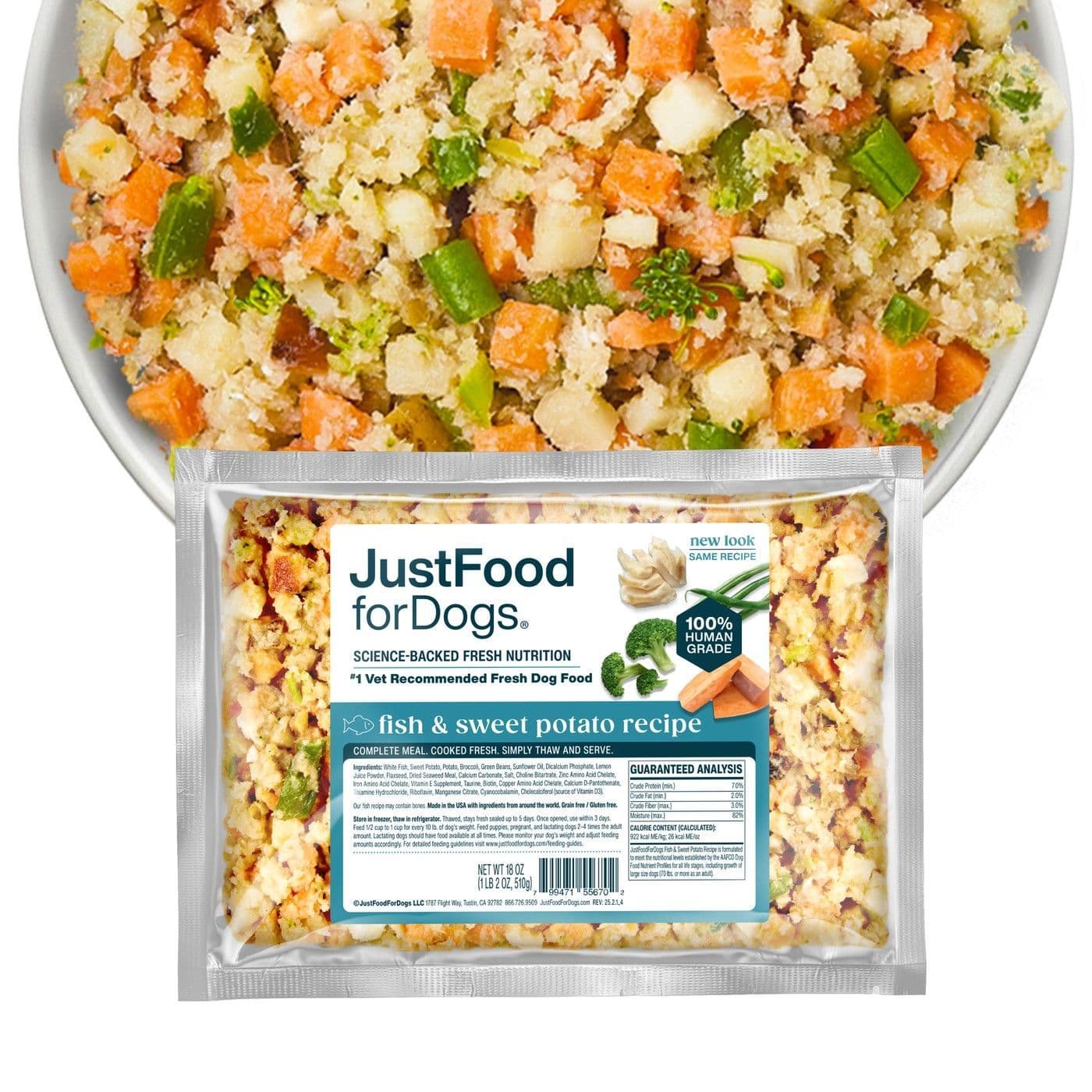
Check the current Fish & Sweet Potato recipe, portions and ordering options.
Webvet may earn a commission when you click through to JustFoodForDogs, at no extra cost to you.
- 1Look for complete and balanced nutrition for the appropriate life stage.
- 2JFFD Fish & Sweet Potato uses a white fish blend containing cod, pollock, and haddock.
- 3JFFD Sensitive Skin is labeled for adult maintenance; its name does not establish puppy suitability.
- 4A fish meal, supplemental oil, and veterinary diet serve different purposes.
For owners seeking a prepared meal, JFFD Fish & Sweet Potato provides a specific recipe with a published nutritional adequacy statement and calorie density. Those details make it possible to assess eligibility and calculate portions instead of guessing from a bowl's appearance.
The best fish dog food for a particular dog is one that provides the required nutrients, suits the dog's health needs, and works within the household's feeding routine. A recipe that needs freezing and careful thawing may fit one home well, while another owner needs a different format. The nutritional check comes first; practical convenience helps determine whether the plan is sustainable.
White Fish, Salmon, and Other Fish Types
Fish-based recipes may name a species, use a white fish blend, or include an ingredient such as fish meal. Read the ingredient list to understand what the name actually represents. “Ocean fish” and “white fish” are broader descriptions than a single named species.
The current JFFD Fish & Sweet Potato recipe contains a blend of cod, pollock, and haddock. It is not a cod-only food, and it is not a salmon recipe. That distinction matters when you are tracking previously eaten ingredients or comparing two foods that use different fish.

Fish meal is a processed, concentrated fish ingredient with much of its water removed. It is different from fish oil, which supplies fat rather than serving as an equivalent protein ingredient. A recipe containing fish meal can still be evaluated using the same nutritional adequacy and life-stage checks as other foods.
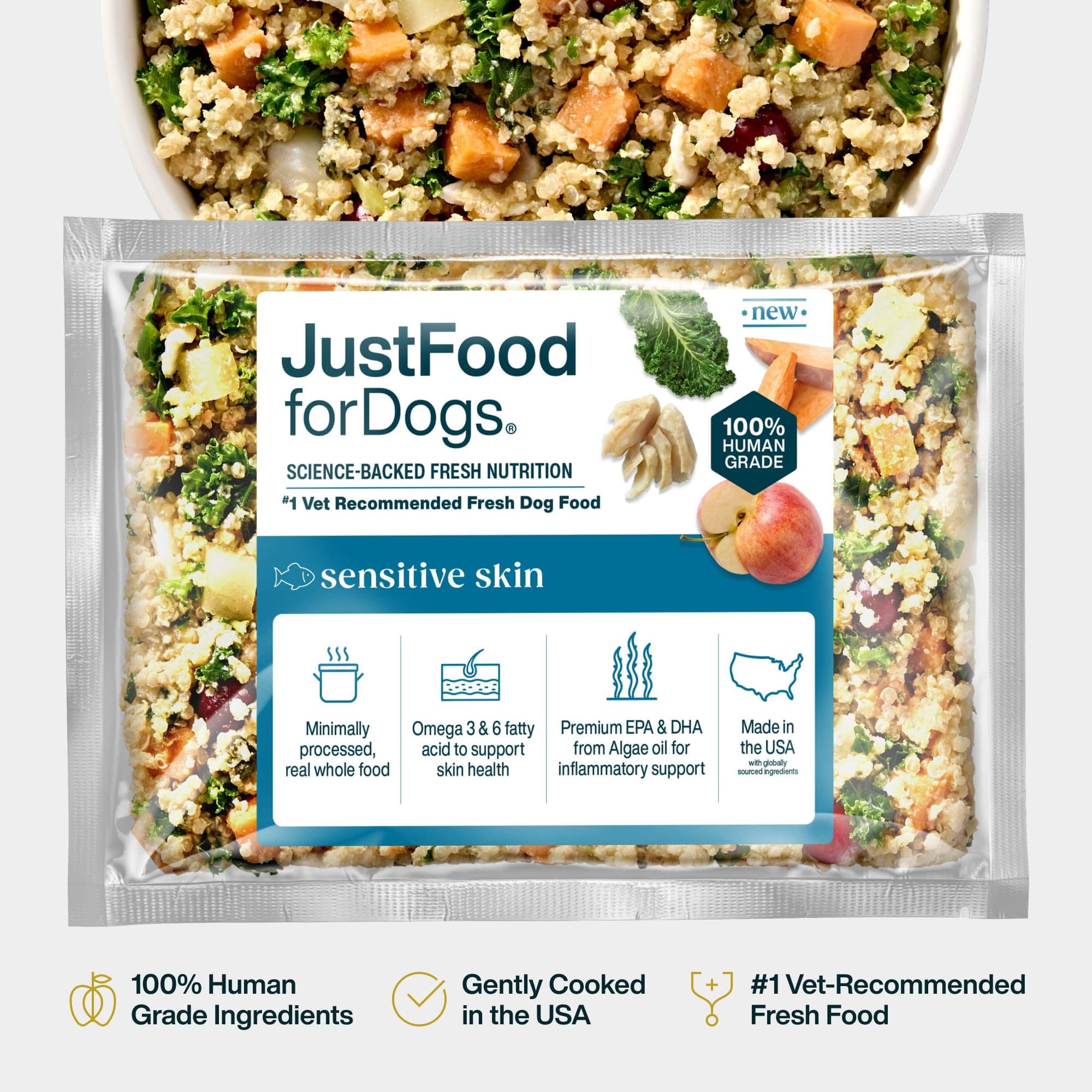
Compare the Sensitive Skin adult-maintenance recipe.
Webvet may earn a commission when you click through to JustFoodForDogs, at no extra cost to you.
When comparing fish types, check:
- Whether the manufacturer names one species or a blend.
- Whether the recipe contains other animal proteins.
- Whether fish appears as flesh, meal, oil, or several ingredients.
- Whether the finished food provides the nutrient information relevant to your dog.
The other ingredients matter too. Fish and potato, fish and rice, and fish and sweet potato describe different recipe combinations, but none of those pairings alone establishes complete nutrition. Oils, minerals, vitamins, and other components contribute to the finished formula.
For example, the UK James Wellbeloved Adult Fish & Rice dry food is described as a complete adult food and is offered in sizes including 15 kg. That adult label and dry format are distinct from JFFD Fish & Sweet Potato's growth-qualified fresh recipe. Compare the exact regional product, life stage, and feeding directions before treating similarly named fish meals as equivalents.
Compare the finished nutrient profile
Similarly, salmon's reputation as a source of omega-3 fatty acids is not a reason to assume that any salmon food provides more EPA and DHA than every white-fish food. Added oils and the amount of each ingredient can change the finished-food nutrient content. Ask for that information when the amount matters to a clinical or supplementation decision.
How to Recognize a Complete Fish Recipe
Feeding fish as an ingredient and choosing a complete fish meal are different decisions. Assess the finished recipe's nutritional adequacy label and exact life-stage eligibility, rather than transferring the benefits of an ingredient to the whole food. There is no universal healthiest recipe: complete nutrition and the individual dog's needs determine the choice.
Start with the nutritional adequacy statement. It should identify whether the food is intended to provide complete and balanced nutrition and the life stage it covers. Adult maintenance and growth are different categories. A recipe labeled for adults should not be assumed suitable as a puppy's main food.

For a growing large-breed dog, check the wording about growth of large-size dogs, defined in these statements as dogs expected to weigh 70 pounds or more as adults. “All life stages” still needs to be read in full because a qualification about large-size growth changes the decision.
Our explanation of what makes dog food complete and balanced covers these label distinctions. Keep that check separate from the ingredient preference that led you to fish in the first place.
A useful label review includes:
- The complete-and-balanced statement and covered life stage.
- Any qualification about large-size puppy growth.
- Whether the product is a full meal or intended for supplemental feeding.
- Calories per kilogram and practical feeding instructions.
- The full ingredient list when a specific ingredient must be avoided.
How can I identify a complete fish-based dry food?
One dry-food example is Purina Pro Plan Adult Sensitive Skin & Stomach Salmon & Rice Formula. Its manufacturer lists salmon first, along with fish meal and salmon meal. The full list also includes beef fat, illustrating why a fish-based name does not mean every animal-derived ingredient comes from fish.
Check the ingredient list for the named fish ingredients, then read the nutritional adequacy statement and confirm the appropriate life stage. The same process applies to kibble, air-dried, freeze-dried, and dehydrated products. A dry format is not evidence of completeness, and a fish flavor does not establish that fish is the only animal protein.
The JFFD meals discussed here are fresh-food recipes, not dry kibble recommendations. If you prefer a shelf-stable fish food, assess the exact product rather than transferring the eligibility or feeding instructions from one of these fresh recipes. Rehydration directions, where applicable, also belong to that specific food.
Grain-free and home-prepared fish meals
The best grain-free fish dog food still needs a complete-and-balanced statement for the appropriate life stage. Grain-free describes an ingredient choice, not nutritional completeness or suitability for an allergy diet. Compare the full formula and your dog's needs before deciding whether that restriction is useful.
CaniSource Grand Cru's grain-free fish formula illustrates another format: the manufacturer describes low-temperature dehydration rather than conventional extrusion. Grain-free and dehydrated describe different aspects of that product. Neither term makes its preparation, portions, or suitability interchangeable with JFFD's cooked fresh meals.
For a cooked fresh option, compare JFFD Fish & Sweet Potato's complete recipe and growth-qualified label. This is separate from the dehydrated and home-prepared formats discussed here.
Webvet may earn a commission when you click through to JustFoodForDogs, at no extra cost to you.
Home-cooked fish with rice or potatoes needs a different assessment. Familiar ingredients alone do not make a balanced recipe. A home-prepared diet intended as the main food should follow an appropriately formulated recipe, including its specified nutrient supplementation and quantities.
Where JustFoodForDogs Fish Recipes Fit
JFFD Fish & Sweet Potato and Sensitive Skin provide two distinct starting points for a fish-based feeding discussion. Compare the exact formulations and their intended use before deciding between them.
The current Fish & Sweet Potato label supports all life stages, including large-size growth, and lists 922 kcal/kg. Its minimum fat is 2%. That minimum is a label guarantee, not the typical amount in every serving and not proof that the food meets a prescribed low-fat target.

The current JFFD Sensitive Skin recipe is labeled for adult maintenance, also at 922 kcal/kg. Its ingredients include whitefish, sweet potato, quinoa, kale, sunflower oil, flaxseed, cranberry, apple, algae oil, and a nutrient blend.
Sensitive Skin lists minimum protein of 7%, fat of 2.5%, and EPA plus DHA of 0.08%, with maximum fiber of 2% and moisture of 80%. These figures describe the current product information; the recipe's name does not establish that it treats a diagnosed skin disease.
| JFFD option or category | Nutritional role | What to confirm |
|---|---|---|
| Fish & Sweet Potato | Complete meal for all life stages, including large-size growth | Current white fish blend, individual tolerance, and portion at 922 kcal/kg |
| Sensitive Skin | Complete meal for adult maintenance | Adult eligibility, full ingredient list, and suitability for the individual dog |
| Supplemental omega oil | Adds selected fats to an existing feeding plan | Product concentration, appropriate amount, and calories; it does not replace a complete meal |
| Veterinary diet, such as Digestive Care | Recipe selected for a diagnosis-specific nutritional plan | Exact analysis, nutritional adequacy, and prescribing veterinarian's instructions |
Quinoa is not a legume. More broadly, identifying an ingredient category is only one part of evaluating the whole formula. The two recipes' ingredient lists, nutrient levels, and adequacy statements should be considered together rather than treating one ingredient as a shortcut to a nutritional verdict.
Compare the Sensitive Skin adult-maintenance recipe.
Webvet may earn a commission when you click through to JustFoodForDogs, at no extra cost to you.
For a recipe-level look, Petful reviews JustFoodForDogs Fish & Sweet Potato, including which dogs it suits and how to feed it.
The equal calorie density of these two current recipes makes portion arithmetic comparable, but it does not make the formulas interchangeable. Their life-stage statements and ingredients still differ. In particular, a growth-qualified recipe and an adult-maintenance recipe answer different feeding needs.
A veterinary diet is another separate category. If your dog needs a prescribed fat limit or other therapeutic restriction, a low-looking guaranteed minimum is insufficient evidence. The clinician needs the relevant analysis for the exact recipe, expressed on a suitable basis, before deciding whether it fits.
Fish Food, Allergies, and Sensitive Digestion
Fish-based food may suit an individual dog, but fish is not universally hypoallergenic. Choosing a fish recipe because a dog is itchy or has recurring digestive upset does not identify the cause of those signs. Ingredient history and veterinary assessment help determine whether a dietary change is appropriate.
There is no universal ingredient blacklist for all dogs. The ingredient to avoid is an individual confirmed trigger, when one has been identified, or another ingredient excluded by the dog's prescribed plan. Avoiding chicken, grains, or a long list of foods without a clear reason can make selection harder without resolving the problem.
For questions about atopic dermatitis and dietary support, our dog food for sensitive skin guide explains the broader decision. A Sensitive Skin product name and a veterinary allergy assessment provide different kinds of information.
Is fish food automatically hypoallergenic?
No. Whether a protein is novel depends on prior exposure, and a dog may have eaten fish through meals, treats, or supplements even if the main food was chicken-based. A veterinary diet trial may require a carefully selected food and strict control of everything else the dog consumes.
An ordinary fish recipe is not automatically equivalent to a hydrolyzed or otherwise prescribed diagnostic diet. Read the complete ingredient list and follow the veterinarian's instructions about treats, flavored medication, chews, and other additions during a trial.
Before switching for suspected food sensitivity, collect:
- Names of current and previously fed foods.
- Treats, chews, toppers, and supplements.
- The signs you have noticed and when they occur.
- Previous dietary changes and the dog's response.
This history helps make the change purposeful. If the dog improves after switching food, the veterinarian can help interpret what that means rather than assuming the fish ingredient alone explains the result.
A fish recipe should not be selected as a treatment for dermatitis or pancreatitis merely because it contains fish. Skin symptoms need an individual diagnosis, while pancreatitis may require a prescribed fat limit. Fish & Sweet Potato's minimum 2% fat does not establish its typical fat intake per calorie or its suitability for that clinical target.
Portions, Switching, and Safe Storage
Once the recipe is appropriate, calculate the portion from its calories. Fish & Sweet Potato and Sensitive Skin currently both list 922 kcal/kg, equivalent to 0.922 kcal per gram. Use the daily calories allocated to the food, then divide that amount into the planned meals.

Calculate the daily portion
The calculation is:
Grams per day = daily food calories ÷ 922 × 1,000.
For a clearly illustrative example, 400 calories assigned to either current recipe would equal about 434 grams per day. Divided into two equal meals, that is approximately 217 grams per meal. This demonstrates the arithmetic; it is not a calorie recommendation for a dog of a particular size.
Put the measured portions into practice
Use a kitchen scale to make portions repeatable, and account for treats and other calorie-containing additions. Our JustFoodForDogs feeding guide explains how calorie targets connect to portions. Monitor body condition and weight trend because an initial estimate may need adjustment.
For a healthy dog, follow the product's transition guidance and increase the new food gradually as tolerated. When a veterinarian has prescribed a diet change, use the clinical instructions instead of a generic schedule. Track appetite and digestion so a problem can be addressed without repeatedly adding new ingredients.
Follow the fish-specific storage limits
Storage needs its own plan. The current JFFD FAQ gives fish-based meals a frozen storage period of up to 18 months, a sealed-thawed refrigerated limit of 5 days, and an opened refrigerated limit of 3 days. Follow a shorter instruction on the package if one is supplied.
To organize the routine:
- Thaw according to the product's instructions.
- Record when a pack was thawed and opened.
- Use clean utensils and keep refrigerated portions properly stored.
- Plan pack use around the measured daily amount.
- Check the exact instructions before changing formats or recipes.
A pack containing several days of food does not automatically remain usable for all those days after opening. This matters particularly for small portions. Before ordering, compare your expected daily use with the opened-storage window, then ask the manufacturer about suitable handling arrangements if the pack size is impractical.
If Fish & Sweet Potato fits your dog's needs, the portion and storage calculations help turn that choice into a consistent routine. They are also more useful for planning food orders than assuming every dog receives the same fraction of a package.
Finally, treat fish oil as a separate supplement decision. Adding oil to food changes the calorie and fat intake, and pumps, sprays, and capsules can have different concentrations. Our guide to fish oil for dogs and cats explains the questions to discuss with your veterinarian. A supplemental oil cannot supply the complete nutrition of a meal.
Frequently Asked Questions
Is fish wet food good for dogs?
It can be when it is complete and balanced for the appropriate life stage and suits the dog's individual tolerance. Check the exact recipe rather than choosing from moisture content or protein source alone. Calories and serving instructions still determine the daily portion.
Is there any dog food that is only made with fish?
A food can use fish as a protein source, but it must also supply the other required nutrients in appropriate amounts. Plain fish alone is not equivalent to a complete formulated meal. Read the nutritional adequacy statement rather than assuming that “all fish” or a short ingredient list establishes completeness.
Does JFFD Fish & Sweet Potato contain only cod?
No. The current white fish blend includes cod, pollock, and haddock. If you need a single-species food for a specific dietary reason, this blend should not be treated as cod-only. Share the full current ingredient information with your veterinarian.
Can puppies eat both JFFD fish recipes?
The current Fish & Sweet Potato statement covers growth including large-size dogs. Sensitive Skin is labeled for adult maintenance, so the two recipes do not have the same puppy eligibility. Select the growth-qualified food and calculate portions for the puppy's individual needs.
Does feeding fish mean my dog needs fish oil too?
No. Consider the finished-food nutrient content and the reason for any proposed supplementation. Supplemental oil should be added in an appropriate measured amount when indicated, with its calories included in the feeding plan. The presence of fish in a meal does not automatically establish either a need for oil or a therapeutic omega-3 dose.

Editor
The Webvet Editorial Team is the in-house group of pet-care editors and writers behind Webvet, operated by Smart Pet Collective. The team researches, writes, and maintains Webvet's pet health, behavior, and medication content. Every article follows a defined editorial process: research from reputable veterinary and scientific sources, careful drafting, mandatory review of medical content by a credentialed veterinarian, and dated publication. Health and medication articles are medically reviewed by a licensed veterinary professional before they go live and are kept current over time.
Related reading

Best Dog Food for Goldendoodles: Choosing Food by Size and Life Stage

Vet-Recommended Diets for Dogs With Pancreatitis

How Much Does Fresh Dog Food Cost for a Small Dog? Price per Day and per Pound Compared
