Lipoma in Dogs (Fatty Tumors): Pictures, Removal Costs, and When to Worry
Lipomas are benign fatty tumors common in senior dogs, but feel alone cannot rule out cancer. Learn why vets aspirate every lump, what removal costs, the burst and infiltrative exceptions, and which home remedies actually have evidence.

BVMS MRCVS
Medically reviewed by Dr. Pippa Elliott, BVMS MRCVS · Last reviewed

This article contains affiliate links. Webvet may earn a commission when you buy through them, at no extra cost to you.
Finding a soft, squishy lump under your dog's skin is unsettling, but a lipoma in dogs is one of the most common and least dangerous growths a veterinarian sees. These fatty tumors are among the most frequent lumps found on middle-aged and senior dogs, and the overwhelming majority are benign. That word "majority" is doing real work, though: your vet cannot tell a harmless lipoma from a dangerous mast cell tumor by feel alone, which is why every new lump earns a quick needle test before anyone relaxes.
This guide covers what lipomas are, what they look like (with pictures), why the vet still aspirates even a classic fatty lump, the two exceptions that break the "harmless" rule, when removal actually makes sense, what surgery costs, and an honest, evidence-graded read on the home remedies you will find promoted online.

 Sponsored
Want a vet's take on your dog's skin or coat?
Talk to a licensed vet at Dutch over video, often the same day. They can recommend treatment and prescribe it when it's appropriate.
Use code Pets30
Plans start at $11/month · covers up to 5 pets
- Licensed vets in most states
- Rx for 150+ conditions
- 4.7 on Trustpilot
What Is a Lipoma in Dogs?
A lipoma is a benign tumor made of fat cells (adipocytes) that grows in or just under the skin. Lipomas are soft, rounded, usually painless masses that move freely when you press them, because they typically sit between the skin and the muscle layer rather than attaching to either. They grow slowly, sometimes over years, and they do not spread to other organs.
- 1Lipomas are benign fatty tumors and among the most common lumps in middle-aged and senior dogs.
- 2Feel alone cannot rule out cancer: only a fine needle aspiration (FNA) confirms a lump is really a lipoma.
- 3Watch for the two exceptions: burst lipomas need same-day care, and infiltrative lipomas invade muscle and need aggressive treatment.
- 4No home remedy has evidence for shrinking lipomas; weight management is the only intervention with real support.
Fatty tumor and fatty lump are the phrasing owners actually use for lipomas, along with "fat deposit," and vets use all of those phrases interchangeably with the clinical term, so if your vet says lipoma and you say fatty tumor, you are talking about the same lump. Per the Cornell Riney Canine Health Center (vet.cornell.edu), lipomas are especially common in older dogs and in dogs carrying extra weight, and many dogs develop more than one over their lifetime.

Sponsored Lemonade pet insurance link. Webvet may earn a commission.
Can dogs live long with lipomas? Yes. A confirmed simple lipoma has no effect on life expectancy at all. Dogs routinely live out full, normal lifespans carrying one or several fatty tumors that never cause a single problem. Most confirmed lipomas are simply monitored rather than removed, and the mass itself does not hurt, itch, or make the dog sick. The prognosis conversation only changes for the rare infiltrative form, or when a lipoma grows somewhere that restricts movement, and both of those situations are covered below.
What Do Lipomas Look Like? (Pictures)
The classic lipoma is a dome-shaped or oval lump under otherwise normal-looking skin. Owners searching for lipoma in dogs images or lipoma in dogs photos are usually trying to answer one question: does my dog's lump match the classic soft movable lump of a fatty tumor? If you have found a lump and are trying to match it against pictures, here is what a typical lipoma on a senior dog looks and feels like:
- Soft to slightly firm, often described as doughy or rubbery
- Movable: it slides around under the skin when you press it
- Slow growing: it looked the same last month, or grew very gradually
- Painless: your dog does not flinch when you handle it
- Covered by normal skin: no redness, ulceration, hair loss, or discharge
- Usually on the trunk: chest, belly, and upper legs are the most common sites

Size varies enormously. Many lipomas stay smaller than a grape for years. Others slowly reach the size of a golf ball, a baseball, or in neglected cases a grapefruit. Large size alone does not make a lipoma cancerous, but big masses are heavier, harder to remove, and more likely to interfere with how your dog walks or lies down.
Here is the critical caveat about pictures: a lipoma is a "look-alike" tumor. Mast cell tumors, soft tissue sarcomas, and cysts can all present as soft, movable, innocent-feeling lumps. Photographs help you describe what you are seeing, and they are useful for tracking change over time, but they can never confirm the diagnosis. If your dog's lump is red, ulcerated, fast growing, firm, fixed in place, or painful, it does not fit the lipoma picture and deserves a prompt vet visit. And even when it fits the picture perfectly, the FNA below is still the step that makes "it's just a fatty tumor" true instead of hopeful. A cyst on a dog is the closest look-alike of all, since sebaceous cysts are also soft, slow, and movable, and only sampling tells the two apart.
What Causes Lipomas in Dogs?
Nobody has identified a single cause of lipomas. They arise when fat cells begin dividing into an organized, encapsulated mass, and the best-supported risk factors are age, body condition, and genetics.
The known risk factors are:
- Age. Lipomas are strongly a middle-age and senior phenomenon. Most first appear between 6 and 10 years of age, and prevalence climbs from there.
- Overweight and obesity. Overweight dogs develop more lipomas, and they develop them larger. Fat metabolism clearly plays a role, although thin dogs get lipomas too.
- Breed and genetics. What breeds are prone to lipomas? Labrador Retrievers lead nearly every published list, followed by Golden Retrievers, Weimaraners, Doberman Pinschers, Miniature Schnauzers, Dachshunds, Cocker Spaniels, and mixed-breed dogs of similar builds. If your dog's parents were lumpy seniors, your dog is more likely to be one as well.
- Sex. Several sources, including VCA Animal Hospitals (vcahospitals.com), note that middle-aged females are slightly overrepresented.

A collar-mounted sensor and app for activity, rest, sleep, respiratory rate, heart-rate trends, itch behaviors, and more.
- Builds a personalized baseline over time
- Tracks trends between veterinary visits
- Generates a month-long shareable report
Health monitoring for dogs and cats
Webvet may earn a commission when you click through to Maven Pet, at no extra cost to you.
Two things lipomas are not caused by: vaccines and diet quality. Neither has any demonstrated causal link to lipoma formation, despite persistent claims online. The honest summary is that some dogs are genetically wired to make fatty lumps as they age, and body weight is the one risk factor you can actually influence.
Lipomas in young dogs under 5 are less common but not alarming by themselves. The same rule applies at every age: sample the lump, then relax.
Lipoma vs. Cancer: Why the Vet Still Aspirates
This is the section that matters most, so here is the answer up front: your vet aspirates every new lump, including the ones that feel exactly like lipomas, because palpation misdiagnoses a meaningful share of skin masses. A mast cell tumor is nicknamed "the great pretender" precisely because it can feel soft, squishy, and movable, indistinguishable from a lipoma under your fingers. Studies of vet accuracy on feel alone consistently show that experienced clinicians get it wrong often enough that no responsible practice skips the needle.

The test is called fine needle aspiration (FNA). Here is what it involves:
- The vet inserts a small needle (the same gauge used for vaccines) into the lump.
- A few cells are drawn into the needle, smeared on a slide, and stained.
- The slide is examined under a microscope, in-house or at a reference lab (cytology).
- A true lipoma shows sheets of uniform fat cells, and often just an oily smear.
No sedation is needed, most dogs barely notice, and results from an in-house read can come back the same visit. The cost typically runs $30 to $150 with the exam, or $150 to $300 if the slides go to a pathologist. That is a small price for certainty when the alternative is watching a mast cell tumor for six months under the assumption it is fat.
FNA has one limitation worth knowing: because it samples only a few cells, it can occasionally miss a liposarcoma, the rare malignant tumor of fat cells, or an infiltrative lipoma. If a "lipoma" grows quickly, changes texture, becomes fixed to underlying tissue, or the aspirate looks unusual, your vet may recommend a surgical biopsy for a definitive answer. Liposarcomas are genuinely uncommon, and they do not develop from existing benign lipomas, but they are part of why follow-up matters even after a reassuring first test.
Can a lipoma become cancerous?
Two related questions come up constantly. Can a lipoma become cancerous in dogs? A true benign lipoma essentially never does; liposarcoma arises on its own rather than from an existing fatty lump. And how to tell a lipoma from cancer in dogs? You cannot by look or feel, which is the whole point: only the aspirate, and a biopsy when the aspirate is unclear, separates the two.
So the rhythm to internalize is: find the lump, aspirate the lump, then monitor the lump. Reassurance is the likely outcome. Verification is what makes the reassurance worth anything.
 Sponsored
Vet care that's always there
Unlimited video calls and messaging with licensed vets for less than a typical vet visit. One membership covers up to five pets.
Use code Pets30
Plans start at $11/month · covers up to 5 pets
- Licensed vets in most states
- Rx for 150+ conditions
- 4.7 on Trustpilot
The Two Exceptions: Burst and Infiltrative Lipomas
Two situations break the "benign, just watch it" rule, and neither gets adequate coverage on most lipoma pages.

Burst (Ruptured) Lipomas
A lipoma can rupture through the overlying skin, usually because it grew large in a high-friction spot (armpit, chest wall, point of the elbow), got scraped or pressure-damaged, or outgrew its own blood supply and the tissue over it broke down. What you see is an open, oozing wound over a previously smooth lump, sometimes leaking fatty or bloody material.
A burst lipoma is not a wait-and-see problem. Exposed fat is fragile tissue that infects easily and heals poorly on its own, and what looks like a burst lipoma can also be a ruptured abscess or an ulcerated tumor of a nastier kind.
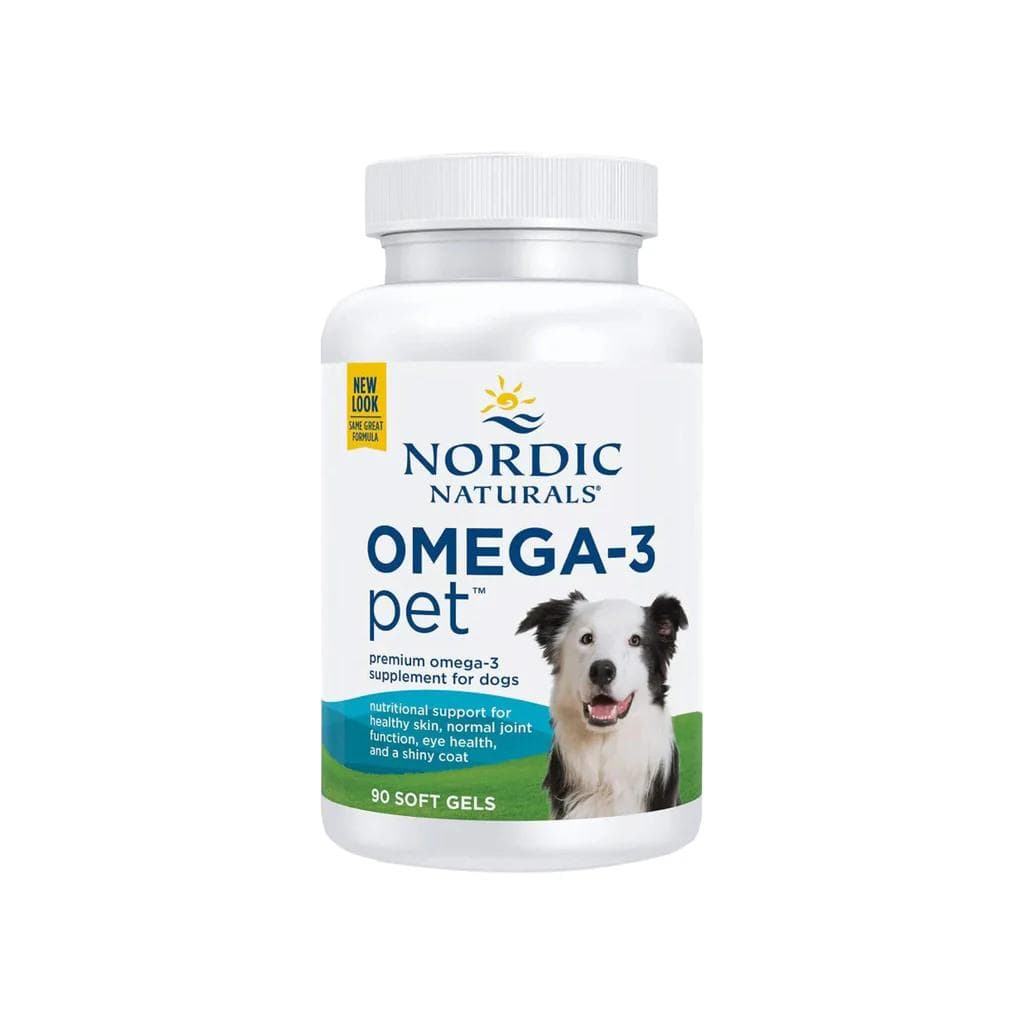
Third-party-tested omega-3 softgels (EPA and DHA) that support skin, coat, and joint health in dogs. Fish oil is one of the first things many vets suggest for a dull, dry, or flaky coat.
Webvet may earn a commission when you click through to Chewy, at no extra cost to you.
Once a lipoma has ruptured, removal is almost always the recommendation, because the damaged mass will keep breaking down and re-infecting.
Infiltrative Lipomas
The second exception is rarer but more serious. An infiltrative lipoma is still made of benign fat cells, but instead of sitting in a tidy capsule it grows between and into muscle planes, connective tissue, and occasionally around nerves and blood vessels. It feels firmer and less movable than a classic lipoma, commonly shows up on the thigh, shoulder, or chest wall, and it does not respect boundaries.
Infiltrative lipomas do not metastasize, which separates them from liposarcoma, but their local invasion can cause lameness, pain, and loss of function. Per the Merck Veterinary Manual (merckvetmanual.com), wide surgical excision is the treatment of choice, and early intervention while the mass is small gives the best odds of a complete removal. This is another reason the FNA-and-monitor habit matters: a lump that firms up or anchors itself to muscle has declared that it needs imaging, not patience.
When Removal Is Actually Needed and What It Costs
Should lipomas in dogs be removed? Most should not. A confirmed, small, slow-growing lipoma in a location that does not affect movement is usually left alone and monitored, because anesthesia and surgery carry more risk than the lump does. Removal is needed when the lipoma interferes with movement or comfort, sits where a harness or leg rubs it, grows rapidly, ruptures, is suspected to be infiltrative, or cannot be confidently diagnosed from the aspirate.
Vets often suggest removing borderline masses while the dog is under anesthesia for something else anyway, like a dental cleaning. Timing also matters: a lipoma the size of a grape on the chest wall is a 20-minute lumpectomy, while the same lipoma three years later at grapefruit size is a longer anesthesia, a bigger incision, a drain, and a much bigger bill.
The question of when removal is actually needed always arrives with a second one: what will it cost? Lipoma in dogs treatment cost depends mostly on size, location, and how many masses come off at once, so instead of a vague "costs vary," here are realistic surgery cost ranges for lipoma removal in the United States, from the diagnostic aspirate through the infiltrative worst case:
| Scenario | Typical cost range | What drives the price |
|---|---|---|
| Fine needle aspiration (diagnosis) | $30-$300 | In-house read vs. pathologist review |
| Small, simple lipoma removal | $300-$800 | Short anesthesia, single small mass |
| Large or awkwardly placed lipoma | $800-$2,500 | Longer surgery, drains, difficult location |
| Multiple lipomas in one procedure | $1,000-$3,000 | Added time per mass, longer anesthesia |
| Infiltrative lipoma (imaging + surgery) | $3,000-$8,000+ | CT/MRI, specialist surgeon, possible radiation |
Prices vary by region and by clinic type: a rural general practice and an urban specialty hospital can differ by a factor of three for the same mass. Pre-anesthetic bloodwork ($100 to $250) and histopathology on the removed mass ($150 to $300) are commonly added, and both are worth doing. If you carry pet insurance, lipoma removal is typically covered when medically indicated but not when purely cosmetic, so get the medical rationale in writing.
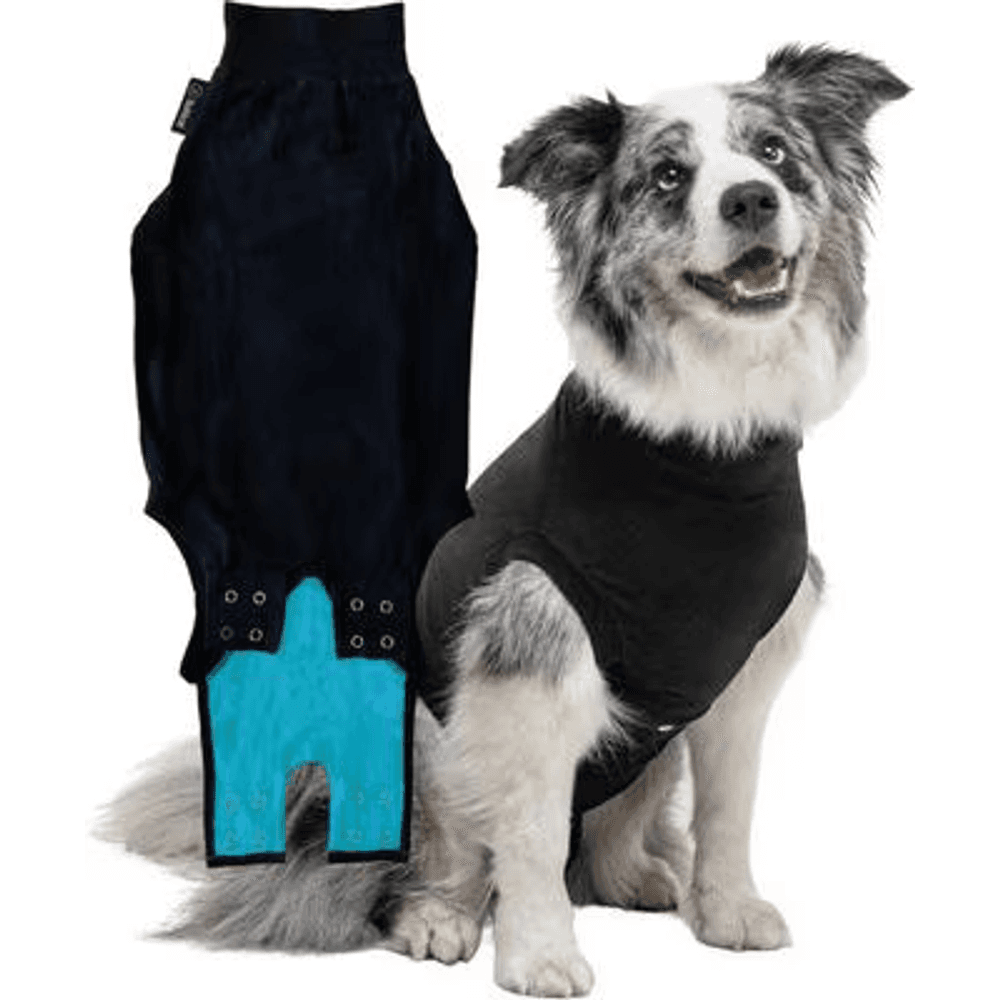
A breathable full-body recovery suit that covers a spay or abdominal incision, the vet-recommended cone alternative that lets a dog rest, walk, and go potty normally without licking or scratching the wound.
Webvet may earn a commission when you click through to Chewy, at no extra cost to you.
The good news inside those numbers: removal of a simple lipoma is curative. The mass does not grow back at that site once fully excised, although predisposed dogs often grow new, separate lipomas elsewhere, which is a reason some owners of lumpy Labradors choose monitoring over serial surgeries.
How Lipomas Are Treated (and the Honest Read on Home Remedies)
For a confirmed simple lipoma, mainstream treatment is one of two paths: surgical removal when the criteria above are met, or structured monitoring when they are not. Monitoring is an active job, not neglect. Here is the method vets actually recommend:
The method is a senior-dog lump monitoring log built on a simple measure and photo routine: you measure each lump, photograph it for scale, and log the results monthly. This monitoring log is the senior dog habit that catches trouble early, because a written record of measurements and photos shows change long before memory does. Here is exactly how to keep it:
- Measure each lump monthly with a ruler or calipers (two dimensions, in millimeters).
- Photograph it next to a coin for scale, in the same position and lighting.
- Keep a simple log: date, location, size, texture, and whether it moves freely.
- Report to your vet any lump that grows fast, firms up, fixes in place, ulcerates, or bothers the dog, and bring every lump to each annual or semi-annual exam for a fresh check.

Now the part the internet is full of. Owners searching for lipoma in dogs treatment at home, natural treatment, holistic treatment, or how to shrink a lipoma naturally in dogs will find no shortage of confident advice on how to treat lipoma in dogs without a vet. The honest read: there is no evidence any home treatment shrinks a lipoma, and some are actively risky. Castor oil for lipoma in dogs is the most-promoted example, and it has no supporting data plus a real irritation and licking risk. The only treatment for lipoma in dogs with genuine support is weight loss, which does not dissolve an existing lipoma but is associated with slower growth, smaller masses, and fewer new ones, and it is unambiguously good for the dog either way.
So here are honest, evidence-graded verdicts on the home and natural shrinking remedies, in one verdict table instead of hype or silence. The institutional pages that dominate this topic (Cornell, VCA, Blue Cross, VIN) are short overviews with no cost detail and no remedy grading, and you will rarely find a graded home-remedy verdict table combined with real lipoma photos, burst first aid, and concrete removal cost ranges in one place; the table below grades each remedy, from castor oil to turmeric to diet changes, strictly on its evidence:
| Remedy | Claim | Evidence | Verdict |
|---|---|---|---|
| Castor oil (topical) | Rubbed on daily, shrinks the lump | No evidence in dogs; skin irritation risk, and toxic if licked in quantity | Skip it |
| Turmeric / curcumin | Anti-inflammatory, dissolves fatty tumors | No clinical evidence for lipoma shrinkage in dogs; GI upset at high doses | Skip as a lipoma treatment |
| Apple cider vinegar | Given orally or applied, breaks down fat | No evidence and no plausible mechanism | Skip it |
| Fish oil / omega-3s | Reduces lipoma formation | No lipoma-specific evidence; reasonable general supplement with vet dosing | Fine to feed, not a treatment |
| CBD oil | Shrinks tumors naturally | No evidence for lipomas in dogs | Skip as a lipoma treatment |
| Raw or grain-free diet switch | Diet caused the lipoma, diet cures it | No evidence diet type causes or shrinks lipomas | Skip the causal claim |
| Weight loss and exercise | Fewer, smaller fatty tumors | The only approach with real supporting data; helps prevention and slows growth | Do this |
Two remedies deserve a sharper warning. Injecting or applying anything intended to "dissolve" the lump at home can damage tissue and mask changes your vet needs to see. And every month spent on a remedy that cannot work is a month a misdiagnosed mast cell tumor gets to grow. If the lump has not been aspirated, no remedy conversation should be happening at all.
Steroid injection into lipomas (intralesional triamcinolone) exists as a veterinary procedure and has shrunk small lipomas in some reported cases, but the effect is often temporary and it is not a mainstream standard of care. It is worth asking your vet about for a small mass in a dog who is a poor anesthesia candidate, and that is a conversation to have in the exam room, not a DIY project.
Can You Prevent Lipomas? Myth vs. Reality
The honest answer: you cannot reliably prevent lipomas, because the biggest risk factors are age and genetics, and no supplement, detox, or special diet has been shown to stop them from forming. What you can do is manage the one modifiable risk factor, body condition. Keeping your dog lean is associated with fewer and smaller lipomas, and it pays off across joints, heart, and lifespan regardless.
Practical prevention-adjacent habits that are actually worth your time:
- Keep your dog at a body condition score of 4-5/9, with a visible waist and easily felt ribs.
- Feed measured meals rather than free-feeding, and count treats inside the daily ration. A slow-feeder bowl stretches the same ration into a longer, more satisfying meal.
- Do a monthly hands-on lump check from nose to tail, so anything new is found small.
- Book senior wellness exams every 6 to 12 months, where every lump gets professional review.
Early detection is the realistic goal. A lipoma found at grape size gives you every option cheaply; a lipoma found at softball size has already spent your leverage.
Where Lipomas Show Up: Neck, Chest, Legs, and More
Lipomas can form anywhere there is fat, but location changes how much a benign lump actually matters:
- Chest and belly: the most common sites, and usually the lowest-stakes. These can grow fairly large before causing anything worse than cosmetic annoyance.
- Armpit (axilla) and groin: high-friction, high-motion areas. Lipomas here interfere with gait earlier, rub against the body wall, and are the classic sites for eventual rupture. Vets recommend removal at a smaller size in these spots.
- Neck and shoulder: watch collar and harness fit; constant pressure over a lipoma irritates the skin above it.
- Legs and thigh: more likely to affect movement, and the thigh is a signature location for the infiltrative form, so a firm, poorly movable thigh mass warrants imaging.
- Chest wall between the elbow and ribs: friction from the elbow can rub these raw as they enlarge.
- Mouth, eyelid, or inside the body cavity: genuinely uncommon sites. Intra-abdominal and intrathoracic lipomas usually stay silent unless they press on organs, and oral fatty masses always deserve sampling because the mouth grows more dangerous tumor types.
The location rule of thumb: the more a spot moves or bears friction, the earlier a "harmless" lipoma stops being harmless in practice. Senior dogs commonly carry several lumps at once, and each one gets its own aspirate, because a dog with three confirmed lipomas can absolutely grow a mast cell tumor as lump number four. If your senior dog is showing other new signs alongside a lump, such as shaking or weakness, our guide to old dog trembling covers when those changes need their own workup. For seniors carrying armpit or elbow lipomas, an orthopedic bed takes daily pressure off exactly those spots.
Is It Lymphoma or Something Else?
Owners sometimes confuse lipoma and lymphoma because the names sound alike, but they are entirely different diseases. Lymphoma is a cancer of lymphocytes that classically appears as firm, rubbery, rapidly enlarging lymph nodes: under the jaw, in front of the shoulders, behind the knees, often at several sites at once, and frequently with sick-dog signs like lethargy and appetite loss. A lipoma is a single soft fatty mass in the skin with a healthy dog attached. The physical overlap is small, but the stakes of confusing them are enormous, and swollen nodes need a vet visit within days, not months. Our complete guide to lymphoma in dogs covers the node map, staging, and treatment options in full. And if you are still at the "I found a lump and have no idea what it is" stage, start with our lump on dog triage guide, which walks through all eight common lump types with photos.
Lipoma in Dogs FAQs
Because lipomas are so tied to age, our sister site Petful's guide to senior dog health pairs well with this one for owners of graying muzzles.
Frequently Asked Questions
At what age do dogs start getting lipomas?
Most lipomas first appear in middle-aged dogs between 6 and 10 years old, and the odds keep climbing into the senior years. They are uncommon but possible in dogs under 5. Build a lump check into your monthly routine from about age 6, and make sure every senior wellness exam includes a hands-on lump check with your vet, since new fatty tumors keep appearing as predisposed dogs age.
How fast do lipomas grow in dogs?
Slowly, as a rule. A typical lipoma takes months to years to change size noticeably, and many plateau and stay stable indefinitely. Rapid growth over weeks does not fit lipoma behavior, even if the lump was previously aspirated as one, and it is a signal to return to the vet for a repeat aspirate or biopsy rather than continued monitoring.
Can a lipoma turn into cancer?
A true benign lipoma essentially never transforms into cancer. Liposarcoma, the malignant fat-cell tumor, arises on its own rather than developing from an existing lipoma. The practical risk is different: a lump assumed to be a lipoma without testing may have been something else all along. That is why the fine needle aspirate up front, and re-testing any lump that changes, matter more than fear of transformation.
Do lipomas hurt dogs?
Simple lipomas are almost always painless, and most dogs ignore them completely. Pain, flinching, or licking at a lump suggests something else: an abscess, an inflamed cyst, a mast cell tumor, or an infiltrative lipoma working into muscle. A painful "fatty lump" should be examined promptly rather than watched, and pain plus firmness or fixation moves imaging up the priority list.
What happens if you leave a lipoma untreated?
For most confirmed lipomas, nothing: they grow slowly or not at all and never bother the dog. The costs of ignoring one show up in the exceptions, such as a mass in the armpit that eventually alters gait, a large lump that ruptures, or an unsampled "lipoma" that was never a lipoma. Monitoring with monthly measurements is the middle path between surgery and neglect.

Editor
The Webvet Editorial Team is the in-house group of pet-care editors and writers behind Webvet, operated by Smart Pet Collective. The team researches, writes, and maintains Webvet's pet health, behavior, and medication content. Every article follows a defined editorial process: research from reputable veterinary and scientific sources, careful drafting, mandatory review of medical content by a credentialed veterinarian, and dated publication. Health and medication articles are medically reviewed by a licensed veterinary professional before they go live and are kept current over time.
Veterinarian · BVMS MRCVS
Dr. Pippa Elliott, BVMS, MRCVS, is a veterinarian with nearly 30 years of experience in companion animal practice. Dr. Elliott earned her Bachelor of Veterinary Medicine and Surgery from the University of Glasgow. She was also designated a Member of the Royal College of Veterinary Surgeons. Married with 2 grown-up kids, Dr. Elliott has a naughty Puggle named Poggle, 3 cats and a bearded dragon.


