Hydrolyzed Protein Cat Food: How It Works and the Best Options
Hydrolyzed protein cat food breaks proteins into pieces too small for the immune system to react to, so vets use it for suspected food allergies. How it works, the elimination trial, and the veterinary diets that need a vet's authorization.

BVMS MRCVS

This article contains affiliate links. Webvet may earn a commission when you buy through them, at no extra cost to you.
Hydrolyzed protein cat food is a veterinary diet in which the protein is broken into pieces too small for the immune system to recognize. Vets use it when a cat has signs of a suspected food allergy, such as itchy skin, overgrooming, or chronic vomiting or diarrhea, and as the basis of an elimination diet trial that confirms or rules out the allergy.
The true hydrolyzed protein cat food options are veterinary therapeutic diets that need your vet's authorization before Chewy will ship them. Limited ingredient and "hypoallergenic" store foods are not the same thing, and they cannot stand in for a hydrolyzed diet during a trial. A vet chooses among a handful of veterinary hydrolyzed diets, wet or dry, and the right one depends on the cat's diet history and what it will eat.
| Product | Type | Form | How the protein is handled | Needs vet authorization |
|---|---|---|---|---|
| Royal Canin Veterinary Diet Hypoallergenic HP Premium Dry Cat Food, 7.7-lb bag | Veterinary diet | Dry kibble | Hydrolyzed soy protein | Yes |
| Hill's Prescription Diet z/d Feline Low Sensitivity Cat Food, 8.5-lb | Veterinary diet | Dry kibble | Hydrolyzed chicken liver | Yes |
| Hill's Prescription Diet z/d Feline Ultra Cat Food, 5.5-oz, 24 ct | Veterinary diet | Wet, canned | Hydrolyzed chicken liver | Yes |
| Purina Veterinary Diets HA Hypoallergenic Dry Cat Food, 8-lb bag | Veterinary diet | Dry kibble | Hydrolyzed protein | Yes |
| Royal Canin Veterinary Diet Adult Ultamino Dry Cat Food, 5.5-lb bag | Veterinary diet | Dry kibble | Extensively hydrolyzed, down to amino acids | Yes |
| Blue Buffalo Natural Veterinary Diet HF Hydrolyzed for Food Intolerance Salmon Wet Cat Food, 5.5-oz can, case of 4 | Veterinary diet | Wet, canned | Hydrolyzed salmon | Yes |
| Purina Pro Plan Sensitive Skin & Stomach Lamb & Rice Cat Food, 7-lb | Over-the-counter | Dry kibble | Intact protein, not hydrolyzed | No |
Hydrolyzed protein cat food: what it is, how it works, and which cats need it
A food allergy is an immune reaction, and protein is the usual trigger. The NC State Veterinary Hospital nutrition service explains that a hydrolyzed diet takes a protein source such as chicken, fish, or soy and breaks it into very small pieces, much as digestion would, which makes it harder for the body to detect the allergenic part and react to it.
- 1How hydrolysis hides a protein from the immune system: the protein is cut into fragments too small for immune cells to recognize as the original food.
- 2Which cats a vet puts on a hydrolyzed diet: cats with suspected food allergy signs such as itching, overgrooming, miliary dermatitis, or chronic vomiting and diarrhea.
- 3The hydrolyzed diet is the backbone of an elimination diet trial, the only reliable way to diagnose a food allergy.
- 4True hydrolyzed diets are veterinary diets that need a vet's authorization; store-bought hypoallergenic foods are not equivalent.
What does hydrolyzed protein mean in cat food? It means the protein has been split into small peptides before the food is made. VCA Animal Hospitals describes a veterinary hydrolyzed protein diet as one in which the protein molecules are broken down to a size too small for the cat's immune system to recognize.
The Merck Veterinary Manual describes two grades of hydrolyzed diet, plus elemental diets that go a step further:
- Partially hydrolyzed: protein fragments generally under 5 kilodaltons.
- Extensively hydrolyzed: fragments generally under 3 kilodaltons.
- Elemental diet: a mixture of synthetic amino acids meets the cat's protein requirement.
Merck also notes that some sensitized animals still react to hydrolyzed diets, which is why a vet sometimes moves a cat from a standard hydrolyzed food to an extensively hydrolyzed one.

What does hydrolyzed protein do for a cat?
Hydrolyzed protein lets a cat with a suspected food allergy eat a complete diet without its immune system recognizing the protein as a threat. Because the fragments are too small to trigger the reaction, itching and digestive signs caused by food can settle, which is how a vet tells a food allergy apart from other causes during an elimination trial.
Which cats does a vet put on a hydrolyzed diet?
Vets consider a hydrolyzed diet when the signs fit a cutaneous adverse food reaction or a food-responsive gut problem. Merck reports that fewer than 1% of cats seen by vets have a food allergy, but 12 to 21% of itchy cats do. The signs vets look for include:
- Itching of the face, ears, and neck, which Merck calls very common in food-allergic cats.
- Year-round itching that VCA says can also affect the belly, groin, armpits, legs, and paws.
- Skin lesions such as miliary dermatitis in cats, eosinophilic granuloma complex lesions, and fur loss from overgrooming.
- Vomiting or diarrhea, alone or alongside the skin signs.
Itching has other causes too, especially fleas and environmental allergies. WebVet's guide to allergies in cats from food and fleas walks through how vets separate them, and Merck lists beef, fish, and chicken as the most common feline food allergens.
What is the easiest protein for a cat to digest?
No single protein is easiest for every cat, but hydrolyzed protein comes close to pre-digested: NC State compares the breakdown to how the body normally digests food. Royal Canin describes the hydrolyzed soy protein in its HP formula as low molecular weight peptides that are highly digestible. For a healthy cat, an intact animal protein the cat tolerates is usually digested well.
What is hydrolyzed protein cat food made of, and does it have side effects? Ingredient lists vary by maker. Royal Canin's HP dry food starts with brewers rice, hydrolyzed soy protein, and chicken fat, while Hill's z/d starts with brewers rice and hydrolyzed chicken liver. Hydrolyzed soy protein cat food includes Royal Canin's HP and its Gastrointestinal Hydrolyzed Protein formula; the main documented drawback of any hydrolyzed diet is that some allergic cats still react.
Our picks: the best hydrolyzed protein cat food, with veterinary diets that need your vet's authorization
The best hydrolyzed protein cat food is the veterinary diet a vet matches to the cat's diet history and food preference, and the first six picks are those therapeutic diets. Each one needs your vet's authorization, and Chewy asks for it at checkout, so the vet chooses which diet fits before you buy. The last pick is an over-the-counter food for mild skin and stomach concerns with no diagnosis behind them; it is not hydrolyzed and is not a trial diet.
Royal Canin Veterinary Diet Hypoallergenic HP Premium Dry Cat Food: best veterinary hydrolyzed dry food
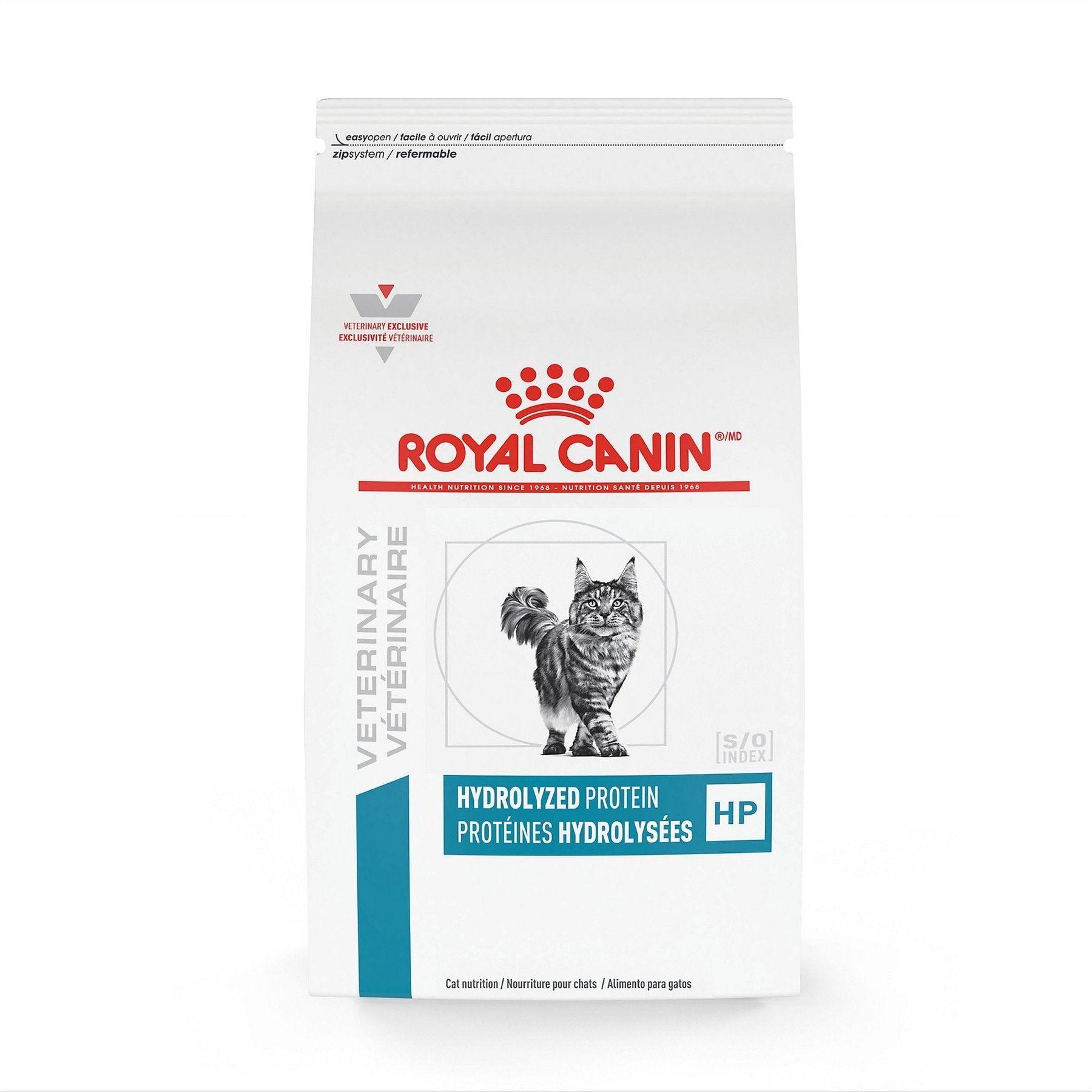
A veterinary hydrolyzed soy dry food a vet can use for an elimination trial or long-term allergy management.
Webvet may earn a commission when you click through to Chewy, at no extra cost to you.
Royal Canin Veterinary Diet Hypoallergenic HP Premium Dry Cat Food, 7.7-lb bag is Royal Canin's hydrolyzed protein cat food, usually shortened to HP. Royal Canin's product page lists brewers rice, hydrolyzed soy protein, and chicken fat as the first three ingredients, 330 kcal per cup (3,923 kcal per kg), and an AAFCO statement for adult maintenance.
- Protein: hydrolyzed soy, a protein source other than the beef, fish, and chicken Merck lists as the most common feline allergens.
- Form: dry kibble in a 7.7-lb bag.
- Who should skip it: kittens, since the AAFCO statement is for adult maintenance, and any cat whose vet suspects a soy reaction.
- Price: listed at $81.99 on Chewy when checked in November 2026.
Hill's Prescription Diet z/d Feline Low Sensitivity Cat Food: best veterinary dry alternative
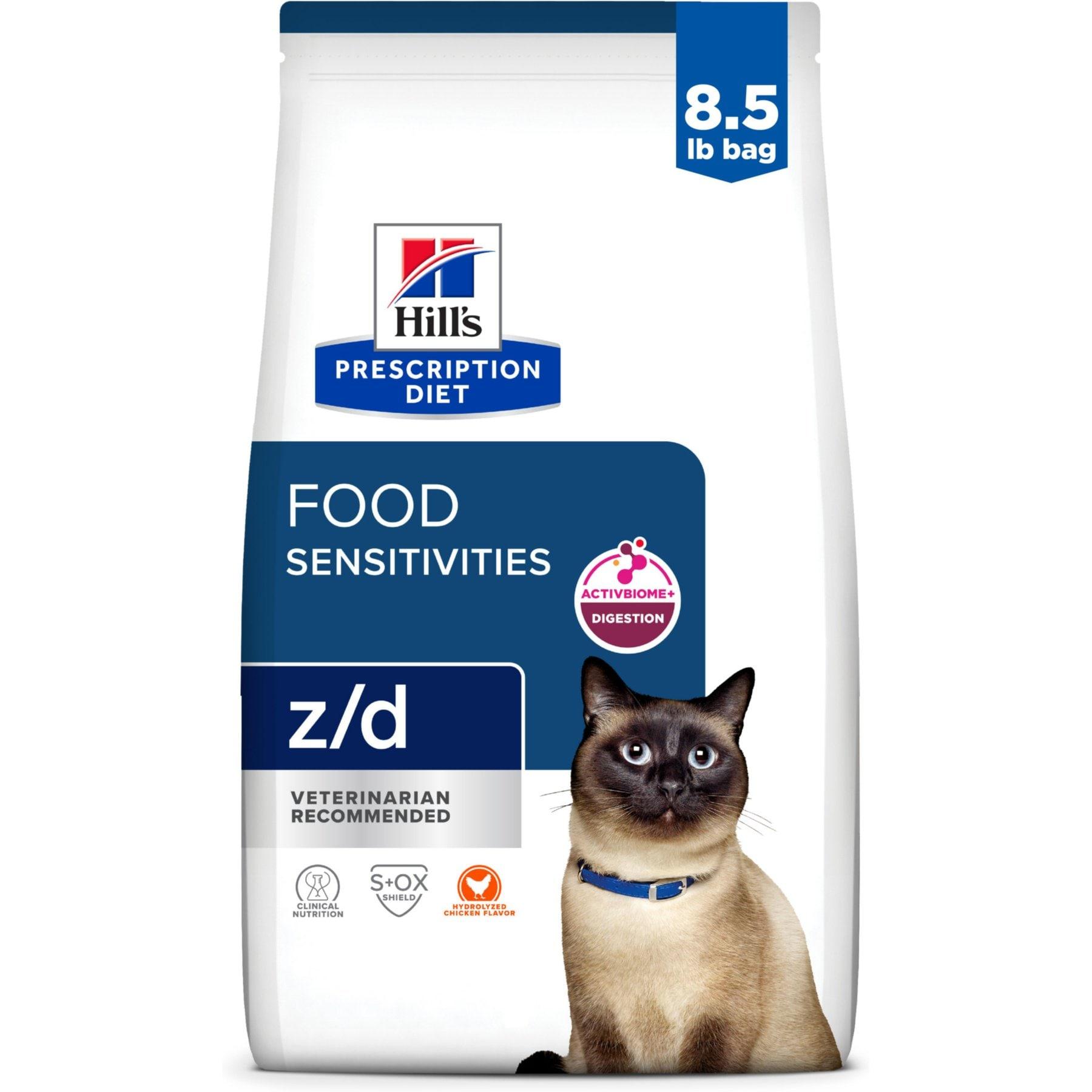
A veterinary hydrolyzed chicken liver dry food, a second-maker option when a cat needs a different hydrolyzed recipe.
Webvet may earn a commission when you click through to Chewy, at no extra cost to you.
Hill's Prescription Diet z/d Feline Low Sensitivity Cat Food, 8.5-lb is Hill's z/d cat food in dry form. Hill's current z/d dry page lists brewers rice, hydrolyzed chicken liver, and rice protein concentrate first, 385 kcal per cup (3,847 kcal per kg), and AAFCO feeding tests for adult maintenance. Hill's says the proteins are highly hydrolyzed and broken down to avoid detection by the immune system.
- Protein: hydrolyzed chicken liver, a different source from Royal Canin's soy.
- Calories: higher per cup than HP, so the measured portion matters.
- Who should skip it: kittens, and cats whose vet wants a soy-based or amino acid-based diet instead.
- Price: listed at $84.99 on Chewy when checked in November 2026.
Hill's hydrolyzed diets sit in its Prescription Diet line. Hill's Science Diet sensitive formulas are over-the-counter foods with intact protein, not hydrolyzed.
Hill's Prescription Diet z/d Feline Ultra Cat Food: best veterinary hydrolyzed wet food
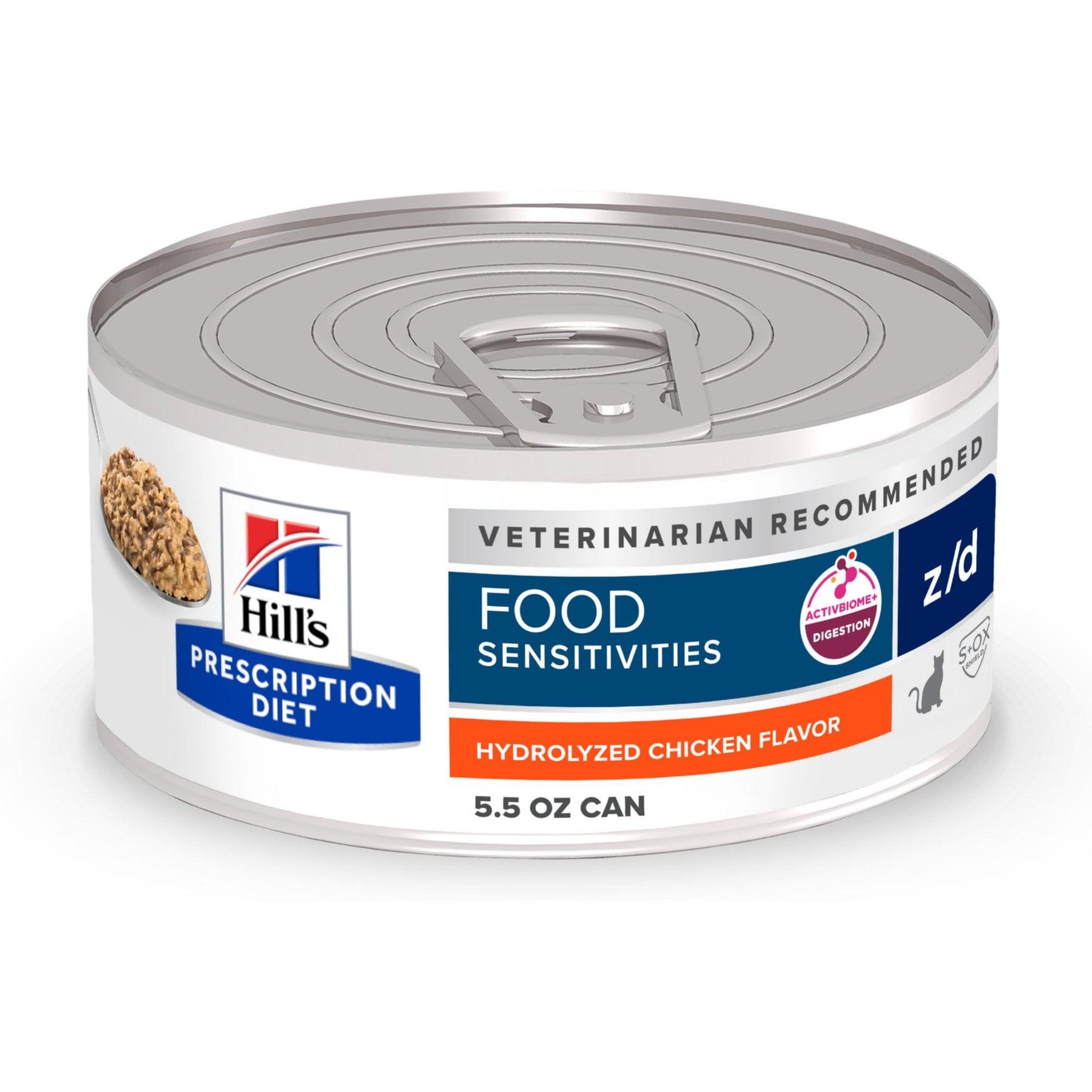
A canned hydrolyzed diet for cats on an elimination trial that eat better on wet food.
Webvet may earn a commission when you click through to Chewy, at no extra cost to you.
Hill's Prescription Diet z/d Feline Ultra Cat Food, 5.5-oz, 24 ct is the canned version of z/d. Hill's lists hydrolyzed chicken liver, water, and corn starch as the first three ingredients and 173 kcal per can, with AAFCO feeding tests for adult maintenance.
- Form: wet food in 5.5-oz cans for cats that prefer canned food.
- Pairing: it shares its hydrolyzed protein with z/d dry, so a vet can let a cat eat both during a trial.
- Who should skip it: kittens, and owners who need a lower-cost case size.
- Price: listed at $101.99 on Chewy when checked in November 2026 for 24 cans.
Purina Veterinary Diets HA Hypoallergenic Dry Cat Food: best veterinary diet to switch to
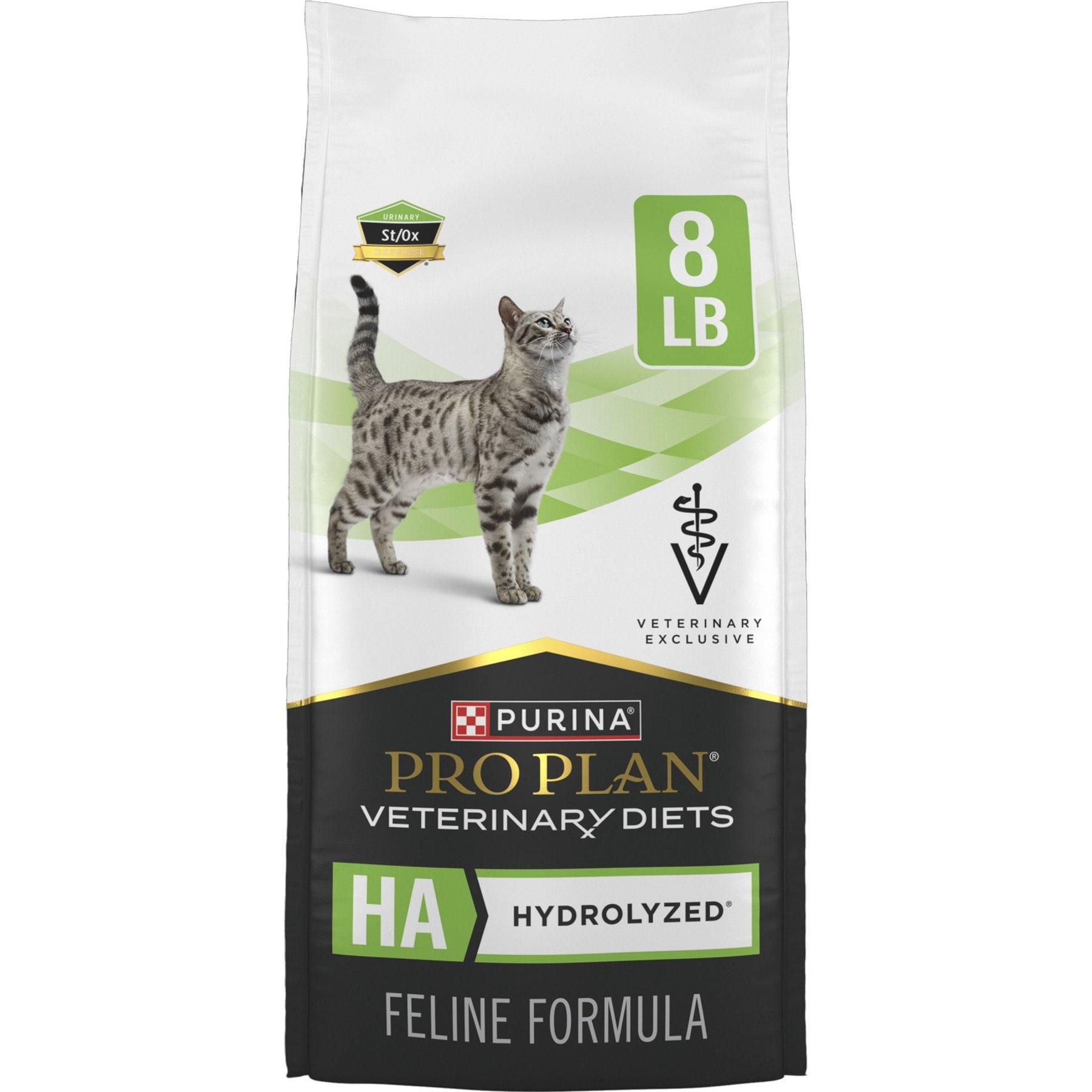
A third maker's hydrolyzed dry diet a vet can switch to when a cat refuses or does not respond to the first one.
Webvet may earn a commission when you click through to Chewy, at no extra cost to you.
Purina Veterinary Diets HA Hypoallergenic Dry Cat Food, 8-lb bag is the Purina HA cat food that VCA names alongside Hill's z/d and Royal Canin HP as an example of a veterinary hydrolyzed diet. Chewy's catalog describes it as made with simple proteins and low-allergen carbohydrates to minimize the risk of food allergic reactions.
A cat that turns down one diet has options. VCA Canada notes that cats who don't do well on one hydrolyzed food often respond better on a different hydrolyzed diet, so a third maker's recipe gives a vet somewhere to go.
- Who it suits: adult cats whose vet wants to switch from another maker's hydrolyzed diet.
- Who should skip it: any cat the vet has not yet assessed; it is a therapeutic diet.
- Price: listed at $79.99 on Chewy when checked in November 2026.
Royal Canin Veterinary Diet Adult Ultamino Dry Cat Food: best extensively hydrolyzed veterinary diet
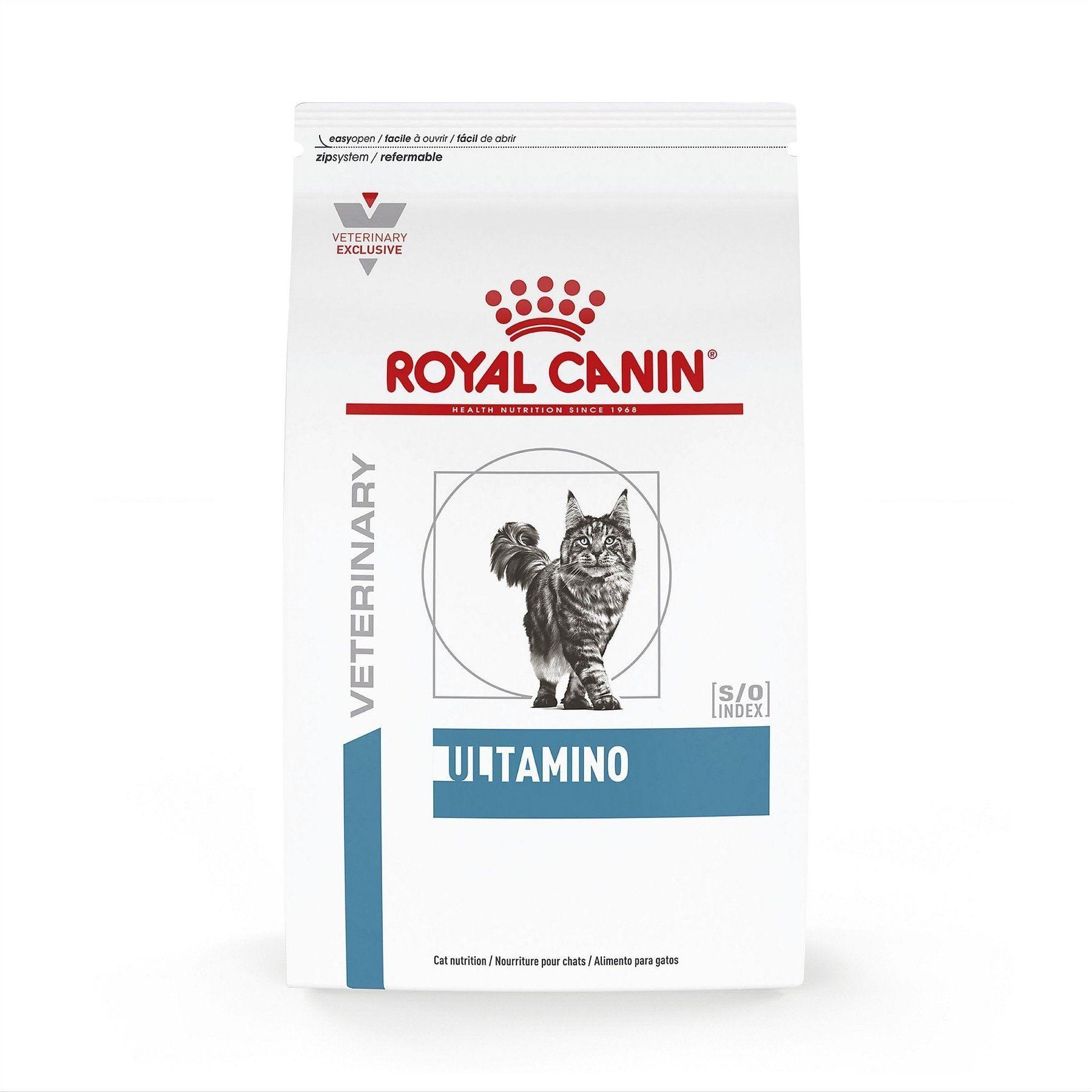
An extensively hydrolyzed, amino acid-level diet for cats that still react on a standard hydrolyzed food.
Webvet may earn a commission when you click through to Chewy, at no extra cost to you.
Royal Canin Veterinary Diet Adult Ultamino Dry Cat Food, 5.5-lb bag is the step a vet may take when a standard hydrolyzed diet is not enough. Royal Canin describes its protein as extensively hydrolyzed, made of oligopeptides and pure amino acids from a single source. The first ingredients are corn starch, hydrolyzed poultry by-products aggregate, and coconut oil, at 335 kcal per cup.
- Why it exists: Merck notes that some sensitized animals still react to hydrolyzed diets; Royal Canin says Ultamino helps reduce the risk of developing signs of food sensitivities.
- Who it suits: adult cats with severe or persistent signs on another hydrolyzed food.
- Who should skip it: cats that have not tried a standard hydrolyzed diet first, unless the vet says otherwise.
- Price: listed at $74.99 on Chewy when checked in November 2026.
Blue Buffalo Natural Veterinary Diet HF Hydrolyzed for Food Intolerance Salmon Wet Cat Food: best veterinary wet alternative
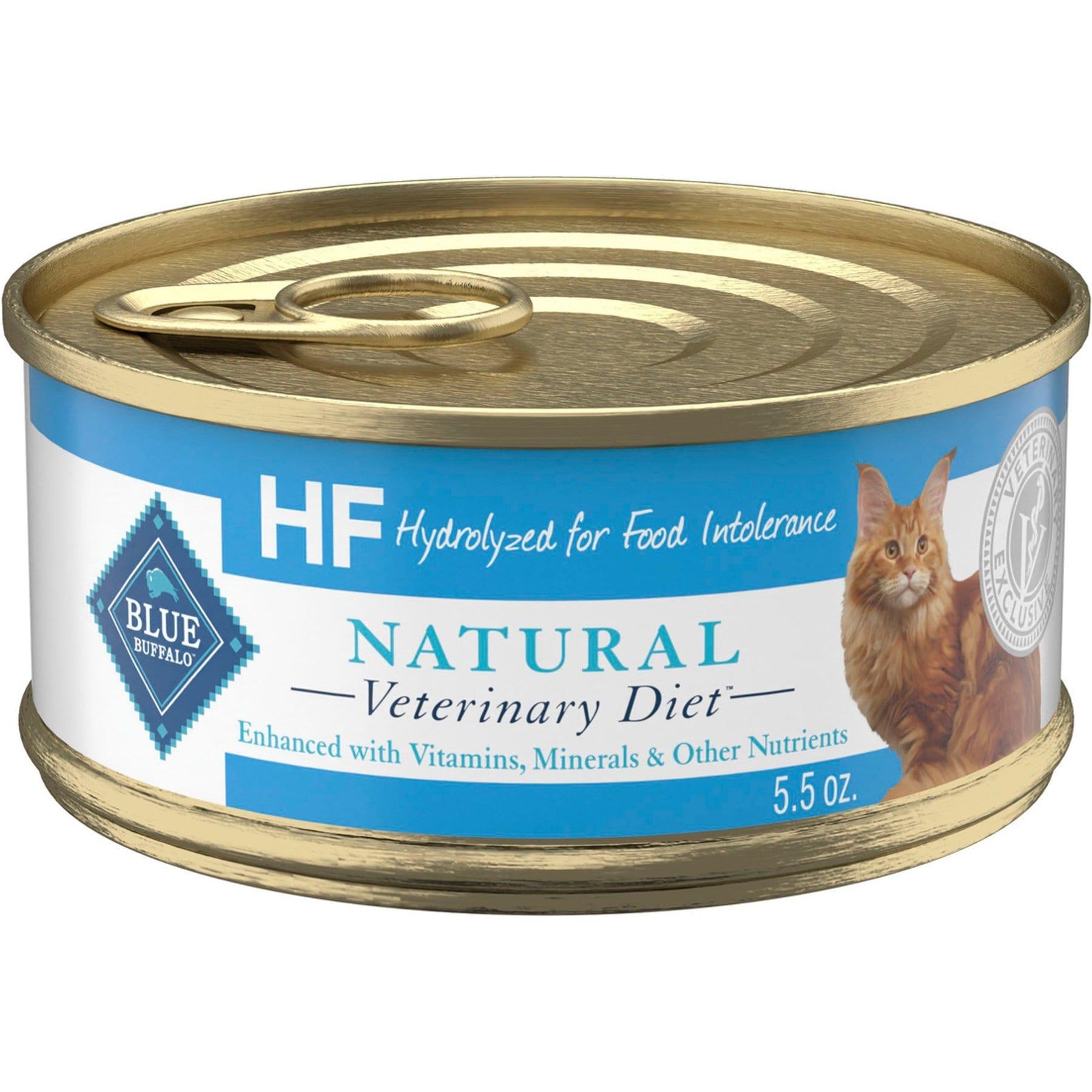
A hydrolyzed salmon canned diet, a wet option for cats whose vet wants a fish-based hydrolyzed protein.
Webvet may earn a commission when you click through to Chewy, at no extra cost to you.
Blue Buffalo Natural Veterinary Diet HF Hydrolyzed for Food Intolerance Salmon Wet Cat Food, 5.5-oz can, case of 4 is Blue Buffalo's hydrolyzed diet in canned form. Blue Buffalo describes its salmon hydrolysate as produced by enzymatic hydrolysis and says the diet is available exclusively through your veterinarian. Chewy's catalog lists hydrolyzed salmon as the first ingredient.
- Who it suits: cats that eat better on canned food and whose vet wants a fish-based hydrolyzed protein.
- Who should skip it: cats with a known fish reaction, unless the vet decides the hydrolysis is enough.
- Price: listed at $18.30 on Chewy when checked in November 2026 for four cans.
The final pick is a different kind of food. It is sold without a vet's authorization and contains intact protein, so it belongs with cats that have mild, undiagnosed skin or stomach concerns, not with a cat starting a trial.
Purina Pro Plan Sensitive Skin & Stomach Lamb & Rice Cat Food: best over-the-counter food for mild skin concerns
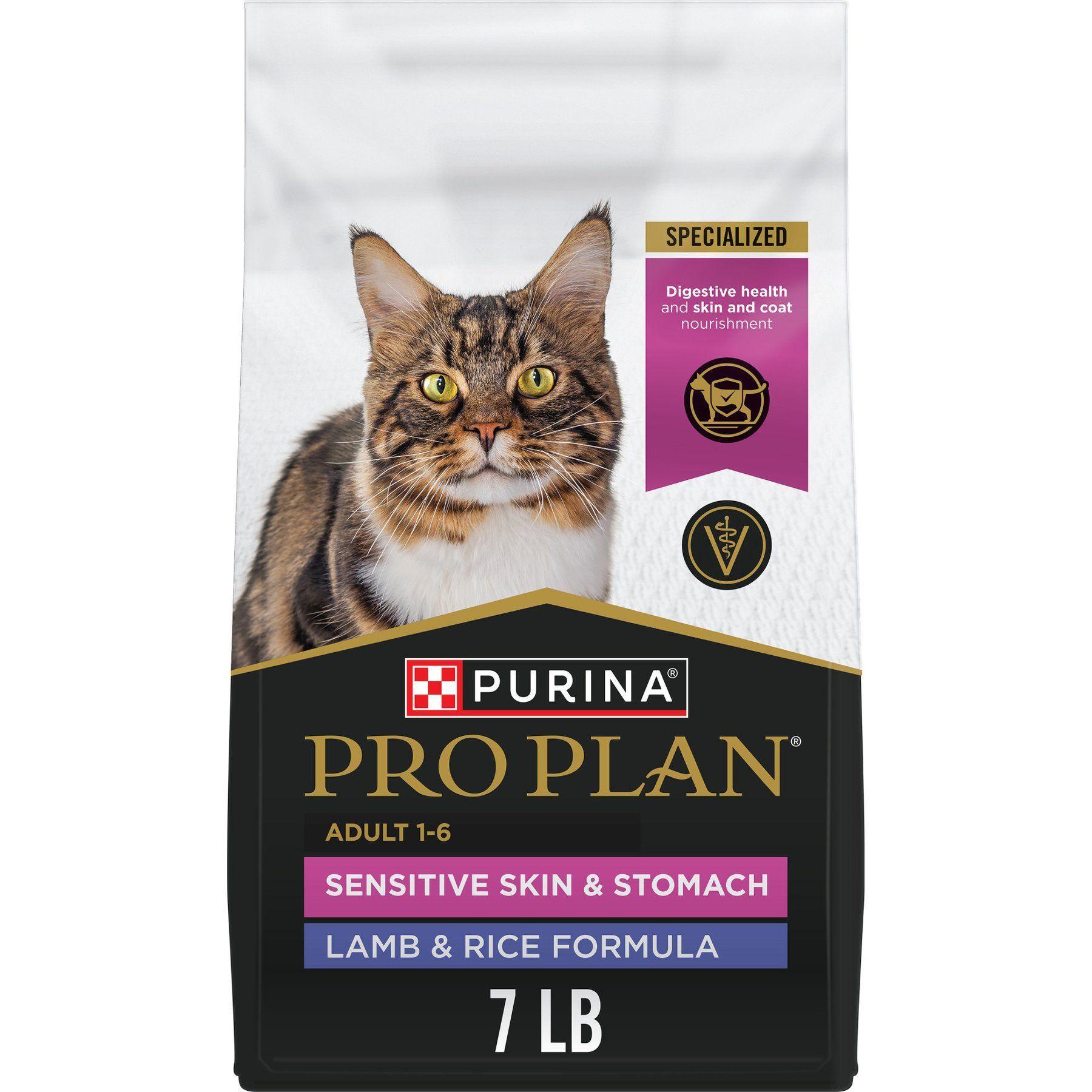
An over-the-counter lamb and rice food for mild skin or coat concerns; not hydrolyzed and not an elimination diet.
Webvet may earn a commission when you click through to Chewy, at no extra cost to you.
Purina Pro Plan Sensitive Skin & Stomach Lamb & Rice Cat Food, 7-lb is an everyday maintenance food with lamb as its named protein. It is not hydrolyzed, it is not made to veterinary diet quality control, and it cannot confirm or rule out a food allergy.
- Who it suits: adult cats with a dull coat or an occasionally sensitive stomach and no diagnosis.
- Who should skip it: any cat starting an elimination trial, and cats with ongoing itching, vomiting, or diarrhea that have not seen a vet.
- Price: listed at $28.08 on Chewy when checked in November 2026.
Hydrolyzed vs limited ingredient vs "hypoallergenic" cat food: which one fits your cat
For a cat with a suspected food allergy, the best hypoallergenic cat food is a veterinary hydrolyzed diet such as Royal Canin Hypoallergenic HP, Hill's z/d, or Purina HA, because the protein is broken down enough that most allergic cats do not react. A store-bought limited ingredient or sensitive skin food fits only a cat with mild, undiagnosed signs or a trigger the vet has already identified. Compare how each type handles the protein, its cross-contamination risk, and whether it works for an elimination trial:
| Food type | How the protein is handled | Cross-contamination risk | Suitable for an elimination trial | Vet authorization |
|---|---|---|---|---|
| Veterinary hydrolyzed diet | Protein split into fragments too small for the immune system to recognize | Low; made under strict veterinary diet quality control | Yes; preferred when the diet history is unclear | Required |
| Extensively hydrolyzed or amino acid-based veterinary diet | Protein broken down to oligopeptides and amino acids | Low; veterinary diet quality control | Yes; often used when a standard hydrolyzed diet fails | Required |
| Over-the-counter limited ingredient food | Intact protein, usually one named source | Higher; studies found undeclared proteins in limited ingredient diets | No; contaminant proteins can skew the result | Not required |
| Over-the-counter sensitive skin or "hypoallergenic" food | Intact protein, often a common source like lamb, salmon, or chicken | Higher; not made to veterinary diet quality control | No | Not required |
The right food depends on which allergy the cat has. Food changes help a food allergy; they do not fix itching caused by fleas or environmental allergies, which is why the vet rules those out first.
"Hypoallergenic" on a store label is a marketing word, not a test result. What matters for a cat with a suspected food allergy is how the protein is handled and how carefully the food is made, which is where veterinary diets and store foods part ways.
NC State says prescription hydrolyzed and novel protein diets have far stricter quality control, while over-the-counter diets can contain contaminant proteins that may skew an elimination trial. Cross-contamination is the reason a pet store food labeled hypoallergenic can look right on paper and still fail a trial.

Limited ingredient food versus a hydrolyzed diet
A limited ingredient food often uses one intact protein the cat may never have eaten, a novel protein such as rabbit or kangaroo. That approach can work, but it depends on knowing everything the cat has eaten before. NC State adds that cross-reactions between similar proteins can occur even when a protein is new to the cat.
A hydrolyzed diet avoids that guesswork; NC State says choosing one can take the guesswork out of a pet's diet history. Tufts Petfoodology makes the same point from the other side: novel ingredient diets are not inherently less allergenic; they are only novel to that individual pet.
WebVet's guide to limited ingredient cat food covers the over-the-counter options for cats whose trigger is already known.
Alternatives to Royal Canin hydrolyzed protein cat food
The direct alternatives to Royal Canin HP are other veterinary hydrolyzed diets, not store foods. Makers with veterinary hydrolyzed lines include:
- Hill's Prescription Diet z/d, dry and canned, based on hydrolyzed chicken liver.
- Purina Pro Plan Veterinary Diets HA, a dry hydrolyzed formula.
- Blue Buffalo Natural Veterinary Diet HF, a hydrolyzed salmon canned food.
- Royal Canin Ultamino, for cats that need protein broken down further than HP.
An over-the-counter food such as Purina Pro Plan Sensitive Skin & Stomach Lamb & Rice Cat Food, 7-lb is not an alternative to a hydrolyzed protein cat food during a trial. It can be a maintenance food later if the vet confirms the cat tolerates its ingredients.
What is the best source of protein for a cat?
Animal protein is the best source of protein for a cat. The Merck Veterinary Manual classes cats as obligate carnivores whose needs, including taurine, arginine, and vitamin A, can only be met by a diet with animal tissues. For a food-allergic cat, the best source is whichever protein, intact or hydrolyzed, the cat does not react to.
What wet cat food do veterinary professionals recommend?
For a cat with a suspected food allergy, vets recommend a veterinary hydrolyzed or novel protein wet diet chosen for that cat, not a single brand for every cat. VCA lists Hill's z/d, Royal Canin Hypoallergenic Hydrolyzed Protein, and Purina HA as hydrolyzed examples. For healthy cats, see WebVet's roundup of the best wet cat food.
How a food elimination trial works with a hydrolyzed diet
An elimination diet trial is the only reliable way to diagnose a food allergy in a cat. VCA puts it plainly: during the trial, the chosen elimination diet is the only thing that crosses your cat's lips. Blood, saliva, and skin tests are not a shortcut; Tufts calls blood and saliva tests highly inaccurate, and NC State says skin and blood tests don't accurately identify food allergens.

Running an elimination trial, step by step
- Vet exam first. The vet looks for other causes of the signs, such as fleas or environmental allergies, and chooses the hydrolyzed or novel protein diet.
- Switch to the trial diet. The cat eats only that diet and water for the full trial.
- Remove every other food source. Treats, flavored medications, supplements, dental chews, and other pets' food all count.
- Keep a daily log. Note itching, skin, vomiting, and stool so the vet can compare before and after.
- Recheck with the vet. If signs improve, the vet plans a rechallenge with the old food or a single protein.
- Watch for a flare. A return of signs after the rechallenge confirms the food allergy.
How long the trial lasts
Sources agree a trial runs for weeks, not days, but they give different minimums:
- NC State: 6 to 10 weeks of exclusive feeding, then a rechallenge.
- VCA: at least eight weeks, though improvement is often seen sooner.
- Cornell Feline Health Center: at least eight to 10 weeks of nothing but the diet and water, per its food allergy page.
- Tufts: at least 8 to 12 weeks for skin issues and 3 to 4 weeks for digestive issues.
- Merck: a literature review found a minimum of 10 weeks might be needed to identify 95% of food-allergic patients.
The research behind those numbers is a 2015 review by Olivry and colleagues, which found more than 80% of cats in remission by six weeks and over 90% by eight, and concluded that trials should last at least 8 weeks. Your vet sets the length for your cat.
The rechallenge
After the trial, the vet reintroduces the old food or one protein at a time. VCA says signs typically return in one to three days but can take up to four weeks. A 2020 review by Olivry and Mueller found clinicians need to wait 7 days for more than 90% of food-allergic cats to flare. NC State says a flare of itching can take up to two weeks.
Hydrolyzed protein cat food for IBD and chronic gut signs
Hydrolyzed diets are also used for cats with chronic enteropathy, the umbrella term that includes inflammatory bowel disease. A 2022 study in Scientific Reports notes this category of diets is frequently used for chronic enteropathy in cats. In that study, 33 cats ate a hydrolyzed diet for six weeks: 15 (45%) had full remission and 18 (55%) had partial or no response.
Cats that improve on diet alone are described as having food-responsive enteropathy. For gut cases, Royal Canin also makes a Feline Gastrointestinal Hydrolyzed Protein dry cat food, which its page lists as starting with hydrolyzed soy protein at about 348 kcal per cup. Which gut diet fits is the vet's call.
Probiotics and supplements change the trial, so ask before adding one. WebVet's guide to cat probiotics explains what they can do once a diagnosis is in place.
Over-the-counter options: what they can and cannot do for a cat with food allergies
None of these makers sells a non prescription hydrolyzed protein cat food: every hydrolyzed diet in their veterinary lines, wet or dry, needs a vet's authorization. The foods sold without one are sensitive skin, limited ingredient, or "hypoallergenic" formulas, which work differently.
What over-the-counter foods cannot promise
The evidence on store foods is specific. Tufts Petfoodology reports that several studies found high rates of contamination with common proteins in over-the-counter "allergy" and limited ingredient diets. Contamination is not limited to store brands: a 2018 study in BMC Veterinary Research found undeclared animal protein in 6 of 11 limited-antigen wet dog and cat diets sold through clinics, while the one hydrolyzed diet tested was clean.
An over-the-counter food cannot promise:
- Freedom from trace proteins that are not on the label.
- Protein broken down below the immune system's notice; the protein is intact.
- A valid trial result, since contaminant proteins can skew it.
- Relief for a cat that is allergic to its named protein.
What over-the-counter foods can do
For a cat with no diagnosis and mild signs, a sensitive skin and stomach food can be a reasonable everyday diet. Hill's Science Diet Adult Sensitive Stomach & Skin Dry Cat Food, 7-lb is a chicken and rice recipe with prebiotic fiber, listed at $38.99 on Chewy when checked in November 2026. It is a maintenance food, not an elimination diet.
Purina Pro Plan Sensitive Skin & Stomach Lamb & Rice Cat Food, 7-lb fills the same role with lamb as the named protein. Either can follow a confirmed diagnosis if the vet agrees the cat tolerates the ingredients. For cats whose main problem is the gut rather than the skin, see WebVet's guide to cat food for sensitive stomach.
The same holds for hydrolyzed protein wet cat food: these makers sell no non prescription version. If a cat needs canned food during a trial, the vet can authorize a canned hydrolyzed diet such as z/d or Blue Buffalo HF instead.
When itching, vomiting, or diarrhea needs a vet before any food change
Food allergy is only one cause of itching and stomach upset, and changing foods first can delay the real diagnosis. The Cornell Feline Health Center says that when the signs of a food allergy appear, a cat should receive prompt veterinary care, because gut signs can lead to food avoidance and weight loss.

Book a vet visit before any food change when you see:
- Itching that keeps going, scabs, hair loss, or overgrooming.
- Vomiting more than once a week, or vomiting with lethargy, weakness, or a decreased appetite, which Cornell says should be evaluated promptly.
- Diarrhea with poor appetite, lethargy, or vomiting, or stool with mucus or blood; Cornell's diarrhea page says a vet should examine the cat as soon as the signs are noticed.
- A cat that stops eating, even on a new diet.
A cat that refuses food is urgent. Cornell explains that hepatic lipidosis, a serious liver condition, is almost always accompanied or preceded by a cat not eating. Never let a cat go without food while waiting for it to accept a new diet.
Cornell also warns that some over-the-counter medications can be harmful to cats. WebVet's guides to a cat throwing up and why your cat has diarrhea and what to do about it cover what to watch while you wait for the appointment.
How to switch to a hydrolyzed diet: wet or dry, treats, and long-term feeding
Most cats start on the hydrolyzed diet the vet chooses, and the switch is part of the trial. Tufts Petfoodology recommends changing foods over at least one week to let the digestive tract adjust, and notes some pets need 4 to 6 weeks. Ask the vet whether the trial clock starts on day one or once the old food is gone.

Switching without breaking the trial
- Offer the foods side by side. Tufts suggests this can work better for cats than mixing.
- Remove untouched new food after an hour and offer it fresh at the next meal, as Tufts advises.
- Measure portions from the label calories; WebVet's guide to how much to feed a cat explains how to set a daily amount.
- Call the vet if the cat refuses the diet. A different hydrolyzed food is often the fix.
Wet or dry hydrolyzed protein cat food
Both forms work, and a vet can authorize either. Dry options include Royal Canin HP, Hill's z/d dry, Purina HA, and Ultamino. Canned options include Hill's Prescription Diet z/d Feline Ultra Cat Food, 5.5-oz, 24 ct and Blue Buffalo Natural Veterinary Diet HF Hydrolyzed for Food Intolerance Salmon Wet Cat Food, 5.5-oz can, case of 4.
Does Royal Canin make a hydrolyzed protein wet cat food? Royal Canin's US page for Hydrolyzed Protein HP lists dry food only, so ask the vet for current canned options. Royal Canin also pairs hydrolyzed protein with other therapeutic goals, such as its Multifunction Renal Support + Hydrolyzed Protein dry cat food. Satiety or Urinary SO combinations with hydrolyzed protein are a question for the vet, who can check what is currently made.
Whether Purina HA comes in a canned version is another question for the vet. NC State notes that if a cat needs softer food, the hydrolyzed diet may come in a canned version, or water can be added to the kibble.
Treats that keep a trial intact
Treats are the most common way a trial gets broken. Tufts lists treats, rawhides, dental chews and toothpaste, table food, supplements, and flavored medications as things the trial must control. Merck adds that chewable heartworm and flea products often contain beef, pork, or soy protein.
Trial-safe treat options, all with the vet's approval:
- Matching hydrolyzed treats. NC State says the companies that make prescription hydrolyzed diets also make compatible treats, such as Royal Canin Veterinary Diet Hydrolyzed Protein Cat Treats, 0.49-lb bag, made with hydrolyzed soy protein and listed at $9.49 on Chewy when checked in November 2026. They need a vet's authorization too.
- Kibble from the daily ration. NC State suggests setting aside part of the meal and using single pieces as treats.
- Canned diet as a treat for cats on the dry version of the same diet.
Long-term feeding
Food allergies cannot be cured, VCA says; they are managed by avoiding the trigger ingredients. After the rechallenge, some cats stay on the hydrolyzed diet for life, while others move to a food without their trigger protein. NC State says the answer is maybe: it depends on what the rechallenge shows.
Hydrolyzed protein cat food questions
Frequently Asked Questions
Can you buy hydrolyzed protein cat food without a vet prescription?
Not the veterinary diets. Hydrolyzed diets from Royal Canin, Hill's, Purina, and Blue Buffalo need a prescription or authorization from a veterinarian, and Chewy asks for it at checkout. Blue Buffalo says its HF diet is available exclusively through your veterinarian. Store foods labeled for sensitive skin are sold freely but are not hydrolyzed.
Is there a wet hydrolyzed protein cat food?
Yes. Hill's z/d comes as a canned wet food at 173 kcal per can, and Blue Buffalo's HF salmon formula is also canned. If a cat prefers wet food but is on a dry diet, NC State notes that water can be added to the kibble to soften it.
Does hydrolyzed protein cat food have side effects?
Few side effects are documented. The main limit, per Merck, is that some sensitized cats still react to a hydrolyzed diet. Some cats also refuse a new food. Watch stool and appetite during the switch, and call the vet if stool stays loose, contains blood, or the cat eats less.
Is hypoallergenic cat food the same as hydrolyzed protein cat food?
Not always. Some veterinary diets use both words, but a "hypoallergenic" label on a store food does not mean the protein is hydrolyzed. A hydrolyzed diet has its protein broken into tiny fragments and is made under veterinary diet quality control; a store food usually contains intact protein.
Can a cat with kidney disease eat a hydrolyzed protein diet?
Yes, under a veterinarian's direction. Royal Canin makes Renal Support + Hydrolyzed Protein with low phosphorus and restricted protein, and Hill's makes k/d + z/d for kidney care plus food sensitivities. Never start a kidney diet without a diagnosis; the veterinarian matches the diet to the cat's kidney stage.
Veterinarian · BVMS MRCVS
Dr. Pippa Elliott, BVMS, MRCVS, is a veterinarian with nearly 30 years of experience in companion animal practice. Dr. Elliott earned her Bachelor of Veterinary Medicine and Surgery from the University of Glasgow. She was also designated a Member of the Royal College of Veterinary Surgeons. Married with 2 grown-up kids, Dr. Elliott has a naughty Puggle named Poggle, 3 cats and a bearded dragon.
Related reading

Limited Ingredient Cat Food: Best Picks and When It Helps

Best Dry Cat Food: Vet-Reviewed Picks and How to Choose

Best Wet Cat Food: Vet-Reviewed Picks and How to Choose
