Limited Ingredient Cat Food: Best Picks and When It Helps
Limited ingredient cat food uses one main animal protein and a short ingredient list. It can suit a cat with a suspected food sensitivity, but a true elimination trial usually needs a vet-directed diet. What it is, how to choose, and picks.

BVMS MRCVS

This article contains affiliate links. Webvet may earn a commission when you buy through them, at no extra cost to you.
Limited ingredient cat food is a complete diet built around one main animal protein and a short ingredient list. It can help a cat with a suspected food sensitivity, but only if that protein is new to the cat, and it is not the same thing as the veterinary diet used to diagnose a food allergy.
That distinction decides what to buy. An over-the-counter limited ingredient cat food suits a cat with mild, vet-checked digestive or skin trouble and no confirmed allergy. A cat that needs a formal elimination diet trial is better served by a veterinary novel protein or hydrolyzed protein diet, because retail foods can carry traces of other proteins.
Limited ingredient cat food: what it is, when it helps, and when a vet diet is the better choice
A limited ingredient food reduces the number of ingredients a sensitive cat meets at each meal, so a suspected trigger is easier to avoid. A food allergy, in the words of VCA Animal Hospitals, is "an adverse reaction caused by the immune system." Vets also use the broader term adverse food reaction, which covers allergy and other reactions to an ingredient.
The benefits of limited ingredient cat food are practical rather than magical. Fewer ingredients make the label easier to check against a cat's diet history, a single novel protein avoids the proteins the cat has already eaten, and owners can rotate away from a suspected trigger without giving up a complete and balanced diet.
- 1Start with what limited ingredient means on a label: one main animal protein, a short list, and a complete-and-balanced statement, not a regulated promise.
- 2Choosing a protein the cat has not eaten matters more than the brand; check every past food and treat first.
- 3Over-the-counter limited ingredient foods can carry traces of other proteins, so they are not a diagnostic food trial.
- 4A suspected food allergy is confirmed with an elimination trial of 8 weeks or longer run with your vet.
- 5Itching, repeated vomiting, or diarrhea that does not settle needs a veterinarian, not another food switch.

When an over-the-counter limited ingredient food helps
Is limited ingredient cat food better than a regular food? For most healthy cats it offers no special advantage. It earns its place when a cat seems to react to something in its current food and the vet has already ruled out the more common causes of itching and stomach upset.
Those other causes come first for a reason. Tufts Petfoodology notes that flea allergies and environmental allergies are "MUCH more common in pets than food allergies." The overview of allergies in cats and the role of food and fleas walks through how vets sort them apart.
A limited ingredient food is a reasonable choice when:
- Your vet has checked the cat and suggested a simpler diet for mild, ongoing digestive or skin signs.
- The cat has already been tested and treated for fleas and other parasites.
- You want a single protein the cat has not eaten, from a food you can buy and feed long term.
- The cat finished a vet-run food trial and the vet now wants a retail food without the trigger protein.
When a veterinary diet is the better choice
A veterinary diet is the better choice whenever the goal is a diagnosis. VCA explains that retail pet foods "are not manufactured with the extreme health and safety protocols to prevent cross-contamination" that veterinary diets use, and Tufts Petfoodology reports studies showing "high rates of contamination with common proteins in over-the-counter" foods.
The Merck Veterinary Manual makes the same point from the label side: ruling out an allergy to a certain ingredient "may be best done using a therapeutic diet." Veterinary options include novel protein diets such as Hill's Prescription Diet d/d Venison & Green Pea Cat Food, 8.5-lb bag, which needs a veterinarian's authorization to buy.
Choose the veterinary route when the cat has:
- Itching that lasts for weeks or returns year after year.
- Vomiting or diarrhea that keeps coming back despite a simple diet.
- A long, uncertain diet history, so no retail protein can be counted on as new.
- A previous over-the-counter food change that helped for a while, then stopped working.
Our picks: the best limited ingredient cat food
The best limited ingredient cat foods for most owners are Instinct's rabbit recipes, Natural Balance's salmon and duck recipes, Blue Buffalo Basics duck and potato for a budget, and KOHA venison pate, with Hill's d/d as the veterinary option. Each is a single protein cat food judged on the label and the maker, not on taste or testing. Over-the-counter foods and veterinary diets are different categories, and a veterinary novel protein diet needs a vet's sign-off. Before buying, check the bag or can for the complete-and-balanced statement and the life stage it covers, and ask the vet before feeding a kitten a limited ingredient formula.
Highest rated is not the same as right for your cat. The best choice for a given cat is the one whose protein your cat has never eaten, in a form your cat will accept.
Owners who want details the label leaves out, such as phosphorus level or whether cans are BPA-free, can ask the maker directly; the WSAVA Global Nutrition Committee says companies should answer questions about "the level of specific nutrients not on the label."
Over-the-counter limited ingredient picks
Instinct Limited Ingredient Diet Real Rabbit Recipe Grain-Free Dry Cat Food: best novel-protein dry food
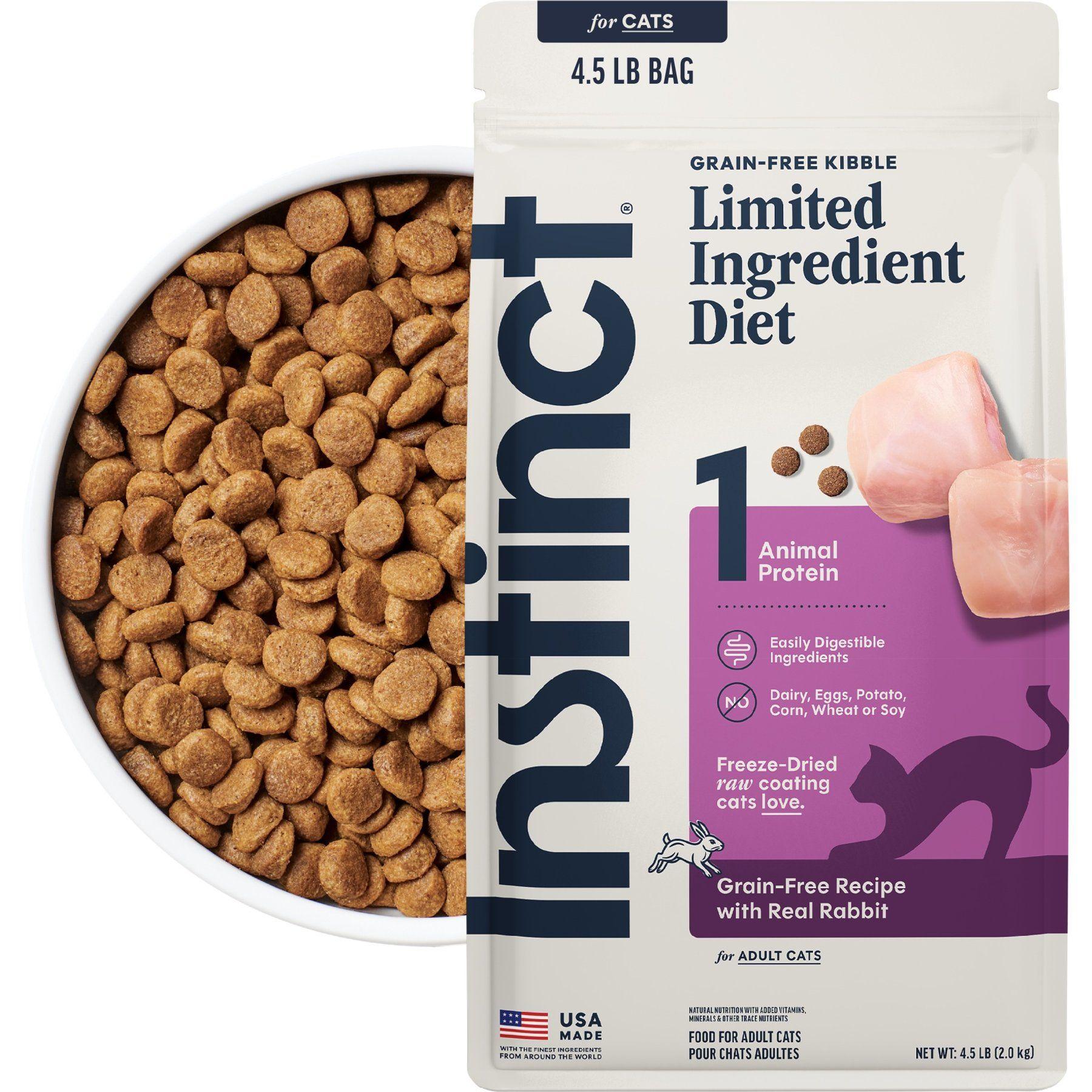
A rabbit-only dry food for cats that have never eaten rabbit and need a simple, single-protein kibble.
Webvet may earn a commission when you click through to Chewy, at no extra cost to you.
The Instinct Limited Ingredient Diet Real Rabbit Recipe Grain-Free Dry Cat Food, 4.5-lb bag uses farm-raised rabbit as the first and only animal protein, according to its Chewy listing, with a deliberately short ingredient list aimed at cats with food sensitivities. It is listed at $36.99 on Chewy when checked in November 2026.
Rabbit is the reason this food leads the list. Beef, fish, and chicken are the proteins the Merck Veterinary Manual names as the most common feline food allergens, so a cat raised on those foods may never have eaten rabbit; the diet history confirms it.
The grain-free recipe is a dry kibble, so pair it with fresh water at every meal.
- Suits: cats with no rabbit in their diet history, owners who prefer dry food, cats a vet has cleared for an over-the-counter trial of a simpler diet.
- Skip it if: the cat has eaten rabbit before, or the vet wants a formal elimination trial; the same Instinct rabbit recipe in a pate is the wet alternative.
Natural Balance Limited Ingredient Grain-Free Salmon & Green Pea Recipe Dry Cat Food: best fish-based dry food
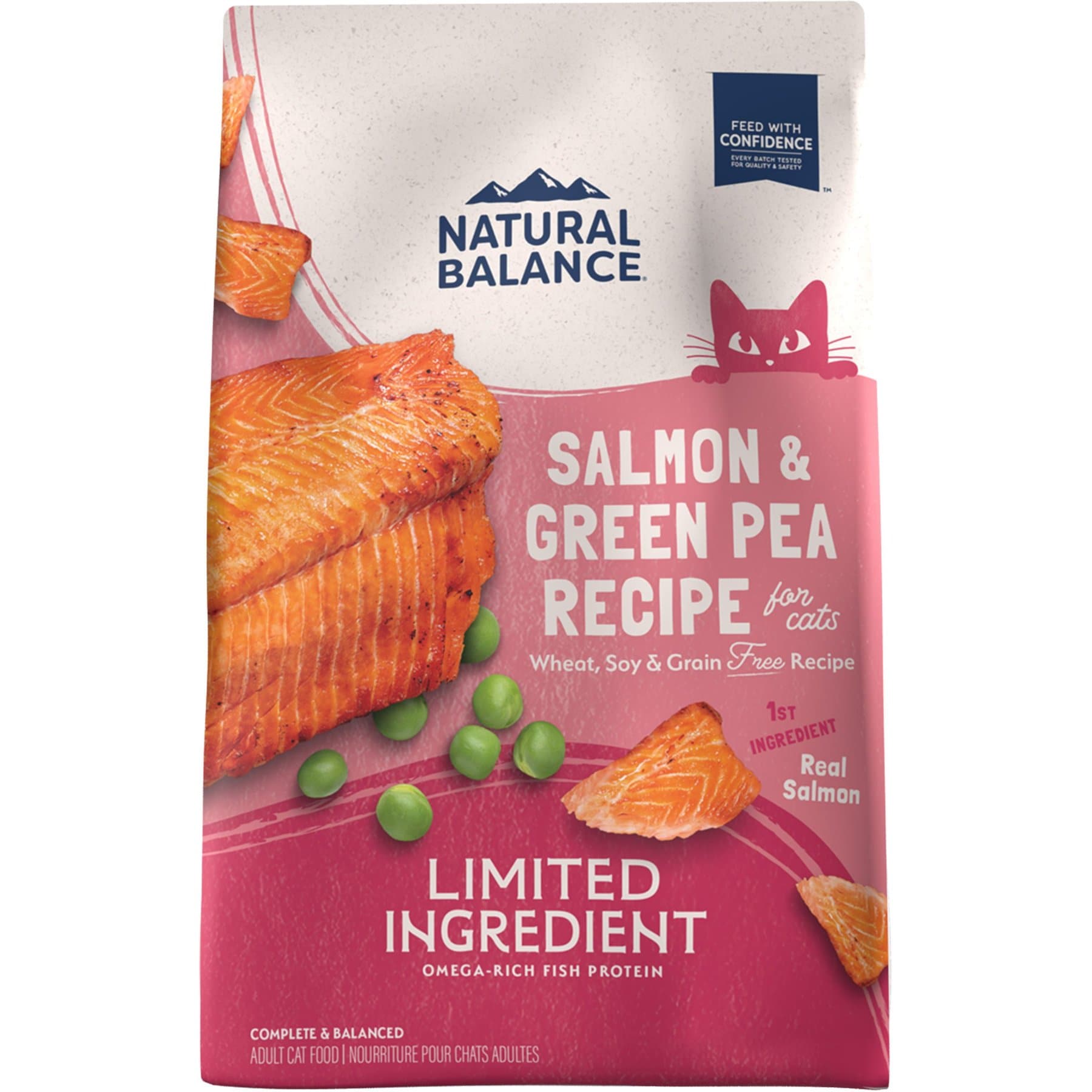
A salmon-only kibble with peas, chickpeas, and lentils for cats with no history of fish reactions.
Webvet may earn a commission when you click through to Chewy, at no extra cost to you.
The Natural Balance Limited Ingredient Grain-Free Salmon & Green Pea Recipe Dry Cat Food, 4-lb bag uses salmon as the only animal protein, according to its listing, with green peas, chickpeas, and lentils for fiber plus added vitamins and minerals. It is listed at $27.98 on Chewy when checked in November 2026.
This recipe fits a narrower group than its name suggests. Fish is one of the two proteins most often tied to food reactions in cats, so it is a sensible single-protein choice only for a cat whose diet history contains no fish. For a cat that has eaten tuna or salmon foods, pick rabbit, duck, or venison instead.
- Suits: cats that do well on fish and need fewer ingredients, owners who prefer dry food.
- Skip it if: the cat has eaten fish-based foods or treats, or reacts to legumes such as peas and lentils.
Blue Buffalo Basics Limited Ingredient Duck & Potato Dry Cat Food: best budget limited ingredient food
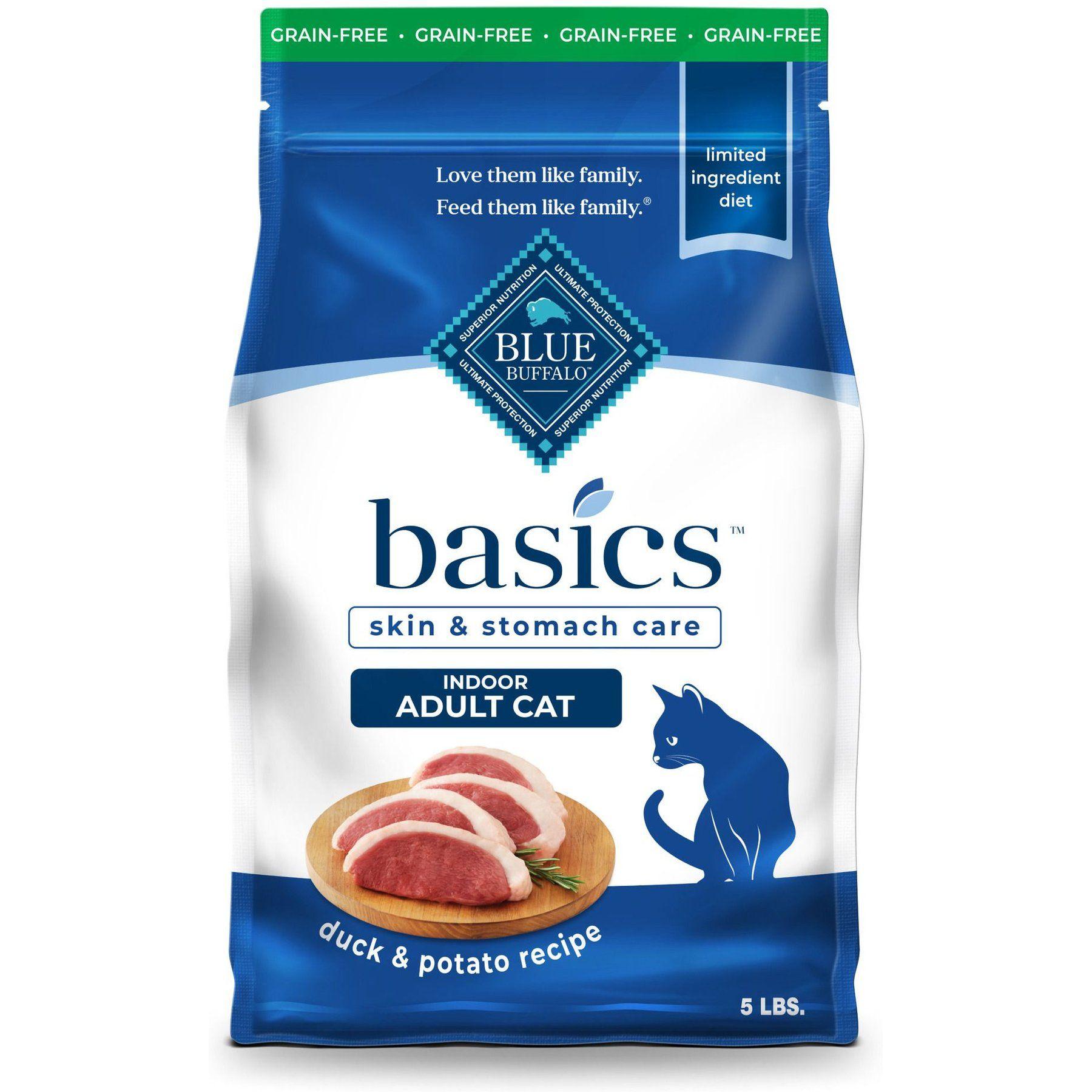
A duck-first dry food with pumpkin and pea fiber for owners who want a lower-cost single-protein kibble.
Webvet may earn a commission when you click through to Chewy, at no extra cost to you.
The Blue Buffalo Basics Limited Ingredient Duck & Potato Dry Cat Food 5-lb lists real duck as the first ingredient and a single animal protein source, with pea fiber and pumpkin, according to its listing. It is listed at $32.99 on Chewy when checked in November 2026 for a larger bag than the other dry picks.
This is the value option here. The duck and potato recipe is grain-free and described as an indoor formula with omega-3 and omega-6 fatty acids for skin and coat. Check the ingredient list for any second protein before buying.
- Suits: cats that have never eaten duck, indoor adults, households feeding on a budget.
- Skip it if: the cat has eaten duck before, or the vet wants a food made with veterinary contamination controls.
Natural Balance Limited Ingredient Reserve Duck & Green Pea Recipe Wet Cat Food: best limited ingredient wet food
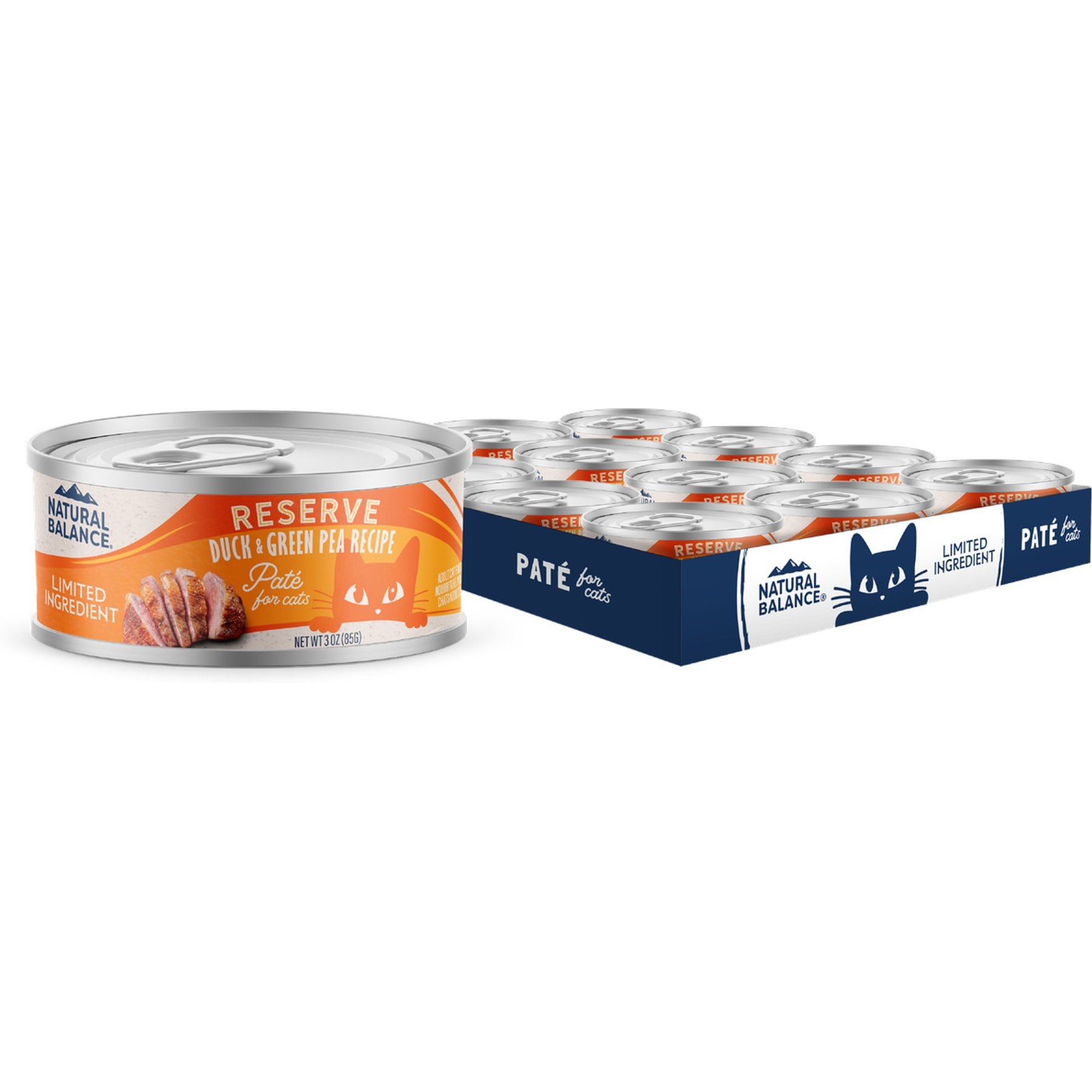
A duck-only canned food for sensitive cats that need more moisture than kibble provides.
Webvet may earn a commission when you click through to Chewy, at no extra cost to you.
The Natural Balance Limited Ingredient Reserve Duck & Green Pea Recipe Wet Cat Food, 3-oz can, case of 24 uses duck as the single animal protein and top ingredient, according to its listing, in a grain-free recipe with a short ingredient list. The case is listed at $54.72 on Chewy when checked in November 2026.
Wet food is the simplest way to add water to a cat's diet, since canned food carries far more moisture than kibble. This duck can is a good match for a cat already on a duck-based dry food that needs a canned partner with the same protein, so the diet stays single-protein across both bowls.
- Suits: cats that drink little, cats that prefer canned food, households pairing wet and dry duck recipes.
- Skip it if: the cat has eaten duck, or reacts to peas.
Instinct Limited Ingredient Diet Real Rabbit Recipe Grain-Free Pate Wet Cat Food: best small pack to test acceptance
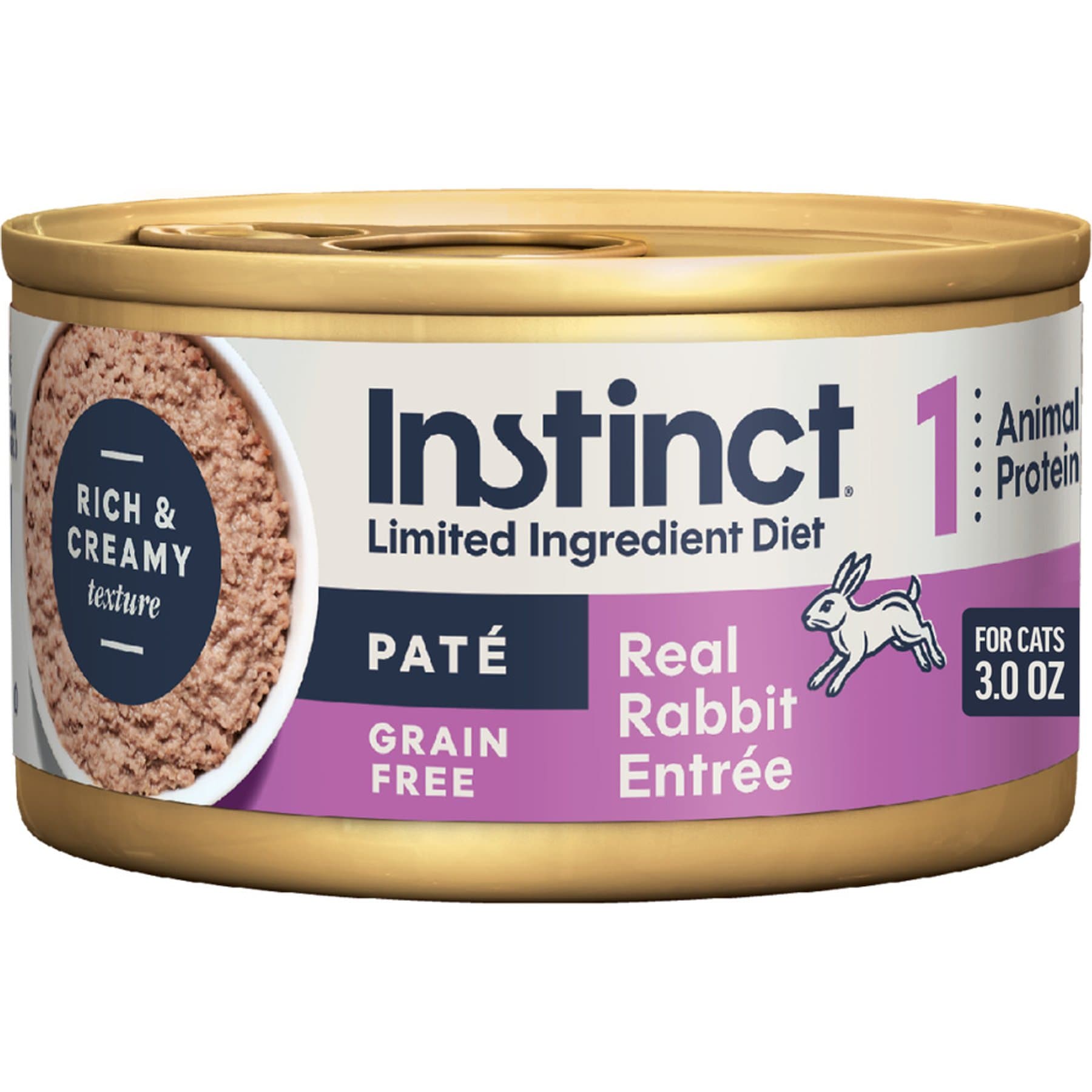
A four-can rabbit pate pack to see whether a picky cat will eat rabbit before buying a full case.
Webvet may earn a commission when you click through to Chewy, at no extra cost to you.
The Instinct Limited Ingredient Diet Real Rabbit Recipe Grain-Free Pate Wet Cat Food, 3-oz can, case of 4 is made with one animal protein and one vegetable, with real rabbit as the first ingredient, according to its listing. The four-can pack is listed at $12.99 on Chewy when checked in November 2026.
The small pack is the point. Cats can be stubborn about new proteins, and a four-can trial shows whether a cat will eat rabbit before an owner commits to a full case or the matching dry bag. As a smooth pate, it also suits cats that pick around chunks.
- Suits: picky eaters, owners pairing it with the Instinct rabbit kibble, cats that prefer pate.
- Skip it if: the cat has eaten rabbit before.
KOHA Limited Ingredient Diet Venison Entrée Grain-Free Paté Wet Cat Food: best premium novel-protein pate
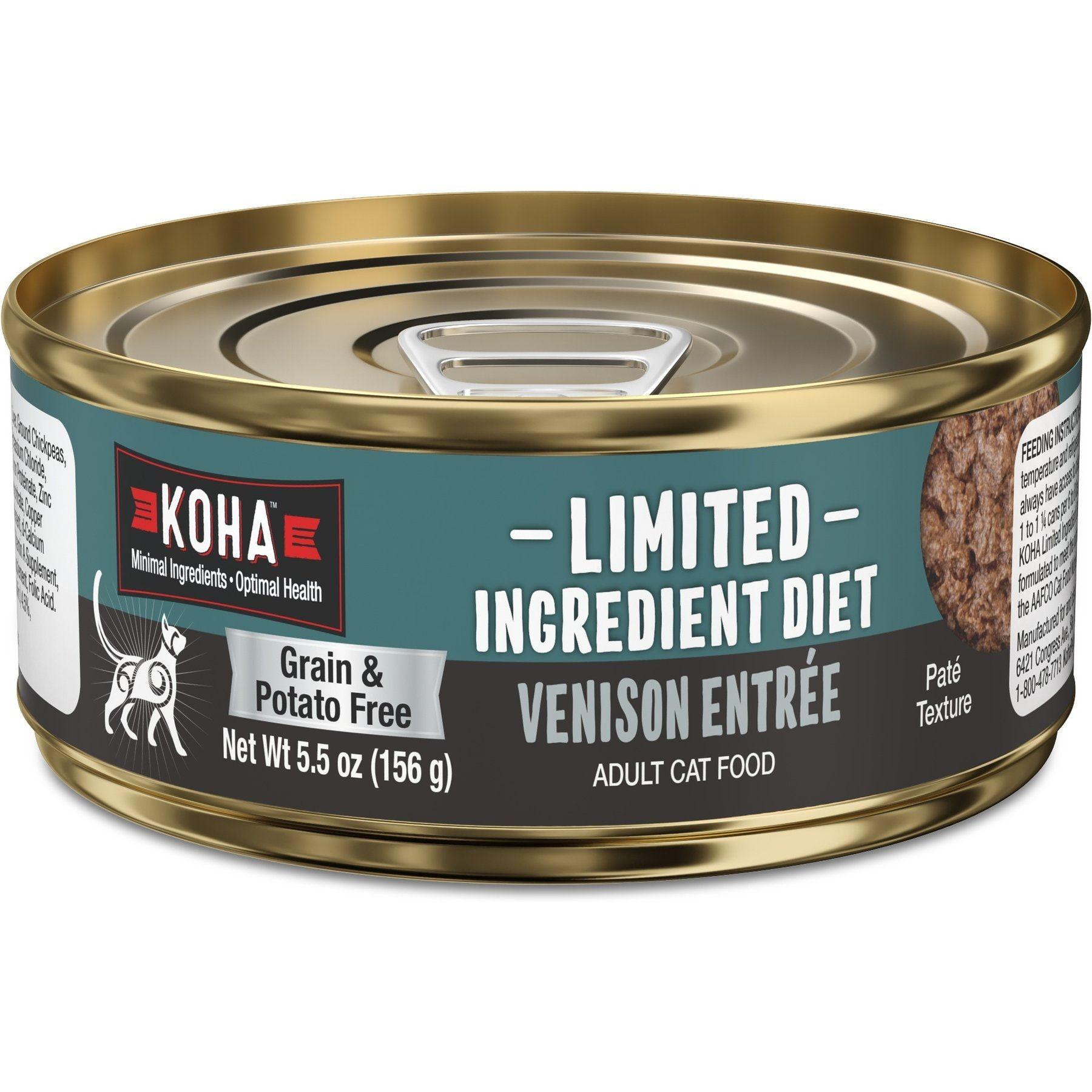
A venison-only pate for cats that have never eaten venison and need a wet single-protein food.
Webvet may earn a commission when you click through to Chewy, at no extra cost to you.
The KOHA Limited Ingredient Diet Venison Entrée Grain-Free Paté Wet Cat Food, 5.5-oz can, case of 24 uses one animal protein and is made without potatoes, wheat, corn, soy, or carrageenan, according to its listing. The case of larger 5.5-oz cans is listed at $96.76 on Chewy when checked in November 2026.
This venison pate appeals to owners whose cats have already eaten beef, fish, and chicken foods. The word entrée matters too: under pet food naming rules, an entrée name means the named meat makes up at least 25% of the ingredients excluding water, not the whole recipe.
- Suits: cats with long diet histories that still lack venison, owners who want a carrageenan-free pate.
- Skip it if: the budget is tight, or the cat has eaten venison.
Veterinary novel protein diet
Veterinary diets sit apart from the foods above. They need a veterinarian's authorization, and Chewy asks for it at checkout. Prescription limited ingredient foods from Hill's and Royal Canin belong to this group.
Hill's Prescription Diet d/d Venison & Green Pea Cat Food: best veterinary novel protein diet
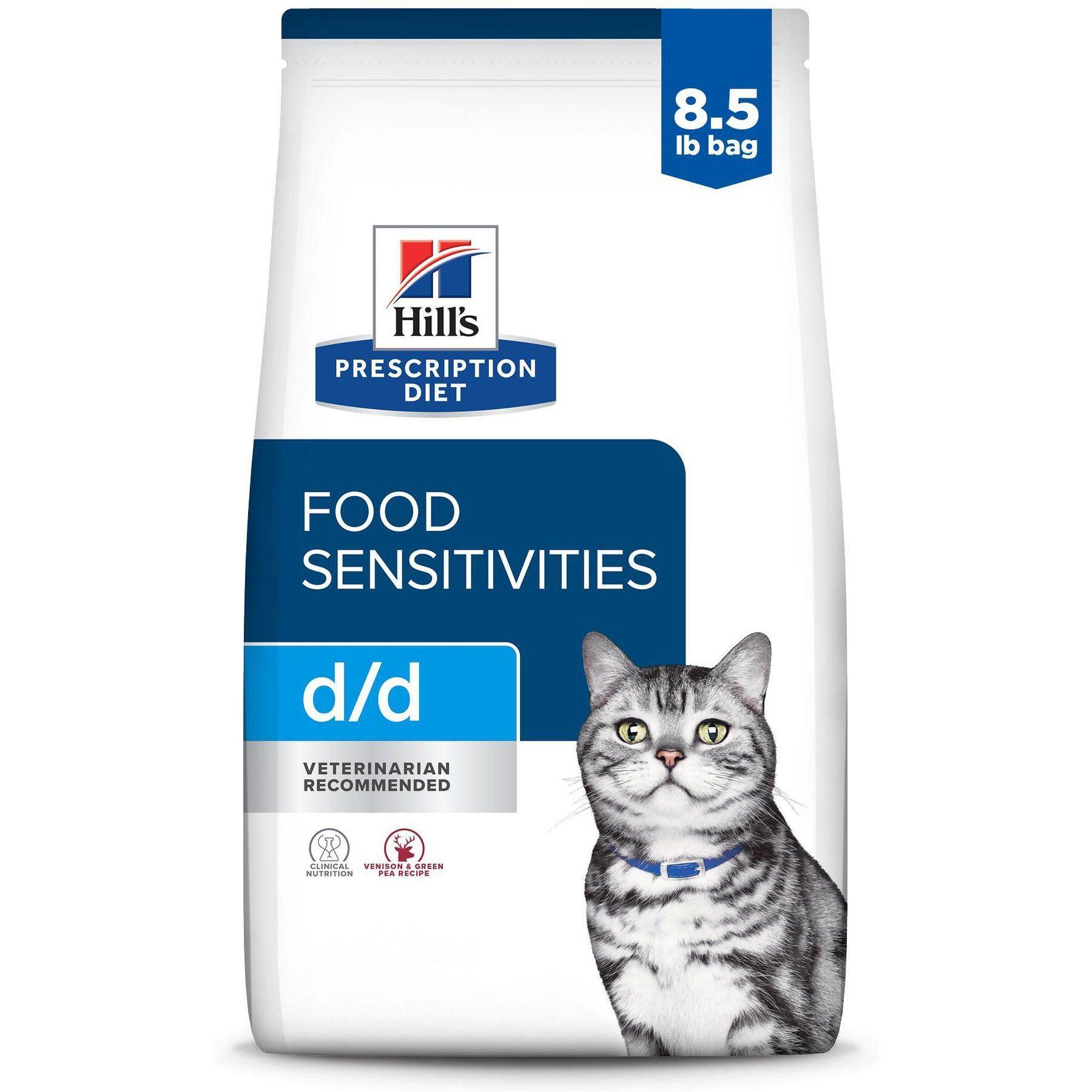
A veterinary venison diet your vet can authorize for a food trial in a cat with skin or food sensitivities.
Webvet may earn a commission when you click through to Chewy, at no extra cost to you.
The Hill's Prescription Diet d/d Venison & Green Pea Cat Food, 8.5-lb bag is a veterinary diet formulated for skin and food sensitivities, according to its listing. It is listed at $91.99 on Chewy when checked in November 2026 and needs a veterinarian's authorization before it ships.
This is the trial-grade option on the list. Because veterinary diets are made under stricter controls against cross-contamination than retail foods, vets often reach for a veterinary novel protein or hydrolyzed diet when they want a clean answer about food allergy.
- Suits: cats starting a vet-run elimination trial, cats with venison absent from their diet history.
- Skip it if: the cat has eaten venison, or the vet prefers a hydrolyzed diet for this cat.
Limited ingredient vs novel protein vs hydrolyzed diets: which fits your cat
An over-the-counter limited ingredient food fits a cat with mild, vet-checked signs, while a veterinary novel protein or hydrolyzed diet fits a cat that needs a food allergy trial. When a vet recommends a hypoallergenic cat food for that trial, it is usually one of these two veterinary types. Compare each diet type by cross-contamination risk, elimination trial fit, and whether it needs vet authorization.
| Diet type | What it is | Cross-contamination risk | Elimination trial fit | Vet authorization |
|---|---|---|---|---|
| Over-the-counter limited ingredient | One main animal protein and a short ingredient list, sold in stores | Highest; retail foods lack veterinary controls and studies found undeclared proteins | Not recommended for a diagnostic elimination trial | Not needed |
| Veterinary novel protein | A protein the cat has never eaten, made under veterinary diet controls | Lower, though one study found undeclared protein in some veterinary wet diets | Suitable when the diet history is complete | Needed |
| Veterinary hydrolyzed protein | Protein broken into pieces too small for the immune system to recognize | Lower than novel protein diets in one study, though not zero | Preferred when the diet history is unclear | Needed |
| Home-cooked trial diet | A recipe written by a board-certified veterinary nutritionist | Controlled at home | Suitable when designed and supervised by the vet team | Vet-designed |
The diet ladder runs from simplest to most controlled. An over-the-counter limited ingredient food reduces ingredients. A veterinary novel protein diet uses a protein that, per VCA, "does not contain any products that were present in your cat's previous foods." A hydrolyzed protein diet breaks protein down "to a size too small to be recognized by your cat's immune system."
Cross-contamination is the reason the ladder exists, and the evidence cuts in two directions. Retail foods carry the most risk, yet Pagani and colleagues found undeclared animal protein in 6 of 11 (54.5%) dietetic limited-antigen wet diets for dogs and cats. No food is guaranteed clean, which is one reason vets supervise the trial closely.
A second study points toward hydrolyzed diets for the most sensitive cases. Ricci and colleagues analyzed 40 novel protein and hydrolyzed protein diets for dogs and cats, most of them dog foods, and found undeclared animal species in 23. Fewer contaminating species turned up in hydrolyzed diets than in novel protein diets, 4 against 10. The guide to hydrolyzed protein cat food covers that option in depth.

Choosing a protein the cat has not eaten
Start with a written diet history. List every dry food, canned food, treat, topper, dental chew, and flavored medicine the cat has had, plus anything shared from other pets. The protein you choose has to be missing from that whole list, not just from the current bag.
The Merck Veterinary Manual adds a refinement: it "might be prudent to avoid selecting diets that contain species similar to those previously fed." A cat raised on chicken may not be a good candidate for turkey or duck, and a cat raised on fish foods may not do well on another fish.
Common single-protein options on shelf labels, and how they fit:
- Rabbit: new to many cats. The Instinct rabbit recipe comes as dry kibble and as a canned pate.
- Venison: used in KOHA's pate and in Hill's d/d, which is sold only with vet authorization.
- Duck: a poultry protein, so think twice for a cat with a long chicken history; Blue Buffalo Basics duck and potato, the Natural Balance duck can, and the Go! Solutions Sensitivities Limited Ingredient Duck Grain-Free Dry Cat Food, 3-lb bag all use it.
- Turkey and chicken: poultry again. Turkey recipes suit only cats with no poultry history, and chicken is one of the three most common feline allergens Merck names.
- Salmon and other fish: one of the most common triggers, so a fish-based food fits only cats with no fish history.
- Lamb and pork: may be new to a cat, though pork was among the most frequent hidden contaminants Ricci found in other diets.
To avoid chicken, read the full ingredient list, not just the front of the bag, because the front names only the lead protein. Only the diet history can tell you whether a protein is new to your cat.
What protein is better for cats?
No single protein is better for every cat. Cats are obligate carnivores that "rely on nutrients found only in animal products," per the Cornell Feline Health Center, so any complete food built on animal protein can work. For a sensitive cat, the better protein is simply one it has never eaten.
The protein to avoid first is the one most likely to be a trigger. In a review of 78 cats by Mueller, Olivry, and Prélaud, beef (14 cats, 18%) and fish (13 cats, 17%) were the most frequent causes of food reactions, followed by chicken. Exotic meats are not protective: Tufts Petfoodology notes that duck, kangaroo, lamb, or venison "doesn't prevent food allergies."
Novel protein versus hydrolyzed diets
A novel protein diet works by avoiding what the immune system has met before. A hydrolyzed diet works by hiding the protein from the immune system. Which one fits depends mostly on how complete the diet history is.
- Choose novel protein when the history is complete and a clearly new protein is available in a veterinary diet.
- Choose hydrolyzed when the history is unknown, as with many adopted or shelter cats, or when the cat has eaten most common proteins.
- Ask about both when a previous trial failed; the vet may switch diet type rather than protein.
Wet vs dry limited ingredient food and how to read the label
Wet and dry limited ingredient foods do the same job; the difference is water and handling. The Cornell Feline Health Center notes that canned cat food "has a moisture content of at least 75 percent," while dry food "contains between six and 10 percent water."
Dry food has its own catch for sensitive cats. Ricci and colleagues found that "the presence of undeclared animal species was higher in dry than wet pet foods," and that pork, chicken, and turkey were the most frequent contaminants. That does not make every kibble a problem, but it favors canned food when contamination is the main worry.

How the main lines compare by form:
- Instinct: a rabbit pate and a rabbit kibble, so a cat can eat one protein across both forms.
- Natural Balance: a salmon kibble and a duck can among the picks here. The proteins differ, so check each ingredient list before pairing them.
- Blue Buffalo Basics: the duck and potato recipe is a kibble. Check the label of any canned food from the same line separately, since recipes differ by form.
- KOHA: wet only among these picks, as the venison pate.
- Go! Solutions: the Go! Solutions Sensitivities Limited Ingredient Duck Grain-Free Dry Cat Food, 3-lb bag is a grain-free, potato-free single-protein dry option listed at $27.99 on Chewy when checked in November 2026.
For a mixed diet, pair a wet and dry food with the same protein, such as the Instinct Limited Ingredient Diet Real Rabbit Recipe Grain-Free Pate Wet Cat Food, 3-oz can, case of 4 with the Instinct rabbit kibble, or the Natural Balance Limited Ingredient Reserve Duck & Green Pea Recipe Wet Cat Food, 3-oz can, case of 24 with a duck kibble.
Two proteins in two bowls defeat the purpose.
What wet cat food has the least amount of ingredients?
No wet cat food is truly a one-ingredient meal, because a complete diet must add vitamins, minerals, and essential nutrients such as taurine. The wet foods with the shortest lists are single-protein limited ingredient pates. Among the picks here, the Instinct rabbit pate is described on its listing as made with one animal protein and one vegetable, and the KOHA venison pate uses one animal protein. Compare the ingredient panels directly, since Tufts Petfoodology warns that many "limited ingredient diets" contain more than one protein and one carbohydrate source.
What limited ingredient means on a label
Limited ingredient is a marketing description, not a defined standard, so the label has to be read rather than trusted. The WSAVA Global Nutrition Committee notes that unregulated terms such as "holistic" or "premium" are of little practical value for judging a food.
Check these parts of every bag or can:
- The product name. Per the Merck Veterinary Manual, a name with only the meat (such as "rabbit cat food") means that meat is at least 70% of the product or at least 95% of ingredients excluding water. A name with a qualifier such as dinner or entrée means at least 25% of ingredients excluding water. "With rabbit" means at least 3%, and "rabbit flavor" means less than 3%.
- The ingredient list. Ingredients are listed "in descending order of weight," so scan the whole list for a second meat, fish, egg, or animal fat, and for broth or flavor ingredients from another species.
- The complete-and-balanced statement. WSAVA says foods should be labeled to show whether they provide a "complete" diet. Foods labeled for intermittent or supplemental feeding should be 10% or less of the diet.
- The guaranteed analysis. Merck notes it "does not specify the actual amount of protein, fat, water, and fiber," only minimums and maximums.
- The calorie statement. WSAVA notes calorie information is required on US labels, which helps with portioning.
Every complete cat food has to supply taurine, which VCA calls "an essential amino acid for cats," and a healthy cat on a life-stage-appropriate food does not need a supplement. The page on taurine for cats explains why it matters for the heart and eyes.
Grain-free is not the same as limited ingredient. Tufts Petfoodology notes that "grains are actually uncommon causes of food allergies," and most limited ingredient lines are grain-free by design, not because grain is the usual trigger.
The guide to grain-free cat food covers what that label does and does not mean. Owners avoiding legumes should check for peas, since many grain-free recipes use them.
How a food elimination trial works and what breaks it
An elimination diet trial is how a food allergy is confirmed. VCA states that "the only reliable test for diagnosing food allergies in cats is an elimination diet trial," and the Merck Veterinary Manual adds that proof requires the trial "followed by a controlled dietary challenge." Blood, saliva, and hair tests sold online do not replace it.
Trial length depends on the problem. VCA says the trial "will take at least eight weeks." Tufts Petfoodology recommends "at least 8-12 weeks for pets with skin issues and 3-4 weeks for those with digestive issues," and Merck cites a review finding that "a minimum of 10 weeks might be required to identify 95% of food-allergic patients."

Running an elimination trial with the vet usually follows these steps:
- Diet history. The vet reviews every food, treat, and medicine the cat has had.
- Diet choice. The vet picks a veterinary novel protein, hydrolyzed, or nutritionist-designed home-cooked diet.
- Transition. The new food replaces the old one gradually; the trial clock starts once the cat is fully switched.
- Strict feeding. Per VCA, the cat eats only "the prescribed food, water, and unflavored prescribed medications."
- Recheck. The vet assesses itching, skin, stool, and vomiting at the end of the trial.
- Challenge. If signs improved, the old food goes back in. VCA notes that signs returning within one week of the challenge support the diagnosis; Merck notes some responses take up to 10 to 14 days.
For a vet-directed wet option, the Royal Canin Veterinary Diet Selected Protein Pea & Rabbit Formula Loaf in Sauce Adult Wet Cat Food, 5.1-oz can, case of 24 is a veterinary-exclusive rabbit diet for cats with skin and digestive issues, listed at $112.56 on Chewy when checked in November 2026. Like Hill's d/d, it needs a veterinarian's authorization.
Treats that break a food trial
Most failed trials fail at the edges of the diet, not in the bowl. Tufts Petfoodology says a trial must control "everything that goes into your pet's mouth." That includes treats sold under a limited ingredient label, even ones from the same brand as the food.
The trial-breakers vets warn about most often:
- Treats of any kind, including limited ingredient treats, unless the vet names one made from the trial diet.
- Dental chews and flavored chew toys, per the Tufts Petfoodology trial handout.
- Flavored medications. Merck notes chewable heartworm and flea products "generally contain beef, pork, or soy protein." Keep giving preventives, but ask the vet about unflavored or topical versions.
- Capsules and pill pockets. Capsules "might be made of beef or pork gelatin," and pill treats add protein.
- Pet toothpaste. Brushing can continue without it.
- Supplements, unless the vet recommends them.
- Other pets' food. Feed pets separately and keep the trial cat out of shared bowls.
- People food, including gelatin foods such as marshmallows.
A diet change only works as a test when all of these are under control. For cats whose main problem is digestive, the guide to cat food for a sensitive stomach covers diets chosen for digestion rather than allergy.
What are the five cat foods to avoid?
There is no fixed list of five cat foods to avoid, and the right answer depends on the cat. For a cat with a suspected food reaction, avoid any food containing a protein from its diet history, foods with vague flavor or broth ingredients, and foods without a complete-and-balanced statement.
For any cat, WSAVA suggests checking the maker: ask whether it employs a qualified nutritionist and how it controls quality.
When to see the vet: itching, vomiting, or diarrhea a food change will not fix
See the vet when itching lasts for weeks, the skin is broken, or vomiting or diarrhea keeps coming back. Food is only one cause of itching and stomach trouble, and switching foods can delay care a cat needs. Per the Merck Veterinary Manual, itching is "the most common clinical sign associated with food allergy in cats," and "pruritus of the face, ears, and neck is very common." Other signs include crusty skin bumps known as miliary dermatitis in cats.

Signs that need a vet rather than a new bag:
- Itching that lasts for weeks, comes back year-round, or causes hair loss and scabs; VCA notes allergic cats often have "chronic, year-round itching."
- Vomiting that continues "for more than one to two days," per VCA's vomiting guidance, or comes with lethargy, poor appetite, diarrhea, blood, or dehydration.
- Diarrhea that is frequent, watery, or bloody, or that does not settle once the cat is back on a familiar food.
- Weight loss or a falling appetite alongside any of these signs.
- A cat that stops eating the new food, which needs prompt care rather than waiting.
The guides on why your cat has diarrhea and what to do about it and on a cat throwing up list the other common causes a vet will want to rule out. Some cats with food allergies do show vomiting or diarrhea, according to VCA, but so do cats with parasites, IBD, and other illnesses.
Owners also ask whether non-prescription urinary cat food is as good as prescription. That is a separate question about urinary diets, answered in the guide to the best cat food for urinary health; a limited ingredient food is not a urinary diet. Cornell warns that a blocked cat can die in less than 24 to 48 hours.
How to switch to a limited ingredient food
Switch gradually. Tufts Petfoodology recommends changing foods "over the course of at least one week to allow your pet's digestive tract the time to adjust," mixing more of the new food into the old one each day. Some cats need several weeks.
A typical step-by-step switch:
- Start: mostly the old food with a small amount of the new.
- Middle of the week: a larger share of the new food each day.
- End of the week or later: the new food only, if stools and appetite are normal.
- If the stomach is upset: hold the current mix for a day or two before moving on, as Tufts suggests for mild signs.
- During a vet-run trial: follow the vet's switch plan, since the trial clock starts once the cat is fully on the new food.

For a cat that refuses mixed food, Tufts suggests separate bowls, which "could be a better option for cats that tend to get easily stressed." A small pack, such as the Instinct Limited Ingredient Diet Real Rabbit Recipe Grain-Free Pate Wet Cat Food, 3-oz can, case of 4, shows whether a cat will accept a new protein before a large purchase.
Portion size matters as much as the protein. Use the calorie statement on the new food and the cat's body condition to set the daily amount; the guide on how much to feed a cat explains the calculation. Limited ingredient foods differ in calories, so a cup of one is not a cup of another.
Never let a cat go without food to force a switch. Cornell explains that hepatic lipidosis, a liver condition almost always tied to appetite loss, can be fatal if not promptly reversed, and urges owners to "nourish an affected cat immediately." Call the vet if vomiting, diarrhea, gas, or constipation persists.
Limited ingredient cat food questions
Frequently Asked Questions
Is limited ingredient cat food good for cats with allergies?
It can help, but it is not a diagnosis. Over-the-counter foods can contain traces of proteins that are not on the label, so a cat with a suspected food allergy needs an elimination trial planned by a veterinarian with a veterinary novel protein or hydrolyzed diet. Once the trigger is known, a retail limited ingredient food without it may work long term.
What is a novel protein cat food?
A novel protein cat food uses an animal protein the cat has never eaten before, such as rabbit or venison for many cats. Whether a protein is novel depends entirely on the cat's diet history, including treats and flavored medicines. Tufts Petfoodology notes that with an incomplete history, it can be impossible to find a diet you are sure is novel.
Are limited ingredient cat treats okay during a food trial?
Usually not. During a food trial the cat should eat only the prescribed food, water, and unflavored prescribed medications, so limited ingredient treats count as an extra food. Ask the vet whether pieces of the trial diet itself, or a treat made by the same veterinary diet line, can be used as rewards instead.
Is limited ingredient cat food good for a sensitive stomach?
It can be, when the upset is mild and the vet has checked the cat. A single protein and fewer ingredients give the gut less to cope with, which may support steadier digestion. Persistent vomiting or diarrhea is a different matter and may point to food allergy, IBD, or another illness that needs a diagnosis.
Can limited ingredient cat food help a cat with IBD?
Diet is part of managing inflammatory bowel disease, but the choice belongs to the veterinarian. The Cornell Feline Health Center notes that because dietary allergens can play a role, vets may recommend a food trial with hypoallergenic diets, and VCA explains these may use a single protein new to the cat.
IBD is confirmed by biopsy, and over-the-counter food is not a substitute for that diagnosis.
Veterinarian · BVMS MRCVS
Dr. Pippa Elliott, BVMS, MRCVS, is a veterinarian with nearly 30 years of experience in companion animal practice. Dr. Elliott earned her Bachelor of Veterinary Medicine and Surgery from the University of Glasgow. She was also designated a Member of the Royal College of Veterinary Surgeons. Married with 2 grown-up kids, Dr. Elliott has a naughty Puggle named Poggle, 3 cats and a bearded dragon.
Related reading

Best Dry Cat Food: Vet-Reviewed Picks and How to Choose

Best Wet Cat Food: Vet-Reviewed Picks and How to Choose

Turkey Tail Mushroom for Dogs: What the Evidence Says, Dosing, and Risks
