Best Wet Cat Food: Vet-Reviewed Picks and How to Choose
The best wet cat food is a complete and balanced meal for your cat's life stage that your cat will actually finish. How a vet reads the label, how pate and gravy differ, how to move a dry-food cat to wet, and our picks across price tiers.

BVMS MRCVS

This article contains affiliate links. Webvet may earn a commission when you buy through them, at no extra cost to you.
Best wet cat food: what makes a good one and how vets judge the label
The best wet cat food is a can or tray labeled complete and balanced for your cat's life stage, made by a company that will answer basic nutrition questions, in a texture your cat actually finishes. A broth, topper, or lickable snack sold on the same shelf is not a meal, however good it smells.
That label check comes before brand, price, or flavor when choosing the best wet cat food. One more rule sits beside it: if your cat has suddenly stopped eating or is eating much less, call your veterinarian before you try a new food, because a change in appetite is often a health problem rather than a menu problem.
| Pick | Best for | Texture | Life stage on the label |
|---|---|---|---|
| Purina Pro Plan Adult Chicken Entree Canned Cat Food, 5.5-oz, 24 ct | Everyday adult meals | Chunks in gravy | Adult |
| Fancy Feast Classic Pate Chicken Feast Grain-Free Pate Canned Cat Food, 3-oz can, case of 24 | Tight budgets | Smooth pate | Adult |
| Hill's Science Diet Adult Tender Chicken Canned Cat Food, 5.5oz, 24 ct | Owners who want calories printed per can | Chunks in gravy | Adult maintenance, ages 1 to 6 |
| Royal Canin Adult Instinctive Thin Slices Canned Cat Food, 3-oz, 24 ct | Cats that refuse pate | Thin slices in gravy | Adult maintenance |
| Tiki Cat Luau Succulent Chicken Pate Wet Cat Food, 2.8-oz can, case of 12 | Meat-forward pate fans | Finely ground pate | Check the can |
| Iams Perfect Portions Healthy Adult Chicken Recipe Pate Grain-Free Wet Cat Food Trays, 2.6-oz tray, case of 24 twin packs | Single cats and less waste | Pate in split trays | Adult |
- 1Read the complete-and-balanced statement first: a meal says complete and balanced, a broth or topper says intermittent or supplemental feeding.
- 2Match the life stage on the label to your cat: adult maintenance for most adults, growth or all life stages for kittens.
- 3Compare calories per can, not can size, because small cans and large cans hold very different amounts of energy.
- 4Pick the texture your cat finishes, then move a dry-food cat to wet slowly and side by side.
- 5A cat that stops eating needs a veterinarian before it needs a new food.
The four checks a veterinarian makes on a can
A vet reading a wet food label is not looking at the picture of the chicken on the front. The useful information sits in small print on the back or side, and the AAFCO guide to reading labels calls the nutritional adequacy statement perhaps the most important part of the whole label.
- Is it a meal? The FDA's Center for Veterinary Medicine explains that complete and balanced means the product is intended to be fed as a pet's sole diet. It must meet the AAFCO nutrient profiles at the recommended levels, or pass an AAFCO feeding trial.
- Is it for this cat's life stage? AAFCO recognizes gestation and lactation, growth, maintenance, and all life stages, and different stages need different nutrient amounts and ratios.
- How many calories per can? US labels carry a Calorie Content statement in kilocalories per kilogram and per familiar unit such as per can.
- Will the maker answer questions? The WSAVA Global Nutrition Committee lists questions about nutritionists, formulation, and quality control that a good manufacturer should be able to answer.

Why complements and toppers are not a dinner
Shelves now carry broths, lickable purees, and toppers next to the cans. Products that do not meet a complete-and-balanced standard must say they are for intermittent or supplementary feeding only, according to AAFCO, and the FDA notes that treats, snacks, and supplements are not meant to be a sole diet.
WSAVA puts a number on it: foods labeled for short-term, intermittent, or complementary feeding should make up a small portion of the diet, 10% or less, unless a veterinarian is supervising a therapeutic diet. A cat living mostly on broth cups can be well hydrated and still short of the nutrients a full meal supplies.
Our picks: the best wet cat food
Wet cat food is canned, pouched, or tray-packed food with a high water content. The Cornell Feline Health Center puts the moisture content of canned cat food at at least 75 percent, against 6 to 10 percent water in dry food.
These picks were chosen on the label and the maker, not on taste tests or star ratings. Each is sold as a meal rather than a complement and suits a different household, from a tight budget to a single cat that never finishes a large can.
The most recommended, highest rated, or most popular wet cat food is not automatically the right one for your cat. Reviews and sales show that many cats eat a product, not whether that can is complete and balanced for your cat, so brand questions come back to the same label checks:
- Which brands are good? Purina (Fancy Feast, Purina ONE, and Pro Plan), Hill's Science Diet, Royal Canin, Iams, Tiki Cat, and Weruva all sell wet food by the case. Each sells several recipes, so judge the can, not the brand.
- Is Iams wet cat food good? Iams sells adult wet recipes labeled complete and balanced; the right one is the recipe whose life stage, calories, and texture fit your cat.
- Do reviews matter? Reviews describe how cats eat a food. The AAFCO statement and the Calorie Content line tell you whether to feed it and how much.
- One brand, different products: makers can sell meals and complements under one brand name, so confirm the AAFCO statement on the specific can before feeding it as a main diet.
- Salmon or turkey instead of chicken? Fine for cats bored with chicken, as long as the recipe is complete and balanced.
- Indoor cats: usually a complete-and-balanced adult maintenance recipe, portioned for an indoor cat's lower activity with your vet's calorie target.
Purina Pro Plan Adult Chicken Entree Canned Cat Food: best overall wet cat food
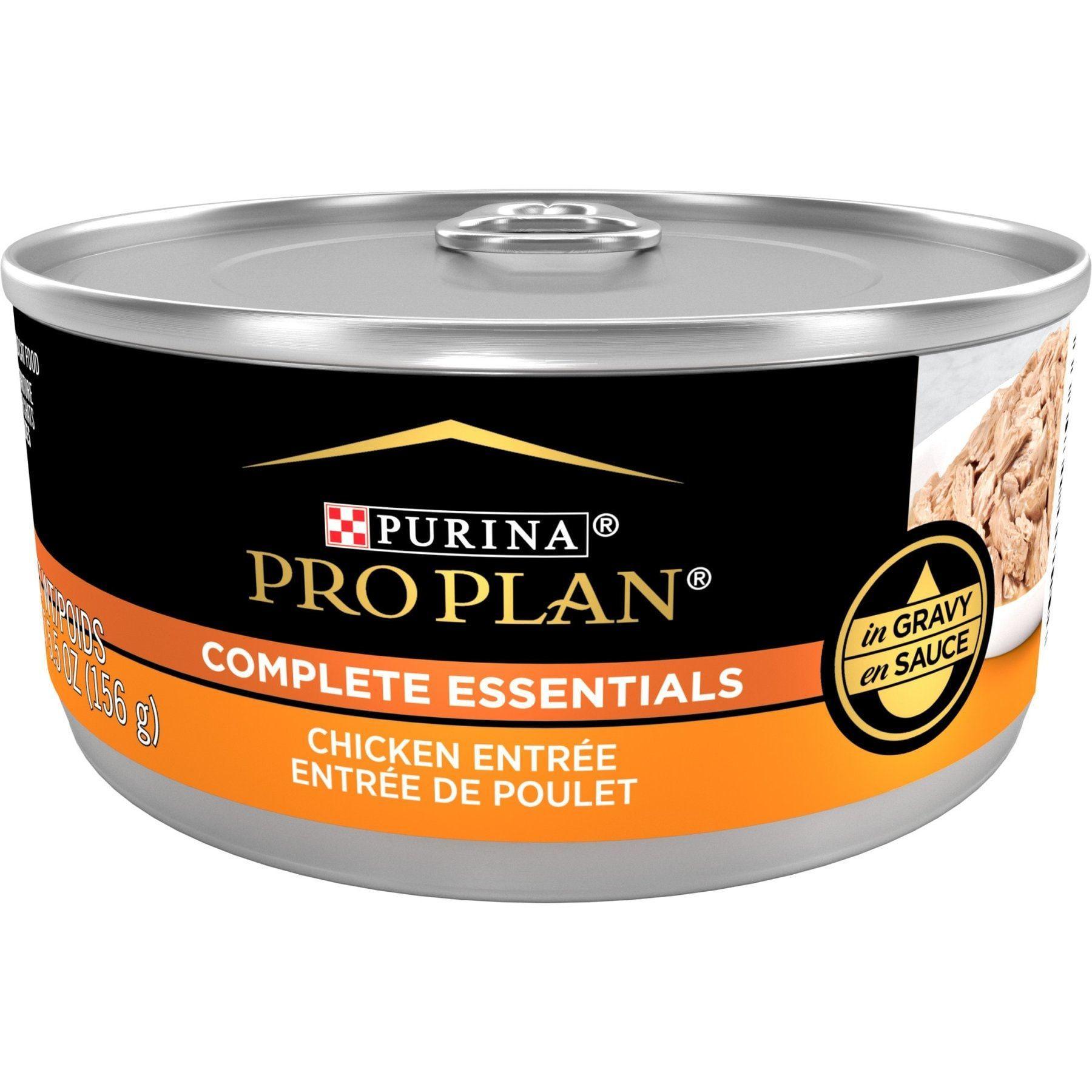
An everyday adult chicken entree in gravy for cats that like chunks and sauce.
Webvet may earn a commission when you click through to Chewy, at no extra cost to you.
This Purina Pro Plan Complete Essentials recipe pairs real chicken with gravy in a 5.5-ounce can, according to the catalog description. It is sold as an adult food in cases of 24, listed at $56.16 on Chewy when checked in November 2026, which puts it in the middle of this group on price.
The larger can makes it a practical everyday base for a single adult cat or a two-cat home that splits a can at each meal. Read the AAFCO statement and the Calorie Content line on the can before setting a portion, then use your vet's calorie target to decide how much of a can each cat gets.
- Suits: healthy adult cats that like chunks and sauce, and owners who want one recipe for daily meals.
- Skip if: your cat is a kitten, is pregnant or nursing, or is on a veterinary diet for a medical condition.
Fancy Feast Classic Pate Chicken Feast Grain-Free Pate Canned Cat Food: best budget wet food
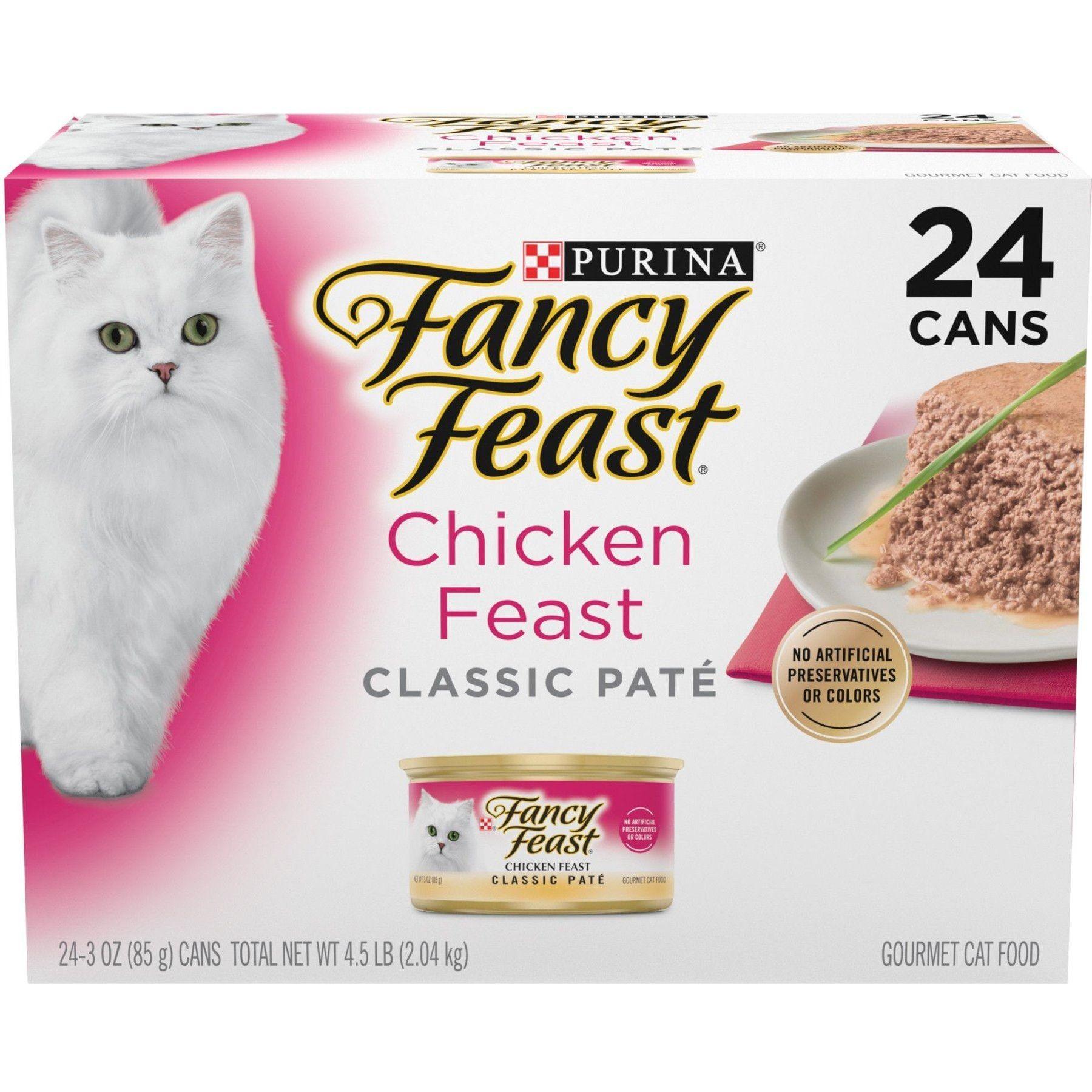
A low-cost 3-oz adult pate sold as a complete and balanced meal for everyday feeding.
Webvet may earn a commission when you click through to Chewy, at no extra cost to you.
The catalog describes this smooth pate as a complete and balanced meal for adult cats, with real chicken flavor. It comes in a case of 24 three-ounce cans, listed at $22.86 on Chewy when checked in November 2026, the lowest case price among these picks.
Fancy Feast sells many products under one brand, from Classic Pate and Gems to gravy lines. The cheapest way to feed wet food fails if the can in the cart is a complement, so look for the words complete and balanced on each flavor rather than assuming every can in the brand is a meal.
- Suits: adult cats that like smooth pate, and households feeding wet food on a budget.
- Skip if: your cat needs a kitten or veterinary diet, or prefers chunks and slices.
Hill's Science Diet Adult Tender Chicken Canned Cat Food: best vet-brand everyday wet food
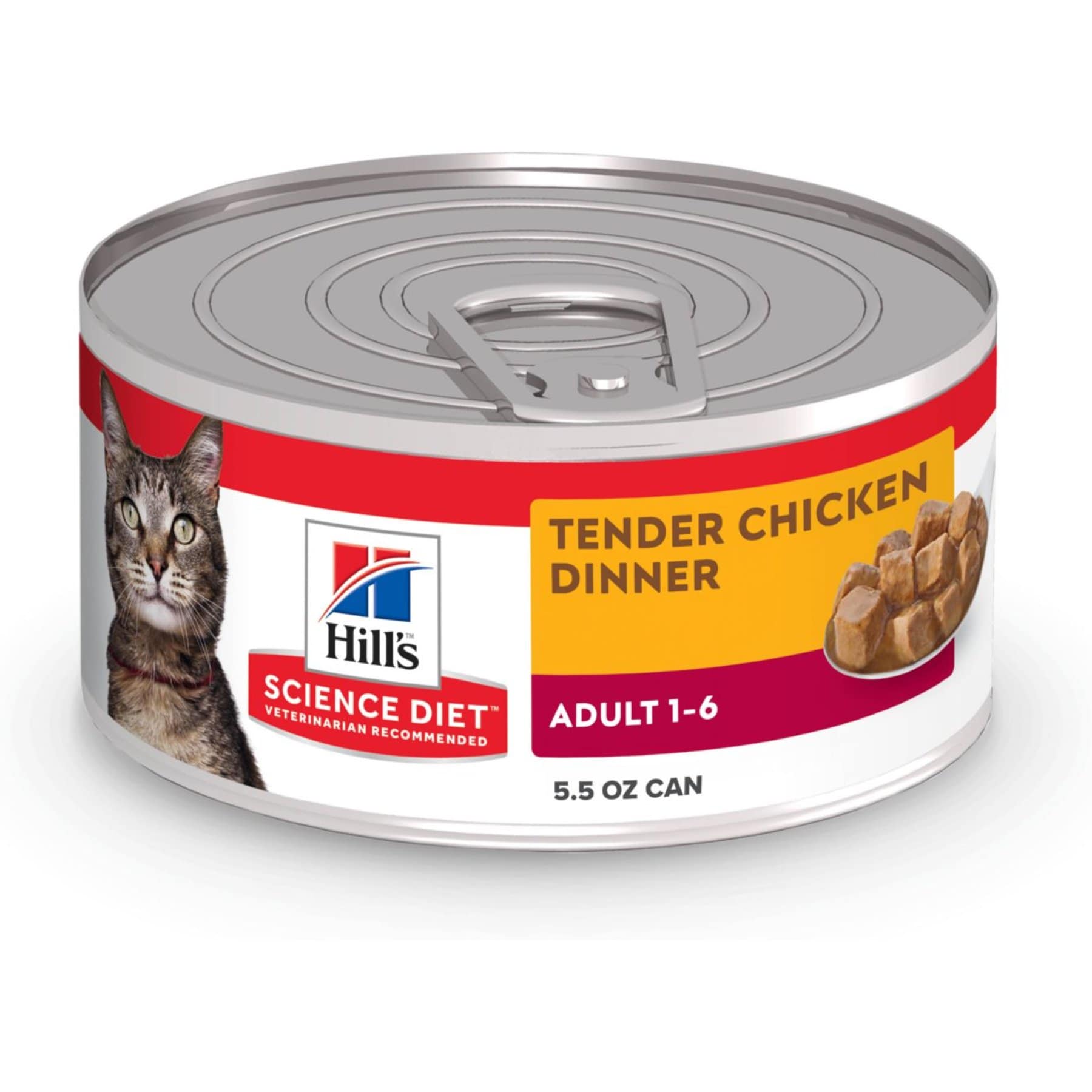
An adult maintenance chicken dinner with its calorie count printed per 5.5-oz can.
Webvet may earn a commission when you click through to Chewy, at no extra cost to you.
Hill's states that this chicken dinner is formulated to meet AAFCO cat food nutrient profiles for maintenance of adult cats and recommends it for cats 1 to 6 years old. It lists 160 kcal per 5.5-ounce can, and the first ingredients are water, chicken, and pork liver, followed by wheat flour and wheat gluten.
The texture is chicken chunks in gravy. A case of 24 is listed at $62.16 on Chewy when checked in November 2026, so it sits at the premium end of this group, with the advantage that the maker publishes calories and the full ingredient list on its own page.
- Suits: healthy adult cats, and owners who like a published calorie count for portioning.
- Skip if: your cat is a kitten, a pregnant or nursing queen, or you are avoiding wheat ingredients.
Royal Canin Adult Instinctive Thin Slices Canned Cat Food: best for cats that prefer slices in gravy
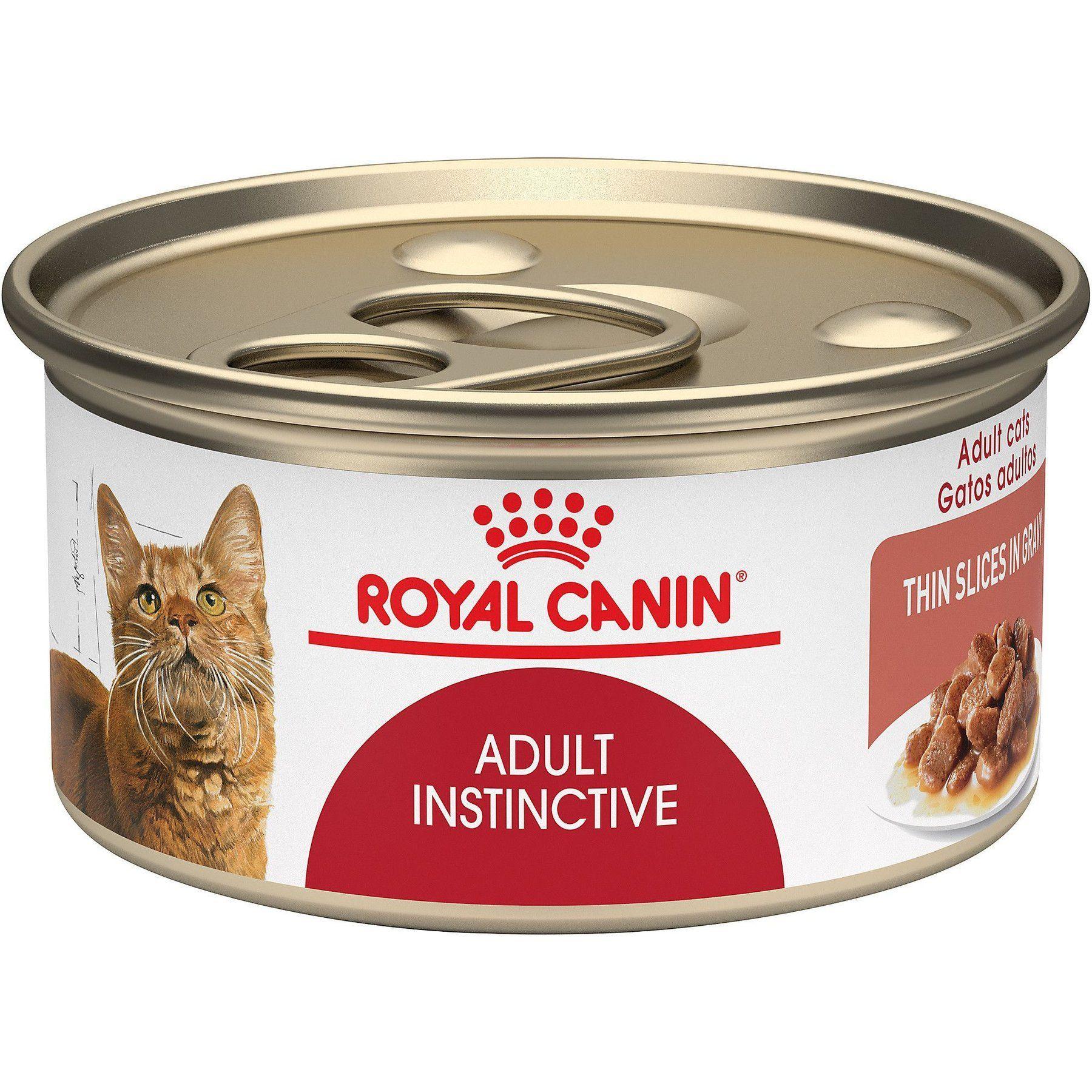
Thin slices in gravy for adult cats that walk away from smooth pate.
Webvet may earn a commission when you click through to Chewy, at no extra cost to you.
Royal Canin states that Adult Instinctive thin slices in gravy are formulated to meet AAFCO cat food nutrient profiles for maintenance. The maker lists 66 kcal per can, 81.5% maximum moisture, and first ingredients of water, pork by-products, chicken by-products, chicken liver, and pork liver.
At 66 kcal, a three-ounce can holds less than half the energy of a 5.5-ounce can like the Hill's pick, so an adult usually needs several cans a day. The case of 24 is listed at $52.56 on Chewy when checked in November 2026, which makes it the costliest per calorie of the picks whose makers publish a calorie count.
- Suits: adult cats that lick the gravy and leave pate untouched.
- Skip if: you want the lowest cost per day, or your cat needs a kitten or veterinary diet.
Tiki Cat Luau Succulent Chicken Pate Wet Cat Food: best meat-forward pate
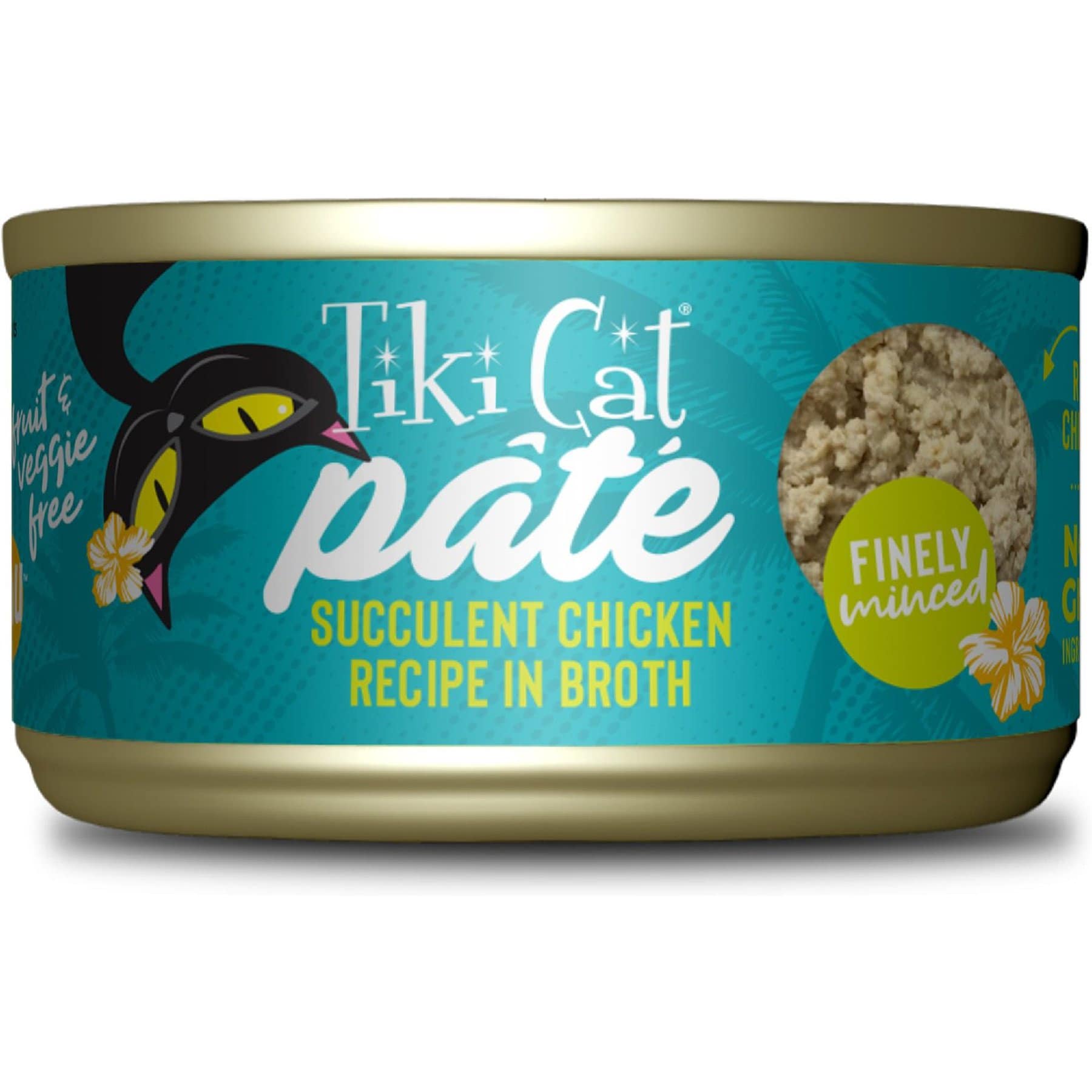
A chicken-first pate with no grains, vegetables, or fruit, in small 2.8-oz cans.
Webvet may earn a commission when you click through to Chewy, at no extra cost to you.
Tiki Pets describes this finely ground pate as a complete and balanced meal and lists chicken, chicken broth, sunflower seed oil, and dried egg product as the first ingredients. The maker gives 77 kcal per 2.8-ounce can, with 13% minimum protein, 3% minimum fat, and 81.5% maximum moisture.
The catalog notes no vegetables, fruit, or grains, and the maker lists no carrageenan. The life stage is not stated on the maker's page, so read the AAFCO line on the can before feeding it as a main diet. A case of 12 is listed at $24.51 on Chewy when checked in November 2026.
- Suits: adult cats that like smooth pate, and owners who prefer short ingredient lists.
- Skip if: you need a recipe with the life stage printed on the product page, or you feed several cats on a budget.
Iams Perfect Portions Healthy Adult Chicken Recipe Pate Grain-Free Wet Cat Food Trays: best single-serve trays
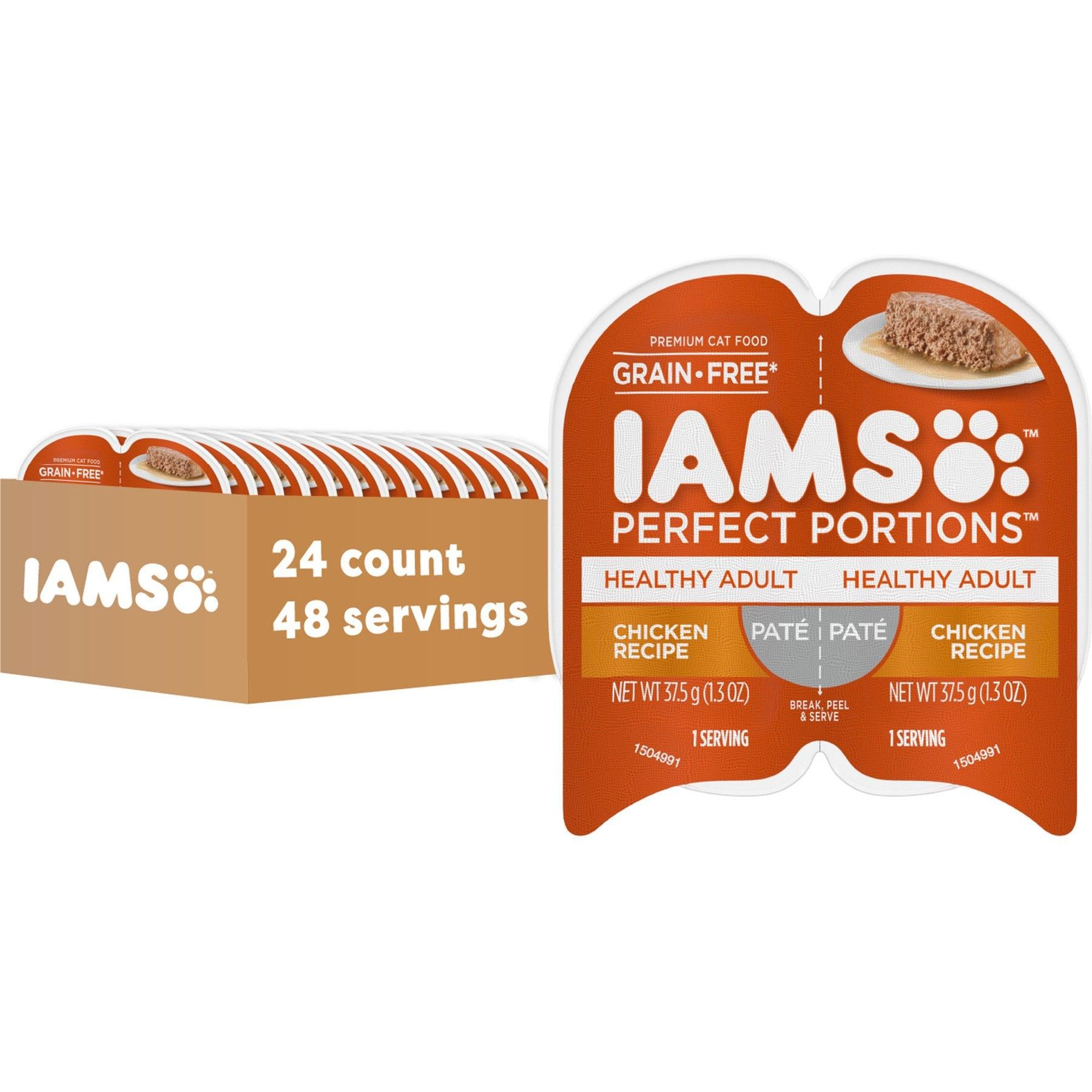
Twin-pack pate trays sized as single servings, so less food sits opened in the fridge.
Webvet may earn a commission when you click through to Chewy, at no extra cost to you.
Iams describes this grain-free chicken pate as complete and balanced nutrition for adult cats, packed as two individual meals in an easy-peel tray. The calorie count is printed on the tray label.
Split trays solve a common problem: a large can opened for one small cat ends up half-used in the fridge, and leaving wet cat food out overnight is not safe either, since VCA notes moist food spoils quickly when left out and the CDC advises throwing away leftovers that have been out at room temperature. A case of 24 twin packs is listed at $33.36 on Chewy when checked in November 2026, a low-to-mid price for single-serve wet cat food.
- Suits: single-cat homes, owners who hate leftovers, and cats that like pate.
- Skip if: your cat eats more than one small serving at a meal, or needs a kitten or veterinary diet.
How to choose a wet cat food: complete and balanced, life stage, calories, and texture
| Pick | Label statement | Life stage | Texture | Calories per can | Price tier |
|---|---|---|---|---|---|
| Purina Pro Plan Adult Chicken Entree | Complete Essentials adult entree; confirm the AAFCO line on the can | Adult | Chunks in gravy | Printed on the can | Mid: $56.16 for 24 x 5.5-oz |
| Fancy Feast Classic Pate Chicken Feast Grain-Free | Complete and balanced meal for adult cats | Adult | Smooth pate | Printed on the can | Budget: $22.86 for 24 x 3-oz |
| Hill's Science Diet Adult Tender Chicken | AAFCO profiles for maintenance of adult cats | Adult, ages 1 to 6 | Chunks in gravy | 160 kcal per 5.5-oz can | Premium: $62.16 for 24 x 5.5-oz |
| Royal Canin Adult Instinctive Thin Slices | AAFCO profiles for maintenance | Adult | Thin slices in gravy | 66 kcal per 3-oz can | Premium per calorie: $52.56 for 24 x 3-oz |
| Tiki Cat Luau Succulent Chicken Pate | Maker calls it a complete and balanced meal | Check the can | Finely ground pate | 77 kcal per 2.8-oz can | Mid: $24.51 for 12 x 2.8-oz |
| Iams Perfect Portions Healthy Adult Chicken Pate | Complete and balanced nutrition for adult cats | Adult | Pate in twin trays | Printed on the tray | Low to mid: $33.36 for 24 twin packs |
The highest quality wet cat food for your cat is the one that passes four checks in order: it is complete and balanced, it matches your cat's life stage, its calories fit your cat's daily target, and your cat eats it. A good can may be cheap or expensive; price and marketing words are not on that list.
Step 1: find the complete-and-balanced statement
Turn the can over and look for an AAFCO statement. A meal says it is formulated to meet the AAFCO cat food nutrient profiles, or that feeding trials substantiate it, for a named life stage. A complement says intermittent or supplementary feeding only, and belongs in the 10% treat allowance WSAVA describes.
When a vet recommends a wet cat food, this statement is usually the first thing checked. Phrases on the front of a pack do not replace that statement, and WSAVA notes that unregulated words such as holistic or premium are of little practical value for judging nutrition.
Step 2: match the life stage on the label
Adult maintenance is the label written for grown cats. WSAVA notes that all-life-stages foods are formulated for reproduction and growth, and Cornell adds they can simplify feeding cats of different ages. Kittens can eat wet cat food when the label says growth or all life stages; WebVet's guide to the best kitten food covers the choices.
Older cats have their own considerations, and WebVet's senior cat food guide covers them. If your vet has diagnosed a medical condition, a therapeutic diet chosen with the vet comes before any of these picks.

Step 3: compare calories per can
The AAFCO calorie guide explains that the Calorie Content statement lists kilocalories per kilogram as fed and per familiar unit such as per can. That per-can figure is the fastest way to compare foods, because can sizes vary so much.
Two picks show why. The Hill's Science Diet Adult Tender Chicken Canned Cat Food, 5.5oz, 24 ct lists 160 kcal per 5.5-ounce can, while the Royal Canin Adult Instinctive Thin Slices Canned Cat Food, 3-oz, 24 ct lists 66 kcal per three-ounce can. Feeding one can of each is not feeding the same amount.
Step 4: read the ingredients and the name, but do not over-read them
AAFCO requires ingredients to be listed from most to least by weight, so water or broth often comes first in wet food. The product name also follows AAFCO rules:
- Named for one ingredient: at least 95% of that ingredient, not counting added water.
- Dinner, entree, or recipe: the named ingredient makes up at least 10% of the total weight.
- With: at least 3% of the named ingredient.
- Flavor: the ingredient only has to provide the flavor.
Ingredient questions about a particular recipe are best answered on the specific can, because recipes within one brand differ. Use the name rules to spot a chicken dinner that is mostly other meats, then read the list in full if your cat has a known ingredient problem.
Natural, organic, clean, and other claims
The healthiest wet cat food is a complete-and-balanced recipe that fits your cat's life stage and calorie needs; words such as natural, organic, and clean do not by themselves make a can safer or healthier. AAFCO's definitions narrow what those words promise:
- Natural: AAFCO defines it by source and processing, and states there is no requirement that natural ingredients are safer than synthetic ones.
- Organic: organic pet food must comply with the USDA National Organic Program, and AAFCO notes the USDA does not consider organic foods necessarily safer, healthier, or more nutritious.
- By-products: AAFCO's position is that by-products can be safely used to provide nutrition, so a can without chicken by-products is a preference, not a safety upgrade.
- Carrageenan-free and BPA-free: these are maker claims to raise with the company. WSAVA says a good manufacturer offers a phone number or email and can give a typical analysis for all essential nutrients.
For wet cat food without chicken or without fish, filter by the protein in the name and ingredients. The Tiki Cat Luau Succulent Chicken Pate Wet Cat Food, 2.8-oz can, case of 12 is chicken-first with no fish, and its maker lists no carrageenan. Cats that need very high protein have their own guide to high protein cat food.
What are some cat food brands to avoid?
Avoid any brand that cannot answer the WSAVA questions, rather than a list of names. WSAVA advises caution about feeding a brand whose manufacturer cannot or will not say whether it employs a qualified nutritionist, who formulates its diets, how it controls quality, and what research it has done.
Use these checks on any brand:
- No complete-and-balanced statement on a food sold as a meal.
- No life stage stated, or a life stage that does not fit your cat.
- No Calorie Content line, or no way to reach the company with nutrition questions.
- Marketing words such as premium, holistic, or human-grade doing the work instead of the label.
The FDA publishes animal product recalls and withdrawals, and a recall notice is specific to products and lot codes, so check the exact can rather than avoiding a whole brand on rumor.
Wet vs dry cat food: hydration, calories, and feeding both
Wet cat food is not better than dry for every cat, and it is not bad for cats either. Tufts Petfoodology explains that canned and dry foods meet basically the same standards for nutrient levels, and that you can feed all canned, a combination, or all dry food.
Which is better, dry or wet cat food, comes down to the individual cat. Cornell notes that some cats like canned food, some like dry, and some like a combination, and the Tufts nutritionists point to the differences that matter most: water, calories per bite, and cost.

Hydration: where wet food helps
Wet food adds water directly. Cornell's hydration guidance notes that cats eating wet food, which can contain up to 80% water, may drink less, while cats on dry food take in more of their water by drinking. Cornell suggests about 4 ounces of water per 5 pounds of lean body weight daily.
That extra water is the main way wet food is good for cats, and any complete-and-balanced can delivers it; no special hydration recipe is needed. Cornell adds that adding water to food also raises intake. WebVet explains daily targets in how much water should a cat drink, and some cats drink more from moving water, covered in the guide to the best cat water fountains.
Tufts notes that canned food helps cats with urinary tract issues where more water is beneficial. Cats with diagnosed urinary problems may need a specific diet, covered in WebVet's guide to the best cat food for urinary health.
A cat straining in the litter box is an emergency
A cat straining in the litter box and passing little or no urine needs an emergency vet immediately. The MSD Veterinary Manual describes urethral obstruction as a common urinary emergency, warns that cat owners may mistake it for constipation, and notes that complete obstruction causes uremia within 36 to 48 hours. No food change treats a blocked bladder.
Calories and weight
AAFCO explains that canned food has fewer calories per kilogram as fed than dry food because of its water, and Tufts notes canned diets are lower in calories per volume. That makes wet food more filling per calorie, but a cat can still gain weight on it if portions run too large.
The Merck Veterinary Manual warns that overfeeding can lead to obesity and serious health problems that can shorten a cat's life, and advises working with a veterinarian on how much to feed.
Dental care is one area where dry food has a small edge. Tufts notes some dry diets carry added compounds on the kibble surface to help reduce tartar, which does not make wet food bad for cats' teeth but explains why some owners keep a little dry in the mix.
Feeding both wet and dry
Mixed feeding is common and reasonable. A household might measure a portion of kibble from the best dry cat food guide for daytime and serve a can such as Purina Pro Plan Adult Chicken Entree Canned Cat Food, 5.5-oz, 24 ct at the evening meal, adding both foods' calories into one daily total.
The AAFP feeding programs statement in the Journal of Feline Medicine and Surgery advises splitting a cat's daily food allowance into multiple small meals, and notes puzzle feeders can be designed for dry or wet foods.
How often cats should eat, and whether two cans of wet food a day is enough, depends on the cat's ideal weight and each can's calories; WebVet works through both in how much to feed a cat.
Do cats live longer if they eat wet food?
There is no good evidence that wet food alone makes cats live longer, and Tufts Petfoodology says the same of diet type and overall health. What does affect lifespan is weight: Merck warns that obesity from overfeeding can shorten a cat's life, on wet or dry food.
Wet food helps specific cats, such as those that need more water for urinary reasons. For a healthy cat, the long-term wins are a complete-and-balanced diet, a lean body, and regular vet checks.
When a change in eating needs the vet before a new food
A cat that suddenly refuses its usual wet food, eats much less, or stops eating is showing a health sign before a preference. The Ontario Veterinary College at the University of Guelph says a complete lack of appetite should be considered a serious symptom, and that any appetite change should be shared with the veterinary team.
Cats carry a particular risk when they stop eating. The Cornell Feline Health Center explains that hepatic lipidosis, or fatty liver, is almost always preceded or accompanied by loss of appetite, is much more common in obese cats, and is likely to be fatal if not treated promptly.
The University of Illinois College of Veterinary Medicine names not eating for multiple days as the key warning sign and advises prompt veterinary attention. Cornell adds that a veterinarian should examine any cat that refuses to eat and is losing weight. WebVet's guide to a cat not eating walks through what to watch for at home and when to go in.
What causes a cat to stop eating wet food?
Illness is the cause to rule out first, then food and setting. The Merck Veterinary Manual describes a primary disease causing anorexia as the usual trigger for fatty liver, with environmental stress as a less common cause, including forced weight loss with unacceptable food substitutions.
Once a vet has ruled out illness, everyday causes are worth checking:
- Spoiled or stale food: VCA notes that moist food spoils quickly if left out for longer periods.
- Cold food: VCA explains that warm food has more aroma, so cats eat it more readily than food straight from the fridge.
- A sudden switch: cats keep strong learned preferences, so a new texture or flavor overnight can be refused.
- Stress or competition: the AAFP feeding statement notes that cats naturally prefer to eat small, frequent meals alone.
How to switch to wet food, including cats that only eat dry
Most cats can learn to eat wet food when the change is slow, warm, and side by side. Tufts Petfoodology recommends a switch over at least a week for most pets, moving from about 10% new food on day one to 100% by day seven, and notes some pets need 4 to 6 weeks.
Cats can be particular eaters. VCA Animal Hospitals notes that texture, odor, temperature, and flavor strongly influence a cat's food preferences, and that cats often develop preferences for specific textures and shapes.

How can I get my cat to eat wet food?
Offer a small amount of warmed wet food beside the usual food, and let your cat choose. Tufts suggests that for some cats it works better to offer the old and new foods side by side, and to remove an untouched new food after an hour rather than leaving it to spoil.
These steps help most cats accept wet food:
- Start with a teaspoon of wet food on a separate saucer next to the usual bowl.
- Warm it slightly, since VCA notes warm food has more aroma and cats eat it more readily.
- Remove untouched wet food after about an hour and try again at the next meal.
- Once your cat eats some, increase the wet portion and reduce the dry portion over a week or more.
- Keep total daily calories steady as the mix changes.
Why is my cat eating her dry food but not her wet food?
She has most likely learned to prefer the taste and texture of kibble. Texas A&M's veterinary college notes that cats fed only dry food as kittens tend to grow attached to that taste and texture, and a 2019 review in Animals found that cats tend to retain food preferences across their lifetime.
Texture is the other common reason. A cat that refuses pate may eat slices or shreds, and a cat that licks off gravy may prefer a smoother food. If a cat that used to eat wet food suddenly refuses it, treat that as an appetite change and call the vet first.
How do I get my cat who only eats dry food to eat wet food?
Move a dry-food cat to wet in small steps, starting with wet food that resembles kibble in some way. Texture matters as much as flavor, so try a few forms before deciding your cat dislikes wet food.
- Try a mid-priced pate first: a can such as Purina ONE SmartBlend Classic Chicken Pate Cat Food, 3-oz, 24 ct lets you test pate without buying an expensive case.
- Try slices if pate fails: the Royal Canin Adult Instinctive Thin Slices Canned Cat Food, 3-oz, 24 ct is a slices-in-gravy texture for cats that walk away from smooth food.
- Use the kibble as a bridge: a few familiar kibbles on top of the wet food can draw a cat to the dish.
- Keep the old food available: a slow side-by-side change avoids the long gaps without food that are risky for cats.
Picky eaters reward patience more than a hunt for the tastiest can. The best wet cat food for a picky eater is the complete-and-balanced recipe it accepts, in the texture it prefers.
What wet cat food do cats like best?
Research points to texture and gravy rather than any single brand. A 2024 Journal of Animal Science abstract found shreds were eaten in greater amounts than pate, minced was preferred over standard cuts in gravy, and concluded shreds or minced formats with additional gravy could enhance palatability.
Which food tastes best is still individual to the cat. If a cat develops vomiting or diarrhea during a switch, Tufts advises calling the veterinarian for continued vomiting, liquid diarrhea, pain, or lethargy, and WebVet's guide to cat food for sensitive stomach covers gentler options to discuss.
Budget, pate vs gravy, and storing opened cans
Wet food costs more than dry because, as Tufts puts it, you are paying for a can that is 75 to 85% water. Feeding wet food on a budget is still possible: the cheapest can that works is a complete-and-balanced one your cat finishes, because a discarded half-can costs more than a slightly pricier tray that gets eaten.

Budget and best value wet cat food
To find the best affordable wet cat food, divide the case price by the number of cans, then compare that cost with each can's calories. A can that is cheap per ounce but low in calories per can may cost more per day than it looks.
- Lowest case price: the Fancy Feast Classic Pate Chicken Feast Grain-Free Pate Canned Cat Food, 3-oz can, case of 24 is listed at $22.86 on Chewy when checked in November 2026.
- Least waste: the Iams Perfect Portions Healthy Adult Chicken Recipe Pate Grain-Free Wet Cat Food Trays, 2.6-oz tray, case of 24 twin packs splits each tray into single-serve meals, which suits one small cat.
- Bulk buying: cases of 24 cut the cost per can, but only if your cat reliably eats that recipe.
Affordable wet food comes in cans, pouches, and single-serve trays. Pouches and split trays cost more per ounce, but they reduce leftovers, which is the best value for a household with one cat.
Pate vs gravy and shredded textures
Pate is smooth and dense; gravy styles are chunks, slices, or shreds in sauce. The 2024 Journal of Animal Science abstract found pate performed at parity with minced, cuts in gravy, and flaked formats, while shreds were eaten more than pate, so neither texture is better nutritionally when both are complete and balanced.
Most large brands sell both styles:
- Pate: smooth and dense, for cats that lick food rather than chew it. The Fancy Feast, Tiki Cat, and Iams picks above are pates.
- Chunks or slices in gravy: for cats that go for the sauce first. The Purina Pro Plan, Hill's, and Royal Canin picks above are gravy styles.
- Shredded: can win over cats that eat only the sauce.
Whichever texture your cat prefers, the complete-and-balanced statement on the can still decides whether it can be the main meal.
Does wet cat food go bad, and how to store it
Yes, opened wet cat food goes bad. Unopened cans store in a cool, dry place, but once opened the food needs the fridge. The FDA advises the following:
- Promptly refrigerate or throw out unused canned and pouched pet food.
- Tightly cover refrigerated pet food.
- Set your refrigerator to 40 F or below.
Keeping wet cat food fresh comes down to those steps, clean dishes, and the storage directions on the can. The CDC advises cleaning pet food bowls and scoops frequently and following label storage instructions, and Cornell adds that unused portions of opened canned food should be refrigerated to maintain quality and prevent spoilage.
Can you warm up or microwave wet cat food?
Yes, you can warm up wet cat food, and many cats eat it more readily. The Ontario Veterinary College says warming may enhance aroma and palatability, and advises mixing after heating and testing for hot spots. If you heat it up in a microwave, move the portion into a microwave-safe dish first, never the metal can, and serve it barely warm.
Best wet cat food questions
Frequently Asked Questions
Is wet cat food better than dry?
Neither is better for every cat. Wet food brings far more moisture, at least 75 percent in canned food according to Cornell, and fewer calories per bite, which helps cats that drink little. Dry food is cheaper to feed, since Tufts notes canned diets cost more. Many households feed both and count total daily calories.
Can you leave wet cat food out all day?
No. Opened wet food should not sit at room temperature all day. The CDC advises throwing away leftovers that have been out at room temperature, and the FDA notes pet food can be contaminated with harmful bacteria that cause foodborne illness. Serve meal-sized portions and lift what is left.
How should opened wet cat food be stored?
Refrigerate it promptly in a covered container or with a tight lid on the can, with the fridge at 40 F or below, as the FDA advises. Follow the storage instructions printed on the label, and wash the bowl after each meal before the next portion goes in.
Is pate or gravy wet cat food better?
Neither, if both are complete and balanced. Pate is dense and smooth, while gravy styles add sauce around chunks, slices, or shreds. Compare the calories per can of each before swapping one for the other. Research on palatability favors shreds or minced with extra gravy, but your cat's preference decides it.
What should I look for in a wet cat food?
Look for an AAFCO statement saying the food is complete and balanced for your cat's life stage, a Calorie Content line per can, and a maker that answers questions about its nutritionist and quality control. Then choose the texture your cat eats, and keep complements under 10% of the diet.
Veterinarian · BVMS MRCVS
Dr. Pippa Elliott, BVMS, MRCVS, is a veterinarian with nearly 30 years of experience in companion animal practice. Dr. Elliott earned her Bachelor of Veterinary Medicine and Surgery from the University of Glasgow. She was also designated a Member of the Royal College of Veterinary Surgeons. Married with 2 grown-up kids, Dr. Elliott has a naughty Puggle named Poggle, 3 cats and a bearded dragon.
Related reading

Hydrolyzed Protein Cat Food: How It Works and the Best Options

Limited Ingredient Cat Food: Best Picks and When It Helps

Best Dry Cat Food: Vet-Reviewed Picks and How to Choose
