Best Cat Food for Sensitive Stomach: Vet-Reviewed Picks
A cat with a sensitive stomach often does better on a highly digestible, consistent diet, but repeated vomiting or diarrhea needs a vet first. What to look for, wet vs dry, how to switch slowly, and picks from everyday to veterinary GI diets.

BVMS MRCVS
Medically reviewed by Dr. Pippa Elliott, BVMS MRCVS · Last reviewed

This article contains affiliate links. Webvet may earn a commission when you buy through them, at no extra cost to you.
Cat food for sensitive stomach: what helps, what does not, and when it is not the food
A good cat food for sensitive stomach trouble is a highly digestible, complete and balanced diet that your cat eats well, introduced slowly and then fed consistently. Wet or dry can both work if your cat tolerates it. Frequent vomiting, diarrhea, weight loss, blood, or lethargy need a vet before any food change.
That order matters because "sensitive stomach" is a description, not a diagnosis. Tufts Petfoodology notes there are no regulations, or even agreement among manufacturers, on what a sensitive diet means, and that vomiting and diarrhea "can have many causes, both diet-related and unrelated." The right food depends on which of those causes you are dealing with.
- 1Know the signs that need a vet before a food change: vomiting more than once a week, diarrhea past two days, weight loss, blood, lethargy, or a poor appetite.
- 2For a cat that is otherwise well, look for highly digestible ingredients, a named animal protein, and an AAFCO complete and balanced statement.
- 3Wet and dry both work; pick the form your cat eats reliably and keep it consistent.
- 4Switch over at least a week, and slower if stools soften.
- 5Veterinary GI diets need your vet's authorization and are chosen after an exam.
Most cats with a touchy stomach fall into one of three groups. Some vomit now and then but are bright, eating, and holding their weight. Some have soft stool after a food change or a new treat. Others have a medical problem, such as inflammatory bowel disease or a food reaction, where food is part of treatment but not a home fix.
A sensitive stomach food is a reasonable first step only for the first two groups. For the third, the food decision belongs with your veterinarian, and the over-the-counter picks below are not a substitute for that exam.

 Sponsored
Want a vet's take on your cat's upset stomach?
Talk to a licensed vet at Dutch over video, often the same day. They can recommend treatment and prescribe it when it's appropriate.
Use code Pets60
Plans start at $12/month · covers up to 5 pets
- Licensed vets in most states
- Rx for 150+ conditions
- 4.7 on Trustpilot
Our picks: the best cat food for a sensitive stomach
No single brand suits every sensitive stomach. The best choice is the complete and balanced adult food your cat eats, keeps down, and does well on for several weeks. All of the over-the-counter picks are adult formulas.
The picks cover Purina sensitive stomach cat food at two price points (Pro Plan and Purina ONE), a canned Hill's Science Diet cat food for sensitive stomach and skin, a Royal Canin digestive-care kibble, and a Nulo pate, plus two veterinary GI diets. Each was chosen on what its label and maker state: protein source, form, calories where given, and who it suits.
Purina Pro Plan Adult Sensitive Skin & Stomach Salmon & Rice Formula Dry Cat Food: best overall food for a sensitive stomach
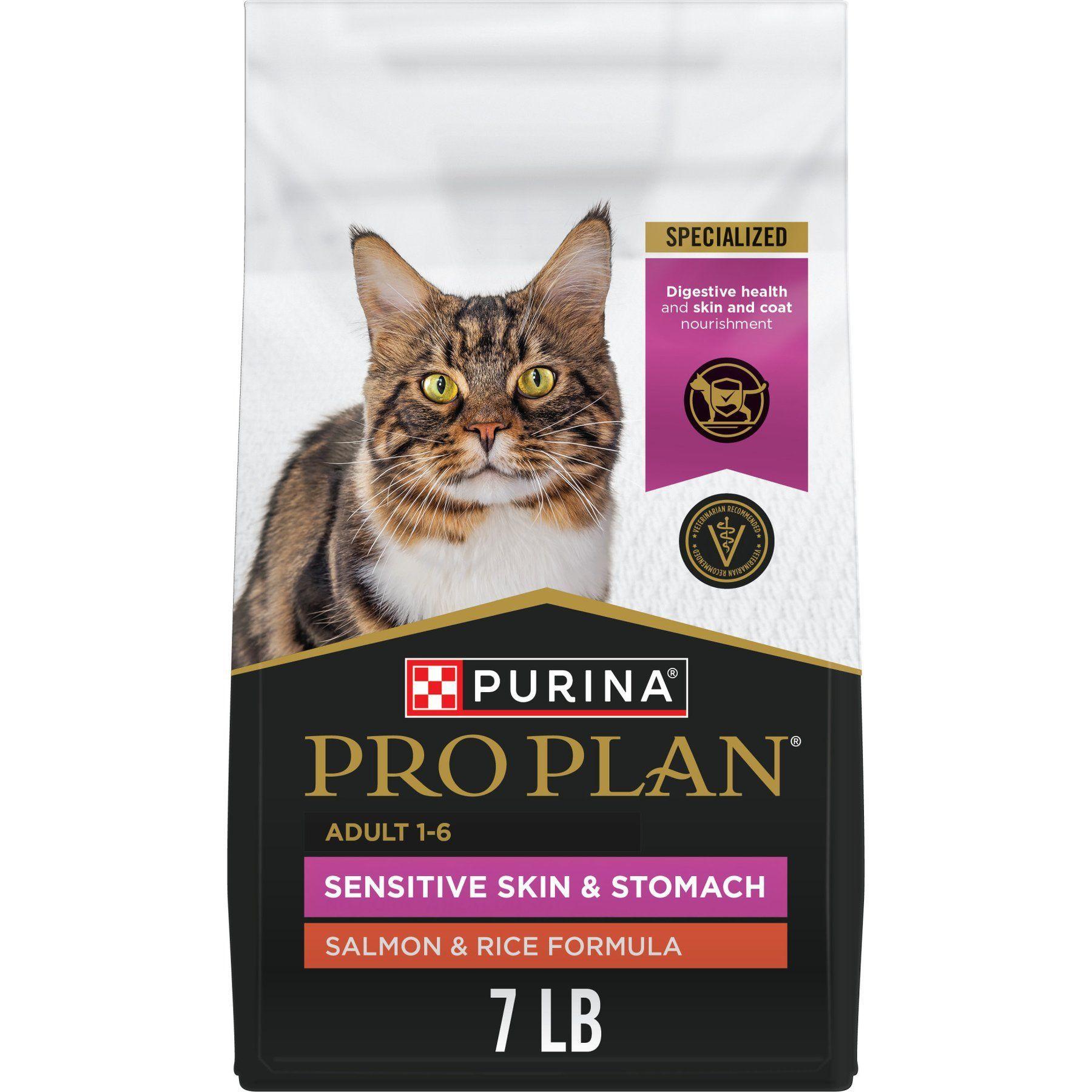
A salmon and rice dry food for adult cats with mild, intermittent stomach upset and sensitive skin.
Webvet may earn a commission when you click through to Chewy, at no extra cost to you.
This Purina Pro Plan cat food for sensitive stomach and skin is a dry kibble built around salmon, which Purina describes as a highly digestible formula for digestive support. It is the pick for owners who want an easy-to-find adult dry food that combines a fish protein with a skin and stomach focus.
It is listed at $28.08 on Chewy for a 7-lb bag when checked in November 2026. Check the AAFCO statement and calorie line on the bag before you buy, since those are the details that let you compare it with your cat's current food.
- Suits: adult cats that eat dry food well, have occasional soft stool or vomiting, and are otherwise healthy.
- Skip it: cats with a known or suspected fish reaction, kittens, and any cat with weight loss, blood, or ongoing vomiting that has not yet been examined.
Hill's Science Diet Adult Sensitive Stomach & Sensitive Skin Chicken & Vegetable Entree Wet Cat Food: best wet food for a sensitive stomach
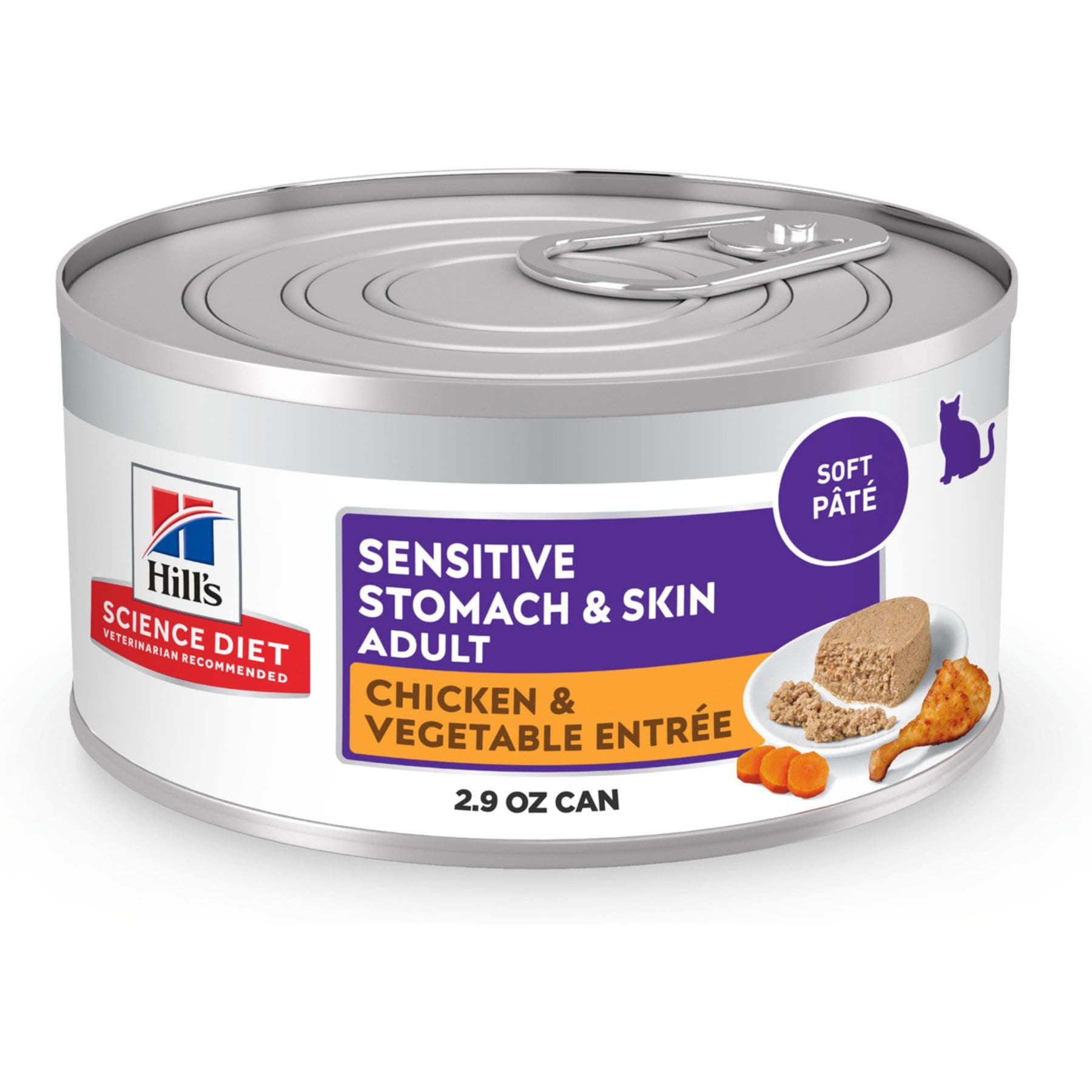
A chicken wet food in small cans for adult cats with a sensitive stomach that eat wet food best.
Webvet may earn a commission when you click through to Chewy, at no extra cost to you.
Hill's lists chicken broth, chicken, and pork liver as the first ingredients and 88 kcal per 2.9-oz can. The maker states that AAFCO feeding tests substantiate complete and balanced nutrition for adult maintenance, and describes it as highly digestible with prebiotic fiber, vitamin E, and omega-3 and omega-6 fatty acids.
The case of 24 is listed at $47.53 on Chewy when checked in November 2026. The small can size suits cats that eat little at each meal, since you can open a fresh can more often.
- Suits: adult cats that prefer wet food or need more moisture, and cats that eat small meals.
- Skip it: kittens and pregnant or nursing cats, which Hill's does not recommend it for, and cats with a chicken reaction.
Royal Canin Feline Care Nutrition Digestive Care Adult Dry Cat Food: best digestive-care dry food
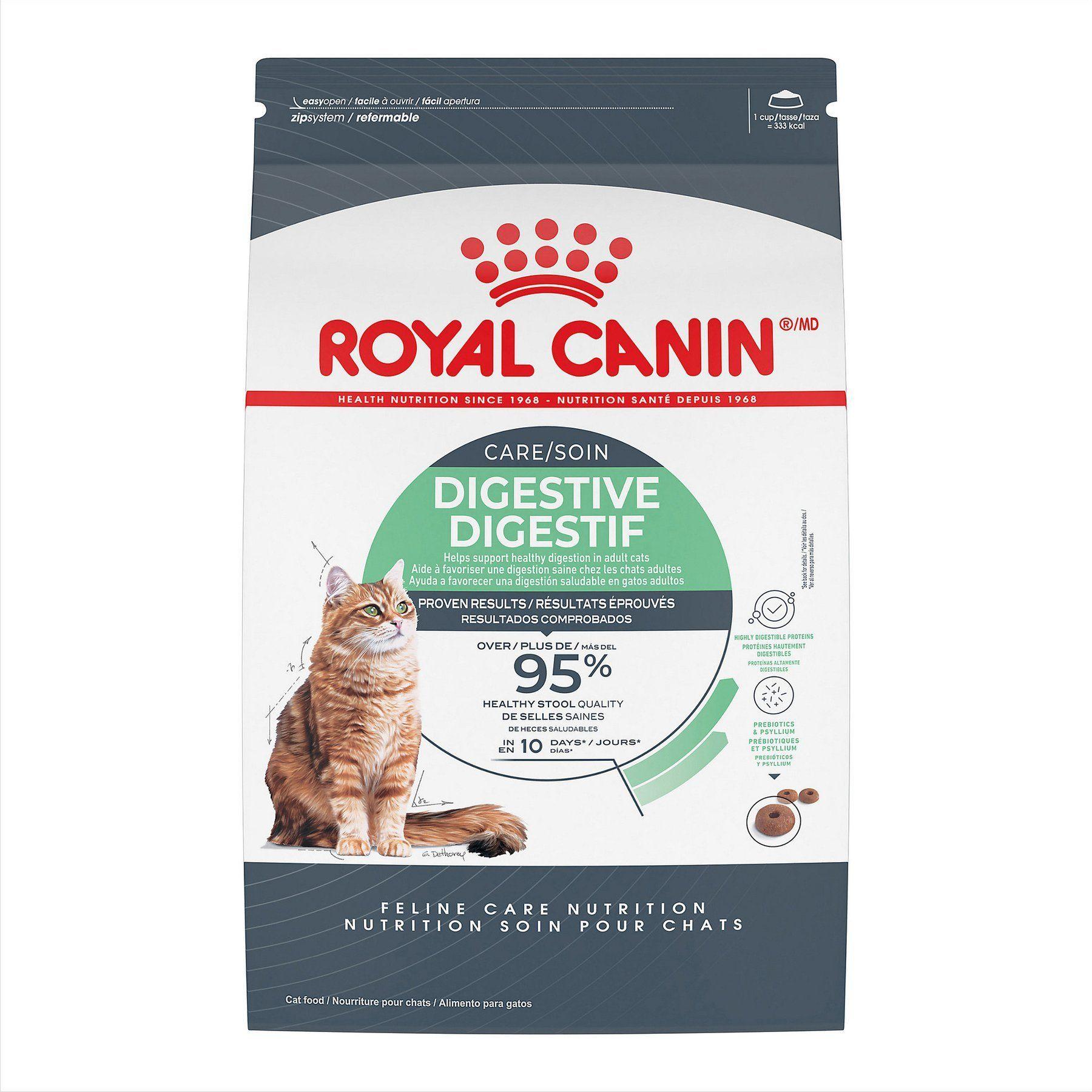
A dry digestive-care food with prebiotics and psyllium for adult cats that eat too fast and bring food up.
Webvet may earn a commission when you click through to Chewy, at no extra cost to you.
This Royal Canin sensitive stomach cat food is made for cats that scarf their food and regurgitate it, according to the catalog description. Royal Canin lists brewers rice and chicken by-product meal as the first ingredients, about 333 kcal per cup, and a blend of prebiotics and fibers that includes psyllium.
The label guarantees at least 36.0% crude protein and 13.0% crude fat, with no more than 4.8% crude fiber, and the maker states it is formulated to meet AAFCO maintenance profiles. It is listed at $42.99 on Chewy for a 6-lb bag when checked in November 2026.
- Suits: adult cats that bring kibble back up soon after gulping it, and owners who want a fiber-supported dry food.
- Skip it: cats with a suspected chicken, wheat, or soy reaction, and any cat whose vomiting is frequent or comes with other signs.
Purina ONE +Plus Sensitive Skin & Stomach Adult Natural Digestive Dry Cat Food: best budget sensitive stomach food
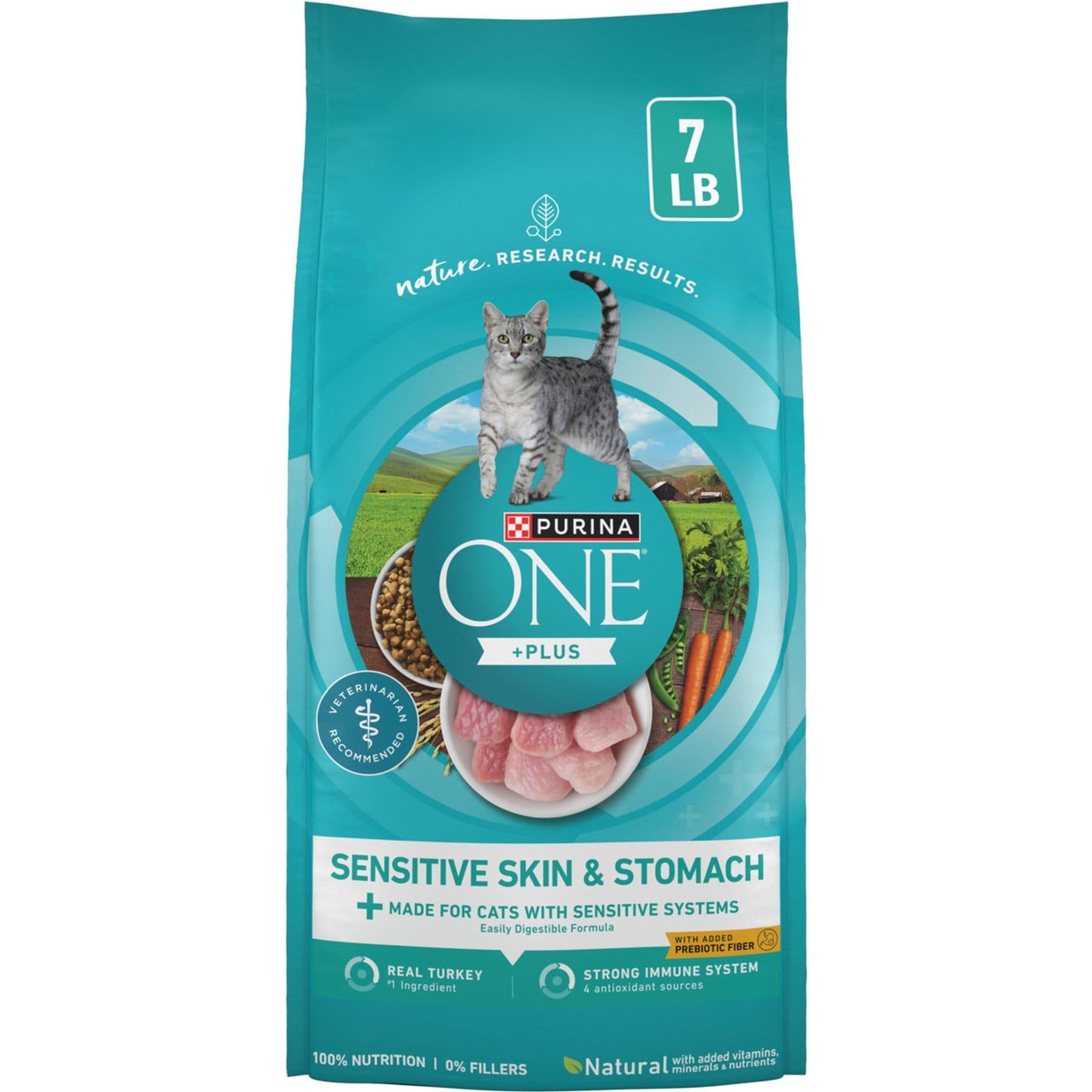
An affordable turkey-first dry food with prebiotic fiber for adult cats with mild digestive sensitivity.
Webvet may earn a commission when you click through to Chewy, at no extra cost to you.
This Purina ONE cat food for sensitive stomach lists real turkey first and, per the catalog, adds prebiotic fiber plus omega fatty acids for skin and coat. It is the lowest-priced pick here and still a mainstream adult formula.
It is listed at $17.97 on Chewy for a 7-lb bag when checked in November 2026. Turkey is a useful alternative protein if your cat's current food is chicken or fish based and you want a simple change.
- Suits: adult cats with mild, occasional digestive upset on a tighter budget.
- Skip it: cats with a turkey reaction and cats that need a vet-directed diet.
Nulo Prowess Sensitive Stomach Chicken & Duck Pate Adult Wet Cat Food: best small-can pate
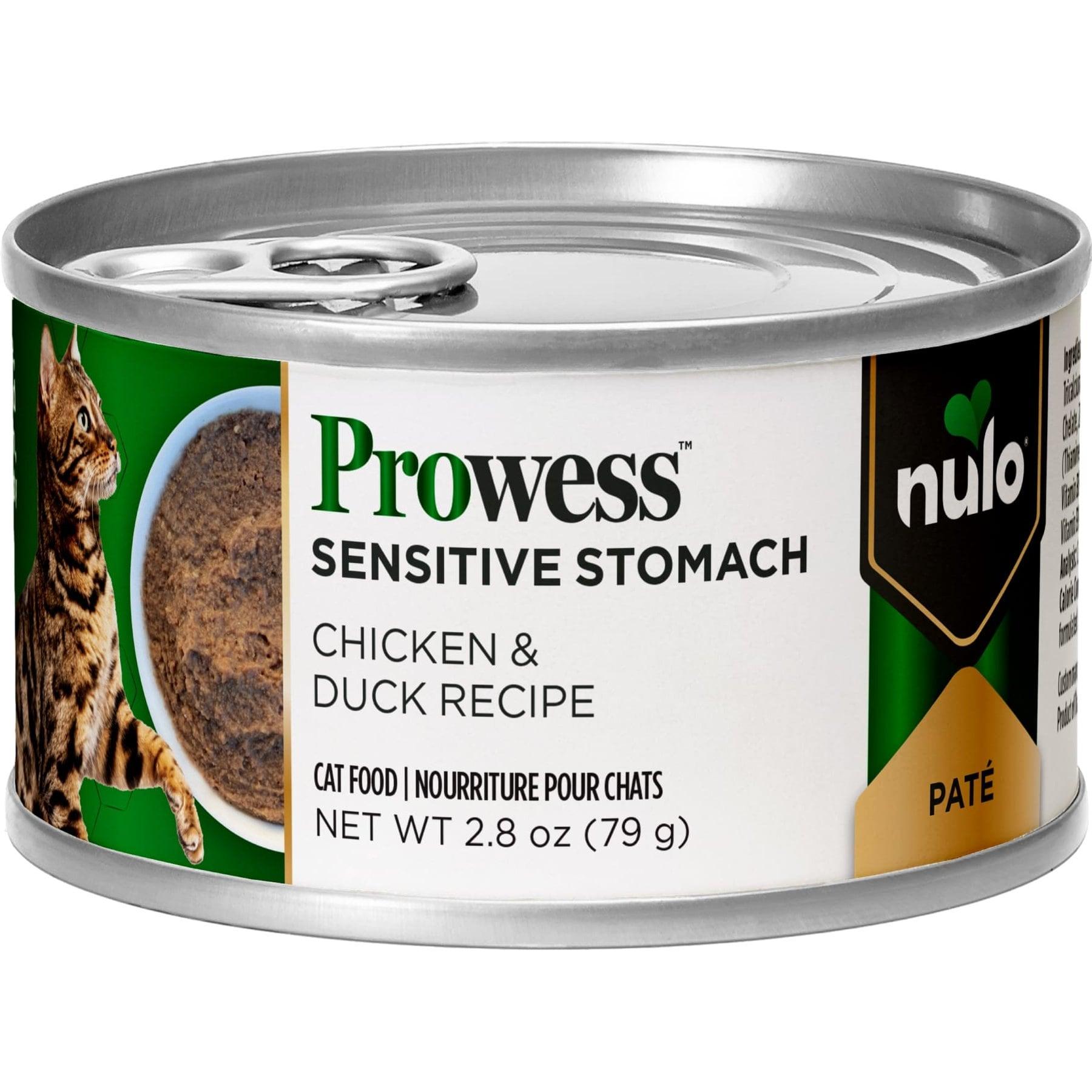
A small-can chicken and duck pate with pumpkin and brown rice for adult cats that eat little at a time.
Webvet may earn a commission when you click through to Chewy, at no extra cost to you.
This pate is made with chicken and duck as its animal proteins, with pumpkin and brown rice included as easily digestible ingredients, according to the catalog description. The 2.8-oz cans are small enough to serve fresh at each meal for a cat that picks at food.
The case of 12 is listed at $24.89 on Chewy when checked in November 2026. A smooth pate also suits cats that do better with a soft texture.
- Suits: adult cats that prefer pate and eat small, frequent meals.
- Skip it: cats with a chicken or poultry reaction and cats under a vet's diet plan.
Veterinary GI diets: only with your vet's authorization
The next two foods are veterinary diets, sometimes called prescription GI diets. Chewy asks for your veterinarian's authorization at checkout, and they are meant for a cat whose vet has examined it and chosen the diet. They are not an upgrade to try at home.
Hill's Prescription Diet i/d Gastrointestinal Cat Food: best veterinary GI diet
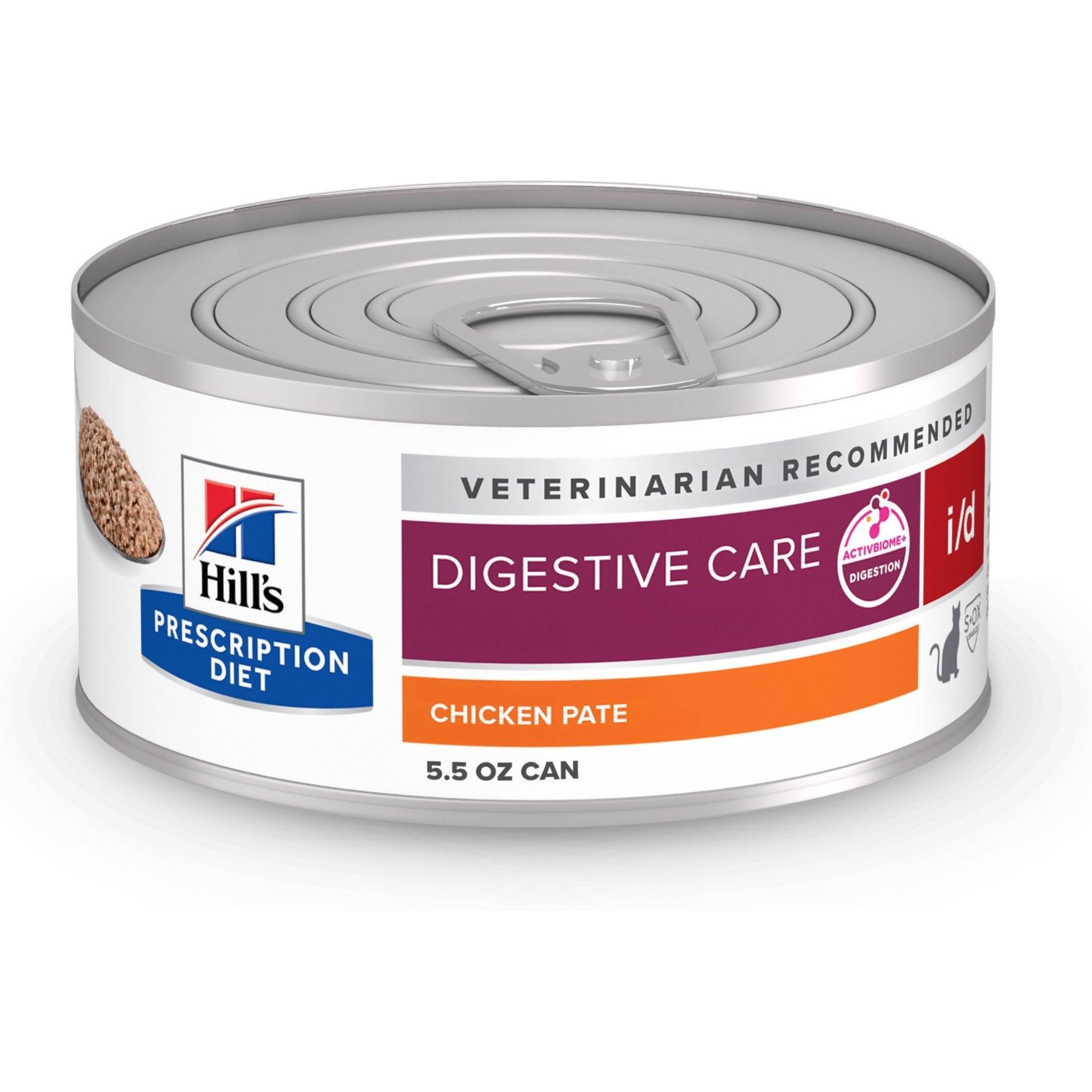
A veterinary GI wet food your vet may prescribe for a cat with a diagnosed digestive problem.
Webvet may earn a commission when you click through to Chewy, at no extra cost to you.
Hill's lists i/d wet at 171 kcal per 5.5-oz can and describes it as highly digestible, with a prebiotic blend, added electrolytes, and B vitamins. The maker tells owners to ask their veterinarian for specific feeding instructions, which reflects how this food is meant to be used.
The 24-can case is listed at $83.99 on Chewy when checked in November 2026, and it needs a veterinarian's authorization to buy.
- Suits: cats with a digestive diagnosis whose vet has chosen i/d.
- Skip it: any cat that has not been examined; it is not a self-chosen sensitive stomach food.
Purina Pro Plan Veterinary Diets EN Gastroenteric Wet Cat Food: best veterinary GI diet alternative
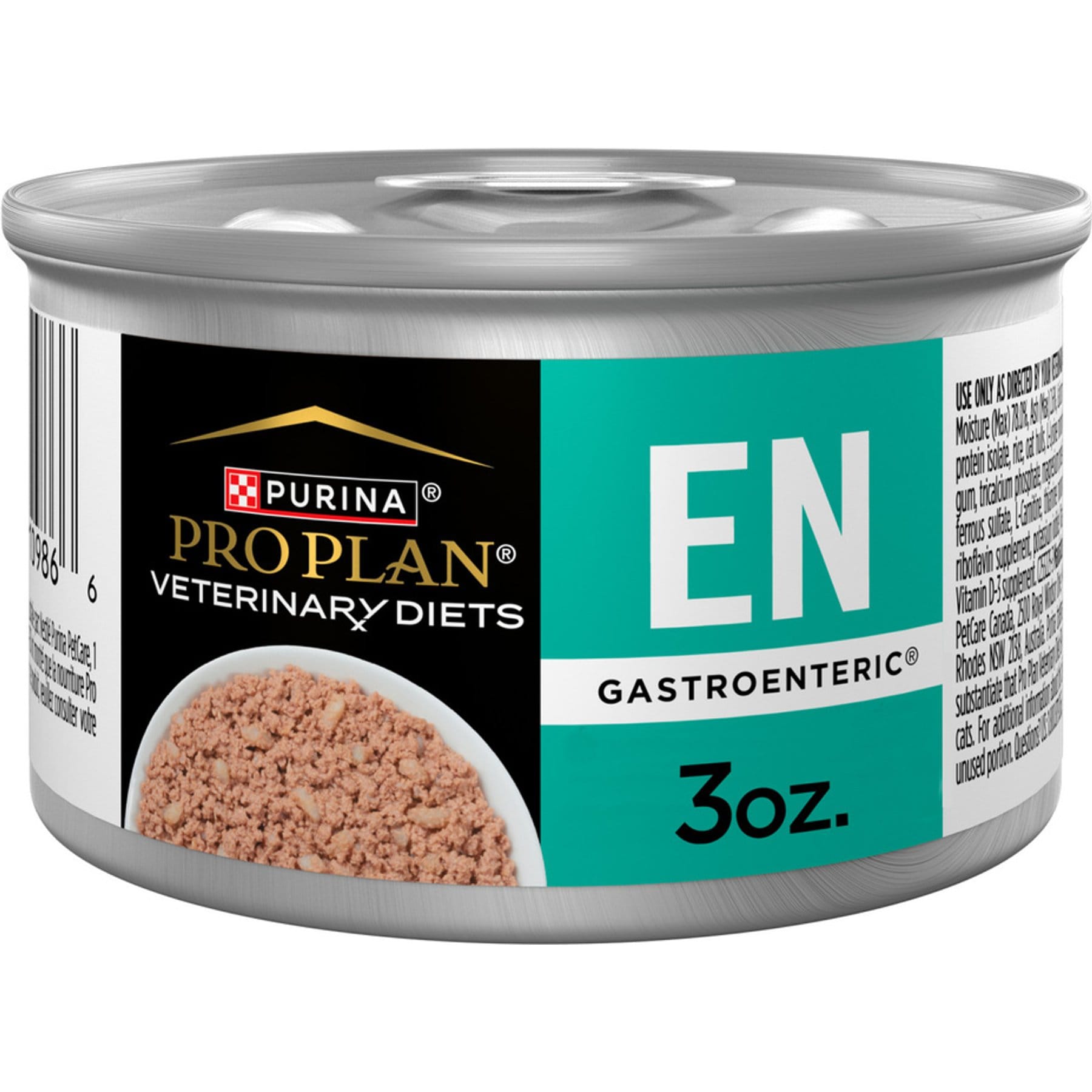
A veterinary GI wet food your vet may choose as an alternative for a cat with a digestive diagnosis.
Webvet may earn a commission when you click through to Chewy, at no extra cost to you.
Purina describes EN Gastroenteric as containing highly digestible nutrients with omega-3 and omega-6 fatty acids, and lists it as optimized for low carbohydrates and high protein. The catalog notes it for adult cats and growing kittens, so it is one of the few GI options a vet may use for a young cat.
It is listed at $56.99 on Chewy for 24 3-oz cans when checked in November 2026, and Chewy asks for veterinary authorization.
- Suits: cats whose vet prefers EN, including kittens when the vet directs it.
- Skip it: cats without a veterinary diagnosis and plan.
SponsoredVet care that's always there
Unlimited video calls and messaging with licensed vets for less than a typical vet visit. One membership covers up to five pets.
Use code Pets60
Plans start at $12/month · covers up to 5 pets
- Licensed vets in most states
- Rx for 150+ conditions
- 4.7 on Trustpilot
How to choose a sensitive stomach cat food: digestibility, fat, fiber, and protein source
Start with the signs, then the label. The table below matches what you see in your cat to a first food step or a vet visit, because some signs rule out any home food change.
| What you see | Likely first food step | Wet or dry | Vet first? |
|---|---|---|---|
| Occasional vomiting soon after meals, cat otherwise bright and eating | Higher digestibility, a consistent complete diet, smaller and more frequent meals | Either; the form your cat eats reliably | Not first, unless it happens more than once a week or lasts over 1 to 2 days |
| Soft stool after a recent food or treat change, no other signs | Go back to the old food, then switch over at least a week | Keep the form your cat already eats | Not first, unless it lasts more than two days |
| Vomiting or soft stool with itchy skin | A vet-run elimination diet trial, not an over-the-counter food | As your vet directs | Yes, vet first |
| Vomiting or diarrhea with weight loss | No food change until your cat is examined | Not a food decision yet | Yes, vet first |
| Blood in vomit or stool | No food change until your cat is examined | Not a food decision yet | Yes, vet first and promptly |
| Lethargy, weakness, or poor appetite with stomach signs | No food change until your cat is examined | Not a food decision yet | Yes, vet first and promptly |
| Cat has stopped eating | No home food trial | Not a food decision | Yes, urgent |
Four things on the label decide whether a food is likely to suit a sensitive stomach: digestibility, fat, fiber, and the protein source. Words such as natural, organic, healthy, or gentle on the front of the bag do not tell you any of these. Purina, for example, calls its sensitive skin and stomach formula gentle, which describes the product's purpose rather than a measured standard.
When weight loss, blood, lethargy, or a poor appetite is part of the picture, it is vet first, food second.
Cornell Feline Health Center calls reading the nutrition label "the best way to compare cat foods," and says foods carrying an AAFCO nutritional guarantee are considered complete and balanced. Start there, then look at the four points below.
What food is best for cats with sensitive stomachs?
The best food for a cat with a sensitive stomach is a highly digestible, complete and balanced diet with a named animal protein and moderate fat, fed consistently. Tufts Petfoodology lists the overall digestibility of the food among the diet factors behind stomach signs. Cats are obligate carnivores, so animal protein should lead the label.

Digestibility
An easily digestible cat food leaves less undigested material moving through the gut. VCA Animal Hospitals explains that with highly digestible GI diets, a pet will "digest and absorb a larger percentage of the nutrients." Labels rarely print a digestibility figure, so makers' descriptions of highly digestible ingredients are the main clue.
A salmon and rice formula such as Purina Pro Plan Adult Sensitive Skin & Stomach Salmon & Rice Formula Dry Cat Food, 7-lb bag is described by its maker as highly digestible, and that is the kind of claim worth looking for on any food you are considering.
Fat
Fat is the nutrient most often adjusted for an upset stomach, but compare it correctly. Tufts Petfoodology says fat comparisons "should be on a 'per 1000 kilocalories' or 'per 100 kilocalories' basis, not percent." If the current food is high in fat, Tufts suggests trying one that is at least 25% lower.
Veterinary GI diets go further. A review by Zoran in Clinical Techniques in Small Animal Practice describes therapeutic GI diets as containing low fat, for example under 15% on a dry matter basis in cats. That level of restriction is a vet's call, not a goal for an over-the-counter food.
Fiber, prebiotics, and diarrhea
Dietary fiber can help some cats with soft stool or mild diarrhea, but it is hard to judge from a label. Tufts notes "it is extremely difficult to compare the fiber content between diets" because different fibers act differently in the gut. VCA adds that for conditions that respond to fiber, it can help normalize gut motility.
Prebiotics are fibers that feed beneficial gut bacteria. When choosing cat food for diarrhea that is mild and short-lived, a formula with prebiotic fiber and psyllium, such as Royal Canin Feline Care Nutrition Digestive Care Adult Dry Cat Food, 6-lb bag, is one label-based option.
Diarrhea that persists is a vet question, not a fiber question.
Protein source and food intolerance
Some cats react to a specific ingredient. The Merck Veterinary Manual defines food intolerance as an adverse reaction that does not involve the immune system, unlike a food allergy. VCA lists beef, fish, chicken, and dairy as the foods most often linked to allergies in cats.
For a cat with an upset stomach on one protein, trying a food built on a different named protein is a common next step. For cats that may have a true food allergy, the limited ingredient cat food and hydrolyzed protein cat food guides cover the vet-guided options.
What is the best cat food for cats that throw up?
The best food for a cat that throws up is a highly digestible, complete and balanced diet fed in smaller, more frequent meals, but only once a vet has ruled out illness. VCA Animal Hospitals advises offering "smaller amounts of food more frequently during the day" during stomach upset. A cat vomiting more than once a week needs an exam first.
Wet vs dry food for a sensitive stomach
Wet and dry cat food can both work for a sensitive stomach, and neither form is proven better for every cat. The deciding factors are what your cat eats reliably, moisture, how fast it eats, and cost. A cat that eats wet food happily and keeps it down is better served by that than by a dry food it picks at.

Is wet food better for cats with sensitive stomachs?
Wet food is not automatically better, but it helps some cats. Cornell Feline Health Center says canned food has a moisture content of at least 75 percent, compared with six to 10 percent for dry food, and that dry food may be less palatable. Wet suits cats that drink little or eat slowly.
What dry cat food is best for a sensitive stomach?
The best dry cat food for a sensitive stomach is a complete and balanced adult kibble described by its maker as highly digestible, with a named animal protein first and moderate fat. Cornell notes that dry food digestibility can vary with ingredient type and quality, so compare the label, not the bag's front-panel claims.
Dry food is usually the lower-cost form; Cornell notes canned food is generally the most expensive type. Dry food is also the only form that can carry a live probiotic, since Tufts Petfoodology notes canning heat would kill it. Both Purina dry cat food for sensitive stomach picks above, Pro Plan and Purina ONE, are kibble.
Another everyday dry option is Blue Buffalo Tastefuls Chicken & Brown Rice Recipe Sensitive Stomach Adult Dry Cat Food, 5-lb bag, which lists real chicken first and is made for adult cats with sensitive stomachs. It is listed at $20.98 on Chewy when checked in November 2026.
Choosing wet, canned, or soft food
The best wet cat food for a sensitive stomach is one with small portions you can serve fresh, a named animal protein, and a texture your cat finishes. Canned food suits cats that need more water and cats that vomit after gulping dry kibble.
- Hill's Science Diet Adult Sensitive Stomach & Sensitive Skin Chicken & Vegetable Entree Wet Cat Food, 2.9-oz can, case of 24 is a chicken-based can at 88 kcal per can, per Hill's.
- Nulo Prowess Sensitive Stomach Chicken & Duck Pate Adult Wet Cat Food, 2.8-oz can, case of 12 is a soft pate in small cans for cats that eat little at a time.
For a wider look at canned options for healthy cats, see the best wet cat food guide.
Wet or dry for vomiting and diarrhea
For a cat that vomits soon after eating dry food, the hard kibble itself, eaten fast, may be the trigger, and a wet or soft food eaten more slowly can help. For soft stool, the form matters less than consistency: changing form and recipe at once is a bigger change for the gut than changing one at a time.
Living indoors does not change the choice: pick the form your cat eats reliably. If you want to combine wet and dry, choose foods from the same line where possible and keep the ratio steady from day to day.
When vomiting or diarrhea needs a vet before any food change
Vomiting or diarrhea needs a vet before any food change when it is frequent, lasts more than a day or two, or comes with other signs. Cornell Feline Health Center notes that "even the healthiest cat is apt to vomit now and then," but a food change can delay finding a medical cause, so check the signs below first.
VCA Animal Hospitals advises veterinary care if a cat that otherwise seems well keeps vomiting for more than one to two days, and immediate care when vomiting comes with signs such as lethargy, diarrhea, dehydration, or blood in the vomit. Cornell says cats vomiting more than once a week should be evaluated promptly.
For diarrhea, Cornell advises veterinary care if it lasts longer than a day or two or comes with poor appetite, lethargy, or vomiting. VCA gives a two-day threshold for frequent liquid stools and lists weight loss among the signs of wider illness.

How to tell if a cat has a sensitive stomach?
A cat may have a sensitive stomach if it has occasional vomiting or soft stool tied to meals or food changes, while staying bright, eating, and holding weight. Only a vet can confirm it, because VCA lists food intolerance as just one of many causes of vomiting. Ongoing or worsening signs point to a medical problem instead.
Useful notes to bring to the appointment:
- How often the vomiting or diarrhea happens, and how soon after meals.
- Whether vomit contains food, hair, or fluid.
- Every food, treat, and supplement your cat eats, including recent changes.
- Any change in weight, appetite, thirst, energy, or grooming.
These details help your vet separate a food issue from conditions such as gastroenteritis in cats. For the causes behind the signs, see the guides on a cat throwing up, a cat throwing up after eating, cat hairballs, and why your cat has diarrhea and what to do about it.
How to switch foods slowly for a cat with a sensitive stomach
Switching foods slowly protects a sensitive gut. Cornell Feline Health Center notes that an abrupt change in diet may cause diarrhea for a few days, which can be mistaken for the new food failing.

Tufts Petfoodology recommends mixing in an increasing amount of the new food over at least one week, starting at about 90% old and 10% new and reaching 100% new by day 7. Tufts adds that some pets need four to six week transitions.
- Days 1 to 2: about 90% old food and 10% new, then 75% old and 25% new.
- Days 3 to 4: half old, half new.
- Days 5 to 6: about 75% new food, then 90% new.
- Day 7 or later: all new food, if stools have stayed normal.
If stools soften, Tufts says some soft stool can happen during a change. Stay at the last mix that did not cause problems for another day or two, then continue more slowly. For a picky cat, Tufts suggests offering the old and new foods side by side and letting the cat choose.
Keep everything else steady during the switch:
- Treats: Cornell advises keeping treats to no more than 10 to 15 percent of daily calories, and fewer extras make it easier to judge the new food.
- Strictness: for a suspected food sensitivity, Tufts says to be strict about the diet for at least two weeks.
- One change at a time: avoid starting a new supplement or treat in the same week.
Never let a cat go without eating to force it onto a new food. Cornell explains that hepatic lipidosis follows a cat's near-total avoidance of food and can be fatal if not promptly reversed. If your cat refuses the new food, go back to the old one and call your vet.
If signs are serious at any point, Tufts advises calling your veterinarian, as something else may be going on. After a bout of diarrhea, VCA says cats can usually go back to their regular diet over seven to ten days once stools return to normal.
Sensitive skin and stomach formulas, probiotics, and veterinary GI diets
Cat food for sensitive skin and stomach problems usually pairs a digestible recipe with omega fatty acids for the coat, and it is the largest over-the-counter category. Tufts Petfoodology says the most common meaning of "sensitive" is a food with fewer ingredients than others in the same line, though the term is not regulated.
Sensitive skin and stomach formulas
The skin and stomach link is real for some cats. VCA says cats with allergies often have chronic, year-round itching and skin inflammation, and some also vomit or have diarrhea. The Merck Veterinary Manual notes that food allergies usually cause GI signs.
Without a prescription, the sensible choice is a complete adult formula built on a protein your cat tolerates. Options include Purina Pro Plan Sensitive Skin & Stomach (salmon) and Purina ONE +Plus Sensitive Skin & Stomach Adult Natural Digestive Dry Cat Food, 7-lb bag, a turkey-first dry food at $17.97 on Chewy when checked in November 2026.
- Wet cat food for sensitive skin and stomach: Hill's Science Diet's chicken entree combines prebiotic fiber with vitamin E and omega-3 and omega-6 fatty acids, per Hill's.
- Dry cat food for sensitive skin and stomach: Pro Plan is built on salmon and Purina ONE on turkey, so choose by the protein your cat already tolerates.
- Any form: expect a gradual effect over weeks, not days, and keep the diet consistent while you judge it.
These foods do not diagnose a food allergy. The Merck Veterinary Manual says food allergy cannot be told apart from food intolerance and skin testing is unreliable, so a food trial is used, feeding only a single novel protein or a hydrolyzed protein diet. VCA warns retail foods are not made with protocols that prevent cross-contamination, which matters for a trial.
The sources differ on trial length. Merck says trials for GI signs should continue for two to four weeks, while VCA says an elimination trial takes at least eight weeks. Your vet will set the length based on your cat's signs.
Probiotics
VCA describes probiotics as supplements containing live microorganisms considered beneficial, with mild gas or stomach discomfort as possible side effects. Tufts Petfoodology says there is not yet evidence they improve wellness in otherwise healthy animals, and one study found only 2 of 15 popular pet probiotics had labels matching their contents.
Tufts advises waiting unless your veterinarian specifically recommends a probiotic. If your vet does, Purina Pro Plan Veterinary Diets FortiFlora Cat Supplement, 30 count is a probiotic powder for adult cats and kittens, listed at $30.99 on Chewy when checked in November 2026. Ask your vet which product and how long. The cat probiotics guide covers the evidence in more depth.
When a veterinary GI diet is needed
A gastrointestinal veterinary diet is needed when a vet has diagnosed a digestive problem, or when vomiting or diarrhea keeps returning despite a sensible over-the-counter food. Tufts describes therapeutic diets as "specifically designed (and tested)" for pets with gastrointestinal issues, and Cornell notes inflammatory bowel disease is usually treated with dietary therapy, antibiotics, and/or steroids.
Evidence supports these diets for chronic vomiting. In a study of 28 cats in Frontiers in Veterinary Science, the authors concluded that gastrointestinal therapeutic diets alone can be effective in managing chronic vomiting. It was a small, four-week study.
There is no single vet-recommended food for every sensitive stomach; your vet picks a gastrointestinal diet for your cat's diagnosis. Common choices include Hill's Prescription Diet i/d Gastrointestinal Cat Food, 5.5-oz, 24 ct and Purina Pro Plan Veterinary Diets EN Gastroenteric Wet Cat Food, 3-oz can, case of 24, and each needs your vet's authorization on Chewy.
- A veterinary GI diet is not the same as Royal Canin Digestive Care, a retail digestive cat food for adult cats that needs no authorization.
- It is a complete diet that replaces the regular food, so mixing in other foods or treats undoes the plan.
- It is chosen, and later reviewed, by your vet based on how your cat responds.
Cat food for sensitive stomach questions
Frequently Asked Questions
What cat food is easiest to digest?
Foods made for high digestibility, such as veterinary GI diets and sensitive stomach formulas described by their makers as highly digestible, are generally easiest to digest. Moderate fat also helps: Tufts Petfoodology suggests comparing fat per 1,000 kilocalories and trying a food at least 25% lower if the current one is high.
What should I feed a cat with diarrhea?
For mild diarrhea in a cat that is otherwise well, keep the current food steady, stop new treats, and keep water available. VCA says a veterinarian may advise withholding food briefly or feeding small amounts of a veterinary diet. Diarrhea lasting more than two days, or with blood, lethargy, or vomiting, needs a vet.
Is sensitive skin and stomach cat food different from regular food?
Usually, yes, but the term is not regulated. These foods often use fewer ingredients, a single main protein, and added omega fatty acids for skin, and makers typically describe them as having higher digestibility. They are not diagnostic trial diets for a food allergy, which your vet runs with a novel or hydrolyzed protein food.
Is soft food easier on a sensitive stomach?
Soft food can be easier for some cats. A pate texture is easy to eat slowly, and canned food carries at least 75 percent moisture, according to Cornell Feline Health Center. That suits cats that gulp kibble or drink little. Soft food is not proven better for every cat, so the food your cat tolerates comes first.
What is a gastrointestinal cat food?
A gastrointestinal cat food is a veterinary diet formulated for cats with digestive upset, often called a prescription GI diet. VCA describes these as formulated specifically for GI upset, and the diarrhea guidance adds that they contain a balance of fibers that feed good gut bacteria. Your vet authorizes and directs them after an exam.
Veterinarian · BVMS MRCVS
Dr. Pippa Elliott, BVMS, MRCVS, is a veterinarian with nearly 30 years of experience in companion animal practice. Dr. Elliott earned her Bachelor of Veterinary Medicine and Surgery from the University of Glasgow. She was also designated a Member of the Royal College of Veterinary Surgeons. Married with 2 grown-up kids, Dr. Elliott has a naughty Puggle named Poggle, 3 cats and a bearded dragon.
Related reading

Proviable for Dogs: Forte, DC, and KP Compared, With Dosing and Safety

Dog Diarrhea at Night: Why It Happens and What to Do

Dog Diarrhea After Boarding: Causes and What to Do Next
