Best Kitten Food: Wet and Dry Options by Age
Compare three kitten-food options by life stage and texture. Learn how to read nutritional statements, weigh wet and dry formats, and choose a practical feeding plan without unsupported rankings.

This article contains affiliate links. Webvet may earn a commission when you buy through them, at no extra cost to you.
The best kitten food is complete for growth, appropriate to your kitten's feeding stage, and practical for you to provide consistently. A soft food for a kitten learning to eat is a different choice from dry food for a kitten already eating independently. Start with that distinction before comparing brands, ingredients, or bag sizes.
This guide compares three options using manufacturer information and nutritional-selection principles. We have not conducted hands-on feeding tests, and these are not three foods every kitten needs. The useful choice depends on age, health, texture preference, and the feeding plan you agree with your veterinarian.
Choose complete kitten nutrition
Look for the nutritional adequacy statement on the actual package. In the United States, a complete and balanced food for growth, or an appropriate all-life-stages food, serves a different purpose from one labeled only for adult maintenance or intermittent feeding. “Kitten” on the front is helpful, but the adequacy statement gives more precise information. The FDA explains how complete-and-balanced statements work.
Next, consider what your kitten can eat. A newborn dependent on milk cannot use a dry-food recommendation in place of proper neonatal feeding. A weaning kitten needs a gradual transition and monitoring, while an older kitten may manage wet food, dry food, or a measured combination. Our kitten age chart helps you compare development when the history is uncertain.
- 1Match the food to life stage and feeding ability.
- 2Confirm that the food is complete and balanced for the intended use.
- 3Compare daily feeding needs and practical handling, not just package size.

| Food | Most useful comparison role | Important limitation |
|---|---|---|
| Purina Pro Plan Kitten Chicken & Rice | Dry option for a growing kitten who manages the texture | Not a substitute for milk feeding in a dependent newborn |
| Hill's Science Diet Kitten Chicken Recipe | Another complete dry option to compare for growth | Not automatically the right food for a kitten with a diagnosed medical need |
| Royal Canin Mother & Babycat Ultra-Soft Mousse | Soft texture during weaning and early growth, with manufacturer age guidance of 1–4 months | Not newborn kitten milk replacer; reassess the choice as the kitten develops |
What “healthy” should mean when shopping
A healthy choice supports the whole diet, not one fashionable ingredient. Do not rank foods solely by a protein percentage copied from the front of a bag, a grain-free claim, or whether a word sounds familiar. Wet and dry labels also contain different amounts of moisture, so their printed percentages are not directly interchangeable. Your veterinarian can help interpret the information in the context of your kitten.
The WSAVA nutrition resources encourage useful questions about manufacturer expertise, formulation, quality control, and nutritional information. WSAVA does not certify a list of approved retail foods. A claim that one brand is “WSAVA approved” should not replace checking the actual food and its intended use.
- Can you identify the exact formula and life-stage statement?
- Is calorie information available?
- Can the manufacturer answer nutrition and quality-control questions?
- Can you store and serve the food appropriately?
- Does the kitten eat enough of it and grow appropriately?
These questions are also a useful way to discuss “vet recommended kitten food.” Ask what makes a specific formula suitable for your kitten rather than looking for a universal badge. A kitten recovering from illness, failing to grow, or needing a therapeutic diet may require a different decision from a healthy kitten choosing between ordinary growth foods.

Wet kitten food and early weaning
Wet food can provide a soft texture that is useful during weaning and for kittens who prefer it. It also contributes water to the diet. The relevant question is whether the exact food is complete for the intended life stage and whether the kitten is actually consuming an adequate amount. A few exploratory licks are not proof that a young kitten no longer needs other feeding support.
Royal Canin positions its Mother & Babycat Ultra-Soft Mousse for early kitten growth and the transition from milk toward solid food, with a stated kitten age range of 1–4 months. That makes its role different from a generic adult pâté or a complementary lickable treat. Follow the exact product's feeding directions and veterinary advice rather than using the texture alone to determine suitability.

Wet-food handling that makes the choice workable
Use a clean, shallow dish that the kitten can reach comfortably. Serve an appropriate portion and follow the manufacturer's directions for storage and leftovers. Wash dishes regularly. In a multi-cat home, observe feeding closely enough to know which animal ate the meal; an empty bowl does not prove that the smallest kitten received its share.
- Separate animals temporarily if one takes another's food.
- Keep opened food stored according to its label.
- Note appetite changes rather than covering them with increasingly tempting extras.
- Introduce new textures gradually when the kitten is stable and eating.
Wet food for an indoor kitten does not need to carry “indoor” in large print to be useful. Growth needs still matter. Evaluate the food's adequacy statement and the kitten's intake, body condition, and activity. If you mix wet and dry foods, account for both in the daily ration instead of giving the full suggested amount of each.
Dry kitten food for growing kittens
Dry kitten food can be convenient to measure, store, and use in suitable enrichment activities. Choose a complete growth formula and make sure your kitten manages its texture comfortably. Fresh drinking water remains important. Dry food's convenience does not establish that unlimited access is appropriate for every kitten or every household.
Both Purina Pro Plan Kitten Chicken & Rice and Hill's Science Diet Kitten Chicken Recipe provide dry options to discuss with your veterinarian. Their exact formulas, calorie densities, and feeding directions need to be read individually. Changing brands does not mean that the same scoop contains the same daily energy. Use the current package rather than assuming that yesterday's portion translates unchanged.

Dry food in a multi-cat household
When an adult cat and a kitten share a home, their feeding plans may differ. Separate meals can make it easier to see what each animal consumes. Avoid letting the kitten depend on occasional access to an adult's maintenance diet while the adult eats the kitten's growth food. Ask your veterinarian how to organize meals if separation is difficult.
- Measure the daily amount before dividing it among meals.
- Include kibble used for training or food puzzles.
- Keep the bag or its identifying information so the formula and lot can be checked.
- Store food securely and follow the manufacturer's storage instructions.
A kitten who suddenly struggles with dry food may have a health problem rather than a new preference. Dropping food, chewing unusually, refusing meals, or seeming painful deserves assessment. Do not assume that switching to a softer food has resolved the cause simply because the kitten manages to eat it.

Compare the three food options
These selections cover two common decisions: choosing a complete dry growth food and choosing a soft early-weaning texture. None is labeled here as a universal winner, a treatment for allergies, or a cure for digestive problems. The comparison uses product purpose and practical fit, not an invented taste score or a claim that we fed the foods to test kittens.
Start with the option that matches the feeding stage. Then compare the exact label, availability, portion requirements, and your kitten's response. If the current complete food is working well, a new recommendation does not automatically create a reason to switch. Consistency can be valuable when the kitten is settling into a new home and several other routines are changing.
Purina Pro Plan Kitten Chicken & Rice: dry growth option
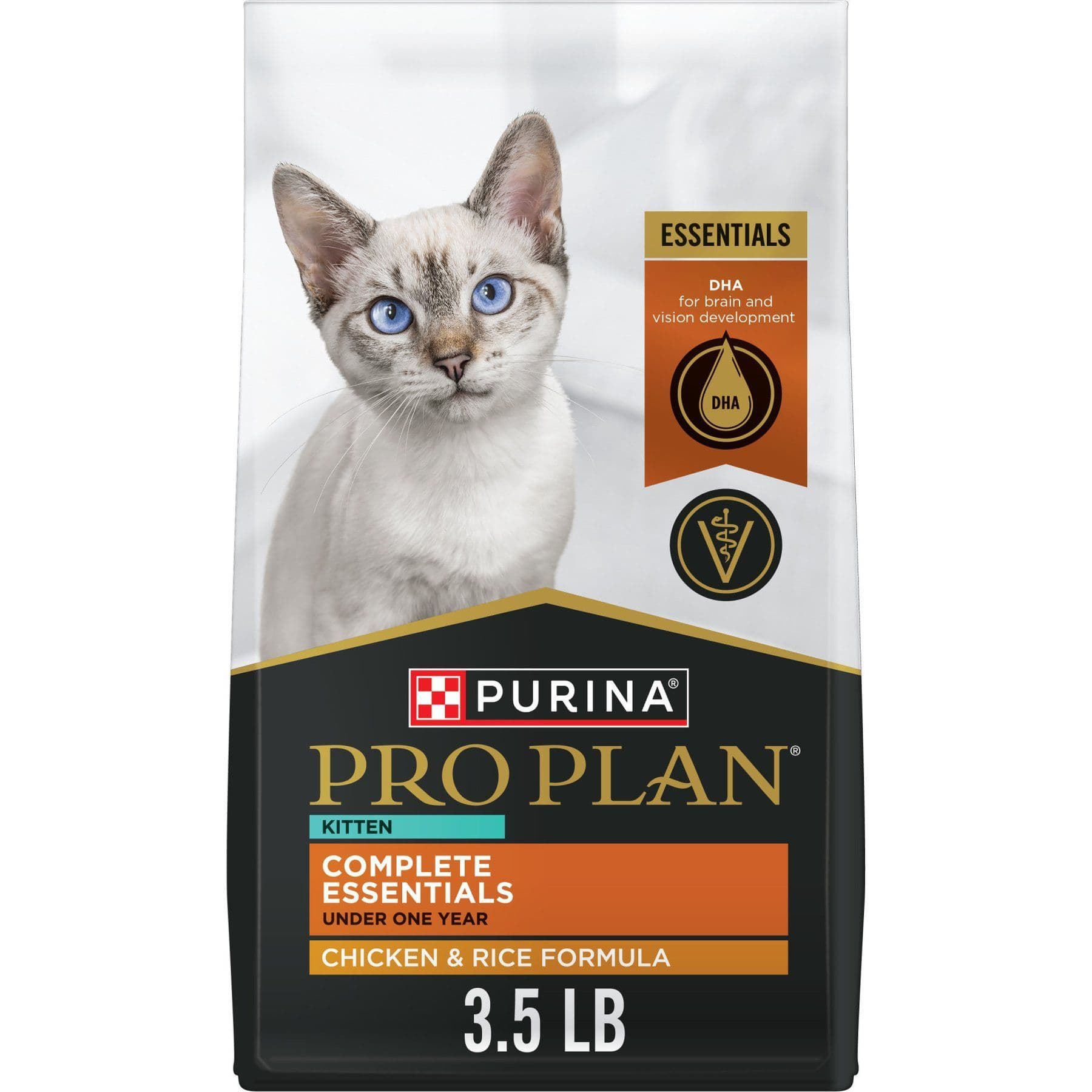
A complete dry growth formula for a kitten who manages kibble; measure the daily amount from the bag's feeding directions rather than guessing by scoop.
Webvet may earn a commission when you click through to Chewy, at no extra cost to you.
The manufacturer's current product page identifies this as a kitten dry formula for the first year of growth and describes chicken as its first ingredient, with DHA and other nutrients. Its role in this comparison is straightforward: an option for a growing kitten ready to manage dry food. Use the package's feeding guide as a starting point and review the kitten's progress with your veterinarian.
Consider it when you want a dry format that fits measured meals or appropriately supervised enrichment. Check the exact formula and bag size when buying, because adult Pro Plan products are not interchangeable with the kitten product. A brand name alone does not establish the life stage.
- Useful fit: a dry-food feeding routine for a growing kitten.
- Check before buying: kitten formula identity, daily quantity, and calorie information.
- Limitation: it does not replace specialized feeding support for a dependent neonate or a prescribed medical diet.
Hill's Science Diet Kitten Chicken Recipe: alternative dry option
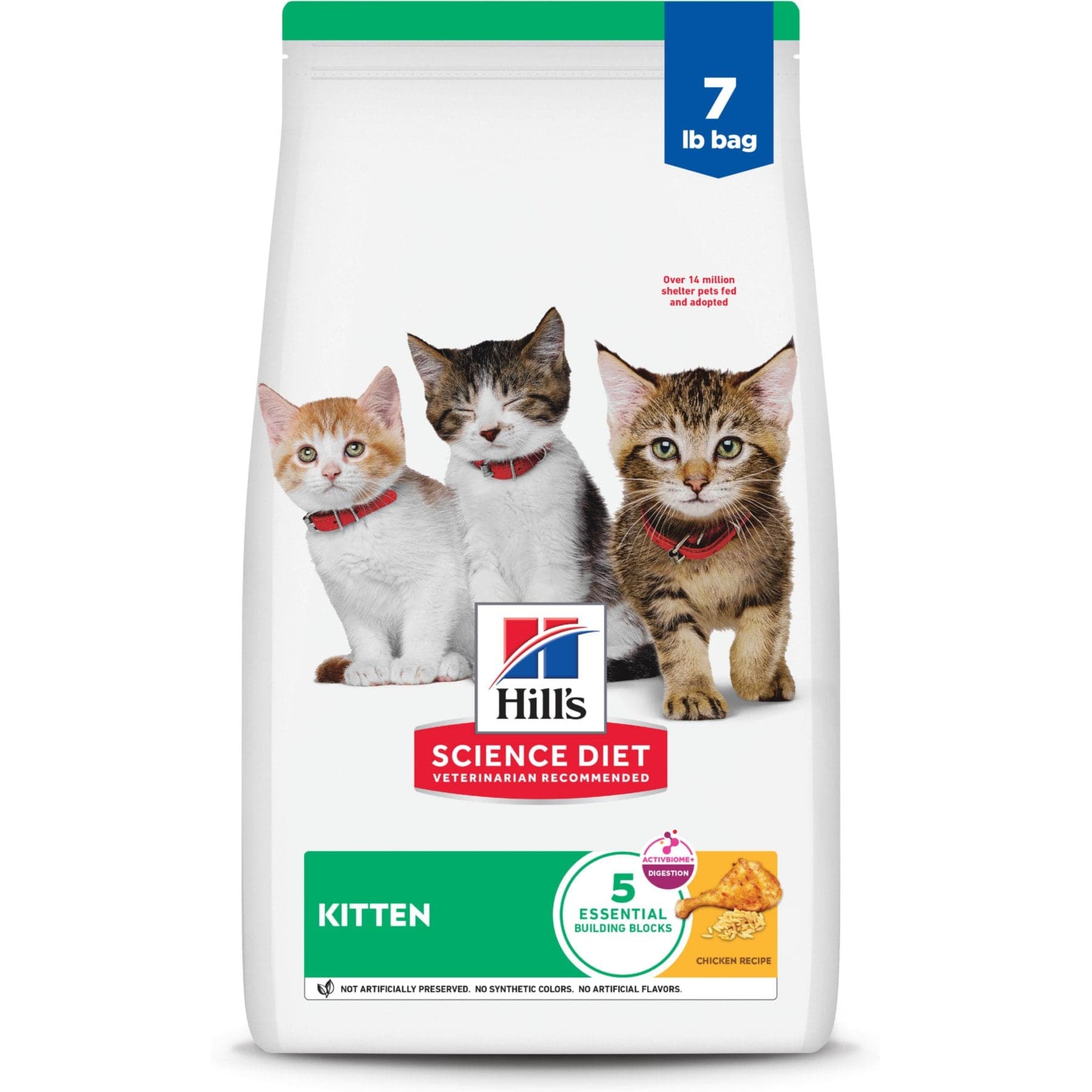
Hill's complete dry kitten formula to compare on the same feeding directions and nutritional statement; useful when a kitten eats it reliably.
Webvet may earn a commission when you click through to Chewy, at no extra cost to you.
Hill's identifies this formula for kittens and also lists reproductive use in pregnant or nursing cats. For a healthy growing kitten, it is another dry option to compare using the exact feeding directions and nutritional statement. The practical choice is whether the kitten eats it appropriately and whether it suits the feeding plan, not whether one front-label phrase sounds more impressive.
Compare the cost of the daily amount rather than the bag price alone. If you switch from a different food, check the calorie density and introduce the new diet gradually when appropriate. Keep a record of appetite and stool changes so you can distinguish a transition problem from an unrelated illness.
- Useful fit: a complete dry growth-food option.
- Check before buying: the kitten formula rather than adult maintenance, and the current serving guide.
- Limitation: it is not a universal answer to persistent vomiting, diarrhea, or poor growth.
Royal Canin Mother & Babycat Ultra-Soft Mousse: early-weaning texture
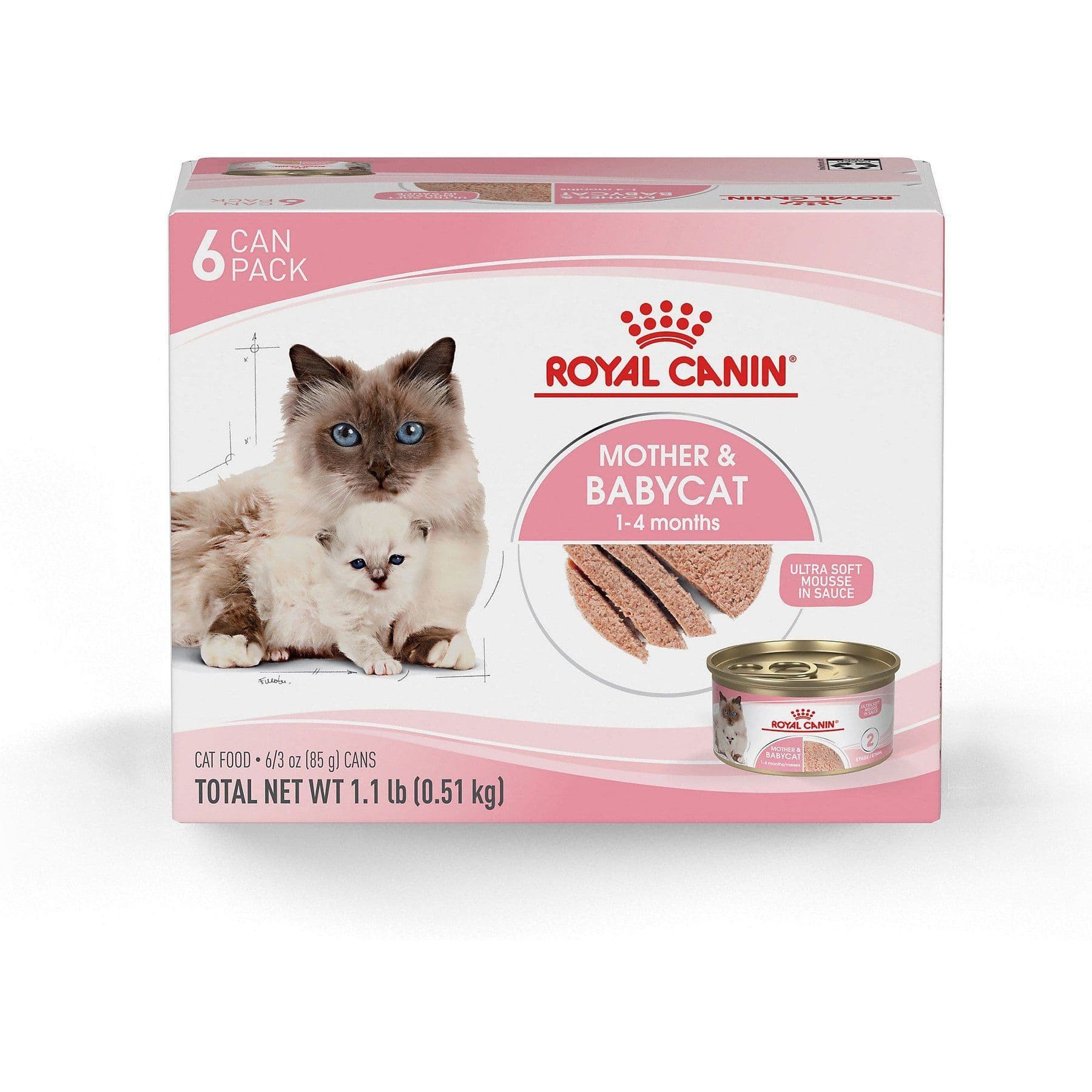
Royal Canin Mother & Babycat mousse is a soft first food that mixes easily into weaning gruel.
Webvet may earn a commission when you click through to Chewy, at no extra cost to you.
This food's distinguishing feature in the comparison is its early-stage soft texture and the manufacturer's specific 1–4-month kitten positioning. It can be considered as part of an appropriate weaning plan. That positioning does not make it a newborn milk replacer, and a young kitten's ability to eat a little mousse does not prove that weaning is complete.
Plan how you will serve, store, and monitor it. Wet food requires more attention to opened portions and leftovers than an unopened dry bag. As the kitten grows, reassess texture, intake, and the next complete growth food with your veterinarian. The same product can serve a useful early role without needing to be the only food throughout kittenhood.
- Useful fit: soft food during the appropriate weaning and early-growth stage.
- Check before buying: the exact Mother & Babycat mousse product and current feeding directions.
- Limitation: not milk replacement for a dependent newborn and not a diagnosis-based therapeutic diet.

Feeding amounts and food transitions
There is no single cup or can amount that is correct for every kitten. Age, size, growth, activity, the food's calories, and any medical needs affect the plan. Start with the exact manufacturer's guidance and your veterinarian's advice, then monitor the kitten. Measuring food makes adjustments more informative than repeatedly topping up a bowl without knowing the day's total.
Ask how often to offer meals at the kitten's current stage and how to judge growth and body condition. A very young or medically vulnerable kitten needs specific instructions. If the kitten is not eating, seems weak, vomits repeatedly, or has persistent diarrhea, seek veterinary advice promptly rather than waiting for a different brand to solve the problem.
Our cat weight chart explains body condition scoring and how to track weight as a trend rather than a single number.

Change one variable at a time
When a change is appropriate, transition gradually according to the product's guidance and your veterinarian's recommendations. Keep the rest of the routine as stable as practical. Simultaneously changing the main food, treats, supplements, and meal schedule makes it harder to identify what caused a change in appetite or stool.
- Write down the old and new food names.
- Note the amount of each offered.
- Record whether the kitten actually ate the meal.
- Watch energy, stool, and comfort as well as the bowl.
- Contact the clinic if concerning signs appear.
Do not use a homemade diet as a casual substitute for a complete kitten food. Growth requires balanced nutrition, and an appealing recipe can still be deficient or excessive in important nutrients. If a home-prepared diet is important to you, work with a qualified veterinary nutrition professional. Likewise, treats, milk products, and lickable snacks should not quietly replace a balanced main ration.
Pregnant and nursing cats have their own changing demands. If the food is for the mother as well as her litter, see our cat pregnancy care guide and confirm the exact reproductive feeding plan with your veterinarian. Sharing a product category does not mean that the mother's portion and the kittens' portions should be calculated the same way.
Frequently asked questions
What do vets recommend to feed kittens?
The useful recommendation is a complete food appropriate for growth and for the kitten's current feeding ability, with an individualized plan when health or neonatal care changes the needs. Ask your veterinarian to identify the exact formula and explain why it fits. “Vet recommended” should lead to a specific nutritional reason, not replace checking the package's life-stage statement and directions.
Which food brand is best for kittens?
No single brand is the best answer for every kitten. Compare the exact formula, nutritional adequacy, texture, practical feeding needs, and the kitten's response. Two foods from one brand may serve different life stages. The three options here illustrate dry growth nutrition and an early-weaning texture; your veterinarian can help choose among appropriate foods when health or feeding concerns complicate the decision.
What is the one meat to never feed a cat?
There is no useful universal “one meat” rule that replaces assessing preparation, ingredients, and nutritional balance. A complete kitten food is different from a piece of seasoned human food or a raw-meat ration. Avoid treating meat alone as a balanced kitten diet. Ask your veterinarian about any specific food exposure or feeding plan rather than relying on a dramatic online ranking.
What are the five cat food brands to avoid?
An unsupported blacklist is not a reliable way to choose kitten nutrition. Evaluate the exact product's life-stage statement, manufacturer information, current safety notices, and suitability for your kitten. A food labeled for adult maintenance or complementary feeding may be inappropriate as a kitten's main diet regardless of brand. If you suspect a food-related illness or recall, keep the package details and contact your veterinarian.

Editor
The Webvet Editorial Team is the in-house group of pet-care editors and writers behind Webvet, operated by Smart Pet Collective. The team researches, writes, and maintains Webvet's pet health, behavior, and medication content. Every article follows a defined editorial process: research from reputable veterinary and scientific sources, careful drafting, mandatory review of medical content by a credentialed veterinarian, and dated publication. Health and medication articles are medically reviewed by a licensed veterinary professional before they go live and are kept current over time.
Related reading

Cat Weight Chart: Healthy Weight and Body Condition

Best Dog Advent Calendars and Cat Advent Calendars for 2026: Vet-Reviewed Picks

How to Help a Cat Lose Weight: A Safe Weight Loss Plan
