Kitten Age Chart: How to Tell How Old a Kitten Is
Estimate a kitten's age by comparing eyes, ears, teeth, movement, and feeding skills. Learn why weight alone can mislead and how to turn a developmental estimate into useful care decisions.

BVMS MRCVS
Medically reviewed by Dr. Pippa Elliott, BVMS MRCVS · Last reviewed

This article contains affiliate links. Webvet may earn a commission when you buy through them, at no extra cost to you.
A kitten age chart is most useful when you compare several signs together: eyes, ears, teeth, movement, and feeding ability. Weight helps you monitor growth, but it cannot identify age by itself. A small, undernourished kitten may be older than it looks, and a healthy kitten's development does not follow a perfectly precise calendar.
If you have found a cold, weak, injured, or unresponsive kitten, getting help matters more than calculating an exact birthday. Contact a veterinarian or experienced rescue promptly. For an apparently healthy kitten, the chart below helps you form an age estimate and recognize which care questions to ask next.

 Sponsored
Have a health question about your pet?
Talk to a licensed vet at Dutch over video or message, including nights and weekends.
Use code Pets60
Plans start at $12/month · covers up to 5 pets
- Licensed vets in most states
- Rx for 150+ conditions
- 4.7 on Trustpilot
Kitten age chart by week
Treat each row as an approximate developmental window. Cross-check several developmental signs: illness or low weight can make an age estimate misleading, so reduce your confidence when the clues disagree and ask for an examination. Look for agreement among multiple milestones rather than selecting the row that matches one feature. An open eye, a particular weight, or a confident step is not enough to date a kitten accurately. Note the observations first, then decide on the most plausible range.
For example, a kitten with open eyes, increasingly upright ears, and an unsteady walk is developmentally different from a newborn with closed eyes and folded ears. A kitten who runs, plays, and eats appropriate solid food has different care needs again. The combination guides the estimate; the chart should not force a kitten into a stage when its signs disagree.
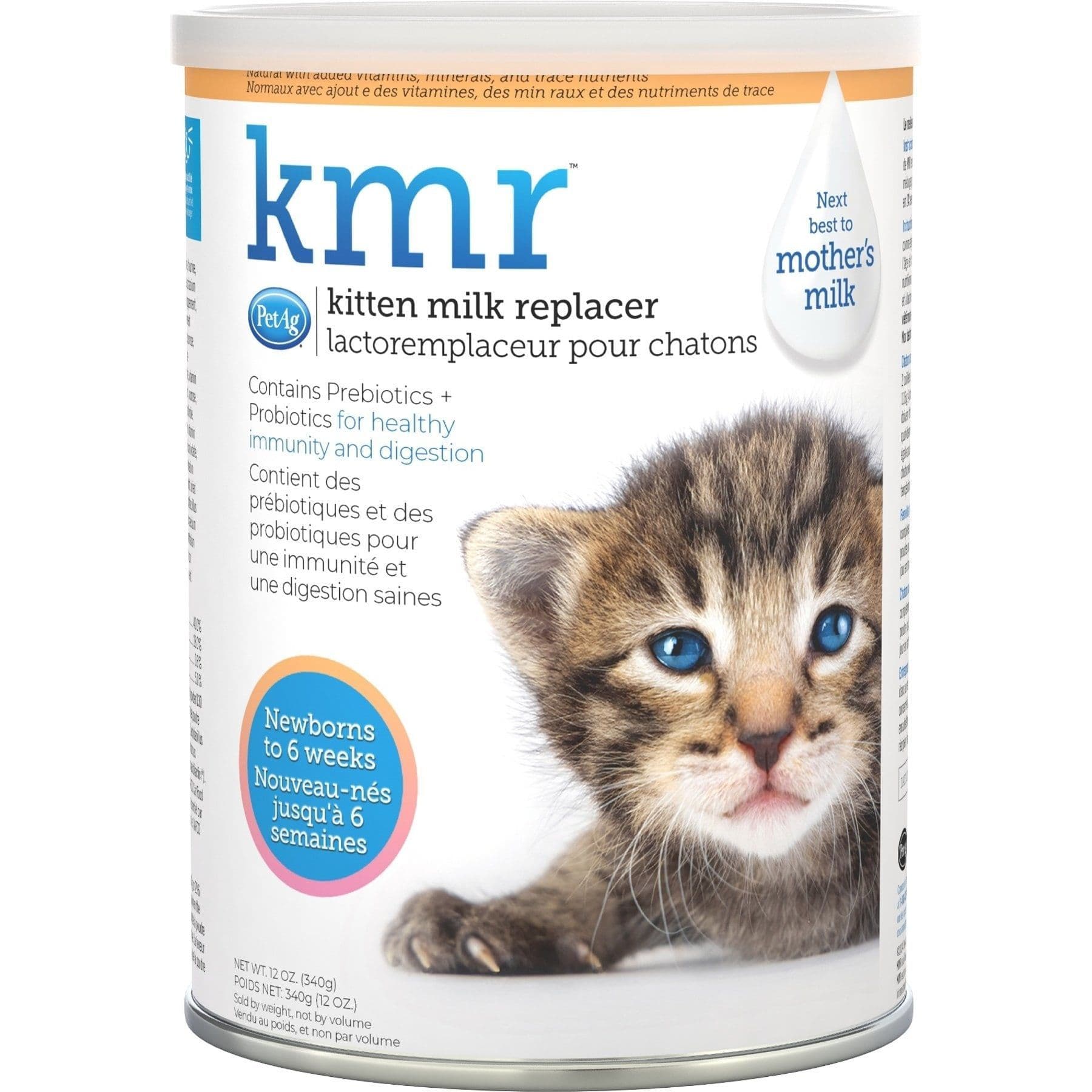
KMR kitten milk replacer is the standard formula for supplementing kittens the mother cannot feed.
Webvet may earn a commission when you click through to Chewy, at no extra cost to you.
- 1Use multiple milestones to form an age estimate.
- 2Record weight as a trend, not a birth certificate.
- 3Match immediate care to the kitten's actual abilities and condition.

| Approximate age | Eyes and ears | Movement and teeth | Care implication |
|---|---|---|---|
| Newborn to about 1 week | Eyes closed initially; ears folded | Very limited mobility; no teeth | Dependent on mother or skilled neonatal care |
| About 1–2 weeks | Eyes opening; ears beginning to unfold | Crawling and developing coordination; usually no visible teeth | Still needs close support and age-appropriate milk feeding |
| About 2–3 weeks | Eyes open; ears more upright | Increasing attempts to stand and walk; first teeth may begin emerging | Assess warmth, feeding, elimination support, and progress with an experienced caregiver |
| About 3–4 weeks | More alert response to surroundings | Walking improves; early baby teeth become visible | Discuss the gradual introduction of appropriate weaning food |
| About 4–5 weeks | More mature facial appearance | Increasing play and coordination; additional baby teeth | Support gradual weaning while monitoring actual intake |
| About 5–6 weeks | Alert and interactive | More confident exploration and play | Continue complete kitten nutrition and a safe environment |
| About 6–8 weeks | Features increasingly resemble a small cat | Good mobility; baby teeth more developed | Review weaning, preventive care, and social development with a veterinarian |
| About 8–12 weeks | Eye color and overall appearance continue developing | Active play and rapid growth | Continue kitten food, veterinary care, and gentle training |
| About 3–6 months | Increasingly juvenile appearance | Adult teeth begin replacing baby teeth during this broader period | Adjust portions, home safety, and preventive-care plans as the kitten grows |
The Kitten Lady developmental guide and Alley Cat Allies progression resource provide age-labeled reference material. Use them to compare a group of features, not to declare that a kitten must be a specific number of days old because it resembles one photograph.
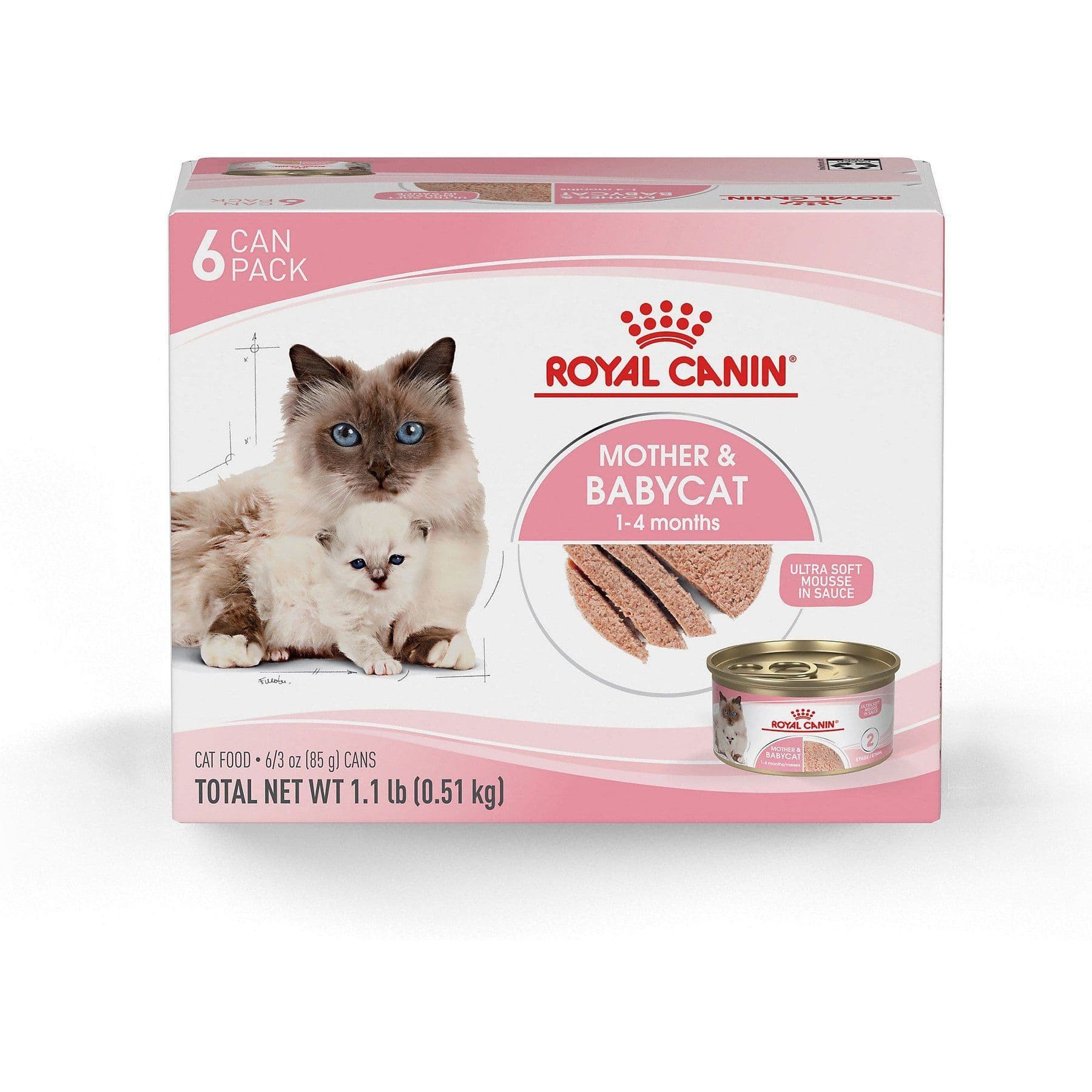
Royal Canin Mother & Babycat mousse is a soft first food that mixes easily into weaning gruel.
Webvet may earn a commission when you click through to Chewy, at no extra cost to you.
How to make a useful observation record
Write down the date, eye status, ear position, walking ability, visible baby teeth (deciduous teeth), feeding ability, and weight. Add whether the kitten seems bright, settles after feeding, and interacts normally for its stage. If you are caring for a litter, keep separate records. One kitten can lag behind while the others make the overall litter seem healthy.
- Observe in a warm, quiet, safe setting.
- Let the kitten move voluntarily on a secure surface.
- Avoid forcing the mouth open or pulling at the eyelids.
- Use the same scale and similar conditions for repeat weights.
- Share photographs and notes with the veterinary team when asked.
A record is valuable even when the age estimate remains broad. “Eyes open, ears partly upright, standing but wobbly” tells a clinician more than an unsupported exact birthday. It also helps you notice a change. A kitten that was active yesterday and is weak today needs attention even if its appearance still matches the same chart row.
Read eyes, ears, movement, and teeth together
Eyes and ears are useful early clues, but development is gradual. Do not force open closed eyes. Swelling, discharge, crusting, or an eye that looks painful deserves veterinary advice rather than an attempt to reveal what is underneath. An ill kitten's appearance can be misleading, and a problem affecting the eyes should not be treated as a normal age marker.
Movement adds a second line of evidence. Notice whether the kitten mostly crawls, can stand, walks with an unsteady gait, or runs and plays confidently. Use a safe floor-level surface. Do not place a kitten on a high table to test coordination. Weakness from illness is different from developmental wobbliness and can make an older kitten appear much younger.

Estimating kitten age by teeth
Baby teeth emerge in a sequence, so they can help refine an estimate. First look only if the kitten is comfortable with gentle handling. Tiny front teeth, pointed canine teeth, and cheek teeth do not all appear at once. Later, the change from baby teeth to adult teeth helps place a juvenile kitten in a broader age range. Your veterinarian can assess this more accurately during an examination.
Do not use a kitten age chart based on teeth as a reason to pry the mouth open or ignore pain. A broken tooth, mouth injury, or dental abnormality can interfere with a simple visual comparison. If the kitten resists because handling appears painful, stop and arrange assessment. Good information should not depend on making the kitten uncomfortable.
- Eyes and ears help most during early development.
- Walking and play show functional maturity.
- Teeth can narrow the estimate when assessed safely.
- Feeding ability helps determine immediate care needs.
- Disagreement among signs calls for a wider age range, not a forced answer.
Using pictures without overconfidence
A kitten age chart with pictures can show changes that are difficult to describe, but coat length, camera angle, posture, and body condition alter appearance. A fluffy kitten may look larger than a shorthaired kitten of the same age. A photograph also cannot show whether a kitten is strong, warm, eating enough, or moving normally.
When trying to tell how old a kitten is from pictures, compare documented developmental features rather than overall cuteness or size. Use the original age-labeled rescue resources linked above for reference, and include a veterinary assessment when care decisions depend on the result. There is no reliable shortcut from “looks like this photo” to a precise date of birth.
 Sponsored
Vet care that's always there
Unlimited video calls and messaging with licensed vets for less than a typical vet visit. One membership covers up to five pets.
Use code Pets60
Plans start at $12/month · covers up to 5 pets
- Licensed vets in most states
- Rx for 150+ conditions
- 4.7 on Trustpilot
What kitten weight can and cannot tell you
Weight is especially helpful as a repeated measurement. A single number reflects age plus body size, nutrition, health, hydration, and other factors. That is why a kitten age estimate by weight can be wrong even when the scale itself is accurate. A small kitten should not automatically be assigned a younger age and given a care plan intended for a different developmental stage.
Use a scale appropriate for the kitten's size and the small changes you need to track. A household bathroom scale designed for people may not resolve useful differences in a tiny kitten. Place the kitten in a safe container, account for its weight, and keep the process brief. Ask a veterinary professional or experienced neonatal caregiver how often to weigh and what changes should trigger a call.

A gram-resolution kitchen scale resolves the small daily changes a tiny kitten shows; weigh in a safe container and record the trend.
Webvet may earn a commission when you click through to Chewy, at no extra cost to you.
| Weight-record item | Why it matters |
|---|---|
| Date and time | Makes changes easier to interpret |
| Scale and unit | Prevents mixing grams, kilograms, ounces, and pounds |
| Individual kitten identity | Keeps littermates' records separate |
| Weight and direction of change | Shows a trend instead of an isolated value |
| Feeding and behavior notes | Adds context when progress changes |
For a kitten weight chart in kilograms, remember that 1 kilogram equals 1,000 grams. Grams are often more convenient for small kittens because the number is easier to record without repeated decimal places. Be consistent. Confusing units can turn a normal-looking entry into a misleading one and obscure a genuine change.
A day-by-day weight chart is a monitoring tool, while a week-by-week or month-by-month age chart is an estimation tool. Keep those purposes separate. If weight stalls, falls, or does not fit the kitten's condition, ask for guidance promptly rather than selecting a new age row. Do not reduce support simply because a kitten reaches a number printed in an online chart.

Teaser wand with a feathered bird charm and catnip to trigger your cat's chase-and-pounce instinct.
Webvet may earn a commission when you click through to Chewy, at no extra cost to you.
Why a single average can mislead
Two kittens of a similar estimated age can weigh different amounts. Litter history, previous nutrition, and individual growth all affect the comparison. Average values describe groups; they do not show whether your kitten is meeting its own needs. A veterinarian can consider body condition, examination findings, and the direction of change together.
Avoid repeatedly changing feeding amounts to chase a chart number without appropriate advice. The product's instructions, the kitten's stage, and any medical or neonatal-care plan matter. For a weak or poorly feeding kitten, the next step is assessment, not an improvised high-volume feeding attempt based only on weight.
Care decisions for the estimated age
Once you have a reasonable age range, ask what the kitten can actually do. Can it maintain normal warmth with appropriate support? Can it feed independently? Is it eliminating appropriately? Does it move and respond as expected? These functional questions are more useful than whether the birthday you chose is three days early or late.

Very young kittens separated from their mother need skilled support. A cold or weak kitten should not simply be offered a bowl of food and left to recover. Contact a veterinarian or experienced rescue for immediate instructions. Appropriate milk replacement, feeding technique, warmth, and elimination support are specialized matters; ordinary cow's milk and adult-cat routines are not substitutes.
- A dependent neonatal kitten needs an individualized care plan.
- A weaning kitten needs a gradual transition and monitoring of real intake.
- A kitten eating solid food still needs complete growth nutrition.
- An active older kitten needs safe play, rest, and preventive care.
Weaning and food selection
Weaning is a process, not a birthday switch. Interest in a dish does not prove that a kitten is taking enough food to stop other support. Discuss the transition with an experienced caregiver, especially when the kitten's history is unknown. Use a complete food appropriate to growth and a texture the kitten can manage.
Royal Canin Mother & Babycat Ultra-Soft Mousse is one example of a food the manufacturer positions for kittens during weaning and early growth, approximately 1–4 months, as well as mothers during gestation and lactation. It is not milk replacer for newborn kittens. Our best kitten food guide compares this use with dry options for growing kittens.
Veterinary care and social development
Book an examination for a newly found or adopted kitten and bring the history you have. The veterinarian can assess age, body condition, parasites, nutrition, and a suitable preventive-care schedule. The examination may revise your estimate, which is useful information rather than a mistake. Keep records so everyone caring for the kitten uses the same current plan.
Provide gentle interactions the kitten can leave, appropriate hiding and resting places, and toys suitable for its size. Do not use hands as wrestling toys. Our kitten biting guide explains how to build safe play habits. A kitten's small size does not remove its need for choice or make forceful handling harmless.
If you are monitoring a litter born at home, an actual birth date gives a stronger age reference than any visual estimate. Our guide to cat pregnancy and birth preparation covers planning for the mother and litter. Continue assessing health and progress even when the age is known exactly.
Older kittens and uncertainty
After the earliest weeks, age estimation from appearance becomes less precise. Size and personality vary, and a confident three-month-old kitten may seem older than a shy littermate. Teeth, examination findings, and any available history can help, but the honest result may be a range. A guessed exact birthday is convenient for a record; it should not be confused with a confirmed date.
A kitten age chart by month can help organize broad stages, but it cannot predict every behavior or feeding amount. A three-month-old remains a young, developing animal. By later kittenhood, increased mobility and curiosity may require new safety measures around windows, cords, small objects, and escape routes. Reassess the home as abilities change rather than assuming the original kitten-proofing will remain adequate.
- Use a range when the evidence supports a range.
- Keep uncertain dates labeled as estimates in care records.
- Update the estimate after veterinary assessment.
- Base supervision and feeding on current needs, not appearance alone.
Separate male and female age charts do not solve uncertainty. Sex can affect eventual size, but early developmental observations still need context, and personality does not reliably identify either sex or age. A calculator that converts one weight or feature into an exact birthday risks false precision. Combining observations and professional assessment is more dependable.
Finally, do not let a plausible chart match reassure you about an unwell kitten. Poor feeding, weakness, unusual breathing, dehydration concerns, persistent diarrhea, or a marked behavior change needs prompt advice. The chart answers “what developmental stage might this be?” It cannot answer “is this kitten healthy enough to wait?”
Frequently asked questions
How can I tell how old a kitten I found is?
Compare eyes, ears, movement, teeth, and feeding ability, then use weight as supporting information. Record a range rather than an exact birthday if the signs are mixed. A veterinary examination can refine the estimate and check health. If the kitten is cold, weak, injured, or not feeding, obtain help first instead of spending time trying to identify the perfect age row.
What is the hardest age for kittens?
The challenge depends on the caregiver and kitten. Neonatal kittens have intensive physical needs, while mobile older kittens may need more supervision and structured play. There is no universal hardest week. Identify the kitten's actual abilities and arrange the support those require. An uncertain age is a reason to seek guidance, especially when feeding or warmth depends on the estimate.
Is a 3 month old kitten still a baby?
A three-month-old kitten is still growing and needs kitten-appropriate nutrition, preventive care, safe play, and supervision. It may appear coordinated and independent compared with a newborn, but it is not a miniature adult with identical needs. Discuss feeding and routine care with your veterinarian, and adjust the home as the kitten becomes more mobile and curious.
Can I leave a 3 month old kitten alone for 8 hours?
There is no blanket answer based only on age. Health, feeding needs, how recently the kitten arrived, the safety of the room, and access to appropriate resources all matter. A newly adopted or medically vulnerable kitten may need more frequent attention. Arrange a check-in when necessary and ask your veterinarian what routine fits this particular kitten rather than treating an eight-hour absence as automatically suitable.
At what age are kittens the naughtiest?
Kittens explore and practice hunting-style play as they develop, but there is no exact age at which all become most difficult. What appears naughty often reflects normal activity without a suitable outlet. Provide appropriate toys, safe climbing opportunities, rest, and consistent handling. A sudden change accompanied by illness or discomfort should be assessed instead of attributed automatically to a developmental phase.
Is it cruel to leave a kitten alone overnight?
An overnight absence must be judged against the kitten's needs. A dependent, unwell, newly rescued, or frequently fed kitten cannot be treated like a settled healthy adult cat. Arrange appropriate supervision and care, including someone able to recognize problems. For an older kitten, assess the environment and routine with your veterinarian rather than relying on a single age cutoff to guarantee safety.
Veterinarian · BVMS MRCVS
Dr. Pippa Elliott, BVMS, MRCVS, is a veterinarian with nearly 30 years of experience in companion animal practice. Dr. Elliott earned her Bachelor of Veterinary Medicine and Surgery from the University of Glasgow. She was also designated a Member of the Royal College of Veterinary Surgeons. Married with 2 grown-up kids, Dr. Elliott has a naughty Puggle named Poggle, 3 cats and a bearded dragon.


