How to Stop Kitten From Biting: Play and Teething
Help your kitten learn gentle play with calm responses, suitable toys, and consistent routines. Identify the difference between playful bites, unwanted petting, fear, and possible pain.

This article contains affiliate links. Webvet may earn a commission when you buy through them, at no extra cost to you.
The practical answer to how to stop kitten from biting is to stop making skin part of the game. Keep your response calm, pause interaction when teeth touch you, and give your kitten appropriate toys and regular chances to chase, pounce, and catch. First check the bite context: playful hunting, unwanted touch, fear, and pain need different responses.
Kittens explore and practice with their mouths. That does not mean you must accept painful bites, or that a kitten who bites is “bad.” Your job is to make the safe choice clear and repeatable while protecting everyone involved.

 Sponsored
Want a vet's help with your pet's anxiety or behavior?
Talk to a licensed vet at Dutch over video, often the same day. They can recommend treatment and prescribe it when it's appropriate.
Use code Pets30
Plans start at $11/month · covers up to 5 pets
- Licensed vets in most states
- Rx for 150+ conditions
- 4.7 on Trustpilot
Stop a bite without turning it into a game
To train a kitten not to scratch you during play, keep claws and teeth directed toward toys. End rough contact calmly, then reward gentle interaction; do not punish the kitten for reaching toward a hand that has been used as a toy.
When a kitten grabs your hand during play, avoid making it dart away like prey. Pause your movement, disengage gently when you can do so safely, and stop play briefly. Do not hit, scruff, shout, or press the kitten's face. If the kitten remains wound up, create a little space using a safe barrier rather than continuing to handle it.
Resume only when the kitten is calmer and use a toy that places distance between teeth and fingers. A wand toy can make the target obvious, while a suitable soft toy can provide something to grasp and kick. Put string and wand toys away after supervised play. A toy is an alternative activity, not something to force into a kitten's mouth during a frightened or painful reaction.
- 1Identify the bite context before choosing a response.
- 2Stop play calmly when teeth touch skin.
- 3Reward appropriate play and make hands predictable and gentle.
A Frisco bird teaser wand gives your kitten a moving target beyond your fingers. Drag the bird away from the kitten in short movements, let them catch it, and stop if play becomes frantic. Supervise the whole session and store the wand, feathers, and string out of reach afterward.
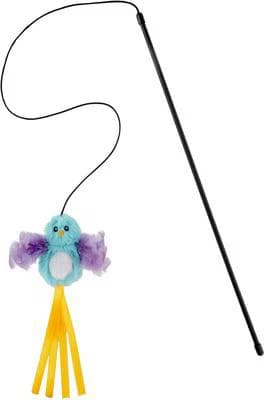
Teaser wand with a feathered bird charm and catnip to trigger your cat's chase-and-pounce instinct.
Webvet may earn a commission when you click through to Chewy, at no extra cost to you.

| Bite context | What to notice | Useful response |
|---|---|---|
| Chasing hands or ankles | Stalking and pouncing during movement | Pause, then redirect a calmer kitten to a moving toy |
| Petting | Tension, tail movement, turning toward the hand | Stop touching and allow space |
| Chewing during development | Exploring objects and seeking something to mouth | Offer suitable safe toys and remove hazards |
| Fear | Attempts to retreat, hiding, defensive posture | Increase distance and avoid forced interaction |
| Sudden change or apparent pain | Sensitivity, reduced appetite, altered movement | Arrange veterinary assessment |
Use the bite-context table with a simple daily log: record play, touch intolerance, teething-related chewing, fear, and any sudden painful behavior. The context determines whether the useful response is redirection, less touching, more distance, or veterinary assessment.
The goal is a repeatable sequence that does not reward grabbing you. Watch for the moment before the bite, too. If you can stop a petting session while the kitten is still comfortable, or start play before an ankle ambush, the kitten gets more practice succeeding. Kitten Lady's bite guidance emphasizes appropriate interactive play and avoiding hand play.
If your kitten wants to grab a forearm and kick, offer a soft wrestling target before contact starts. The KONG Kickeroo Cuddler provides a plush body to hold and kick instead of your hand. Choose a size your kitten can comfortably manage, supervise use, and check seams and the tail for damage. It is an outlet for play, not a treatment for fear or pain.

A soft wrestling target for supervised grasping and hind-leg kicking, keeping hands out of the game.
Webvet may earn a commission when you click through to Chewy, at no extra cost to you.
When a kitten bites and scratches a lot, look at play opportunities and consistency before assuming a personality problem. People sometimes call rough play in a kitten without a feline playmate “single kitten syndrome.” That label is not a diagnosis, and adopting another kitten is not a guaranteed fix. A compatible companion can provide social play, but you still need safe introductions, enough resources, and the same gentle-play rules with people.
Work out why your kitten is biting
If your kitten bites you when you pet her, stop the touch and let her move away. Shorter petting sessions may prevent overstimulation. Repeated sensitivity to one area or a sudden change warrants a veterinary check rather than assuming she simply dislikes affection.
Look at the setting instead of using bite intensity as the only clue. A kitten who stalks moving feet may be practicing predatory play. One who bites while being stroked may have had enough contact. A kitten who freezes or tries to escape may be frightened. These situations can overlap, but treating all of them as an invitation to more play misses important information.
Purring or licking does not guarantee that a kitten wants continued petting; a kitten may lick and then bite. Watch muscle tension, ear position, tail movement, turning toward your hand, and attempts to leave. Try a short touch, pause, and let the kitten choose whether to approach again. Avoid reaching repeatedly into a hiding place or waking a resting kitten to practice handling.
- Record what happened immediately before the bite.
- Note whether the kitten approached or was approached.
- Identify the body area being touched.
- Note sleep, meals, and recent play.
- Record sudden changes in appetite, activity, or comfort.
Teething can contribute to chewing, but it should not explain away every behavior change. Persistent drooling, reluctance to eat, mouth pain, or unusual bleeding needs veterinary advice. Development also varies. Use our kitten teething guide to understand tooth development without assuming a specific age makes every bite normal. An eight-week-old kitten learning appropriate play and a six-month-old kitten with a rehearsed ankle-chasing habit may need different adjustments.
Teething changes the chewing need, not the training rule
 Sponsored
Vet care that's always there
Unlimited video calls and messaging with licensed vets for less than a typical vet visit. One membership covers up to five pets.
Use code Pets30
Plans start at $11/month · covers up to 5 pets
- Licensed vets in most states
- Rx for 150+ conditions
- 4.7 on Trustpilot
Build a daily play and redirection routine
Plan several short opportunities for appropriate play across the day, especially before times when ambushes usually occur. Move the toy away from the kitten in an inviting way, allow stalking and pouncing, and include successful catches. Match the pace to the kitten's energy and coordination. Stop before the kitten becomes exhausted or frustrated. Individual kittens differ, so observe the response rather than imposing a rigid exercise quota.
Cat chew toys can offer an appropriate surface for developmental chewing, but choose kitten-suitable size and material, supervise use, and remove anything that breaks apart. Avoid very hard objects and loose pieces that could injure teeth or be swallowed. Chewing toys do not treat pain or replace assessment of a sore mouth.
For a kitten who seeks a flexible chewing surface, the Catstages Kitty Chew Wheel is a rubber-ring option with fabric streamers. Check that the size suits your kitten and supervise every session. Remove it if the rubber splits, streamers fray, or pieces go missing. No toy is chew-proof, and a toy marketed for dental play does not replace dental care.
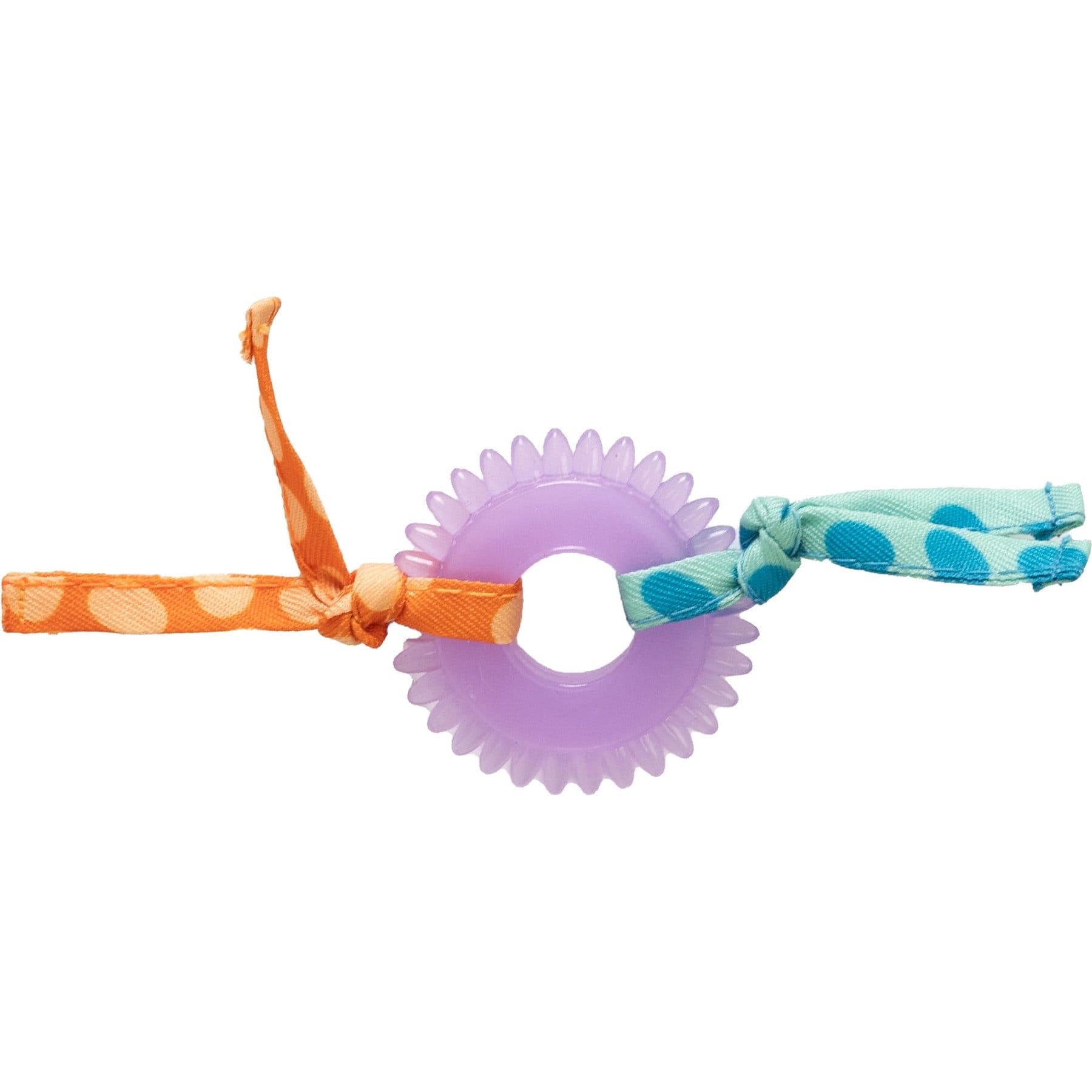
A flexible chewing option to offer under supervision. Check the size and remove the toy if its ring or streamers become damaged.
Webvet may earn a commission when you click through to Chewy, at no extra cost to you.
Rotate a few safe toys instead of leaving every toy out indefinitely. A teaser wand keeps fingers distant during chasing, while the Kickeroo offers a soft target for grasping and kicking. Inspect toys for loose pieces, damaged seams, strings, or swallowed fragments. Choose items that suit the kitten’s size and supervise unfamiliar toys; remove anything the kitten can dismantle or swallow.

- Use toys for wrestling, never bare hands or toes.
- Reward calm approaches and gentle interaction.
- Keep routines consistent across adults and children.
- Offer rest and places to retreat between activities.
- Introduce food puzzles gradually and include their food in the daily allowance.
Use food enrichment between interactive games
A food puzzle can add another activity for a kitten ready to use it, but it does not replace social play or treat aggression. Start with an easy setup and watch the first sessions. If the kitten cannot obtain food or becomes frustrated, simplify the task. The useful outcome is engagement and successful problem solving, not making a hungry animal work harder.
Try a predictable sequence before the usual evening ankle ambush: a short wand game with successful catches, the kitten’s normal meal, then a quiet place to rest. This is a routine to adapt, not a guaranteed cure or a required exercise duration. Record bites and successful redirections in the same setting so you can see which change helps.
A Catit Senses Food Tree can give a food-motivated kitten a separate foraging activity once they can comfortably reach and use it. Begin at the easiest setting with part of the normal food allowance and watch for successful retrieval. If this feeder is too tall or difficult, use a shallow tray with a few pieces of food instead; do not withhold a meal until the puzzle is solved.
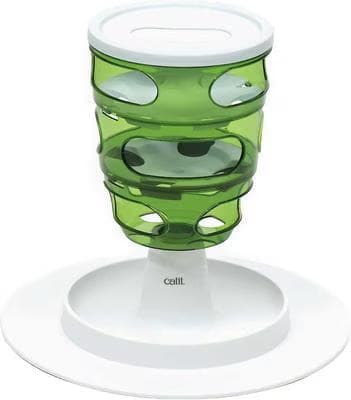
Webvet may earn a commission when you click through to Chewy, at no extra cost to you.
Protect hands, feet, cords, and other cats
If your kitten is scratching you frequently, check whether claws are being used during climbing, rough play, restraint, or attempts to escape. Provide scratching surfaces and toys, avoid forced handling, and redirect before contact escalates. Repeated scratches during petting call for shorter, consent-based interactions rather than more vigorous play.
For feet attacked under a blanket, stop wiggling them as a game and provide appropriate play before bedtime. Keep the Kickeroo or another suitable soft toy accessible so you can redirect before an ambush begins. If the kitten is too excited to settle, use a safe separate resting area with necessary resources. Do not make the bedroom a place where the kitten practices biting toes every night and expect daytime lessons to cancel that experience.
When a kitten bites feet while you walk, avoid running away or encouraging a chase. Pause safely and use management when you need to move through the room. Give children clear, simple instructions and supervise interactions. Young children may struggle to stay still or recognize early signals, so adults should prevent situations that depend on perfect reactions from either child or kitten.
- If your kitten bites your nose or face, stop bringing your face close during excited play and avoid face-to-face games. Provide space to settle before gentle contact. Redirect stalking toward legs before the kitten reaches you; a toy across the room is a better target than ankles moving past. Separate a kitten who relentlessly chases another pet, including a dog, rather than relying on that animal to correct it.
Chewing cords is a different safety problem from playful bites toward people. Secure cables, block access behind equipment, and offer appropriate alternatives. Avoid applying essential oils or unverified homemade deterrents. If a kitten repeatedly chews or swallows nonfood objects, discuss the behavior with your veterinarian rather than assuming every incident will disappear with age.
Other cats also need a choice about interaction. Interrupt relentless chasing with environmental separation and alternative activity; do not expect an older cat to “teach a lesson.” Provide multiple resting locations, access to resources, and escape routes. For related household training, our counter-training plan shows how to combine rewarding alternatives with practical management instead of punishment.
When biting needs professional help
If your kitten keeps biting aggressively or attacks you violently at night, prioritize safe separation rather than testing how hard the next bite will be. Note whether attacks follow moving feet, interrupted sleep, handling, or no obvious trigger. Repeated severe attacks need veterinary and behavior support even when they happen only at night.
Seek veterinary advice when biting starts suddenly, becomes markedly different, accompanies illness, or seems linked to pain. A kitten who resists one particular touch, eats less, hides unusually, or changes the way it moves needs more than a new toy. Bring your bite-context log and, if safely available, a video taken without provoking the behavior. These details are more useful than trying to demonstrate a bite during an appointment.
If health concerns have been addressed but the pattern remains difficult, ask for referral to a qualified feline behavior professional. Persistent severe attacks, fear around ordinary interactions, or conflict with another cat deserve an individualized plan. Do not test the kitten's tolerance by repeatedly triggering the behavior. Preventing rehearsal protects the relationship while you obtain help.
- Review whether everyone has stopped hand play.
- Check that toys, rest, and safe retreat are available.
- Look for unnoticed triggers rather than labeling the kitten stubborn.
- Protect vulnerable household members while the plan develops.
If a kitten bite draws blood or breaks human skin, wash the area promptly and seek medical advice, particularly for punctures, bites to a hand or face, worsening redness, swelling, or anyone at increased infection risk. Tell the clinician if the kitten is stray, its vaccination history is unknown, or rabies exposure is a concern. A toy or training change does not treat a bite wound. Human care and the kitten’s behavior assessment are separate decisions.
The NHS bite-care guidance recommends cleaning broken skin with soap and warm water and seeking urgent help for concerning wounds. Large or deep wounds and bleeding that will not stop need emergency care.
Frequently asked questions
How to discipline a kitten for biting?
Use a predictable consequence: teeth on skin end that interaction briefly. Stay calm, disengage safely, and resume with an appropriate toy when the kitten settles. Physical punishment, shouting, and scruffing can create fear without showing the kitten what to do instead. Also reward gentle play and prevent situations in which hands or feet repeatedly become exciting targets.
Can kittens be trained not to bite?
Kittens can learn appropriate ways to interact, but learning depends on consistent responses and suitable outlets. Everyone in the home needs to avoid hand play and reward gentler behavior. Progress may be uneven during development. If biting comes from fear, pain, or unwanted touch, address that cause rather than expecting a play-training routine to solve every case.
What to do when a kitten won't stop biting?
Stop the current interaction safely and allow space. Then review the trigger: was the kitten chasing, being touched, frightened, or apparently uncomfortable? Increase appropriate play and management where needed, and keep a short log. Persistent, severe, or suddenly changed biting warrants veterinary assessment and possibly behavior support. Repeating the same response more forcefully is not a substitute for identifying the cause.
What age should a kitten stop biting?
There is no exact age at which every kitten stops biting. As kittens grow, developmental chewing and exuberant play often change, but waiting alone does not teach safe interaction. Behaviors that repeatedly earn a reward can continue. Keep hands out of games, reward gentle play, and offer appropriate targets. Sudden pain-related biting or persistent severe attacks need assessment rather than waiting for an assumed deadline.
What is the hardest age for kittens?
There is no single hardest or naughtiest age for every kitten. A new arrival may struggle with routines, while an older, more mobile kitten may need more supervision and suitable play. Track the situations and times that lead to bites instead of predicting trouble from age alone. Provide safe climbing and play, protect rest, and reward the behavior you want. A sudden change with discomfort or illness needs veterinary advice.

Editor
The Webvet Editorial Team is the in-house group of pet-care editors and writers behind Webvet, operated by Smart Pet Collective. The team researches, writes, and maintains Webvet's pet health, behavior, and medication content. Every article follows a defined editorial process: research from reputable veterinary and scientific sources, careful drafting, mandatory review of medical content by a credentialed veterinarian, and dated publication. Health and medication articles are medically reviewed by a licensed veterinary professional before they go live and are kept current over time.
Related reading

How to Keep Cats off Counters: A Practical Training Plan

Cat Zoomies: Why They Happen and When to Be Concerned

How to Introduce Cats: A Step-by-Step Plan and Troubleshooting Guide
