How to Keep Cats off Counters: A Practical Training Plan
Keep your cat off kitchen counters by understanding the reward behind each jump, teaching a useful alternative perch, and making food preparation safer while the habit changes.

This article contains affiliate links. Webvet may earn a commission when you buy through them, at no extra cost to you.
Learning how to keep cats off counters starts with making another location more rewarding. Remove food and other attractions from the counter, provide a safe elevated perch, and reward your cat for using it. Consistency matters more than a startling noise or a smell your cat dislikes.
A cat jumping up is usually pursuing something ordinary: a view, food, water, attention, or a place away from household activity. The useful question is what the counter provides and how to offer that benefit somewhere safer.

 Sponsored
Want a vet's help with your pet's anxiety or behavior?
Talk to a licensed vet at Dutch over video, often the same day. They can recommend treatment and prescribe it when it's appropriate.
Use code Pets30
Plans start at $11/month · covers up to 5 pets
- Licensed vets in most states
- Rx for 150+ conditions
- 4.7 on Trustpilot
Why the counter keeps winning
The best plan starts with observation. Watch what happens immediately before and after a jump. A cat who arrives during meal preparation may be following food smells. One who settles beside the sink may want water, while a cat who watches the room from the island may value height. More than one reward can maintain the same habit.
Track progress with a short record for several ordinary days: time, activity, where the cat landed, and what the cat gained. Include your own reaction. Picking up, talking to, or chasing a cat can supply attention even when you intended to discourage the behavior. A quiet counter is also different from one that occasionally produces a piece of chicken. Intermittent rewards give a cat a reason to keep checking.
A Frisco window perch can provide a designated observation spot when the window, mounting method, and weight limit suit your home. Install and check it according to the instructions; a perch should not wobble or put the cat beside an unsafe open window.

Webvet may earn a commission when you click through to Chewy, at no extra cost to you.
- 1Identify what the counter provides before choosing a solution.
- 2Pair an alternative perch with good reward timing.
- 3Prevent access to hot burners, sharp tools, and unsafe foods while training develops.

| What happens before the jump? | Likely benefit | Alternative to test |
|---|---|---|
| You prepare food | Food scraps or participation | A meal or appropriate food puzzle away from preparation |
| The sink runs | Access to water | Fresh water in a preferred safe location |
| A dog or visitor enters | Height and distance | An elevated perch with an unobstructed exit |
| You turn away | Attention | Reward calm waiting before the jump occurs |
| Nothing obvious | A familiar resting place | A stable, comfortable perch with a similar view |
This is a working hypothesis, not a diagnosis. If your first alternative is ignored, adjust its position, comfort, or timing. A low bed across the house may not replace a high observation point beside you. The Anti-Cruelty training guidance likewise emphasizes offering an appropriate alternative and rewarding desired behavior.
Teach a rewarding alternative perch
To keep cats off counters, teach a specific place to go and reward choosing it. To stop your cat from jumping, climbing, or walking on a kitchen worktop, also remove food and other rewards from that surface. This positive reinforcement approach combines learning with practical prevention. The alternative should supply what your cat seeks, whether that is a view, food, or being near you.
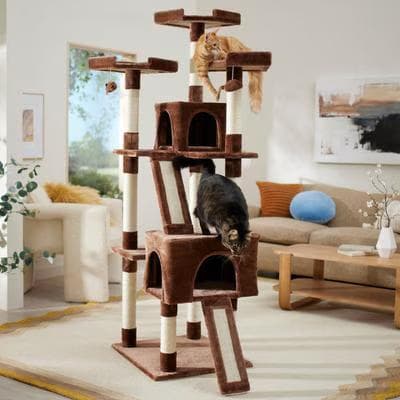
Webvet may earn a commission when you click through to Chewy, at no extra cost to you.
Choose a location close enough for your cat to remain involved but safely away from heat and food preparation. A stable cat tree, window perch, or chair with an appropriate surface can work. Check the manufacturer's weight limit and installation instructions. Avoid creating a convenient launch point directly onto the counter you are trying to protect.
A freestanding option such as the Frisco 72-inch cat tree may suit a cat who wants several resting levels. Choose accessible heights for your cat, follow assembly and anchoring instructions, and position it away from hot appliances. The tree supplies an alternative location; your reward routine teaches the cat to choose it.
Start when the kitchen is quiet. Reward the cat for approaching the perch, then for stepping onto it. You can use a small food reward from the day's allowance or another reward the cat values. Deliver it on the perch so the location becomes worth visiting. Once your cat goes there readily, add a simple cue such as “place.” Increase the waiting time gradually rather than expecting a long stay immediately.
- Practice brief sessions before you need the skill during cooking.
- Reward four paws on the alternative surface.
- Give the reward before a jump onto the counter, when possible.
- Increase distractions in small steps.
- Let every household member use the same cue and reward location.
Avoid teaching a repeated sequence of counter, floor, treat. If every counter jump leads to a reward, your cat may learn the entire chain. Guide the cat to the alternative calmly when necessary, but devote most rewards to choosing it independently. Good reward timing makes the wanted action easy to identify.
Jackson Galaxy’s counter-training advice emphasizes giving a cat an acceptable alternative when you prohibit a behavior. To prevent your cat from getting on counters, put that idea into a repeatable routine: before chopping vegetables, cue the perch and reward your cat there. Start with a manageable wait and release the cat before they lose interest. If they leave repeatedly, shorten the wait or practice outside cooking time. A clicker or quiet “yes” can mark success, but follow it with the reward.
 Sponsored
Vet care that's always there
Unlimited video calls and messaging with licensed vets for less than a typical vet visit. One membership covers up to five pets.
Use code Pets30
Plans start at $11/month · covers up to 5 pets
- Licensed vets in most states
- Rx for 150+ conditions
- 4.7 on Trustpilot
Make counters boring and manage access
Training works better when the unwanted behavior stops paying. Put food away promptly, clear dishes, secure rubbish, and wipe preparation areas with a cat-safe cleaning product used according to its label. Keep cleaners themselves inaccessible. A few overlooked crumbs can compete with your carefully planned reward system.

Deal with other attractions too. Repair a dripping tap if it draws your cat to the sink. Provide appealing drinking water elsewhere. If the cat seeks your company, give the alternative perch a useful view of you. In a busy home, make sure another pet cannot trap the cat there. A perch that feels unsafe will not remain attractive just because it has a soft cushion.
For a cat motivated by food, a Catit Senses Food Tree is one puzzle-feeding option to consider. Start with an easy setup and an appropriate portion from the daily allowance. Offer it in the safe location before meal preparation, and check that your cat can obtain food without becoming frustrated.
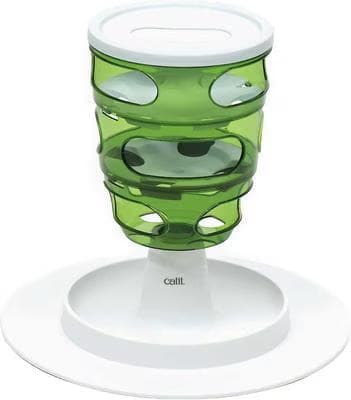
Webvet may earn a commission when you click through to Chewy, at no extra cost to you.
- Close the kitchen door during unsafe activities if your layout allows.
- Set up a comfortable separate space with water, a litter box using litter your cat accepts, and appropriate enrichment when supervision is impossible.
- Put knives, string, food wrappers, and breakable items away.
- Keep the cat away from cooling burners as well as active cooking.
- Clean food-contact surfaces before preparing food, even when training is going well.
Management is part of the plan, not a punishment. Set up the safe space before cooking starts and make it pleasant. Sudden isolation after a jump is less useful than a predictable routine that meets your cat's needs. Food puzzles can occupy an interested cat, but supervise initial use and choose a difficulty level that does not cause frustration.
A supervised session with a Frisco bird teaser wand can give an interested cat an appropriate outlet for chasing and pouncing away from the kitchen. Let the cat catch the toy periodically, keep play suited to their ability, and put the wand and string out of reach afterward. Play complements the perch training; it is not a punishment after jumping.
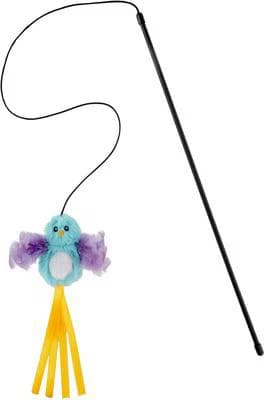
Teaser wand with a feathered bird charm and catnip to trigger your cat's chase-and-pounce instinct.
Webvet may earn a commission when you click through to Chewy, at no extra cost to you.
Foil, sprays, scents, and other deterrents
The best countertop deterrent is a setup that removes your cat’s reason to jump while making the alternative rewarding. Aluminum foil, motion-activated air sprays, alarms, and sticky materials are often recommended online, but responses vary. Some cats avoid a new texture briefly; others investigate or ignore it. No surface or household repellent guarantees that every cat will stay off counters permanently. A startled cat has still not learned where to go instead.
Foil and double-sided tape do not work for every cat. If your cat ignores foil, adding more noise or a stronger scent is not the next training step. Remove chewable or loose materials and return to a more attractive perch, prompt rewards, and preventing unsupervised access. Choose the method by what your cat needs, not by a claim that one texture keeps all cats away permanently.
Avoid deterrents that create fear or injury
PetSafe describes SSSCAT as a motion-activated device that releases a spray to startle a pet away from an area. That is a different mechanism from rewarding an alternative perch. If you are considering it, discuss suitability for your individual cat with a qualified behavior professional, especially if the cat is already fearful.
Avoid spraying water at your cat, shouting, hitting, or pushing the cat off a high surface. Do not use shock collars, electrified counter mats, mouse traps, or unstable objects to frighten a cat off a counter. These methods can cause fear or injury without teaching the alternative. Loose foil or tape can also be swallowed by cats who chew household materials.
Many cats dislike strong citrus smells, including lemon and orange, as Cats Protection explains. There is no proven universal smell that every cat hates most or that permanently solves counter jumping. A disliked scent is not evidence that a concentrated oil or spray is safe. Instead of applying citrus or essential oils to counters, remove food rewards and teach the cat to use a desirable alternative perch.
Troubleshoot nighttime and persistent jumping
If jumping happens mainly at night or when you are not home, inspect what remains available then. Dirty dishes, a dripping tap, a window view, or an accessible food bag may explain the pattern. A camera can help identify the trigger, but you do not need one to start: a consistent cleanup routine and a safe overnight arrangement often reveal whether access was the missing part.
For a cat who repeatedly returns while you cook, lower the difficulty. Practice the perch behavior outside meal preparation, deliver rewards more frequently at first, and keep sessions short. Consider whether hunger is part of the problem and schedule appropriate meals accordingly. Do not withhold food to make training rewards more powerful. A persistent cat may simply be receiving a better reward on the counter than at the station.
- Count voluntary visits to the perch, not just mistakes.
- Record whether food, water, or attention preceded each jump.
- Change one practical variable at a time, such as perch position or how soon you reward it. Compare similar meal-preparation periods in your log, rather than expecting a fixed number of days to solve every cat’s habit.
- Continue rewarding the alternative after improvement.
Young cats also need suitable play. Our guide to stopping kitten biting explains how to redirect hunting-style play without using hands as toys. Sudden restlessness, unusual hunger or thirst, difficulty moving, or a marked behavior change deserves a veterinary conversation rather than a tougher deterrent. For persistent problems in an otherwise healthy cat, a qualified feline behavior professional can help tailor the environment and training.
Frequently asked questions
Can cats learn to stay off counters?
Cats can learn that an alternative location earns rewards and that counters no longer provide the benefits they once did. Reliability depends on consistent practice and environmental management. A cat may still explore when circumstances change, particularly if food is left accessible. Keep rewarding the preferred behavior and maintain kitchen safety even after jumping becomes less frequent; improvement does not remove the need to clean food-contact surfaces.
What happens if a cat sniffs lavender?
A brief sniff near a plant is different from contact with concentrated lavender oil, licking a product, or inhaling a heavy spray. Cats do not reliably know to stay away from lavender or other unsafe substances. Curiosity is not a safety test. Keep oils inaccessible and avoid using lavender oil as a counter deterrent. If you suspect ingestion or concerning exposure, contact a veterinarian or animal poison service with the exact product, timing, and symptoms.
How long after spraying peppermint oil is it safe for cats?
There is no universal waiting period that makes every peppermint-oil spray safe. Concentration, ingredients, ventilation, residue, and possible contact matter. Pet Poison Helpline identifies peppermint oil as a poisoning risk. Keep the cat away and seek product-specific advice from a veterinarian or animal poison service rather than using a timer as proof of safety. Choose a counter-training method that does not rely on essential oils.

Editor
The Webvet Editorial Team is the in-house group of pet-care editors and writers behind Webvet, operated by Smart Pet Collective. The team researches, writes, and maintains Webvet's pet health, behavior, and medication content. Every article follows a defined editorial process: research from reputable veterinary and scientific sources, careful drafting, mandatory review of medical content by a credentialed veterinarian, and dated publication. Health and medication articles are medically reviewed by a licensed veterinary professional before they go live and are kept current over time.
Related reading

How to Stop Kitten From Biting: Play and Teething

Cat Zoomies: Why They Happen and When to Be Concerned

How to Introduce Cats: A Step-by-Step Plan and Troubleshooting Guide
