Churu Cat Treats: Are They Healthy, and How Many Can a Cat Have?
Churu is Inaba's lickable puree treat, and most cats love it. What the label says is in it, how many tubes fit a cat's daily treat allowance, whether kittens and seniors can have it, the real risks, and how to use it for pills and hydration.

BVMS MRCVS

This article contains affiliate links. Webvet may earn a commission when you buy through them, at no extra cost to you.
Churu cat treats: what they are, whether they are healthy, and how to use them well
Churu cat treats are lickable puree treats made by Inaba and sold in squeezable tubes. A classic tube is a complementary treat, not a meal: Inaba's product page says to feed it as a treat and lists 6 calories per tube.
The WSAVA Global Nutrition Committee advises keeping treats to no more than 10 percent of a cat's daily calories, so most healthy adult cats have room for about three or four tubes a day when Churu is the only treat. Vomiting, diarrhea, or a cat that starts refusing its regular food after Churu are signs to cut back and call the vet.
- 1What Churu is, who makes it: a lickable puree cat treat from Inaba, produced in Thailand for North America
- 2What the label lists: 6 kcal per classic tube and 91 percent moisture
- 3Daily limit: treats stay within 10 percent of calories, which is about 3 to 4 tubes for most adult cats
- 4Health conditions: cats with kidney disease, diabetes, or a prescription diet need the vet's okay first
- 5Warning signs: vomiting, diarrhea, or skipped meals after Churu mean stop the tubes and call the vet
What makes Churu so appealing to cats is its form: a smooth puree of water and chicken or tuna that a cat can lick straight from the open tube. Inaba traces its business to 1805 in Japan and created the INABA brand in 1989, and the company's About page says products sold in North America are produced in Saraburi, Thailand.
For a healthy adult cat, Churu is a reasonable treat when they stay inside the daily allowance. The tube most people picture is the Inaba Churu Grain-Free Chicken Puree Lickable Cat Treat, 0.5-oz tube, pack of 24, listed at $21.01 on Chewy when checked in November 2026.
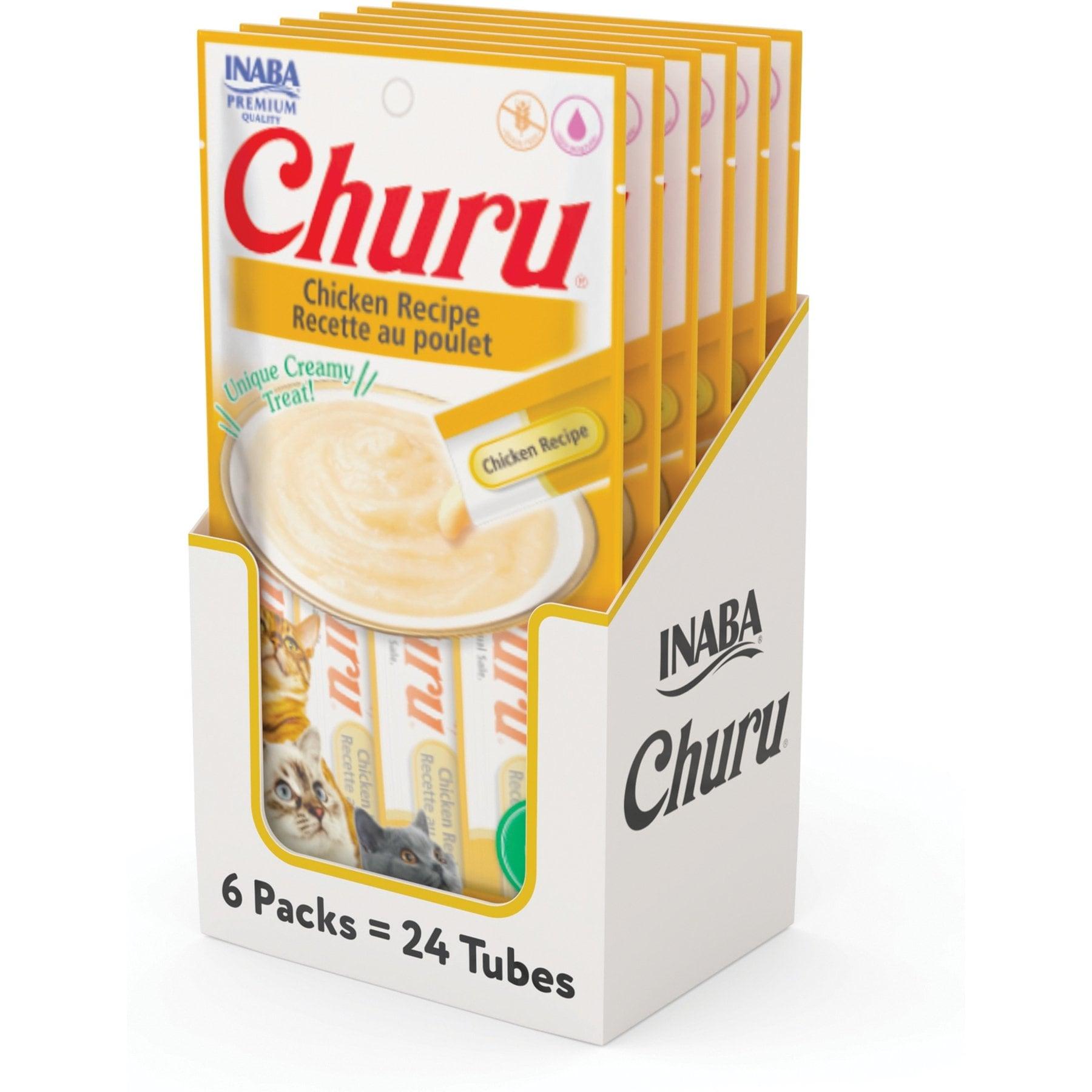
The classic chicken Churu tube at about 6 calories each, an easy fit inside a cat's daily treat allowance.
Webvet may earn a commission when you click through to Chewy, at no extra cost to you.
Cats with health problems are a different conversation. A standard tube is not a hydrolyzed protein product, because the label lists chicken or tuna rather than a hydrolyzed protein, and it is not a veterinary or urinary diet. WSAVA notes that conventional treats may not suit a cat with a medical condition or one eating a veterinary-prescribed diet, so ask the vet before adding Churu to a therapeutic diet.

What is in Churu: ingredients, calories, and what the label says
Churu cat treats are mostly water plus chicken or tuna, at 6 calories per classic tube, and the short label answers most questions owners ask. AAFCO requires ingredients to be listed in descending order by weight, so the first few items show what most of the tube is.
What's in Churu?
Mostly water and meat. Inaba lists the classic Chicken Recipe as water, chicken, tapioca starch, natural flavors, natural scallop flavor, guar gum, and vitamin E supplement. Tapioca starch and guar gum thicken the puree. Some recipes, such as those in the 50-tube Chicken Variety Jar, also list taurine and green tea extract at the end.
The Churu nutrition facts that Inaba publishes online come down to a few points:
- Calories: 6.0 kcal per tube (metabolizable energy) for the classic puree tubes.
- Moisture: 91 percent, which is why the treat is so runny.
- Grain: Inaba describes the tubes as grain-free; the starch comes from tapioca.
- Taurine: listed in some recipes but not all; Inaba says it is added to help with vision, digestion, and heart health.
- Phosphorus: no phosphorus figure appears on Inaba's product pages, so whether Churu is high in phosphorus cannot be judged from them.
- Feeding statement: feed as a treat; not intended to be fed as a meal.
The tuna version swaps the meat. The Inaba Churu Grain-Free Tuna Puree Lickable Cat Treat, 0.5-oz tube, pack of 24 lists water, tuna, tapioca starch, natural flavors, guar gum, natural tuna flavor, and vitamin E supplement, at the same 6.0 kcal per tube. It suits cats that prefer fish to poultry.
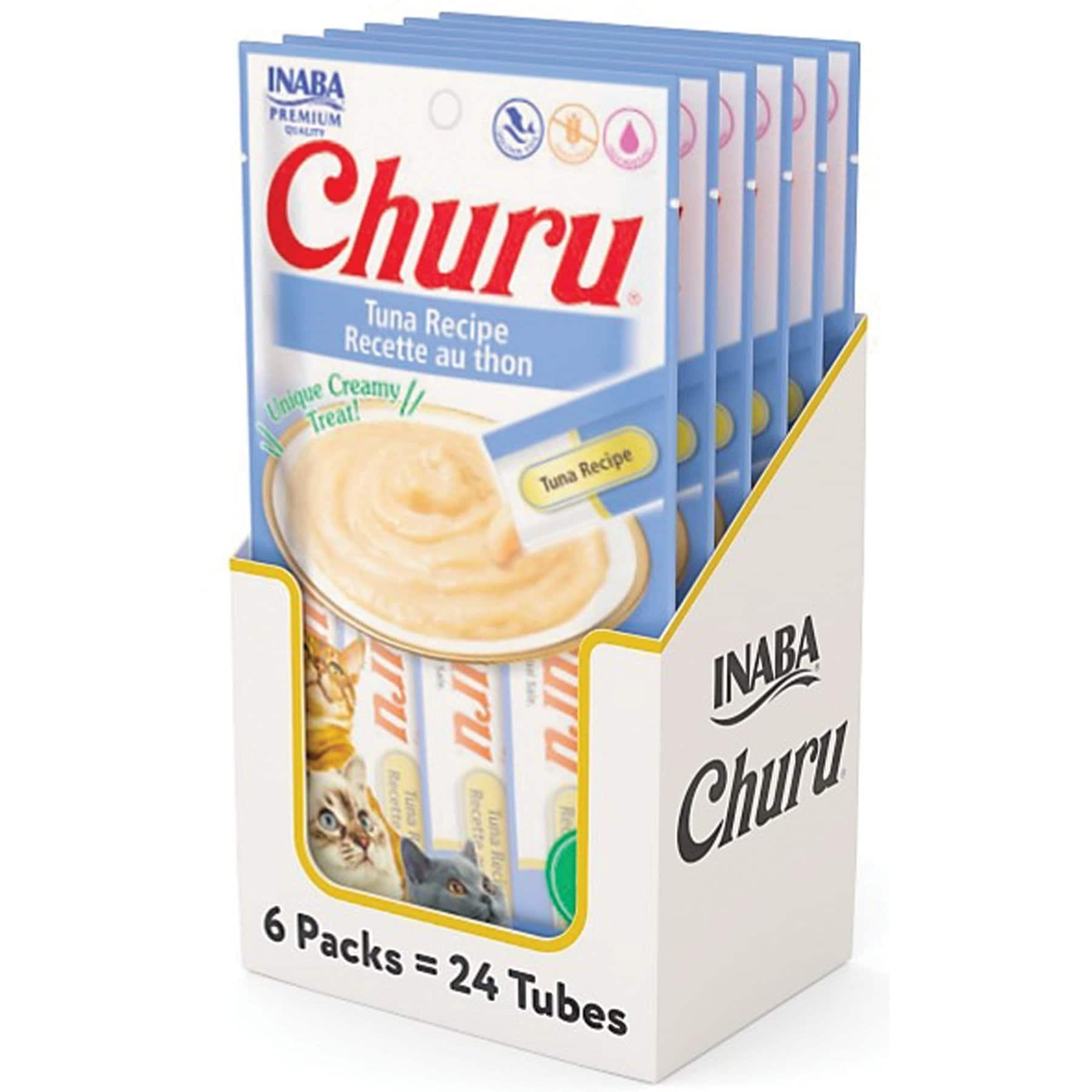
The tuna Churu tube at 6 calories each, for cats that prefer fish within the same daily treat budget.
Webvet may earn a commission when you click through to Chewy, at no extra cost to you.
Inaba's web pages show calories and moisture but not a full guaranteed analysis. AAFCO requires four guarantees on the package itself: minimum crude protein and crude fat, and maximum crude fiber and moisture. Protein and fat figures are therefore best read from the printed package, and anything missing, such as phosphorus, can be requested from Inaba.
Calories differ by Churu line, so check the format before counting:
- Churu Bites: 13 kcal per piece and 72 percent moisture, according to Inaba.
- Churu Bisque (Chicken Recipe pouch): 16.0 kcal per 1.4-oz pouch.
- Churu for Senior 10+: seven calories per tube, per the retailer listing.
- Churu Stew pouch: less than twenty calories per serving, per the retailer listing.
- Churu Nourish and other lines: read the Calorie Content statement, which AAFCO requires under that heading on the package.
Inaba describes Churu Bites as a soft baked chicken paste, but its puree pages do not say whether the puree is raw or cooked; ask Inaba directly. As for taste, each tube carries the chicken, tuna, or seafood flavor named on the label plus natural flavors.
What is in Churu that makes cats go crazy?
Nothing unusual: the label shows meat, water, thickeners, flavorings, a vitamin, and in some recipes taurine and green tea extract. There is no catnip or similar plant in the list. The Cornell Feline Health Center explains that cats are obligate carnivores that rely on nutrients found only in animal products, and a smooth meat puree offered by hand delivers that in a form cats lick up eagerly.
Is Churu really good for cats?
Churu is a good treat for most healthy cats when it stays a treat. The label shows a low-calorie, high-moisture product made mostly of water and chicken or tuna. It is not good as a meal replacement: VCA Animal Hospitals notes that many cat treats are not complete and balanced, and Inaba says Churu is not intended to be fed as a meal.
How many Churu treats a day: the 10 percent treat rule
A Churu serving is one tube, and most healthy adult cats have room for three or four a day. The exact number depends on body weight, so this Churu treat budget by cat size matches each weight to its daily treat allowance and the tubes that fit inside it.
| Cat size | Life stage | Daily treat allowance | Classic tubes that fit (6 kcal) | Senior 10+ tubes that fit (7 kcal) |
|---|---|---|---|---|
| 2.5 kg (about 5.5 lb) | Adult, ideal weight | 18 kcal | 3 tubes | 2 tubes |
| 3 kg (about 6.6 lb) | Adult, ideal weight | 20 kcal | 3 tubes | 2 tubes |
| 3.5 kg (about 7.7 lb) | Adult, ideal weight | 21 kcal | 3 tubes | 3 tubes |
| 4 kg (about 8.8 lb) | Adult, ideal weight | 22 kcal | 3 tubes | 3 tubes |
| 4.5 kg (about 9.9 lb) | Adult, ideal weight | 24 kcal | 4 tubes | 3 tubes |
| 5 kg (about 11 lb) | Adult, ideal weight | 25 kcal | 4 tubes | 3 tubes |
| 6 kg (about 13.2 lb) | Adult, ideal weight | 26 kcal | 4 tubes | 3 tubes |
| 7 kg (about 15.4 lb) | Adult, ideal weight | 28 kcal | 4 tubes | 4 tubes |
| Any size | Growing kitten | Set with the vet; adult figures do not apply | Ask the vet | Not applicable |
| Any size | Overweight adult | Set by the vet's weight plan | Ask the vet | Ask the vet |
| Any size | Kidney disease, diabetes, or prescription diet | Set by the vet | Only with the vet's okay | Only with the vet's okay |
The treat allowance figures come from the WSAVA treat guide, which gives maximum daily treat calories by body weight for an average healthy adult cat in ideal body condition. The tube counts divide that allowance by the calories Inaba lists per tube, rounded down, and assume Churu is the only treat that day.
Sources differ slightly on the cap. WSAVA and VCA say 10 percent of daily calories; the Cornell Feline Health Center gives 10 to 15 percent; and Tufts University puts a small cat's treat budget at under 25 calories a day. Working to the stricter 10 percent rule leaves a margin for other snacks.

How many churus can a cat eat per day?
Most healthy adult cats can have about three or four classic Churu tubes a day if they get no other treats. That figure comes from WSAVA's treat allowance of 18 to 28 calories for cats weighing 2.5 to 7 kg, divided by Inaba's 6 calories per tube. Count every other treat against the same budget and drop tubes on days with extra snacks.
Is it healthy to give my cat a Churu every day?
Yes, one Churu a day is fine for most healthy adult cats, because 6 calories sits well inside the daily treat allowance. The daily total matters more than how many separate servings it is split into. Watch for a cat that starts eating less of its regular food: VCA notes that too many treats can interfere with a cat's appetite for regular food.
Churu cannot be a meal. Inaba's feeding statement says the tubes are not intended to be fed as a meal, and WSAVA says treats should never replace a meal because every cat needs a complete and balanced diet. Portions for the main food are set out in how much to feed a cat, and a complete wet cat food is the way to add moisture at mealtimes.
Churu for kittens and senior cats
Kittens can have Churu in small amounts, and Inaba says its flavors suit cats of all stages, from kitten to senior. Inaba's page does not set a minimum age. Kittens are typically fully weaned at about 8 weeks, according to VCA Animal Hospitals, and their growth depends on a complete kitten food whose label states it meets the requirements for growth.
That makes Churu a small extra for kittens rather than part of their nutrition. WSAVA's allowance is calculated for adult cats, so ask the vet at a kitten visit how much room a growing kitten has for treats. A few licks during handling, brushing, or nail trims can make those routines pleasant early in life.

Senior cats often take to Churu readily, and kidney health is the main thing to check. The Cornell Feline Health Center reports chronic kidney disease in up to 40 percent of cats over 10 and 80 percent of cats over 15, and those cats are often managed on diets restricted in phosphorus. A senior with kidney disease should have every treat cleared by the vet.
For older cats with healthy kidneys, moisture is a useful feature. Cornell stresses that good hydration matters for cats with kidney disease, and a high-moisture treat adds a little water alongside wet meals and the water bowl.
Inaba makes a dedicated senior line. The Inaba Churu for Senior 10+ Chicken Recipe Lickable Cat Treats, 0.5-oz tube, 24 count are listed at seven calories and 90 percent moisture per tube, made with chicken and tuna, and listed at $18.93 on Chewy when checked in November 2026.
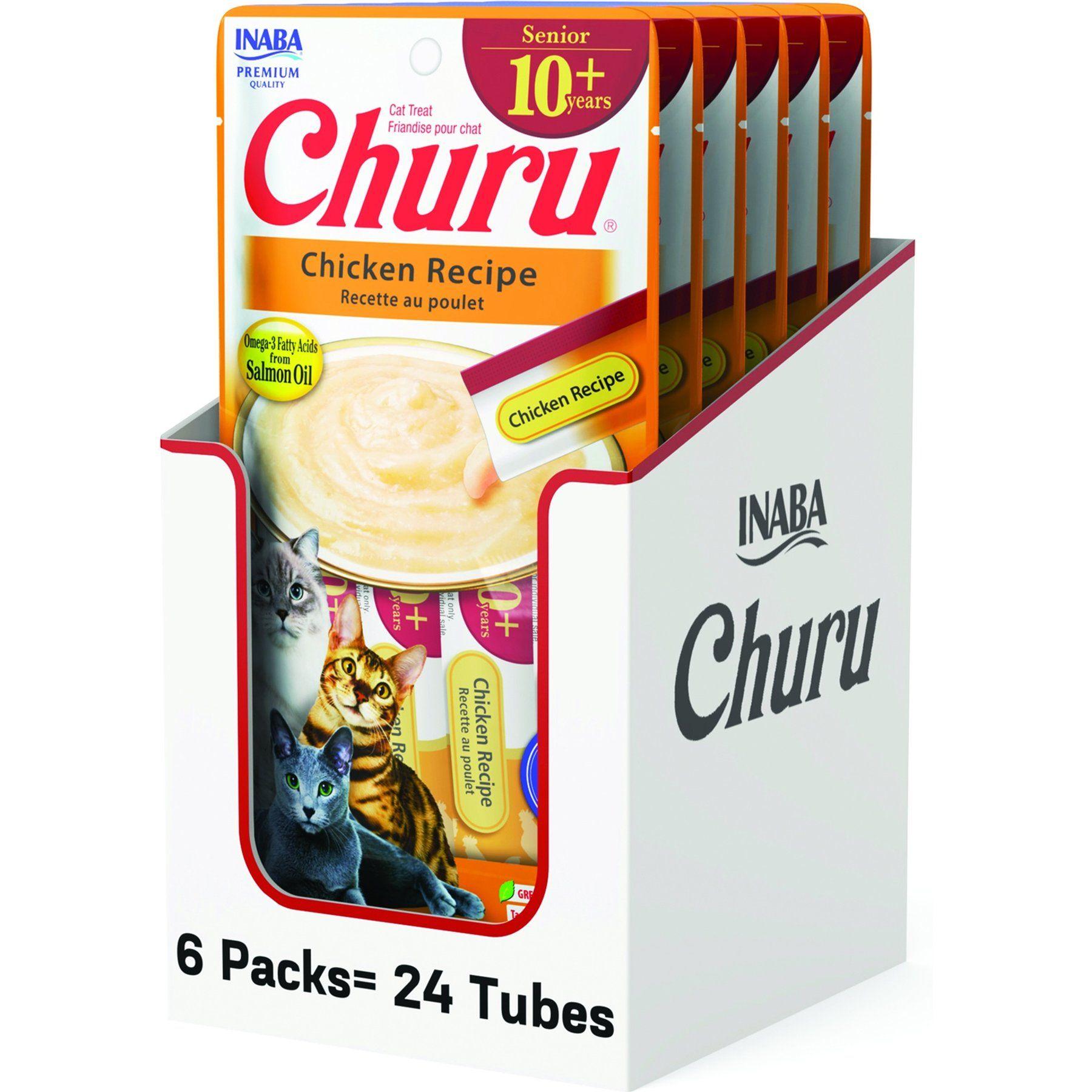
Churu's senior line at about 7 calories per tube, for older cats whose vet has cleared treats.
Webvet may earn a commission when you click through to Chewy, at no extra cost to you.
Churu risks: vomiting, diarrhea, picky eating, and when to call the vet
Churu is safe and healthy for most cats as a treat, and the problems owners notice usually trace back to quantity, a sudden change, or an underlying condition. The risks worth knowing are:
- Vomiting: the Cornell Feline Health Center notes that even the healthiest cat is apt to vomit now and then, but repeated vomiting is not normal.
- Diarrhea: VCA lists changes in diet and food intolerances as common causes, so Churu treats can cause diarrhea when a cat gets several at once or the treat is new.
- Picky eating: too many treats can interfere with a cat's appetite for its regular food, according to VCA.
- Weight gain: WSAVA warns that too many treats can contribute to unintended weight gain.
- Constipation: the tubes are 91 percent water, so a constipated or straining cat points to a cause other than the treat.

Why does my cat throw up after eating Churu?
A cat that throws up after Churu has usually had a large amount at once, met a new food its stomach is not used to, or is vomiting for an unrelated reason. VCA advises introducing new foods slowly and one at a time, especially for cats prone to tummy upset. Offer one tube, let the cat lick slowly, and stop the treat if vomiting repeats. Other causes are covered in cat throwing up after eating.
Is Churu safe for cats?
Yes, Churu is safe for most healthy cats when fed as a treat within the daily allowance. Its ingredients are ordinary pet food ingredients, and the calorie load is small, from 6 kcal per classic tube to under twenty calories per serving for the larger Churu Stew pouch.
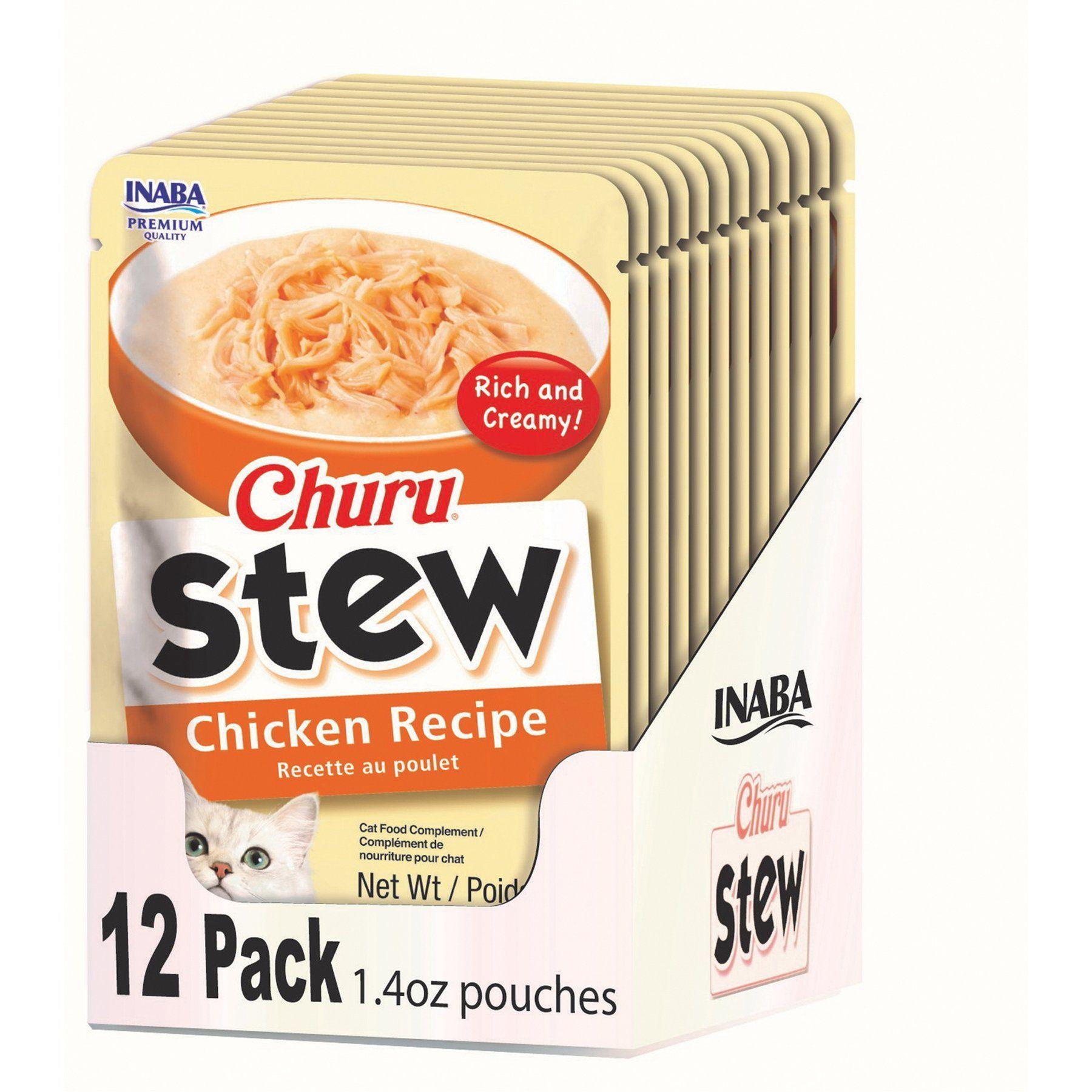
A broth-based Churu stew pouch under twenty calories per serving, for adding moisture as a treat, not a meal.
Webvet may earn a commission when you click through to Chewy, at no extra cost to you.
Green tea extract appears at the end of some Churu ingredient lists. WSAVA lists caffeinated drinks, including tea, among foods unsafe for cats; Inaba says the extract is added for its antioxidants and does not publish the amount. Because ingredients are listed by weight, an extract in last place is among the smallest components of the tube. Owners who would rather avoid it can choose a recipe whose label omits it, such as the classic Chicken Recipe, and a cat with a health condition should have the choice cleared by the vet. Any Churu recall would appear on the FDA's recalls and withdrawals list, which is the place to check a specific lot.
Churu is not automatically suitable for every cat: WSAVA notes that conventional treats may not be appropriate for a cat with a medical condition, dietary sensitivities, or a veterinary-prescribed diet. Diabetic cats are one example. The Cornell Feline Health Center says a low-carbohydrate diet improves blood sugar regulation, and Churu contains tapioca starch. Insulin can lower blood glucose to dangerously low levels, so any change in what a diabetic cat eats, treats included, goes through the vet.
Using Churu well: pills, hydration, lick mats, and bonding
Hydration. Churu does add water to a cat's day, though one tube adds a little rather than a lot. Moisture by format, per Inaba and Cornell:
- Classic Churu tube: 91 percent moisture.
- Canned cat food: at least 75 percent.
- Dry cat food: 6 to 10 percent.
For a larger serving of liquid, the Inaba Churu Stew Chicken Recipe Grain-Free Lickable Cat Treats, 1.4-oz pouch, 12 count are a broth-based gelée listed at 86 percent moisture and under twenty calories per serving. Fresh water should always be available, and how much water should a cat drink sets out normal intake. For a cat that seems to drink less than usual, cat not drinking water explains what that can mean.
Churu works best as a tool with a purpose. WSAVA counts foods used to give medication as treats and notes that treats provide enrichment and may strengthen the bond between a cat and its owner. Every use still spends the same daily treat allowance.
Pills. The Feline Veterinary Medical Association suggests these steps:
- Ask the vet first whether the pill can be hidden in a lickable tube treat.
- Mix a liquid medicine into a soft lickable treat only if the vet confirms it does not taste bad.
- If you pill the cat directly, never give the pill alone: follow it with a syringe of water and feed the cat afterward.
- Never put medication in the regular food, because a cat can start to dislike its food, which matters most on a therapeutic diet.
- Skip plastic pill guns: the association warns these gadgets can hurt the back of a cat's mouth.
- Get the cat used to pill treats before it needs medication, and switch methods if it stops responding to one; a plain lick of Churu on ordinary days keeps the tube from always signaling a pill.
Lick mats and enrichment. Spreading a tube thinly on a textured mat slows licking and stretches a few calories into longer activity. A small, hand-washable option is the Squishmallows Cam the Cat Cat Lick Mat, listed at $6.57 on Chewy when checked in November 2026. Mat shapes and materials are compared in lick mat for cats.
Bonding and handling. Offering a tube by hand during brushing, nail trims, or carrier practice pairs those moments with something a cat values. WSAVA notes that treats work as training aids or rewards for good behavior, and also suggests other ways of spending quality time with a cat, so food is not the only reward.

A reluctant eater. A little Churu on top of a meal can tempt a fussy cat, but it can also teach a cat to hold out for the treat. VCA warns that too many treats can interfere with appetite for regular food. A cat that stops eating its regular food needs the vet promptly, not more toppers.
Storage. How long Churu cat treats last depends on whether the tube is sealed:
- Opened tubes: Inaba says to refrigerate after opening and serve as soon as possible.
- Unopened tubes: use them by the date printed on the package.
- Frozen Churu: Inaba's pages give no freezing guidance, so owners who freeze tubes for longer licking on a mat are going beyond the maker's instructions, and a frozen tube's calories still count.
Churu flavors and product lines compared, plus similar lickable treats
Inaba sells Churu in many flavors and formats, and the best flavor is the one a cat licks eagerly without stomach upset. Inaba's site lists 4-tube sleeves, 10- and 20-tube bags, and 50-tube jars. Whatever the pack size, the calories per tube stay the same.
The main Churu lines and what Inaba or the retailer listing states about each:
- Churu puree tubes: chicken, tuna, chicken with scallop, chicken with shrimp flavor, chicken with crab flavor, and chicken with cheese recipes, at 6 kcal per tube; chicken variety and tuna variety packs mix several.
- Churu Bites: soft baked pieces with a Churu filling at 13 kcal per piece, in chicken, tuna, tuna with salmon, and tuna with scallop recipes.
- Churu Bisque: a pouch at 16.0 kcal for the chicken recipe.
- Churu Stew: a 1.4-oz pouch of broth-based gelée with shreds of chicken, per the retailer listing.
- Churu for Senior 10+: seven calories per tube.
- Churu Complete lines, including Churu Complete Pate Kitten: Inaba sells these as complete and balanced cat meals, separate from the treats.
Matching the line to the goal keeps the calories where they do the most good:
- Hiding a pill: the classic puree tubes, the lickable tube format the Feline Veterinary Medical Association describes.
- Adding moisture: Stew or Bisque pouches, which hold 1.4 oz against a tube's 0.5 oz.
- Lick mat enrichment: classic tubes spread thin, at 6 kcal each.
- Training and handling rewards: Bites are individual soft pieces, but at 13 kcal each they use the budget faster than a tube.
- Older cats: the Senior 10+ tubes, once the vet has checked kidney health.
- Meal topping: Sprinkles, counted as part of the treat allowance.
Two needs-based lines are worth knowing. The Inaba Churu Grain-Free Skin & Coat Chicken Recipe Lickable Cat Treat, 24 count is made with farm-raised chicken, and its listing says it adds omega-3 fatty acids from fish oil; it is listed at $19.30 on Chewy when checked in November 2026. A treat at under 10 percent of calories is a small contribution, so a cat with skin trouble still needs a vet's diagnosis.
For a topper rather than a lick, the Inaba Churu Sprinkles Chicken Recipe Grain-Free Cat Treats, 0.35-oz tube, 24 count are soft morsels with a Churu filling, real chicken as the first ingredient, and 70 percent moisture. They count toward the same treat budget when sprinkled on a meal.
If a Churu pack is sold for hairball control, as Churu Nourish, or for another need, judge it the way a vet would read any treat label:
- Calorie Content per tube, piece, or pouch.
- The first ingredients: a named meat or fish versus water.
- The feeding statement: treat only, or a complete and balanced meal.
- Moisture, if hydration is the goal.
Is Churu better than Delectables or another lickable treat? The choice comes down to those same label checks rather than brand: calories per serving, the protein source, and whether the cat's vet has cleared treats. WSAVA advises contacting the manufacturer for calorie information when a treat label does not state it. Chicken and tuna Churu differ mainly in protein, so a cat with a known sensitivity to one can try the other with the vet's agreement.
Churu cat treats questions
Frequently Asked Questions
Does Churu need to be refrigerated?
Not before opening. Inaba's instructions say to refrigerate after the tube is opened and serve it as soon as possible, so a half-used tube belongs in the fridge, sealed, and should be finished soon. Inaba gives the same instruction for the larger Bisque pouches, so an opened pouch goes in the fridge too.
Is Churu safe for cats with kidney disease?
Only with the vet's approval. Cats with kidney disease are often managed on therapeutic diets restricted in protein, phosphorus, and sodium, according to Cornell, and Inaba's web pages give no phosphorus figure for Churu. The vet can weigh a treat against the cat's diet and bloodwork. Cornell also notes that cats with kidney disease that go without food even for short periods can develop significant problems, so a treat that tempts a poor eater is a conversation worth having at the next visit.
Can Churu cause diarrhea in cats?
It can, mostly when a cat gets several tubes at once or Churu is new to it. VCA lists diet changes and food intolerances as common causes of diarrhea and advises introducing treats slowly. Diarrhea that lasts more than two days, contains blood, or comes with vomiting needs a vet.
Can kittens have Churu?
Kittens can have small amounts once they are eating solid food. Inaba says its flavors suit cats from kitten to senior, but a treat should never displace a kitten food whose label states it meets the requirements for growth. VCA notes that most kittens do best on three to four small meals a day, so a lick of Churu fits between meals rather than in place of one.
Why does Churu have green tea extract?
Inaba says it adds green tea extract for its natural antioxidants. In the recipes that include it, it sits last on the label, and because ingredients are listed by weight it is among the smallest components. Owners who prefer to avoid it can pick a recipe whose label omits it, such as the classic Chicken Recipe 4-tube pack.
Veterinarian · BVMS MRCVS
Dr. Pippa Elliott, BVMS, MRCVS, is a veterinarian with nearly 30 years of experience in companion animal practice. Dr. Elliott earned her Bachelor of Veterinary Medicine and Surgery from the University of Glasgow. She was also designated a Member of the Royal College of Veterinary Surgeons. Married with 2 grown-up kids, Dr. Elliott has a naughty Puggle named Poggle, 3 cats and a bearded dragon.


