Cat Separation Anxiety: Signs and a Step-by-Step Management Plan
Clinginess alone does not establish cat separation anxiety. Learn how to record absence-linked distress, build calm routines, and practice manageable separations.

BVMS MRCVS

This article contains affiliate links. Webvet may earn a commission when you buy through them, at no extra cost to you.
Cat separation anxiety describes distress associated with being away from an important companion. The useful clue is a pattern: behavior changes around departure or absence and improves when that companion is available. Following you around or enjoying your company does not, by itself, establish anxiety.
Start by recording what happens, arranging veterinary assessment for new or concerning signs, and making home life predictable. Then practice absences short enough for your cat to remain comfortable. Persistent distress needs an individualized plan, sometimes with veterinary behavior support, rather than a longer period of being left to cope.
Signs of separation-related distress in cats
- 1Look for absence-linked behavior and distress during separation, not affection alone.
- 2New house soiling, appetite loss, overgrooming, or unusual vocalization needs veterinary assessment because medical problems can look behavioral.
- 3Keep practice below the point of distress. If your cat becomes unsettled, make the next session easier rather than extending it.
A cat beside a closed door may simply be curious. Repeated door checking, persistent meowing or yowling, pacing, destruction, inappropriate urination or defecation, and failure to settle become more informative when you record the timing. Some cats stop eating while alone or overgroom. A photograph of a posture cannot establish separation anxiety; the sequence around an absence matters.
A camera can help you see that sequence. The INSTACHEW Purrsight 360 Degree Wi-Fi Security Cat & Dog Pet Camera is one option for recording a familiar resting area or doorway. Position it where the cat behaves normally and keep cords inaccessible. Use the footage to support assessment, not to diagnose anxiety from an alert or one brief clip.

Record what happens during ordinary absences for the veterinary team. A pet camera can document timing and settling, but cannot diagnose anxiety.
Webvet may earn a commission when you click through to Chewy, at no extra cost to you.

What are the signs of attachment issues in cats?
An affectionate or clingy cat does not necessarily have an attachment problem. Look for distress specifically when a companion leaves or becomes inaccessible: persistent calling, restlessness, inability to settle, or changes in eating and grooming. These signs require context and medical consideration. A cat who follows you but then rests comfortably during your absence is showing a different pattern from one who remains distressed.
Aggression or biting around departure also deserves investigation rather than a label of spite. Record the circumstances without provoking another incident. If behavior includes self-injury, severe agitation, or failure to eat, seek prompt veterinary advice. Breathing difficulty or open-mouth breathing is a medical concern, not something to dismiss as anxiety.
Clinginess, illness, or another source of stress?
Medical differential diagnosis comes first when behavior changes. Pain, urinary problems, digestive illness, sensory changes, and other conditions can affect vocalization, elimination, sleep, and contact-seeking. Vomiting or diarrhea during an absence does not prove separation anxiety. Tell the veterinarian when these signs also occur while someone is home.
Consider the wider situation:
- Has a work schedule, vacation, move, or household member changed the usual routine?
- Is another animal blocking food, litter, resting places, or a doorway?
- Do noises or outdoor cats appear shortly before the behavior?
- Is an older cat disoriented, sleeping differently, or seeking help reaching resources?
After medical and environmental needs are addressed, a pheromone diffuser may be an optional adjunct. The Feliway Optimum diffuser is one example to discuss with your veterinarian. Follow its placement instructions and watch the individual response. It does not diagnose anxiety, replace behavior work, or explain away a new symptom that needs an examination.
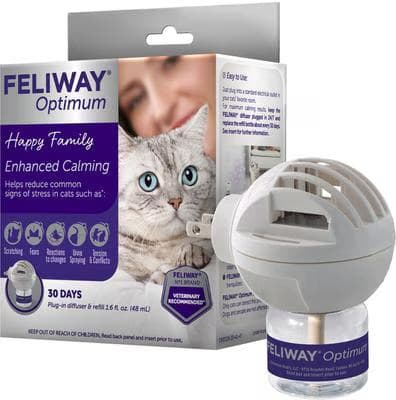
A pheromone diffuser may be an optional environmental adjunct. Follow its instructions and judge your cat's response alongside the behavior plan.
Webvet may earn a commission when you click through to Chewy, at no extra cost to you.
Cats may struggle after a major change from near-constant company to routine absences, including after a vacation or an extended period of working at home. Rescue history, breed, or being a male cat does not establish the diagnosis. A senior or deaf cat may need changes to communication and access as well as assessment for other health issues.
Distress after separation from another cat is also possible, but the relationship and circumstances matter. Loss of a bonded companion, conflict with a housemate, and absence of a person are not interchangeable explanations. Bring that history to the assessment rather than assuming any new cat will fill the gap. For ordinary following and contact-seeking, see why cats follow their people.
Record what happens while you are away
Use naturally occurring, manageable absences to build a baseline. Do not leave your cat distressed for hours to obtain convincing footage. Set a camera or phone safely, check that it captures the relevant space, and review both the beginning of the absence and what happens afterward. A short burst of calling followed by relaxed sleep differs from persistent pacing or repeated trips to the door.
Record the details that can guide a plan:
- What happened immediately before departure, including shoes, keys, bags, or a closed bedroom door.
- How long it took for the first behavior change to appear.
- Whether the cat ate, played, rested, hid, or continued calling.
- Whether behavior changed when a different familiar person remained home.
- How the cat behaved after you returned.
An online separation-anxiety quiz may help you organize observations, but it cannot rule out illness or confirm the diagnosis. Bring representative clips and a brief written timeline to the veterinary team. Include ordinary calm periods as well as the most concerning episode so the pattern is not defined by a single dramatic moment.
AAHA's separation-anxiety guidance describes observation, gradual practice, and veterinary support. In cats, assess appetite, grooming, elimination, and use of space as well as sounds. A cat who is quiet but frozen or hiding may not be comfortable, and lack of a camera alert is not evidence of successful training.
Before departure practice, video observation can also show whether a simple cue changes your cat's behavior while you remain home. Compare the cat's ordinary resting behavior with what happens when you pick up your keys, then put them down. A photograph shows the setup; the recording and timing reveal the sequence.

Step 1: build a predictable, secure home routine
Meet the cat's daily needs before making absence practice the focus. Provide reliable opportunities for meals, interactive play, scratching, exploration, rest, and social contact. Predictable does not mean every activity must happen at the exact minute. Aim for familiar patterns the cat can rely on and accessible resources that are not contested by another animal.
Offer a comfortable resting station near you first. Reward voluntary use with calm attention or a small food reward the cat enjoys. Let the cat leave. Over time, practice sitting slightly farther away or briefly moving within the room while the cat remains relaxed. A bed or mat should become a comfortable option, not a place where the cat is held against its wishes.
A food puzzle can provide a familiar activity after supervised introduction. The Catit Senses 2.0 Food Tree is one option if it suits your cat's ability and normal food. Use part of the measured daily ration and start at an easy setting. Confirm the cat can obtain food without frustration before considering it during an absence; a puzzle is not a treatment for clinical anxiety.
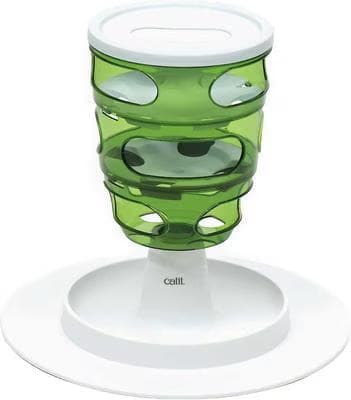
Introduce a food puzzle while supervising, using the normal measured ration. Keep it easy enough for your cat to obtain food without frustration.
Webvet may earn a commission when you click through to Chewy, at no extra cost to you.
Choose supports by the cat's response:
- Use toys and foraging activities that are safe for this individual when unsupervised; put string and wand toys away.
- Try quiet background sound only if it appears comfortable. Music is not a proven substitute for a separation plan, and loud sound can add another stressor.
- Provide hiding and resting choices with easy access to food, water, and litter.
- Keep social contact available when you are home. You do not need to reject a cat's affection to teach calm alone time.
Our cat stress-relief guide covers broader environmental support. If the main issue is too little activity or novelty rather than distress during absence, the signs of boredom guide can help frame that separate discussion.
Step 2: practice departure cues and brief absences
Begin with a departure cue your cat can tolerate. For example, pick up your keys and put them down while remaining home. If this already produces marked agitation, make the exercise smaller and discuss it with the veterinary team. Repeating the full sequence until the cat gives up is not gradual desensitization.
The resting station should remain an appealing choice during practice. A securely installed K&H EZ Mount window perch may provide one if your cat enjoys the view and can reach it comfortably. Check the surface and weight requirements and offer a floor-level alternative. If outdoor cats or traffic cause vigilance, choose a quieter resting location instead.
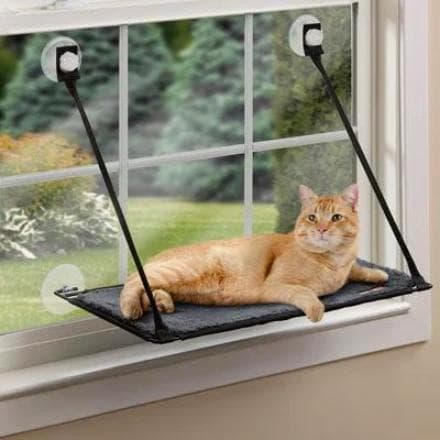
Offer a safely installed perch only if your cat finds the view calming. Check access and weight requirements, and retain a comfortable alternative resting place.
Webvet may earn a commission when you click through to Chewy, at no extra cost to you.
Once the cat remains comfortable with easy cues, try a very brief absence. That may mean stepping out of sight for seconds, not starting with a trip to the store. Return before distress develops. Use the recording to judge whether the cat stayed settled rather than assuming silence means success.
VCA's separation-distress guidance emphasizes staying below the distress threshold. Pairing an easy separation with something the cat enjoys is counterconditioning; gradually changing duration or distance is desensitization. Both depend on the cat remaining comfortable enough to participate.
| Observed response and next practice | What to record | How to adjust |
|---|---|---|
| Comfortable after a departure cue | The cue and whether ordinary activity continued | Repeat it calmly before adding distance or time |
| Settled behavior throughout a short absence | Duration, eating or resting, and behavior after return | Repeat success; then make one small increase |
| Early vigilance or restlessness | The first change and when it appeared | Shorten the absence to stay below the distress threshold |
| Persistent calling, pacing, or inability to settle | Duration and relevant video, without prolonging the episode for evidence | Stop escalating practice and seek help with the plan |
| Self-injury, poor intake, or new medical signs | The signs and when they occur, including while someone is home | Contact the veterinarian promptly rather than treating this as a training setback |
Change one element at a time:
- Practice a manageable cue while remaining present.
- Add a brief movement away or moment out of sight.
- Repeat comfortable sessions before increasing the challenge.
- Shorten the next attempt if the cat becomes unsettled.
Do not use forced confinement, punishment, or prolonged “cry it out” sessions. A closed room may help some cats feel safe and worsen distress in others. The appropriate setup follows the cat's response; a crate is not a default solution to feline separation anxiety.
Step 3: extend calm time and adjust the plan
Use an absence log to choose the next step. Record the planned duration, what actually happened, and how the cat recovered. Progress is comfortable behavior during and after the exercise, not simply completing a longer absence. Include easier sessions between harder ones instead of increasing the duration every time.
How do I fix my cat's separation anxiety?
Start with veterinary assessment, a clear absence-linked history, and practical management that reduces distress while training begins. Build predictable daily activities and practice separations shorter than the cat's current limit. Increase difficulty only after comfortable repetitions. If the cat cannot settle, shorten the absence and seek professional help. No product or fixed timetable reliably fixes every case, and some cats need prescribed medication alongside behavior work.
Planning unavoidable absences
For unavoidable workdays or travel, discuss temporary management with the team. A familiar sitter or trusted person may help if the cat is comfortable with them, but another person does not automatically replace a particular attachment figure. Boarding introduces a different environment and should not be treated as guaranteed relief. Plan ahead rather than testing a new arrangement during a long vacation.
Adopting a second cat is not a dependable treatment. It can create additional social stress, and a distressed cat may still miss the original companion. If another cat is already joining the household for other reasons, use gradual cat introductions and keep the separation plan focused on the observed problem.
Separation anxiety is not a diagnosis that predicts a cat will die simply from missing someone. However, self-injury, prolonged inadequate intake, or an untreated medical illness can have serious consequences. Take those signs seriously and obtain care rather than relying on reassurance that the behavior is “only anxiety.”
When professional treatment is needed
Contact the veterinarian when distress persists, practice cannot stay comfortable, or behavior interferes with eating, grooming, elimination, or rest. Sudden changes deserve medical assessment. Bring your log, representative recordings, household routine, and details of what has been tried. A veterinary behaviorist can help distinguish contributing problems and design a plan that fits the cat and household.
Medication may be part of treatment, but the choice, dose, timing, and monitoring are individual. Do not use another pet's prescription or transfer a dog medication's approval and directions to a cat. Ask what benefit to expect, when the plan will be reviewed, and which side effects should prompt contact. Medication supports management and learning; it does not make prolonged distress an appropriate training exercise.
Make the plan practical enough to follow:
- Agree on what caregivers will record and who will review it.
- Identify how unavoidable absences will be managed while treatment starts.
- Set a recheck and criteria for contacting the team sooner.
- Tell the team when the arrangement is not feasible so it can be adapted.
Cat separation anxiety questions
Frequently Asked Questions
Why won't my cat leave me alone?
Ordinary attachment, interest in food or play, a learned routine, or a wish for company can explain following. A new behavior change can also signal pain, illness, or stress. The key question is what happens when you are unavailable: does the cat settle, or show persistent distress? Record that pattern and discuss concerning changes with your veterinarian rather than diagnosing anxiety from clinginess alone.
How long does it take for a cat to destress?
There is no dependable number of days that applies to every cat. Settling after one brief upset is different from changing a recurring separation-anxiety pattern: a calm evening does not establish that the next absence will be comfortable. Track eating, resting, grooming, and the first distress sign across repeated manageable absences. Move ahead only when those observations support it, and agree on a recheck date with the veterinary team. If the cat cannot eat or rest normally, seek help promptly instead of waiting for an arbitrary recovery deadline.
Will adopting another cat cure separation anxiety?
Another cat is not a guaranteed cure. Some cats enjoy a compatible companion, while others find sharing territory stressful, and attachment to a person may remain unchanged. First identify the actual trigger and address the cat's medical and behavioral needs. If you choose to add a cat for other reasons, plan careful introductions and separate resources rather than expecting immediate reassurance or friendship.
Can a cat have separation anxiety at night?
Some cats show distress when a person becomes inaccessible behind a closed bedroom door, but night-time calling also has other explanations. Hunger, activity patterns, pain, sensory changes, and other medical causes should be considered, especially in an older cat or a new behavior change. Record the pattern and discuss it with your veterinarian. Do not assume that opening or closing the door alone resolves the underlying problem.
Veterinarian · BVMS MRCVS
Dr. Pippa Elliott, BVMS, MRCVS, is a veterinarian with nearly 30 years of experience in companion animal practice. Dr. Elliott earned her Bachelor of Veterinary Medicine and Surgery from the University of Glasgow. She was also designated a Member of the Royal College of Veterinary Surgeons. Married with 2 grown-up kids, Dr. Elliott has a naughty Puggle named Poggle, 3 cats and a bearded dragon.
Related reading

Cat Zoomies: Why They Happen and When to Be Concerned

How to Introduce Cats: A Step-by-Step Plan and Troubleshooting Guide

Pica in Cats: Why Cats Eat Nonfood Items and What to Do
