Why Does My Cat Follow Me Everywhere? 7 Reasons
Why does my cat follow me everywhere? Learn seven adult-cat reasons, what sudden clinginess can mean, and when enrichment or a veterinary visit may help.

This article contains affiliate links. Webvet may earn a commission when you buy through them, at no extra cost to you.
If you wonder, “why does my cat follow me everywhere,” the answer is usually social contact, curiosity, a familiar routine, or a learned request. The timing and the rest of your cat's behavior show whether the pattern is ordinary companionship or a change that deserves attention.
 Sponsored
Want a vet's help with your cat's anxiety or behavior?
Talk to a licensed vet at Dutch over video, often the same day. They can recommend treatment and prescribe it when it's appropriate.
Use code Pets60
Plans start at $12/month · covers up to 5 pets
- Licensed vets in most states
- Rx for 150+ conditions
- 4.7 on Trustpilot
What It Means When an Adult Cat Follows You Everywhere
Use this early adult cat following reason and action table to compare likely context, supporting behavior clues, and the next low-risk action. Each row pairs a likely motivation with a sudden-change boundary, helping you respond to the behavior in front of you without assuming that following proves affection, anxiety, or illness.
- 1An adult cat may follow you for social contact, curiosity, routine, food, attention, stimulation, or reassurance.
- 2Following is contextual behavior, not proof of one emotion or a diagnosis of anxiety.
- 3Look at when it happens, what your cat does next, and what response the behavior usually produces.
- 4Treat a persistent sudden behavior change as important, especially with appetite, pain, mobility, vocal, sleep, elimination, or awareness changes.
| Adult cat following: likely reason | Supporting clues | Next low-risk action | Sudden-change boundary |
|---|---|---|---|
| Social proximity | Relaxed posture, quiet company, settling nearby | Allow choice and provide a comfortable nearby resting place | Call the veterinarian if proximity becomes persistent and abruptly different |
| Curiosity or territory | Watching doors, inspecting rooms, checking new activity | Let the cat observe safely without forcing contact | Seek advice if confusion or disorientation appears |
| Predictable routine | Following before meals, play, work, or bedtime | Keep routines consistent and vary rewards slightly | Investigate a sudden change in timing or intensity |
| Learned need | Following leads to food, a door opening, play, or attention | Meet the need on a schedule and reward calm alternatives | Check for illness if the need itself changes, such as new hunger or thirst |
| Under-stimulation | Restlessness, repeated bids for activity, limited independent play | Add foraging, climbing, scratching, and short play sessions | Contact the veterinarian if restlessness is new or hard to interrupt |
| Stress or vulnerability | Hiding, scanning, startle responses, conflict, changed resource use | Reduce pressure and provide separated resources and safe places | Ask for veterinary help when stress signs persist or escalate |
| Pain or another health change | New vocalizing, altered sleep, appetite, movement, grooming, or elimination | Record the full pattern and call the veterinarian | Do not wait for another sign to become severe |
Most adult-cat following is normal social or routine behavior. A cat may prefer to share space without wanting to be held. Another may follow because your movement predicts food, play, an open door, or something interesting in a different room.
This context-first answer organizes adult cat following reasons around what happens before, during, and after the behavior. If “my cat always follows me around” describes your home, look for flexibility as well as frequency. Calm company differs from a learned request, under-stimulation, social pressure, or a meaningful behavior change. Context guides the next step.
Read the whole sequence
For several days, notice four parts:
- Cue: You stand up, enter the kitchen, close a door, begin work, or prepare for bed.
- Following: The cat walks behind you, runs ahead, meows, touches you, or waits nearby.
- Result: Food appears, a door opens, play begins, or the cat receives attention.
- Afterward: The cat settles, keeps asking, redirects to another activity, or seems unable to relax.
One sequence can have more than one explanation. A socially attached cat can also be hungry. A curious cat can learn that meowing speeds up breakfast. Avoid assigning a fixed personality label from one familiar behavior.
Adult cats and kittens need different explanations
This guide addresses an established adult cat following a familiar person. Kittens are still developing attachment, confidence, routines, and independence. Their age, recent separation from littermates, and new-home adjustment change the decision.
Compare coverage choices for your pet, then request a quote directly on Lemonade.
- Check a price for your pet
- Review available coverage choices
- See the terms before you decide
Eligibility, waiting periods, limits and exclusions apply.
Webvet may earn a commission when you click through to Lemonade, at no extra cost to you.
Keep the adult-versus-kitten boundary clear because kitten development changes the meaning of following. A young cat may be adjusting to separation, a new home, and emerging independence. The dedicated kitten guide addresses that life stage, while this article stays with established adult routines, attachment, health changes, and respectful responses.
If the follower is young, read WebVet's guide to why a kitten follows you everywhere. It covers kitten development without stretching an adult behavior explanation across a different life stage.
Normal following leaves room for normal independence
A comfortable adult cat should still be able to eat, drink, groom, sleep, explore, play, and use the litter area without staying beside one person. Independence does not require the cat to be aloof. It means social contact remains one choice among several safe choices.
Notice whether the cat can:
- Remain settled when you cross the room
- Choose another person, perch, or resting area
- Engage with food, play, or exploration without prompting
- Reach resources without following you through a guarded route
- Recover calmly when a familiar routine changes slightly
These observations are more informative than counting footsteps. A cat can follow frequently and remain flexible. Another may follow less often but show distress, conflict, or physical difficulty when separated from a particular location or person.
Keep the cat's baseline in mind. A behavior that has been stable for years carries different information from a persistent change that began this week. The new pattern, not an arbitrary amount of closeness, is what should guide the next step.
Why Adult Cats Follow Their People
An adult cat's reason can change across the day. The same cat may seek quiet company in the morning, expect lunch in the kitchen, and follow at night because the household routine is ending.
Questions such as “why does my cat always follow me everywhere?” and “why does my cat want to follow me everywhere?” often involve routine learning, curiosity, territory, attention seeking, or a predictable reward. None of those explanations proves anxiety. Use the cat's posture, timing, destination, and ability to disengage.
1. Your cat chooses social proximity
Cats can maintain social contact without constant touching. Following, resting in the same room, or observing from a short distance can let a cat stay connected while preserving control over physical contact.

Look for a loose body, neutral ears, normal movement, and the ability to settle independently. Those clues support comfortable proximity. They do not prove imprinting, rank your relationship, or show that the cat likes only one person.
2. Your movement creates something to investigate
A person moving through the home changes doors, sounds, scents, light, furniture access, and activity. A cat may simply inspect what changed. This is especially likely when the cat watches briefly, explores the room, and then chooses another activity.
Curiosity is not the same as distress. A curious cat can pause, turn away, or settle after inspecting. A cat that seems unable to disengage, scans constantly, or startles repeatedly needs a closer look at stress, conflict, and health.
3. You move through the cat's territory
Indoor cats organize their day around familiar routes, safe places, resources, and observation points. When you cross those routes, your cat may accompany you to check access or monitor activity.
The FelineVMA and ISFM environmental-needs guidelines emphasize safe places, separated key resources, play, predictable positive interaction, and respect for feline sensory needs. Those foundations matter more than trying to stop the footsteps themselves.
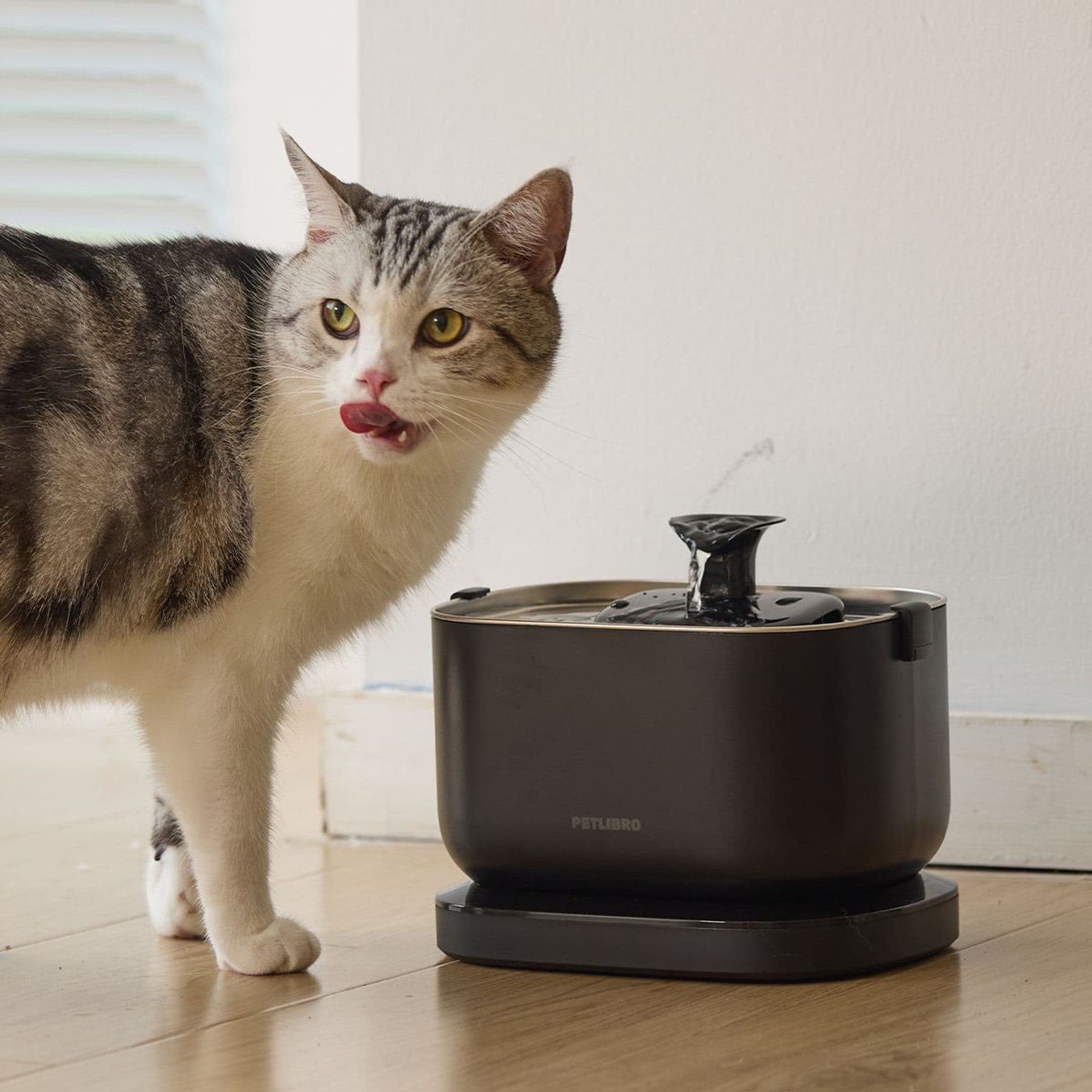
Webvet may earn a commission when you click through to Chewy, at no extra cost to you.
4. Your cat predicts the routine
Cats learn reliable sequences. A laptop closing may predict dinner. A bathroom light may predict bedtime. Shoes may predict an open door or a quiet house. Following can begin before the event because the earlier cue has become meaningful.

A predictable routine can help a cat feel secure. Trouble starts when only close following makes the expected event happen, or when the cat cannot settle if a familiar sequence changes.
5. Following has become a learned-needs loop
The loop is simple: a cue occurs, the cat follows, the person responds, and the response makes following more likely next time. The need may be food, attention, play, access, or relief from a blocked route.
For example:
- You enter the kitchen.
- The cat follows and meows.
- Food appears immediately.
- The kitchen cue and meowing become a reliable path to food.
This does not mean the cat is manipulative. It means a useful behavior has been learned. Meet genuine needs on a predictable schedule, then reward waiting on a mat, using a perch, playing independently, or settling nearby.
6. Your cat wants food, play, or access
Watch what the cat does at the destination. Looking toward a bowl, toy drawer, door, litter area, or favorite perch often identifies the immediate request. Check that essential resources are accessible and that another pet is not guarding the route.
New hunger, thirst, urgency, or repeated requests can also accompany health changes. If the need is suddenly stronger or paired with weight, appetite, elimination, activity, or vocal changes, contact the veterinarian rather than treating it as a training issue.
7. Your cat needs more stimulation or reassurance
A cat with limited play, climbing, foraging, scratching, hiding, and observation opportunities may rely heavily on a person for activity. Stress can also narrow the cat's choices, especially after a move, household change, conflict, or loss of access to a safe place.
The FelineVMA indoor-cat position statement supports environments that meet physical and emotional needs. Add choices and predictable positive interaction instead of scolding the cat for seeking information or contact.
SponsoredVet care that's always there
Unlimited video calls and messaging with licensed vets for less than a typical vet visit. One membership covers up to five pets.
Use code Pets60
Plans start at $12/month · covers up to 5 pets
- Licensed vets in most states
- Rx for 150+ conditions
- 4.7 on Trustpilot
Why Cats Follow You to the Bathroom, Bed, or Every Room
Rooms create different cues. A closed bathroom offers restricted access, running water, warmth, sounds, and a predictable pause in your movement. A bedroom carries resting routines and familiar scent. A kitchen predicts activity and food.
“Why does my cat follow me around the house?” and “why does my cat keep following me around the house?” are usually context questions. Compare the rooms, routine, meowing, and what the cat gains. A cat following from room to room may be maintaining proximity while monitoring changes.
If you ask, “why does my cat follow me everywhere and meow,” note whether the sound appears before a familiar destination or reward. Meowing can add a learned request to ordinary room-to-room following, while new persistent vocalizing belongs in the wider health and behavior history.

Bathroom following combines access and routine
A cat waiting outside the bathroom may dislike a closed route, expect attention, investigate sound, or follow a daily sequence. If the cat waits calmly and resumes normal activity afterward, the behavior is usually a context clue rather than a problem.

Webvet may earn a commission when you click through to Chewy, at no extra cost to you.
Check what you have reinforced. Talking through the door, opening it after repeated scratching, or offering attention immediately may teach the cat that persistence changes access. A predictable resting place nearby can give the routine another ending.
Following to bed can be social and practical
Your bed may offer warmth, quiet, elevation, familiar scent, and a long period of stillness. A cat that follows, chooses a comfortable distance, and sleeps normally is making a location choice.
If nighttime following comes with pacing, loud vocalizing, disorientation, repeated waking, or changed elimination, record the pattern. An older cat with a persistent new nighttime behavior should be assessed by a veterinarian.
Meowing adds information, but not a diagnosis
Notice the sound, location, timing, and result. A familiar short call before dinner may be a learned request. Repeated new vocalizing, especially with appetite, thirst, mobility, sleep, or litter-box changes, deserves veterinary attention.
Do not assume every meow means hunger or anxiety. Check water, food schedule, litter access, social pressure, doors, and opportunities for play. Then compare the behavior with the cat's established baseline.
Room-to-room following can be quiet companionship
Some cats relocate whenever their person settles. If the cat can rest, eat, groom, play, and use resources independently, moving from room to room may simply maintain social proximity.
Following becomes more concerning when the cat cannot settle unless touching you, panics at brief separation, stops normal activities, or develops a sudden persistent change. The next section separates “clingy” from a reason to call the veterinarian.
If distress appears specifically when you prepare to leave or while you are away, our cat separation anxiety guide explains what to record, how veterinarians assess possible causes, and how to build gradual practice without provoking panic.
When Following Becomes Clingy or Changes Suddenly
“Clingy” describes intensity from the person's perspective. It does not identify the cause. Compare the behavior with this cat's normal pattern, then look for changes in health, access, household relationships, and daily routine.
Owners may describe the shift as “a cat suddenly follows me everywhere,” “my cat follows me everywhere and meows,” or “my cat is following me everywhere and meowing.” Those descriptions help define timing and vocal behavior, but the clingy cat context still depends on what else changed.
If your exact question is “why does my cat follow me everywhere and meow,” compare the pattern with the cat's normal baseline. A familiar request at a familiar time differs from new, persistent following and vocalizing that appears with pain, appetite, sleep, mobility, elimination, or awareness changes.
Why is my cat so clingy to me?
A cat may stay unusually close after a move, schedule change, conflict, frightening event, or loss of a familiar resource. The cat may also have learned that close following produces food, attention, play, or door access.
Persistent new closeness can accompany pain, illness, sensory change, or age-related cognitive change. Following alone cannot distinguish among those explanations. The safest response combines a behavior log, low-pressure environmental support, and veterinary assessment when the change is sudden or continues.
If you are asking “why does my cat keep meowing and following me,” note whether the sound, destination, appetite, thirst, sleep, or litter use is new. An old cat follows me everywhere for many possible reasons, so cognitive change should be considered with pain, sensory loss, mobility, and other medical causes.

Record the whole behavior change
Use a sudden-change checklist to keep veterinary assessment load-bearing without diagnosing anxiety or illness from following alone. Record the first change, timing, intensity, vocal behavior, appetite, thirst, sleep, movement, grooming, elimination, orientation, household events, and current treatments. This wider history helps the veterinarian compare behavioral, sensory, painful, and medical explanations.
Bring the veterinarian specific observations:
- The first date and time the following changed
- Whether it happens all day or around one cue
- Appetite, thirst, weight, and elimination changes
- Jumping, stairs, grooming, posture, and touch sensitivity
- New vocalizing, nighttime waking, or disorientation
- Household changes, visitors, construction, or animal conflict
- Current medications, supplements, and recent care
The Merck Veterinary Manual recommends a detailed history and medical assessment before a behavior is treated as a primary behavior problem. A good history prevents a familiar habit from hiding a wider change.
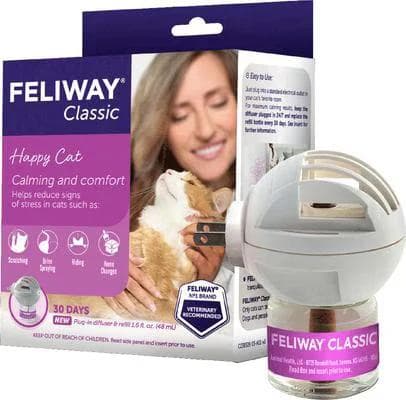
A vet-recommended plug-in diffuser that releases the drug-free Feliway Classic pheromone to reduce stress signs in cats like scratching, hiding, and urine marking. 30-day starter kit.
Webvet may earn a commission when you click through to Chewy, at no extra cost to you.
Pay special attention to older cats
An older cat may seek more proximity because hearing, vision, mobility, pain, sleep, or orientation has changed. Some changes are treatable or manageable, and “getting old” is not a diagnosis.
Cornell Feline Health Center describes cognitive dysfunction as a diagnosis reached after other medical causes are considered. New following plus nighttime waking, disorientation, house soiling, or changed interaction warrants veterinary discussion.
Merck's pain-recognition guidance notes that behavior and activity changes can help identify pain. Following cannot prove pain, but it belongs in the history when movement, posture, grooming, sleep, or touch response also changes.
How to Reduce Constant Following Without Punishment
Do not punish, startle, chase, yell at, or spray water at a cat for following. Those responses can add fear without addressing social contact, routine, blocked resources, under-stimulation, or a medical change.
Routine learning and attention seeking often strengthen following, while environmental enrichment can give an adult cat more ways to choose activity or rest. Stress can also change proximity, so compare the pattern with the cat's baseline. Reward calm alternatives, preserve choice, and ask a veterinarian about any persistent, sudden shift in behavior.
Use respectful enrichment and predictable routines without punishment. Confirm health and essential resources first, then schedule contact, create independent activities, and reward calm alternatives. Track whether the cat can settle, play, eat, groom, and use resources comfortably. A worsening or newly inflexible pattern belongs in a veterinary discussion, not a harsher training plan.
Start with needs and health
Confirm access to food, water, clean litter areas, safe rest, hiding, scratching, climbing, and observation points. Watch whether another pet blocks any route. Contact the veterinarian first when the behavior is new, intense, or accompanied by other changes.
Build predictable contact
Schedule short play, grooming if enjoyed, and calm social time before the cat usually begins repeated bids. End while the cat remains comfortable. Predictability can reduce the need to follow every movement to discover when contact will happen.
Avoid making every departure dramatic. Offer a calm cue, then continue with the routine. When you return, greet the cat after both of you have settled rather than rewarding frantic behavior with an immediate burst of activity.
Create independent enrichment

Offer choices that work without constant human movement:
- A window view with a safe resting platform
- Food scattered through a simple foraging activity
- Climbing and hiding areas in more than one room
- Scratching surfaces near common resting routes
- Toys rotated so only a few are available at once
- Quiet resting places away from household traffic
Match the activity to the cat. A fearful cat may value a covered safe place more than a busy puzzle. A cat with mobility limits needs reachable surfaces and veterinary guidance before changes that require jumping.
Change the learned-needs loop
Identify the outcome that following usually earns. Meet that need on a schedule, then reinforce an alternative that is incompatible with constant shadowing.
A learned-needs loop can show how food, attention, doors, and routines reinforce following. The cue leads to following, your response supplies a result, and repetition strengthens the sequence. A predictable alternative routine changes that result without blame: meet the need on schedule, then reward waiting, settling, or another safe request.
Examples include:
- Serve meals on time without waiting for hallway pursuit.
- Open a safe door after the cat waits at a designated spot.
- Start play when the cat uses a perch or toy area.
- Give attention for calm settling, not only repeated meowing.
- Provide a nearby bed during work, then reward independent rest.
Change one loop at a time. Consistent low-key responses are clearer than ignoring the cat one day and rewarding intense following the next. If distress escalates, stop the experiment and ask the veterinarian for help.
Preserve choice and the relationship
The goal is not to make a social cat avoid you. It is to give the cat safe alternatives and help normal needs occur without constant pursuit. Allow the cat to approach, leave, rest nearby, or choose another room.
Progress may look like shorter following sequences, easier settling, more independent play, and normal resource use. It should not depend on fear, isolation, or suppressing communication.
Measure change without demanding perfect independence
Choose one observable goal for a week. Examples include settling on a nearby bed during one work period, using a foraging activity before breakfast, or resting in another room for part of the evening.
Record the cue, the alternative offered, and how long the cat remained comfortable. Also note appetite, sleep, movement, vocalizing, and litter use. This keeps a behavior plan from hiding a health change.
Review the result after several consistent repetitions:
- Improving: The cat uses the alternative and can settle without escalating bids.
- Unchanged: The cat follows at the same intensity despite accessible alternatives.
- Worsening: The cat becomes distressed, stops normal activities, or develops another change.
An unchanged pattern may simply reflect a social preference that does not harm either of you. Worsening or newly inflexible behavior deserves veterinary discussion. The goal is comfortable choice, not a prescribed number of rooms the cat should occupy alone.
Following Is Only One Affection Clue
Following can coexist with trust and attachment, but it does not rank your bond. A cat may prefer your company without cuddling. Another may show affiliation through greetings, relaxed proximity, scent rubbing, play, or sleeping nearby.
If your cat follows you everywhere but doesn't cuddle, or your cat follows everywhere but won't cuddle, that does not cancel the relationship. Cats differ in touch preferences. Following is one clue, while broad affection and imprinting questions need the full pattern of greetings, proximity, rubbing, play, rest, and choice.
Questions about imprinting, favorite people, the “highest” form of affection, or how to express love are covered in WebVet's guide to signs your cat likes you. That guide evaluates the broader set of affection signals without making following carry the whole conclusion.
Keep the intent boundary clear
This creates an explicit boundary for kitten development and broad affection signs. The adult article owns following context, learned routines, enrichment, and sudden changes. Broad affection and imprinting signs belong in the dedicated affection guide, where following can be weighed beside greetings, scent rubbing, relaxed proximity, play, sleep, touch preferences, and choice.
Adult Cat Following FAQs
Frequently Asked Questions
Why does my cat follow me to the bathroom?
For adult cat following, the bathroom routine combines predictable movement, restricted access, warmth, and attention. Curiosity and access are likely when the cat waits calmly and moves on afterward. Check whether the cat settles elsewhere. The appropriate next step for new distress, frantic scratching, persistent vocalizing, or inability to disengage is veterinary advice.
Why does my cat follow me and meow?
Following plus meowing may be a learned request for food, play, attention, or an open door. Check the destination, timing, and result. A sudden behavior change needs a different response. Contact your veterinarian if vocalizing is new or appears with changes in appetite, thirst, sleep, movement, elimination, awareness, or the cat's ability to settle.
Why does my cat follow me from room to room?
Moving with you can maintain social proximity while the cat monitors territory. Routine prediction also matters when your movement leads to food, play, work, or bedtime. If the cat can rest, eat, play, groom, and use resources independently, room-to-room following may be normal companionship rather than a sign that the cat cannot cope alone.
How can I stop my cat from following me constantly?
Meet essential needs, schedule predictable contact, add independent enrichment, and reward calm behavior in another safe spot. Do not punish or frighten the cat. Change one routine at a time, then record whether the cat settles comfortably. Start with veterinary advice when following is sudden, inflexible, or paired with another physical or behavioral change.
Why is my older cat suddenly following me everywhere?
An older cat behavior change may follow pain, mobility, hearing, vision, sleep, health, or orientation changes. Following alone cannot identify the cause. Record the pattern and arrange a veterinary assessment, especially when the change persists with nighttime waking, confusion, house soiling, appetite change, altered movement, or unusual vocalizing. Early evaluation may uncover manageable problems.

Editor
The Webvet Editorial Team is the in-house group of pet-care editors and writers behind Webvet, operated by Smart Pet Collective. The team researches, writes, and maintains Webvet's pet health, behavior, and medication content. Every article follows a defined editorial process: research from reputable veterinary and scientific sources, careful drafting, mandatory review of medical content by a credentialed veterinarian, and dated publication. Health and medication articles are medically reviewed by a licensed veterinary professional before they go live and are kept current over time.


