Hypoallergenic Dog Treats: Diet Trials and Safer Choices
Choose rewards around a prescribed food trial or confirmed dietary triggers. Learn what hydrolyzed, novel-protein, and single-ingredient treats mean, how to prevent accidental extras, and how training can continue within the plan.

BVMS MRCVS
Medically reviewed by Dr. Pippa Elliott, BVMS MRCVS · Last reviewed

This article contains affiliate links. Webvet may earn a commission when you buy through them, at no extra cost to you.
Hypoallergenic dog treats should be chosen around the individual dog’s prescribed diet and confirmed food triggers. A bag labeled “hypoallergenic,” “natural,” or “single ingredient” is not a guarantee that it fits a food-allergy investigation. During an elimination diet, use only rewards the veterinary team has specifically approved. After the investigation, the choices may widen, but the whole formula and the dog’s actual tolerance still matter.
- 1During a food trial, follow the prescribed diet and permitted rewards exactly.
- 2Choose for confirmed food triggers, not a universal list of bad proteins.
- 3Hydrolyzed, novel-protein, and single-ingredient treats are different concepts.
- 4Keep training rewarding with permitted meal portions or enjoyable nonfood rewards.
What hypoallergenic dog treats mean
Hypoallergenic dog treats are intended to reduce exposure to ingredients likely to cause a food reaction, but suitability depends on the individual dog.
A food allergy involves an immune response to a dietary component. Food intolerance is a different problem, although owners may notice overlapping digestive signs. The word on the package cannot tell you which problem is present, which ingredient matters, or whether the treat is appropriate during a diagnostic diet trial.
The Merck Veterinary Manual describes a controlled elimination diet followed by a veterinary-directed food challenge as the reliable way to establish a food allergy. A pattern of itching after a snack is worth reporting, but it does not identify the cause by itself. Our guide to allergens in dog food explains the broader ingredient question; this page focuses on how rewards fit the resulting feeding plan.
| Feeding situation | Reward decision | Why it matters |
|---|---|---|
| During a diagnostic trial | Only the exact food and rewards approved for that trial. | Unapproved extras can make the results difficult to interpret. |
| After confirmed food triggers | Choose a formula compatible with the documented triggers and veterinary plan. | A suitable food for one dog may be unsuitable for another. |
| Itching without a diagnosis | Arrange assessment rather than cycling through hypoallergenic snacks. | Food allergy is only one possible cause. |
| Digestive sensitivity without confirmed allergy | Start with the current tolerated diet and the clinical advice. | A sensitive stomach does not establish a food allergy. |
A useful shopping question is therefore “Does this exact product fit this dog’s plan?” rather than “Which protein is always safest?” Chicken, beef, fish, rabbit, and plant ingredients are not universal answers. An unfamiliar protein may be useful in one carefully selected plan and inappropriate in another. Keep the distinction between a diagnostic trial and ordinary long-term feeding visible when talking with the practice or choosing a reward.
Treats during a prescribed elimination diet

A dog on a hypoallergenic diet may be able to have pieces of the prescribed main food as rewards, or a specific compatible treat approved by the veterinarian. VCA’s elimination-trial guidance stresses that other food exposures can interfere with interpretation. “Only a little” is not a dependable exception. Ask about rewards before starting the trial so training, medication routines, and household habits do not become unexpected obstacles. One example to discuss is Royal Canin Hydrolyzed Protein Dog Treats; permission depends on the exact prescribed diet.
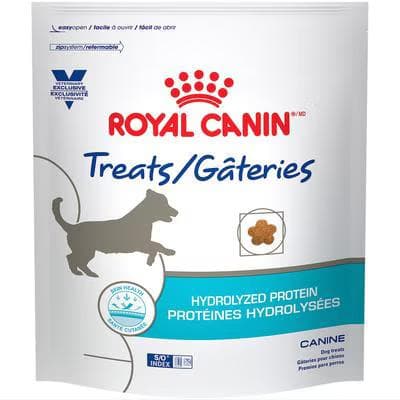
Webvet may earn a commission when you click through to Chewy, at no extra cost to you.
Write down the exact permitted food, flavor, form, and daily amount. If rewards come from the main ration, set them aside before serving meals.
The dog receives the same planned food through a different activity, rather than an additional snack. For a canned diet, ask how to portion and store small rewards; do not assume a homemade baking or freezing method is approved for every formulation.
- Confirm which exact food can be used for training and handling rewards.
- Ask whether any separate treat is permitted with that particular diet.
- Tell the practice about chews, supplements, flavored medicines, and food used for pills.
- Follow the clinic’s trial duration and recheck plan, including any later challenge instructions.
Do not shorten the trial because the dog looks better after a few days, and do not test suspected ingredients on your own. Improvement and relapse need interpretation alongside the rest of the clinical history. If the dog refuses the prescribed food or the plan is becoming impractical, call the team. A revised plan is more useful than quietly adding familiar treats and leaving the clinic unaware of the change.
Hydrolyzed treats must match the prescribed diet
Hydrolyzed treats use proteins broken into smaller components. Novel-protein products use a protein selected in light of the dog’s previous exposure.
These approaches are not interchangeable, and neither makes every product suitable for every dog. The veterinarian needs the exact diet and medical history when deciding whether a separate treat belongs in the plan. A retail limited-ingredient biscuit is not automatically equivalent to a veterinary hydrolyzed formula.
Examples to discuss with the prescribing team include Hill’s Prescription Diet Hypo Treats, Royal Canin Hydrolyzed Protein Canine Treats, and Purina Pro Plan Veterinary Diets Gentle Snackers. These are manufacturer references, not a ranking or a substitute for diet matching. Royal Canin specifically describes its treats for adult dogs using compatible veterinary hydrolyzed-protein formulas; that is narrower than approval for any dog with itchy skin.
The current Hill’s Hypo Treats ingredient list begins with corn starch and hydrolyzed chicken liver. Hydrolyzed chicken is not the same ingredient form as an ordinary chicken biscuit. Whether that specific product fits a dog’s prescribed diet is still a question for the veterinarian; do not replace it based only on the protein name or assume every chicken-containing product is equivalent.
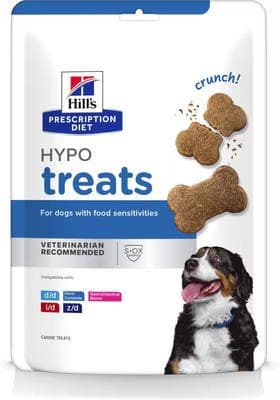
Webvet may earn a commission when you click through to Chewy, at no extra cost to you.
- Check the full product name, not just the brand or the word hypoallergenic.
- Confirm compatibility with the exact prescribed food and the dog’s life stage.
- Ask about the permitted portion, calories, texture, and storage.
- Recheck before substituting another brand, flavor, or product during a shortage.
Hill’s Science Diet and Hill’s Prescription Diet are different product lines. A search result that uses the brand name loosely should not override the package or the prescribing instructions. Similarly, Purina Gentle Snackers and Royal Canin’s hydrolyzed treats have their own formulations. Do not infer that products share the same protein processing, ingredients, or calorie value because they appear in the same search results.
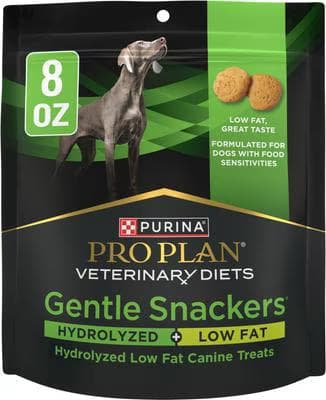
Webvet may earn a commission when you click through to Chewy, at no extra cost to you.
The AAHA allergic-skin-disease guidance cautions that over-the-counter diets may contain undeclared protein sources and are not equivalent to a true prescription elimination trial. This is a reason to follow the chosen clinical plan, not a claim that every retail treat causes allergy. If cost or availability is a problem, explain that early so the team can discuss a realistic alternative and what it can establish.
 $65 · no membership
Is your dog's itching or skin issue getting worse?
A licensed vet can examine your dog over video and prescribe treatment online when it's appropriate.
 Talk to a vet
- Licensed vets
- All 50 states
- same-day Rx

Webvet may earn a commission if you book.
Choose ordinary rewards only after the plan allows them
The best treats for a dog with confirmed food allergies are those that fit its documented triggers and veterinary feeding plan.
After assessment, the veterinarian may permit selected ordinary rewards. Introduce only the agreed product and portion, keep the rest of the diet stable, and retain the label. An apparent improvement does not justify abandoning the plan or broadly declaring a brand safe for every allergic dog.
A possible ordinary-food example is The Honest Kitchen Purely One White Fish Filets, whose manufacturer lists dehydrated white fish. Consider it only if the veterinarian confirms that fish and this exact product fit the dog’s established plan. It is not presented as an elimination-diet treat. The fish species may vary, and the approximate 28-calorie whole fillet also needs portion accounting. A short ingredient list does not settle either question.
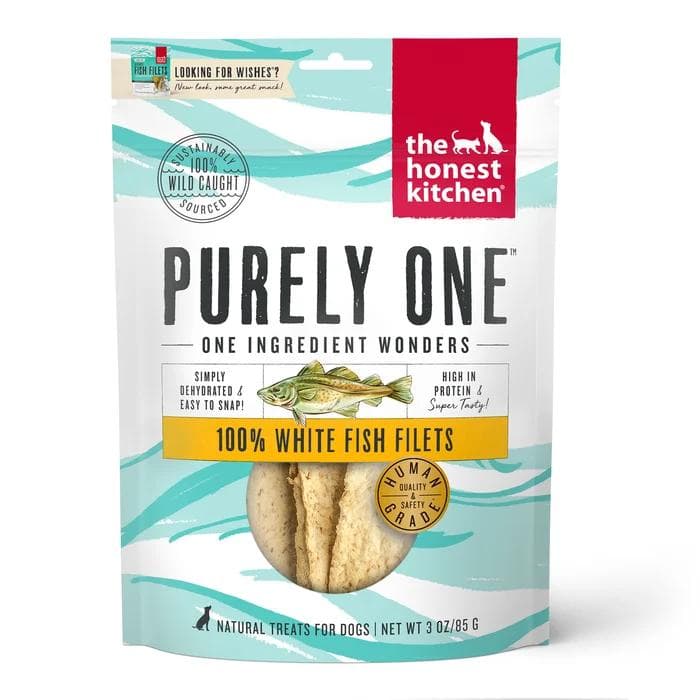
Webvet may earn a commission when you click through to The Honest Kitchen, at no extra cost to you.
For a dog whose main issue is a sensitive digestive history rather than a confirmed food allergy, the sensitive-stomach treat guide follows that separate decision path. The healthy-treat guide covers everyday label, texture, and calorie choices once medical restrictions have been addressed.
Read the whole label and protein history
What should a dog with allergies avoid? Avoid the confirmed triggers and any unapproved extras during the diagnostic plan.
Do not remove entire food groups based only on a general internet list. A flavor name is not the whole ingredient list, and “grain-free” does not mean animal-protein-free or allergy-safe. Keep photographs of the current label so the veterinary team can review the actual formula rather than an older retailer description.
| Label example | Whole formula detail to check | What this means for diet compatibility |
|---|---|---|
| Chicken-flavored training reward | Other ingredients may include pork liver and egg. | Not automatically a single-protein treat. |
| Peanut butter and oats reward | Dried cultured whey may also appear in the recipe. | Not automatically dairy-free. |
| Pumpkin and berry reward | Pork stock and several other ingredients may be present. | Not the same as plain pumpkin. |
| Single-ingredient white fish | The fish species may vary. | A short list does not identify one fixed novel protein. |
For concrete examples, the current Pet Botanics Chicken formula includes pork liver, egg, and chicken ingredients; Zuke’s Peanut Butter & Oats includes dried cultured whey; and Fruitables Pumpkin & Berry includes pork stock. These examples explain label reading. They are not presented as an allergy-safe slate or as substitutes for prescribed trial rewards.
Ask the manufacturer a specific question when a label leaves an uncertainty: which species supplies an ingredient, whether the recipe recently changed, or what information is available about production controls. Pass the answer to the veterinary team. “Made with one protein” and “free from the protein my dog must avoid” are different claims; neither should be invented from a short ingredient list or an attractive front label.
Prevent accidental food exposure

A well-designed food plan can be undermined by food nobody remembered to count. Think through an ordinary week rather than only the dog’s bowl. Visitors may bring biscuits; a trainer may reward a good sit; the dog may finish another pet’s meal. A short household instruction sheet helps everyone give the same answer without asking the owner to supervise every interaction.
- 1Keep only the permitted food in the dog’s reward container.
- 2Tell visitors and trainers which rewards are allowed.
- 3Feed pets separately when the plan requires different foods.
- 4Check pill foods, flavored medicines, supplements, chews, and dental products with the veterinary team.
Use clean utensils and containers for the permitted food, and avoid topping up the trial container with an old mixed bag of treats. Put other pets’ food away after feeding. If the dog scavenges outdoors, discuss management that is practical for your walks. These habits support the plan; they do not prove that a particular exposure caused a flare or replace the follow-up examination.
If an accidental snack happens, record what was eaten, approximately how much, and when. Tell the clinic and ask whether it changes the trial or monitoring schedule. Do not punish the dog or compensate by withholding meals. Honest records are more useful than presenting an apparently perfect trial that actually included unreported extras. Keep prescribed medicines going unless the veterinarian directs a change.
Homemade and single-ingredient rewards
Homemade hypoallergenic dog treats are not automatically appropriate for a diagnostic trial.
A recipe can contain several proteins, ingredients the dog has eaten before, or additions absent from the prescribed diet. A rabbit treat is not novel for a dog that has already eaten rabbit. A one-ingredient reward may simplify the label, but single ingredient does not mean allergy-safe. The ingredient itself can be the problem.
Using part of the main diet as a reward is often more straightforward than introducing a recipe. Cornell’s diet guidance describes taking treats from the primary food rather than adding random scraps. For a restricted diet, confirm the method with the prescribing team. If the dog needs a home-prepared main diet, ask about veterinary nutrition formulation; an online treat recipe is not a complete long-term diet.
- Get permission for the exact ingredients before making a batch.
- Use clean preparation equipment and follow safe food storage.
- Keep rewards within the planned ration or extras allowance.
- Do not add oils, flavorings, supplements, or a new flour to improve acceptance during a trial.
Processing is a separate safety question. The CDC advises against raw pet foods and treats; freeze-drying does not reliably eliminate all germ concerns. A raw single-protein snack is therefore not a safer default simply because its label is short. Ask about the actual manufacturing process and the dog’s feeding requirements rather than treating raw, dehydrated, and hydrolyzed as synonyms.
Soft rewards, chews, and training

Soft hypoallergenic dog treats can be easier for some dogs to divide or chew, but softness does not determine allergy compatibility.
Start with the permitted formula, then choose a texture and portion the dog can manage. Ask the team how to use the approved diet for training if the available prescription treat is hard or too large. Do not replace it with a soft ordinary reward solely because the training session will involve frequent repetitions.
For a dog with skin issues, a low-allergen dental treat is suitable only if its ingredients fit the individual feeding plan. Dental treats and chews need the same review as other food. A product intended for oral care still introduces ingredients and calories, and a long-lasting item may be difficult to portion. Ask which dental routine fits the food trial rather than abandoning dental care or assuming every dental chew is exempt. Avoid excessively hard items, supervise use, and raise chewing discomfort with the practice.
- Use tiny suitable pieces of the permitted food when the dog enjoys them.
- Try play, praise, sniffing time, or another nonfood reward the dog values.
- Keep practice short and adapt the task if the dog is uncomfortable or distracted.
- Give trainers the permitted reward portion and clear feeding instructions.
For general portion arithmetic, our daily treat-budget guide explains how whole treats and smaller deliveries relate. A prescribed trial can impose stricter ingredient rules than the usual healthy-dog extras allowance. Permission to use a calorie allowance is not permission to add an unapproved ingredient.
Treat the cause of itching with the veterinary team
A dog with allergies may need treatment for inflammation, parasites, or secondary skin and ear infections as well as a feeding plan.
A treat is not an allergy medicine. Contact the practice about persistent scratching, painful skin, repeated ear problems, or self-injury. Ask how comfort will be managed while the cause is investigated, and how to tell whether the current treatment is helping.
Itchy skin does not identify a food trigger
There is no single cause of itchy skin that can be identified from the fact that a dog scratches. Fleas and other parasites, environmental allergy, food allergy, and infection are among the possibilities. The relative likelihood depends on the dog, season, history, examination, and testing. Choosing a hypoallergenic snack cannot distinguish them. Record where and when the dog itches, recent diet changes, and any ear or digestive signs for the appointment.
More allergy and treat questions
Frequently Asked Questions
What stops itching fast for dogs?
Fast itch relief depends on the cause and severity, not on finding a hypoallergenic snack. Contact the veterinary team for painful skin, broken skin, repeated ear problems, or persistent scratching. The veterinarian may treat parasites, secondary infection, or allergic inflammation while investigating the cause. Do not give a human medicine or change prescribed treatment without advice; replacing treats alone may not relieve the problem.
What dog food is best for itchy skin?
There is no single best food for every itchy dog. If food allergy is being investigated, a veterinarian may choose an appropriate hydrolyzed or novel-protein diet and a controlled trial. Flea allergy, environmental allergy, and other skin disease need different care. Use the planned complete diet and permitted rewards together rather than buying a food based only on an itch-relief claim.
Does coconut oil help with dog itching?
Coconut oil is not a way to identify or reliably treat the cause of a dog’s itching. Adding it as food also introduces an extra ingredient and calories that may conflict with a feeding trial. Ask your veterinarian before applying oils to irritated skin or adding supplements. A suitable diagnosis and treatment plan is more useful than testing household remedies while the dog remains uncomfortable.
$65 · no membershipIs your dog's itching or skin issue getting worse?
A licensed vet can examine your dog over video and prescribe treatment online when it's appropriate.
Talk to a vet- Licensed vets
- All 50 states
- same-day Rx
Webvet may earn a commission if you book.
Veterinarian · BVMS MRCVS
Dr. Pippa Elliott, BVMS, MRCVS, is a veterinarian with nearly 30 years of experience in companion animal practice. Dr. Elliott earned her Bachelor of Veterinary Medicine and Surgery from the University of Glasgow. She was also designated a Member of the Royal College of Veterinary Surgeons. Married with 2 grown-up kids, Dr. Elliott has a naughty Puggle named Poggle, 3 cats and a bearded dragon.


