Dog Treats for Sensitive Stomachs: A Practical Guide
Choose rewards for a stable dog by its current diet, complete ingredient list, and known tolerance. Covers prescribed-diet rules, careful introductions, pumpkin and chew limits, and signs needing veterinary care.

BVMS MRCVS
Medically reviewed by Dr. Pippa Elliott, BVMS MRCVS · Last reviewed

This article contains affiliate links. Webvet may earn a commission when you buy through them, at no extra cost to you.
Choosing dog treats for sensitive stomachs starts with your dog’s symptoms and current diet. For an otherwise well dog, small rewards made from food it already tolerates may be a practical starting point. If vomiting or diarrhea is active, pause new treats and contact your veterinary team rather than searching for a snack to settle the stomach. A prescribed diet or food trial can change the rules completely, even for a single-ingredient treat.
- 1A sensitive stomach is a description, not a diagnosis.
- 2Start with the current diet and known ingredient tolerance.
- 3Do not add ordinary treats during a prescribed food trial without permission.
- 4Stop new extras and seek veterinary advice when symptoms are active or keep returning.
Start with the food your dog already tolerates
The best treats for dogs with sensitive stomachs are the ones that fit the individual dog’s established feeding plan.
There is no single gastro-friendly protein or brand that every dog will tolerate. A history of loose stools after a rich snack, a diagnosed food allergy, and a dog recovering from an illness are different situations. The first decision is whether the dog is stable enough to consider ordinary rewards at all.
What gastro-friendly means for an individual dog
A good gastro-friendly reward fits the dog’s tolerated diet, suitable portion, and medical restrictions. That may mean pieces of its measured complete food, or an ordinary treat whose whole recipe the dog already tolerates. It does not mean every product sold with digestive-health wording has been shown to prevent an upset stomach. Check the individual plan before choosing a new bag.
A “sensitive stomach” is not a diagnosis. VCA’s explanation of food intolerance describes how dietary reactions can have different causes and need a careful history. If your dog repeatedly becomes unwell, take the meal and treat labels, portion details, and timing of symptoms to the veterinary practice. Repeatedly switching foods can make the pattern harder to interpret. Our sensitive-stomach food guide covers the separate question of the main diet.
| Situation | First reward decision | What to avoid |
|---|---|---|
| Stable dog tolerating its current diet | Ask whether part of the measured meal can be used for rewards. | Several new treats introduced together. |
| Prescribed gastrointestinal or other medical diet | Confirm which rewards and amounts are compatible with that exact diet. | Assuming a natural or low-calorie snack fits every prescription. |
| Elimination diet or food trial | Use only foods and rewards specifically permitted by the veterinary team. | Unapproved extras, flavored supplements, or pill foods. |
| Current vomiting or diarrhea | Pause new treats and contact the clinic about feeding and care. | Shopping for a treat to stop symptoms. |
For a stable dog whose veterinary team permits an ordinary fish reward, The Honest Kitchen Purely One White Fish Filets offer a single listed ingredient: dehydrated white fish. That can simplify a label review, but it is not proof of digestive tolerance. The maker notes that the fish species may vary, so this is not an automatic choice for a strict single-species food trial. A whole fillet is approximately 28 calories; a suitable small portion needs to fit the daily plan.

Webvet may earn a commission when you click through to The Honest Kitchen, at no extra cost to you.
If a dog already does well on its measured dry food, setting aside some of that ration can avoid introducing another formula. That is a transfer from the meal, not extra food added on top. For wet food, ask the team about a practical portioning method and storage. You do not need a new commercial snack simply because training is starting; the familiar food may be useful for easy practice.
When a prescribed diet changes the treat rules

During an elimination diet, the whole plan matters. VCA’s food-trial guidance explains why other foods, treats, flavored supplements, and medication-related foods can interfere with interpretation. An over-the-counter limited-ingredient snack is not automatically equivalent to a prescribed hydrolyzed or selected-protein diet. Check before adding it, including a tiny piece. Tell the veterinarian about all flavored medicines and supplements rather than stopping prescribed treatment yourself.
Ask for a written answer to three practical questions: which exact food can supply rewards, how much can be used, and what should everyone in the household avoid?
Include the dog walker, trainer, groomer, and visitors. A well-meant snack during class can matter if the plan depends on controlling ingredients. Improvement during a diet change also does not, by itself, identify the ingredient responsible or confirm a food allergy.
- Confirm the exact permitted food or treat, including flavor and formulation.
- Keep rewards within the agreed meal and calorie allocation.
- Check chews, toothpaste, supplements, and foods used for pills with the team.
- Use the prescribed trial and follow-up plan; do not run repeated home challenges on your own.
For a diagnosed or suspected food allergy, our hypoallergenic-treat guide explains the narrower selection issue. This page focuses on digestive history and practical reward choice. A short ingredient list may be easier to review, but it does not certify freedom from unwanted proteins, establish a therapeutic effect, or make the treat suitable for every medical diet.
Read the whole formula, not just the flavor
Read the whole ingredient list on the current package. A chicken, peanut-butter, or pumpkin name highlights a flavor, not every ingredient in the recipe.
Check the ingredients your veterinary team has identified as unsuitable and the amount you plan to feed. There is no reason to exclude a tolerated ingredient simply because it sounds less natural, or to assume a familiar ingredient will be tolerated in every quantity and formulation.
The regular Pet Botanics Chicken Training Reward shows this distinction. Its manufacturer’s formula lists pork liver first and also includes egg and chicken ingredients; the calorie value is 3 kcal per treat. It is an ordinary multi-ingredient soft reward, not a sensitive-stomach treatment. Consider it only when the full formula is already tolerated and ordinary treats are allowed. A dog with a relevant restriction needs a different option.
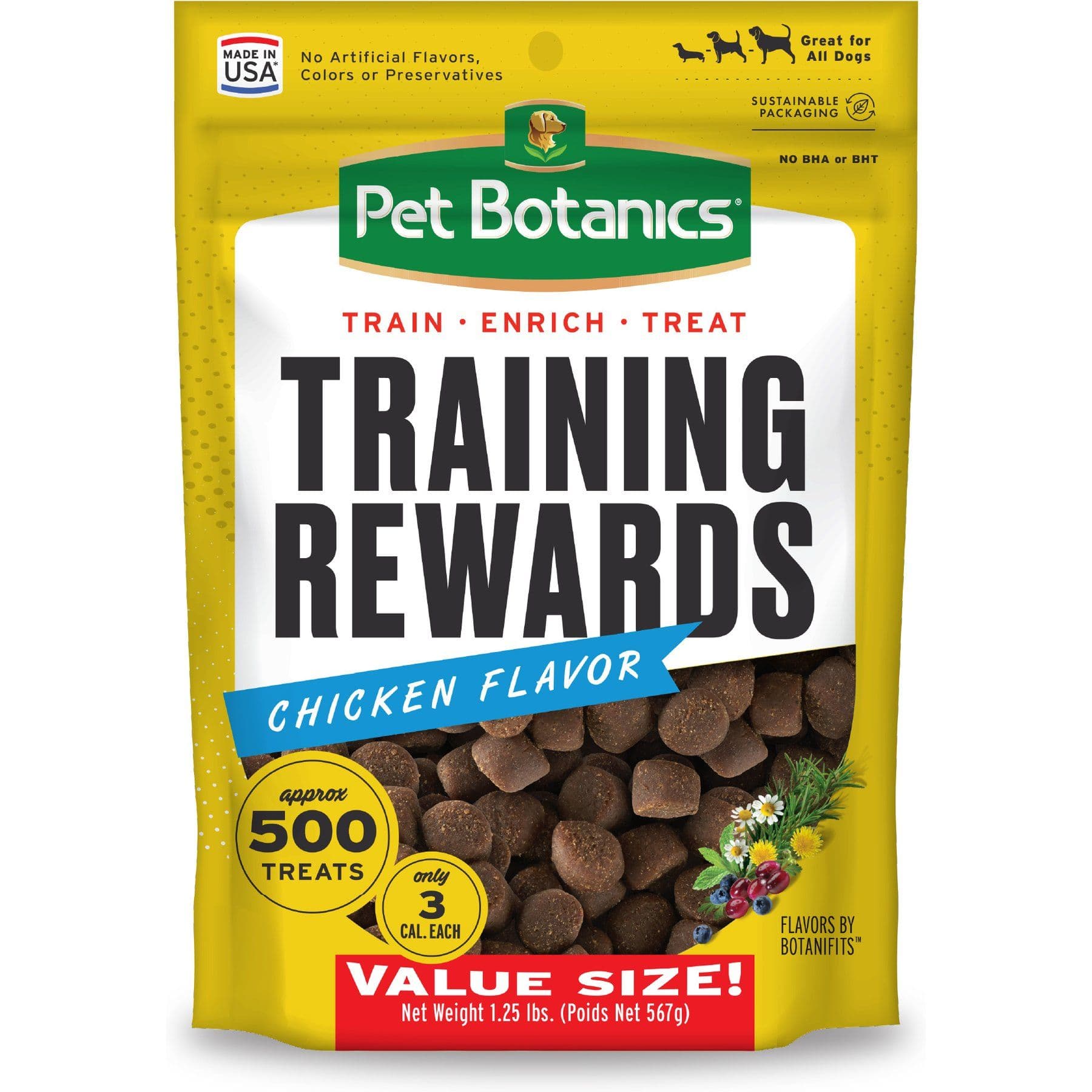
Soft chicken-flavor training rewards in a larger bag for frequent practice. Break rewards into appropriate pieces for your dog.
Webvet may earn a commission when you click through to Chewy, at no extra cost to you.
| Label wording | What the full label can reveal | What it does not establish |
|---|---|---|
| Chicken flavor | Other proteins such as pork liver or egg may also be present. | A single-protein or allergy-safe formula. |
| Peanut butter and oats | The recipe may include dried cultured whey. | Dairy-free status or guaranteed tolerance. |
| Pumpkin and berry | A formulated treat can also contain peas, honey, oil, and pork stock. | The effects of plain pumpkin or a treatment for diarrhea. |
| Natural or limited ingredient | A description of ingredients or processing that still needs checking. | Medical-diet compatibility or reliable symptom relief. |
For example, Zuke’s Mini Naturals Peanut Butter & Oats contain dried cultured whey and supply 2 kcal per piece. They are a small ordinary reward to consider only if the dog tolerates the complete formula. Their size makes portion counting easier; it does not establish that a dog with gastrointestinal disease should receive them. If an ingredient restriction is unclear, take the label to the veterinary team before buying another bag.
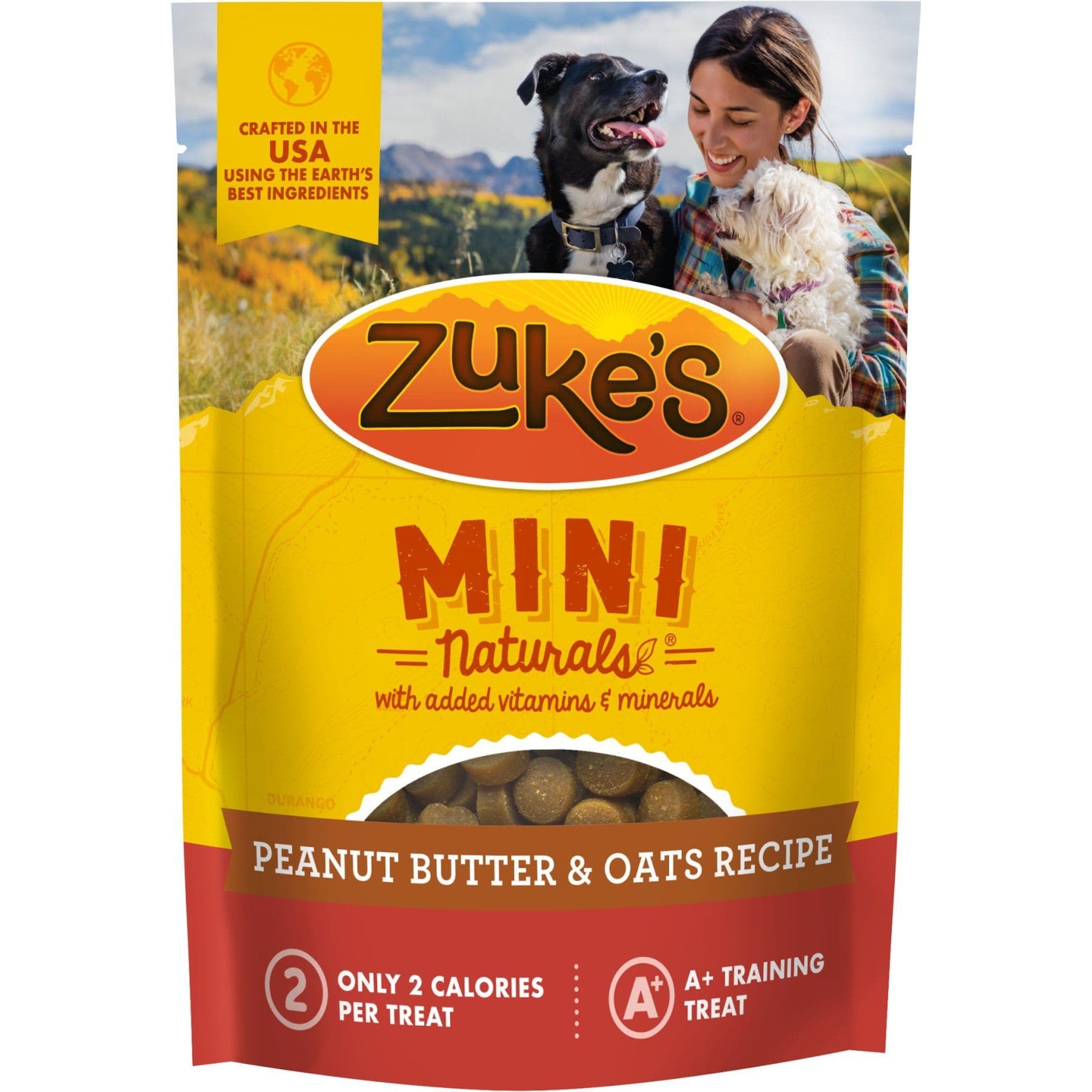
Soft, pea-sized training treats made with peanut butter and oats. Small enough to reward often while keeping treats inside the 10% of daily calories vets recommend.
Webvet may earn a commission when you click through to Chewy, at no extra cost to you.
Brand names also need precision. A search for Hill’s Science Diet dog treats is not the same as a recommendation for a specific prescription product. Hill’s Prescription Diet Hypo Treats are a separate formula intended to complement certain prescribed diets. The veterinarian should confirm compatibility with the exact food and medical plan. Do not substitute a retail treat simply because the brands or digestive-health wording sound similar.
 $65 · no membership
Worried about your dog's vomiting or diarrhea?
A licensed vet can examine your dog over video and prescribe treatment online when it's appropriate.
 Talk to a vet
- Licensed vets
- All 50 states
- same-day Rx

Webvet may earn a commission if you book.
Introduce an approved treat one change at a time

Once the dog is well and the veterinary team has approved an ordinary reward, change one thing at a time. Keep the main diet consistent and start with a small portion of the selected product. Avoid beginning a new chew, supplement, and treat on the same day. There is no universal introduction schedule that guarantees tolerance; follow the amount and monitoring advice appropriate to your dog’s history.
Record what was actually offered, including treats given by other people. Keep the package and note the exact flavor, lot information, amount, and time. Observe appetite, stool, vomiting, and comfort without assuming that every change proves the new treat caused it. If signs recur, stop the new extra and contact the practice. Do not deliberately give a larger portion to see whether the symptoms repeat.
- 1Product and exact formula, including a package photo.
- 2Portion offered and other food changes that day.
- 3Stool, vomiting, appetite, and energy observations.
- 4When to stop the extra and contact the veterinary team.
A plain cooked food is not automatically a better experiment than a packaged reward. It still introduces an ingredient and a portion. The small cooked-fish portion illustrated here is an example of portioning, not a recommendation for every sensitive dog or a photograph of a branded treat. Use it only if that food is specifically suitable for your dog, and keep food safety and storage in the plan.
Pumpkin and homemade treats are not a treatment plan
Pumpkin is not a universal fix for digestive problems. A pumpkin-flavored cookie is also different from plain pumpkin: it has a full recipe and a defined feeding purpose.
Homemade dog treats for sensitive stomachs can introduce several ingredients at once, even when the recipe looks simple. A food that one dog tolerates may not fit another dog’s prescribed diet or explain why diarrhea is occurring.
The current formula for Fruitables Skinny Minis Pumpkin & Berry includes pumpkin, chickpeas, peas, honey, sunflower oil, pork stock, and other ingredients. At 3 calories per bite, it can be portioned as an ordinary reward for an otherwise stable dog that already tolerates the recipe. The pumpkin name is not a reason to use it to firm up stool, treat diarrhea, or replace a gastrointestinal feeding plan.

Soft training treats made with real pumpkin and blueberries, small enough to hand over often without breaking the 10% treat rule. The fruit-flavoured reward that skips the prep and the pits.
Webvet may earn a commission when you click through to Chewy, at no extra cost to you.
If a dog is recovering from gastrointestinal upset, follow the clinic’s feeding instructions. VCA’s recovery-diet guidance advises avoiding treats and table food during that period. A veterinary gastrointestinal food can supply balanced nutrition; a homemade chicken-and-rice mixture or treat recipe should not silently become the long-term diet. Ask the team what to feed, how long to use it, and when ordinary rewards may resume.
- Use only ingredients already cleared for the dog’s individual plan.
- Avoid recipes with rich additions or several untried ingredients.
- Freezing a treat does not make an unsuitable formula gentler.
- Do not use homemade treats for diarrhea in place of veterinary assessment.
Choose a manageable texture and a safer process
There is no universally best chew for dogs with sensitive stomachs. Think about the whole item: ingredients, amount eaten, hardness, size, and whether the dog bites off unsuitable pieces.
A long-lasting chew can supply a large portion of the day’s extras, and a low-calorie claim does not establish easy digestion. Dogs on a fat-restricted or otherwise prescribed diet need specific product advice rather than a generic natural-chew recommendation.
WSAVA’s treat guidance advises against bones and excessively hard items. Supervise chewing and choose a size and texture appropriate for the dog. A chew that encourages gulping or splinters into unsuitable pieces is not a good reward for that dog, regardless of the ingredient list. If chewing is painful or the dog has swallowing difficulties, consult the practice about a safer format.
- Check the whole chew’s calories and the portion actually consumed.
- Avoid assuming a single ingredient makes an item suitable for a medical diet.
- Keep raw-food processing separate from ingredient-count claims.
- Wash hands and feeding equipment, and keep package storage instructions.
Freeze-dried does not necessarily mean cooked. The CDC does not recommend raw pet food or treats because germs can affect pets and people, and freeze-drying does not reliably remove that concern. Raw single-ingredient treats therefore are not presented here as a safer choice for a sensitive dog. If you need to know how a specific product is processed, ask the manufacturer rather than inferring a heat-treatment method from softness or shelf stability.
Keep training and comfort within the feeding plan

Dietary restrictions do not prevent every form of reward. Some dogs will work for portions of their measured meal, and others enjoy play, a toy, praise, or sniffing time.
Match the reward to the dog and the task. A calm dog who is comfortable and able to participate matters more than finishing a fixed number of repetitions. Pause a session if the dog seems unwell instead of tempting it with richer food.
For dogs allowed ordinary treats, count all extras together. The daily treat-budget guide explains the usual calorie framework, while the healthy-treat hub covers general label and safety choices. A medical feeding plan can be stricter than that general allowance. Tell the trainer which food is permitted and provide the day’s measured portion rather than asking them to choose a substitute.
Pause treats when your dog has diarrhea or vomiting
A dog with diarrhea needs a decision about care, not a promise that a particular treat will stop it.
Diarrhea is a sign with many possible causes; it is not proof that the last ingredient eaten is an allergen. If it occurs every day, keeps returning, or follows repeated food changes, arrange veterinary assessment. No everyday treat or stool-firming food should be used to postpone that investigation.
Why stool-firming foods are not a diagnosis
No single food will reliably firm up every dog’s poop. A veterinarian may recommend a complete gastrointestinal food or a different feeding plan after considering the cause. Plain pumpkin and pumpkin-flavored treats are not interchangeable treatments, and a firmer stool does not establish that the underlying illness has resolved. Avoid trying one stool-firming food after another while diarrhea continues.
VCA’s diarrhea guidance explains that the veterinary team may need a history, examination, and tests to find the cause. Keep a record for the veterinary team. Keep water available. Ask before adding a supplement, human medicine, or a new feeding restriction, especially for a puppy, an older dog, or a dog with another illness.
- When signs began and how often stools occur.
- Stool appearance, vomiting, appetite, and energy changes.
- Recent foods, treats, and other possible exposures.
When diarrhea needs veterinary care
Ask the veterinary team what to feed your dog while it has diarrhea. The appropriate food depends on the cause and the dog’s health; a snack cannot reliably stop diarrhea. Use the clinic’s feeding instructions instead of adding a new treat or withholding the prescribed diet without advice. Report worsening signs promptly and avoid human antidiarrheal medicines unless the veterinarian specifically directs their use.
- Seek prompt advice for blood in stool, repeated vomiting, abdominal pain, weakness, poor appetite, or signs of dehydration.
- Seek emergency care if the dog appears severely ill or has difficulty standing or walking.
- Contact the clinic earlier for puppies and medically vulnerable dogs.
- Keep packaging and report possible access to a toxin, foreign object, or unusually large portion.
The VCA urgent-care guide separates repeated digestive signs from severe illness needing emergency care. Once the cause and feeding plan are clearer, the veterinarian can help decide when rewards may resume. The best long-term routine is a suitable main diet, a manageable reward portion, and a clear response when symptoms recur, rather than repeated searches for a snack guaranteed never to upset any stomach.
Sensitive-stomach treat questions
Frequently Asked Questions
What dog treats won’t cause diarrhea?
No treat can be guaranteed not to cause diarrhea in every dog. Tolerance depends on the dog, the amount, the whole recipe, and any underlying condition. For a stable dog, start with rewards drawn from its tolerated feeding plan and ask before adding a different product. If diarrhea is active or keeps returning, pause new treats and seek veterinary advice instead of cycling through bags.
What foods will calm a dog’s stomach?
The useful food choice depends on why the dog is unwell. A veterinarian may recommend a complete gastrointestinal diet or another feeding plan; no snack reliably treats all causes of stomach upset. Avoid adding rich food, multiple new ingredients, or supplements in an attempt to fix symptoms. Keep water available and contact the clinic if vomiting, diarrhea, pain, weakness, or poor appetite is present.
What if my dog has diarrhea but is still eating and drinking?
Eating and drinking are useful observations, but they do not rule out a problem that needs veterinary care. Contact your clinic if diarrhea is repeated, persists, or returns, and seek prompt advice for blood, vomiting, pain, weakness, or dehydration. Puppies and dogs with existing illness need earlier guidance. Keep the food and treat packaging and record when signs started; do not continue trialing treats to see which one stops the diarrhea.
$65 · no membershipWorried about your dog's vomiting or diarrhea?
A licensed vet can examine your dog over video and prescribe treatment online when it's appropriate.
Talk to a vet- Licensed vets
- All 50 states
- same-day Rx
Webvet may earn a commission if you book.
Veterinarian · BVMS MRCVS
Dr. Pippa Elliott, BVMS, MRCVS, is a veterinarian with nearly 30 years of experience in companion animal practice. Dr. Elliott earned her Bachelor of Veterinary Medicine and Surgery from the University of Glasgow. She was also designated a Member of the Royal College of Veterinary Surgeons. Married with 2 grown-up kids, Dr. Elliott has a naughty Puggle named Poggle, 3 cats and a bearded dragon.


