Mange in Dogs Pictures: What Early and Advanced Mange Looks Like
Vet-reviewed mange in dogs pictures: early crusts on the ear edges, bald patches around the eyes, advanced sarcoptic and demodectic mange, look-alikes, and how vets confirm and treat it.

BVMS MRCVS
Medically reviewed by Dr. Pippa Elliott, BVMS MRCVS · Last reviewed

This article contains affiliate links. Webvet may earn a commission when you buy through them, at no extra cost to you.
Early sarcoptic mange looks like intensely itchy red bumps and crusts on the ear edges, elbows and belly. Early demodectic mange looks like a few small, bald, scaly patches around a young dog's eyes, lips or front legs, with little or no itch. These mange in dogs pictures show both types, early and advanced.
Photos help you judge how worried to be and how fast to act, but they cannot confirm mange. Allergies, yeast, ringworm and other problems can look similar, so a veterinarian confirms mange with skin scrapings, hair plucks or a treatment trial.
What does mange look like on a dog?
- 1Sarcoptic mange (canine scabies) causes sudden, intense itching with red bumps, crusts and hair loss, usually starting on the ear edges, elbows, hocks, chest and belly.
- 2Demodectic mange usually starts as one to four small, bald, scaly patches on the face or front legs of a young dog, with mild itching or none.
- 3Sarcoptic mange spreads easily to other dogs and can give people an itchy rash. Demodectic mange is not contagious.
- 4No photo can confirm mange. A veterinarian confirms it with a skin scraping, hair pluck, blood test or treatment trial.
- 5Oozing sores, swollen paws, fever or a dog that stops eating needs a vet the same day.
Mange is a skin disease caused by mites, most of them too small to see without a microscope. The mites cause itching, hair loss and inflammation, so most mange pictures show scratched skin, bald patches and crusts. Two mites cause the forms most owners mean by mange in dogs: Sarcoptes scabiei and Demodex canis.
They look different because they live differently. Sarcoptic mange mites burrow into the top layer of the skin, and their droppings probably trigger an itch so intense that dogs scratch and bite until the skin crusts. Demodectic mange mites live in the hair follicles of every dog and cause hair loss only when they overgrow.
Other mites can affect a dog's skin too, including walking dandruff mites, chiggers and ear mites, and several problems that have nothing to do with mites look similar. For the wider group side by side, see our dog skin problems pictures guide.
| Feature | Sarcoptic mange | Demodectic mange |
|---|---|---|
| Mite | Sarcoptes scabiei, which burrows into the skin | Demodex canis, which lives in hair follicles |
| Itch | Sudden and intense | Mild or none unless the skin is infected |
| Where it starts | Ear edges, elbows, hocks, chest and belly | Around the eyes and lips, and on the front legs |
| Who gets it | Any dog after contact with an infested dog, fox or bedding | Mostly dogs under 18 months, plus adults with a weakened immune system |
| Contagious to people and other dogs | Yes. People can get a temporary itchy rash | No |
| How a vet confirms it | Skin scrapings, which often miss the mites, a blood test or a treatment trial | Deep skin scrapings or hair plucks, which usually find many mites |
Early stage mange pictures: the first signs of mites on a dog
The first signs of mites on a dog depend on the mite. Sarcoptic mange usually starts with a sudden, intense itch that keeps the dog scratching and chewing, then small red bumps on the ear edges, elbows or belly. Demodectic mange usually starts as a small bald patch that barely bothers the dog.
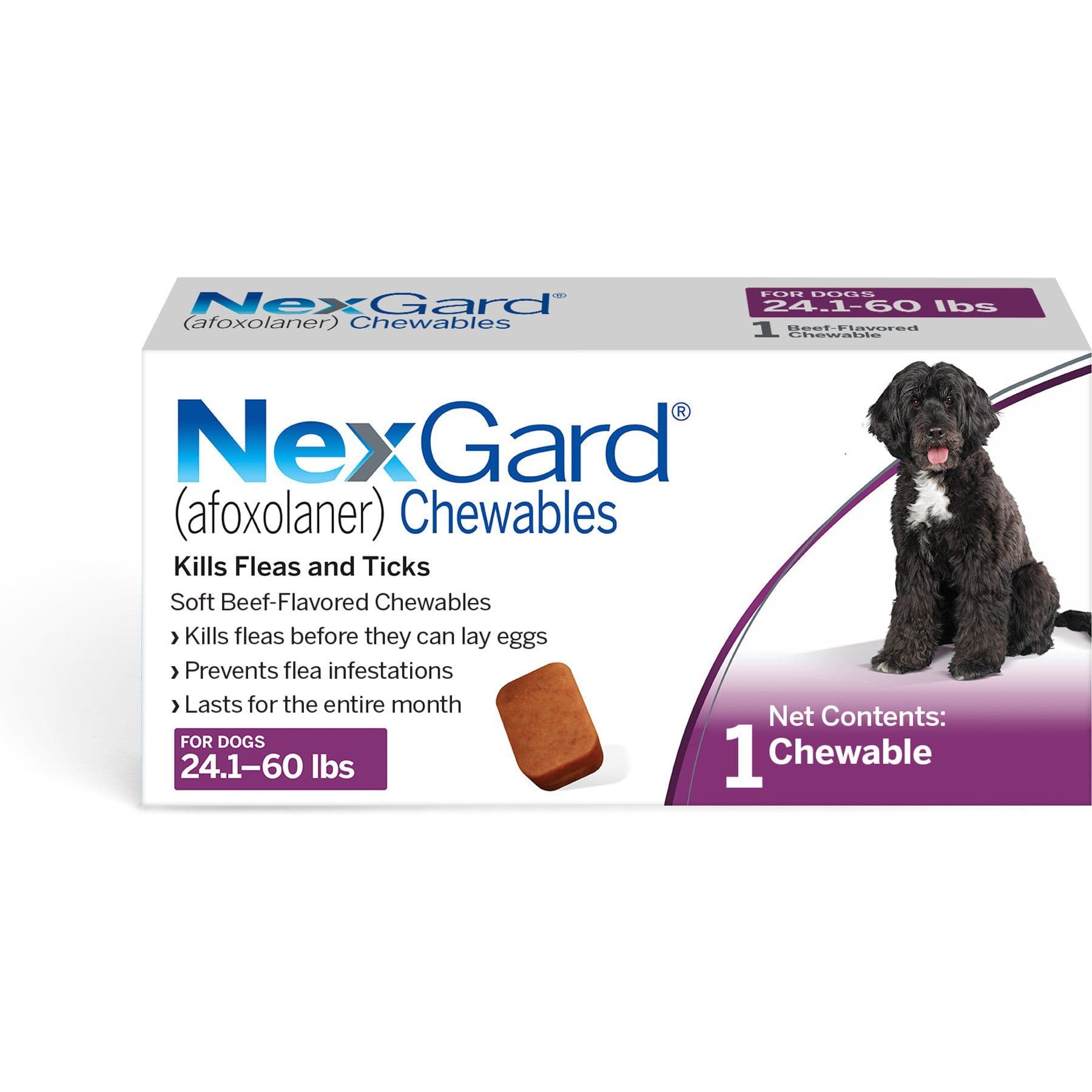
Prescription afoxolaner option: NexGard for dogs 24.1–60 lb. Mange use is off-label in the US; your vet must choose the product and treatment schedule.
Webvet may earn a commission when you click through to Chewy, at no extra cost to you.
Compare your dog with these early patterns to decide whether to book a vet visit for skin scrapings:
- Looks like early sarcoptic mange: a sudden, intense itch plus small red bumps or thin yellowish crusts on the ear edges, elbows, hocks or belly. Book a vet visit for skin scrapings, and keep your dog away from other dogs until then.
- Looks like early demodectic mange: one to four small, sharply edged bald patches with pink, flaky skin around the eyes, lips or front legs of a dog under about 18 months, with little or no itch. Book a vet visit for deep skin scrapings or hair plucks.
- Points to something else: moving white flakes along the back suggest walking dandruff mites, hair loss only at the tail base suggests flea allergy, and greasy, smelly skin suggests yeast. These still deserve a vet visit, but the tests differ.
- Fits none of these: mange is less likely, but only a vet's tests can rule it out, so book a visit anyway if your dog keeps scratching or the hair loss spreads.
Mild, early stage mange in dogs is easy to mistake for a scrape, an allergy or dry skin. Catching it early still matters, because untreated sarcoptic mange can spread over the whole body and to other pets.
If the skin fits either early pattern, book a regular vet appointment soon rather than waiting to see whether it spreads. Widespread crusting, oozing sores or a dog that seems unwell needs a vet the same day.
Early sarcoptic mange: crusty ear edges and sudden itching
Early sarcoptic mange often shows up first on the edges of the ear flaps. The picture below shows the typical look: small red bumps and thin yellowish crusts stuck tightly along the margin, a little hair thinning at the edge, and fresh scratch marks from a dog that cannot leave its ears alone.

Vets often check a clue called the pinnal-pedal reflex: rubbing the edge of an ear flap makes the hind leg on that side kick in a scratching motion. In one study, it was positive in 82 percent of dogs with scabies but also in about 6 percent of dogs without it.
That makes it a reason to test, not a home diagnosis. A dog can react for other reasons, and a dog with mange may not react at all. In dogs that are bathed often, the crusts can also wash away and leave mostly the itch, a presentation vets call scabies incognito.
Early demodectic mange: small bald patches around the eyes
Early demodectic mange usually appears in dogs under a year old as one to four small, sharply edged patches of hair loss. The skin in the patches is pink and a little scaly.
The most common spots are around the eyes and lips and on the front legs. The picture below shows this localized demodectic mange pattern around a puppy's eye.

A puppy with localized demodectic mange is usually otherwise healthy and not very itchy. Owners sometimes call this eye mites, but the mites live in the hair follicles of the skin around the eye. If the eye itself looks red, cloudy or weepy, tell your vet, since that is not the usual pattern.
Most localized cases clear up without treatment as the young dog's immune system matures, and many vets simply monitor them. A few spread into the generalized form, so a vet check, and a recheck if new patches appear, are worth the visit.
Sarcoptic mange in dogs: from itchy bumps to crusted, thickened skin
Sarcoptic mange in dogs, also called canine scabies, gets worse in a predictable order when it is not treated. Symptoms can start anywhere from 10 days to 8 weeks after contact with an infested animal, and some infested dogs show few or no signs.
How sarcoptic mange progresses without treatment, according to the Merck Veterinary Manual:
- Early: sudden, intense itching and small, solid red bumps on the ear edges, elbows, hocks, chest or belly.
- Established: scratching and biting damage the bumps into thick, crusted sores with hair loss, and yeast or bacterial infection can set in.
- Spreading: the sores can spread over the entire body.
- Chronic: oily dandruff, severely thickened and wrinkled skin with heavy crusts, oozing sores, enlarged lymph nodes and weight loss. Dogs this badly affected can die.
The difference between early and advanced sarcoptic mange is easy to see side by side. The advanced picture below shows a thin adult dog with widespread hair loss over the belly, chest, elbows and hind legs, thickened, wrinkled gray skin, thick yellow-gray crusts, greasy scale and scratch wounds.

A dog at this stage needs prompt veterinary care, often including treatment for skin infection. Your vet may clip the coat and soak off the crusts with a medicated shampoo so the mite treatment can reach the skin, and every dog in the home needs treatment too, even dogs that look normal.

For vet-directed crust and greasy-skin care: Davis benzoyl peroxide shampoo. Supportive bathing does not replace mite treatment.
Webvet may earn a commission when you click through to Chewy, at no extra cost to you.
Demodectic mange in dogs: localized vs generalized
Demodectic mange, sometimes called red mange, comes from Demodex canis mites that live in small numbers on every dog. Puppies pick them up from their mother in the first days of life, and the mites cause disease only when they multiply out of control. Demodectic mange is not contagious to other dogs or to people.
Vets split it into two forms. Localized demodectic mange means a few small patches, usually in a dog under a year old, and most cases clear up on their own. Generalized demodicosis means widespread disease: five or more patches, a whole body region, or two or more feet involved.
Signs that demodectic mange has become generalized:
- Hair loss over large areas, often with red, swollen or darkened skin
- Pimple-like bumps, scabs and crusts, usually from a secondary bacterial skin infection
- Red, swollen, sore paws
- Swollen lymph nodes, fever or lethargy in more severe cases
The generalized demodectic mange picture below shows a young dog with hair loss across the face, neck and front legs, red and swollen skin with darkened patches, pimple-like bumps and crusts, and swollen red front paws. That mix of infected skin and swollen paws means treatment should start promptly rather than waiting.

The secondary infection is what makes many generalized cases look so angry. Vets call it pyodemodicosis, and it often needs antibiotics or medicated baths alongside the mite treatment. Our bacterial skin infection pictures show what that infection looks like on its own.
For a confirmed secondary infection, ask your vet whether MiconaHex+Triz shampoo fits the plan.
In young dogs, generalized demodectic mange is linked to an inherited immune defect, and affected dogs should not be bred. In adults, it often signals another illness that has weakened the immune system, such as Cushing's disease, hypothyroidism, diabetes or cancer, so expect tests for an underlying problem too.
Where mange shows up on a dog: ears, elbows, belly, paws and tail
Where the skin changes sit is one of the most useful clues in mange pictures, because each mite has favorite places. Sarcoptic mange prefers the ear edges, elbows, hocks, chest and belly. Demodectic mange prefers the face and front legs and, once it is generalized, the paws.
Mange on a dog's ears
When mange affects a dog's ears, the classic pattern is sarcoptic: crusts, hair thinning and scratch marks along the outer edges of the ear flaps. Allergies can redden the ear flaps too, but they typically spare the edges, which is one reason vets look closely at the ear margins.
Ear mites are a different parasite. They live in the ear canal and cause head shaking and scratching at the ears rather than crusted ear edges. Our guide to dog ear mite symptoms shows what they look like and how they differ.
Mange on the elbows, hocks and belly
The outer elbows and the hocks, the ankle joints of the back legs, are classic sarcoptic mange spots, along with the chest and belly. Look for red bumps, crusts and patchy hair loss. In young dogs with demodectic mange, the front legs are a common early spot instead.
Mange on the paws
Paw involvement points toward generalized demodectic mange, which often causes red, swollen, sore feet. Sarcoptic mange can also reach the legs and feet as it spreads. Allergies commonly affect the paws as well, so red paws alone do not mean mange: look at the rest of the dog too.
Mange on a dog's tail
The tail is not a usual starting point for either type of mange, so dog tail mange usually appears as part of a wider case.
The picture below shows patchy hair loss on the tail and the backs of the thighs, with red, scaly skin, small crusts and at least one patch well away from the tail base.

Hair loss only at the base of the tail, over the lower back and on the backs of the thighs is the classic flea allergy pattern instead. Check for fleas and flea dirt before assuming mange, and mention the pattern to your vet, who may use a strict flea-control trial as a test.
What do mites look like on dogs?
Mites are tiny parasites, and most mites on dogs' skin are too small to see without a microscope. Pictures of mites on a dog usually show the damage they cause rather than the mites. Under a microscope, Sarcoptes mites are roughly round and covered in small spines, while Demodex mites are long and slender.
Can you see mites on dogs? The mite you are most likely to see moving is Cheyletiella, the cause of walking dandruff. These large, whitish mites cause heavy white scaling along the back and upper body, and the dandruff that seems to move is actually the mites crawling.
The picture below shows that scaling with the coat parted along the spine.

Walking dandruff mites spread easily between dogs, cats and rabbits and can infest people too. Itching ranges from none to severe, and some pets carry the mites without any signs. Vets confirm them with flea combing, a tape test or a skin scraping, then treat every pet in the home along with bedding and surfaces.
If your vet asks you to collect loose coat debris, a Safari Double Row Flea Comb can help. A comb cannot rule out mange; mites such as Sarcoptes and Demodex still need veterinary testing.
Other mites you might spot or hear about:
- Chiggers: tiny orange-red dots that do not move, clustered on the head, ears, feet or belly after time outdoors. They drop off after feeding, but the itch can last. They are seasonal and not contagious.
- Ear mites: these live in the ear canal and cause head shaking and ear scratching rather than crusted skin.
- Chicken mites: the poultry red mite can feed on dogs and cats, but it spends most of its life off the host near birds and feeds briefly, mostly in the dark. A dog that sleeps near a coop may be bitten, but these mites do not live on the dog like mange mites.
 $65 · no membership
Is your dog's itching or skin issue getting worse?
A licensed vet can examine your dog over video and prescribe treatment online when it's appropriate.
 Talk to a vet
- Licensed vets
- All 50 states
- same-day Rx

Webvet may earn a commission if you book.
What can be mistaken for mange?
Allergies, yeast infection, ringworm and other look-alike conditions can be mistaken for mange, because they also cause itching, hair loss, redness and crusts. Flea allergy, bacterial skin infection (pyoderma), hot spots and walking dandruff complete the usual list.
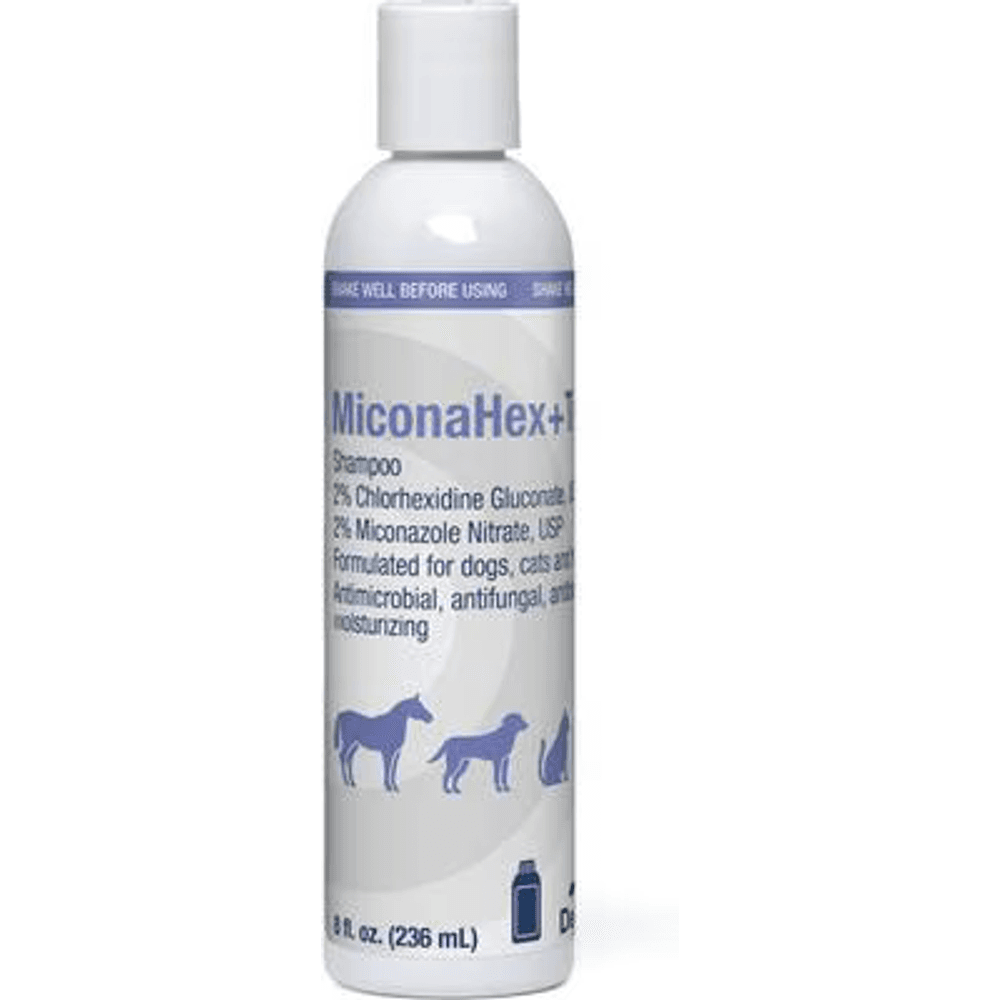
For a confirmed secondary skin infection: MiconaHex+Triz shampoo if selected by your vet. This is not a mite-killing treatment.
Webvet may earn a commission when you click through to Chewy, at no extra cost to you.
The table below compares how each look-alike appears, itches and spreads, and the test a vet uses to tell them apart.
| Condition | What it looks like | Itch | Spreads to people or pets? | How a vet checks |
|---|---|---|---|---|
| Sarcoptic mange | Red bumps, yellowish crusts and hair loss on ear edges, elbows, hocks and belly | Intense | Yes, to dogs, other pets and people | Skin scrapings, blood test or treatment trial |
| Demodectic mange | Small bald, scaly patches on the face and front legs, or widespread infected skin when generalized | Mild unless infected | No | Deep skin scrapings or hair plucks |
| Walking dandruff (Cheyletiella) | Heavy white scaling along the back, with flakes that move | None to severe | Yes, to pets and people | Flea combing, tape test or skin scraping |
| Environmental or food allergies | Red skin on the paws, face, armpits and belly, with ear flaps affected but ear edges spared | Itchy, sometimes seasonal | No | Ruling out mites, fleas and infection first |
| Flea allergy | Crusts and hair loss over the lower back, tail base and backs of the thighs | Itchy | No, though the fleas spread | Finding fleas or flea dirt, and response to flea control |
| Ringworm | Roughly circular patches of hair loss with brittle, broken hairs | Usually not itchy | Yes, to people and pets | Fungal culture, Wood's lamp or PCR test |
| Yeast infection (Malassezia) | Red, greasy, darkened skin with a musty smell in skin folds, armpits and ears | Itchy | No | Skin cytology with tape or a slide impression |
| Bacterial pyoderma | Pimple-like pustules, circular crusts and flaky patches | Can be itchy | Rarely | Skin cytology, sometimes a culture |
| Hot spot | A sudden red, moist, oozing patch, often on the head, legs or hips | Itchy and irritated | Comes from the dog's own licking and scratching | Exam and a search for the itchy trigger |
Which look-alike is more likely, and where to read next:
- Allergies fit better when the paws, face, armpits and belly are red but the ear edges stay smooth. Read next: our dog food allergy rash pictures.
- Yeast fits better when the skin is greasy, dark and musty-smelling, especially in folds. Read next: our dog skin yeast infection pictures.
- Ringworm fits better with round patches of broken hairs that barely itch. Read next: our ringworm on dogs pictures.
- Bacterial pyoderma fits better with pimple-like pustules and circular crusts, though it often rides along with mange or allergies. Read next: our bacterial skin infection pictures.
- Walking dandruff fits better when heavy flakes along the back seem to move. It is covered in the mites section above.
- Flea allergy fits better when hair loss stays on the lower back, tail base and thighs. Read next: our guide to fleas and flea dirt.
Mange vs allergies
Allergies are easy to confuse with sarcoptic mange, because both make dogs itchy. The difference is the pattern. Allergic skin disease such as atopic dermatitis usually affects the paws, face, armpits, belly and the inner ear flaps, while sarcoptic mange goes for the ear edges, elbows and hocks.
The allergy picture below shows red front paws with reddish-brown saliva staining between the toes and red skin in the armpit and on the belly, while the ear edges stay smooth and free of crusts. Crusted ear edges point more toward mange.

Vets diagnose allergies by ruling out other itchy skin diseases first, so an itchy dog may get skin scrapings or a mite treatment trial before any allergy workup. Our dog food allergy rash pictures show the allergic patterns in more detail.
Mange vs yeast infection
Yeast infection (Malassezia dermatitis) tends to look greasy where mange looks dry and crusted. Expect red, itchy skin with brown-black greasy material matting the hair, a musty smell and, over time, thickened elephant-like skin and dark pigment, especially in skin folds, armpits and ears.
The yeast picture below shows an armpit and neck fold with greasy, darkened, thickened skin and brown waxy residue in the hair, with no dry crusts on the ear edges.

The two can overlap, because yeast infection can develop in skin damaged by mange. A vet can check for both at one visit with skin cytology and skin scrapings. For more on the greasy yeast pattern, see our dog skin yeast infection pictures.
Mange vs ringworm
Ringworm is a fungal infection, not a mite. On dogs it usually causes roughly circular patches of hair loss with brittle, broken hairs, and it is usually not very itchy. It spreads easily to people, especially children, and to other pets.
The most accurate test is a fungal culture, sometimes alongside a Wood's lamp or PCR test, according to VCA Animal Hospitals. Our ringworm on dogs pictures walk through the ringworm patterns that get confused with mange.
How do I know if my dog has mange?
You can suspect mange from the pattern, but only a veterinarian can confirm it, often by finding mites in skin scrapings or hair plucks under a microscope. Suspect sarcoptic mange when intense itching comes on suddenly with crusts on the ear edges, elbows or belly.
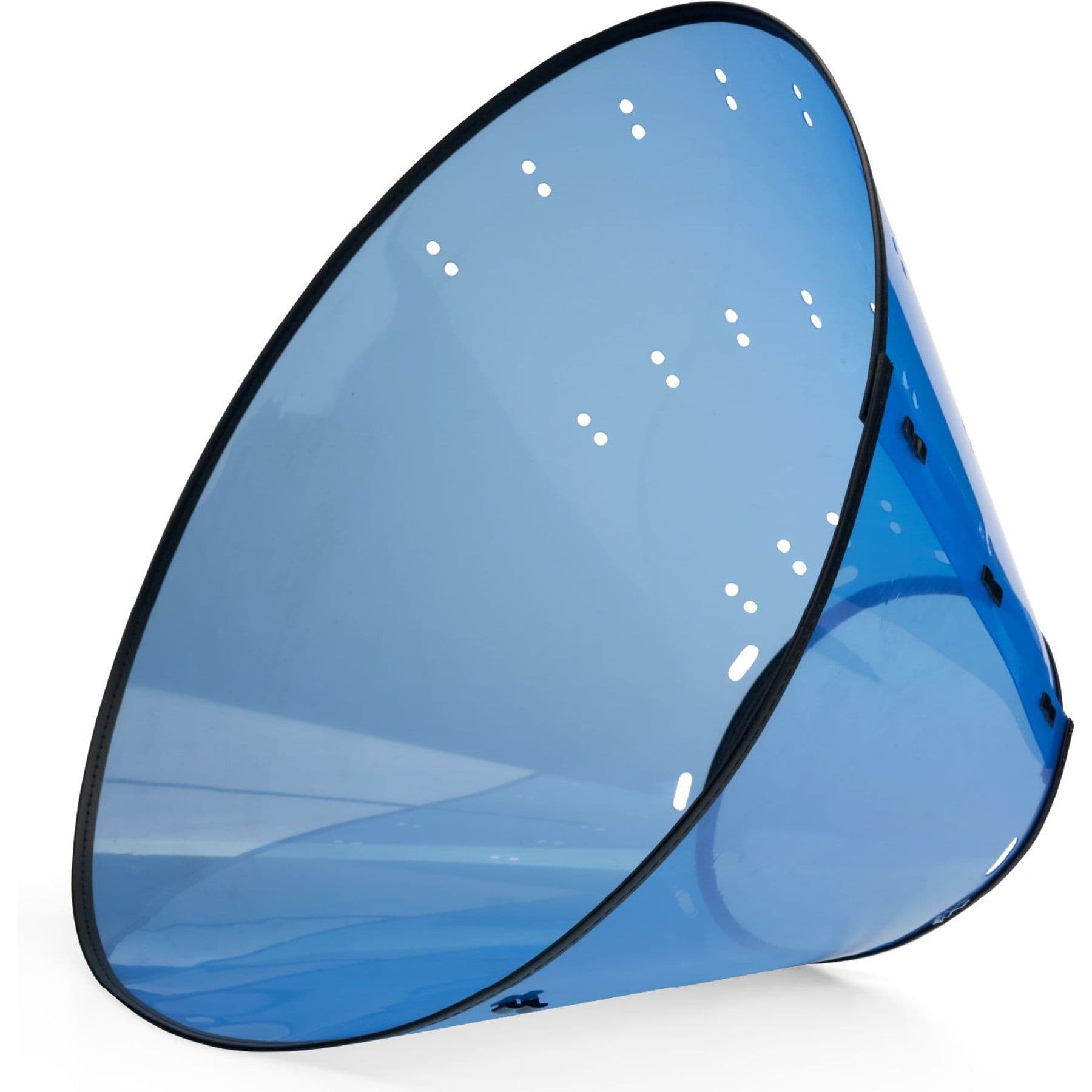
For persistent licking during treatment: a rigid recovery collar. This listing is Small; select the correct size and check reach.
Webvet may earn a commission when you click through to Chewy, at no extra cost to you.
Signs of mange in dogs that are worth a vet visit:
- Sudden, intense itching that keeps your dog scratching, chewing or rubbing
- Red bumps or yellowish crusts on the ear edges, elbows, hocks, chest or belly
- Small, sharply edged bald patches with pink, scaly skin on the face or front legs of a young dog
- Hair loss that keeps spreading, or skin that is thickening, darkening or wrinkling
- Pimple-like bumps, scabs or a bad smell, which can mean the skin is infected
- Another dog, pet or person in the home who suddenly itches too
- A recent stay at a shelter, boarding kennel or groomer, or regular dog park visits
If your dog is itchy but shows none of these signs, fleas or allergies may fit better. Work through why a dog is so itchy with your vet, who can still rule mange in or out.
How a vet confirms mange
A photo cannot confirm mange, because several diseases look alike and sarcoptic mites are often hard to find. Your vet will combine the history, the pattern on the skin and one or more of these tests:
- Skin scrapings: the vet gently scrapes the skin surface with a dull blade and looks for mites under a microscope. Deep scrapings usually find Demodex easily, but scrapings often miss Sarcoptes.
- Hair plucks: hairs pulled from an affected patch can show Demodex mites under the microscope.
- Tape tests and flea combing: these pick up walking dandruff mites and their eggs.
- Blood test: some clinics use one to detect antibodies against sarcoptic mites.
- Treatment trial: if sarcoptic mange looks likely but no mites turn up, vets often treat and watch the response.
- Other tests: skin cytology for secondary infection, and tests for an underlying illness in adult dogs with generalized demodectic mange.
Using skin scrapings to confirm mange sometimes takes several scrapings, and a negative scraping does not rule sarcoptic mange out. That is why your vet may recommend a treatment trial even when the first tests come back clear.
When is mange an emergency?
Early signs such as a few crusts or a small bald patch call for a regular vet appointment soon. Severe or complicated mange is different.
Can mange kill a dog? Yes, if it goes untreated long enough. Dogs with severe, chronic mange can become emaciated and die, and generalized demodectic mange can bring fever, lethargy and deep skin infection.
How do dogs get mange?
What causes mange in dogs depends on the mite. Sarcoptic mange and walking dandruff are caught from other animals, while demodectic mange comes from mites every dog already carries. Any dog can get mange, but puppies, dogs from shelters or kennels, and dogs with weakened immune systems are more likely to.
How dogs get mites of each type:
- Sarcoptic mange: direct contact with an infested dog is the main route. It also spreads in kennels, grooming salons, multi-dog homes and dog parks, and through shared brushes, towels and bedding. Red foxes and coyotes carry the same mite, and it can pass between species.
If contaminated bedding cannot be cleaned, a Frisco Swirl Crate Mat is one replacement option. The linked mat is 30 inches; choose the right size and follow its care label and your vet’s cleaning plan.
- Demodectic mange: puppies get Demodex mites from their mother in the first days of life. Disease develops only if the immune system fails to keep the mites in check, which is why it runs in some family lines and appears in adults with other illnesses.
- Walking dandruff: usually picked up from other pets at shelters, breeders, groomers or anywhere many animals mix.
- Chiggers: picked up by lying on the ground or walking through outdoor habitat where the larvae live.
Routine parasite control helps with some of these. The Merck Veterinary Manual notes that regular use of certain flea control products often controls walking dandruff mites as a side benefit. Ask your vet which parasite preventive fits your dog's lifestyle and health.
Can humans get mange mites from dogs?
Yes, from sarcoptic mange and walking dandruff, but not from demodectic mange. Sarcoptic mites cause an intensely itchy rash in people who handle an infested dog. They cannot complete their life cycle on human skin, so the rash usually clears once every dog in the home is treated, though itching can last a few weeks.
Walking dandruff mites also infest people, and the itch usually clears within about three weeks once every pet and the home have been treated. Treating the dog quickly is the best protection for the family. See your own doctor about any new rash, and mention that your dog is being treated for mites.
Other pets need attention too. Treat every dog in the household for sarcoptic mange even if only one looks sick, and all pets for walking dandruff, because animals without signs can still carry mites. Demodectic mange needs no household treatment.
How to treat mange in dogs
How to treat mange in dogs depends on which mite your vet finds, so treatment starts with a diagnosis rather than a product. Current prescription treatments work well for most dogs.
A typical mange treatment plan includes:
- Confirming the mite with skin tests, since sarcoptic, demodectic and walking dandruff mites are treated differently
- A prescription antiparasitic, most often an isoxazoline, or a spot-on or dip your vet chooses, sometimes after a heartworm test
- Treating every in-contact dog for sarcoptic mange, and every pet for walking dandruff
- Clipping the coat and soaking off crusts with a medicated shampoo if your vet advises it
- Antibiotics or medicated baths for any secondary bacterial or yeast infection
- Rechecks, including repeat skin scrapings for demodectic mange, until the mites are gone
Prescription isoxazoline treatment is now the first choice for many dogs. Isoxazolines such as afoxolaner, fluralaner, lotilaner and sarolaner, the drug class in several flea and tick products, are given as a chew or on the skin. Merck calls them the preferred treatment for generalized demodectic mange, and they also work against sarcoptic mange.
Your vet sets the product, schedule and length of treatment, usually until rechecks show no mites. The FDA considers isoxazolines safe and effective but has noted tremors, wobbliness and seizures in some dogs, so mention any history of seizures or other neurologic problems and any other medicines your dog takes.
A medicated shampoo is a helper, not a cure. Antiseborrheic or benzoyl peroxide shampoos soften and lift crusts and help the skin recover, but they do not replace the prescription mite treatment. Use the product and bathing routine your vet recommends.
Davis Benzoyl Peroxide Shampoo contains 2.5% benzoyl peroxide. Use it only if your vet recommends that formula for the crusts or greasy skin; it does not replace medicine that kills the mites.
Can you treat mites without a vet?
Not reliably, and not safely. You cannot tell at home which mite is involved, over-the-counter mange shampoos do not cure mange, and home remedies do not kill mange mites the way prescription antiparasitics do. What you can do at home is make the vet's treatment work.
How to support mange treatment at home:
- Keep your dog away from other dogs, dog parks, daycare and grooming until your vet says the mange is no longer contagious
- Wash your dog's bedding often or replace it, and wash the brushes, towels and blankets it uses
- Give every dose and medicated bath exactly as prescribed, including to dogs without signs
- Use a mange shampoo for dogs only as your vet directs, to lift crusts and soothe the skin alongside the mite treatment
After a vet-directed bath, use a clean Frisco Microfiber Towel to pat the coat dry. Keep your dog’s towel separate from other pets’ supplies and launder it after use.
The same logic applies to ear mites, which need medication as well as cleaning. Our guide to ear mites in dogs explains why cleaning alone does not clear them.
Skip the home remedy for dog mites you find online. Vinegar rinses, oils and homemade dips are not among the treatments veterinary references list for mange, and concentrated tea tree oil can poison dogs: the Merck Veterinary Manual names it the most commonly reported essential oil poisoning in pets.
What kills skin mites on dogs?
Prescription antiparasitic drugs kill skin mites on dogs. Vets most often use isoxazolines, the drug class in several monthly or longer-acting flea and tick chews, along with selamectin or moxidectin spot-ons and lime sulfur dips. The right choice and length of treatment depend on the mite and on your dog's age, breed and health.
What each mite usually needs:
- Sarcoptic mange: an isoxazoline, selamectin or moxidectin, or a series of lime sulfur dips, which are safe even for young puppies.
- Demodectic mange: isoxazolines are now the preferred treatment for generalized cases, with medicated shampoos and antibiotics for infected skin. Localized patches in puppies are often just monitored.
- Walking dandruff: a topical or oral parasite treatment for every pet, plus cleaning of bedding and surfaces.
Using flea and tick products against mange mites is often off-label, and the length of treatment and rechecks differ from routine flea control, so the plan belongs to your vet.
Vets sometimes use ivermectin against mange as well, but only after weighing the MDR1 risk, often with a genetic test first.
Mange healing stages: what recovery looks like
Healing shows up in the itch before the coat. Generalized demodectic mange heals more slowly than sarcoptic mange, and its treatment often runs for several months.
A realistic timeline for hair regrowth after mange treatment:
- Sarcoptic mange: itching eases within about two weeks, and full resolution can take up to 6 to 8 weeks, according to Cornell University's canine health center.
- Generalized demodectic mange: in a study of 10 dogs treated with an isoxazoline, hair regrowth was clearly improving in every dog from six weeks, and crusts or scales dropped from 9 of 10 dogs to 2 of 10 by eight weeks.
- Localized demodectic mange in puppies: the patches usually fill in on their own as the immune system matures, but any that spread need a recheck.
Hair regrowth during healing starts as short, fine new hair filling in the bald patches, often a little shorter than the surrounding coat at first. The healing picture below shows new hair growing back on the face and front legs, with calmer, pale pink skin and no crusts or redness.

Looking better is not the same as being cured. For generalized demodectic mange, treatment continues until at least two negative skin scrapings a month apart, not just until the coat recovers, so keep every recheck even when your dog looks normal.
Call your vet sooner if the itching returns, new patches appear, or the skin starts to crust or smell again, because these can mean the mites or an infection are back.
Mange in dogs FAQ
Frequently Asked Questions
What is the fastest way to cure mange?
The fastest route is a prompt vet visit and a prescription antiparasitic matched to the mite your dog has, most often an isoxazoline. For sarcoptic mange, treat every dog in the home at the same time, because a dog without signs can still carry mites.
With sarcoptic mange, most dogs itch less within about two weeks, while generalized demodectic mange can take months to clear.
Can mange clear up on its own?
Sometimes. Localized demodectic mange, a few small patches in a young dog, usually clears up without treatment as the immune system matures, which is why vets often monitor it.
Sarcoptic mange does not go away on its own: without treatment it spreads over the body and to other animals. Generalized demodectic mange also needs treatment.
What can be mistaken for mites on dogs?
Flea dirt is a common mix-up: reddish-black specks in the coat that dissolve into a reddish-brown smear on a damp paper towel. Ordinary dandruff, meaning dry skin flakes that do not move, is another.
Flakes that do move may be walking dandruff mites, and tiny orange-red dots clustered on the head, ears, feet or belly may be chiggers. Both are worth showing your vet.
Can a dog get mange again after treatment?
Yes. Sarcoptic mange can return if your dog meets an infested dog or fox again, or if another pet in the home was not treated.
Generalized demodectic mange can relapse, often within the first year, especially if treatment stops before two negative skin scrapings a month apart. In an adult dog, a relapse is a reason to look for an underlying illness.
$65 · no membershipIs your dog's itching or skin issue getting worse?
A licensed vet can examine your dog over video and prescribe treatment online when it's appropriate.
Talk to a vet- Licensed vets
- All 50 states
- same-day Rx
Webvet may earn a commission if you book.

Editor
The Webvet Editorial Team is the in-house group of pet-care editors and writers behind Webvet, operated by Smart Pet Collective. The team researches, writes, and maintains Webvet's pet health, behavior, and medication content. Every article follows a defined editorial process: research from reputable veterinary and scientific sources, careful drafting, mandatory review of medical content by a credentialed veterinarian, and dated publication. Health and medication articles are medically reviewed by a licensed veterinary professional before they go live and are kept current over time.
Veterinarian · BVMS MRCVS
Dr. Pippa Elliott, BVMS, MRCVS, is a veterinarian with nearly 30 years of experience in companion animal practice. Dr. Elliott earned her Bachelor of Veterinary Medicine and Surgery from the University of Glasgow. She was also designated a Member of the Royal College of Veterinary Surgeons. Married with 2 grown-up kids, Dr. Elliott has a naughty Puggle named Poggle, 3 cats and a bearded dragon.


