Sarcoptic Mange in Dogs: Symptoms, Treatment, and Whether People Can Catch It
Sarcoptic mange is a burrowing mite infestation that makes dogs frantically itchy and spreads easily to other dogs. Learn the early signs, how vets confirm and treat it, how to clean the house, and what it means for people.

BVMS MRCVS
Medically reviewed by Dr. Pippa Elliott, BVMS MRCVS · Last reviewed

This article contains affiliate links. Webvet may earn a commission when you buy through them, at no extra cost to you.
Sarcoptic mange in dogs, also called canine scabies, is a contagious skin disease caused by a mite that burrows into the skin, and its defining sign is sudden, intense itching. Book a vet visit soon after you notice it, and go the same day if your dog is lethargic, feverish, or has deep, pus-filled sores.
The outlook for sarcoptic mange in dogs is good once the right prescription starts. A 2023 review in BMC Veterinary Research found that several prescription antiparasitics can cure it, and the itchy bumps some people get from an infested dog usually clear on their own within 12 to 14 days, according to Veterinary Partner.

 Sponsored
Want a vet's take on your dog's skin or coat?
Talk to a licensed vet at Dutch over video, often the same day. They can recommend treatment and prescribe it when it's appropriate.
Use code Pets60
Plans start at $12/month · covers up to 5 pets
- Licensed vets in most states
- Rx for 150+ conditions
- 4.7 on Trustpilot
What sarcoptic mange in dogs is and what you are seeing
The cause is Sarcoptes scabiei var. canis, a parasitic mite that burrows just beneath the surface of the skin, according to VCA Animal Hospitals. The Merck Veterinary Manual calls it a highly contagious disease of dogs that occurs worldwide, and vets also refer to it as sarcoptic scabies.
These sarcoptic mites spend their entire life cycle on the dog. Merck puts that life cycle at 17 to 21 days, with adult mites measuring 0.2 to 0.6 mm. Female mites burrow into the outer layer of the skin to lay their eggs there.

Getting rid of sarcoptic mange in dogs means killing the mites on the affected dog and on every dog it lives with. One long-standing option is selamectin, sold as Revolution, whose FDA label covers the treatment and control of sarcoptic mange in dogs. It is a prescription spot-on that Chewy's pharmacy dispenses with a veterinary prescription.
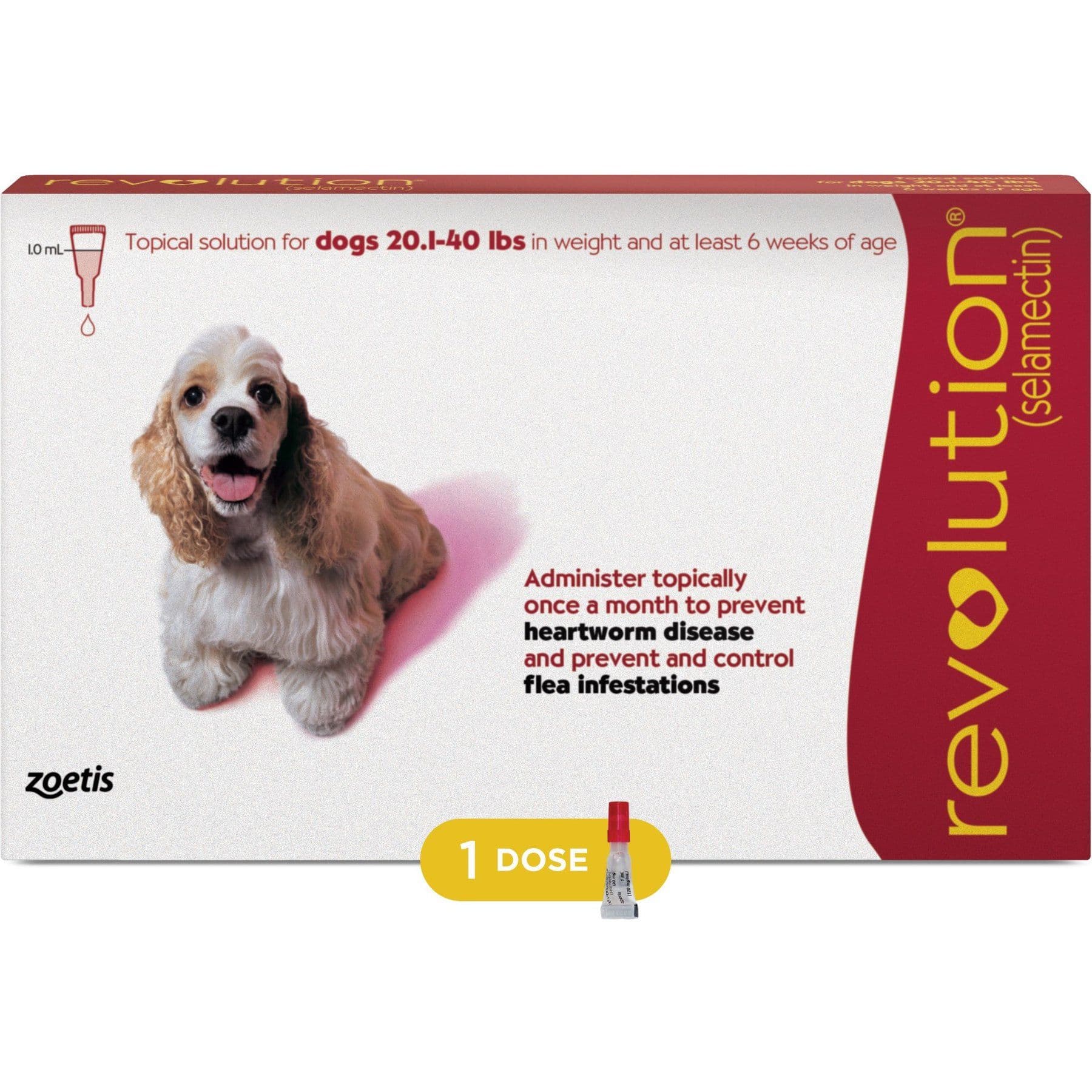
Prescription spot-on applied every 30 days; the listing covers sarcoptic mange and requires a current heartworm test on file.
Webvet may earn a commission when you click through to Chewy, at no extra cost to you.
Two things explain why sarcoptic mange itches so intensely. Veterinary Partner says the motion of the mites in and on the skin is extremely itchy, and the burrowed mites and their eggs trigger a massive allergic response that itches even more. Merck likewise traces the intense itch to hypersensitivity to mite products.
- 1Sarcoptic mange is a contagious skin disease caused by the burrowing Sarcoptes scabiei mite, and it spreads easily between dogs.
- 2Hypersensitivity to the mites, their eggs, and their droppings is why sarcoptic mange itches so intensely.
- 3Watch for early signs on the ear margins, elbows, or belly, especially crusty ear edges and small itchy bumps.
- 4A vet confirms the diagnosis and prescribes a mite-killing medicine for every dog in the home.
- 5People can get itchy red bumps that usually clear on their own within 12 to 14 days.
The mites are largely host specific. Veterinary Partner explains that Sarcoptes scabiei var. canis infests dogs while var. hominis infests people, and a dog mite cannot complete its life cycle on a human, so a person's exposure is short-lived.
How common is sarcoptic mange in dogs? No published figure gives a rate for pet dogs. What is clear is its reach: Merck says it occurs worldwide, VCA says it can affect any dog at any age, and Merck notes that some infested dogs carry mites without showing any signs.
Oral flea and tick chews are the other main treatment family. VCA lists isoxazolines such as NexGard, Bravecto, and Simparica among the options, and Veterinary Partner says they kill sarcoptic mites in one dose. None carries a US label for mange, so this is extra-label use your vet decides on; all are prescription chews dispensed through Chewy's pharmacy.
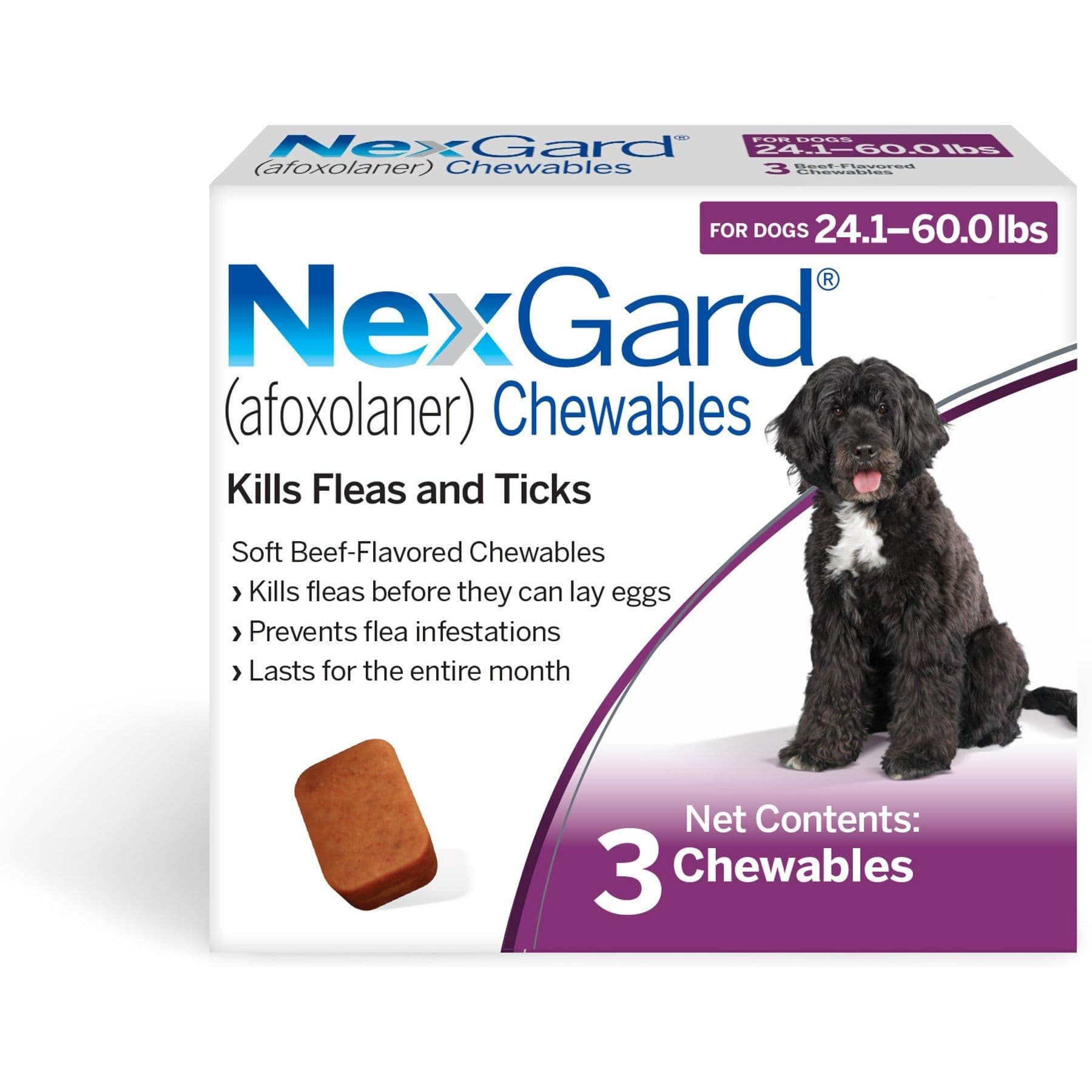
Prescription monthly afoxolaner chew labeled for fleas and ticks; any use for mange is an extra-label vet decision.
Webvet may earn a commission when you click through to Chewy, at no extra cost to you.
Symptoms of sarcoptic mange, from early ear-edge crusts to severe cases
The first symptom is usually itching that comes on suddenly and hard. The Merck Veterinary Manual pet owner guide says it is probably caused by sensitivity to the mites' droppings, and the skin then erupts in small, solid bumps. Veterinary Partner places the early signs on the ear margins, elbows, or belly:
- Crusts along the ear edges, which Veterinary Partner calls the hallmark lesion
- Bumps, redness, and hair loss on the elbows and hocks
- The same changes on the belly and chest
- Thick yellow crusts and scratch wounds, which Merck lists among the primary lesions
In the early stage, a mild case may show little more than crusty ear edges and a few itchy bumps. Some dogs only develop ear crusts later, Veterinary Partner notes, and Merck describes "scabies incognito" in well-groomed dogs whose baths remove the crusts.
As it advances, constant chewing and scratching cause heavy hair loss on the legs and belly, and the skin thickens and darkens, per VCA; see hair loss in dogs for other causes. Merck adds that bacterial and yeast infections may follow.
Severe sarcoptic mange is the chronic, generalized form, with oily dandruff, thick folded skin, enlarged lymph nodes, and emaciation. Merck says dogs this badly affected may even die.

How fast does mange spread on a dog?
Signs can appear 10 days to 8 weeks after contact with an infested animal, according to Merck, and lesions that start on the belly, chest, ears, elbows, and hocks become generalized if the dog goes untreated. No published figure sets a speed for that spread, so treat at the first signs.
How dogs catch sarcoptic mange and whether people can get it
What causes sarcoptic mange in dogs is always the same mite moving between hosts. Merck says it passes readily between dogs by direct contact, and its owner guide adds that spread through infested bedding is less common but can occur. This is how the mite spreads between dogs:
- Direct contact with an infested dog, the main route
- Shared bedding, blankets, towels, combs, and brushes
- Places infected dogs or foxes frequent, which VCA advises keeping your dog away from
- Symptom-free carriers, which Merck says may exist
Sarcoptic mange stays contagious after treatment starts: Veterinary Partner's dermatology handout says a dog may remain contagious for two to four weeks, so keep it away from other dogs and unexposed people.

What are the symptoms of sarcoptic mange in humans?
What people may notice on their own skin is red, itchy bumps. Veterinary Partner says dog mites burrow into human skin and cause significant itching and irritation, sometimes with a secondary infection from scratching. VCA notes the mite cannot complete its life cycle on people and dies within a few days, though medical treatment is often recommended.
These infestations usually go away on their own within 12 to 14 days, per Veterinary Partner, which advises seeing your family physician if anyone at home has red, itchy skin bumps.
 Sponsored
Vet care that's always there
Unlimited video calls and messaging with licensed vets for less than a typical vet visit. One membership covers up to five pets.
Use code Pets60
Plans start at $12/month · covers up to 5 pets
- Licensed vets in most states
- Rx for 150+ conditions
- 4.7 on Trustpilot
Sarcoptic vs demodectic mange: how a vet confirms the diagnosis
VCA stresses that sarcoptic mange must not be confused with demodectic mange, which is caused by a different mite. Two differences matter most:
- Contagion: sarcoptic mange spreads readily; Merck says demodex is not considered contagious, as its mites pass from mother to puppies in the first 72 hours of life.
- Finding mites: sarcoptic mites turn up in probably 50 percent or fewer cases (Veterinary Partner), while deep scrapings usually find demodex mites in high numbers (Merck).
WebVet's guide to demodectic mange in dogs covers demodex in full. Telling mange from mites is simpler than it sounds: mange is the skin disease the mites cause, mange in dogs pictures shows how the main types look, and a vet confirms the mite.
To confirm sarcoptic mange, Merck says vets weigh a history of sudden, severe itching, possible exposure, and itchy pets or people at home, then take several extensive superficial scrapings of the ears, elbows, and hocks. A skin scraping that finds mites confirms it; a negative one does not rule it out.

Vets may also test the pinnal-pedal reflex, in which rubbing the ear margin sets off scratching with the hind leg. In a 588-dog study in Veterinary Record, it was positive in 82 percent of dogs with scabies. A positive result supports the diagnosis, and a negative one, with a negative predictive value of 0.98, makes scabies unlikely.
When the history fits but no mites turn up, Merck says a therapeutic trial is warranted: Veterinary Partner describes treating for sarcoptic mange and watching for the signs to resolve within two to four weeks.
What is mistaken for mange in dogs?
Allergies are the classic mix-up. Veterinary Partner says the itch pattern resembles environmental allergies (atopy) and food allergies, and Merck notes sarcoptic cases are often treated as another allergic skin disease for weeks or months before dermatology referral. See the common causes of canine pruritus for those allergies.
Walking dandruff, caused by Cheyletiella mites, can also look similar, with scaling along the back and often intense itching, per Merck's owner guide. WebVet covers it in cheyletiella in dogs.
When sarcoptic mange needs a vet visit
Any dog with sudden, intense itching and crusty ear edges should see a vet: the mites are hard to find, the medicines are prescription products, and Merck's owner guide warns that long-term untreated mange can cause oozing sores and emaciation. Book a prompt visit if:
- Another dog or a person at home is itchy too, a clue Merck lists among the diagnostic signs
- The skin looks infected, since Veterinary Partner says controlling secondary bacterial infections with antibiotics is important
- Your dog is still scratching four to five days after treatment, the point at which VCA asks owners to contact the vet
Go the same day for lethargy, fever, or pus-filled inflammation deep in the skin, signs Merck links to serious skin disease.
Sarcoptic mange treatment: the prescription options vets use
What kills sarcoptic mange in dogs?
Prescription antiparasitics kill the mites: the 2023 review found afoxolaner, fluralaner, sarolaner, selamectin, moxidectin, and milbemycin oxime can all lead to a cure. Isoxazoline chews kill mites in one dose, per Veterinary Partner, and selamectin and moxidectin spot-ons carry FDA labels for mange. Lime sulfur dips are the older topical option.
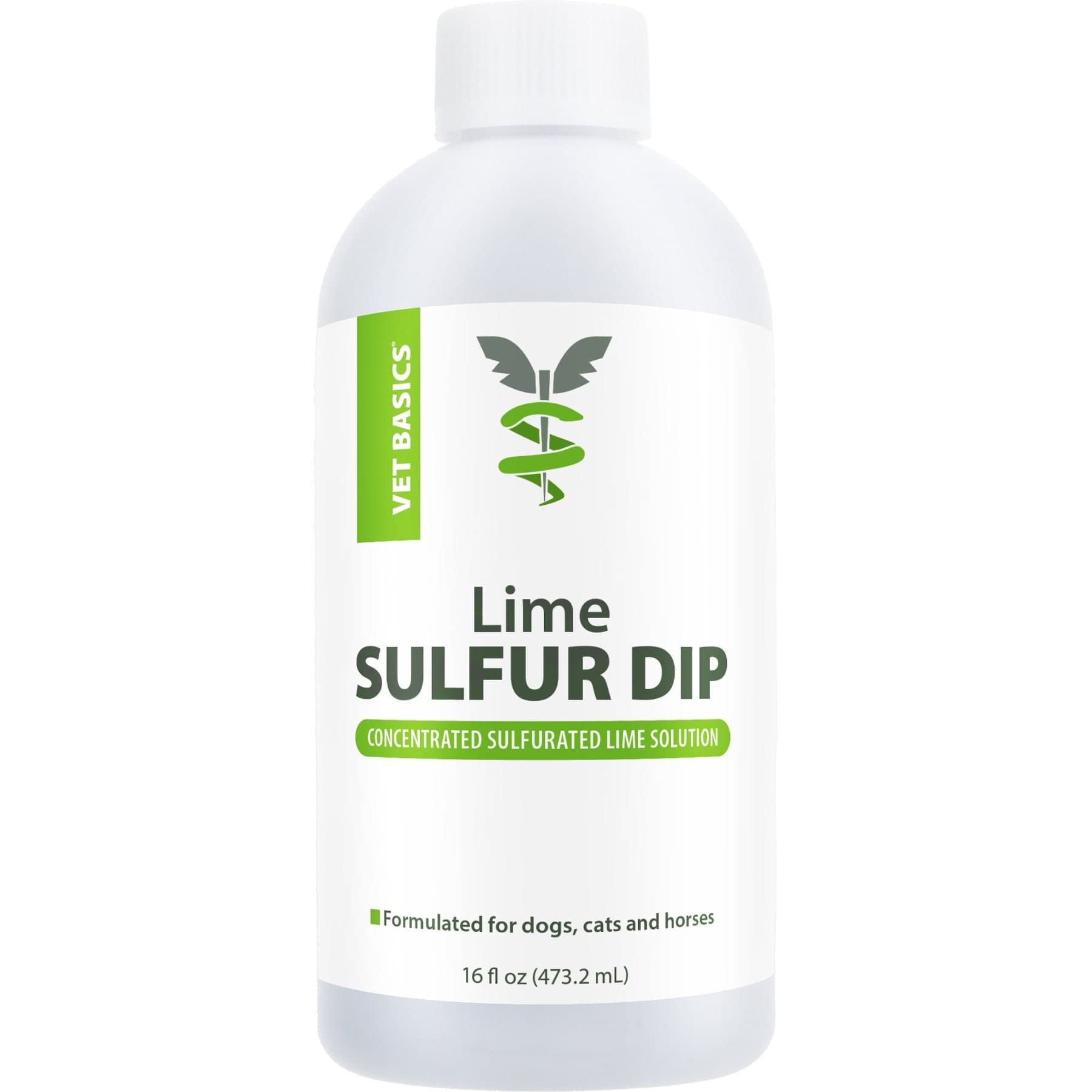
Lime and sulfur dip the listing says treats mange and kills mites; use it on the schedule your vet sets.
Webvet may earn a commission when you click through to Chewy, at no extra cost to you.
Merck calls lime sulfur highly effective and safe for use in young animals, with several dips 7 days apart. Veterinary Partner says weekly dips are usually effective and the disease typically resolves within one month, but dipping is messy and rarely done, and VCA agrees dips are no longer commonly used.
Does NexGard treat sarcoptic mange?
NexGard kills the mites, but mange is not on its label. The NexGard FDA label covers fleas and ticks, and Merck notes no isoxazoline is FDA approved for sarcoptic mange, making mange use extra-label. In a Parasite field study, two doses a month apart cut live mite counts 98.9 percent by one month and 99.7 percent by two.
Two other isoxazoline chews come up at the vet, and both are prescription products dispensed through Chewy's pharmacy:
- Fluralaner: in a 17-dog study in Veterinary Dermatology, one oral dose eliminated mites within 14 days. The 22-44 lbs, Bravecto Chews for Dogs, 1 treatment, 500 mg Fluralaner contains it, though its US label covers only fleas and ticks in dogs 6 months and older.
- Sarolaner: the Simparica Trio Chewable Tablet for Dogs, 22.1-44.0 lbs, 3 Chewable Tablets (3-mos. supply) pairs it with moxidectin and pyrantel, and its FDA label covers heartworm, intestinal worms, fleas, and ticks rather than mange.
Whatever the mite killer, supportive care runs alongside it. Veterinary Partner says controlling secondary bacterial infections with antibiotics is important, and Merck mentions an antiseborrheic shampoo only as a way to remove crusts before a dip. WebVet's guide to medicated dog shampoo explains how the main types differ.
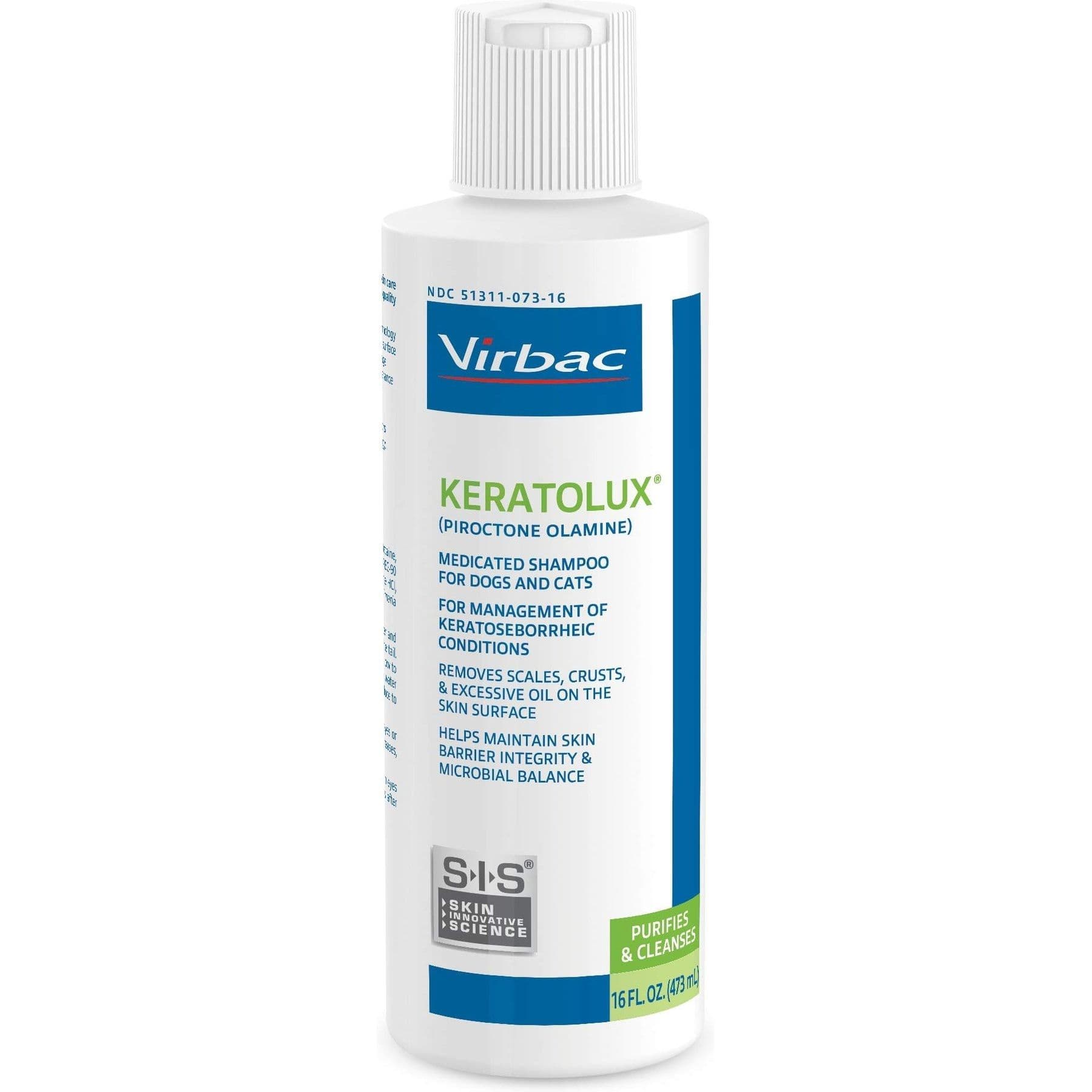
Medicated shampoo the listing says removes scales, crusts and excess oil; it does not kill mites, so it supports treatment.
Webvet may earn a commission when you click through to Chewy, at no extra cost to you.
Can ivermectin completely cure mange?
Often, yes. Merck calls ivermectin very effective and usually curative, and lists a vet-prescribed ivermectin protocol for sarcoptic mange given by mouth or injection as 2 to 4 treatments 2 weeks apart. That use is extralabel in the US, per Merck's pharmacology chapter, and Veterinary Partner calls it mostly of historical interest given safer options.
Breed safety is the bigger issue. Collies, Shetland Sheepdogs, Old English Sheepdogs, Australian Collies, and their crosses can carry an MDR1 gene mutation that lets more ivermectin into the central nervous system and causes toxicity, Merck explains. Selamectin is safe even in ivermectin-sensitive breeds, and Veterinary Partner says the MDR1 mutation does not come into play with isoxazolines.
Before the appointment, it helps to know how each option is given, whether its US label covers sarcoptic mange, and the retreatment timing for each.
| Option | Drug class | How it is given | US label status for sarcoptic mange | Retreatment schedule |
|---|---|---|---|---|
| Selamectin (Revolution) | Macrocyclic lactone | Prescription topical spot-on | FDA labeled for treatment and control in dogs 6 weeks and older | One dose; label allows a second monthly dose, Veterinary Partner advises an extra dose after 2 weeks |
| Imidacloprid and moxidectin (Advantage Multi for Dogs) | Macrocyclic lactone combination | Topical spot-on | FDA labeled for sarcoptic mange | Label: one dose, second monthly dose if needed; Merck: two doses 4 weeks apart |
| Afoxolaner (NexGard), fluralaner (Bravecto), sarolaner (Simparica Trio) | Isoxazoline | Prescription oral chew | Not FDA approved for mange, used extra-label | Afoxolaner studied as two doses a month apart; fluralaner as a single dose |
| Ivermectin | Macrocyclic lactone | By mouth or injection | Not registered for mange, extralabel in the US | 2 to 4 treatments 2 weeks apart; contraindicated at this dose in avermectin-sensitive breeds |
| Milbemycin oxime | Macrocyclic lactone | By mouth | Not registered for mange | Weekly for 3 to 4 weeks |
| Lime sulfur | Sulfur dip | Diluted dip applied to the skin | Sold as an antimicrobial dip that lists mange among its uses | Several dips 7 days apart per Merck; weekly per Veterinary Partner |
Guidance on selamectin retreatment differs: the Revolution label allows a second monthly dose, while Veterinary Partner says an extra dose after 2 weeks is usually needed to clear an active infection.
Treating sarcoptic mange in puppies depends on which products are labeled for the puppy's age and weight, and those minimums differ from one medicine to the next. Mild sarcoptic mange gets the same mite-killing medicines as a severe case; no published guidance describes a lighter regimen for mild cases, though severe cases may also need antibiotics.
A few safety checks apply before any of these medicines:
- The FDA has linked Bravecto, NexGard, and Simparica to muscle tremors, ataxia, and seizures in some animals, while saying they remain safe and effective for most.
- The NexGard label advises caution in dogs with a history of seizures or neurologic disorders.
- Revolution's label calls for testing dogs for existing heartworm infection first.
Among the prescription treatment options a vet chooses from, no comparative study has named a single best one; VCA says your vet weighs your dog's condition and lifestyle. Whatever the pick, treatment of sarcoptic mange in dogs aims to kill every mite on the affected dog and every dog in contact with it, as Merck advises.
Home care, cleaning the house, and recovery time
Home treatment for sarcoptic mange in dogs supports the prescription rather than replacing it: the medicine does the mite killing, and the household work stops reinfection and spread. Work through these steps in order once treatment starts:
- Treat every in-contact dog on the schedule your vet sets, including dogs that are not itching. Cats get a different mite, Notoedres cati, covered in WebVet's guide to mange in cats.
- Machine wash the dog's bedding or replace it with new bedding, as Veterinary Partner advises. VCA goes further and recommends discarding bedding or washing it frequently in a dilute bleach solution of one ounce of bleach in one gallon of water.
- Wash collars and harnesses, which Veterinary Partner also recommends.
- Launder towels and blankets and clean combs and brushes, since Merck lists them as indirect routes between dogs.
- Keep the dog apart from other dogs until your vet's recheck.
- Skip whole-house spraying and deep cleaning, which Veterinary Partner says is not necessary.
Cleaning bedding during treatment is the step both VCA and Veterinary Partner call for; they differ on whether machine washing alone is enough or a dilute bleach wash is needed.

How long can mange live in your house?
Not long enough to justify fumigating. Veterinary Partner says sarcoptic mites can live off a host for days to weeks depending on their life stage, but they are only infective in the environment for 36 hours, so decontaminating the house is generally not necessary. Washing bedding covers the realistic risk.
Can I treat mange at home?
You can handle the home care, but not the cure on your own: the medicines that kill Sarcoptes mites are prescription products, and a vet needs to rule out allergies and demodex first.
Veterinary Partner also notes that the dose needed for sarcoptic mange can differ from the dose the same medicine uses for other conditions, so leftover flea medicine is not a stand-in.
Natural treatment is where many owners start, and the internet is full of home remedies. No veterinary source supports apple cider vinegar, essential oils, or any other home remedy for sarcoptic mange in dogs. Trying to treat it naturally first only leaves the mites untreated, and Merck says untreated lesions spread until they are generalized.
How long does sarcoptic mange last in dogs on treatment? Recovery is measured in weeks, and the published timelines are encouraging:
- Itch and sores: in the 17-dog fluralaner study, lesion size and itching dropped significantly within 14 to 21 days of a single dose, and improvement continued to day 28.
- Coat: in an afoxolaner field trial in Parasite, 8 of 9 treated dogs regrew 90 percent of the hair on their lesions by day 56, compared with none of 10 untreated dogs.
- Full regrowth: there is no standard published time for a complete coat, so expect the hair to lag behind the itch.
Preventing sarcoptic mange in dogs after recovery comes down to two habits. The label for Revolution Topical Solution for Dogs, 20.1-40 lbs (Red Box), 1 Dose (1-mo. supply) says monthly use will control any later sarcoptic mange mite infestations.
VCA also advises keeping dogs away from areas infected dogs or foxes frequent. WebVet's guide to the best flea and tick prevention for dogs compares monthly products.
Sarcoptic mange questions
Frequently Asked Questions
Is sarcoptic mange contagious to other dogs in the house?
Yes, very. Merck's owner guide says mange spreads easily between animals by direct contact, and indirect spread through infested bedding is less common but can happen. In a multi-dog home, expect your vet to treat all the dogs together, and keep the itchy dog's bedding separate and freshly washed until treatment is underway.
How long does sarcoptic mange last once treatment starts?
Plan on several weeks. On the Revolution label, itching had resolved in about 50 percent of treated dogs 30 days after the first dose and in about 90 percent 30 days after the second monthly dose. Veterinary Partner judges a treatment trial by whether signs resolve within two to four weeks.
Can puppies be treated for sarcoptic mange?
Yes, but the product has to fit the puppy's age and weight. Revolution is labeled for dogs 6 weeks and older. Advantage Multi's safe use is not established under 7 weeks or 3 pounds, NexGard is for puppies 8 weeks and 4 pounds or more, Simparica Trio for 8 weeks and 2.8 pounds, and Bravecto chews for 6 months and 4.4 pounds. Merck also describes lime sulfur as safe for young animals.
Can you prevent sarcoptic mange in dogs?
Largely, yes. Veterinary Partner says normal monthly use of a selamectin product should prevent a sarcoptic mange problem, and your vet can tell you whether your dog's current parasite product covers the mite. Beyond that, limit contact with dogs that are scratching constantly or have crusty ears, and steer clear of places foxes frequent.
Do other pets in the house need treatment too?
Yes for every in-contact dog, whether or not it itches. Merck says treatment should include all dogs in contact with the infested dog, and its owner guide extends that to all other animals that have been in contact with one another. Ask your vet about any cats in the home, since cats can get their own mange mite.

Editor
The Webvet Editorial Team is the in-house group of pet-care editors and writers behind Webvet, operated by Smart Pet Collective. The team researches, writes, and maintains Webvet's pet health, behavior, and medication content. Every article follows a defined editorial process: research from reputable veterinary and scientific sources, careful drafting, mandatory review of medical content by a credentialed veterinarian, and dated publication. Health and medication articles are medically reviewed by a licensed veterinary professional before they go live and are kept current over time.
Veterinarian · BVMS MRCVS
Dr. Pippa Elliott, BVMS, MRCVS, is a veterinarian with nearly 30 years of experience in companion animal practice. Dr. Elliott earned her Bachelor of Veterinary Medicine and Surgery from the University of Glasgow. She was also designated a Member of the Royal College of Veterinary Surgeons. Married with 2 grown-up kids, Dr. Elliott has a naughty Puggle named Poggle, 3 cats and a bearded dragon.
Related reading

Stud Tail in Cats: Causes, Treatment, and Grooming That Helps

Eosinophilic Granuloma Complex in Cats: Rodent Ulcers, Plaques, and Treatment

Miliary Dermatitis in Cats: Causes, Treatment, and Flea Control
