Mange in Cats: Types, Contagion, Treatment, and Recovery
Mange in cats can involve different mites with different contagion risks. Learn how vets diagnose it, choose treatment, protect other pets, and assess recovery safely.

BVMS MRCVS
Medically reviewed by Dr. Pippa Elliott, BVMS MRCVS · Last reviewed

This article contains affiliate links. Webvet may earn a commission when you buy through them, at no extra cost to you.
Mange in cats describes skin problems caused by microscopic mites. Itching, crusts, hair loss, and excess scale are possible signs, but they overlap with allergies and infections. Your veterinarian needs to identify the likely mite and the cat’s overall condition before choosing treatment or advising when household precautions can end.
Different mites behave differently. Some spread easily between cats or temporarily irritate human skin; others raise concern about an underlying health problem. A successful plan may therefore involve more than the visibly affected cat. Avoid starting a dog mange medicine or an internet home remedy while you wait for advice.
What is mange in cats?
Microscopic mites cause mange, but veterinary treatment is chosen for the specific infestation. A skin examination helps separate mites from other causes of itching and hair loss. Share your cat’s symptoms and exposure history with the clinic before applying medication. The same outward signs can require different testing, household precautions, and follow-up care.
The definition of mange centers on mites as the cause of skin disease. Cats can get several different mite infestations, so symptoms alone cannot identify the parasite. Fleas are a separate problem, although both can cause scratching. Many infestations are treatable, but getting rid of them requires a plan suited to the diagnosis.
Mange is an umbrella term, not one disease with one cure. Mites can live on the skin surface, burrow into superficial skin, inhabit hair follicles, or affect the ear canal. The resulting irritation and self-trauma can change how the skin looks. Veterinary treatment targets the particular infestation and any secondary problems.
- 1Skin testing helps distinguish mite infestations from look-alike conditions.
- 2Veterinary treatment depends on the mite, the cat, and sometimes other exposed pets.
- 3A cleaner-looking coat does not prove that treatment is complete or contagion has ended.
Possible signs include:
- Repeated scratching, licking, or overgrooming.
- Patchy or extensive hair loss.
- Thick scale, crusts, or redness.
- Scratching around the head and ears.
- Earwax or debris, depending on the mite involved.
- Broken skin or infection after persistent scratching.
Itch is not a reliable severity scale. Some cats with mite infestations itch intensely, while others have less obvious irritation. A cat with a damaged coat may also be uncomfortable from another skin condition. Take changes seriously without assuming every itchy or bald cat has mange.
Prepare for the scheduled skin examination
For a stable cat’s veterinary visit, a Frisco Travel Safety carrier provides an enclosed travel space. The linked size is Medium. Tell the clinic about suspected contagious skin disease before arrival, and follow its arrival and carrier-cleaning instructions. A carrier is not a treatment or a guarantee against transmission.

Soft-sided travel safety carrier that keeps a stressed cat secure and well-ventilated on the way to the vet, with mesh panels for airflow and a seat-belt loop.
Webvet may earn a commission when you click through to Chewy, at no extra cost to you.
Types of mange in cats
The distinction between Notoedres cati, Demodex cati, and Demodex gatoi matters. These names tell the veterinarian something about location, contagion, and the tests that may help. “Red mange,” “scabies,” and other informal labels are less precise. Ask which mite is suspected and what evidence supports that diagnosis.
| Mite or condition | Typical pattern | Why identification matters | Next step |
|---|---|---|---|
| Notoedres cati, feline scabies | Marked itching, crusts around ears, head, and neck | Highly contagious between cats; can affect people | Prompt examination and contact-pet plan |
| Demodex gatoi | Itching, overgrooming, hair loss | Contagious between cats; can be difficult to find | Superficial sampling and household assessment |
| Demodex cati | Localized or widespread hair loss, scale, sometimes ear changes | Generalized disease may accompany another illness | Deeper sampling and health assessment |
| Sarcoptes scabiei | Itchy scabies after relevant exposure | Cats may acquire it through contact with affected animals | Veterinary diagnosis and exposure history |
| Otodectes cynotis, ear mites | Ear irritation and debris | Ear disease has several look-alikes | Ear examination |
| Severe sores or an unwell cat | Any distribution | Complications need prompt care | Call the clinic promptly |
Feline scabies and demodicosis
Notoedric mange often starts around the ear margins, face, and neck and may spread. Demodectic mange in cats is more often called feline demodicosis. D. gatoi lives superficially and can spread between cats; D. cati lives in follicles and behaves differently. The same household advice cannot be applied to both automatically.
The Merck Veterinary Manual’s professional discussion of mange distinguishes these infestations. Generalized D. cati disease can prompt investigation for systemic illness. That does not mean every cat with a suspected mite has an immune disorder, nor should owners assume all feline demodicosis is noncontagious because they have heard that about dogs.

Other mite-related conditions
Sarcoptic mange primarily affects dogs but can occur in cats after contact with infected animals. Ear mites and Cheyletiella, often called walking dandruff, cause different patterns and require their own assessment. A flea product’s activity against one parasite does not establish that it will treat every mite.
Our guide to ear mites in kittens covers that ear-specific problem. Dark ear debris alone cannot confirm mites; infection and other ear conditions can look similar. Do not put household oils, peroxide, or an old ear medication into a cat’s ears without veterinary instructions.
Is mange in cats contagious?
Ask whether you can safely pet the affected cat and how to prevent spread while treatment takes effect. Demodex species differ, and a fox exposure does not prove sarcoptic mange. Give the clinic the details instead of assuming all mites transfer between animals in the same way. Household instructions should follow the diagnosis.
Humans can get an itchy rash after contact with some mites that affect cats. Dogs and cats may also share certain exposures, but not every form of mange spreads between species. The early appearance or supposed stage cannot establish contagion, the incubation period, or when it is safe to resume close contact.
Household precautions
Some forms are contagious to other cats, and some can affect people or other animals. Notoedric mange and D. gatoi deserve particular attention when several cats share space. D. cati has different biology and is not managed as the same contagious household infestation.
The name of the mite matters more than the broad word “mange.”
Choose bedding you can manage separately
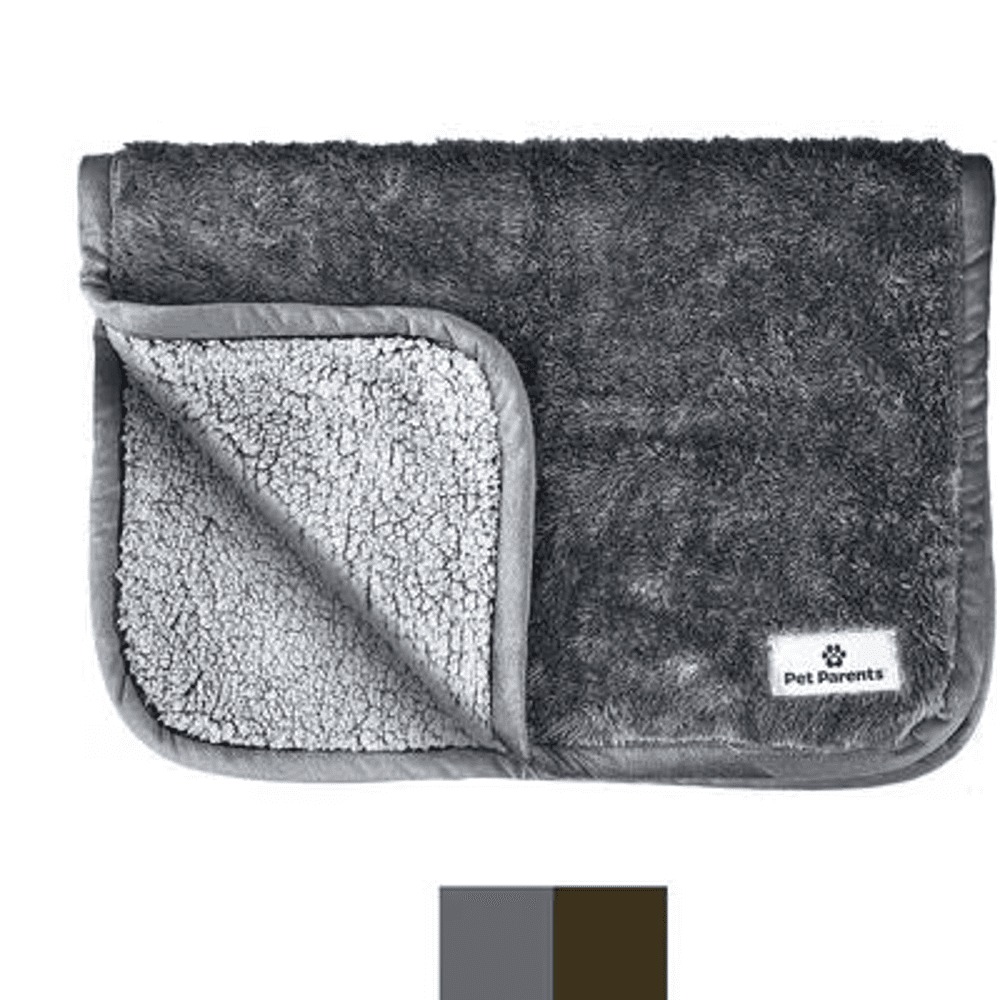
A washable Pet Parents Pawtect blanket can provide a removable layer for the cat’s assigned resting area. The link opens the Small size. Follow your veterinarian’s laundering and household-contact advice, and the blanket’s care label. Waterproof fabric is not an antiparasitic surface and does not replace a mite-specific household plan.
Until you receive a plan:
- Limit close contact with other pets when practical and safe.
- Avoid sharing bedding and grooming tools.
- Wash hands after handling the affected cat or bedding.
- Tell the clinic about all household animals and any itchy people.
- Ask whether exposed pets need examination or treatment, even if they look normal.
Notoedres and Sarcoptes can cause itchy skin lesions in people. If someone develops a rash after contact with an affected cat, they should contact a healthcare professional and mention the animal’s diagnosis. Do not put veterinary medication on a person or use a person’s scabies treatment on the cat.
Indoor cats and contact with other animals
Indoor living reduces some exposures but does not rule out mites. A new cat, visiting animal, previous infestation, or other contact may be relevant. Cats also groom away evidence, so a housemate with a normal-looking coat may still need assessment when a contagious mite is found.
Avoid guessing which wild animal caused the problem. Reports of foxes, squirrels, or other wildlife nearby are useful history, but they do not identify the mite. Likewise, not every dog mite transfers to cats in the same way. Let the veterinarian connect exposure history with the examination and testing.
 $65 · no membership
Is your cat's itching or skin issue getting worse?
A licensed vet can examine your cat over video and prescribe treatment online when it's appropriate.
 Talk to a vet
- Licensed vets
- All 50 states
- same-day Rx
Webvet may earn a commission if you book.
How vets diagnose mange in cats
To tell if your cat has mange, the vet looks for supporting evidence rather than a picture match. Diagnosing the mite can involve samples from more than one area or animal. Tell the clinic if you have already bathed your cat or used a product, because that may affect the examination.
Diagnosing mange in cats involves the pattern of lesions, exposure history, and tests for mites or other causes. A skin scraping or tape sample may be examined under a microscope. Superficial and deeper samples answer different questions.
An ear examination is important if head shaking, ear pain, or unusual debris is part of the problem.
When a sample is negative
A negative sample does not always exclude mites. Cats can remove mites by grooming, and some species are difficult to recover. Your veterinarian may repeat sampling, examine a housemate, or recommend a carefully monitored treatment trial. “No mites on this sample” and “mites definitely ruled out” are different conclusions.
Prepare this information for the appointment:
- When itching or hair loss started and which area changed first.
- Whether other pets or people have skin symptoms.
- Every recent parasite product, including its name and application date.
- Any shampoo, cream, oil, or home remedy already used.
- Changes in appetite, weight, activity, thirst, or existing illnesses.
How vets diagnose cat skin problems explains the broader workup. Ringworm testing may also be useful because ringworm in cats can resemble mite disease and sometimes occur alongside it. Treating one problem does not automatically address the other.
Mange in cats treatment
To get rid of mange in cats, treat the diagnosed mite and complete the prescribed follow-up. Early or mild symptoms do not justify stopping treatment before advice. Notoedric scabies, sarcoptic mange, and demodectic mange may need different decisions. Treating secondary infection or another illness can also be part of an effective plan.
Veterinary treatment may use a topical antiparasitic, another veterinarian-selected medication, or lime sulfur dips. The choice depends on the mite, age, weight, health, and handling needs of the cat. Secondary skin infection or significant self-trauma may need additional care. Do not copy another animal’s prescription or a dosage from a case report.
Check the prescribed product and weight band
Revolution Plus is a prescription cat parasite product, but mange is not a listed US indication. Any use for a diagnosed mange mite must be selected and directed by the veterinarian as extra-label treatment. This offer is the 11.1–22-pound cat variant, not the small-kitten pack. Confirm the exact product, weight band, and neurologic-history precautions.
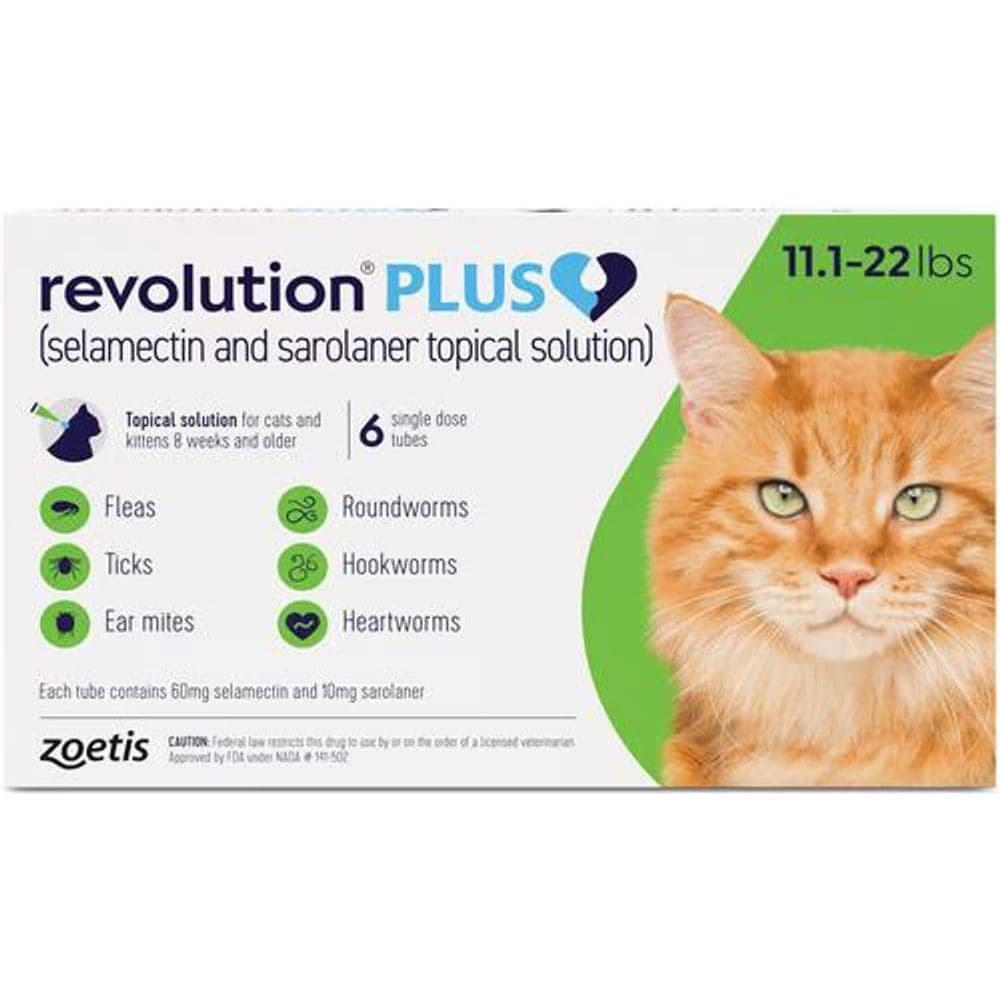
Monthly topical that protects cats from fleas, ticks, ear mites, roundworms, hookworms, and heartworm.
Webvet may earn a commission when you click through to Chewy, at no extra cost to you.
Prescription antiparasitic options
Medicines such as ivermectin or fluralaner, the active ingredient in Bravecto products, are choices for a veterinarian to evaluate in particular circumstances. This does not make every formulation or oral tablet suitable for cats. Ask about the exact species label and whether the proposed use is extra-label before giving any product.
The best medicine for mange in a cat is the one selected for that cat’s mite and health history. A spray, tablet, injection, or dip is not interchangeable with another format. Ask what the medicine treats, how it is given, and which side effects mean you should call the clinic before another dose.
Veterinarians may use isoxazoline-containing products or other antiparasitic medicines for certain feline mite infestations. Some uses are extra-label, meaning the product is used under veterinary direction for a purpose not listed on its US label. Extra-label use is a prescribing decision, not a reason for owners to improvise treatment.
Revolution Plus label and extra-label use
Revolution Plus for cats contains selamectin and sarolaner. Its US prescribing information includes fleas, certain ticks, ear mites, heartworm prevention, and specified intestinal worms. Mange is not a listed US indication. A veterinarian may consider an extra-label use when it fits a diagnosed infestation.
This is a prescription cat product, not an over-the-counter mange cure. The labeled minimum is eight weeks of age and 2.8 pounds. Your veterinarian selects the appropriate weight range and considers medical history, including neurological conditions. Do not use a tube meant for another weight range, split doses, or shorten intervals yourself.

Lime sulfur and bathing decisions
Treatment cost and follow-up
How much it costs to treat mange depends on tests, medicines, rechecks, and complications. Ask for an estimate before treatment begins and explain any budget limits. Mange is often treatable, but repeated baths or unplanned products can add expense without an effective result. The clinic can help prioritize a workable plan.
Using the prescribed dip safely
Lime sulfur is another option a veterinarian may prescribe for certain mite infestations. Correct dilution, application, eye protection, drying, and prevention of licking matter. Ask the clinic to demonstrate the process and explain how to keep the cat warm and comfortable. A product labeled for another species is not an interchangeable substitute.
Grooming shampoo and medicated treatment serve different purposes. Oatmeal shampoo, for example, does not eliminate a mange infestation simply because it cleans flakes from the coat. Do not bathe immediately before or after a topical medication unless the prescribing veterinarian and product directions allow it. Ask about timing before starting either product.
Treat a secondary infection only when diagnosed
A veterinarian may choose MiconaHex+Triz shampoo for a bacterial or fungal skin problem occurring alongside mite disease. The manufacturer lists cats among its intended species. It does not kill mange mites as a substitute for the prescribed antiparasitic. Coordinate bathing with the rest of the treatment so it does not interfere with a topical medicine.
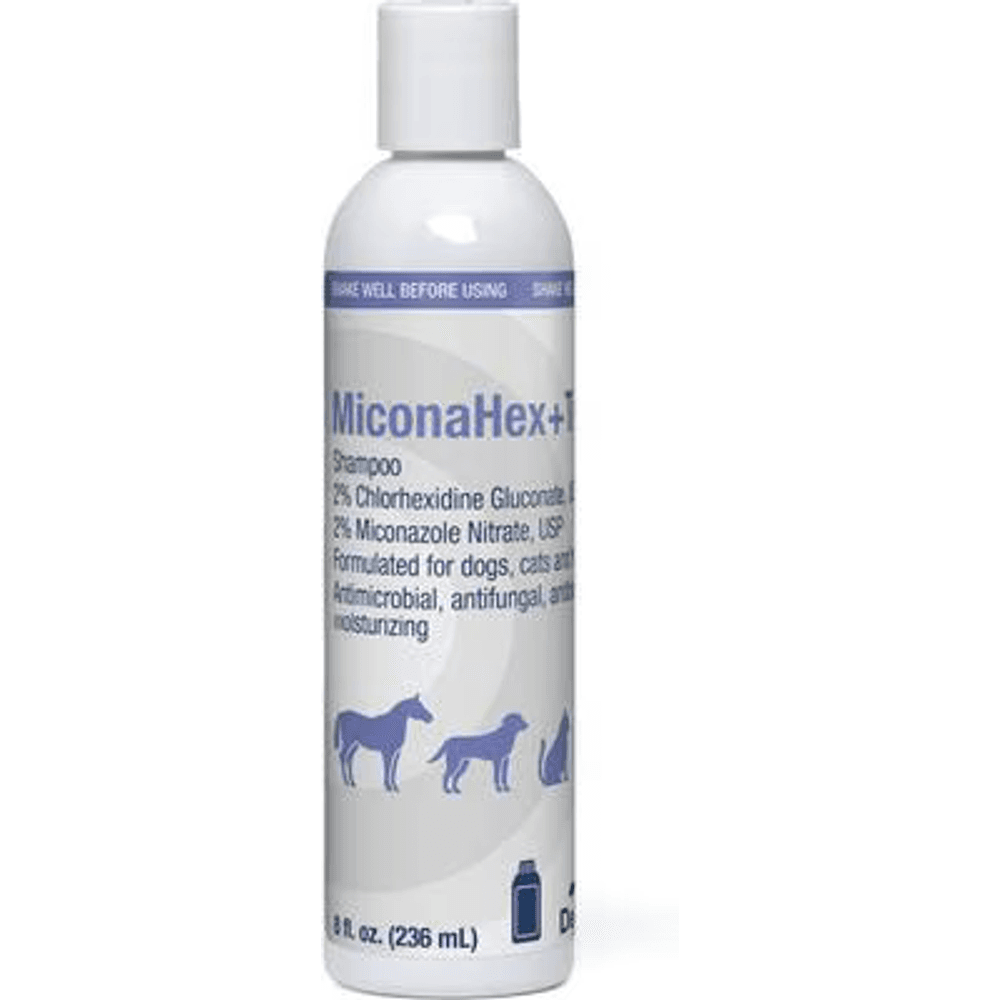
A vet-strength medicated shampoo pairing 2% chlorhexidine and 2% miconazole, a potent antifungal and antibacterial combination widely used to help clear ringworm and yeast or bacterial skin infections.
Webvet may earn a commission when you click through to Chewy, at no extra cost to you.
Home care and treatments to avoid
An over-the-counter mange product is not automatically a safe treatment for cats. Apple cider vinegar, castor oil, and other household oils do not replace an effective mite treatment. Benzoyl peroxide products also need veterinary approval for the exact cat and skin problem. Do not combine them with a prescribed plan on your own.
You cannot reliably treat suspected mange without veterinary input because the cause, product choice, and household plan remain uncertain. Home care supports prescribed treatment; it does not replace diagnosis. This is particularly important for kittens, frail cats, cats with extensive lesions, and cats that are not eating normally.
Avoid unapproved home remedies, including:
- Vinegar, borax, or hydrogen peroxide mixtures.
- Tea tree oil, neem oil, and other essential-oil preparations.
- Colloidal silver or homeopathic products presented as mite cures.
- Dog mange dips, livestock ivermectin, or leftover pet prescriptions.
- Repeated dish-soap baths intended to remove the infestation.
These approaches can irritate injured skin, create ingestion risks, or delay effective treatment. A “natural” label does not establish feline safety or effectiveness. Cats groom topical substances from their fur, and products that another species tolerates may be unsuitable for them. Obtain approval for the exact product rather than a general ingredient category.
For bedding and shared spaces, follow the veterinarian’s mite-specific instructions. Washing washable fabrics and cleaning grooming tools may be part of the plan. Do not spray household pesticides onto the cat or saturate the home with products without advice.
Environmental measures should match the parasite rather than an assumption that all mites behave like fleas.
Make the treatment plan workable
Before leaving the clinic, confirm who will administer each treatment and how to record it. Ask what to do if a dose is missed, the cat licks the application site, or handling becomes difficult. A written schedule is especially useful when several people care for the household’s animals.
Keep each pet’s medication clearly labeled and separate. Do not share applicators or use a remaining tube simply because another animal is itchy. Contact the clinic when you cannot carry out the plan as directed. Adjusting treatment safely is more useful than hiding missed doses or substituting a product on your own.
Recovery, rechecks, and prevention
Severe mange can leave cats painful and vulnerable to complications. Untreated skin injury, infection, and poor condition can become life-threatening, but a photograph cannot predict whether or how fast a cat might die. Seek prompt help for an unwell cat. A stray or feral cat needs a coordinated handling and follow-up plan.
Recovery is usually judged over weeks, but there is no universal timetable. The infestation, skin damage, secondary infection, and underlying health all affect progress. Hair regrowth can lag behind improved comfort. Conversely, less scratching does not prove that every mite has been eliminated or that exposed housemates no longer need attention.
Three-part recovery check
The three-part recovery check distinguishes improving itch, healing lesions, and veterinary clearance. Look for better comfort and no new lesions, then complete the planned recheck tests. There is no universal cure date. These separate observations keep a better-looking coat from becoming the only reason to stop an otherwise necessary treatment plan.
Use these three questions:
- Comfort: Is scratching, licking, or head shaking decreasing?
- Skin: Are existing lesions healing, with no new lesions appearing?
- Clearance: Have the planned veterinary recheck tests or clinical assessments been completed?
Follow the entire prescribed schedule and keep the recheck even when the coat looks better. If new lesions appear, treatment becomes hard to administer, or the cat reacts to a product, contact the clinic. Do not simply double the dose or add another parasite medicine.
The veterinarian may need to reassess the diagnosis or plan.

For a stray or feral cat, ask a veterinarian, shelter, or experienced rescue about safe capture and treatment. Do not chase, corner, or apply medication to a cat you cannot handle safely. A coordinated plan can address repeat treatment, monitoring, housing, and exposed animals in a way an isolated dose cannot.
Untreated severe disease can become dangerous through skin injury, infection, and declining condition. A cat that is weak, not eating, or developing widespread sores needs prompt care. Do not wait for a predicted “late stage.” Symptoms and the cat’s condition determine urgency, not an online recovery calendar.
What mange looks like
What mange looks like on cats varies by mite and individual. The beginning of a problem may look like mild itching or hair loss, but pictures cannot assign universal stages. Describing the symptoms, location, and changing appearance helps your veterinarian decide what to examine. It does not establish a diagnosis at home.
Before-and-after images of feline scabies or demodectic mange document individual cases. They cannot distinguish mange from ringworm or flea-related skin damage in another cat. The linked visual companion explains what these pictures can contribute to the appointment, including location and change over time, without presenting appearance as proof of a diagnosis.
Use photographs to describe location
Pictures of mange in cats can show changes on the ears, head, neck, legs, body, or tail. Mild or early changes may be less striking than severe crusting. A black cat may show pale scale more clearly, but color cannot identify the mite or establish which stage the disease has reached.
Mange may cause crusts around the ears and face, irregular bald areas, thick scale, or overgroomed skin. Those appearances overlap with several other conditions. Our cat mange photo guide uses real clinical case photographs to explain patterns and limits, with comparisons to common look-alikes.
Keep photographs in consistent light and note the date, location, and products used. That record is useful at rechecks because it shows change over time. It should support the examination, not turn a resemblance to a picture into a diagnosis or a reason to medicate without advice.
Frequently asked questions
Will Dawn dish soap help with mange?
Dawn dish soap does not help cure mange or replace veterinary treatment. Removing dirt or some loose scale from the coat does not establish that mites are gone. Repeated washing can also make an uncomfortable cat harder to handle.
Ask which cleansing product, if any, belongs in the prescribed plan and how bathing should be timed around topical medication.
Can you buy mange treatment over the counter?
You can buy some products marketed for mange treatment over the counter, but availability does not prove they fit your cat’s infestation. A mite diagnosis and cat-safe prescription or veterinarian-selected product are more useful than a generic “mange” label.
This also answers whether you can get medicine for a cat’s mange over the counter: do not choose it independently of the diagnosis.
Can ivermectin completely cure mange?
Ivermectin can cure some mite infestations when correctly selected, but it does not completely cure every type of mange in every cat. Veterinarians sometimes use it for particular mite infestations, but success depends on the diagnosis, appropriate veterinary dosing, and completing follow-up care. It is not a universal home treatment.
Concentrated livestock products and incorrect doses create a toxicity risk.
Other medicines may be preferred for an individual cat, so ask the treating veterinarian rather than substituting ivermectin yourself.
Is mange treatment expensive?
Mange treatment can become expensive when several pets need care or complications develop. Costs depend on diagnostic tests, medication choice, rechecks, and the number of affected pets. Ask for an estimate that separates the initial examination from follow-up care and household treatment. If cost is a concern, say so before starting.
A veterinarian can help prioritize an achievable plan; repeated unsuccessful home remedies may add cost without addressing the infestation.
$65 · no membershipIs your cat's itching or skin issue getting worse?
A licensed vet can examine your cat over video and prescribe treatment online when it's appropriate.
Talk to a vet- Licensed vets
- All 50 states
- same-day Rx
Webvet may earn a commission if you book.

Editor
The Webvet Editorial Team is the in-house group of pet-care editors and writers behind Webvet, operated by Smart Pet Collective. The team researches, writes, and maintains Webvet's pet health, behavior, and medication content. Every article follows a defined editorial process: research from reputable veterinary and scientific sources, careful drafting, mandatory review of medical content by a credentialed veterinarian, and dated publication. Health and medication articles are medically reviewed by a licensed veterinary professional before they go live and are kept current over time.
Veterinarian · BVMS MRCVS
Dr. Pippa Elliott, BVMS, MRCVS, is a veterinarian with nearly 30 years of experience in companion animal practice. Dr. Elliott earned her Bachelor of Veterinary Medicine and Surgery from the University of Glasgow. She was also designated a Member of the Royal College of Veterinary Surgeons. Married with 2 grown-up kids, Dr. Elliott has a naughty Puggle named Poggle, 3 cats and a bearded dragon.


