Dog Ate Chocolate Cake? Slice vs Whole Cake Risk by Weight


Medically reviewed by Dr. Athena Gaffud, DVM · Last reviewed
Quick answer
If your dog ate chocolate cake, the risk depends on how much cake is missing, how dark the chocolate was and how much your dog weighs. One slice of store-bought frosted chocolate cake (one-eighth of an 18 oz cake) holds about 141 milligrams of theobromine and caffeine, based on USDA FoodData Central, and the Merck Veterinary Manual links mild signs to about 20 milligrams per kilogram of body weight. That means one slice can reach the mild-signs level in a 15 lb dog, and a whole cake can reach the seizure range in a 40 lb dog. Call your vet or a pet poison line now, whatever the amount, and work out how much is missing while you talk.
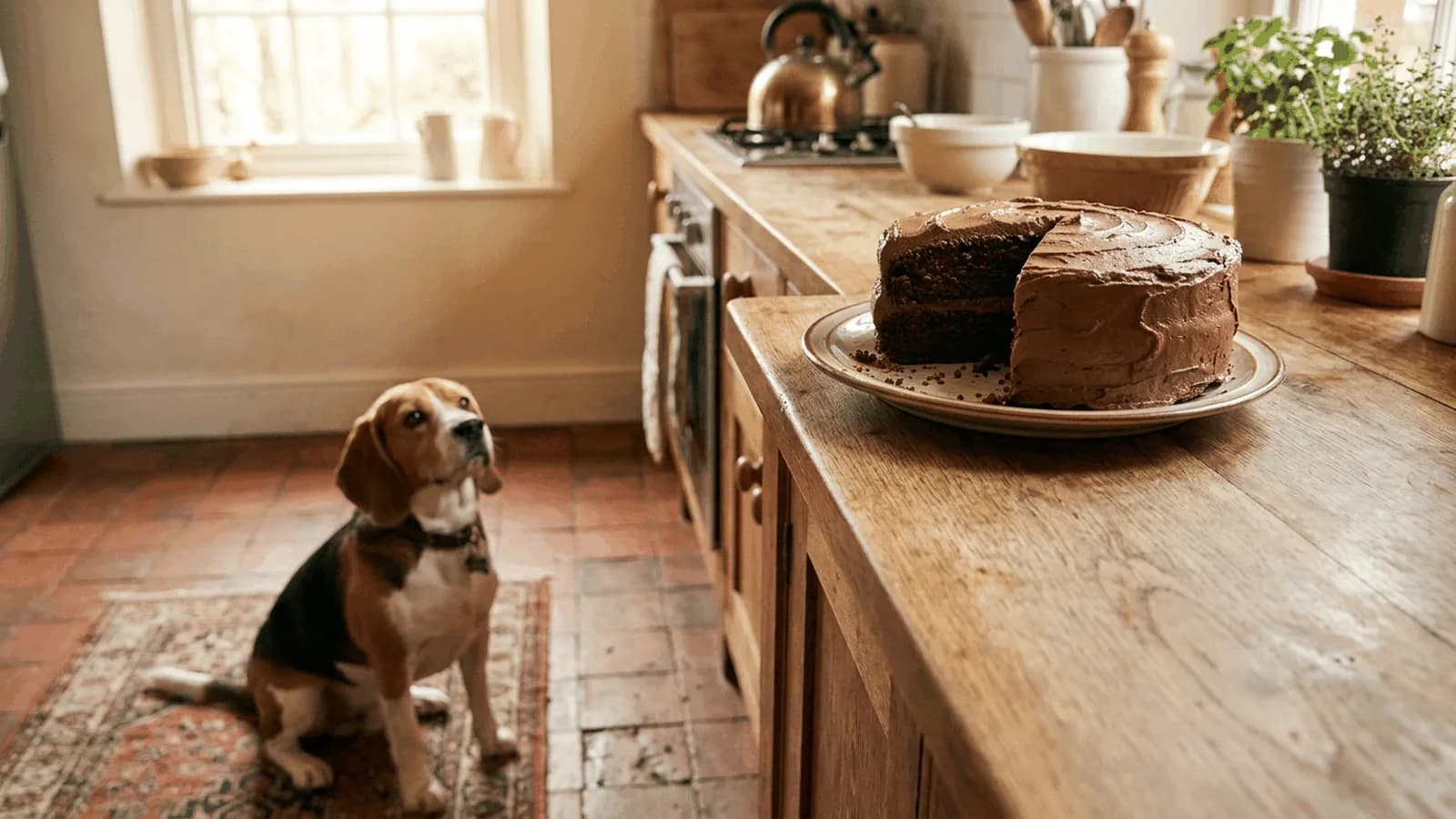
How many slices reach each dose line, by dog weight
Chocolate cake with frosting (1/8 of an 18 oz cake), from USDA FoodData Central values. Any amount is a reason to call your vet or a poison line.
| Dog weight | Signs possible (20 milligrams per kilogram) | Heart effects (40) | Seizures possible (60) |
|---|---|---|---|
| 5 lb | 0.3 | 0.6 | 1.0 |
| 10 lb | 0.6 | 1.3 | 1.9 |
| 20 lb | 1.3 | 2.6 | 3.8 |
| 30 lb | 1.9 | 3.8 | 5.8 |
| 50 lb | 3.2 | 6.4 | 9.6 |
| 70 lb | 4.5 | 9.0 | 13 |
| 90 lb | 5.8 | 12 | 17 |
- 1One slice of frosted chocolate cake holds more theobromine and caffeine (about 141 milligrams) than a 1.55 oz milk chocolate bar (about 99).
- 2The portion decides the risk: a 15 lb dog reaches the 20 milligrams per kilogram threshold at about one slice, a 70 lb dog at about 4.5.
- 3For homemade devil's food, cocoa-dusted or ganache-topped cake, estimate the cocoa and chocolate from the recipe and the share eaten, not the cake's weight.
- 4After any chocolate cake, call your vet or a poison line now, and find the box, the recipe or a photo of what is left while you talk.
What to do right now if your dog ate chocolate cake
If your dog just ate chocolate cake, or accidentally got a slice or a cupcake, act now: dogs eating chocolate cake need a vet's advice, not a wait at home. This is what you should do:
- Move your dog away and pick up what is left of the cake, the plates and any liners.
- Call your vet, Pet Poison Helpline (855-764-7661) or the ASPCA Animal Poison Control Center (888-426-4435) now. Both lines are open 24/7, and consultation fees may apply.
- While you talk, work out how much cake is missing and whether it was store-bought, bakery or homemade. If you are unsure, use the largest amount that could be missing.
- If someone can help, have them enter your dog's weight and the slices in the calculator at the top of this page.
What to tell your vet about the cake
The person on the phone will ask about the cake as well as the chocolate. Gather these while you talk:
- How much cake is missing, in slices or as a fraction of the cake.
- The size of the cake, and whether it was store-bought, bakery or homemade, with the cocoa and chocolate amounts for homemade cakes.
- The frosting and any extras: ganache, cocoa dusting, sugar-free frosting, raisins, nuts, alcohol, coffee, liners or foil.
- Your dog's weight, the time it happened, any signs so far and any health problems, such as pancreatitis or heart disease.
There is no safe way to flush chocolate out of a dog's system at home. Your vet decides whether decontamination is right, and in-clinic treatment can include IV fluids and heart monitoring. VCA Animal Hospitals notes that the sooner treatment begins, the better the prognosis and the less costly the treatment.
How much chocolate is in chocolate cake?
Can dogs eat chocolate cake? No. Cake is mostly flour, sugar, butter and eggs, so each bite carries less theobromine and caffeine than a bite of a candy bar, but no amount is recommended for dogs. The problem is the portion: a slice is big, the frosting adds more cocoa, and a dog that finds a cake on the counter rarely stops at one bite.
Compare coverage choices for your pet, then request a quote directly on Lemonade.
- Check a price for your pet
- Review available coverage choices
- See the terms before you decide
Eligibility, waiting periods, limits and exclusions apply.
Webvet may earn a commission when you click through to Lemonade, at no extra cost to you.

USDA FoodData Central values for commercially prepared chocolate cake with chocolate frosting, the same numbers the chocolate toxicity calculator at the top of this page uses, work out to:
- One slice, one-eighth of an 18 oz cake (about 64 grams): about 138 milligrams of theobromine plus about 4 milligrams of caffeine, or about 141 combined.
- A whole 18 oz cake: eight of those slices.
The weight table above shows how many slices take dogs from 5 to 90 lb to each threshold, and our full guide to how much chocolate is toxic to dogs covers every kind of chocolate.
Slice vs whole cake: worked examples for 15, 40 and 70 lb dogs
How much chocolate cake can a dog eat before getting sick? None is recommended. These examples use the store-bought values above. Each threshold is where the Merck Veterinary Manual says those signs can appear, not a safe line, and some dogs react below it. If your dog ate a bite, a few crumbs or a small piece, count it as that fraction of a slice; a little bit still counts.

A 15 lb dog
- One slice works out to about 21 milligrams per kilogram, the band where vomiting, diarrhea, restlessness, panting and a fast heart rate can occur.
- A whole cake works out to about 166 milligrams per kilogram, far past the seizure threshold and deep in the emergency band, where the dose can be fatal.
A 40 lb dog
- One slice works out to about 8 milligrams per kilogram: the lowest band, where vomiting, diarrhea and thirst are still possible.
- Half the cake works out to about 31 milligrams per kilogram, in the mild to moderate band, and the whole cake to about 62, the emergency band where seizures are possible.
A 70 lb dog
- One slice works out to about 4.5 milligrams per kilogram: a lower dose, but still a reason to call.
- The whole cake works out to about 36 milligrams per kilogram, close to the 40 line where Merck describes heart effects.
So how much chocolate is harmful to a 70 pound dog? No amount is recommended. A dog that size reaches the mild-signs threshold at about 4.5 store-bought slices, about 10 ounces of milk chocolate or about 1 ounce of natural cocoa powder.
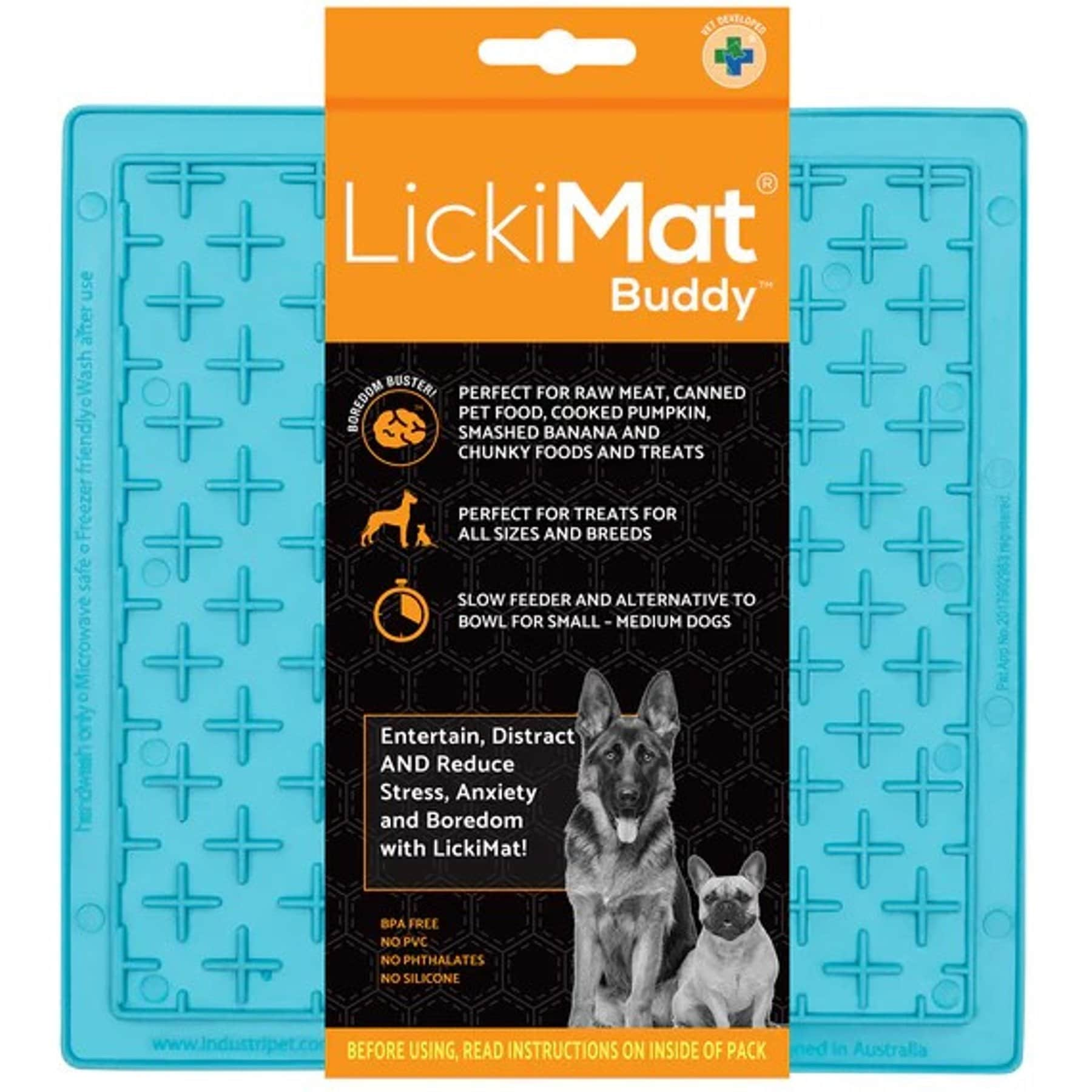
A textured lick mat for a smear of plain pumpkin, so your dog has its own slow treat while the family eats dessert.
Webvet may earn a commission when you click through to Chewy, at no extra cost to you.
Can chocolate cake kill a dog?
It can, if enough is eaten. How much chocolate cake can kill a dog depends on its size and the recipe: about three store-bought slices pass the seizure threshold for a 15 lb dog, and a whole cake reaches the emergency band, where the Merck Veterinary Manual says doses can be fatal. Our page on how much chocolate can kill a dog explains the lethal range.
A whole-cake theft that reaches the seizure band can mean a long clinic stay, since Merck notes signs may persist up to 72 hours in severe cases; our guide to emergency vet costs explains what drives the bill. A new policy covers future accidents and illnesses, not a cake your dog already ate, so to have coverage in place before the next birthday or holiday dessert table, compare plans in our pet insurance planner and get a personalized Lemonade quote.
Cupcakes, muffins, donuts, frosting and other chocolate desserts
Can dogs eat chocolate cupcakes, muffins or donuts? No. Each dessert dilutes chocolate differently, so match what your dog ate to the closest entry in the calculator at the top of this page, count every piece that is missing, and tell your vet about any liners or wrappers too.
Chocolate cupcakes and muffins
A frosted chocolate cupcake is built like a small piece of frosted cake, so compare its size with one-eighth of an 18 oz cake and enter roughly the closest fraction of a slice. Size matching is only a model: recipes vary in how much cocoa they use, so treat the result as a starting point, not a ceiling. If your dog ate a chocolate muffin, size matters more: bakery and Costco muffins can be much bigger than a slice, a dark chocolate muffin carries more than a milk chocolate one, and chocolate chip muffins add semisweet chips; our page on a dog that ate a chocolate chip cookie has the chip math. If the paper liner or muffin wrapper is missing too, tell your vet.
Chocolate donuts
If your dog ate a chocolate donut, the chocolate dose is usually small: USDA lists a chocolate glazed cake donut at only about 9 milligrams of theobromine and caffeine, so a 10 lb dog reaches the 20 milligrams per kilogram threshold at about 9.8 donuts. Frosted donuts, donut holes and a box of Hostess or Dunkin' chocolate donuts, even half a donut, still bring a heavy load of fat and sugar, so tell your vet what kind and how many.
Chocolate frosting
Frosting is already counted in the slice figures, but a dog that licks out a frosting tub or mixing bowl is a separate case. If your dog ate chocolate frosting, read the tub label to your vet while you talk, or count homemade frosting as the cocoa powder or melted chocolate that went into it. Sugar-free frosting can contain xylitol (a sweetener found in some sugar-free gum).
If the plan was a birthday treat for the dog, a LickiMat Buddy lick mat with a thin layer of plain pumpkin or xylitol-free peanut butter gives it a celebration of its own while the cake, cupcakes and frosting stay on human plates.

A double-door wire crate with reinforced latches, so a counter-surfer stays out of the kitchen while desserts cool.
Webvet may earn a commission when you click through to Chewy, at no extra cost to you.
Pudding, ice cream and hot cocoa
A 4 oz chocolate pudding cup holds about 78 milligrams of theobromine and caffeine, a measuring cup of chocolate ice cream about 86, and a packet of hot cocoa mix about 96. Dogs should not eat any of them, and chocolate syrup counts too. Our page on what to do when a dog ate chocolate covers these desserts, and our ice cream and whipped cream guides cover the dairy.
Devil's food, ganache and cocoa-dusted cakes: count the cocoa, not the cake

Homemade and bakery cakes can carry far more than the store-bought figures, because they are built from concentrated cocoa products. Cornell University's College of Veterinary Medicine ranks toxicity potential highest in cocoa powder, then unsweetened baker's chocolate, then semisweet and sweet dark chocolate, then milk chocolate. Ounce for ounce, USDA values line up the same way:
- Natural cocoa powder: about 649 milligrams of theobromine and caffeine per ounce, more than four store-bought slices' worth.
- Dutch-process cocoa powder: about 768 per ounce, more than five slices' worth.
- Unsweetened baker's chocolate: about 391 per ounce.
- Dark chocolate at 70 to 85% cacao: about 250 per ounce.

A tall walk-through gate with a small pet door. Measure the doorway, then close off the kitchen while baked goods cool.
Webvet may earn a commission when you click through to Chewy, at no extra cost to you.
Devil's food cake gets its deep color from cocoa powder, ganache is chocolate melted with cream, so its strength depends on the recipe and the chocolate used, and a cocoa-dusted cake has cocoa powder right on the surface. If your dog ate German chocolate cake, it is traditionally made with German's sweet chocolate, a product sold as sweet chocolate, which USDA puts at about 139 per ounce. Chocolate cheesecake and boxed cake mixes such as Betty Crocker follow the same rule: the label or recipe tells you how much cocoa and chocolate went in, and a dry mix holds the whole cake's cocoa. There is no per-slice figure for homemade cakes, so do not enter one as a store-bought slice. Instead, while you are on the phone:
- Find the recipe and note how much cocoa powder and chocolate went into the whole cake, plus the cacao percentage on any bar.
- Estimate what fraction of the cake is gone, and round up.
- Enter that share of each ingredient in the calculator at the top of this page as cocoa powder or the matching dark chocolate type, and tell your vet that is how you counted it.
Small amounts of cocoa reach the thresholds fast: a 20 lb dog reaches the seizure threshold at about 0.8 ounce of natural cocoa powder, and a 10 lb dog at about 0.4 ounce. Brownies follow the same logic; see our page on what to do when a dog ate brownies.
Cocoa powder, baking squares and chips usually live in a low pantry or cabinet that a determined dog can nose open on baking day, so keep them high or latched. If your dog will be home alone with a cooling cake, crate it or close the kitchen door; a sturdy crate such as the Frisco Heavy Duty Enhanced Lock crate keeps a counter-surfer away until you are back.
Birthday and holiday parties: keeping cake away from your dog
Birthdays and holidays put cakes and dessert plates at dog height, and guests may not know your house rules:

- Keep the cake at the back of a high counter or in a closed room until it is served.
- Gate off the kitchen, or settle your dog in a crate or quiet room while cake is handed out.
- Ask guests, especially children, not to share bites, and collect plates as soon as people finish.
- Put liners, plates and crumbs in a lidded trash can, and store leftovers in the fridge.
Counter thefts are why cake exposures are often large. If your kitchen is open to the dog while a cake cools or waits for guests, a tall barrier such as the Carlson Pet Products Extra Tall Walk-Thru Gate keeps your dog on the other side of the doorway while you still walk through.
Fat, butter and the other hazards in cake
The Merck Veterinary Manual notes that the high fat content of chocolate products may trigger pancreatitis in susceptible animals, and cake piles butter, oil, buttercream and cream cheese frosting on top. Tell your vet if your dog has had pancreatitis before, then check the cake and recipe for these extras, several of which are on our list of foods toxic to dogs:
- Raisins and grapes in fruitcakes and garnishes. See our guides to raisins and grapes.
- Macadamia nuts in some cakes and cookie bars. See macadamia nuts.
- Xylitol in some sugar-free and keto frostings. See xylitol.
- Alcohol in rum cakes and liqueur-soaked layers, a separate poisoning risk.
- Coffee and espresso in mocha cakes and tiramisu, which add caffeine the chocolate figures do not count.
- Paper liners, foil, plastic toppers and candles, which are not food.
Is cupcake paper digestible? No. Paper and foil liners are not food, and a large liner or several of them can upset the stomach or cause a blockage, so tell your vet how many are missing.
What happens after a dog eats chocolate cake
Chocolate poisoning builds with the dose, from vomiting, diarrhea and restlessness to a racing heart, tremors and seizures. Will your dog be okay after eating chocolate cake? You cannot tell from how it looks: signs usually start 2 to 12 hours after eating, according to Cornell University's College of Veterinary Medicine, so acting fine is not proof your dog is safe. Our guide to what happens when a dog eats chocolate covers the symptoms and timeline.
Cat ate chocolate cake or frosting?
If your cat ate chocolate cake, a chocolate donut or muffin, or licked chocolate frosting, call your vet or a poison line now, whatever the amount. There is no established safe dose of chocolate for cats, so any chocolate a cat eats is a reason to call. Our page on what to do when a cat ate chocolate covers the signs and what to tell the vet.
Frequently Asked Questions
Will one chocolate cupcake hurt a dog?
One chocolate cupcake can hurt a dog, especially a small dog or a cupcake made with cocoa powder or dark chocolate frosting. A cupcake is built like a small piece of frosted cake, and a 15 lb dog reaches the Merck mild-signs threshold at about one full slice, so smaller dogs get there sooner. Stomach upset is possible even below that line, and the liner, frosting fat and any xylitol add risk. Call your vet or a poison line.
What happens if a dog eats a cupcake?
What happens depends on the flavor and the size of the dog that eats it. A chocolate cupcake adds theobromine and caffeine, which can cause vomiting, diarrhea, restlessness and a fast heart rate as the dose rises, and tremors or seizures at high doses. Any cupcake brings sugar and fat that can upset the stomach. Call your vet or a poison line and describe the cupcake, the frosting and whether the liner is missing.
My dog ate a chocolate muffin wrapper. What should I do?
If your dog ate a chocolate muffin wrapper, you should call your vet now and tell them about both the muffin and the wrapper. The chocolate in the muffin counts toward the dose, so compare its size with a cake slice in the calculator at the top of this page for a rough estimate; recipes vary in cocoa, so the real dose can be higher or lower. The paper or foil wrapper is not food, and a large wrapper or several can upset the stomach or cause a blockage. Our guide to intestinal blockage surgery costs covers what that treatment can involve.
Can my dog have a regular cupcake?
No, your dog should not have a regular cupcake made for people, even without chocolate. Vanilla and other non-chocolate cupcakes skip the theobromine, but their sugar and frosting fat can upset the stomach and may trigger pancreatitis in susceptible dogs, and some recipes add xylitol, raisins or macadamia nuts. For a birthday, choose a treat made for dogs instead, and if your dog already ate a chocolate cupcake, call your vet or a poison line.
Sources
- USDA FoodData Central
One slice of store-bought frosted chocolate cake (one-eighth of an 18 oz cake) holds about 141 milligrams of theobromine and caffeine, based on USDA FoodData Central, and the Merck Veterinary Manual links mild signs to about 20 milligrams per kilogram of body weight.
- Merck Veterinary Manual
One slice of store-bought frosted chocolate cake (one-eighth of an 18 oz cake) holds about 141 milligrams of theobromine and caffeine, based on USDA FoodData Central, and the Merck Veterinary Manual links mild signs to about 20 milligrams per kilogram of body weight.
- Cornell University College of Veterinary Medicine
Cornell University's College of Veterinary Medicine ranks toxicity potential highest in cocoa powder, then unsweetened baker's chocolate, then semisweet and sweet dark chocolate, then milk chocolate.
- VCA Animal Hospitals
VCA Animal Hospitals notes that the sooner treatment begins, the better the prognosis and the less costly the treatment.