Dog Ate Chocolate Chip Cookies? What to Do, by Dog Weight


Medically reviewed by Dr. Athena Gaffud, DVM · Last reviewed
Quick answer
If your dog ate chocolate chip cookies, the risk depends on the size of the cookies, the kind of chips and your dog's weight. According to USDA FoodData Central, a small packaged chocolate chip cookie of about 12 grams carries about 11.5 milligrams of theobromine and caffeine combined, while semisweet baking chips carry about 155 milligrams per ounce, so big homemade cookies and an open bag of chips are far more concerning. The Merck Veterinary Manual puts the start of mild signs at about 20 milligrams per kilogram of body weight. Call your vet or a pet poison line now, whatever the amount, with the package or recipe in hand.

How many cookies reach each dose line, by dog weight
Chocolate chip cookie (small packaged, about 12 g), from USDA FoodData Central values. Any amount is a reason to call your vet or a poison line.
| Dog weight | Signs possible (20 milligrams per kilogram) | Heart effects (40) | Seizures possible (60) |
|---|---|---|---|
| 5 lb | 4.0 | 7.9 | 12 |
| 10 lb | 7.9 | 16 | 24 |
| 20 lb | 16 | 32 | 47 |
| 30 lb | 24 | 47 | 71 |
| 50 lb | 40 | 79 | 100+ |
| 70 lb | 55 | 100+ | 100+ |
| 90 lb | 71 | 100+ | 100+ |
- 1One small packaged cookie carries about 11.5 milligrams of theobromine and caffeine. A 20 lb dog reaches the 20 milligrams per kilogram line, where mild signs can begin, at about 16 of them.
- 2Homemade and bakery cookies are bigger and often use semisweet chips. For those cookies, count the chips, not the cookies.
- 3A bag of semisweet baking chips is the real danger: about a third of a measuring cup takes a 10 lb dog to the seizure line.
- 4Raisins, macadamia nuts, xylitol and raw cookie dough are separate hazards. Tell your vet about every ingredient.
Packaged, homemade and bakery cookies are not the same
If your dog ate chocolate chip cookies, the first question is what kind, because "just a cookie" can mean very different doses. A small packaged cookie, the kind sold in snack packs, weighs about 12 grams; USDA FoodData Central puts it at about 10 milligrams of theobromine and 1.3 milligrams of caffeine. A dog that eats a big homemade or bakery cookie, or accidentally finds the chip bag while eating one, takes in far more.

Homemade and bakery cookies change the math:
- Size: one big cookie can count as several 12 gram packaged cookies.
- Chip type: semisweet chocolate carries about 155 milligrams of theobromine and caffeine per ounce, more than double milk chocolate at about 64. Dark chips run higher: about 204 per ounce for 60 to 69% dark and about 250 for 70 to 85%.
- Cocoa in the dough: double chocolate cookies add cocoa powder, which carries about 649 milligrams per ounce.
- White chips: USDA lists no theobromine in white chocolate, but white chocolate macadamia cookies bring a nut problem, covered below.
One ounce of semisweet chips carries about as much as 14 small packaged cookies, so with homemade cookies, count the chips: the share of the batch your dog ate is the share of the recipe's chips. For a bakery or restaurant cookie, such as a Chick-fil-A chocolate chip cookie, weigh one that is left or check the box or the restaurant's ingredient list; as a rough model, a cookie four times as heavy as a packaged one counts as roughly four. Recipes vary in how much chocolate they use, so treat that as a starting point, not a ceiling.
What to do right now if your dog ate chocolate chip cookies
If your dog eats chocolate chip cookies, here is what you should do, starting with the call:
- Call your vet, an emergency clinic, the Pet Poison Helpline at 855-764-7661 or ASPCA Animal Poison Control at 888-426-4435 now. Consultation fees may apply.
- While you call, move your dog away from what is left and gather the wrappers, the box, the recipe and the chip bag.
- Give the largest amount that could be missing, and enter it with your dog's weight in the calculator at the top of this page.
Do not induce vomiting at home or give any home remedy; leave that decision to your veterinarian. Call even if your dog ate the cookies but is acting fine: signs can take hours to start, and acting fine is not proof your dog is safe, so the time to call is now, not when signs appear.

What to tell your vet about the cookies
- Your dog's weight and health problems, especially heart disease or past pancreatitis.
- Packaged (keep the box), homemade or bakery, how many are missing and how big they were.
- The chips: milk, semisweet, dark (with the cacao percentage), white or a mix, and any cocoa powder in the dough.
- Every other ingredient, including raisins, nuts and sugar-free sweeteners such as xylitol (also found in some sugar-free gum), and whether the dough was raw.
- When your dog ate them and any signs so far.
What your vet may do, and what it can cost
Our page on what to do when a dog ate chocolate covers clinic care for any chocolate food, from brownies to a dog that ate mint chocolate chip ice cream.
Compare coverage choices for your pet, then request a quote directly on Lemonade.
- Check a price for your pet
- Review available coverage choices
- See the terms before you decide
Eligibility, waiting periods, limits and exclusions apply.
Webvet may earn a commission when you click through to Lemonade, at no extra cost to you.
A small dose reported early may be handled by phone; a big chip raid may mean a clinic visit, where treatment can include decontamination, IV fluids and heart monitoring. VCA Animal Hospitals notes that the sooner treatment begins, the better the prognosis and the less costly the treatment. Our guide to emergency vet costs explains what drives the bill.
Pet insurance only covers accidents and illnesses that happen after a policy starts, never an exposure already underway, so it is a decision to make before the next cookie plate goes out. Our pet insurance planner walks you through the options and lets you get a personalized Lemonade quote.
Worked examples: packaged vs homemade cookies by dog weight
These examples use the chocolate toxicity calculator's USDA values and Merck thresholds; the homemade ones assume a batch made with one measuring cup of semisweet chips. They are not safe amounts. The weight table above lists packaged-cookie counts for every size, and our how much chocolate is toxic to dogs guide covers other chocolate.
- A 10 lb dog: two or three small packaged cookies sit in the lowest band, but a third of a homemade batch puts it past the seizure line.
- A 30 lb dog: half a homemade batch lands in the mild to moderate band, and the whole batch passes the seizure line.
- A 50 to 70 lb dog: the whole homemade batch takes a 50 lb dog to the heart-effect line and puts a 70 lb dog past the mild-signs line.
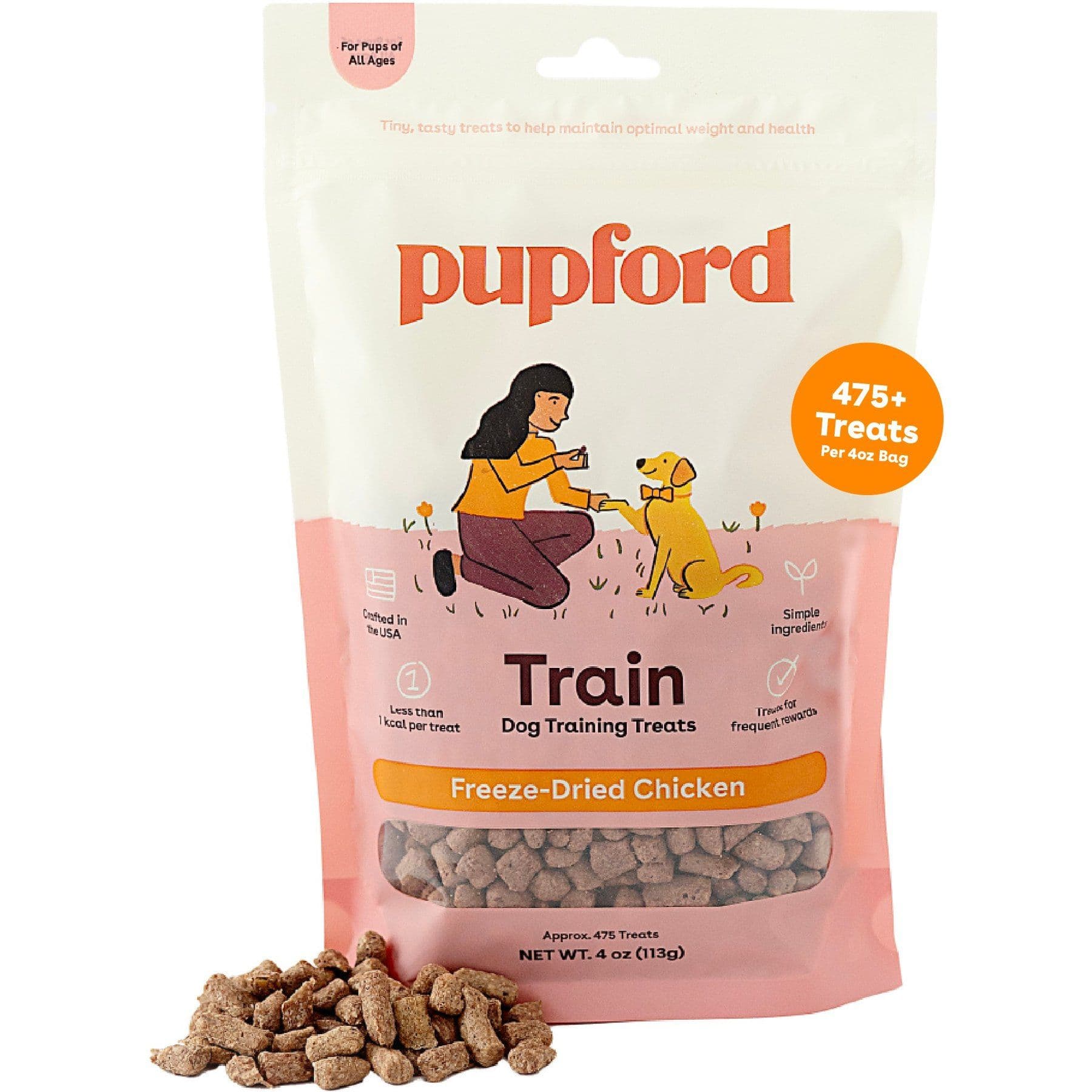
Single-ingredient freeze-dried chicken training treats. After a suspected ingestion, give no food until your vet says so.
Webvet may earn a commission when you click through to Chewy, at no extra cost to you.
So will a chocolate chip cookie kill a dog? It depends on the dog's size and the cookie. In the calculator's model, a 20 lb dog needs about 16 small packaged cookies to reach the 20 milligrams per kilogram line where mild signs can begin, but a very small dog or a puppy can reach serious levels from just a few cookies out of a pack, and a plate of a dozen homemade semisweet cookies can reach dangerous doses in bigger dogs too, so call whatever the count. Our page on how much chocolate can kill a dog explains why published LD50 figures are not a lethal threshold.
My dog ate one chocolate chip: the honest answer
Should you worry if your dog ate one chocolate chip, and is one chip bad enough to hurt? One chip is a very small dose: a measuring cup of semisweet chips holds about 920 milligrams of theobromine and caffeine, and a single chip is a tiny fraction of it. Even a 5 lb dog needs about 0.3 ounce of semisweet chocolate, a little under one tablespoon of chips, to reach the 20 milligrams per kilogram line. Small dogs vary, so call your vet or a poison line anyway. The bigger question is whether it was really one chip or a few, because a dog that finds one will often have found the bag or the cookie plate. Check while you call:
- Look at the bag or measuring cup to see how much is missing.
- Count the cookies left, and check under tables and couches for dropped chips.
- Note the chip type: dark chips carry more theobromine and caffeine than semisweet.
Many one-chip moments start when someone shares a bite of cookie. Keeping a dog treat within reach, such as Pupford freeze-dried chicken training treats, gives everyone something to hand over instead.
A bag of semisweet baking chips is the real danger
If your dog ate chocolate chips straight from the bag, half a bag or a whole bag is a different emergency from a few chips in a cookie. A measuring cup of semisweet chips weighs about 168 grams and holds about 920 milligrams of theobromine and caffeine, as much as about 80 small packaged cookies. Here is how much of a cup reaches the 20, 40 and 60 milligrams per kilogram lines for each dog weight:

- 10 lb dog: less than a tenth of a cup, about 0.2 cup and about 0.3 cup.
- 20 lb dog: about 0.2, 0.4 and 0.6 cup.
- 30 lb dog: about 0.3, 0.6 and 0.9 cup.
- 50 lb dog: about 0.5, 1.0 and 1.5 cups.
- 70 lb dog: about 0.7, 1.4 and 2.1 cups.
- 90 lb dog: about 0.9, 1.8 and 2.7 cups.
Chips are sold by weight, so check the net weight on the bag: a 10 lb dog reaches the seizure line at about 1.8 ounces of semisweet chips and a 30 lb dog at about 5.3. Milk chocolate chips are less toxic per ounce, but some dogs still react, so every chip bag should prompt a call.
An open bag in a low pantry sits at nose height, and a latch such as the Qdos adhesive double door cabinet lock keeps baking supplies shut away between baking days.
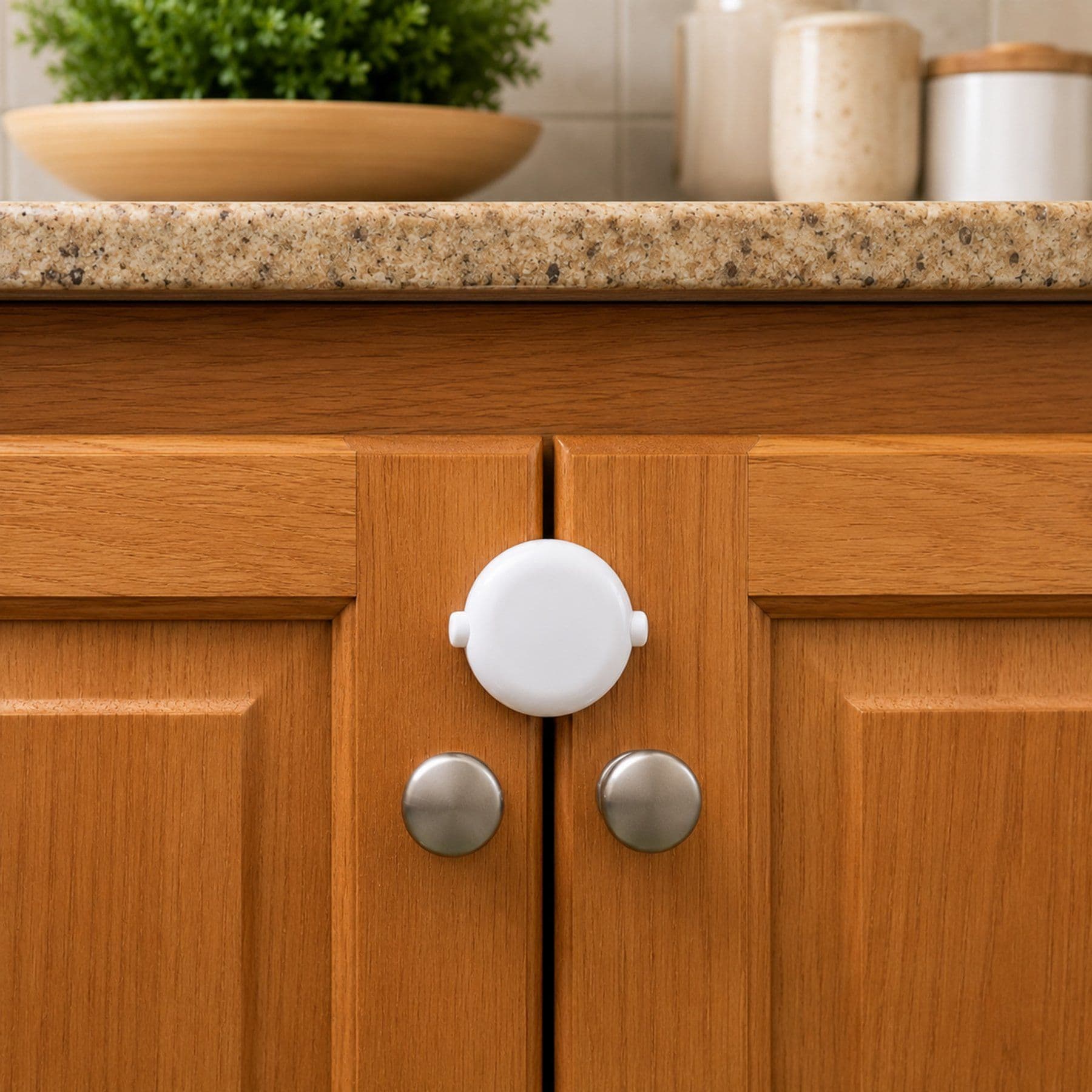
Adhesive double-door cabinet locks, no drilling, so a nose cannot open the low cabinet where baking chocolate lives.
Webvet may earn a commission when you click through to Chewy, at no extra cost to you.
Cookie math: packaged cookies vs tablespoons of chips for a 20 lb dog
For a 20 lb dog, the 20 milligrams per kilogram line arrives at about 16 small packaged cookies or about 3 level tablespoons of semisweet chips. A measuring cup holds 16 tablespoons, so each tablespoon of semisweet chips carries about as much theobromine and caffeine as 5 small packaged cookies.
| Line for a 20 lb dog | Small packaged cookies | Semisweet chips (level tablespoons) | Semisweet chips (ounces) |
|---|---|---|---|
| 20 milligrams per kilogram: mild signs possible | about 16 | about 3 | about 1.2 |
| 40: heart effects possible | about 32 | about 6 | about 2.3 |
| 60: seizures possible | about 47 | about 9.5 | about 3.5 |
Thirty-two packaged cookies is a lot, but the 6 tablespoons of chips that reach the same heart-effect line can vanish from a torn bag or a mixing bowl. So when someone says it was just a cookie, ask which cookie it was and what chips were in it while you call your vet or a poison line.
On baking day, a gate across the kitchen doorway, such as the Cardinal Gates auto-lock pet gate, latches once you swing it closed behind you and keeps your dog away from loaded counters.
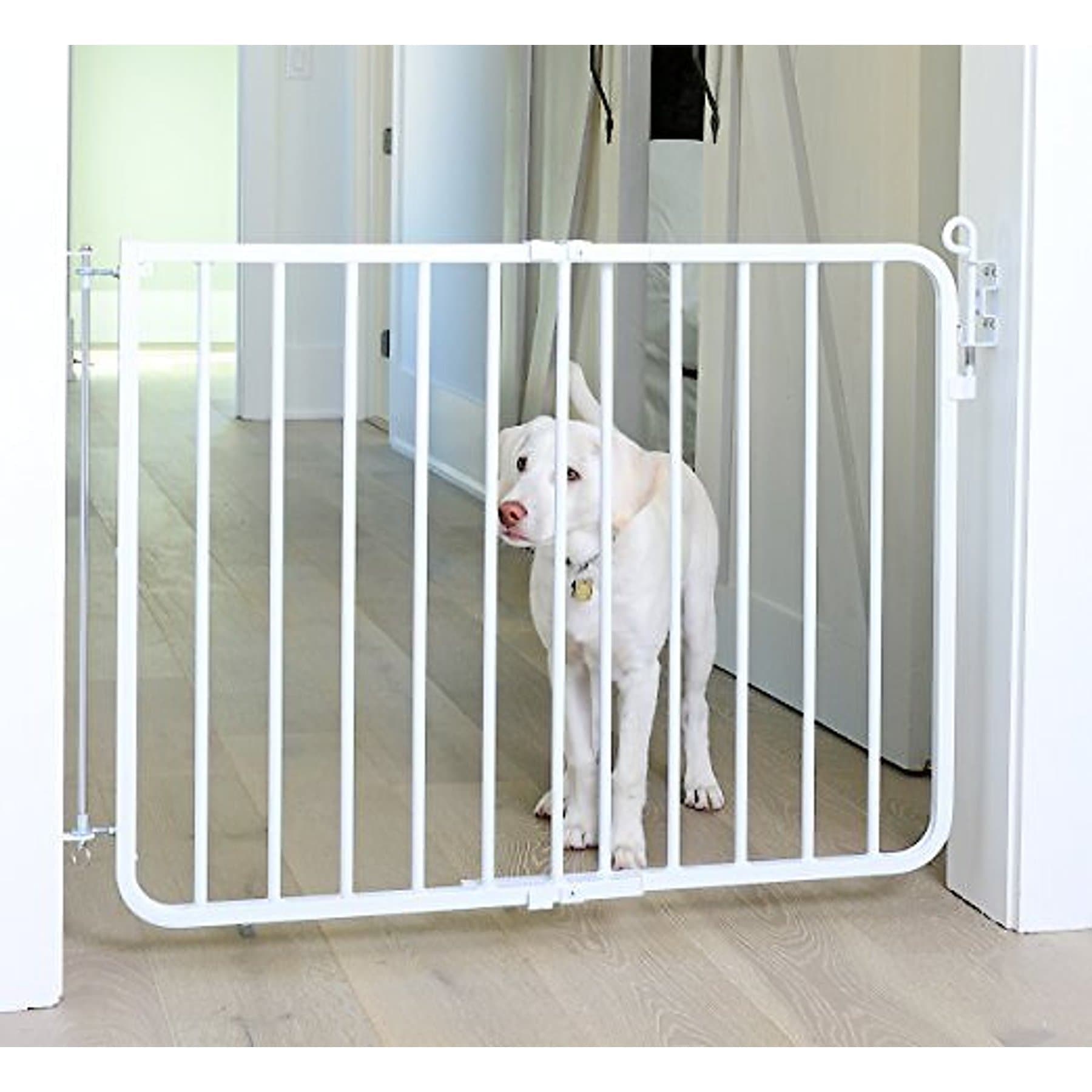
A hardware-mounted gate that latches itself when it swings shut, so the kitchen stays closed after every trip.
Webvet may earn a commission when you click through to Chewy, at no extra cost to you.
Raisins, macadamia nuts, xylitol and raw dough: other cookie hazards
Some cookie add-ins are a separate emergency. Tell your vet about every ingredient:
- Raisins: oatmeal raisin and trail mix cookies can contain raisins, which are toxic to dogs on their own. See our guide to raisins for dogs.
- Macadamia nuts: white chocolate macadamia cookies carry very little theobromine, but the nuts are toxic to dogs. See macadamia nuts for dogs and our page on white chocolate for dogs.
- Xylitol: sugar-free and "keto" cookies may contain xylitol, a serious hazard for dogs that has nothing to do with chocolate. See xylitol and dogs.
- Fat: the Merck Veterinary Manual notes that the high fat content of chocolate products may trigger pancreatitis in susceptible animals.
If your dog ate cookie dough
Raw cookie dough holds the whole batch's chips before it is divided into cookies, so a dog that empties the bowl may have eaten every chip in the recipe at once. Use the recipe's total chips as the amount, and tell your vet the dough was raw.
Banana bread, pancakes and granola bars with chips
Any food studded with chocolate chips, from banana bread to pancakes and granola bars, follows the same chip math: estimate the chips in the slice or portion your dog ate. Bakery chocolate chip muffins and cupcakes can be much bigger and behave more like cake; our page on a dog that ate chocolate cake covers muffins, cupcakes and their paper wrappers.
Signs to watch for after a dog eats chocolate chip cookies
What happens if a dog eats a chocolate chip cookie, or a whole plate of cookies, depends on the dose: bigger doses bring stronger signs. How long after eating chocolate will a dog show symptoms? Signs usually start 2 to 12 hours after eating, according to Cornell University's College of Veterinary Medicine, and the Merck Veterinary Manual describes onset within 6 to 12 hours. The first signs of chocolate poisoning are usually:
- Vomiting or diarrhea.
- Increased thirst.
- Restlessness or panting.
A racing heartbeat, tremors, wobbliness or a seizure means go to an emergency vet now and call ahead. Our guide to what happens when a dog eats chocolate covers the full symptom timeline, and the suspected poisoning checker helps you sort signs while you call.
Can dogs eat chocolate chip cookies?
No. Dogs should not eat chocolate chip cookies, even small packaged ones: every one carries some theobromine and caffeine, and the sugar and fat can upset a dog's stomach. Our guide to why chocolate is bad for dogs explains how theobromine works, and can dogs eat chocolate covers chocolate in general.
Cookies without chocolate are still people food: plain sugar and peanut butter cookies skip the theobromine but stay rich in sugar and fat, and some contain xylitol, raisins or nuts. Our page on peanut butter for dogs explains the xylitol label check, and Oreos and dogs covers chocolate sandwich cookies. For a cookie-style reward, choose a treat from our roundup of healthy dog treats, and see our list of foods toxic to dogs for other kitchen risks.
How to cookie-proof counters and holiday cookie plates
Cookie raids happen when food is left out and no one is watching, especially during the holidays:

- Store chips, cocoa powder and baking chocolate in a latched cabinet or on a high shelf.
- Cool cookies at the back of the counter or on top of the fridge, not at the counter's edge.
- Put holiday cookie plates on high surfaces, and clear the plate left out for Santa before bed.
- Keep wrapped cookie tins and guests' bags off the floor and out from under the tree.
- Use a lidded trash can for wrappers, crumbs and leftover dough.
Cats get into cookie plates too, and any chocolate a cat eats is a reason to call now; our page on what to do when a cat ate chocolate covers cats.
Frequently asked questions
What happens if my dog eats one chocolate chip cookie?
One small packaged chocolate chip cookie is a low dose for most dogs, but a large homemade cookie can carry much more. A 12 gram packaged cookie carries about 11.5 milligrams of theobromine and caffeine, and even a 5 lb dog needs about 4 of them to reach the 20 milligrams per kilogram line, where the Merck Veterinary Manual says mild signs may begin. Stomach upset is still possible below that line, so call your vet or a poison line.
My 60-pound dog accidentally ate a chocolate chip cookie. What should I do?
If your 60-pound dog accidentally ate a chocolate chip cookie, call your vet or a poison line. A 60 lb dog falls between the 50 and 70 lb rows in the weight table above, where it takes about 40 to 55 small packaged cookies, or about 2.9 to 4.1 ounces of semisweet chips, to reach the 20 milligrams per kilogram line. One cookie is a small dose for a dog this size, but let a vet confirm it, especially if it held raisins, macadamia nuts or xylitol.
My dog ate banana bread with chocolate chips. What should I do?
If your dog ate banana bread with chocolate chips, call your vet or a poison line and estimate the chips in the slice or loaf while you talk. The chips are the chocolate risk: semisweet chips carry about 155 milligrams of theobromine and caffeine per ounce, and the share of the loaf your dog ate is the share of the recipe's chips. Also mention nuts, raisins or xylitol, which carry separate risks.
What to do if my dog ate chocolate but seems fine?
Call your vet or a poison line even if your dog seems fine. Signs usually start 2 to 12 hours after eating, so a dog that ate cookies an hour ago may not show them yet; our guide to a dog that ate chocolate but is acting fine explains how long to watch.
How do I flush chocolate out of my dog's system?
You cannot safely flush chocolate out of a dog's system at home, and home remedies can cause harm of their own. Call your vet or a poison line now; our guide to a dog that ate chocolate explains what the clinic can do instead.
How long does chocolate last in a dog's system?
Effects can last up to 72 hours in severe cases, according to the Merck Veterinary Manual, so a dog that raided the cookie plate last night can still be affected today; call your vet even if hours have passed. Our guide to what happens if a dog eats chocolate explains how long it lasts and why.
Sources
- USDA FoodData Central
According to USDA FoodData Central, a small packaged chocolate chip cookie of about 12 grams carries about 11.5 milligrams of theobromine and caffeine combined, while semisweet baking chips carry about 155 milligrams per ounce, so big homemade cookies and an open bag of chips are far more concerning.
- Merck Veterinary Manual
The Merck Veterinary Manual puts the start of mild signs at about 20 milligrams per kilogram of body weight.
- VCA Animal Hospitals
VCA Animal Hospitals notes that the sooner treatment begins, the better the prognosis and the less costly the treatment, one more reason to call as soon as you find the empty plate.
- Cornell University College of Veterinary Medicine
Signs usually start 2 to 12 hours after eating, according to Cornell University's College of Veterinary Medicine, and the Merck Veterinary Manual describes onset within 6 to 12 hours.