How Much Chocolate Can Kill a Dog? Amounts by Weight


Medically reviewed by Dr. Athena Gaffud, DVM · Last reviewed
Quick answer
Yes, chocolate can kill a dog, and how much chocolate can kill a dog depends on the type of chocolate and your dog's weight. According to the Merck Veterinary Manual, the oral LD50 of theobromine and of caffeine, each as a single agent (the dose expected to kill half of dogs), is reportedly 100 to 200 milligrams per kilogram of body weight. That is not a fixed lethal amount of chocolate: seizures can begin from about 60 milligrams per kilogram and heart effects from 40 to 50, well below that range. If your dog ate any chocolate, call your vet or a pet poison line now, before signs start.

- 1Chocolate can kill a dog. Merck reports an oral LD50 of 100 to 200 milligrams per kilogram for theobromine and for caffeine as single agents, but that is not a fixed lethal amount of chocolate: seizures can start from about 60 and heart effects from 40 to 50.
- 2The type of chocolate matters as much as the amount. A 30 lb dog reaches the seizure threshold at about 13 ounces of milk chocolate, but only about 3.3 ounces of 70 to 85% dark chocolate or 2.1 ounces of baker's chocolate.
- 3Size matters too. A 10 lb dog reaches the same threshold at about 4.3 ounces of milk chocolate or 1.1 ounces of 70 to 85% dark chocolate.
- 4No amount of chocolate is recommended for dogs, and outcomes are best when treatment starts early.
- 5After any chocolate, call your vet or a poison line with the wrapper, your dog's weight and the time your dog ate it.
Can chocolate kill a dog?
Yes. It is true that chocolate can kill a dog, and the risk is not a myth. Chocolate contains theobromine and caffeine, two stimulants that act on the heart and nervous system and that dogs clear slowly. How much chocolate is deadly to a dog depends on the type of chocolate and the dog's weight. The Merck Veterinary Manual describes a dose ladder, measured as milligrams of theobromine plus caffeine per kilogram of body weight:

- From about 20 milligrams per kilogram: mild signs may appear, such as vomiting, diarrhea and increased thirst.
- From about 40 to 50 milligrams per kilogram: heart effects, including a racing or irregular heartbeat.
- From about 60 milligrams per kilogram: seizures, which can lead to collapse.
- Reportedly 100 to 200 milligrams per kilogram: the published oral LD50 of theobromine and of caffeine, each tested as a single agent. An LD50 is the dose expected to kill half of the dogs given it.
That LD50 range, reportedly 100 to 200 milligrams per kilogram, is what most people mean when they ask how much chocolate really kills a dog, or how many bars it would take. It is not a safe ceiling, and it does not translate into a fixed lethal amount of chocolate: it was published for each chemical on its own, chocolate delivers both together with fat and sugar, and individual dogs vary, so doses well below that range can be fatal. That is why this page measures every amount, in ounces and standard bars, against the Merck thresholds and stops at the seizure threshold of 60 milligrams per kilogram rather than a lethal figure.
Is your dog going to die after eating chocolate? Whether he or she ate a little or a lot, you cannot tell from the wrapper or from how your dog looks right now, because the outcome depends on the dose and on how quickly treatment starts. Giving dogs chocolate as a treat, or feeding them baked goods that contain it, is never worth the risk. If your dog ate chocolate today, call your vet or a poison line now.
If your dog already ate chocolate
Start the call to your vet or a poison line now, and gather these details while you talk:
- The wrapper or package, so the vet knows the type and size.
- Your dog's weight.
- The time your dog ate it, or your best guess.
Enter the amount in the calculator at the top of this page so you can give the vet a single total for everything your dog ate. Our step-by-step page on what to do when a dog ate chocolate covers the call in detail, and the same steps apply to chocolate ice cream, hot chocolate, chocolate milk and fudge.
How much milk, dark and baker's chocolate it takes, by dog weight
The same chocolate bar can mean a stomach upset for a big dog and an emergency for a small dog or a puppy, because the dose is measured per kilogram of body weight. The examples below compare three chocolate types, milk, dark and baker's chocolate, using the same USDA FoodData Central values and Merck thresholds as the calculator at the top of this page. They are not safe amounts: they show how much it would take to reach the points where Merck says each set of signs can begin, and some dogs react below them.
Compare coverage choices for your pet, then request a quote directly on Lemonade.
- Check a price for your pet
- Review available coverage choices
- See the terms before you decide
Eligibility, waiting periods, limits and exclusions apply.
Webvet may earn a commission when you click through to Lemonade, at no extra cost to you.

Ounce for ounce, milk chocolate carries about 64 milligrams of theobromine and caffeine combined, 70 to 85% dark chocolate about 250 and unsweetened baker's chocolate about 391. Each figure below is the amount that reaches 20, 40 and 60 milligrams per kilogram.
A 10 lb dog
- Milk chocolate: about 1.4, 2.8 and 4.3 ounces. In standard 1.55 oz milk chocolate bars, that is about 0.9, 1.8 and 2.7 bars.
- 70 to 85% dark chocolate: about 0.4, 0.7 and 1.1 ounces.
- Baker's chocolate: about 0.2, 0.5 and 0.7 ounces.
A 50 lb dog
- Milk chocolate: about 7.1, 14 and 21 ounces, or about 4.6, 9.2 and 14 standard bars.
- 70 to 85% dark chocolate: about 1.8, 3.6 and 5.4 ounces.
- Baker's chocolate: about 1.2, 2.3 and 3.5 ounces.
A 70 lb dog
- Milk chocolate: about 10, 20 and 30 ounces, or about 6.4, 13 and 19 standard bars.
- 70 to 85% dark chocolate: about 2.5, 5.1 and 7.6 ounces.
- Baker's chocolate: about 1.6, 3.2 and 4.9 ounces.
So how much chocolate can a 70 pound dog eat? None is recommended. A large dog simply needs more before signs can appear, and about 10 ounces of milk chocolate or 2.5 ounces of 70 to 85% dark chocolate is enough to get there. Size changes everything: a 10 lb dog reaches the seizure threshold at about 2.7 standard milk chocolate bars, while a 70 lb dog gets there at about 19.
A serious exposure can mean a hospital stay, with in-clinic treatment such as decontamination, IV fluids and heart monitoring. Our guide to emergency vet costs explains what drives a bill like that. A new insurance policy covers future accidents and illnesses, not an exposure that has already happened, so if you want a plan in place before the next holiday candy bowl, you can compare coverage in our pet insurance planner and get a personalized Lemonade quote.
Notice how little baker's chocolate it takes: less than an ounce takes a 10 lb dog to the seizure threshold. Baking squares, chips and cocoa powder often sit in a low cabinet a determined dog can nose open, and a latch such as the Qdos adhesive double door cabinet lock keeps those doors shut between baking days.
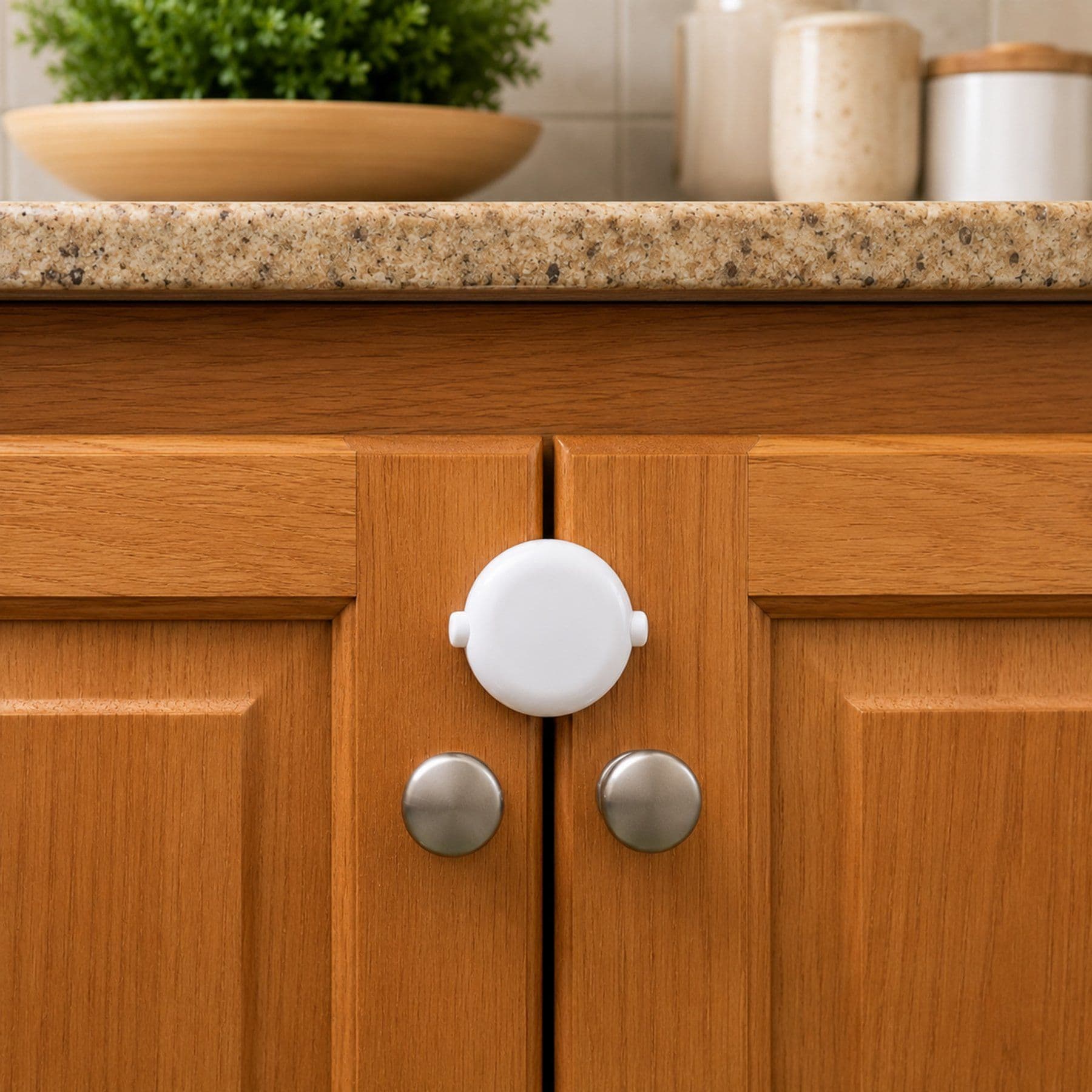
Adhesive double-door cabinet locks, no drilling, so a nose cannot open the low cabinet where baking chocolate lives.
Webvet may earn a commission when you click through to Chewy, at no extra cost to you.
If your dog may have eaten anything close to these amounts, or you are not sure, call your vet or a poison line now with the largest amount that could be missing.
How much chocolate can a dog eat before getting sick? Why the answer is none
People often ask how much chocolate a dog can eat safely, or how much is too much before they die. The honest answer is none: no amount of chocolate is recommended for dogs, even though the amounts above still show where the risk starts. Even a little bit can make some dogs sick, and no number of ounces is safe for every dog, for these reasons:
- The thresholds are where signs can begin, not safe lines. Below 20 milligrams per kilogram, vomiting, diarrhea and thirst are still possible.
- The high fat in chocolate products can trigger pancreatitis in susceptible dogs, separately from the theobromine.
- Chocolate treats often carry extra hazards, such as raisins, macadamia nuts or xylitol (a sweetener found in some sugar-free gum) in sugar-free products.
What about a lick, a few crumbs or a single chocolate chip? One chip is a tiny fraction of a measuring cup of semisweet chips, which holds about 920 milligrams of theobromine and caffeine, so it sits far below the seizure range. Still, one piece rarely means one piece, so check the bag or the cookie plate while you call. Cookies and baking chips are covered on our page for when a dog ate a chocolate chip cookie, and single candy pieces such as one M&M or a Hershey's Kiss on our page about a dog that ate M&M's.
If the urge is to share from your plate, keep a dog treat within reach instead, such as Gaines Family Farmstead sweet potato bones, so the chocolate stays on the counter.

Single-ingredient sweet potato chews to share instead of sweets. After a suspected ingestion, give no food until your vet says so.
Webvet may earn a commission when you click through to Chewy, at no extra cost to you.
Already had some chocolate, small or large? Call your vet or a poison line rather than guessing.
Puppies, senior dogs and dogs with heart disease
Body weight drives the dose, so puppies, toy breeds and other small dogs reach every threshold first. Age and health matter as well, because a vet weighs them when judging the risk. Take extra care with senior dogs, dogs with heart disease and dogs with a history of pancreatitis, the high-risk groups below:

- Puppies and toy breeds: a 5 lb dog reaches the 20 milligrams per kilogram threshold at about half of a standard 1.55 oz milk chocolate bar and the seizure threshold at about 1.4 bars. With 70 to 85% dark chocolate, about half an ounce is enough to reach the seizure threshold.
- Senior dogs: an older dog may have heart, liver or kidney problems, so mention age and any diagnoses on the call; see our guide to senior dog health.
- Dogs with heart disease: theobromine and caffeine stimulate the heart, and Merck lists a fast heart rate, abnormal rhythms and high blood pressure among the effects. A dog with congestive heart failure or another heart condition is already under strain, so tell your vet right away; our guide on why chocolate is bad for dogs explains how these chemicals act.
- Dogs with a history of pancreatitis: the fat in chocolate products may trigger pancreatitis in susceptible animals.
Puppies find dropped candy faster than anyone can pick it up. During holidays and parties, a puppy pen such as the MidWest wire dog exercise pen keeps a young dog in a chocolate-free zone while guests come and go.

A folding wire exercise pen with a step-through door, giving your dog its own space away from the party table.
Webvet may earn a commission when you click through to Chewy, at no extra cost to you.
If one of these dogs eats any chocolate, call your vet or a poison line immediately and mention the condition first.
Chocolate needed to reach the seizure threshold for a 30 lb dog
A 30 lb dog is a useful middle point, so the table below holds the same dog's weight steady and compares chocolate types across the 20, 40 and 60 milligrams per kilogram thresholds. The last column is the seizure threshold, the level the Merck Veterinary Manual links to seizures and a dose that can be fatal. The gap is stark: this dog reaches it at about 13 ounces of milk chocolate, 5.3 ounces of semi-sweet chocolate, 2.1 ounces of baker's chocolate and about 1.3 ounces of natural cocoa powder. Cornell ranks cocoa powder as the most dangerous form of chocolate for dogs.

| Chocolate (unit), 30 lb dog | Reaches 20 milligrams per kilogram | Reaches 40 (heart effects) | Reaches 60 (seizures) |
|---|---|---|---|
| Milk chocolate (ounces) | 4.3 | 8.5 | 13 |
| Milk chocolate bars, 1.55 oz (bars) | 2.7 | 5.5 | 8.2 |
| Dark, % unknown: calculator assumes 70–85%, not a maximum (ounces) | 1.1 | 2.2 | 3.3 |
| Semisweet chocolate (ounces) | 1.8 | 3.5 | 5.3 |
| Semisweet chips (measuring cups) | 0.3 | 0.6 | 0.9 |
| Dark 45–59% (ounces) | 1.8 | 3.6 | 5.4 |
| Dark 60–69% (ounces) | 1.3 | 2.7 | 4.0 |
| Dark 70–85% (ounces) | 1.1 | 2.2 | 3.3 |
| Cocoa bean mulch (ounces) | 1.1 | 2.1 | 3.2 |
| Baker's chocolate, unsweetened (ounces) | 0.7 | 1.4 | 2.1 |
| Cocoa powder, natural (ounces) | 0.4 | 0.8 | 1.3 |
| Dutch-process cocoa powder (ounces) | 0.4 | 0.7 | 1.1 |
| Hot cocoa mix (packets) | 2.9 | 5.7 | 8.6 |
| Brownies (large squares) | 6.1 | 12 | 18 |
| Frosted chocolate cake (slices, 1/8 of an 18 oz cake) | 1.9 | 3.8 | 5.8 |
| Small packaged chocolate chip cookies (about 12 g each) | 24 | 47 | 71 |
How much dark chocolate is toxic to a dog, or will cause seizures, depends on the cacao percentage printed on the label:
- Dark chocolate at 45 to 59% cacao takes a 30 lb dog to the seizure threshold at about 5.4 ounces.
- Dark chocolate at 60 to 69% gets there at about 4.0 ounces.
- Dark chocolate at 70 to 85% gets there at about 3.3 ounces, and mild signs can begin from about 1.1 ounces.
- Cocoa bean garden mulch sits in the same range as strong dark chocolate, at about 3.2 ounces.
Baked goods dilute the chocolate, which is why the cookie, brownie and cake rows need many pieces to reach the same dose, but dogs that raid a plate or a pan often eat that many. White chocolate is missing from the table because USDA lists no theobromine or caffeine in it, yet its fat and sugar can still be bad for dogs; our page on white chocolate for dogs covers it. Chocolate-covered raisins add a second hazard, because raisins can hurt dogs on their own. Whatever the type, call your vet or a poison line with the wrapper in hand.
What changes whether a dog survives chocolate poisoning
A dog's chances of surviving chocolate depend on several factors, not on one number: the dose, set by the type of chocolate, the amount and your dog's weight; the time to treatment; the half-life that keeps theobromine in the body; your dog's age and health; and any wrappers or add-ins. Vets weigh each one when deciding how to treat:
- Dose: the type of chocolate, the amount and your dog's weight combine into milligrams per kilogram.
- Time to treatment: calling early gives your vet the most options, and early treatment works best.
- How long the chemicals linger: Merck gives the half-life of theobromine in dogs as about 17.5 hours and caffeine as about 4.5 hours.
- Wrappers and add-ins: foil, raisins, nuts and xylitol add risks of their own.
Signs usually start 2 to 12 hours after eating, according to Cornell University's College of Veterinary Medicine, and the Merck Veterinary Manual describes onset within 6 to 12 hours. Our guide to what happens if a dog eats chocolate follows that timeline hour by hour.
Treatment is supportive, and a dog that reaches the vet before signs begin has the most options, so call your vet or a poison line fast.
Frequently asked questions
Will my dog be ok after eating chocolate?
It depends on the dose and how quickly care starts, and you cannot judge that from how your dog looks right now, so call your vet or a poison line with the wrapper. Our guide to a dog that ate chocolate covers the next steps.
How much chocolate will make a dog sick?
Mild signs such as vomiting, diarrhea and increased thirst may begin at about 20 milligrams of theobromine and caffeine per kilogram of body weight, according to Merck, and some dogs react to less. There is no safe amount to count on: a small dog can reach that level from a couple of squares of dark chocolate. How much it takes depends on the type of chocolate and your dog's weight, which is why the table above gives the ounces for each line, from mild signs to seizures. If your dog ate any chocolate, call your vet or a pet poison line now and tell them the type and amount.
Will 200g of chocolate kill a dog?
Whether 200g of chocolate will kill a dog depends on the type of chocolate and your dog's size: it can, so call your vet or a poison line now. Using the calculator's USDA values, 200 grams of milk chocolate gives a 20 lb dog about 50 milligrams of theobromine and caffeine per kilogram, in the Merck range for heart effects, and gives a 10 lb dog about 99, well past the seizure threshold of 60. The same 200 grams of 70–85% dark chocolate gives a 50 lb dog about 78 milligrams per kilogram and an 80 lb dog about 49. These figures are estimates, not safe or lethal limits, because sensitivity varies from dog to dog. Enter the exact amount in the calculator at the top of this page and tell your vet the result.
Will my dog be okay if he ate one chocolate chip?
One chip is far below the doses the Merck Veterinary Manual links to seizures, but one chip rarely means one chip, so check the bag and the cookie plate while you call your vet or a poison line. Our guide to a dog that ate chocolate chip cookies covers chips by the handful.
What is the survival rate of a dog eating chocolate?
There is no single survival rate for a dog eating chocolate, because the outcome depends on how much theobromine and caffeine a dog took in for its weight and how fast treatment starts. The Merck Veterinary Manual describes mild signs from about 20 milligrams per kilogram, heart effects from 40 to 50 and seizures from 60. Its reported LD50 of 100 to 200, measured for theobromine and caffeine as single agents, is not a fixed lethal line, and doses below it can be fatal. Early treatment works best, so the most useful thing you can do for your dog is to call your vet or a poison line now.
Is it possible to save a dog after eating chocolate?
Yes, it is possible to save a dog after eating chocolate. Chocolate poisoning is treatable, and care works best when it starts early, ideally before signs appear. Treatment is supportive and can include decontamination, IV fluids, heart monitoring and medicines for tremors and heart rhythm problems. Theobromine has a half-life of about 17.5 hours in dogs, according to Merck, so severe cases can need monitoring for up to 72 hours. Call your vet or a poison line as soon as you know.
Which type of chocolate is worst for dogs?
Cocoa powder and unsweetened baker's chocolate are the worst for dogs, followed by high-cacao dark chocolate, semisweet chocolate and milk chocolate. Based on USDA FoodData Central values, one ounce of Dutch-process cocoa powder carries about 768 milligrams of theobromine and caffeine, baker's chocolate about 391, 70 to 85% dark chocolate about 250 and milk chocolate about 64. White chocolate has a negligible amount but still brings fat and sugar. Our chocolate toxicity calculator guide explains how much chocolate is toxic to dogs of every size. Whatever the type, call your vet or a poison line.
Sources
- Merck Veterinary Manual
According to the Merck Veterinary Manual, the oral LD50 of theobromine and of caffeine, each as a single agent (the dose expected to kill half of dogs), is reportedly 100 to 200 milligrams per kilogram of body weight. That is not a fixed lethal amount of chocolate: seizures can begin from about 60 milligrams per kilogram and heart effects from 40 to 50, well below that range.
- USDA FoodData Central
The examples below use the same USDA FoodData Central values and Merck thresholds as the calculator at the top of this page.
- Cornell University College of Veterinary Medicine
Signs usually start 2 to 12 hours after eating, according to Cornell University's College of Veterinary Medicine, and the Merck Veterinary Manual describes onset within 6 to 12 hours.