Dog Ate Chocolate? What to Do Right Now, Step by Step


Medically reviewed by Dr. Athena Gaffud, DVM · Last reviewed
Quick answer
If your dog ate chocolate, the danger depends on the dose: how much theobromine and caffeine your dog swallowed compared with its body weight. According to the Merck Veterinary Manual, mild signs such as vomiting and diarrhea can appear at about 20 milligrams per kilogram of body weight, heart effects at 40 to 50, and seizures at 60 or more. Dark chocolate, baking chocolate and cocoa powder reach those levels with far less than milk chocolate. Call your veterinarian, an emergency vet or a pet poison line now, even if your dog seems normal.
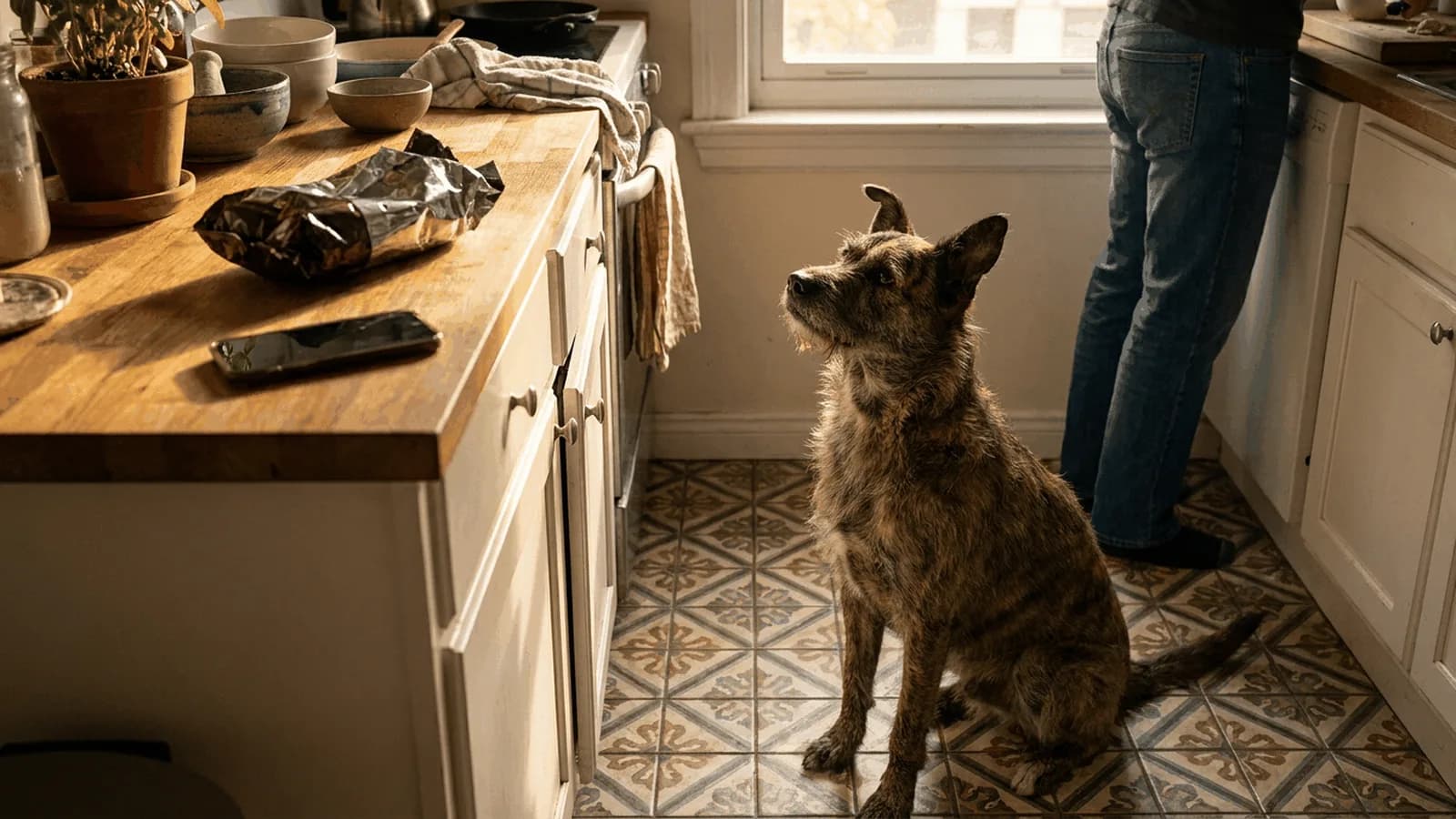
- 1Call your vet, an emergency vet or a poison line now, whatever the amount and however your dog is acting.
- 2Have the wrapper, your dog's weight, the time and the largest amount that could be missing.
- 3Do not treat your dog at home. The vet decides whether treatment is needed.
- 4Darker is worse, and puppies and small dogs reach dangerous doses with much less.
What should I do if my dog ate chocolate?
Speed matters more than precision. If your dog just ate chocolate, or you watch it happen, work through these steps in order and start the phone call as early as you can.
- Move your dog away from the chocolate. Put your dog in another room or on a leash. Pick up every piece, crumb and wrapper you can find. Keep the packaging.
- Call for advice now. Call your regular vet if they are open. After hours, call the nearest emergency vet or a poison line: Pet Poison Helpline at 855-764-7661 or ASPCA Animal Poison Control at 888-426-4435. Both are open 24/7, and consultation fees may apply. Put the phone on speaker so your hands are free to find the wrapper.
- Describe the exposure. Enter your dog's weight and the amount in the calculator at the top of this page so you can read the numbers out on the call. If you are not sure how much is missing, count the largest amount that could be missing.
- Do not treat your dog yourself. Do not induce vomiting at home or give any home remedy; leave that decision to your veterinarian. Hold meals and treats until you have spoken with someone, because food does not help dogs that eat chocolate.
- Follow the instructions you get. That may mean driving to a clinic now or monitoring at home with a clear list of signs. If you are told to come in, call ahead so the team is ready.
Think your dog might have eaten chocolate but do not know for sure? You can often tell: look for torn wrappers or wrapped pieces chewed open, chocolate on the muzzle or paws, a chocolate smell on the breath, or brown material in vomit. If you suspect your dog accidentally ate even one piece, treat it as a real exposure and make the call, even if you are only worried. If a cat may have eaten some too, read what to do if your cat ate chocolate; this calculator has no validated cat thresholds, so any amount is a reason to call.
What to have ready when you call
The person on the phone judges the risk from a handful of facts. Having them ready shortens the call and gets your dog a clearer answer. Gather these while you dial, or ask someone else to:

- The wrapper or package. It shows the type, the cacao percentage and the size. For baked goods, have the box or the recipe.
- The amount that could be missing. Count wrappers, compare what is left with the net weight, and report the worst case.
- Your dog's weight. A recent vet record beats a guess; a bathroom scale works too.
- The time. When your dog ate the chocolate, or the earliest time it could have happened.
- Age, health and medicines. Heart disease, seizures, past pancreatitis and current medications all change the advice.
- Signs so far. Vomiting, restlessness, panting, shaking or a racing heart, and when each started.
- Anything mixed in. Raisins, nuts, coffee beans, sugar substitutes, cannabis or mushrooms change the plan.
How to read the wrapper for your vet
Most of what a vet needs is printed on the package. Read these details out while you are on the call, or hand the wrapper to someone else:
- Cacao percentage. Dark bars often print it on the front; a higher number means more cocoa solids and more theobromine.
- "Unsweetened" or "baking." These mark baking chocolate, far stronger than candy chocolate.
- "Processed with alkali" or "Dutch-process" on cocoa powder. In USDA data, this cocoa carries the most theobromine and caffeine of any type in the calculator.
- Net weight and piece count. These turn "about half the bag" into ounces.
- Ingredients. Scan for raisins, macadamia nuts, coffee and sugar substitutes such as xylitol (also found in some sugar-free gum).
Holiday and branded candy, such as fun-size bars, Kisses, truffles, Easter eggs and chocolate coins, lists a serving weight on the bag that turns a pile of wrappers into ounces. Our guide to a dog that ate M&M's covers candy by the piece, including peanut butter cups.
Those extras carry their own risks. Chocolate-covered raisins such as Raisinets, or trail mix with raisins, bring raisins, which can injure a dog's kidneys. Sugar-free chocolate can contain xylitol, which can cause dangerously low blood sugar, and macadamia nuts are a problem on their own. Chocolate-covered almonds, peanuts and cherries, and fudge- or white-coated pretzels, add fat and sugar, and chocolate-covered espresso or coffee beans add caffeine. If it was a cannabis (THC or weed) edible or a mushroom chocolate bar, say so plainly. Vets ask so they can treat your dog, not to judge.
My dog ate chocolate but is acting fine
If your dog ate chocolate but seems fine, do not take that as the all-clear. How long does it take for a dog to get sick after eating chocolate, and how soon will signs show? Signs of chocolate toxicity usually start 2 to 12 hours after eating, according to Cornell University's College of Veterinary Medicine, and the Merck Veterinary Manual describes onset within 6 to 12 hours. Chocolate also takes a long time to get out of a dog's system: Merck gives theobromine's half-life in dogs as about 17.5 hours. Signs can last 12 to 36 hours, and up to 72 hours in severe cases, so watch your dog for as long as your vet advises.
- The time to worry, and call, is now. Calling before signs start gives your vet the most options.
- Vomiting is not proof the chocolate is gone. If your dog threw up or keeps throwing up, some chocolate may already be absorbed, so call.
- No signs yet is not proof your dog is safe. If your dog ate chocolate yesterday, or two days ago, and nothing happened, call and let a vet decide. A dog that turns hyper or restless, or starts drinking lots of water, is showing early signs, not getting better.
- A call does not commit you to a clinic visit. For a low dose in a large dog, the advice may be to monitor at home. That decision belongs to a vet who has your numbers.
Puppies and small dogs
Puppy ate chocolate? If your puppy has eaten chocolate, or you catch it eating some, call now, even after a little bit or a lick. The dose is measured per kilogram of body weight, so the same piece is a much bigger dose for a small body. A 5-pound puppy reaches the 20 milligrams per kilogram mark at about half of a standard milk chocolate bar and the 60 milligrams per kilogram seizure range at about 1.4 bars. With baker's chocolate it can reach the seizure range with about 0.3 ounce, and with cocoa powder at about 0.2 ounce.

On the call, say how old your puppy is and give its current weight. Puppies grow fast, so last month's weight can be well off, and for a small dog even one pound changes the dose. Large dogs need the same call. Also mention if your dog is diabetic, pregnant or nursing.
Puppies find chocolate at floor level: dropped candy, handbags and grocery bags. A playpen such as the IRIS Exercise Dog Playpen with Door gives a puppy or small dog a safe zone while you cook or host guests.

A four-panel plastic playpen with a door for a small dog or puppy. Check the footprint before baking day.
Webvet may earn a commission when you click through to Chewy, at no extra cost to you.
Why dark chocolate, baking chocolate and cocoa powder are worse
Theobromine and caffeine are concentrated in the cocoa solids, so the more cocoa a product contains, the more dangerous each bite. Cornell ranks toxicity potential highest in cocoa powder, then unsweetened baker's chocolate, semisweet and sweet dark, then milk chocolate. Per ounce, USDA FoodData Central values for combined theobromine and caffeine run about:

- White chocolate: about 0 milligrams, because it has no cocoa solids; the fat and sugar are the problem, as our guide to white chocolate for dogs explains.
- Milk chocolate: about 64 milligrams, the chocolate in most candy bars and kisses.
- Dark chocolate with 45 to 59 percent cacao: about 152 milligrams.
- Semisweet baking chips: about 155 milligrams.
- Dark chocolate with 60 to 69 percent cacao: about 204 milligrams.
- Dark chocolate with 70 to 85 percent cacao: about 250 milligrams.
- Unsweetened baker's chocolate: about 391 milligrams.
- Natural cocoa powder: about 649 milligrams.
- Dutch-process cocoa powder: about 768 milligrams.
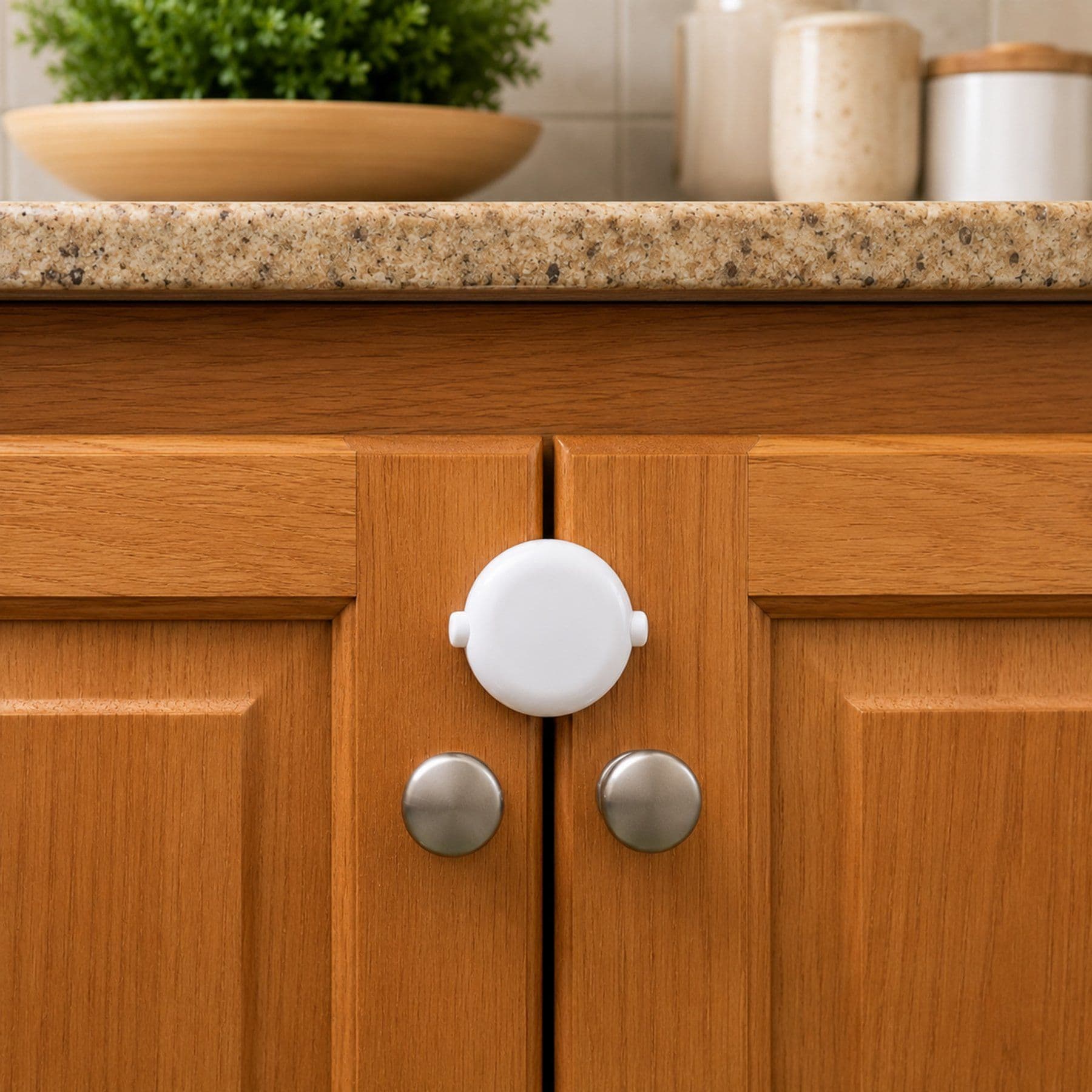
Adhesive double-door cabinet locks, no drilling, so a nose cannot open the low cabinet where baking chocolate lives.
Webvet may earn a commission when you click through to Chewy, at no extra cost to you.
No cacao percentage on a dark chocolate label? The calculator's Dark, % unknown option assumes 70 to 85 percent dark. That is not a maximum: higher-cacao bars, baking chocolate and cocoa carry more. If you can find the product or its percentage, use that instead, and tell your vet the percentage is unknown.
Dog ate cocoa powder or hot cocoa mix
Can dogs eat cocoa powder? No. If your dog ate cocoa powder, cacao powder or even one raw cacao nib, call now, even if it was only a teaspoon. How much cocoa is toxic to a dog depends on its weight, and the amounts are small: natural, unsweetened cocoa powder carries about 649 milligrams of theobromine and caffeine per ounce, and Dutch-process cocoa (processed with alkali) about 768. A 10-pound dog reaches the 20 milligrams per kilogram mark at about a tenth of an ounce of cocoa powder and the 60 milligrams per kilogram seizure range at about 0.4 ounce. Hot cocoa mix is weaker, but one packet still holds about 95.5 milligrams in USDA values, enough to bring a 10-pound dog to about the 20 mark. Branded mixes such as Swiss Miss vary and a hot chocolate bomb adds a shell, so keep the label.
Cocoa powder and baking squares usually sit in a low pantry cupboard, which a determined dog can nose open. An adhesive Qdos double door cabinet lock holds double doors shut without drilling, so the baking shelf stays closed between holiday baking sessions.

A tall walk-through gate with a small pet door. Measure the doorway, then close off the kitchen while baked goods cool.
Webvet may earn a commission when you click through to Chewy, at no extra cost to you.
How the types compare for a 20-pound dog
Ounce for ounce, 70 to 85 percent dark chocolate carries almost four times the theobromine and caffeine of milk chocolate, baker's chocolate about six times, and cocoa powder about ten times. If your dog just ate dark chocolate, whether a square, half a bar, a whole block or a lot more, the cacao percentage is the most useful number you can give the vet. No type is safe for dogs to eat; our guide to can dogs eat chocolate covers that general question. The table shows about how many ounces of each type it takes for a 20-pound dog to reach each dose band, using USDA FoodData Central values and the Merck Veterinary Manual bands.
| Chocolate type (20-pound dog) | Ounces to reach 20 | Ounces to reach 40 | Ounces to reach 60 |
|---|---|---|---|
| Milk chocolate | 2.8 | 5.7 | 8.5 |
| Semisweet chips | 1.2 | 2.3 | 3.5 |
| Dark, 60 to 69 percent | 0.9 | 1.8 | 2.7 |
| Dark, 70 to 85 percent | 0.7 | 1.5 | 2.2 |
| Baker's chocolate | 0.5 | 0.9 | 1.4 |
| Cocoa powder | 0.3 | 0.6 | 0.8 |
| Dutch-process cocoa | 0.2 | 0.5 | 0.7 |
How to keep chocolate away from your dog
Dogs find chocolate where people leave it: gift boxes, candy bowls, handbags and open pantry shelves. A few habits cut the risk:

- Store chocolate, cocoa and baking chips in a closed cabinet or on a high shelf, never on the counter.
- Keep handbags, backpacks, coats and wrapped gifts off the floor; dogs can smell chocolate through wrapping paper.
- Ask guests not to share food with your dog, and move candy bowls up high during parties.
- Check the yard. Cocoa bean mulch carries about 255 milligrams of theobromine and caffeine per ounce, per the Merck Veterinary Manual, about as much as strong dark chocolate, so keep dogs from eating it.
A gate across the kitchen doorway is one of the simplest fixes on baking days. The Carlson Pet Products Extra Tall Walk-Thru Gate lets people walk through while the dog stays out; keep its small pet door closed if your dog could fit through it.
If you want your dog included when the treats come out, hand guests a pouch of dog treats such as Zuke's Mini Naturals. For more ideas, see our tips to dog-proof your home and our list of foods that are toxic to dogs.
Chocolate bars, ice cream and other desserts
Candy bars and desserts carry risks beyond the chocolate itself, from wrappers to fat to sugar substitutes.
Compare coverage choices for your pet, then request a quote directly on Lemonade.
- Check a price for your pet
- Review available coverage choices
- See the terms before you decide
Eligibility, waiting periods, limits and exclusions apply.
Webvet may earn a commission when you click through to Lemonade, at no extra cost to you.
Dog ate a chocolate bar
If your dog ate a whole chocolate bar, an entire bag, lots of chocolate or a bunch of wrapped pieces, find the wrapper and report the type and the size. A standard 1.55-ounce milk chocolate bar holds about 99 milligrams of theobromine and caffeine, so one bar puts a 10-pound dog just past the 20 milligrams per kilogram mark; a dark or semi-sweet bar of the same size carries several times as much. For a half-eaten bar, compare what is left with the net weight and report the worst case. Foil, tin foil and plastic wrappers, including the foil on chocolate coins, can also cause a blockage, so tell the vet if any wrapper is missing. For fun-size candy, M&M's and peanut butter cups, see our guide to a dog that ate M&M's.
Chocolate ice cream, pudding and other desserts
If your dog just ate chocolate ice cream, whether a spoonful, a bowl or a chocolate milkshake, call your vet. Can dogs eat chocolate ice cream? No. It is weaker than a chocolate bar but still contains theobromine: one measuring cup holds about 85.8 milligrams of theobromine and caffeine, close to a whole milk chocolate bar, and a 5-pound dog reaches the 20 milligrams per kilogram mark at about half a cup. A 4-ounce chocolate pudding cup holds about 77.8 milligrams, and a 2-tablespoon serving of chocolate syrup about 76.4. The Merck Veterinary Manual notes that the high fat in chocolate products may trigger pancreatitis in susceptible animals, and sugar-free desserts may contain xylitol. For baked goods, see our guides to a dog that ate chocolate cake, brownies or chocolate chip cookies.
Signs to watch for while you wait
Chocolate poisoning tends to build in steps as the dose rises: vomiting, diarrhea, thirst and restlessness first, then panting, a fast heart rate and tremors, and at the highest doses seizures and collapse. Our guide to what happens when a dog eats chocolate walks through each stage and the hour-by-hour timeline, and the suspected poisoning symptom guide helps you describe what you see. Tremors, a seizure or collapse mean go now.

How your vet judges the dose
Vets do not judge a chocolate exposure by the number of squares. How much chocolate will harm a dog, and how much is toxic, comes down to the dose: the milligrams of theobromine and caffeine eaten, divided by your dog's weight in kilograms. The Merck Veterinary Manual ties that dose to the effects that can occur, and the calculator at the top of this page places your numbers on the same bands. Whatever the band, call your vet:
- Below 20 milligrams per kilogram: a lower dose, but still call your vet. Stomach upset is still possible.
- 20 to 40 milligrams per kilogram: mild to moderate poisoning can occur. Call now, because early treatment works best.
- 40 to 60 milligrams per kilogram: serious, with heart effects possible. Call a poison line or emergency vet right now.
- 60 milligrams per kilogram and above: an emergency. Seizures are possible, and this dose can be fatal. Go to the nearest emergency vet and call ahead on the way.
Here is how that plays out if your dog ate milk chocolate, such as a Dairy Milk or similar candy bar. A standard 1.55-ounce milk chocolate bar holds about 99 milligrams of theobromine and caffeine, based on USDA FoodData Central values, so one bar gives a 20-pound dog about 11 milligrams per kilogram, in the lowest band. The same dog reaches the 20 milligrams per kilogram mark at about 2.8 ounces of milk chocolate; the 20-pound table above covers the other types.
Why some dogs eat chocolate and never get sick
Why did a dog survive after eating a whole bar with no signs? Usually because of dose. A 70-pound dog needs about 6.4 standard milk chocolate bars to reach 20 milligrams per kilogram, while a 5-pound dog gets there with about half of one. Individual dogs also vary, and some get sick below these thresholds, so another dog's experience tells you nothing about yours. For the full method, see the chocolate toxicity calculator guide.
When chocolate becomes life-threatening
Can a dog survive eating chocolate? Many dogs do with prompt care, but chocolate can be fatal. The Merck Veterinary Manual places seizures at 60 milligrams per kilogram or more, and individual dogs vary, so there is no fixed lethal amount to measure your dog against. Our guide to how much chocolate can kill a dog explains what the published figures do and do not mean, by weight and type.
What happens at the vet and what it can cost
How chocolate toxicity is treated depends on the dose, the time since eating and any signs, and vets treat each dog after an exam. The Merck Veterinary Manual describes treatment as supportive, aimed at calming the nervous system and controlling heart rhythm problems. In general terms, care can include:
- An exam and history. The vet checks heart rate and rhythm, temperature and behavior, and uses your wrapper details to estimate the dose.
- Decontamination. If your dog ate recently, the vet may empty the stomach in the clinic and limit how much chocolate is absorbed.
- IV fluids to support circulation and help the body clear the chemicals.
- Heart monitoring and medicines for a racing or irregular heartbeat, tremors or seizures.
- A hospital stay until signs settle; severe cases can need monitoring for a day or more.
What do vets give dogs that eat chocolate, and why not home remedies? Vets choose treatment after examining your dog, in the clinic, where the heart can be watched. Online home remedies for a dog that ate chocolate, such as hydrogen peroxide, salt or activated charcoal, are not first aid, not a cure and not a safe remedy. Making a dog throw up at home can backfire: VCA Animal Hospitals notes that aspiration pneumonia from vomiting worsens the outlook.
The bill follows the same path: a possible poison line fee, then decontamination, IV fluids, heart monitoring and an overnight stay if needed. Our emergency vet cost guide breaks down typical charges, and it is reasonable to ask the clinic for an estimate before treatment starts. VCA also notes that the sooner treatment begins, the better the outlook and the less costly the treatment.
If your dog is insured, keep the policy details handy for the clinic. If not, a policy bought today will not cover chocolate already eaten, but it can cover future accidents and illness; the pet insurance planner builds a coverage checklist and links to Lemonade for a personalized quote.
Why chocolate is toxic to dogs
Chocolate contains two stimulants, theobromine and caffeine, and dogs clear theobromine slowly, so it keeps acting on the heart and nervous system for hours. That is the short reason dogs cannot eat chocolate safely. Our explainer on why chocolate is bad for dogs covers how these chemicals act on the body and why people do not face the same risk.
Frequently asked questions
Will my dog be ok after eating chocolate?
Whether your dog will be OK after eating chocolate depends on the dose, and only a vet can judge that for your dog. Many dogs recover from chocolate poisoning with prompt veterinary care, especially when treatment starts before signs appear. The outlook depends on the chocolate type, the amount, your dog's weight and health, and how quickly care begins. Call your vet or a poison line now with the wrapper and your dog's weight.
How to flush chocolate out of a dog's system?
There is no safe way to flush chocolate out of a dog's system at home, and nothing you can give your dog after it ate chocolate will neutralize theobromine. Give no food, milk or remedies found online until you have spoken with a vet or a poison line. Your dog should have fresh water available as usual, but do not force it to drink: water is not a treatment. Increased thirst and urination can be early signs, so mention them on the call. If decontamination is needed, your vet does it in the clinic, along with IV fluids that help the body clear the chemicals.
Can one lick of chocolate hurt a dog?
One lick can hurt a dog, depending on what was licked and how big your dog is. A lick of chocolate ice cream or pudding carries far less theobromine than a lick of cocoa powder or baking chocolate, and a 5-pound dog is far more sensitive than a 70-pound dog. The same goes if your dog ate a little bit, a tiny or small piece, or just a few crumbs. Enter your best estimate in the calculator at the top of this page, then call your vet or a poison line.
How much 70% dark chocolate can a dog eat?
No amount of 70% dark chocolate is safe for a dog to eat. It carries about 250 milligrams of theobromine and caffeine per ounce, based on USDA values, so a 20-pound dog reaches the 20 milligrams per kilogram mark at about 0.7 ounce and the 60 milligrams per kilogram seizure range at about 2.2 ounces; a 50-pound dog reaches those marks at about 1.8 and 5.4 ounces. Some dogs get sick below these amounts, so call your vet or a poison line after any dark chocolate.
Sources
- Merck Veterinary Manual
According to the Merck Veterinary Manual, mild signs such as vomiting and diarrhea can appear at about 20 milligrams per kilogram of body weight, heart effects at 40 to 50, and seizures at 60 or more.
- Cornell University College of Veterinary Medicine
Signs usually start 2 to 12 hours after eating, according to Cornell University's College of Veterinary Medicine, and the Merck Veterinary Manual describes onset within 6 to 12 hours.
- USDA FoodData Central
A standard 1.55-ounce milk chocolate bar holds about 99 milligrams of theobromine and caffeine, based on USDA FoodData Central values.
- VCA Animal Hospitals
Timing matters for both your dog and the bill: VCA Animal Hospitals notes that the sooner treatment begins, the better the outlook and the less costly the treatment.