Dog Ate M&M's or Halloween Candy? What to Do by Weight


Medically reviewed by Dr. Athena Gaffud, DVM · Last reviewed
Quick answer
If your dog ate M&Ms, the risk depends on how many bags, your dog's weight and what else came out of the candy bowl. According to USDA FoodData Central, a standard 1.69 ounce bag of milk chocolate M&M's carries about 75 milligrams of theobromine and caffeine combined, and the Merck Veterinary Manual puts the start of mild signs at about 20 milligrams per kilogram of body weight, so one bag sits below that line for dogs of about 10 lb and up, while a raided Halloween stash adds up fast. Call your vet or a pet poison line now, whatever the amount, and gather the wrappers while you talk.
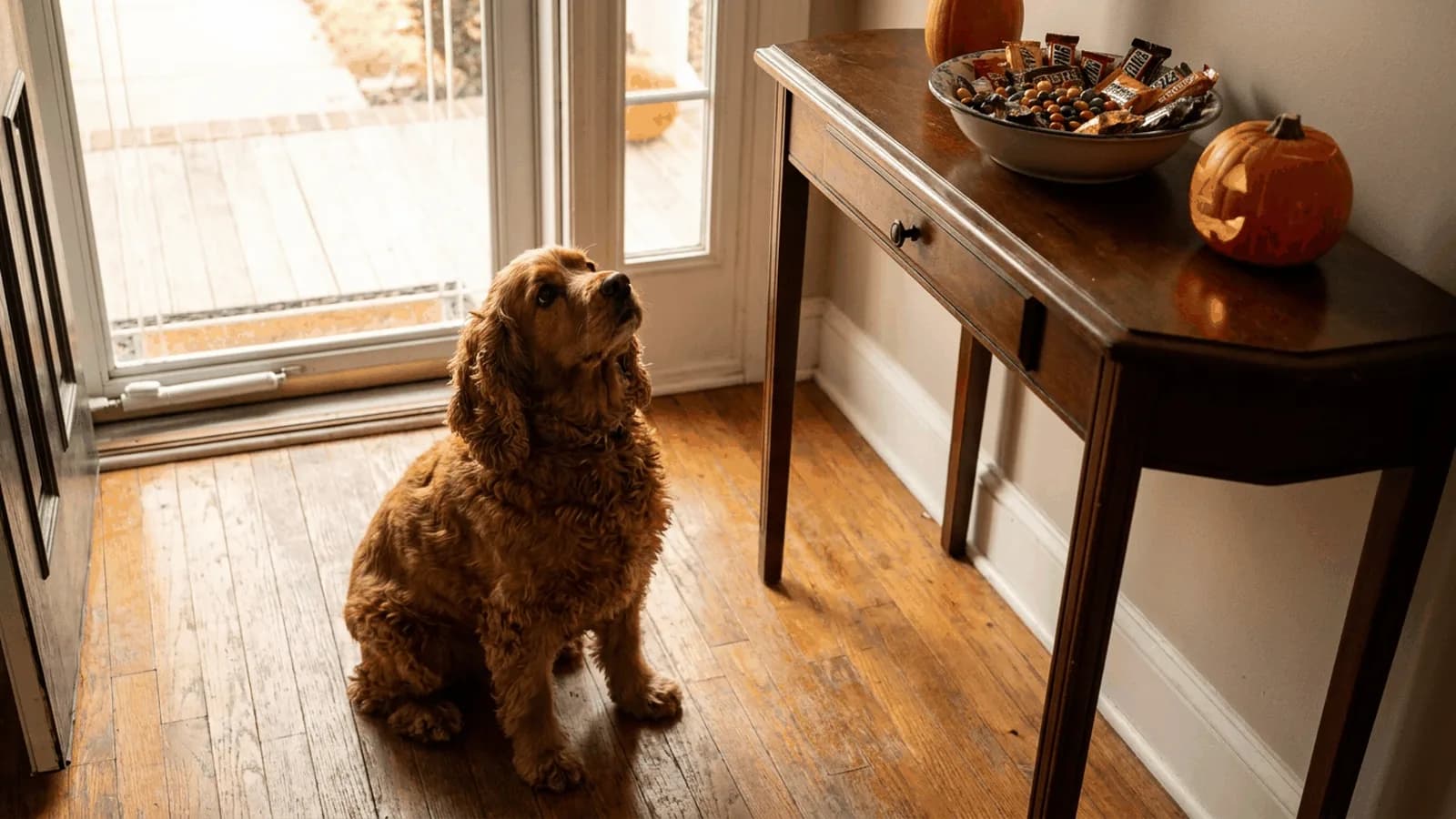
How many bags reach each dose line, by dog weight
M&M's milk chocolate (1.69 oz bag), from USDA FoodData Central values. Any amount is a reason to call your vet or a poison line.
| Dog weight | Signs possible (20 milligrams per kilogram) | Heart effects (40) | Seizures possible (60) |
|---|---|---|---|
| 5 lb | 0.6 | 1.2 | 1.8 |
| 10 lb | 1.2 | 2.4 | 3.6 |
| 20 lb | 2.4 | 4.8 | 7.2 |
| 30 lb | 3.6 | 7.2 | 11 |
| 50 lb | 6.0 | 12 | 18 |
| 70 lb | 8.4 | 17 | 25 |
| 90 lb | 11 | 22 | 33 |
- 1A 1.69 ounce bag of milk chocolate M&M's carries about 75 milligrams of theobromine and caffeine. A 20 lb dog reaches the 20 milligrams per kilogram line, where mild signs can start, at about 2.4 bags.
- 2M&M's, Hershey's Kisses, Kit Kat and Reese's are milk chocolate, so one piece is usually a low dose. A raided bowl or trick-or-treat bag is different: count every wrapper and add them up.
- 3Peanut, peanut butter, caramel and nougat candies add fat; sugar-free candy and gum can contain xylitol; chocolate-covered raisins add raisins. Each is its own risk.
- 4Wrappers, foil and lollipop sticks can cause a blockage even when the chocolate dose is low.
- 5After any candy raid, call your vet or a poison line now. Your dog's weight, the wrappers and the time your dog ate it can be gathered while you talk.
What to do right now if your dog ate M&M's or Halloween candy
If your dog ate some M&M's or other candy, this is what you should do:

- Move your dog away and pick up any candy and wrappers within reach.
- Call your vet, an emergency clinic, the Pet Poison Helpline at 855-764-7661 or ASPCA Animal Poison Control at 888-426-4435 now. Consultation fees may apply.
- While you talk, sort the wrappers by candy and work out the largest amount that could be missing. If you are unsure, use the worst case.
- If someone can help, have them enter your dog's weight and each kind of candy in the calculator at the top of this page. It takes several items.
- Follow the instructions you are given.
Do not induce vomiting at home or give any home remedy; leave that decision to your veterinarian. Both the Pet Poison Helpline and ASPCA Animal Poison Control answer 24 hours a day, every day of the year, and the person on the phone will tell you whether your dog needs to be seen and how soon.
What to tell your vet about the candy
The person on the phone will ask about the candy, not just the chocolate. These are the questions to expect:
- Your dog's weight, age and any health problems, especially heart disease or past pancreatitis.
- Each kind of candy and how many: bags, bars, cups or fun-size packs. Keep the wrappers.
- The size: full-size, fun-size, snack-size or loose pieces, with the net weight from the wrapper or bag.
- Any dark chocolate, sugar-free candy or gum, chocolate-covered raisins or nuts in the mix.
- Whether wrappers, foil or lollipop sticks are missing too.
- When your dog ate it and any signs so far.
How much chocolate is in M&M's?
Milk chocolate M&M's are milk chocolate under a sugar shell, one of the milder chocolates for dogs. USDA FoodData Central lists a standard 1.69 ounce (48 gram) bag at about 68.6 milligrams of theobromine and 6.7 milligrams of caffeine, about 75.4 milligrams combined. The Merck Veterinary Manual puts the start of mild signs at about 20 milligrams per kilogram of body weight. The calculator at the top of this page starts with this bag, and the weight table above shows how many bags reach each line.

Pumpkin and berry training treats to give instead of dessert. After a suspected ingestion, give no food until your vet says so.
Webvet may earn a commission when you click through to Chewy, at no extra cost to you.

So how many M&M's are toxic to a dog? It depends on your dog's weight, and bags are easier to count than single candies: a 5 lb dog reaches the 20 milligrams per kilogram line at just over half a bag, a 10 lb dog at about 1.2 bags and a 30 lb dog at about 3.6. Share-size and party-size bags hold more, so divide the net weight printed on the bag by 1.69 ounces to see how many standard bags it equals.
If your dog ate an M&M, will he be okay? A single M&M is one candy out of a 48 gram bag, far below the 20 milligrams per kilogram line even for a 5 lb dog. Call your vet or a poison line to confirm, and check that it really was one: a dog that finds one M&M on the floor has often found the bag.
Many one-M&M moments start with a child sharing from a candy bag. Keeping a dog treat next to the candy, such as Fruitables Skinny Minis Pumpkin and Berry dog treats, gives kids something they are allowed to hand over while the M&M's stay with the people.
Dog ate peanut M&M's
If your dog ate peanut M&M's, there is less chocolate per gram than in plain M&M's, because the peanut takes up space. USDA FoodData Central lists a fun-size pack (18 grams) at about 19.4 milligrams of theobromine and 1.8 milligrams of caffeine, about 21.2 combined. A 10 lb dog reaches the 20 line at about 4.3 packs; the candy bowl tally below gives the 30 lb figures.
A single-serve bag is bigger than a fun-size pack, so compare the net weights. The peanuts are not toxic to dogs, as our guide to peanuts for dogs explains, but peanut candy adds fat and sugar, so tell your vet if your dog has had pancreatitis. Dogs should not eat peanut M&M's any more than plain ones.
What your vet may do, and what it can cost
What do vets give dogs that eat chocolate? It depends on the dose, the time since they ate it and your dog's health: a small dose may be handled by phone, a larger one with clinic care that can include decontamination, IV fluids and heart monitoring, plus a blockage check if wrappers are missing. Our page on what to do when a dog ate chocolate covers clinic care in more detail.
The sooner treatment begins, the better the prognosis and the less costly the treatment, according to VCA Animal Hospitals. Our guide to emergency vet costs explains what drives the bill.
Pet insurance covers accidents and illnesses that happen after a policy starts, not an exposure that has already happened, so it is a decision to make before Halloween, not after the bowl is empty. If you want a plan in place, our pet insurance planner walks you through the options and lets you get a personalized Lemonade quote.
Compare coverage choices for your pet, then request a quote directly on Lemonade.
- Check a price for your pet
- Review available coverage choices
- See the terms before you decide
Eligibility, waiting periods, limits and exclusions apply.
Webvet may earn a commission when you click through to Lemonade, at no extra cost to you.
Dog ate Halloween candy? Do a candy bowl tally
Is chocolate candy bad for dogs? Yes, though one fun-size or full-size piece is usually a low dose, because most Halloween chocolate is milk chocolate. The danger is the total: a dog that gets into a candy bowl or a trick-or-treat bag can eat several kinds at once, and the milligrams stack up. The tally below lists each candy in the calculator with its theobromine and caffeine per piece from USDA FoodData Central, and how many reach each line for a 30 lb dog.

| Candy (calculator preset) | Theobromine + caffeine per unit (milligrams) | Units to the 20 line, 30 lb dog | Units to 40 | Units to 60 |
|---|---|---|---|---|
| Milk chocolate bar (1.55 oz) | 99 | 2.7 bars | 5.5 | 8.2 |
| M&M's milk chocolate (1.69 oz bag) | 75.4 | 3.6 bags | 7.2 | 11 |
| Milk chocolate, such as Hershey's Kisses (per ounce) | 64 | 4.3 ounces | 8.5 | 13 |
| Kit Kat wafer bar (1.5 oz) | 54.6 | 5.0 bars | 10 | 15 |
| Snickers bar (2 oz) | 53 | 5.1 bars | 10 | 15 |
| Milky Way bar (2.05 oz) | 40.6 | 6.7 bars | 13 | 20 |
| Peanut M&M's (fun-size pack) | 21.2 | 13 packs | 26 | 38 |
| Reese's Peanut Butter Cup (one cup) | 17.8 | 15 cups | 31 | 46 |
For a 30 lb dog (about 13.6 kilograms), the 20 milligrams per kilogram line works out to about 272 milligrams of theobromine and caffeine in total, the heart-effect line at 40 to about 544 and the seizure line at 60 to about 816. Call first; you or a helper can run the tally for your own dog while you are on the phone:
- Sort the wrappers into piles by candy.
- Multiply each pile by the milligrams per unit in the table. For fun-size or snack-size bars, compare the weight on the wrapper with the full-size bar and count the fraction.
- Add the piles together.
- Find your dog's lines: divide its weight in pounds by 2.2 to get kilograms, then multiply by 20, 40 and 60.
- Give the total to the person on the phone, or enter each candy in the calculator at the top of this page.
The worked examples below, for a raided bowl and a 10 lb, 30 lb and 50 to 70 lb dog, use the same USDA values and Merck thresholds as the chocolate toxicity calculator. They are not safe amounts: they are the points where Merck says each set of signs can appear, and some dogs react below them.
A 10 lb dog
A 10 lb dog (about 4.5 kilograms) reaches the 20 line at about 90 milligrams, the 40 line at about 180 and the 60 line at about 270.
- One fun-size pack of Peanut M&M's and two Reese's cups: about 57 milligrams. That is below the 20 line, in the lower-dose band where vomiting, diarrhea and thirst are still possible.
- Add one 1.69 ounce bag of M&M's: about 132 milligrams, past the 20 line and into the mild to moderate band.
A 30 lb dog
- Two Snickers bars, one Kit Kat, four Reese's cups and three fun-size packs of Peanut M&M's: about 295 milligrams. That passes the 272 milligram line and lands in the mild to moderate band, even though the biggest item, the two Snickers bars at about 106 milligrams, is less than half the line.
A 50 to 70 lb dog
A 50 lb dog (about 22.7 kilograms) reaches the lines at about 454, 907 and 1,361 milligrams. A 70 lb dog (about 31.8 kilograms) reaches them at about 635, 1,270 and 1,905.
- An emptied candy bowl with four full-size milk chocolate bars, three Snickers, three Milky Way bars and six Reese's cups: about 784 milligrams.
- That passes the 20 line for both dogs and stays below the 40 line, so any dog from 50 to 70 lb lands in the mild to moderate band. Enter your dog's exact weight in the calculator for its own figure.
Halloween night: keep the candy bowl and treat bags out of reach
On Halloween, candy turns up everywhere: the bowl by the front door, trick-or-treat bags on the floor, a child's stash under the bed and a guest's coat pocket. A gate between the entry and the rest of the house keeps your dog back while the door opens and closes. An auto-lock gate such as the Cardinal Gates auto-lock pet gate latches as soon as you swing it shut, which helps when your hands are full of candy.
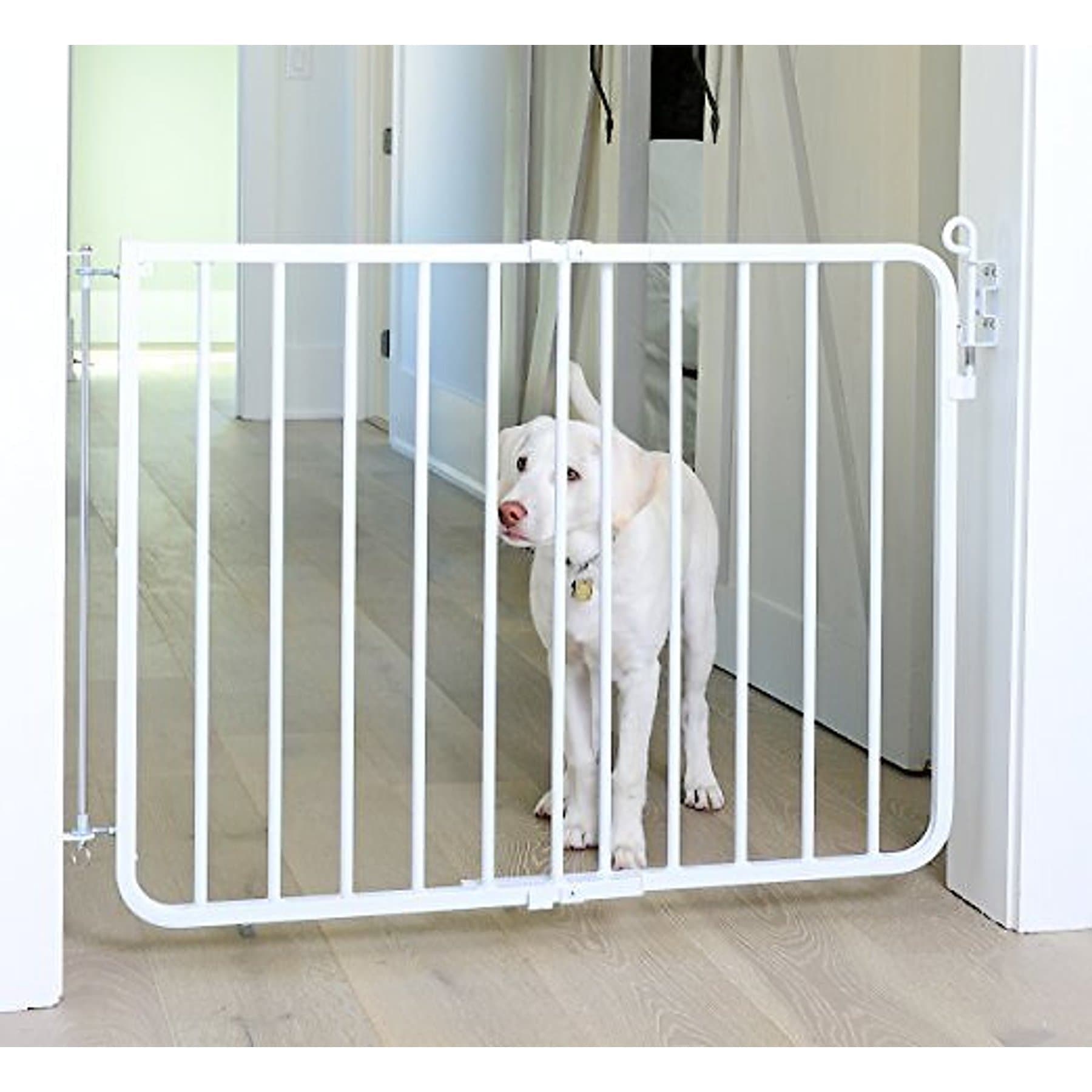
A hardware-mounted gate that latches itself when it swings shut, so the kitchen stays closed after every trip.
Webvet may earn a commission when you click through to Chewy, at no extra cost to you.

A few more habits close the other gaps:
- Keep the candy bowl on a high shelf or counter, never on a low table by the door, and refill it out of your dog's reach.
- Hang trick-or-treat bags on a hook or close them in a cupboard, and sort the haul at a table, not on the floor.
- Ask kids to keep their stashes in a closed drawer or a lidded box, and check backpacks and under beds.
- Ask guests to leave bags and coats in a closed room.
- Use a lidded trash can for wrappers and empty bags.
A quiet room away from the door, with water, a bed and a chew, keeps your dog away from the bowl and the doorbell. Some owners add a pheromone diffuser such as the Tranquil Tails pheromone calming diffuser; our guide to dog calming diffusers explains what to expect.
Hershey's Kisses, Kit Kat, Reese's, Snickers and Milky Way: candy by candy
Each candy has its own quirks, from foil to fillings, that change what you tell your vet. The figures below are from USDA FoodData Central, per bar, cup or serving. Baked treats have their own guides: chocolate cake and cupcakes and chocolate chip cookies.
Dog ate Hershey's Kisses
Hershey's Kisses are milk chocolate, about 64 milligrams of theobromine and caffeine per ounce (28.35 grams). The bag gives no weight per Kiss, so use the serving size on the bag:
- Check the serving size on the bag: it lists how many Kisses make one serving and what that serving weighs.
- Divide to get the weight of one Kiss, then multiply by the number missing.
- Compare the total with the milk chocolate row in the tally: a 10 lb dog reaches the 20 line at about 1.4 ounces, and a 30 lb dog at about 4.3 ounces.
If a dark chocolate Kiss lists no cacao percentage, the calculator's Dark, % unknown option assumes 70 to 85% dark, about 250 milligrams per ounce, roughly four times milk chocolate. That is not a maximum: check the bag for the real percentage, and tell your vet if it is unknown. White chocolate Kisses carry almost no theobromine but bring fat and sugar; see white chocolate for dogs. If foil is missing too, read the wrapper section below.
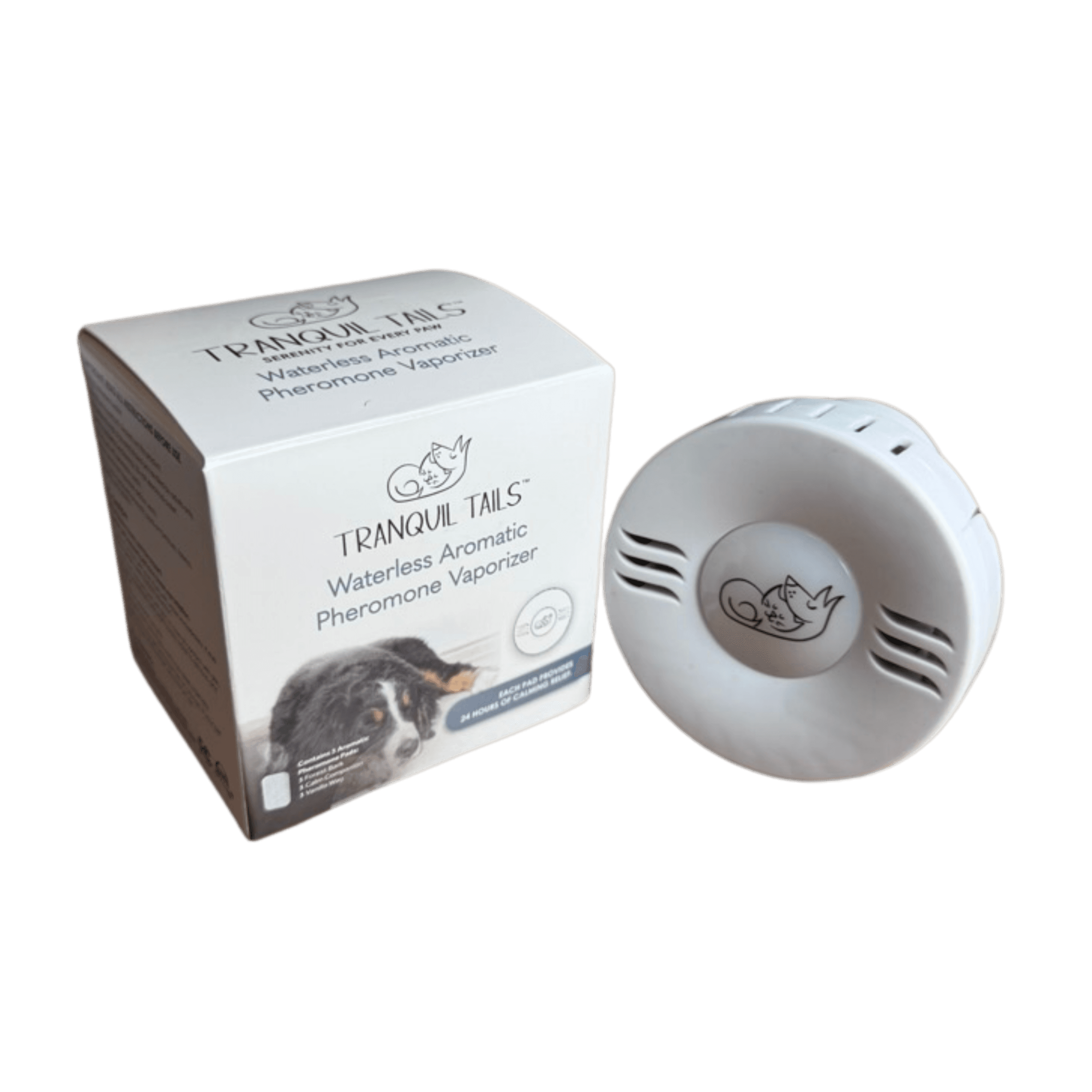
A plug-in pheromone diffuser for a quiet room where your dog can rest away from the doorbell and the candy bowl.
Webvet may earn a commission when you click through to Chewy, at no extra cost to you.
Can one Hershey Kiss hurt or kill a dog? If your dog ate one milk chocolate Kiss, it is a small dose, because a Kiss weighs much less than an ounce. Harm comes from the count and the type: a bag of Kisses or dark Kisses can reach the higher lines, where the Merck Veterinary Manual describes seizures that can be fatal. Whether she ate one or a handful, call your vet or a poison line; they will tell you what to watch for.
Dog ate a Hershey bar
If your dog ate a Hershey bar, call your vet now and count the bars while you talk. A 1.55 ounce milk chocolate bar carries about 99 milligrams, so a 10 lb dog reaches the 20 line at about 0.9 bar and a 20 lb dog at about 1.8 bars. The milk chocolate bar in the calculator at the top of this page turns the count into one number for your vet.
Is Hershey chocolate bad for dogs? Yes; dogs should not eat any of it. Dark chocolate candy bars are stronger: if the label gives no cacao percentage, choose Dark, % unknown in the calculator. Will Hershey's chocolate kill a dog? A large amount can: Merck links 60 milligrams per kilogram and above to seizures, which can be fatal, and a 10 lb dog reaches that line at about 2.7 milk chocolate bars.
Dog ate a Kit Kat
How much chocolate is in a Kit Kat? Less than in a solid bar, because the wafer dilutes it. USDA FoodData Central lists a 1.5 ounce bar at about 48.7 milligrams of theobromine and 5.9 milligrams of caffeine, about 54.6 combined, a little over half of a 1.55 ounce solid milk chocolate bar. A 10 lb dog reaches the 20 line at about 1.7 bars. Snack-size bars are smaller, so compare the weight on the wrapper with the 1.5 ounce bar.
Can dogs eat Kit Kats? No. They are still chocolate, so they are bad for dogs, and if your dog ate a bag of Kit Kats the bars add up: a 5 lb dog reaches the 60 milligrams per kilogram seizure line at about 2.5 bars, and a 10 lb dog at about 5.
Dog ate Reese's
Reese's Peanut Butter Cups do contain chocolate: a milk chocolate shell around a peanut butter filling. USDA FoodData Central lists one cup (about 22.5 grams, a little under an ounce) at about 16.2 milligrams of theobromine and 1.6 milligrams of caffeine, about 17.8 combined. If your dog ate Reese's, each cup is a small dose, but cups come in packs and bags: a 10 lb dog reaches the 20 line at about 5.1 cups. A mini Reese's cup is smaller than one cup, and seasonal shapes such as pumpkins are bigger, so compare the weights on the package.
Do Reese's have xylitol? The ingredient list on standard Reese's Peanut Butter Cups names sugar and dextrose as sweeteners, not xylitol, but recipes change, so read the pack's label to the person on the phone, along with any sugar-free candy. No peanut butter cup is a dog treat: the filling and the chocolate add fat, which matters for dogs prone to pancreatitis. Our guide to peanut butter for dogs covers xylitol-free choices.
Dog ate a Snickers or Milky Way

Can dogs eat Snickers or Milky Way bars? No. If your dog ate one, the bar count is what your vet needs. According to USDA FoodData Central:
- A 2 ounce Snickers bar carries about 53 milligrams of theobromine and caffeine. A 10 lb dog reaches the 20 line at about 1.7 bars, and a 30 lb dog at about 5.1.
- A 2.05 ounce Milky Way bar carries about 40.6 milligrams. A 10 lb dog reaches the 20 line at about 2.2 bars, and a 30 lb dog at about 6.7.
Fun-size bars are a fraction of these, so compare wrapper weights with the full-size bar. The bigger story with these bars is the caramel, nougat and, in Snickers, peanuts, which add fat and sugar; tell your vet if your dog has ever had pancreatitis, and see the other candy hazards below.
Hershey's chocolate syrup
Hershey's syrup is not candy, but it is chocolate. USDA FoodData Central has no Hershey's-specific value, so this estimate uses its generic chocolate syrup record: about 76.4 milligrams of theobromine and caffeine per 2 tablespoons (39 grams), about the same as a 1.69 ounce bag of M&M's, so a 10 lb dog reaches the 20 line at about 2.4 tablespoons. Brands vary, so keep the bottle for the call. Our guide for when a dog ate chocolate covers syrup, cocoa and baking chocolate.
Xylitol, raisins, caramel and wrappers: the other candy hazards
Chocolate is not the only risk in a Halloween haul. Tell your vet about any of these:
- Xylitol: sugar-free candy, gum and mints may be sweetened with xylitol. The Pet Poison Helpline warns that it can cause life-threatening low blood sugar, sometimes within 10 to 15 minutes. If any sugar-free product is missing, call now and read our guide to xylitol and dogs.
- Raisins: chocolate-covered raisins add raisins, which are toxic to dogs on their own. See raisins for dogs.
- Macadamia nuts: some chocolate boxes and candy bars contain them, and they are toxic to dogs. See macadamia nuts for dogs.
- Fat: caramel, nougat, peanut butter and nuts add fat on top of the chocolate, and Merck links the high fat content of chocolate products to pancreatitis in susceptible animals.
Candy wrappers, foil and lollipop sticks
If your dog ate chocolate candy and wrappers, the wrappers are a second problem. Plastic wrappers, Hershey's Kisses foil, the foil cups under Reese's Peanut Butter Cups and lollipop sticks do not dissolve, and they can lodge in the stomach or intestines, especially in small dogs. If the wrapper count comes up short against the missing candy, your dog probably swallowed some, and your vet needs to know. Our guide to dog intestinal blockage surgery costs explains what happens when a wrapper does get stuck.
Can dogs eat M&M's?
No. Dogs should not eat M&M's, even one or two as a treat. Every chocolate M&M carries theobromine and caffeine, which is why the answer to can dogs eat chocolate is no for every form; our guide to why chocolate is bad for dogs explains how those stimulants act. For the thresholds behind every kind of chocolate, see our full guide to how much chocolate is toxic to dogs.
If you want something to share at Halloween, pick a treat made for dogs and read the label to confirm there is no chocolate, cocoa or xylitol; our roundup of healthy dog treats is a good start.
Cat ate M&M's or other candy?
If your cat ate M&M's, a Hershey's Kiss, a Kit Kat, Reese's or a Snickers, call your vet or a poison line now, whatever the amount. There is no established safe dose of chocolate for cats, so any chocolate a cat eats is a reason to call. Our page on what to do when a cat ate chocolate covers the signs to watch for and what to tell the vet.
Frequently Asked Questions
Can my dog have 1 M&M?
No, your dog should not have M&M's as a treat, though a single M&M is a very small dose. A standard 1.69 ounce bag carries about 75 milligrams of theobromine and caffeine, according to USDA FoodData Central, and even a 5 lb dog needs just over half a bag to reach the 20 milligrams per kilogram line, where the Merck Veterinary Manual says mild signs may start. If your dog already ate one, call your vet or a poison line to confirm.
How soon will a dog show signs of chocolate toxicity?
Signs usually start 2 to 12 hours after eating, according to Cornell University's College of Veterinary Medicine, and the Merck Veterinary Manual describes onset within 6 to 12 hours, with effects lasting up to 72 hours in severe cases. A dog that raided a trick-or-treat bag at night may look normal until morning, so call as soon as you find the wrappers; our guide to what happens if a dog eats chocolate has the full timeline.
How do I flush chocolate out of my dog's system?
You cannot safely flush chocolate out of a dog's system at home, and home remedies can cause harm of their own. Keep the wrappers and call your vet or a poison line now, even if your dog seems fine; our guide to a dog that ate chocolate explains what the clinic can do instead.
Will my dog be okay if he licked chocolate?
A lick is a very small dose, but it depends on what was licked: cocoa carries about ten times what milk chocolate does. Call your vet or a poison line to confirm; our guide to a dog that ate chocolate answers the one-lick question in full.
Sources
- USDA FoodData Central
According to USDA FoodData Central, a standard 1.69 ounce bag of milk chocolate M&M's carries about 75 milligrams of theobromine and caffeine combined, and the Merck Veterinary Manual puts the start of mild signs at about 20 milligrams per kilogram of body weight, so one bag sits below that line for dogs of about 10 lb and up, while a raided Halloween stash adds up fast.
- Merck Veterinary Manual
According to USDA FoodData Central, a standard 1.69 ounce bag of milk chocolate M&M's carries about 75 milligrams of theobromine and caffeine combined, and the Merck Veterinary Manual puts the start of mild signs at about 20 milligrams per kilogram of body weight, so one bag sits below that line for dogs of about 10 lb and up, while a raided Halloween stash adds up fast.
- USDA FoodData Central
USDA FoodData Central lists a fun-size pack (18 grams) at about 19.4 milligrams of theobromine and 1.8 milligrams of caffeine, about 21.2 combined.
- VCA Animal Hospitals
VCA Animal Hospitals notes that the sooner treatment begins, the better the prognosis and the less costly the treatment, so call when you find the wrappers instead of waiting for signs.
- Pet Poison Helpline
The Pet Poison Helpline warns that it can cause life-threatening low blood sugar, sometimes within 10 to 15 minutes.
- Cornell University College of Veterinary Medicine
Signs usually start 2 to 12 hours after eating, according to Cornell University's College of Veterinary Medicine, and the Merck Veterinary Manual describes onset within 6 to 12 hours, with effects lasting up to 72 hours in severe cases.