
Can dogs eat white chocolate?
Not recommendedCan dogs eat white chocolate? No. It is far less toxic than milk or dark chocolate, but it is still not a food for dogs. According to USDA FoodData Central, white chocolate lists 0 milligrams of theobromine and 0 milligrams of caffeine per 100 grams, so classic chocolate poisoning is very unlikely, yet its fat and sugar can cause vomiting and diarrhea, and the Merck Veterinary Manual notes that the high fat content of chocolate products may trigger pancreatitis in susceptible animals. Call your vet or a pet poison line after any white chocolate, and right away if your dog ate a lot, ate a product with add-ins such as macadamia nuts, raisins or xylitol, or you are not sure what it was.


Medically reviewed by Dr. Athena Gaffud, DVM · Last reviewed
Pet ate something toxic? Call now.
US poison services, open 24/7. Consultation fees may apply. Do not make your pet vomit or use home remedies unless a vet or poison specialist tells you to.
Your pet
What they ate, done
No cocoa solids
How much
Check the wrapper for the weight. A standard milk chocolate bar is about 1.5 oz (43 g).
–Estimated dosemilligrams per kilogram of body weight
Enter your pet's weight to see the estimate
US poison services, open 24/7. Consultation fees may apply.
Enter weight and amounts first.
Add timing for more specific advice
Why? See the details
This estimate helps you describe the exposure to your vet. It is not a diagnosis and cannot tell you your pet is safe. Puppies, older pets, and pets with heart conditions or on medication can react at lower doses.
- 1USDA FoodData Central lists white chocolate at 0 milligrams of theobromine and caffeine per ounce, compared with about 64 for milk chocolate and about 250 for 70 to 85% dark chocolate.
- 2That makes chocolate poisoning from plain white chocolate very unlikely, but unlikely is not the same as safe. Its fat and sugar can upset a dog's stomach and may trigger pancreatitis.
- 3The add-ins are often the bigger problem. Macadamia nuts, raisins and xylitol are each toxic to dogs on their own.
- 4Swirled, marbled, layered and cookies-and-cream products contain real cocoa. Count that part as milk or dark chocolate.
- 5Call your vet or a poison line after any white chocolate, with the wrapper or package in hand.
Why white chocolate is still not a treat for dogs
White chocolate is made from cocoa butter, sugar and milk ingredients. Cocoa butter is the fat pressed from cocoa beans, while theobromine and caffeine, the two stimulants that make chocolate toxic to dogs, sit mainly in the cocoa solids that white chocolate leaves out. That is why USDA FoodData Central lists white chocolate at 0 milligrams of both per 100 grams, and why the stimulant problem behind milk and dark chocolate poisoning is essentially missing here.

What is left is a rich candy made for people. Is white chocolate bad for dogs? Yes. It is not poisonous in the way darker chocolate is, because its theobromine toxicity is negligible, but it can still hurt a dog, and a large amount can be harmful or even dangerous. It is not safe, okay or good for dogs to eat, for several reasons that have nothing to do with theobromine:
- Fat: white chocolate is made largely of fat, and the Merck Veterinary Manual notes that the high fat content of chocolate products may trigger pancreatitis, a painful inflamed pancreas, in susceptible animals.
- Sugar: a sugar-heavy snack can cause vomiting, diarrhea and loose stools, and it adds calories a dog does not need.
- Milk ingredients: some dogs digest dairy poorly, which can add to an upset stomach.
- Add-ins and coatings: nuts, dried fruit, cookie pieces, sugar-free sweeteners and chocolate swirls change the risk completely, as the label section below explains.
- Habit: a dog that learns white chocolate tastes good will beg for it and raid for it, and the next bar it finds may be dark chocolate.
What to do if your dog ate white chocolate
If your dog eats white chocolate, even a little bit or a single piece, here is what you should do:

- Call your vet, an emergency clinic, the Pet Poison Helpline at 855-764-7661 or ASPCA Animal Poison Control at 888-426-4435 now. Consultation fees may apply.
- While you call, move your dog away from the candy and gather everything left, including the wrapper, box, bag or recipe.
- Read the ingredient list out to the person on the phone, looking for cocoa, chocolate, macadamia nuts, raisins and xylitol (a sweetener found in some sugar-free gum).
- Give the largest amount that could be missing. If you are unsure, use the worst case.
Do not induce vomiting at home or give any home remedy; leave that decision to your veterinarian. A dog that ate white chocolate but is acting fine still needs that call: stomach upset and pancreatitis can take time to show, any milk or dark chocolate in the product can cause signs 2 to 12 hours after eating, and acting fine is not proof your dog is safe.
The calculator at the top of this page is set to white chocolate. In its USDA-based model, plain white chocolate adds no theobromine or caffeine, so any amount lands in the lowest band, "Lower dose, but still call your vet", and that band is not a clean bill of health. If the product had a milk or dark chocolate swirl, shell or drizzle, switch the calculator to that type for the chocolate part and report both numbers on the call.
What to tell your vet about the white chocolate
The person on the phone will ask about the whole product, not just the chocolate, and how much was eaten. Be ready to tell them:
- Your dog's weight, age and any health problems, especially past pancreatitis, diabetes or a sensitive stomach.
- The exact product: brand, flavor and whether it was a bar, chips, coated pretzels, a cookie, cake or a party mix.
- Every ingredient that matters: cocoa or chocolate, nuts, raisins, sugar-free sweeteners and any wrapper or stick that is missing.
- How much is missing and when your dog ate it.
- Any signs so far, such as vomiting, diarrhea, restlessness or a sore belly.
Can white chocolate kill a dog?
Can dogs die from white chocolate, and how much will kill a dog? Plain white chocolate is very unlikely to kill a dog through chocolate poisoning, because USDA lists no theobromine or caffeine in it and the Merck Veterinary Manual describes the amount as negligible. Merck places mild signs at about 20 milligrams per kilogram of body weight of those stimulants, heart effects at 40 to 50 and seizures at 60 or more, and our page on how much chocolate can kill a dog covers those ranges. Serious harm after eating white chocolate can still happen through other routes:
- Pancreatitis after a large, fatty binge, which can become serious and may need hospital care.
- Macadamia nuts, raisins or xylitol hidden in the product, each a separate poisoning.
- Milk or dark chocolate hidden in a swirl, shell, drizzle, layer or cookie piece, which does carry theobromine.
- Wrappers, foil and lollipop sticks swallowed with the candy, which need to be reported separately.
- Size: a small dog that eats a whole bar has eaten far more for its body weight than a large dog that eats the same bar.
If your vet wants to see your dog, treatment can include decontamination, IV fluids and monitoring, and a dog with pancreatitis may need a hospital stay. For chocolate poisoning, VCA Animal Hospitals notes that the sooner treatment begins, the better the prognosis and the less costly the treatment. Our guide to emergency vet costs explains what drives a bill like this.
Pet insurance only covers problems that start after a policy is in place, never an exposure already underway, so it is a decision to make before the holiday candy comes out. Our pet insurance planner walks you through the options and lets you get a personalized Lemonade quote.
Compare coverage choices for your pet, then request a quote directly on Lemonade.
- Check a price for your pet
- Review available coverage choices
- See the terms before you decide
Eligibility, waiting periods, limits and exclusions apply.
Webvet may earn a commission when you click through to Lemonade, at no extra cost to you.
White chocolate vs milk and dark chocolate for dogs
For poisoning, milk chocolate is worse than white chocolate, and dark chocolate is far worse than both. The difference is theobromine and caffeine, which rise with cocoa content. Cornell University's College of Veterinary Medicine ranks toxicity potential highest in cocoa powder, then unsweetened baker's chocolate, semisweet and sweet dark chocolate, and then milk chocolate. White chocolate, with no cocoa solids, sits below all of them.

| Chocolate type | Theobromine and caffeine per ounce (USDA) | For a 20 lb dog, mild-signs line at about |
|---|---|---|
| White chocolate | 0 milligrams | Not reached by theobromine |
| Milk chocolate | about 64 milligrams | 2.8 ounces |
| Semisweet | about 155 milligrams | 1.2 ounces |
| Dark, 60 to 69% | about 204 milligrams | 0.9 ounce |
| Dark, 70 to 85% | about 250 milligrams | 0.7 ounce |
| Baker's chocolate | about 391 milligrams | 0.5 ounce |
| Cocoa powder | about 649 milligrams | 0.3 ounce |
To put the ladder in dog terms, a 20 lb dog reaches the 20 milligrams per kilogram line, where Merck says mild signs may occur, at about 2.8 ounces of milk chocolate, 1.2 ounces of semisweet chocolate or 0.7 ounce of 70 to 85% dark chocolate. In the chocolate toxicity calculator's USDA-based model, plain white chocolate never reaches that line, because USDA lists no theobromine in it and Merck calls the amount negligible. That is why white chocolate is less toxic, but not why it is a good idea: on fat and sugar, both are rich candies, and neither belongs in a dog's bowl.
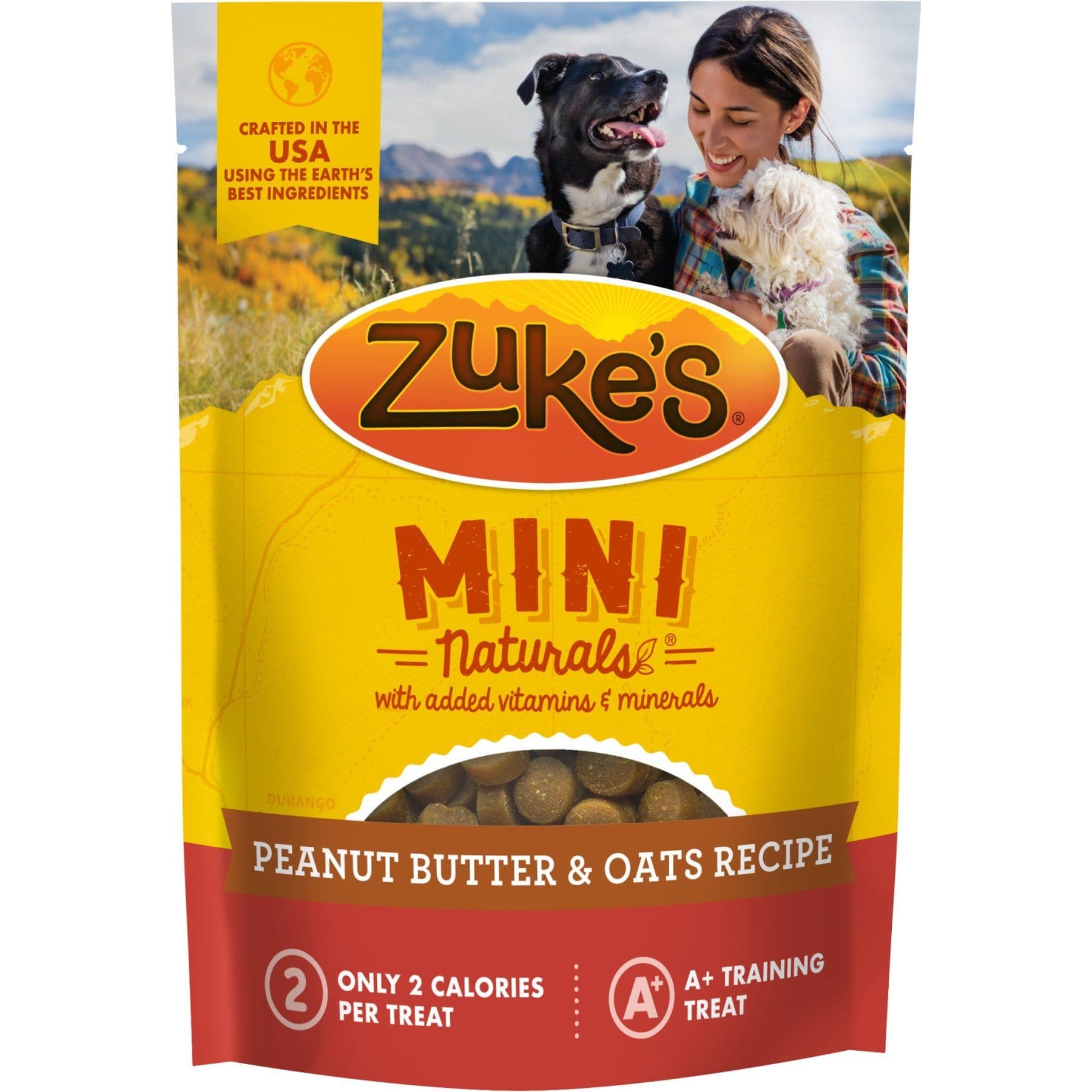
Pea-sized peanut butter and oat training treats. After a suspected ingestion, give no food until your vet says so.
Webvet may earn a commission when you click through to Chewy, at no extra cost to you.
Can a dog eat a Hershey bar, then? No. A 1.55 ounce milk chocolate bar carries about 99 milligrams of theobromine and caffeine, and a 5 lb dog reaches the mild-signs line at about half a bar. Our page on what to do when a dog ate chocolate covers milk and dark bars, and the dog ate M&M's page covers candy-bowl pieces.
If you want to share something sweet with your dog, a small treat made for dogs, such as Zuke's Mini Naturals Peanut Butter and Oats dog treats, gives your dog a reward of its own while the white chocolate stays on human plates. Count any treat within your dog's daily food.

A double-door wire crate with a divider, so your dog rests in its own space while holiday treats are out.
Webvet may earn a commission when you click through to Chewy, at no extra cost to you.
Holiday candy dishes often mix white, milk and dark chocolate, so a dog that finds the white truffles may have found the dark ones too. When you cannot watch your dog, a crate such as the MidWest LifeStages double door wire crate keeps it away from candy dishes until you are back.
For the full set of thresholds by dog weight and chocolate type, see our guide to how much chocolate is toxic to dogs, and for the science behind theobromine, read why chocolate is bad for dogs.
Read the label: white chocolate products and the hazard in each
The words "white chocolate" on the front of a package tell you very little. Turn it over and read the ingredient list: a few words there, such as cocoa butter, chocolate liquor, cocoa mass, palm kernel oil or birch sugar, change what you tell your vet. Here is what each one means:

- "Cocoa butter" alone: true white chocolate. The concern is fat and sugar, not theobromine.
- "Cocoa", "cocoa powder", "chocolate", "chocolate liquor" or "cocoa mass": there is real chocolate in the product, so part of it carries theobromine.
- "Xylitol" or "birch sugar": a sugar-free sweetener that is dangerous to dogs. Treat a confirmed or possible exposure as urgent.
- "Macadamia nuts" or "raisins": separate toxins that need their own call.
- "Palm kernel oil" with no cocoa butter: a white confectionery coating or candy melt rather than true white chocolate. It still brings fat and sugar.
| Product | The hazard that matters | What to report when you call |
|---|---|---|
| Plain white chocolate bar or buttons | Fat and sugar; pancreatitis risk with a large amount | Brand, net weight, how much is missing |
| White chocolate chips or baking morsels | Fat and sugar, often a whole bag at once | Bag size and how full it was |
| Swirl, marbled or layered bar, peppermint bark | Real milk or dark chocolate in the swirl or layer | Which chocolate types and roughly what share of the piece |
| Cookies and cream bar | Cocoa from the chocolate cookie pieces | Product name and amount |
| White-coated pretzels, candy or rice cakes | Fat, sugar and salt; drizzles may be milk or dark chocolate | Coating type and any drizzle |
| Sugar-free or keto white chocolate | Possible xylitol | The full sweetener list |
| White chocolate macadamia nut cookie | Macadamia nuts, plus any milk chocolate chips | Number of cookies, nuts per cookie if known |
| White chocolate party mix or "puppy chow" | Peanut butter (check for xylitol), raisins, candy pieces | The recipe or the bag |
White chocolate puppy chow and party mix
White chocolate puppy chow is a people snack, not dog food: cereal coated in melted white chocolate or candy melts, often with peanut butter and powdered sugar, and sometimes pretzels, candy or raisins. A dog that eats a bowl gets a large dose of fat and sugar plus whatever went into the mix; peanut butter needs a xylitol check, and raisins are toxic on their own, as our guide to raisins for dogs explains.
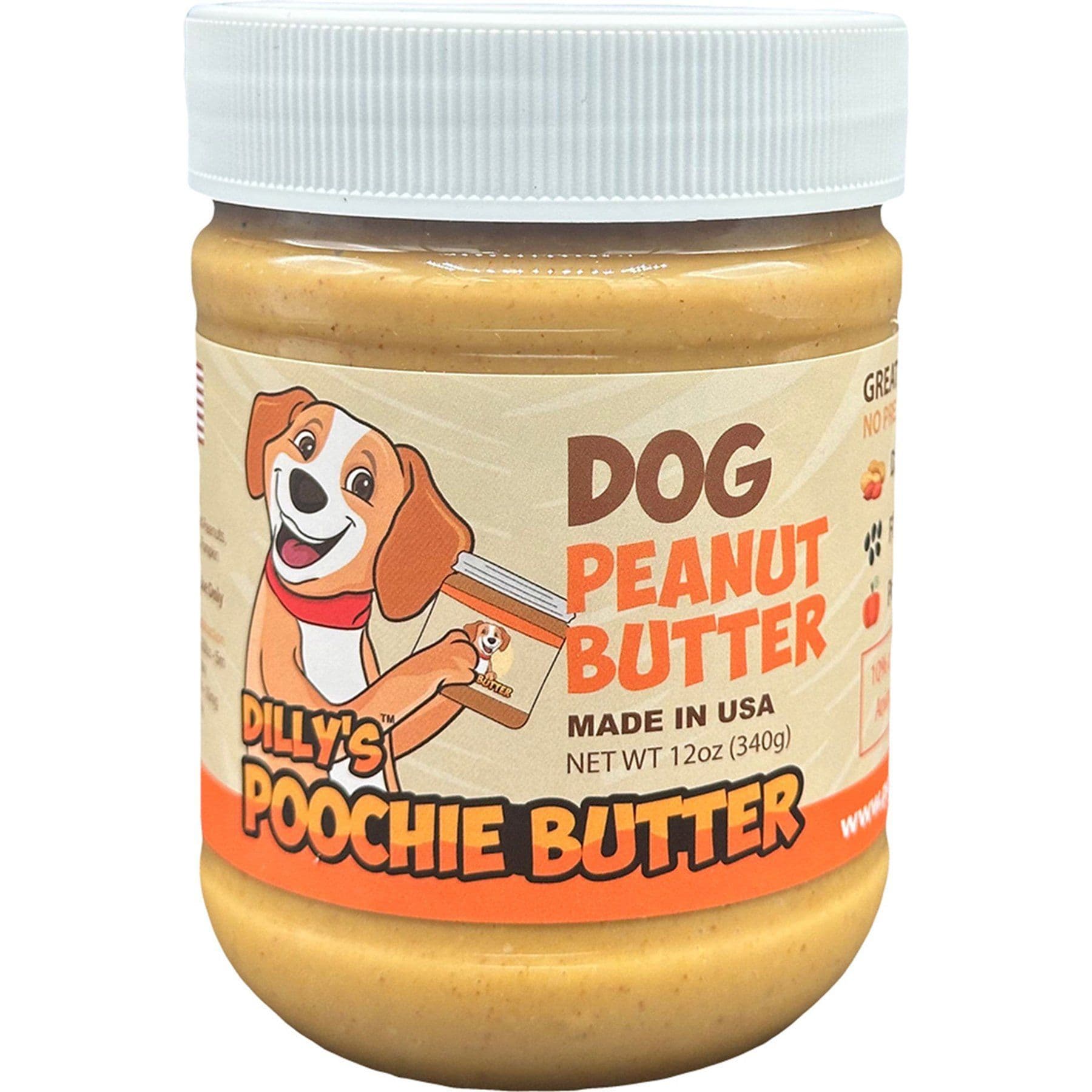
Xylitol-free peanut butter and pumpkin made for dogs. After a suspected ingestion, give no food until your vet says so.
Webvet may earn a commission when you click through to Chewy, at no extra cost to you.
On party nights, give your dog something of its own to work on while the snack bowls are out. A peanut butter made for dogs, such as Poochie Butter Peanut Butter Pumpkin lickable dog treat, spread on a lick mat or stuffed in a chew toy keeps your dog busy and away from the party mix.
Swirled, marbled and layered white chocolate
Peppermint bark is often made with a layer of dark or semisweet chocolate under the white, marbled bars blend white and milk chocolate, and white truffles may sit in a milk chocolate shell. For these, the theobromine comes from the darker part, so estimate that part and enter it in the calculator as milk or dark chocolate. If you cannot tell, count the whole piece as the darker type for a worst case. Cookies and cream bars look white but carry cocoa in the chocolate cookie pieces, which our page on Oreos for dogs explains.
White chocolate macadamia nut cookies
A white chocolate macadamia nut cookie carries very little theobromine unless it also has milk or dark chips, but the nuts are toxic to dogs on their own. Report the number of cookies and any nuts your dog ate, and read our guide to macadamia nuts for dogs. Other chip cookies follow the chip math on our page for a dog that ate chocolate chip cookies.
White chocolate covered pretzels, candy and chips
White chocolate covered pretzels add salt to the fat and sugar, and many "white" coatings are confectionery coatings rather than true white chocolate. Check for a milk or dark chocolate drizzle, which carries theobromine. Our page on pretzels for dogs covers the salty part. Can dogs have white chocolate chips? No, and an open bag is the common way a dog eats a large amount at once.
Sugar-free white chocolate
Sugar-free and keto white chocolate may be sweetened with xylitol, sometimes listed as birch sugar. Xylitol is a separate, serious hazard for dogs that has nothing to do with chocolate, so read every sweetener on the label and call right away if xylitol is listed or you cannot confirm the sweetener. See our guide to xylitol and dogs.
White chocolate cake, frosting and white chocolate ice cream follow the same pattern: fat and sugar first, then any cocoa, nuts or sweeteners in the recipe. Our pages on a dog that ate chocolate cake and on ice cream for dogs cover those desserts.
Signs to watch for after a dog eats white chocolate
What will happen if a dog eats white chocolate? Most problems from plain white chocolate come from the fat and sugar, so the first signs usually involve the stomach. VCA Animal Hospitals lists these as common signs of pancreatitis in dogs:
- Nausea, vomiting or diarrhea.
- Decreased appetite.
- A painful belly, sometimes with a "praying" posture: rear end raised, front legs and head lowered.
- Lethargy.
- Fever.
If the product contained milk or dark chocolate, watch too for restlessness, panting, a racing heartbeat, tremors or seizures, which usually start 2 to 12 hours after eating, according to Cornell University's College of Veterinary Medicine. Our guide to what happens when a dog eats chocolate covers that timeline, and the dog vomiting symptom checker helps you describe what you see while you call.
Safer swaps and keeping white chocolate out of reach
Most white chocolate exposures happen when candy is left within reach during holidays, parties and baking days. A few habits close those gaps:

- Store white chocolate, baking chips and candy melts in a latched cabinet or on a high shelf.
- Keep candy dishes, party mix bowls and gift tins off coffee tables and low counters.
- Ask guests to keep bags and coats with candy in a closed room.
- Use a lidded trash can for wrappers and leftover baking.
- Teach children to share only dog treats, never candy.
When you want to include your dog in a treat moment, choose a treat made for dogs and check the label for chocolate, cocoa, xylitol or raisins; pet-store "chocolate" drops for dogs are often made with carob instead. Our roundup of healthy dog treats is a good place to start, and our list of foods toxic to dogs covers other kitchen risks. For milk and dark chocolate, see can dogs eat chocolate. Cats are a different case, and our page on whether cats can eat chocolate covers white chocolate for cats.
Frequently asked questions
How much white chocolate is too much for a dog?
There is no amount of white chocolate that is right for a dog, and no published safe limit. Because USDA FoodData Central lists no theobromine or caffeine in white chocolate, the chocolate thresholds from the Merck Veterinary Manual do not apply, and there is no equivalent line for fat and sugar. A few chips are a much smaller risk than a whole bar or bag, and a small dog is affected by less than a large one. Call your vet or a poison line with your dog's weight and the package, especially if the product contained add-ins.
What happens if a dog eats a piece of white chocolate?
What happens if a dog eats one piece depends on what was in it. A single piece of plain white chocolate is very unlikely to cause chocolate poisoning, because USDA lists it at 0 milligrams of theobromine and caffeine, but some dogs still get an upset stomach from the fat, sugar and milk, with vomiting or diarrhea. The bigger questions are whether the piece held macadamia nuts, raisins, xylitol or a milk chocolate swirl, and whether it was really just one piece. Call your vet or a poison line and check the wrapper while you talk.
Are dogs allowed Milky Bars?
No, dogs are not allowed Milky Bars. A Milkybar is a white chocolate bar made for people, so it brings the same fat and sugar as other white chocolate, even though it carries little theobromine. Do not confuse it with a Milky Way bar, which is coated in milk chocolate: USDA puts a 2.05 ounce Milky Way at about 40.6 milligrams of theobromine and caffeine. Pet-store "chocolate" treats made for dogs are a different product, often made with carob. If your dog ate either bar, call your vet or a poison line with the wrapper.
Will a little chocolate hurt a dog?
Yes, a little milk or dark chocolate can hurt a dog, and a small dog reaches the danger lines sooner. White chocolate carries almost none of the stimulants, but call your vet or a poison line after any chocolate; our guide to a dog that ate chocolate covers what to do next.
How do I flush chocolate out of my dog's system?
You cannot safely flush chocolate out of a dog's system at home, and home remedies can cause harm of their own. Call your vet or a poison line now; our guide to a dog that ate chocolate explains what the clinic can do instead.
Should a dog drink water after eating chocolate?
Leave fresh water out as usual, but do not force it: water does not flush out theobromine or fat, and a big change in drinking is a reason to call your vet. Our guide to a dog that ate chocolate covers what helps instead.
Chocolate safety guides
Safe alternatives
More sweets & treats for dogs
Sources
- USDA FoodData Central
According to USDA FoodData Central, white chocolate contains 0 milligrams of theobromine and 0 milligrams of caffeine per 100 grams, so classic chocolate poisoning is very unlikely, yet its fat and sugar can cause vomiting and diarrhea, and the Merck Veterinary Manual notes that the high fat content of chocolate products may trigger pancreatitis in susceptible animals.
- Merck Veterinary Manual
According to USDA FoodData Central, white chocolate contains 0 milligrams of theobromine and 0 milligrams of caffeine per 100 grams, so classic chocolate poisoning is very unlikely, yet its fat and sugar can cause vomiting and diarrhea, and the Merck Veterinary Manual notes that the high fat content of chocolate products may trigger pancreatitis in susceptible animals.
- VCA Animal Hospitals
For chocolate poisoning, VCA Animal Hospitals notes that the sooner treatment begins, the better the prognosis and the less costly the treatment, which is one more reason to call early.
- Cornell University College of Veterinary Medicine
Cornell University's College of Veterinary Medicine ranks toxicity potential highest in cocoa powder, then unsweetened baker's chocolate, semisweet and sweet dark chocolate, and then milk chocolate.
- VCA Animal Hospitals
VCA Animal Hospitals lists these as common signs of pancreatitis in dogs:
Reviewed by Dr. Athena Gaffud, DVM
General guidance based on credible veterinary sources; not a diagnosis or a substitute for your veterinarian. If your pet ate something toxic or is unwell, contact your vet or a pet poison line right away.