What Happens If a Dog Eats Chocolate? Signs and Timeline


Medically reviewed by Dr. Athena Gaffud, DVM · Last reviewed
Quick answer
What happens if a dog eats chocolate depends on the dose: the theobromine and caffeine in chocolate overstimulate the heart and nervous system, causing anything from vomiting and restlessness to a racing heart, tremors and seizures. According to the Merck Veterinary Manual, signs usually appear within 6 to 12 hours of eating and can last up to 72 hours in severe cases. Call your vet or a poison line now, even if your dog seems normal, and if it just happened, follow the steps in what to do if your dog ate chocolate.
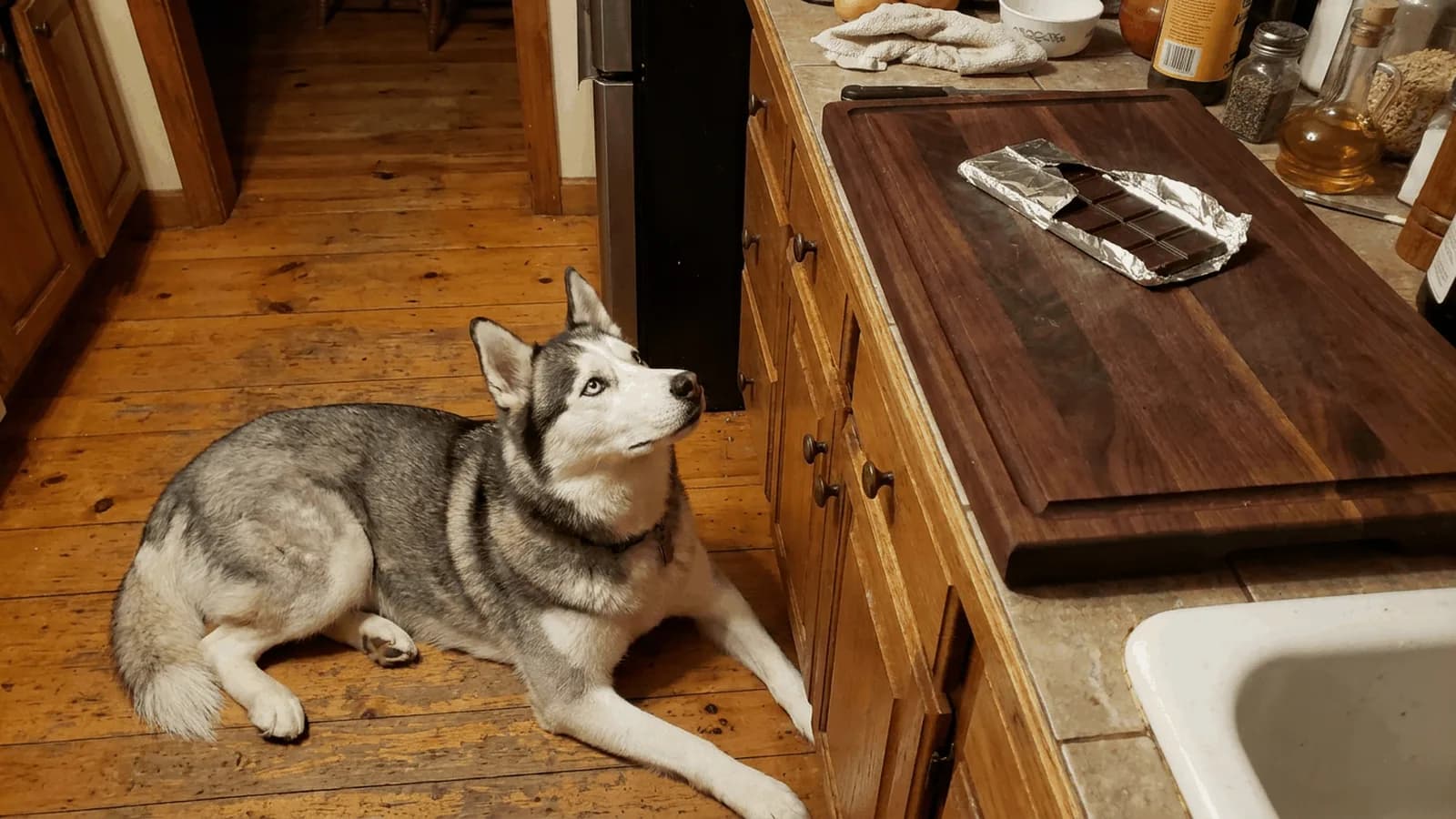
- 1Theobromine and caffeine in chocolate stimulate a dog's heart and nervous system. The dose, measured per kilogram of body weight, decides how sick a dog gets.
- 2Signs usually start 2 to 12 hours after eating and can last 12 to 36 hours, according to Cornell; severe cases can last up to 72 hours.
- 3Early signs are vomiting, diarrhea, thirst and restlessness. Higher doses bring a racing or irregular heartbeat, tremors, seizures and collapse.
- 4Tremors, seizures, collapse or a racing heart mean go to the nearest emergency vet now.
- 5A dog that seems fine still needs a call. If a cat ate any chocolate, call now too.
What to do right now if your dog ate chocolate
If your dog just ate chocolate, call your vet, an emergency hospital or a poison line now, and gather the wrapper, your dog's weight and the time while you talk. Keep your dog away from any leftovers. Do not induce vomiting at home or give any home remedy; leave that decision to your veterinarian. Pet Poison Helpline is 855-764-7661 and ASPCA Animal Poison Control is 888-426-4435; consultation fees may apply. The full checklist, including what happens at the vet, is in what to do if your dog ate chocolate.
Chocolate poisoning timeline: hour by hour
How long after eating chocolate will a dog get sick? Signs usually start 2 to 12 hours after eating, according to Cornell University's College of Veterinary Medicine, and the Merck Veterinary Manual describes onset within 6 to 12 hours. How quickly symptoms show varies, so a dog that eats chocolate in the evening may not show the first stages of chocolate poisoning until well into the night.

The timeline below sets out the stages of chocolate poisoning in dogs as Cornell and Merck describe them. Use it to know what to watch for while you are already talking to a vet, not as a reason to put off the call.
| Time after eating | What you may see | What to do |
|---|---|---|
| Under 2 hours | Often nothing yet. Signs usually start 2 to 12 hours after eating (Cornell). | Call your vet or a poison line now. Calling now gives your vet the most options. |
| 2–6 hours | Signs can start any time from about 2 to 12 hours after eating (Cornell). Look for vomiting, diarrhea, thirst, restlessness, panting or a racing heart. | Watch for these signs while you call, and follow the instructions you get. |
| 6–12 hours | The window the Merck Veterinary Manual gives for most onsets. At higher doses: tremors, wobbliness, an irregular heartbeat, fast breathing or seizures. | Tremors, seizures, collapse or a racing heart: go to the nearest emergency vet now and call ahead. |
| More than 12 hours, no signs | Acting fine is not proof your dog is safe. | Effects can last up to 72 hours, so call and let a vet decide. |
| Through the next day or two | Signs that started earlier can last 12 to 36 hours (Cornell). | Keep following your vet's monitoring plan. If you have not called yet, call now. |
| Up to 72 hours | Severe cases can last this long (Merck). Later signs can include a slow heart rate, low blood pressure or coma. | Severe cases need veterinary care until the signs resolve. |
While you watch, keep a short log to share with your vet:
- The time your dog ate the chocolate, or your best guess
- The wrapper or package, which shows the type and size
- Your dog's weight
- Each sign you see and the time it started
Signs that mean go to the emergency vet now
Some signs cannot wait for a callback. Can chocolate cause seizures in dogs? Yes, at the highest doses, along with tremors and collapse. Go to the nearest emergency vet now, and call ahead on the way, if your dog shows any of these after eating chocolate:

- Tremors, shaking or seizures
- Collapse, or trouble standing or walking
- A racing or irregular heartbeat
- Fast or labored breathing
How long does it take for a dog to pass away after eating chocolate? There is no set timeline, and no one can predict one for an individual dog. Chocolate poisoning can be fatal at the highest doses, signs usually begin within hours of eating, and Merck notes that severe cases can persist for up to 72 hours. The suspected poisoning symptom guide covers poisoning signs more broadly.
Symptoms of chocolate poisoning in dogs, by dose
The symptoms of chocolate poisoning in dogs build with the dose. The Merck Veterinary Manual links mild signs such as vomiting, diarrhea and increased thirst to about 20 milligrams per kilogram, heart effects such as a racing or irregular heartbeat to 40 to 50, and seizures to 60 or more. The four bands below follow those thresholds and match the calculator's result bands, so you can see how the first signs and side effects can change as the dose climbs.
Lower dose: under 20 milligrams per kilogram
Signs are less likely at this level, but they are still possible, and the fat and sugar can upset the stomach on their own. Call your vet or a poison line and find the wrapper while you talk, so they can confirm the dose. Watch for:
- Vomiting
- Diarrhea
- Increased thirst
Mild to moderate: 20 to 40 milligrams per kilogram
Mild to moderate poisoning can occur in this band. Call your vet or a poison line now, because early treatment works best. Signs can include:
- Vomiting, diarrhea or a bloated belly
- Restlessness, pacing or hyperactivity
- Panting and a fast heart rate
- Drinking and urinating more than usual
Serious: 40 to 60 milligrams per kilogram
Heart effects become possible at this dose. Call a poison line or an emergency vet right now. Signs can include:
- A racing or irregular heartbeat
- Muscle tremors or stiff, rigid muscles
- Wobbliness or a drunken walk (ataxia)
- Fast breathing
Emergency: 60 milligrams per kilogram and above
This dose can cause seizures and collapse, and it can be fatal. Go to the nearest emergency vet now and call ahead on the way. Signs at this level can include:
- Seizures and collapse
- A high body temperature and high blood pressure
- Later, a slow heart rate, low blood pressure or coma
So how much chocolate does a dog have to eat to get really sick? It depends on the type and the dog's weight. A 10 lb dog reaches the mild to moderate band at about 0.9 of a 1.55 oz milk chocolate bar and the serious band at about 1.8 bars. A 20 lb dog reaches the serious band at about 1.5 oz of 70–85% dark chocolate and the emergency band at about 1.4 oz of baker's chocolate. Signs can still appear below these marks. For the full breakdown by weight and chocolate type, see how much chocolate can kill a dog.
So what happens if a dog eats a lot of chocolate versus a little? A dog that licked a wrapper or accidentally ate one piece of milk chocolate has usually taken in a low dose, while lots of dark, semi-sweet or baking chocolate can push even a large dog into the serious bands. Either way, the dose and any reaction are what your vet needs to know, so call.
Baking chocolate and cocoa powder reach the dangerous bands with the smallest amounts, and both usually sit in a pantry or low cabinet that a determined nose can nudge open. A Qdos adhesive double door cabinet lock holds baking-cupboard doors closed, which keeps the most concentrated chocolate in the house out of reach.
What chocolate does inside a dog's body
What happens when a dog eats chocolate comes down to two stimulants, theobromine and caffeine. Theobromine does most of the work, because chocolate holds 3 to 10 times as much of it, according to the Merck Veterinary Manual. The effects of theobromine on dogs are those of a stimulant overdose: after a dog eats chocolate, it pushes the heart and nervous system into overdrive, so a poisoned dog can turn restless, shaky and thirsty, breathe fast and develop a racing heart. Darker chocolate carries more theobromine per ounce, so the type matters as much as the amount.
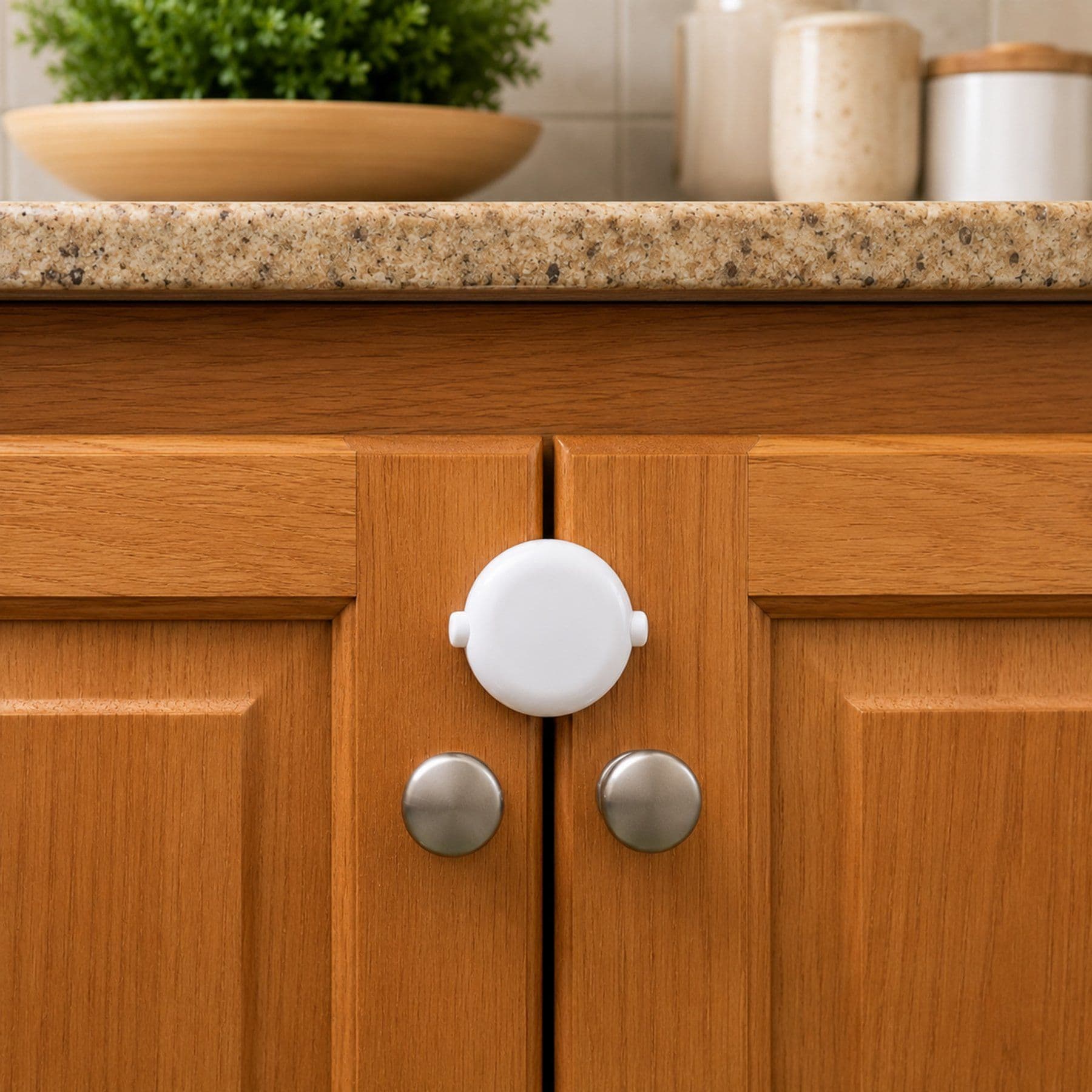
Adhesive double-door cabinet locks, no drilling, so a nose cannot open the low cabinet where baking chocolate lives.
Webvet may earn a commission when you click through to Chewy, at no extra cost to you.

Veterinarians judge a chocolate exposure by dose: milligrams of theobromine and caffeine per kilogram of body weight. One 1.55 oz milk chocolate bar works out to about 11 milligrams per kilogram for a 20 lb dog, while a 5 lb dog reaches the 20 milligrams per kilogram mark at about half a bar. That is what happens if a puppy eats chocolate too: a puppy or small dog that ate the same piece as a large dog gets a far higher dose, and the symptoms of poisoning can be more serious. Enter the chocolate type, the amount and your dog's weight in the calculator at the top of this page to see where an exposure falls.
How serious this gets also depends on how quickly care starts after eating. Dogs with heart or nervous system signs need in-clinic care, which can include decontamination, IV fluids and heart monitoring. A policy bought today will not cover chocolate your dog has already eaten, but it can cover future accidents and illness. If your dog is not insured yet, our pet insurance planner walks you through coverage options and links to Lemonade for a personalized quote.
Compare coverage choices for your pet, then request a quote directly on Lemonade.
- Check a price for your pet
- Review available coverage choices
- See the terms before you decide
Eligibility, waiting periods, limits and exclusions apply.
Webvet may earn a commission when you click through to Lemonade, at no extra cost to you.
How long chocolate poisoning lasts, and why
Chocolate poisoning lasts as long as it does because dogs clear theobromine slowly. How long chocolate affects a dog follows its half-life, which the Merck Veterinary Manual puts at about 17.5 hours in dogs, compared with about 4.5 hours for caffeine, so the stimulant keeps acting into the next day.
That slow clearance explains the course of the illness. Cornell says symptoms can last 12 to 36 hours, sometimes longer, and Merck notes that severe chocolate toxicity can last up to 72 hours. Your vet will tell you how long to monitor your dog and which signs mean you should come back. Ask whether any long-term effects are possible for your dog and whether follow-up checks make sense, especially after heart rhythm problems or seizures.
Recovery and survival
Can a dog recover from eating chocolate? Yes, dogs can survive and recover from chocolate poisoning, and early treatment works best. There is no single survival rate or set of chances for a dog eating chocolate, because the outcome depends on the dose, your dog's health and how quickly care begins. VCA Animal Hospitals notes that the sooner treatment begins, the better the prognosis.
Once your dog is home, follow the discharge instructions closely. A calm, contained space makes that easier. A MidWest wire dog exercise pen keeps a recovering dog in one quiet spot where you can watch for returning signs, and away from leftover holiday food.
My dog ate chocolate but seems fine
If your dog ate chocolate but seems fine, it may simply be early. Signs usually start 2 to 12 hours after eating, so a dog can look normal through dinner and get sick overnight, even after eating a lot of chocolate. Acting fine is not proof your dog is safe, and having no symptoms yet does not tell you the dose was low.

A call still matters even when nothing seems wrong:
- You may not know the exact amount. Use the worst case and count the largest amount that could be missing.
- Dark chocolate, baking chocolate and cocoa powder reach the serious bands with small amounts, and puppies and small dogs get a higher dose from the same piece.
- Theobromine clears slowly, so signs can start after you stop watching.
What if it has been more than 12 hours and there are still no signs? Effects can last up to 72 hours, so call and let a vet decide. That call is how you will know whether your dog is OK: a vet who works out the dose can tell you how long to keep watching and when to come in.
Cats are a different case. There is no established safe dose for cats, so any amount is a reason to call now. See what to do if your cat ate chocolate.
Vomiting, diarrhea and poop changes after chocolate
Vomiting and diarrhea are among the first signs on the Merck Veterinary Manual's list, and they can show up even in the lowest dose band. When a dog eats chocolate and vomits, the vomit may look brown or smell of chocolate. Throwing up some chocolate does not tell you how much stayed down, so it is not a reason to skip the call.
Can chocolate give dogs diarrhea? Yes. Loose stool or diarrhea after eating chocolate, sometimes bloody, is part of the same picture. Note what you see and share it with your vet now:
- How many times your dog has vomited or had diarrhea, and when
- Chocolate pieces, foil or wrapper in vomit or stool, since wrappers can cause a blockage
- Blood in the stool
- A bloated belly or retching without bringing anything up
The WebVet symptom guides for vomiting and diarrhea cover these signs in more detail.
Fat, sugar and the risk of pancreatitis
Theobromine is not the only problem. The Merck Veterinary Manual notes that the high fat content of chocolate products may trigger pancreatitis, an inflamed pancreas, in susceptible animals. Even below 20 milligrams per kilogram, the fat and sugar can upset the stomach. That is why rich desserts such as chocolate cake with frosting, and even white chocolate, which USDA FoodData Central lists at 0 milligrams of theobromine, still warrant a call to your vet.
Tell your vet if your dog keeps vomiting or stops eating after the other signs settle, because the problem may be the fat rather than the theobromine.
The simplest prevention is never sharing sweets. If your dog begs while you snack, keep a dog-safe reward nearby instead, such as Fruitables Skinny Minis Pumpkin & Berry dog treats, so the answer to begging is never a bite of dessert.

A folding wire exercise pen with a step-through door, giving your dog its own space away from the party table.
Webvet may earn a commission when you click through to Chewy, at no extra cost to you.
How much chocolate is dangerous for a dog
No amount of chocolate is recommended for dogs. Risk depends on the type, the amount and your dog's weight, and some dogs react below the Merck thresholds. Worked examples by dog size are in how much chocolate can kill a dog, and you can enter your own numbers in the chocolate toxicity calculator.
Candy-bowl questions, such as one M&M, a Hershey's Kiss or a raided bag of candy, are covered in what to do if your dog ate M&M's.

Pumpkin and berry training treats to give instead of dessert. After a suspected ingestion, give no food until your vet says so.
Webvet may earn a commission when you click through to Chewy, at no extra cost to you.
Why chocolate is toxic to dogs
Chocolate is toxic to dogs because of theobromine and caffeine, two methylxanthines that sit in the cocoa solids and that dogs clear slowly. The chemistry is covered in why is chocolate bad for dogs, and whether any chocolate treat is ever acceptable is answered in can dogs eat chocolate.
Frequently Asked Questions
How long does it take for chocolate to get into a dog's system?
Chocolate starts getting into a dog's system soon after it is swallowed, because the gut absorbs it readily, but signs take longer to show: they can start 2 to 12 hours after eating, according to Cornell, and Merck describes onset usually within 6 to 12 hours. Once absorbed, theobromine lingers, with a half-life of about 17.5 hours in dogs, so it keeps acting into the next day. Call your vet or a poison line as soon as you know.
Will my dog be ok after eating chocolate?
It depends on the dose and how quickly care starts, and you cannot tell from how your dog looks in the first few hours, so call your vet or a poison line now. Our guide to a dog that ate chocolate covers what to do next.
Should a dog drink water after eating chocolate?
Leave fresh water out as usual, but do not force it: water does not neutralize theobromine, and a big change in drinking or urination is a reason to call. Our guide to a dog that ate chocolate covers what helps instead.
How is chocolate toxicity treated in dogs?
A veterinarian treats it, and the plan depends on the dose and timing: care can include decontamination, IV fluids and heart monitoring, and there is no safe home treatment. Our guide to a dog that ate chocolate explains what happens at the vet and what it can cost.
Sources
- Merck Veterinary Manual
According to the Merck Veterinary Manual, signs usually appear within 6 to 12 hours of eating and can last up to 72 hours in severe cases.
- Cornell University College of Veterinary Medicine
Signs usually start 2 to 12 hours after eating, according to Cornell University's College of Veterinary Medicine, and the Merck Veterinary Manual describes onset within 6 to 12 hours.
- VCA Animal Hospitals
VCA Animal Hospitals notes that the sooner treatment begins, the better the prognosis.