
Can cats eat white chocolate?
Toxic: do not feedCan cats eat white chocolate? No. USDA FoodData Central lists plain white chocolate at 0 milligrams of theobromine and 0 milligrams of caffeine, because it is made from cocoa butter rather than the cocoa solids where those stimulants sit, so it is a very different exposure from milk or dark chocolate. It still brings milk solids, fat and sugar that a cat does not need, and many white chocolate products hide real milk or dark chocolate in a swirl, shell or layer. For a cat, any amount is a reason to call your vet or a pet poison line now, with the label in hand.


Medically reviewed by Dr. Athena Gaffud, DVM · Last reviewed
Pet ate something toxic? Call now.
US poison services, open 24/7. Consultation fees may apply. Do not make your pet vomit or use home remedies unless a vet or poison specialist tells you to.
Your pet
What they ate, done
No cocoa solids
How much
Check the wrapper for the weight. A standard milk chocolate bar is about 1.5 oz (43 g).
–Estimated dosemilligrams per kilogram of body weight
Dog reference levels. This calculator has no validated cat thresholds.
Enter your pet's weight to see the estimate
US poison services, open 24/7. Consultation fees may apply.
Enter weight and amounts first.
Add timing for more specific advice
Why? See the details
This estimate helps you describe the exposure to your vet. It is not a diagnosis and cannot tell you your pet is safe. Puppies, older pets, and pets with heart conditions or on medication can react at lower doses.
- 1USDA FoodData Central lists 0 milligrams of theobromine and caffeine in white chocolate, compared with about 64 per ounce in milk chocolate and about 250 in 70 to 85 percent dark chocolate.
- 2Low theobromine does not make white chocolate a cat food. The milk solids, fat and sugar can upset a cat's stomach, and cats cannot even taste the sweetness.
- 3Swirled, marbled, dipped, coated, "white and milk" and cookies-and-cream products can carry real chocolate. Count that part as milk or dark chocolate.
- 4A cat's small body makes a lick of a rich dessert a bigger exposure than it looks. Call your vet or a poison line after any amount.
- 5Keep the wrapper or recipe, and do not treat your cat at home.
Why white chocolate is still not for cats
White chocolate is made from cocoa butter, sugar and milk ingredients. Cocoa butter is the fat pressed from cocoa beans, while theobromine and caffeine, the stimulants behind chocolate poisoning, sit mainly in the cocoa solids that white chocolate leaves out. That is why USDA FoodData Central lists both at zero for white chocolate, and why plain white chocolate is far less likely than milk or dark chocolate to cause classic chocolate poisoning.
Is white chocolate bad for cats, then? Yes. What is left is a rich candy made for people, and almost nothing in it suits a cat:
- Milk solids. Many cats get an upset stomach from dairy, and white chocolate is one of the milkiest sweets in the kitchen. Our guide to milk for cats explains why dairy so often disagrees with them.
- Fat. Cocoa butter makes white chocolate rich, and the Merck Veterinary Manual notes that the high fat content of chocolate products may trigger pancreatitis in susceptible animals. Our guide to pancreatitis in cats explains the condition.
- Sugar a cat cannot taste. Cats cannot taste sweetness, so the sugar is empty calories with no reward. A cat that licks white chocolate is after the cream and fat, not the sweetness.
- Hidden chocolate and add-ins. Swirls, shells, drizzles, cookie pieces, nuts and dried fruit can change the risk completely, as the label section below explains.
- A licking habit. A cat that learns the dessert plate holds something creamy will come back, and the next plate may hold dark chocolate ganache.

So is white chocolate safe for cats? No. It is not toxic in the way milk and dark chocolate are, but it does nothing good for a cat, and the hidden ingredients are where much of the real risk sits.
If your cat hangs around the dessert plate hoping for something creamy, share a treat made for cats instead. A lickable cat treat such as Delectables Lickable Treat Bisque has the soft texture cats look for in cream and frosting, and it is made for cats rather than people. Count any treat within your cat's daily food.
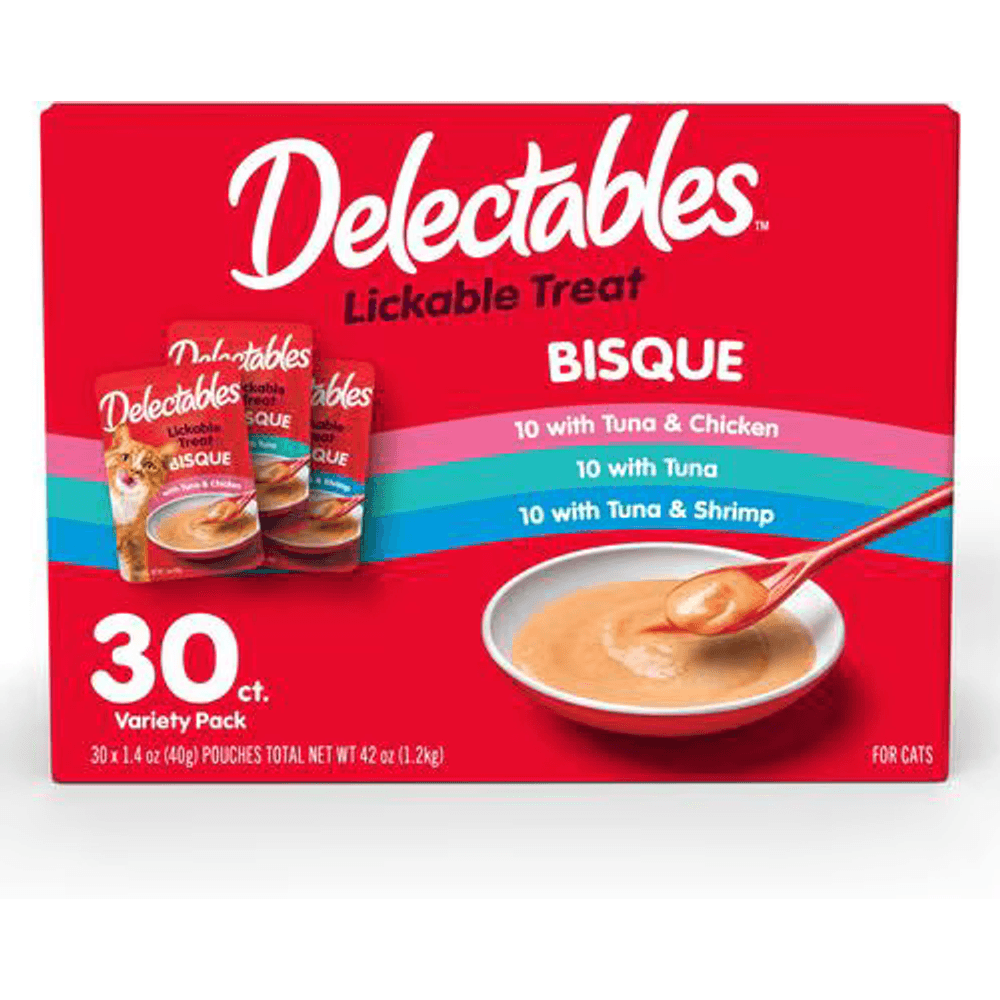
This is an optional cat treat. Review its current label, ingredients, calories, and feeding directions, and count it within the total daily extras.
Webvet may earn a commission when you click through to Chewy, at no extra cost to you.
The white chocolate desserts cats actually go for
Cats cannot taste sweetness, so a plain white chocolate bar offers them no sweet reward. The draw is fat and dairy, so the white chocolate foods a cat is more likely to investigate are the creamy, buttery ones:
- Frosting and buttercream. White chocolate frosting on cupcakes and cakes is mostly butter, cream and sugar, often on top of a chocolate cake layer.
- White chocolate mocha and hot white chocolate. A mug left on a side table holds milk, sugar and, in a mocha, espresso.
- Peppermint bark. The white top is what a cat licks, but the layer underneath is often dark or semisweet chocolate.
- Ganache and mousse. White chocolate ganache is cream and white chocolate, but a dark ganache on the same dessert board is real chocolate.
- Ice cream and whipped cream. White chocolate ice cream and the whipped cream on a drink add dairy on top of the candy; our guide to ice cream for cats covers plain flavors.
- Cheesecake and dipped fruit. Cream cheese bases and white-dipped strawberries often carry a milk or dark chocolate drizzle.
If your cat licked any of these, tell the vet which dessert it was and whether chocolate of any other color was on the same plate. Cats also groom their paws and fur, so frosting or cocoa on the coat can end up swallowed.
When your cat wants in on a treat moment, reach for a treat made for cats. Cats are meat eaters, so a freeze-dried chicken treat made for cats suits them far better than anything from the dessert plate. Freeze-dried chicken such as Vital Essentials Freeze-Dried Chicken Mini Nibs gives your cat a reward of its own. Count treats within the daily food, and ask your vet first if your cat has a sensitive stomach or a health condition.

This is an optional cat treat. Review its current label, ingredients, calories, and feeding directions, and count it within the total daily extras.
Webvet may earn a commission when you click through to Chewy, at no extra cost to you.
What to do if your cat ate white chocolate
Move quickly, and start the call early:
- Separate your cat from the dessert. Put your cat in another room, clear away crumbs and licked plates, and keep the wrapper, box or recipe.
- Check the label. Look for cocoa, chocolate, a milk or dark chocolate swirl or shell, macadamia nuts, raisins, coffee and sugar substitutes.
- Count the worst case. If you are not sure how much is missing, use the largest amount that could be gone.
- Call for advice now. Call your regular vet, an emergency vet or a poison line: Pet Poison Helpline at 855-764-7661 or ASPCA Animal Poison Control at 888-426-4435. Both are US poison services open 24/7, and consultation fees may apply.
- Follow the instructions you get. That may mean bringing your cat in or watching at home for specific signs. If you go in, call ahead.
Do not induce vomiting at home or give any home remedy; leave that decision to your veterinarian.

The calculator at the top of this page is set to white chocolate. For plain white chocolate it finds no theobromine or caffeine and still tells you to call, because fat, sugar and other ingredients can make a cat sick. If the product had a milk or dark chocolate swirl, shell, layer or drizzle, switch the calculator to that chocolate type and enter that part on its own. Every cat result is a call-now result, because this calculator has no validated cat thresholds.
What to have ready when you call
The person on the phone will ask about the whole product, not just the white chocolate:
- Your cat's weight, age and health. Mention past pancreatitis, a sensitive stomach, heart disease or diabetes.
- The exact product. Brand, flavor and whether it was a bar, chips, frosting, a drink, a cookie or a dessert.
- Every ingredient that matters. Cocoa or chocolate, nuts, raisins, coffee and sugar-free sweeteners.
- What your cat actually got. A lick of frosting, a few laps of a drink and a bite of bark are very different exposures.
- The time and any signs so far. When it happened, and any vomiting, diarrhea or restlessness since.
A cat that ate white chocolate but is acting fine still needs that call. Stomach upset can take time to show, and any real chocolate in the product can cause signs hours after eating. Acting fine is not proof your cat is safe.
Why a cat's small body changes the math
Vets measure food toxins against body weight, in milligrams per kilogram, so the same lick means more for a small animal. A 10-pound cat weighs about 4.5 kilograms, and a 5-pound kitten about 2.3. A spoonful of ganache or a lick of frosting that barely registers for a large dog is a much bigger share of a cat's body weight, whether the problem is fat, sugar or hidden chocolate.
Three more things set cats apart:
- No validated cat thresholds. The dose bands used for chocolate come from dogs, and this calculator has no validated cat thresholds, so there is no amount a cat can be left to wait out. Call after any amount, with the label in hand, and let the vet decide what the numbers mean.
- Sensitivity to caffeine. Cats are more sensitive to caffeine than people are, according to VCA Animal Hospitals, and hidden milk or dark chocolate, or a coffee drink, brings caffeine along with theobromine.
- Rich licks. A cat that investigates a dessert may go for the frosting, cream or ganache, often its richest parts, so even a small amount is concentrated fat and sugar.
Speed matters for your budget as well as your cat. VCA Animal Hospitals notes that with chocolate poisoning in cats, the sooner treatment begins, the better the prognosis and the less costly the treatment. Our emergency vet cost guide explains what drives a bill like this.
Pet insurance does not cover problems that start before a policy is in place, and waiting periods and exclusions apply, so it is a decision to make before dessert season. Our pet insurance planner builds a coverage checklist for your cat and links to Lemonade for a personalized quote.
Compare coverage choices for your pet, then request a quote directly on Lemonade.
- Check a price for your pet
- Review available coverage choices
- See the terms before you decide
Eligibility, waiting periods, limits and exclusions apply.
Webvet may earn a commission when you click through to Lemonade, at no extra cost to you.
White chocolate products that hide real chocolate
The words "white chocolate" on the front of a package do not mean the product is free of cocoa. Many white chocolate treats, especially holiday ones, combine white chocolate with milk or dark chocolate, and that part carries theobromine and caffeine. Read the ingredient list: "cocoa butter" alone points to true white chocolate, while "cocoa", "cocoa powder", "chocolate", "chocolate liquor" or "cocoa mass" means real chocolate is in the product.
| White chocolate product | Where real chocolate can hide | Theobromine and caffeine in that part (USDA) |
|---|---|---|
| Plain white chocolate bar, buttons or chips | Nowhere, if the label lists only cocoa butter | 0 milligrams |
| Swirled, marbled or "white and milk" bar | A milk chocolate swirl or half | About 64 milligrams per ounce of the milk chocolate part |
| Peppermint bark | A dark or semisweet layer under the white | About 155 (semisweet) to 250 (70 to 85 percent dark) milligrams per ounce of that layer |
| White truffles and holiday assortments | Milk or dark chocolate shells and mixed pieces in one box | About 64 (milk) to 250 (dark) milligrams per ounce |
| White-dipped strawberries, pretzels or cookies | A milk or dark chocolate drizzle | About 64 to 250 milligrams per ounce, depending on the drizzle |
| Cookies and cream bars or ice cream | Chocolate cookie pieces made with cocoa | About 22.7 milligrams per Oreo-style cookie |
| White chocolate cake or cheesecake | Chocolate ganache, cake layers or shavings | Depends on the recipe |
| White chocolate mocha | Espresso caffeine, and cocoa in some recipes | Not covered by these chocolate figures; tell the vet the drink and size |

Swirled, marbled, dipped and coated products are the common way a cat that "only licked white chocolate" actually got real chocolate. Peppermint bark often has dark or semisweet chocolate under the white top, and a "white and milk" bar is part milk chocolate. Cookies-and-cream products look white, but the dark cookie pieces are made with cocoa; our guide to Oreos for cats covers them. Chocolate hazelnut spread used as a filling or drizzle carries cocoa too, as our guide to Nutella for cats explains. If you cannot tell which chocolate the layer was, say so on the call.
Holiday tins, baking cupboards and candy drawers often keep white, milk and dark chocolate side by side, so a cat that gets into one may have access to all of them. Cats can paw open lower cabinet doors, and a strap lock such as the MyPet Safety Paws Mischief Minder can help keep a baking cupboard full of chips, candy melts and baking bars closed.
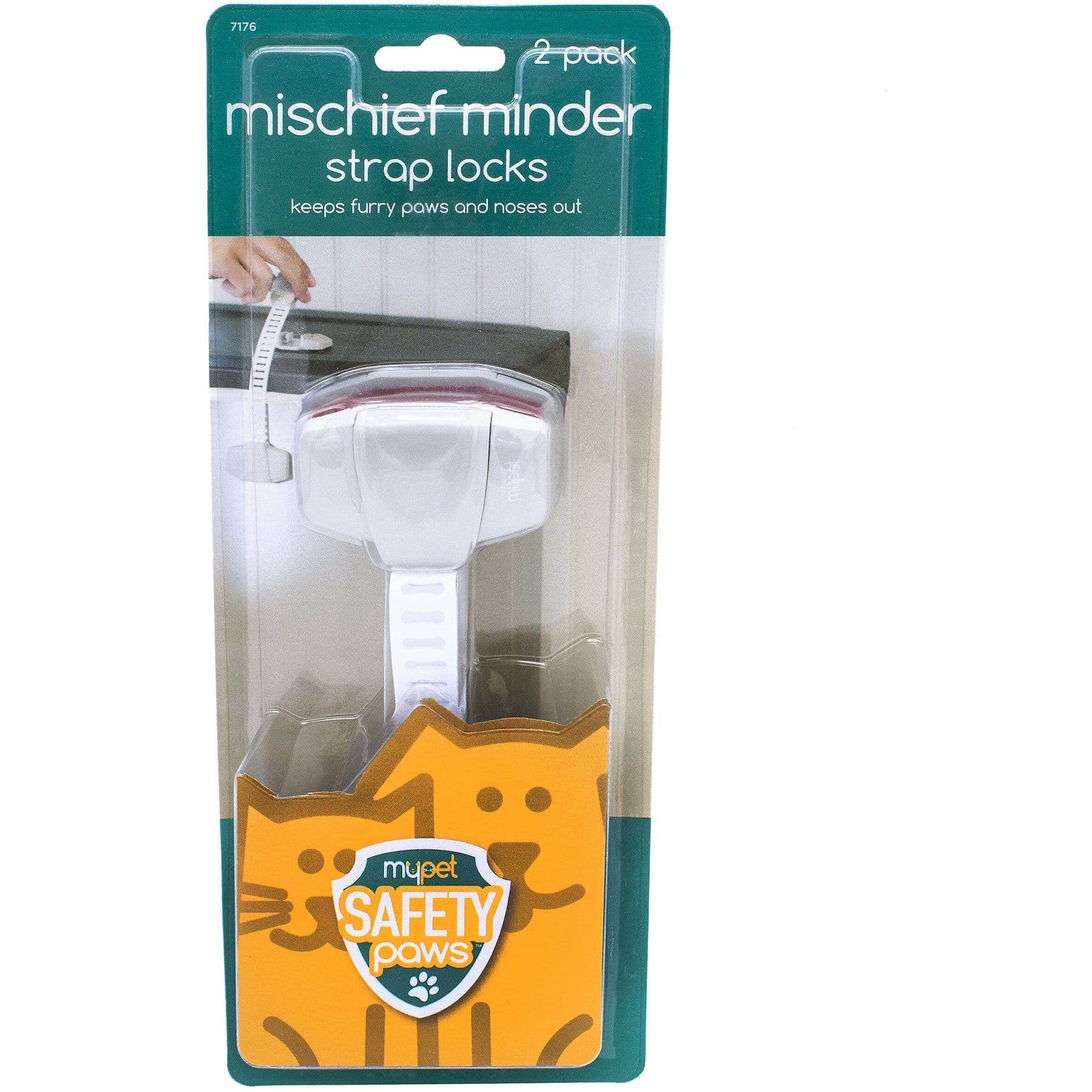
Adjustable strap locks for cabinet doors, fridge doors and trash-can lids, so jars and wrappers stay out of reach.
Webvet may earn a commission when you click through to Chewy, at no extra cost to you.
Add-ins to check on the label
White chocolate is often paired with ingredients that need their own assessment:
- Macadamia nuts. White chocolate macadamia cookies are a classic pairing. The nuts add fat and need their own assessment; see our guide to macadamia nuts for cats.
- Raisins and dried fruit. The effect of raisins on cats is not well defined, so mention any raisins or currants on the call.
- Xylitol and other sugar substitutes. Sugar-free and keto white chocolate may contain xylitol, sometimes listed as birch sugar. As our guide to xylitol for cats explains, the dangerous low blood sugar xylitol causes in dogs has not been shown in cats, but the feline evidence is limited and does not prove every product safe. Read out the full sweetener list.
- Coffee and espresso. White chocolate mocha drinks, tiramisu and coffee-flavored candies add caffeine, and cats are more sensitive to caffeine than people are.
White chocolate vs milk and dark chocolate for cats
Is white chocolate toxic to cats in the same way as other chocolate? No. Theobromine and caffeine rise with cocoa content, so for chocolate poisoning, milk chocolate is worse than white, and dark chocolate and cocoa are far worse than both. Cornell University's College of Veterinary Medicine ranks toxicity potential highest in cocoa powder, then unsweetened baker's chocolate, semisweet and sweet dark chocolate, and then milk chocolate. White chocolate is not on Cornell's list. With no cocoa solids, and 0 milligrams of theobromine in USDA's record for plain white chocolate, it would sit below all of them.
| Chocolate type | Theobromine and caffeine per ounce (USDA) | Amount that brings a 10-pound cat to the lowest dog reference level (not a cat threshold) |
|---|---|---|
| White chocolate | 0 milligrams | Not reached by theobromine |
| Milk chocolate | About 64 milligrams | About 1.4 ounces |
| Semisweet | About 155 milligrams | About 0.6 ounce |
| Dark, 70 to 85 percent | About 250 milligrams | About 0.4 ounce |
| Baker's chocolate | About 391 milligrams | About 0.2 ounce |
| Cocoa powder | About 649 milligrams | About 0.1 ounce |
These numbers are dog reference levels, not cat thresholds. The Merck Veterinary Manual links 20 milligrams per kilogram to mild signs in dogs; for a cat it is only a way to compare products, never a safe line, and smaller amounts still mean a call now. What the comparison does show is how much a hidden layer matters: about 0.4 ounce of 70 to 85 percent dark chocolate in a slab of peppermint bark brings a 10-pound cat to a dog reference level that no amount of plain white chocolate reaches.
For milk and dark chocolate in general, see our food guide can cats eat chocolate. If your cat ate a chocolate dessert rather than white chocolate, our page on what to do when a cat ate chocolate covers brownies, cake and cocoa. If you also have a dog, our guide to whether dogs can eat white chocolate covers the dog side, and the chocolate toxicity calculator works out the dose for either pet. Mention both pets on the same call.
How to cat-proof dessert season
A high shelf keeps candy from a dog, but not from a cat that jumps onto counters and tables. Cat-proofing white chocolate means covering, closing and clearing:
- Cover desserts with a lid or cake dome, or refrigerate them, instead of leaving frosting and ganache out to set.
- Store white chocolate chips, candy melts and baking bars in a closed cupboard.
- Rinse mugs, bowls, whisks and spoons right away. Cats find the last of the mocha or the batter.
- Clear dessert plates from coffee tables and side tables as soon as people finish.
- Keep gift tins, advent calendars and candy dishes off surfaces your cat can reach.
- Ask guests not to share desserts with your cat.

For a full room-by-room checklist, see our guide to poison-proofing your cat's home.
Signs to watch after a cat eats white chocolate
Most problems from plain white chocolate come from the milk, fat and sugar, so the first signs usually involve the stomach, such as vomiting or diarrhea. Our cat vomiting symptom checker helps you describe what you see while you call.
If the product hid milk or dark chocolate, VCA Animal Hospitals lists these signs of chocolate poisoning in cats:
- Vomiting
- Diarrhea
- Increased thirst
- Panting or restlessness
- Excessive urination
- A racing heart rate
In severe cases, VCA lists abnormal heart rhythms, muscle tremors and seizures, and notes that signs can take several hours to develop and can last for several days. The detailed timing figures come from dogs, so treat them as a rough guide for a cat: Cornell University's College of Veterinary Medicine puts the onset in dogs at 2 to 12 hours after eating, and the Merck Veterinary Manual describes onset within 6 to 12 hours. Our suspected poisoning guide for cats can help you organize what you see, but do not let it replace the call.
Frequently Asked Questions
Will a tiny bit of white chocolate hurt my cat?
Even a tiny bit of white chocolate can hurt your cat, and only a vet can judge the risk. Plain white chocolate has no theobromine or caffeine according to USDA FoodData Central, but its milk, fat and sugar can still upset a cat's stomach, and a cat's small body makes a small amount count for more. The bigger question is whether the "white" chocolate hid a milk or dark chocolate swirl, shell or drizzle. Check the label, then call your vet or a poison line with your cat's weight and the product.
Is it okay if my cat ate a little bit of chocolate?
No. If your cat ate even a little bit of chocolate, it is not okay to wait: there is no safe amount for a cat to wait out, so call your vet or a pet poison line now, even if your cat seems normal. Cats are more sensitive to caffeine than people are, and a little milk chocolate, dark chocolate or cocoa can be a meaningful dose for a small body. If the chocolate was plain white chocolate, the stimulant risk is far lower, but the call is still the right step. Have the wrapper, your cat's weight and the time ready.
Can I let my cat lick chocolate?
No. Do not let your cat lick chocolate of any kind, including white chocolate, frosting, mocha foam or a spoon of ganache. Milk and dark chocolate carry theobromine and caffeine, and white chocolate brings milk, fat and sugar that a cat does not need and cannot taste as sweet. A lick also teaches your cat to return to the dessert plate, where the next treat may be dark chocolate. If your cat has already licked some, call your vet or a poison line and describe exactly what it was.
How long after eating chocolate will a cat show symptoms?
How long symptoms take to show varies: signs can take several hours to develop and can last for several days, according to VCA Animal Hospitals. The detailed timing figures come from dogs, where Cornell University's College of Veterinary Medicine puts the onset at 2 to 12 hours after eating. A cat that seems normal soon after eating chocolate can still become sick later, so call your vet or a poison line now rather than watching for symptoms first. With plain white chocolate, stomach upset from the fat and dairy can also take time to appear.
Can a cat recover from chocolate poisoning?
Cats can recover, and the outlook is best when treatment starts early. It depends on the chocolate type, the amount, your cat's weight and health, and how quickly care begins. VCA Animal Hospitals notes that the sooner treatment begins, the better the prognosis and the less costly the treatment, while complications such as aspiration pneumonia from vomiting, or signs that last a long time, worsen the outlook. Call your vet or a poison line now with the wrapper and your cat's weight.
Can white chocolate kill a cat?
Plain white chocolate is very unlikely to cause chocolate poisoning, because USDA FoodData Central lists no theobromine or caffeine in it. Serious harm after eating a white chocolate product can still happen through other routes: hidden milk or dark chocolate, coffee, add-ins such as nuts or raisins, swallowed foil or wrappers, and the fat, which the Merck Veterinary Manual notes may trigger pancreatitis in susceptible animals. This calculator has no validated cat thresholds, so there is no amount to rule in or out at home. Call your vet or a poison line after any amount.
Chocolate safety guides
Safe alternatives
More sweets & treats for cats
Sources
- USDA FoodData Central
USDA FoodData Central lists plain white chocolate at 0 milligrams of theobromine and 0 milligrams of caffeine, because it is made from cocoa butter rather than the cocoa solids where those stimulants sit, so it is a very different exposure from milk or dark chocolate.
- Merck Veterinary Manual
Fat. Cocoa butter makes white chocolate rich, and the Merck Veterinary Manual notes that the high fat content of chocolate products may trigger pancreatitis in susceptible animals.
- VCA Animal Hospitals
VCA Animal Hospitals notes that with chocolate poisoning in cats, the sooner treatment begins, the better the prognosis and the less costly the treatment.
- Cornell University College of Veterinary Medicine
Cornell University's College of Veterinary Medicine ranks toxicity potential highest in cocoa powder, then unsweetened baker's chocolate, semisweet and sweet dark chocolate, and then milk chocolate.
Reviewed by Dr. Athena Gaffud, DVM
General guidance based on credible veterinary sources; not a diagnosis or a substitute for your veterinarian. If your pet ate something toxic or is unwell, contact your vet or a pet poison line right away.