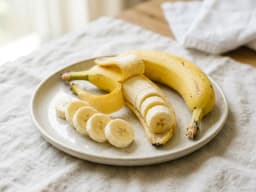
Can cats eat bananas?
Safe in moderationPlain banana flesh is non-toxic to cats. It is optional, so use a small calorie-counted amount only if it fits the cat's complete diet.


Medically reviewed by Dr. Athena Gaffud, DVM · Last reviewed
Can Cats Eat Bananas?
Plain banana flesh is non-toxic to cats. It is optional in a complete feline diet, and there is no evidence-based fixed piece size or universal frequency. Cats can digest and absorb some plant-derived nutrients, although banana composition does not prove a meaningful clinical benefit from a taste.
- 1Plain banana flesh is non-toxic to cats.
- 2Cats can digest and absorb some plant-derived nutrients, though banana is unnecessary in a complete diet.
- 3Banana does not directly cause feline diabetes; overall calorie balance and obesity matter.
- 4Feline grape and raisin evidence remains anecdotal, and xylitol has not produced the dog-like syndrome in a study of six healthy cats.
- 5There is no universal fixed-size, kitten, diabetes, or sensitivity rule; use individual veterinary guidance.


Treats should stay under 10% of your cat's daily calories. Smalls makes the rest, built around the meat an obligate carnivore actually needs.
- Human-grade ingredients, protein first
- Built for obligate carnivores
- Fresh meals delivered to your door
Webvet may earn a commission when you click through to Smalls, at no extra cost to you.
Are Bananas Safe for Cats?
Banana is not a recognized feline toxin. Do not list xylitol as an established cat poison or present grape and raisin kidney failure as proven feline disease. The controlled xylitol evidence includes only six healthy cats and is reassuring but limited, while feline grape and raisin reports remain anecdotal and the true risk is uncertain.
A cat's small size means calorie needs can be modest, but it does not create a universal portion. Banana contains carbohydrate, sugar, fiber, and other nutrients that cats can process to some degree. The relevant questions are total calories, complete diet, health, amount, and tolerance.
Nutritional Context for Bananas and Cats
Banana contains potassium, vitamin B6, vitamin C, fiber, and carbohydrate. Put peels in a covered bin and close smoothie or dried-chip packages after use. Prevention matters because a cat can reach the concentrated or mixed form even when no plain banana was intentionally offered. Cats remain obligate carnivores because several essential nutrient needs must be met with animal-derived ingredients, but they can digest and absorb some plant-derived nutrients. A small banana portion does not fill a demonstrated nutrient gap in a complete diet.

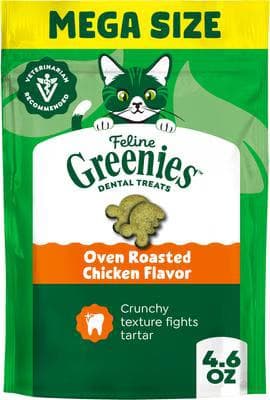
This is a dental cat treat. Follow the current label and ask your veterinarian how it fits alongside tooth brushing and professional dental care.
Webvet may earn a commission when you click through to Chewy, at no extra cost to you.
Regular extras can contribute calories and weight gain, and obesity is a risk factor for feline diabetes. That does not show that banana itself causes diabetes. Cats with diabetes, obesity, or a therapeutic diet need case-specific advice from the treating veterinarian rather than a blanket banana prohibition.
How Much Banana Can a Cat Eat?
There is no evidence-based lick or fixed piece serving for every cat. If banana is approved, use the cat's daily energy requirement, total treat allowance, and the calories in the actual portion. Kittens and cats with medical diets need individualized guidance.
| Cat or situation | Evidence-based guidance | Reason |
|---|---|---|
| Healthy adult | Use an individual calorie plan | No universal piece count |
| Kitten | Ask before adding optional food | Growth diet must remain complete |
| Diabetes or obesity | Follow the treating veterinarian | Overall calories and diet matter |
| Therapeutic diet | Do not add unapproved extras | Nutrient targets may be controlled |
How to Safely Offer Banana to Your Cat
Remove the peel and prepare a small piece of plain flesh that the cat can manage. Banana flesh, peel, dried chips, frozen pieces, baby-food puree, and smoothie are separate forms. Peel is fibrous and unnecessary, while commercial chips may be fried or sweetened and have a different calorie density from fresh fruit. A smoothie can add dairy, chocolate, sweeteners, protein powders, or other fruits. Identify the exact form before deciding that the exposure was simply banana. The peel is not toxic, but a large swallowed piece may create a patient-specific foreign-body concern. A swallowed peel does not predict choking or obstruction; the piece, patient, and symptoms guide assessment.

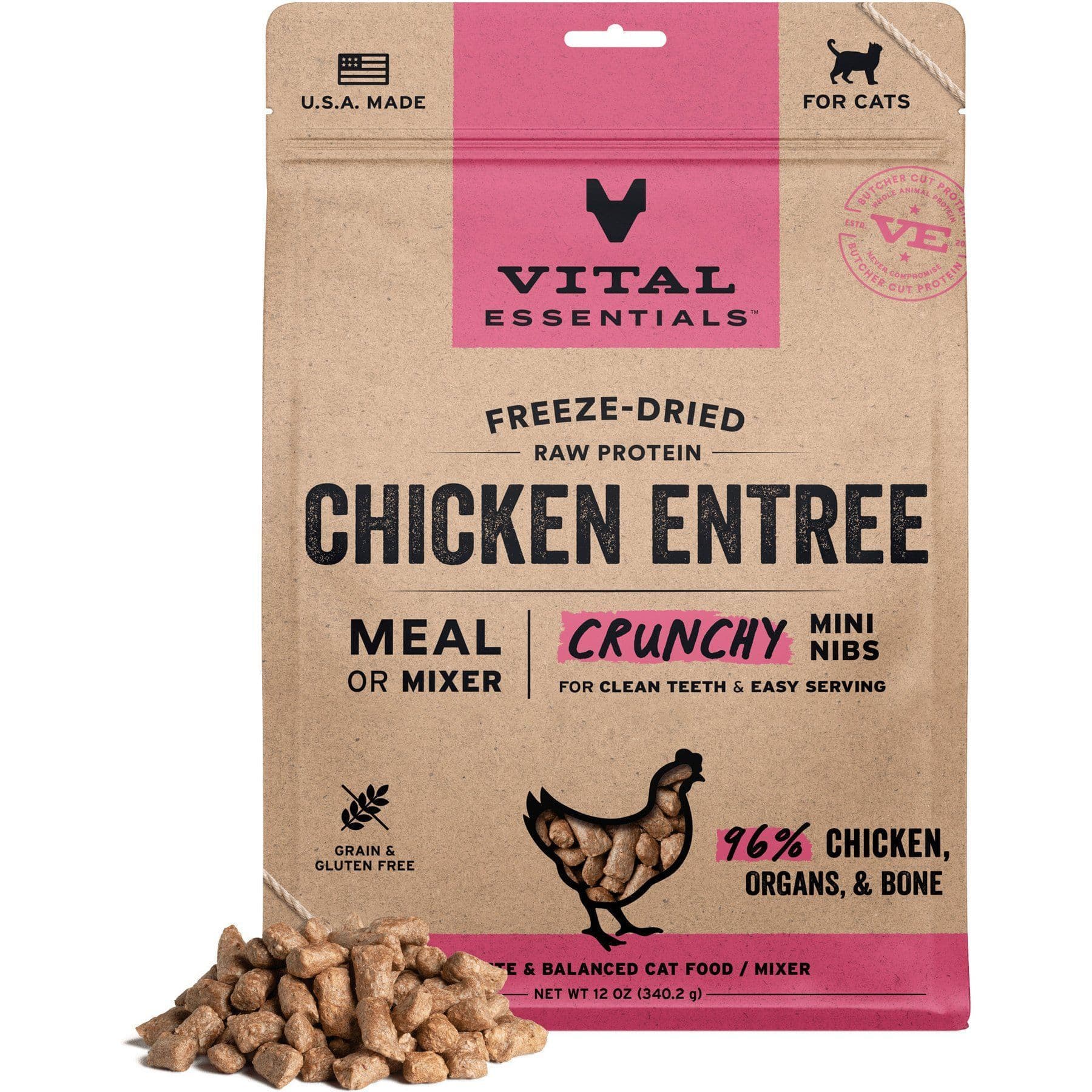
This is an optional cat treat. Review its current label, ingredients, calories, and feeding directions, and count it within the total daily extras.
Webvet may earn a commission when you click through to Chewy, at no extra cost to you.
Introduce any optional food cautiously and stop if it causes gastrointestinal upset. Available veterinary guidance does not establish a special one-day reaction window, a blanket medication rule, or a claim that banana makes cats reject complete food.
Risks of Feeding Banana to Cats
A large amount of any new food may cause gastrointestinal upset or add substantial calories. Banana does not directly cause feline diabetes, and its fiber and sugar are not inherently unusable. A peel or large piece is a patient-specific foreign-body question, not an automatic blockage.
Optional foods should not displace a complete feline diet, but a small banana taste does not erase nutritional balance. If a peel or large frozen piece was swallowed, report the form, approximate dimensions, chewing behavior, and any gagging or vomiting. Do not assume that a soft fruit name rules out a texture concern. Persistent vomiting, abdominal pain, appetite loss, or difficulty passing stool warrants veterinary assessment. Use total calories and the individual cat's diet rather than statements that fruit offers zero nutrition or crowds out meat with every exposure.

Better Treats for Cats: Meat-Based Alternatives
A plain animal-protein treat may fit some cats, but it also adds calories and can conflict with a therapeutic diet. Choose a veterinarian-approved option and prepare it without bones, Allium seasoning, or other hazards.

This is an optional cat treat. Review its current label, ingredients, calories, and feeding directions, and count it within the total daily extras.
Webvet may earn a commission when you click through to Chewy, at no extra cost to you.
Whatever you choose, serve it plain and unseasoned. No salt, no butter, no onion, and no garlic, all of which are far more dangerous to cats than a bit of sugar. These meat-based options give your cat something it will actually enjoy and benefit from, while keeping treats to that same modest ten percent of daily calories. Next to a scrap of chicken, a slice of banana simply cannot compete for a cat.
The Bottom Line
Banana flesh is non-toxic and unnecessary. A soft texture can make banana useful for hiding medicine only if the veterinarian approves it and the cat reliably receives the full dose. Count the food used for medication in the daily extras, and do not mix a drug into a full bowl that may be left unfinished. For diabetes, weight management, food trials, or gastrointestinal disease, follow the existing diet plan rather than using banana as a fiber, potassium, or stool remedy. If a cat is interested and a veterinarian considers it appropriate, use a small calorie-counted amount of plain flesh. Cats can digest and absorb some plant-derived nutrients; for a cat with diabetes, any banana taste must fit the veterinarian-directed complete diet and calorie plan.
Frequently Asked Questions
Can cats eat banana peels?
Banana peel is not toxic, but a large swallowed piece may be a patient-specific foreign body. Contact a veterinarian for repeated vomiting, abdominal pain, appetite loss, or difficulty passing stool.
Can cats eat banana bread or banana chips?
Mixed banana products vary. Read the full recipe for chocolate, raisins, alcohol, xylitol, nutmeg, and other ingredients; do not assume every bread or chip has the same risk.
Do cats even like bananas?
Some cats investigate banana because of smell, texture, moisture, or novelty. Their taste biology does not mean they cannot digest or absorb any plant-derived nutrient.
Can kittens eat bananas?
There is no evidence-based blanket kitten ban or special digestive-development claim. Growth food must remain complete and balanced, and a veterinarian can advise whether any optional treat fits.
How much banana is safe for a cat?
There is no universal piece size. Calculate any amount from the cat's individual calorie plan and use veterinarian guidance for diabetes, obesity, gastrointestinal disease, or a therapeutic diet.

More safe treats
More fruits for cats
Sources
- ASPCA: Toxic and Non-toxic Plants, Banana
Lists banana as non-toxic to dogs and cats.
- Merck Veterinary Manual: Overview of Nutrition in Small Animals
Supports complete and balanced feeding and patient-specific nutrition; it does not establish clinical benefit from a treat portion.
- Jerzsele et al.: Effect of xylitol on blood glucose and liver function in cats
A small controlled study of six healthy cats found no dog-like hypoglycemia or liver injury, while leaving broader feline safety uncertain.
- Merck Veterinary Manual: Grape, Raisin, and Tamarind Toxicosis in Dogs
Establishes grape and raisin renal toxicosis in dogs while not establishing the same detailed syndrome in cats.
Reviewed by Dr. Athena Gaffud, DVM
General guidance based on credible veterinary sources; not a diagnosis or a substitute for your veterinarian. If your pet ate something toxic or is unwell, contact your vet or a pet poison line right away.