
Can cats eat eggs?
SafeFully cooked plain egg can be a treat, not a complete diet. Raw egg may carry Salmonella; kidney-diet fit and allergy need veterinary assessment.


Medically reviewed by Dr. Athena Gaffud, DVM · Last reviewed
Can Cats Eat Eggs?
Yes, cats can eat eggs as long as they are fully cooked and served plain. A spoonful of plain scrambled or hard-boiled egg is a safe, protein-rich treat for a healthy adult cat. Egg supplies animal protein and other nutrients, but it does not exactly match a cat's required nutrient profile and is not a substitute for complete feline food. The two firm rules are cook it completely and add nothing to it, and keep the portion tiny.
- 1Verdict: safe in small amounts when fully cooked and plain.
- 2Never feed raw egg. Raw whites carry salmonella risk and contain avidin, which blocks biotin absorption.
- 3No salt, butter, oil, cheese, or seasoning. Onion and garlic are especially toxic to cats.
- 4A spoonful of cooked egg occasionally is plenty. Treats should stay under 10 percent of daily calories.
- 5Egg is a treat, not a meal. It is not nutritionally complete for a cat.

Treats should stay under 10% of your cat's daily calories. Smalls makes the rest, built around the meat an obligate carnivore actually needs.
- Human-grade ingredients, protein first
- Built for obligate carnivores
- Fresh meals delivered to your door
Webvet may earn a commission when you click through to Smalls, at no extra cost to you.
Why Egg Suits a Cat's Carnivore Body
Cats have species-specific requirements for animal-derived nutrients, and cooked egg can contribute protein and other nutrients. That does not mean cats cannot use any plant-derived ingredient or that fruit, vegetables, and grains provide categorically no benefit. Egg remains an optional treat, not a complete diet.


This is an optional cat treat. Review its current label, ingredients, calories, and feeding directions, and count it within the total daily extras.
Webvet may earn a commission when you click through to Chewy, at no extra cost to you.
That said, an egg is a supplement, not a substitute. A cat needs a complete, balanced diet formulated for cats, and no single human food covers every requirement. Think of egg the way you would a lean-protein treat: a small, occasional bonus on top of proper cat food. A whole egg carries roughly 78 calories, which is a large share of the daily energy budget for an eight to ten pound cat, so even though egg is wholesome, the portion has to stay small to avoid unbalancing the diet or adding unwanted weight.
Nutritionally, a cooked egg brings a handful of things a carnivore uses well. Per 100 grams it supplies about 13 grams of complete protein alongside riboflavin, selenium, and choline, plus fat for energy and fat-soluble vitamins. The protein quality is high, meaning the amino acid profile closely matches what a cat's body needs, so very little goes to waste. None of this makes egg a replacement for a balanced formula, but it does explain why a spoonful can be a genuinely nourishing treat rather than empty calories. Its nutrient profile can fit a small treat, but carbohydrate content alone does not determine whether a food contributes usable nutrients.
Why Raw Egg Is Off the Table
Cook eggs fully. Raw and undercooked eggs can carry Salmonella; affected cats may show vomiting, diarrhea, lethargy, and dehydration in an affected cat. Cats may also shed Salmonella and expose people in the household. The cited FDA source does not support a universal severity comparison based only on body size.
There is a second, quieter reason to cook eggs. Raw egg white contains a protein called avidin that binds biotin, one of the B vitamins, and blocks its absorption. An occasional raw white will not cause a deficiency, but regular feeding over time can lead to biotin problems that show up as a poor coat and skin trouble. Cooking denatures avidin and neutralizes the bacteria at the same time, so a fully cooked egg sidesteps both hazards at once.


This is an optional cat treat. Review its current label, ingredients, calories, and feeding directions, and count it within the total daily extras.
Webvet may earn a commission when you click through to Chewy, at no extra cost to you.
How to Serve Egg to Your Cat
Preparation is simple because the goal is plain. Scramble or hard-boil the egg with nothing added: no salt, no butter, no oil, no milk, and no seasoning. Let it cool to room temperature so it does not burn a curious mouth, then break off a small piece or offer a spoonful. Both the yolk and the white are fine once cooked. Watch your cat the first time, as with any new food, and wait a day to see how their stomach handles it before offering egg again.
Avoid the temptation to cook the egg the way you would enjoy it. A splash of milk in the scramble is a common mistake, and it matters because many adult cats are lactose intolerant and cannot digest dairy well, which can trigger loose stools. Added dairy or fat may not fit an individual cat, while onion or garlic requires dose-based toxicology assessment; these ingredients are not one equivalent hazard category. If you are making breakfast for yourself, set aside a plain portion before you add fat and flavor, then let your cat have that. Keeping it boring is exactly what keeps it safe.

When to Hold Off on Egg
Egg is safe for most healthy adult cats, but a few situations call for caution. Overweight cats do not need the extra calories, so egg is a poor fit while a cat is dieting. Whether egg fits a kidney or other therapeutic diet depends on the individual prescription and should be confirmed with the veterinary team. Itching, ear disease, and gastrointestinal signs are nonspecific; suspected egg allergy requires an elimination diet followed by challenge. Kittens are best kept on a complete kitten diet, with treats introduced only in tiny tastes once they are eating solid food well.
Cat-Safe Alternatives to Egg
If you want to rotate your cat's treats, stay in the protein aisle, because meat and fish are what a carnivore actually wants. A few pieces of plain cooked chicken is arguably the ideal cat treat. A little flaked plain cooked fish works too, in small amounts and not as a daily habit. A lick of plain meat baby food with no onion or garlic, or a proper store-bought cat treat, rounds out the options. Choose treats for calorie fit, safety, and individual tolerance; plant origin alone does not make a food nutritionally useless or predict gastrointestinal upset.
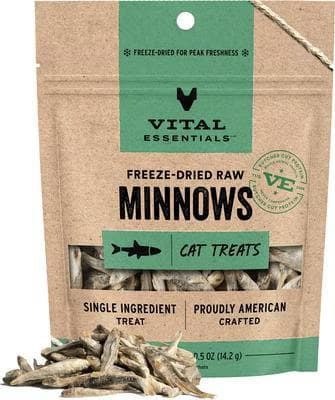
This is an optional cat treat. Review its current label, ingredients, calories, and feeding directions, and count it within the total daily extras.
Webvet may earn a commission when you click through to Chewy, at no extra cost to you.
Whichever treat you choose, keep the same three rules that apply to egg: cook it fully, serve it plain, and keep the amount tiny. If your cat already loves cooked chicken, you can simply alternate it with egg so treat time stays interesting without ever displacing their balanced cat food.

Frequently Asked Questions
Can I give my cat an egg every day?
No, daily egg is too much. Egg is calorie-dense and not nutritionally complete for a cat, so treats like egg should stay under about 10 percent of daily calories. A spoonful once or twice a week as an occasional treat is a better rhythm than a piece every day.
Can I give my cat scrambled eggs?
Yes, plain scrambled egg is fine as long as it is cooked with nothing added. Do not use butter, oil, milk, salt, cheese, or seasoning, and never onion or garlic. Let it cool and offer just a small spoonful.
Can cats eat raw eggs?
Raw eggs may carry Salmonella. Repeated raw-white intake can reduce biotin availability because of avidin, while yolk contains biotin; this is a chronic dietary concern, not acute avidin poisoning. Cook eggs fully before sharing them.
Can cats eat egg yolk and egg white?
Yes, once cooked, both the yolk and the white are safe for cats. The avidin concern applies only to raw white, so a fully cooked egg lets your cat have both parts without that worry. Keep the total serving small.
My cat ate egg with onion or garlic. What should I do?
Contact your vet right away. Onion and garlic are toxic to cats and can damage red blood cells. Call your vet, the Pet Poison Helpline at 855-764-7661, or the ASPCA Animal Poison Control Center at 888-426-4435, and watch for vomiting, weakness, pale gums, or dark urine.
More safe treats
More dairy & eggs for cats
Sources
- FDA: Think Food Safety and Be Salmonella Safe
Raw or undercooked eggs can carry Salmonella; the source does not verify every organism named in the live copy.
- Merck Veterinary Manual: Nutritional Requirements of Small Animals
Repeated raw egg white can impair biotin availability; yolk contains biotin and the issue is not acute poisoning.
- Merck Veterinary Manual: Cutaneous Food Allergy in Animals
Egg allergy requires elimination and challenge rather than a symptom list.
- Merck Veterinary Manual: Overview of Nutrition in Small Animals
Cooked egg can contribute nutrients but is not a complete feline diet; plant-derived ingredients are not categorically useless.
- Merck Veterinary Manual: Garlic and Onion Toxicosis in Animals
Onion and garlic can cause dose-dependent oxidative red-cell injury; a seasoned egg dish requires ingredient- and amount-specific assessment.
- WSAVA: Feeding Treats to Your Cat
Optional egg treats should fit the individual calorie allowance and should not displace complete feline nutrition.
Reviewed by Dr. Athena Gaffud, DVM
General guidance based on credible veterinary sources; not a diagnosis or a substitute for your veterinarian. If your pet ate something toxic or is unwell, contact your vet or a pet poison line right away.