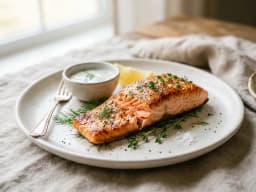
Can cats eat salmon?
SafePlain thoroughly cooked boneless salmon can be an occasional cat treat; avoid raw fish and count the exact product's calories and ingredients.


Medically reviewed by Dr. Athena Gaffud, DVM · Last reviewed
Can Cats Eat Salmon?
Plain thoroughly cooked boneless salmon can be an occasional cat treat when it fits the cat's complete diet, calorie allowance, and medical plan. It is optional, not a required source of nutrients, and a household bite should not be promoted as treatment for coat, joints, stiffness, heart, kidney, or inflammatory disease.
- 1Plain thoroughly cooked boneless salmon can be an optional cat treat.
- 2FDA supports avoiding raw animal food because of pathogen risk.
- 3Evidence does not support saying all raw salmon contains thiaminase.
- 4One bite is not a therapeutic omega-3 dose or an automatic thiamine-deficiency event.
- 5Use exact calories, ingredients, bones, preparation, and the cat's complete diet plan.

Treats should stay under 10% of your cat's daily calories. Smalls makes the rest, built around the meat an obligate carnivore actually needs.
- Human-grade ingredients, protein first
- Built for obligate carnivores
- Fresh meals delivered to your door
Webvet may earn a commission when you click through to Smalls, at no extra cost to you.
Is salmon safe for cats?
Avoid raw salmon because raw animal food can expose cats and people to pathogens. No reliable source establishes that all raw salmon contains thiaminase. Merck discusses thiaminases in certain raw fish and clams, but that general statement does not identify every salmon species or product.

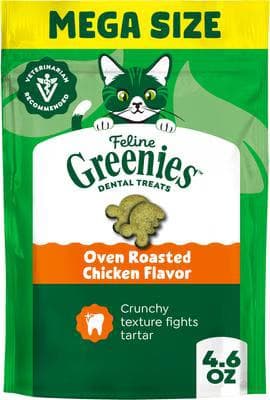
This is a dental cat treat. Follow the current label and ask your veterinarian how it fits alongside tooth brushing and professional dental care.
Webvet may earn a commission when you click through to Chewy, at no extra cost to you.
One raw bite does not automatically cause thiamine deficiency. Deficiency is associated with sustained dietary imbalance, antagonists, or inadequate complete nutrition. If a cat ate raw fish, assess the actual product, amount, source, time, and symptoms rather than diagnosing an enzyme exposure from the word salmon.
What salmon contains and what that does not prove
Salmon contains protein, fat, calories, vitamins, minerals, and long-chain omega-3 fatty acids. A nutrient list is not evidence that a treat portion produces a clinical outcome. Therapeutic fatty-acid use requires a formulated dose, a diagnosis, attention to the full diet, and veterinary monitoring.
Cats require complete feline nutrition, including species-specific nutrients. That requirement does not prove that plant protein is useless or make salmon medically necessary. A complete food can use multiple appropriately processed ingredients while meeting feline nutrient needs.
| What salmon contains | What a taste does not establish |
|---|---|
| Protein | A complete feline diet or disease treatment |
| Fat and calories | Suitability for every cat |
| EPA and DHA | A therapeutic dose for coat, joints, heart, or kidney disease |
| Vitamins and minerals | Correction of a deficiency in a cat eating complete food |
| Palatability | Safety of raw, bony, smoked, or seasoned products |

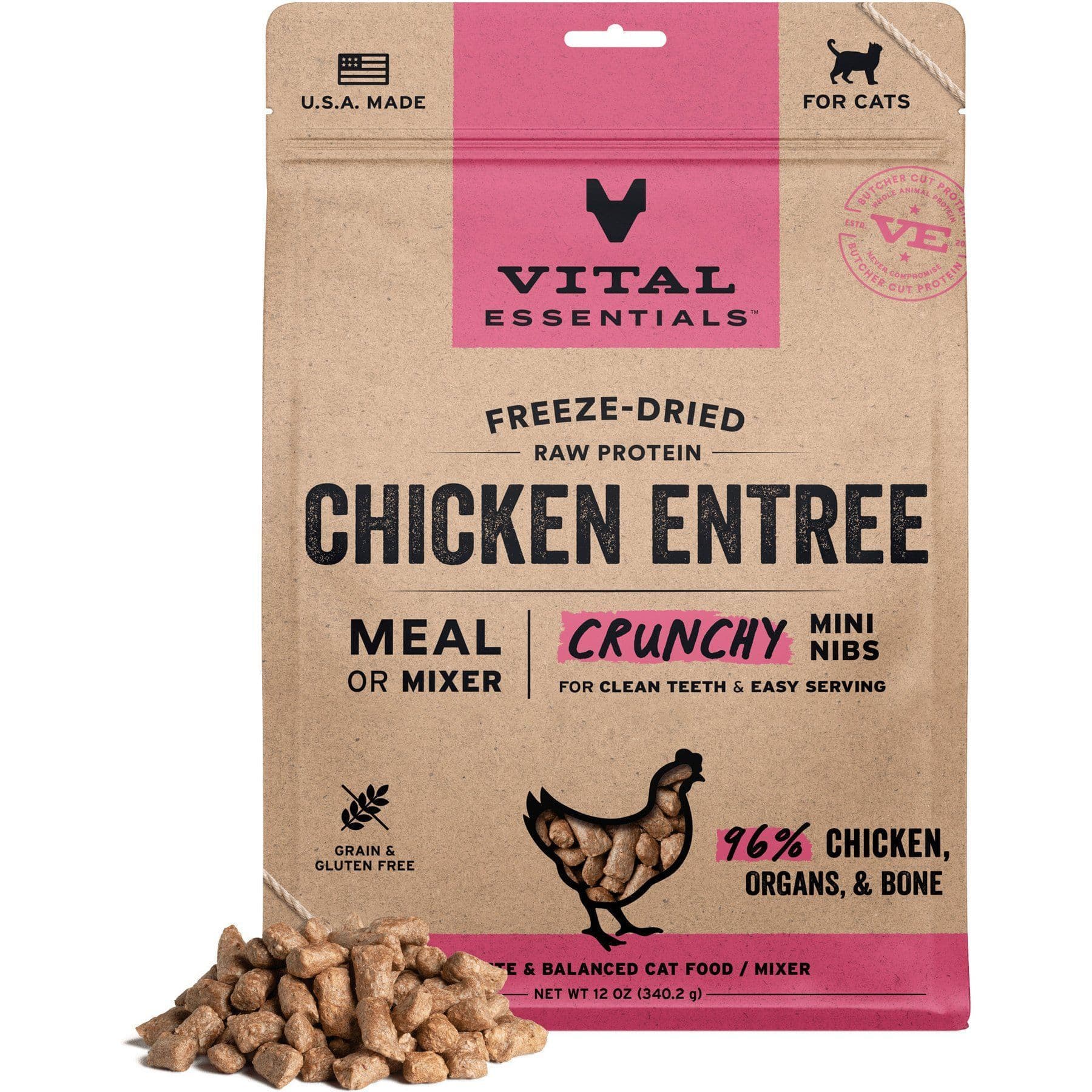
This is an optional cat treat. Review its current label, ingredients, calories, and feeding directions, and count it within the total daily extras.
Webvet may earn a commission when you click through to Chewy, at no extra cost to you.
Raw salmon: pathogen risk and evidence limits
Raw-food pathogen caution applies without guaranteeing illness from every exposure. Keep raw fish and juices away from other food, wash hands and surfaces, and contact a veterinarian when the amount is large or unknown, the cat is medically vulnerable, or signs develop. Classify the salmon product before offering or assessing it. Plain cooked boneless salmon differs from raw fish, smoked salmon, lox, jerky, canned products, sushi, fish cakes, spreads, and seasoned leftovers. Record sodium, oil, sauce, onion, garlic, dairy, bones, skewers, string, and wrappers. Raw fish adds pathogen exposure for the cat and people who handle bowls or feces. A cooked household portion remains supplemental food, while a complete feline diet containing salmon has been formulated around the full nutrient profile rather than the fish alone.
Thorough cooking reduces microbial risk but does not remove every possible concern from a mixed dish. Inspect for bones and check glazes, sauces, marinades, onion, garlic, alcohol, and packaging.
What about smoked and canned salmon?
Smoked and canned salmon vary in sodium, oil, seasonings, calorie density, and bones. Some products are water-packed and no-salt-added. Read the exact label rather than assuming every canned product is too salty or every smoked product creates toxicosis. When comparing labels, use the serving mass with the sodium and calorie values rather than the marketing name alone. Drainage changes some liquid but does not provide a reliable home calculation for how much sodium or oil remains. If a product is used at all, count the portion actually fed. Refrigerate leftovers promptly and discard spoiled fish. Keep cans, pull tabs, foil, hooks, and fishing line inaccessible, and report any missing nonfood material separately from the salmon flesh.
Deciding whether an optional salmon portion fits
No evidence-based feline salmon serving exists by body weight. Use calories from the exact cooked product within the cat's total treat allowance. A piece count ignores product size, fat, moisture, every other extra, body condition, and the complete diet.

Kittens need complete growth nutrition, and senior cats need assessment based on health rather than age alone. Cats on therapeutic diets, elimination trials, calorie restriction, or disease-management plans should receive no unapproved additions.
| Situation | How to assess it |
|---|---|
| Optional plain cooked treat | Exact calories and the cat's total extras |
| Raw or bony exposure | Product, amount, source, object size, time, symptoms |
| Therapeutic diet | Ask the treating veterinarian before any addition |
How to prepare salmon for cats
Cook salmon thoroughly, cool it, remove obvious bones, and offer only plain flesh if it has been approved. Do not use seasoned skin, butter sauce, smoked scraps, sushi, gravlax, or a mixed casserole as though it were equivalent to plain cooked fish.
Fish bones create an individualized physical risk. Size, sharpness, preparation, amount, and chewing behavior matter. Coughing, gagging, repeated swallowing, drooling, vomiting, pain, refusal to eat, or abdominal distress after a bone exposure warrants prompt advice. After an accidental exposure, note the cat's weight, health conditions, source of the fish, maximum amount missing, preparation, timing, and symptoms. Repeated vomiting, diarrhea with lethargy, abdominal pain, fever, breathing difficulty, collapse, or refusal of normal food warrants veterinary attention. Fish bones, hooks, line, skewers, and package film require separate consideration even when the salmon itself was cooked. Cats should not receive hydrogen peroxide or other dog vomiting methods. During a food trial or prescription diet, any salmon outside the specified formula can compromise the plan.

Risks and what to watch for
Salmon allergy cannot be diagnosed from one episode of itching or vomiting. If signs recur with a food, the veterinarian may recommend a structured elimination and challenge plan using a complete therapeutic diet. Random ingredient swapping can obscure the pattern.
A rich or oily salmon product may not fit a cat's calorie or medical plan, but fat is not an automatic toxin. Pancreatitis in cats is multifactorial. Repeated vomiting, lethargy, poor appetite, or abdominal discomfort needs veterinary assessment.
Choosing another optional cat treat
Other fish and meat treats are not automatically better. Compare completeness, calories, texture, bones, raw status, sodium, seasonings, and the cat's medical needs. A measured portion of regular complete food is often easiest to track.

This is an optional cat treat. Review its current label, ingredients, calories, and feeding directions, and count it within the total daily extras.
Webvet may earn a commission when you click through to Chewy, at no extra cost to you.
Frequently Asked Questions
Can cats eat raw salmon?
Plain thoroughly cooked boneless salmon can be an occasional treat if it fits the cat's plan.
Can cats eat salmon skin?
No reliable source establishes that all raw salmon contains thiaminase; avoid raw fish for pathogen risk.
Can cats eat smoked or canned salmon?
One raw bite does not automatically produce thiamine deficiency, which is linked to sustained imbalance or antagonists.
Is salmon or tuna better for cats?
Canned and smoked products vary in sodium, oil, seasoning, calories, and bones.
Can cats eat salmon every day?
No feline body-weight serving or household salmon treatment claim is established.

The useful distinction is plain cooked boneless salmon versus a raw, bony, smoked, canned, seasoned, spoiled, or packaged product. Evaluate the exact exposure and keep health claims proportional to the evidence.
More safe treats
More meat & seafood for cats
Sources
- FDA: Get the Facts about Raw Pet Food Diets
Raw animal foods can expose pets and people to pathogens; the guidance supports avoiding raw fish and shellfish without predicting illness from every bite.
- Merck Veterinary Manual: Nutritional Requirements of Small Animals
Complete diets control nutrient intake; limited-ingredient home mixtures can be inadequate, and processed plant ingredients can be digested and used.
- Cornell Feline Health Center: Feeding Your Cat
Cats require complete feline nutrition, treats should remain limited, and dairy tolerance varies among adult cats.
- FDA: Advice about Eating Fish
FDA lists salmon, sardines, and shrimp among lower-mercury choices for people; this is contaminant context, not a pet serving recommendation.
- Merck Veterinary Manual: Gastrointestinal Obstruction in Small Animals
Foreign-body risk depends on the object, amount, and patient rather than being guaranteed by a shell, hull, skin, seed, or bone.
- Merck Veterinary Manual: Pancreatitis in Dogs and Cats
Pancreatitis is multifactorial; diet recommendations and risk assessment differ by species, patient, diagnosis, and total nutrient intake.
Reviewed by Dr. Athena Gaffud, DVM
General guidance based on credible veterinary sources; not a diagnosis or a substitute for your veterinarian. If your pet ate something toxic or is unwell, contact your vet or a pet poison line right away.