Dog Poop Color Chart: What Each Color and Texture Means
Healthy dog poop is chocolate brown, log-shaped, and firm. This chart decodes every other color and texture, from yellow and green to black and red, with the likely causes and the ones that need a vet visit today.

BVMS MRCVS
Medically reviewed by Dr. Pippa Elliott, BVMS MRCVS · Last reviewed

This article contains affiliate links. Webvet may earn a commission when you buy through them, at no extra cost to you.
A dog poop color chart starts from one baseline: healthy stool is chocolate brown, firm but not hard, and free of any coating. Three colors always need a vet: black tarry stool, red or bloody stool, and white or gray stool. Everything else depends on how the color looks, how long it lasts, and how your dog is acting.
This dog poop color chart pairs each color and texture with its likely diet and medical causes and a clear action, from "watch it for a day" to "see a vet today." Each color section summarizes the essentials and points to WebVet's full guide for that color.
 Sponsored
Want a vet's take on your dog's upset stomach?
Talk to a licensed vet at Dutch over video, often the same day. They can recommend treatment and prescribe it when it's appropriate.
Use code Pets60
Plans start at $12/month · covers up to 5 pets
- Licensed vets in most states
- Rx for 150+ conditions
- 4.7 on Trustpilot
What healthy dog poop looks like
Normal stool has three features you can check in a few seconds: color, firmness, and surface. Hill's Pet Nutrition describes healthy dog poop as chocolate brown in color, firm but not hard with a playdough-like consistency, and free from coating or mucus.
The Texas A&M College of Veterinary Medicine adds that normal stool is usually light to dark brown. That range matters, because diet changes the exact shade from dog to dog without signaling disease.
- 1Start from the chocolate brown firm log baseline: medium to dark brown, segmented, easy to pick up, with no coating.
- 2Learn each color with its likely diet and medical causes before you decide how worried to be.
- 3Black tarry stool, fresh red blood, and white or gray stool are vet calls, not wait-and-see colors.
- 4Texture matters as much as color: hard pebbles, soggy piles, watery puddles, and mucus each point somewhere different.
- 5A sick-acting dog, a young unvaccinated puppy, or vomiting with abnormal stool means see a vet today.
Why stool is brown in the first place
The brown color comes from bile. The liver excretes bilirubin, a bile pigment, into the gut. According to WikiVet, intestinal bacteria break that bilirubin down to urobilinogen and then to stercobilin, the brown pigment that colors feces.
That chemistry explains most color changes. When bile is missing, stool turns pale. When food moves through too fast, bile may not finish breaking down. When blood enters the gut, it darkens or reddens the stool depending on where it entered.
The fecal score vets use
Many clinics describe firmness with the Purina fecal scoring chart, which runs from 1 to 7. Per the Purina Faecal Scoring Chart, the ideal is score 2: firm but not hard, pliable, segmented, and easy to pick up.
Score 3, a log shape with a moist surface that still holds form, sits next to normal. Checking the whole stool against the same scale each time gives you a baseline, so a change is easy to describe to your vet. Picking up every stool in a fresh poop bag also lets you look closely and save a sample when something seems off.
Most owners only look closely when something seems wrong. Glancing at color and shape on every walk is the easiest way to learn what your own dog's normal looks like, so a real change stands out quickly.
A pumpkin fiber powder to keep on hand if your vet suggests extra fiber for mildly soft or firm stool.
Webvet may earn a commission when you click through to Chewy, at no extra cost to you.
Dog poop color chart
The master chart below lists every common stool color, what it usually looks like, the likely causes from veterinary sources, and the action to take. Use it alongside your dog's behavior: a bright, eating dog with one odd stool is a different situation from a lethargic dog with the same color.
| Color | What it looks like | Likely causes | What to do |
|---|---|---|---|
| Chocolate brown | Firm, segmented log, no coating | Normal digestion with bile pigment | Nothing; this is the baseline |
| Light brown or tan | Paler but still formed | Diet and food type; normal range is light to dark brown | Monitor if firm and your dog acts normal |
| Dark brown | Deep brown, formed, not sticky | Diet; still within the normal range | Monitor; compare against true black |
| Yellow-orange | Soft or formed yellow or orange stool | Fast transit, bland diet or quick food switch, liver, pancreas, or gallbladder issues | Vet if it lasts more than a day or two |
| Green | Green or greenish tinge | Eating grass, bile changes, Giardia | Vet if it persists or comes with diarrhea |
| Black or tarry | Black, sticky, tar-like | Melena: digested blood from the upper gut, ulcers, rodenticide bleeding | See a vet today |
| Red, pink, or purple | Red streaks, fresh blood, or jam-like stool | Hematochezia, colitis, parasites, AHDS, parvo | See a vet today |
| White, gray, or chalky | Pale, gray, greasy, or chalky white | Excess calcium, bile duct blockage, poor fat digestion, EPI | See a vet today if pale or gray persists |

Reading across a row gives you the short answer. The sections below explain each color in more depth, including the overlaps between colors, such as dark red stool that sits between black and red, or greenish yellow stool that sits between yellow and green.
What does an unhealthy dog poop chart show?
An unhealthy dog poop chart shows the colors and textures that move away from the chocolate brown, score 2 baseline. The main warning signs are black tarry stool, fresh red blood, white or gray stool, and textures at the loose end of the Purina scale, from soggy piles to watery puddles, especially with mucus, vomiting, or lethargy.
How to read color and texture together
Color and texture rarely change alone. When you check unhealthy dog poop, look at these features together:
- Color: where the stool falls in the chart above
- Consistency: its fecal score, from hard pellets to liquid
- Coating: mucus, a jelly-like casing, a white film, or blood on the surface
- Contents: visible worm segments, grass, or foreign material
- Frequency: whether your dog is pooping more than usual or straining with little output
- Behavior: appetite, energy, vomiting, and gum color
Some owner questions sit just outside stool color. A dog that eats poop, including deer droppings or another dog's poop, can pick up parasites; see WebVet's guide to dog eating poop for that problem. A dog that has not pooped in 24 hours is not necessarily constipated; VCA advises calling your vet if no bowel movement follows within 48 to 72 hours, covered in dog constipation.
Brown shades: normal, light, and dark
Brown is the color you want, but brown has a range. Texas A&M describes normal stool as light to dark brown, so a light brown or dark brown stool is not abnormal on its own. What matters is whether the color is new for your dog, whether the texture changed with it, and whether your dog feels well.
What color poop is normal for dogs?
Normal dog poop is chocolate brown, from medium to dark brown, firm but not hard, and free of mucus or coating, according to Hill's Pet Nutrition. Texas A&M notes healthy stool ranges from light to dark brown. A stable shade on a consistent diet, with a score 2 shape, is normal for your dog.
Light brown dog poop
A light brown stool that is still formed usually reflects diet. Foods vary in ingredients, so the exact shade varies too. Light brown becomes worth watching when it drifts toward pale, gray, or chalky, or when it comes with greasy, bulky stool. That pattern belongs in the white and gray section below.
A probiotic and prebiotic supplement to ask your vet about for mild, short-lived soft stool.
Webvet may earn a commission when you click through to Chewy, at no extra cost to you.
Dark brown dog poop
A dog's poop that is dark brown but otherwise firm, with a dog acting normal, still sits within the normal range Texas A&M describes. The key comparison is with black. Dark brown stool keeps a brown tint and normal texture. Melena is black, sticky, and tar-like.
If you cannot tell whether a stool is very dark brown or black, treat it as black and call your vet. That is safer than guessing, because digested blood can look like a darker version of normal stool.
Brown but unhealthy
Brown color does not guarantee a healthy stool. Many unhealthy dog poop pictures of diarrhea are brown. A brown stool can still be:
- Soft and soggy, losing form when picked up (score 4 or 5)
- Shapeless piles or watery puddles (score 6 or 7)
- Coated with mucus or a jelly-like casing
- Streaked with fresh red blood
- More frequent than usual
A dog pooping more than normal often has loose stool. VCA Animal Hospitals explains that diarrhea results from faster movement of fecal material through the intestines. For causes of brown diarrhea and when it needs attention, see dog has diarrhea causes.
When stool is only slightly soft, your dog is eating, and there is no blood, vomiting, or lethargy, your vet may suggest a short wait or a dietary adjustment first. If your vet recommends added fiber, a measured powder keeps dosing consistent.
VCA advises consulting your veterinarian if frequent liquid or semi-liquid stools persist for more than two days. Cornell's Riney Canine Health Center adds that a vet visit is due when a bland diet has not worked after 2 to 3 days.
Yellow and orange dog poop
Yellow dog poop and orange dog poop are among the most searched stool colors, and the causes range from harmless to serious. The color usually reflects bile that has not finished breaking down, a diet change, or, less often, a problem with the liver, pancreas, or gallbladder.

What makes stool yellow
Pumpkin Pet Insurance explains that if food moves too quickly, bile cannot fully break down, which leaves stool yellow. That fits VCA's description of diarrhea as faster movement through the intestines, which is why bright yellow dog poop is often soft or runny.
Common yellow patterns owners see include:
- Bright yellow, soft stool during a bout of loose stool
- Dog poop that is yellow and soft after a sudden food switch
- Yellow slime or a mucus coating, which points toward the large bowel
- Dog poop that is yellow and dry, which is less common and worth mentioning to your vet if it persists
- Greenish yellow dog poop, which overlaps with the green causes below
Why is my dog's poop yellow after eating chicken and rice?
Yellow stool after chicken and rice is commonly reported as a benign effect of the bland diet. Pumpkin Pet Insurance, a secondary source, lists a bland chicken-and-rice diet and a too-fast food switch as causes. It advises veterinary help if the yellow persists more than a day or two, and Cornell advises a visit if a bland diet fails after 2 to 3 days.
Orange dog poop
Hill's Pet Nutrition notes that yellow or orange stools often indicate liver, pancreatic, or gallbladder issues. Texas A&M flags persistently yellow or gray, greasy stool as a sign of digestive problems. Some owners and vets also report an orange tint with certain viral gut infections, but that link is not well documented, so orange stool that lasts needs a vet's look rather than a guess.
When yellow needs a vet
Yellow is a "watch and call" color, not an emergency on its own. Call your vet when:
- Yellow lasts more than a day or two
- The stool is greasy, bulky, or pale yellow-gray
- Your dog has vomiting, poor appetite, or low energy
- A puppy has yellow, watery stool
For mild, short-lived soft yellow stool in an otherwise bright dog, your vet may suggest a short bland diet or a fiber source such as Nummy Tum-Tum Pure Organic Pumpkin. WebVet's full guide to yellow dog poop covers each yellow pattern in more depth.
Keep the day-or-two rule even when you add fiber. Fiber does not treat liver, pancreatic, or gallbladder disease, and persistent yellow needs a diagnosis rather than another food change.
 Sponsored
Vet care that's always there
Unlimited video calls and messaging with licensed vets for less than a typical vet visit. One membership covers up to five pets.
Use code Pets60
Plans start at $12/month · covers up to 5 pets
- Licensed vets in most states
- Rx for 150+ conditions
- 4.7 on Trustpilot
Green dog poop
Green stool is usually less worrying than black or red, but it still has a short list of causes worth knowing. Hill's Pet Nutrition says green stools usually result from eating grass or indicate gallbladder issues affecting bile production.

The most common green patterns are:
- Grass flecks: green streaks or visible blades in formed stool after grazing
- Greenish tinge with soft stool: possible with Giardia, which VCA lists as stool with a greenish tinge
- Green and runny: loose stool where bile has not broken down, overlapping with yellow causes
- Green-black: possible after bismuth medicines, which VCA notes can cause grey-black or green-black stool
Giardia deserves attention because it is easy to miss. VCA warns that a routine fecal flotation test may fail to detect tiny Giardia cysts, so your vet may run more than one test. See giardia poop in dogs for what that stool looks like.
Green stool after a possible poison exposure is a different matter. Any sudden change in stool color after your dog may have eaten rat bait or another toxin is urgent, whatever the color. Call your vet right away.
For more on grass, bile, and Giardia causes, read WebVet's guide to green dog poop.
Unscented refill rolls for daily pickup, so you can check every stool and bag a sample for your vet.
Webvet may earn a commission when you click through to Chewy, at no extra cost to you.
Black or tarry dog poop
Black or tarry dog poop is one of the colors that always needs a vet. Cornell's Riney Canine Health Center explains that black stool, called melena, is caused by partially digested blood coming out in the feces. Cornell lists black or tarry stool as a reason to see a veterinarian.

What melena looks like
Melena dog poop is black, sticky, and tar-like rather than simply dark. Texas A&M describes a dark or black and tarry appearance as consistent with digested blood. Hill's Pet Nutrition, a secondary source, ties black, tar-like stool to bleeding in the upper gastrointestinal tract.
Causes linked to black stool in veterinary sources include:
- Gastrointestinal ulcers: the Merck Veterinary Manual notes dark stools stained with blood and pale gums suggesting anemia
- Anticoagulant rodenticide poisoning: Merck lists melena and hematochezia among the signs, with bleeding typically 3 to 7 days after ingestion
- Hookworms in puppies: Merck calls anemia in young puppies the characteristic, often fatal, sign
- Bismuth medicines: can cause grey-black stool without bleeding
Black but acting normal
A dog with black stool may seem fine. That is not reassuring. Merck notes rodenticide bleeding appears days after the poison was eaten, so a dog can look normal at first. Black dog poop in a normal-acting dog still means a vet visit today.
Black puppy poop
When puppy poop is black, the stakes are higher. Hookworm anemia can be fatal in young puppies, and parvo can cause bloody diarrhea. Black puppy poop with weakness, pale gums, or vomiting is an emergency.
Black outside, brown inside, or dark red
There is no reliable home rule for stool that looks black on the outside and brown inside, so treat any truly black or tarry stool as a vet call. Dark red poop sits between black and red and can mean blood from anywhere in the gut. Cornell advises never giving Pepto Bismol or other human medicines unless your vet directs it; bismuth can also blacken stool and confuse the picture.
For more on causes and tests, see WebVet's guide to black dog poop.
Red or bloody dog poop
Red dog poop usually means fresh blood. Hill's Pet Nutrition, a secondary source, says fresh red blood or red streaks typically indicate bleeding in the lower gastrointestinal tract. The medical term is hematochezia. Texas A&M advises contacting a veterinarian if a pet's stool has fresh red blood in it, and Cornell lists fresh blood as a vet trigger.

Bright red streaks
Bright red dog poop with a few streaks on a formed stool often comes from the colon. Merck's colitis chapter describes large bowel diarrhea as characterized by mucus, hematochezia, tenesmus (straining), and occasionally pain when defecating. Heavy whipworm infection can also show fresh blood in the feces, according to Merck.
Pink, purple, or jelly-like red stool
Pink dog poop, purple dog poop, or stool that looks like red jelly is more serious. Merck describes acute hemorrhagic diarrhea syndrome (AHDS, formerly called HGE) as profuse hemorrhagic diarrhea, often said to resemble raspberry jam. Signs include:
- Vomiting
- Loss of appetite
- Lethargy
- Abdominal pain
Merck warns that marked fluid loss can cause hypovolemic shock before dehydration is obvious, and small and toy breeds are overrepresented. VCA Animal Hospitals notes dogs with AHDS appear severely ill and may die if untreated. HGE dog poop is a same-day emergency.
Pooping blood and vomiting
If your dog is throwing up blood and pooping blood, or pooping blood and vomiting, go to a vet now. That combination fits AHDS, parvo, ulcers, and rodenticide poisoning, all of which can worsen quickly.
Blood in a puppy's or older dog's poop
Blood in a puppy's poop raises concern for parvo, which Merck describes as causing often hemorrhagic diarrhea. In an old dog pooping blood, colitis, ulcers, and other bowel disease are all possibilities, and only an exam can sort them out.
Pooping blood but acting normal
A dog pooping blood but acting normal still needs a vet call. VCA lists severe, bloody diarrhea as needing prompt attention, and anticoagulant rodenticide bleeding can start days after a dog seemed fine. Reddish brown or red brown dog poop deserves the same call when it is new and unexplained.
White, gray, or chalky dog poop
White, gray, or pale stool means something has changed the normal brown pigment or the diet's mineral content. Some causes are dietary; others involve the liver, bile ducts, or pancreas.

Chalky white dog poop
Dog poop that is white and chalky, or white and dry, often points to excess calcium. Merck notes that excess calcium can cause chalky, white stools, and Hill's Pet Nutrition says chalky white dog poop often indicates excessive calcium in the diet.
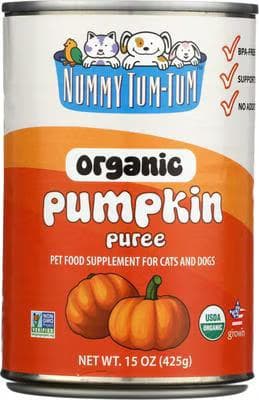
Plain organic canned pumpkin, a simple fiber option to ask your vet about for mild soft stool.
Webvet may earn a commission when you click through to Chewy, at no extra cost to you.
Pale and gray dog poop
Pale dog poop and dog poop that turns grey are more concerning. Texas A&M says a persistently off-white stool can indicate blockage of the bile duct. WikiVet explains that complete biliary obstruction leaves feces white or gray, called acholic, because stercobilin is missing.
Gray, greasy, pale stool can also mean poor fat digestion. The Merck Veterinary Manual describes feces in exocrine pancreatic insufficiency (EPI) as most commonly pale, loose, and voluminous, sometimes malodorous. VCA describes large volumes of pale, fatty feces. EPI usually comes with weight loss, which Merck lists among the most common signs.
White film or white specks
A white film on dog poop differs from white stool. Mucus can look like a whitish film, covered in the texture section. White specks that look like grains of rice can be tapeworm segments, covered in the parasites section.
Light brown versus pale
Light brown dog poop that keeps a brown tint is within the normal range. Stool that loses its brown tint, turns gray or clay-colored, or looks greasy is pale and needs a vet. Read more in WebVet's guide to white dog poop.
Dog poop texture and coating chart
Texture tells you how much water is in the stool and often where in the gut a problem started. The Purina fecal score chart explains that fecal consistency is primarily a function of the amount of moisture in the stool.
| Texture or coating | Purina score or look | Likely meaning | What to do |
|---|---|---|---|
| Hard, dry pellets | Score 1 | Constipation | Vet if no stool in 48 to 72 hours |
| Firm, segmented log | Score 2 | Ideal | Nothing |
| Moist log that holds form | Score 3 | Close to normal | Monitor |
| Soggy log that loses form | Score 4 | Mild loose stool | Monitor for a day or two |
| Very moist piles with shape | Score 5 | Loose stool | Vet if it lasts over two days |
| Piles or spots with no shape | Score 6 | Diarrhea | Vet if it lasts over two days or with other signs |
| Watery flat puddles | Score 7 | Severe diarrhea | Vet today for puppies or sick dogs |
| Mucus or jelly-like coating | Slimy film or casing | Large bowel irritation, colitis | Vet if it lasts beyond a day or two |
| Fatty, greasy, bulky | Pale, voluminous | Poor fat digestion, EPI, Giardia | Vet visit |

Hard and dry stool
Dog poop that is dry and hard, including stool that is black and hard or white and hard, sits at score 1: very hard and dry, often passed as individual pellets with much effort, per Purina. VCA Animal Hospitals explains that retained stool becomes hard and dry, and that constipated dogs may also pass mucus or small amounts of watery feces.
That last point surprises owners. A dog trying to poop with nothing coming out, or passing only liquid, can be constipated rather than having diarrhea. VCA advises calling your vet if no bowel movement follows within 48 to 72 hours.
Soft, runny, and liquid stool
Purina describes the loose end of the scale this way:
- Score 4: very moist, soggy, log-shaped, leaves residue and loses form when picked up
- Score 5: very moist with a distinct shape, present in piles
- Score 6: has texture but no defined shape, in piles or spots
- Score 7: watery, no texture, flat puddles
A dog with runny poop or liquid poop for a day, who is otherwise bright, is usually monitored first. If your dog poops soft for a day or two and your vet suggests digestive support, a probiotic is one option to ask about.
VCA's two-day rule for liquid or semi-liquid stool still applies. Puppy watery poop is different: Merck notes young, unvaccinated puppies are most at risk from parvo, and VCA says any unvaccinated puppy with severe vomiting or diarrhea should be tested.
Mucus and jelly-like coating
When a dog has jelly-like poop, a mucus casing, or dog poop that looks like mucus, the problem usually involves the large bowel. Texas A&M says mucus in the stool can indicate inflammation of the colon. VCA calls stress colitis one of the leading causes of large bowel diarrhea in all dogs.
Merck lists inciting factors for colitis as infectious (bacterial, parasitic, fungal), traumatic, uremic, and allergic causes. Specific causes of mucus in stool include:
- Whipworms, which Cornell notes cause blood or mucus in feces
- Giardia, which Cornell describes as soft or watery stool with mucus and a foul odor
- Stress colitis, a leading cause of large bowel diarrhea per VCA
Soft dog poop with mucus that clears in a day is common. Mucus that lasts longer deserves a call; Hill's advises contacting your vet within 24 to 48 hours. See mucus in dog poop for more.
Bloody, jelly-like, or black liquid stool
Some textures move straight to urgent:
- Dog pooping watery blood, or runny poop with blood
- Dog pooping bloody jelly, or poop that looks like red jelly
- Dog poop that is black liquid or black and tarry
- Any sudden stool change after a possible poison exposure
What does overfed puppy poop look like?
Veterinary sources do not define an overfed puppy stool. Owners and breeders commonly report that overfed puppies pass large, soft stools, sometimes firm early in the day and softer later. Treat that as a pattern to raise with your vet, not a diagnosis. Runny or watery puppy stool, especially in an unvaccinated puppy, needs prompt parvo testing per VCA.
What dog poop looks like with parvo, pancreatitis, or parasites
Owners searching puppy poop color, healthy puppy poop, or dog poop pictures with parasites usually want to know whether a specific disease is behind the change. Some diseases have a recognizable stool pattern; others do not.
What does parvo poop look like?
VCA Animal Hospitals says parvo diarrhea often has a powerful smell, may contain a lot of mucus, and may or may not contain blood. Merck describes vomiting and often hemorrhagic small bowel diarrhea within 24 to 48 hours, alongside anorexia and lethargy. Parvo poop in puppies is a veterinary emergency, not a color to monitor.
Merck notes the most susceptible dogs are 6 weeks to 6 months old, unvaccinated, or incompletely vaccinated. VCA adds that puppies under five months are usually the most severely affected. Puppy poop that is runny, liquid, or black in a young puppy, especially with vomiting, needs a vet now. Parvo season, higher-risk breeds, and whether dogs with parvo still drink water are covered in WebVet's guide to parvo symptoms in dogs.
Whether a fully vaccinated dog can still get parvo is answered in parvo in vaccinated dogs. Home care is not a substitute for treatment, and survival odds with and without veterinary care are covered in parvo survival rate in dogs.
What does dog pancreatitis poop look like?
Pancreatitis has no single distinctive stool look in veterinary sources. Merck lists anorexia, vomiting, weakness, abdominal pain, dehydration, and diarrhea as common signs. Greasy, pale stool is better documented with exocrine pancreatic insufficiency. Some owners report greasy or yellow stool with pancreatitis, but that is unconfirmed; vomiting and belly pain matter more.
VCA notes pancreatitis may be triggered in some cases by a fatty meal, and Merck calls dietary indiscretion a common risk factor in dogs. A dog with diarrhea plus vomiting and a painful belly after raiding fatty food needs a vet the same day. See pancreatitis in dogs for the full picture.
What does parasite dog poop look like?
Most parasites are invisible in stool. VCA explains that roundworms, hookworms, and whipworms typically shed only microscopic eggs. Some are visible:
- Tapeworm segments: VCA says they look like grains of rice or cucumber seeds, about half an inch long; Cornell notes they may be white and moving or dried and yellow
- Roundworms: Merck says they are often passed in the feces or vomited
- Whipworms: may cause blood or mucus, sometimes intermittently
- Giardia: Merck describes soft, pale, malodorous feces with mucus that appear fatty
Visible worms and fecal tests
When dog poop has white worms, or you spot a white worm in dog poop, a fecal test identifies the parasite. Texas A&M notes vets may examine stool under a microscope. A normal-looking stool does not rule parasites out, since most eggs are microscopic and flotation can miss Giardia.
Puppy poop in the house that is suddenly loose is worth a fecal check too. Healthy puppy poop follows the same chocolate brown, score 2 baseline as adult stool.
When a dog poop color means a vet visit
Most odd stools resolve in a day. The colors and combinations below do not wait. Cornell lists black or tarry stool and fresh blood as reasons to see a veterinarian.
Same-day colors and combinations
Call your vet the same day for:
- Black, tarry stool (melena)
- Fresh red blood, or pink, purple, jam-like stool
- White, gray, or pale stool that persists
- Diarrhea with vomiting, lethargy, or loss of appetite
- Pale gums with dark stool, which Merck links to anemia from GI ulcers
- Severe vomiting or diarrhea in an unvaccinated puppy
- Possible rodenticide exposure, since bleeding may appear 3 to 7 days later
Call within a day or two
These are less urgent but still need a call if they continue:
- Yellow stool lasting more than a day or two
- Liquid or semi-liquid stools for more than two days
- A bland diet that has not worked after 2 to 3 days
- Mucus lasting beyond 24 to 48 hours
- No bowel movement within 48 to 72 hours
What to bring
Your vet will likely ask for a sample of fresh fecal material, according to VCA. Cornell suggests bringing a stool sample so the veterinarian can see what the diarrhea looks like. A phone photo can help describe color if the stool changes before the visit, but a fresh sample gives your vet the most information.
Dog poop color chart questions
Frequently Asked Questions
What does dog poop with mucus or a jelly coating mean?
Mucus or a jelly-like coating usually points to irritation of the large bowel. Merck describes large bowel diarrhea, as seen with colitis, as characterized by mucus, blood, and straining. Stress, whipworms, and Giardia are common causes. A single episode in a bright dog can be watched briefly, but mucus that lasts beyond a day or two, or comes with blood, needs a vet.
Why is my dog's poop two different colors?
Veterinary references do not explain two-tone stool directly. Owners and vets commonly attribute it to a recent diet change, with old and new food passing at different times, or to shifts in transit time that change how much bile breaks down. If the darker part looks black and tarry, or either part is red, call your vet.
Should I take a photo or a sample of my dog's poop to the vet?
Bring a fresh sample if you can. VCA Animal Hospitals advises bringing it within six hours, or within 24 hours if refrigerated, and asks for a piece about one inch long and as clean as possible. A photo is sensible backup for color, but the sample lets your vet check for parasites under a microscope.
What does grey or greasy dog poop mean?
Grey or greasy stool usually signals a problem with fat digestion. Merck describes pale, loose, voluminous feces with exocrine pancreatic insufficiency, a disease of the pancreas. Hill's links grayish stool to poor fat absorption, and Texas A&M flags persistent gray, greasy stool as a digestive problem. Giardia can also cause fatty-looking stool. Book a vet visit.
Veterinarian · BVMS MRCVS
Dr. Pippa Elliott, BVMS, MRCVS, is a veterinarian with nearly 30 years of experience in companion animal practice. Dr. Elliott earned her Bachelor of Veterinary Medicine and Surgery from the University of Glasgow. She was also designated a Member of the Royal College of Veterinary Surgeons. Married with 2 grown-up kids, Dr. Elliott has a naughty Puggle named Poggle, 3 cats and a bearded dragon.


