Black Cat Poop: Dark Brown Stool or Possible Bleeding?
Black cat poop can signal digested blood. Learn the difference from dark brown stool, urgent signs, medication clues and how to prepare for veterinary care.

BVMS MRCVS
Medically reviewed by Dr. Pippa Elliott, BVMS MRCVS · Last reviewed

This article contains affiliate links. Webvet may earn a commission when you buy through them, at no extra cost to you.
Black cat poop that is sticky or tarry can be melena, meaning stool that contains digested blood. Contact your veterinarian promptly if you see this pattern, even if your cat is still acting normally. Dark food or certain medicines can change stool color, but appearance alone cannot safely distinguish those effects from bleeding.
Seek emergency care if black stool accompanies weakness, collapse, pale gums, breathing difficulty, repeated vomiting or significant pain. Do not wait for another litter-box visit or try a human stomach remedy. Tell the clinic about possible medication or toxin exposure and ask how to proceed.
 Sponsored
Want a vet's take on your cat's upset stomach?
Talk to a licensed vet at Dutch over video, often the same day. They can recommend treatment and prescribe it when it's appropriate.
Use code Pets30
Plans start at $11/month · covers up to 5 pets
- Licensed vets in most states
- Rx for 150+ conditions
- 4.7 on Trustpilot
Black cat poop versus dark brown stool
Old cat poop may become pale or white-looking as it dries or picks up litter. That is different from fresh black stool; examine the next fresh deposit without delaying advice about suspected bleeding. Normal cat stool is usually brown, and dark brown can look almost black under dim lighting or after litter coats it. Look at a fresh deposit in neutral light if possible. Note the color and whether it is formed, dry, sticky or unusually glossy. These observations help explain the concern; they are not a reliable home test for blood.

A travel carrier for cats or suitably sized small dogs. Check fit and secure it according to its instructions.
Webvet may earn a commission when you click through to Chewy, at no extra cost to you.
Prepare a secure, correctly sized carrier for the veterinary trip. A cat should have an appropriate supported space inside it, with the door properly latched for transport. Keep the carrier level and secured according to its instructions. If your cat is weak or difficult to move safely, ask the clinic for guidance rather than forcing a prolonged struggle.

| Fresh-stool finding | Useful detail | What it cannot establish |
|---|---|---|
| Formed dark brown stool | Whether the brown hue is visible in daylight | That the cat has no other digestive problem |
| Black, sticky or tarry stool | Shine, texture and first occurrence | The precise source or amount of bleeding |
| Black loose stool | Frequency, vomiting and the cat's energy | Whether waiting for a formed stool is safe |
| Dark stool after medication | Exact product, amount and time given | That medication explains it without concern |
Tarry describes a sticky appearance, not simply a dark shade. A black stool does not have to match a reference photo perfectly to warrant advice. Litter can absorb moisture and change the surface, while lighting affects color. Do not keep breaking apart or handling feces to decide whether it is “black enough.”
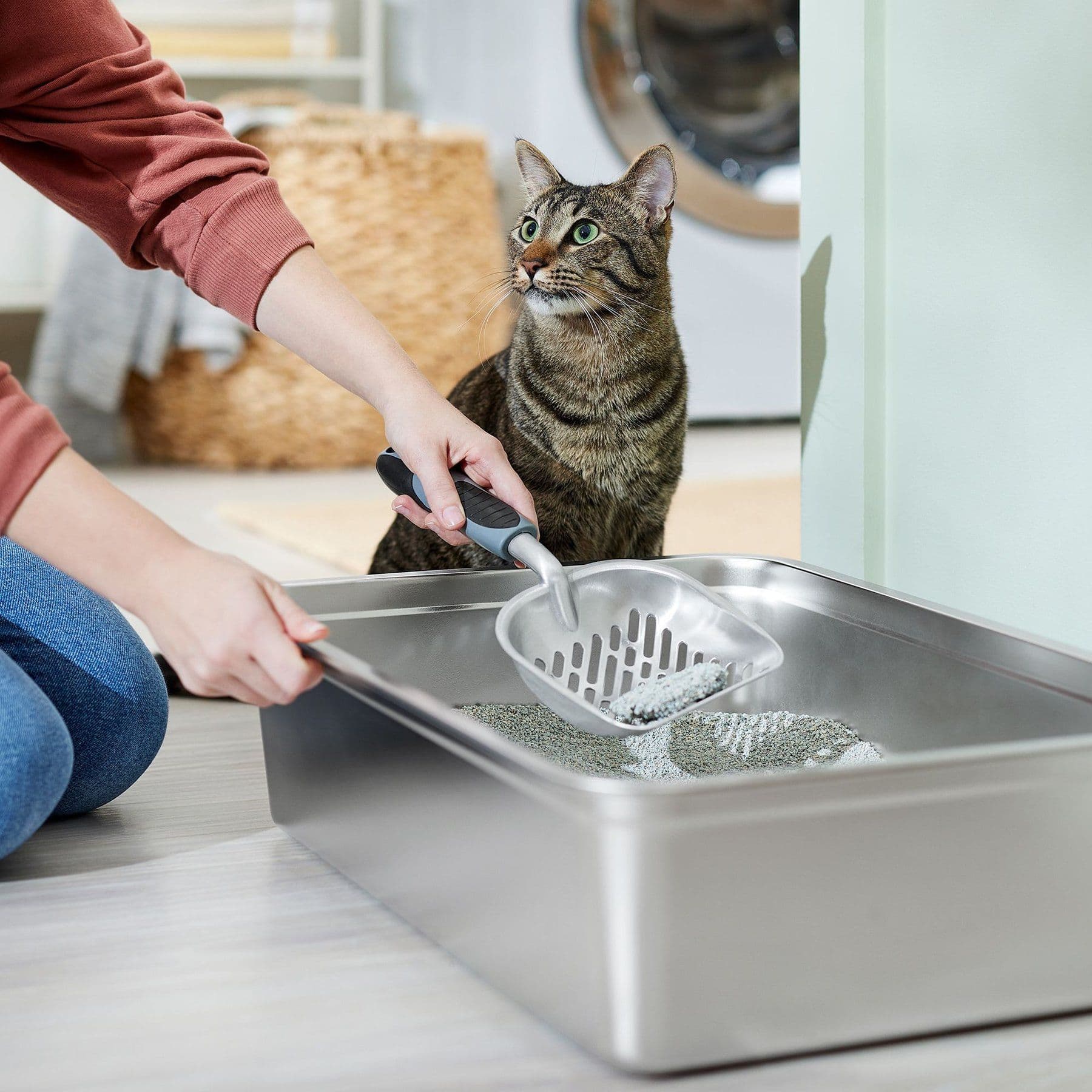
A metal scoop for regular litter-box cleanup and observing fresh stool separately from urine clumps.
Webvet may earn a commission when you click through to Chewy, at no extra cost to you.
The practical difference from fresh-red blood matters. A red streak may arise nearer the lower digestive tract, while digested blood often reflects a different process. See blood in cat poop for the fresh-red pattern. Neither appearance identifies one diagnosis without the wider assessment.
Why melena needs prompt veterinary advice
Melena is a sign of possible bleeding, not a disease name. Potential explanations include gastrointestinal ulceration or injury, some parasites and problems affecting clotting. The veterinarian considers those possibilities alongside your cat's age, health, medicines and examination. A normal-looking interval between bowel movements does not exclude a significant problem.
Cats can hide illness, so normal behavior should not be used to rule out bleeding. Report whether appetite, drinking, activity or hiding habits have changed, even subtly. A cat that is still walking may nevertheless need care. Do not wait for collapse or dramatic blood loss before calling about suspected melena.
A litter scoop helps you observe and remove fresh stool without direct hand contact. Keep track of which cat used the box if several share it. Photograph the unusual deposit before disposal if helpful, then clean the box normally. Ask the clinic whether it wants a separate fresh sample rather than collecting several days of litter-coated waste.
Signs that increase urgency
Pale gums, marked weakness, rapid deterioration or repeated vomiting increase the urgency. Vomit that contains blood or resembles dark coffee grounds is also important to report. Do not repeatedly open a distressed cat's mouth to check gum color; describe what you have observed and obtain veterinary advice.
There is no single “unhealthiest” stool color that replaces assessment. Brown diarrhea can be serious, and dark formed stool may need interpretation. The particular concern with black tarry stool is possible digested blood. That possibility deserves prompt attention rather than a home attempt to make the next bowel movement a different color.
SponsoredVet care that's always there
Unlimited video calls and messaging with licensed vets for less than a typical vet visit. One membership covers up to five pets.
Use code Pets30
Plans start at $11/month · covers up to 5 pets
- Licensed vets in most states
- Rx for 150+ conditions
- 4.7 on Trustpilot
Food, medicines and swallowed blood
Diet and certain substances can darken stool. Activated charcoal, iron products and bismuth-containing medicines are examples the veterinarian may ask about. Do not administer them to test a theory or treat black poop. They can complicate interpretation, and the safety of a product depends on the cat and the reason for its use.
Bismuth subsalicylate is present in some human stomach medicines and should not be given to a cat without explicit veterinary direction. Cats have particular sensitivities to some drugs. If any human medicine has been given, report the exact product and amount promptly rather than assuming a familiar brand is safe for pets.

A washable waterproof liner can help keep an appropriate carrier or resting surface clean if accidents occur. Keep it flat and secure and replace it when soiled. It supports comfort during care; it does not reduce the need to investigate black stool or compensate for ongoing fluid or blood loss.
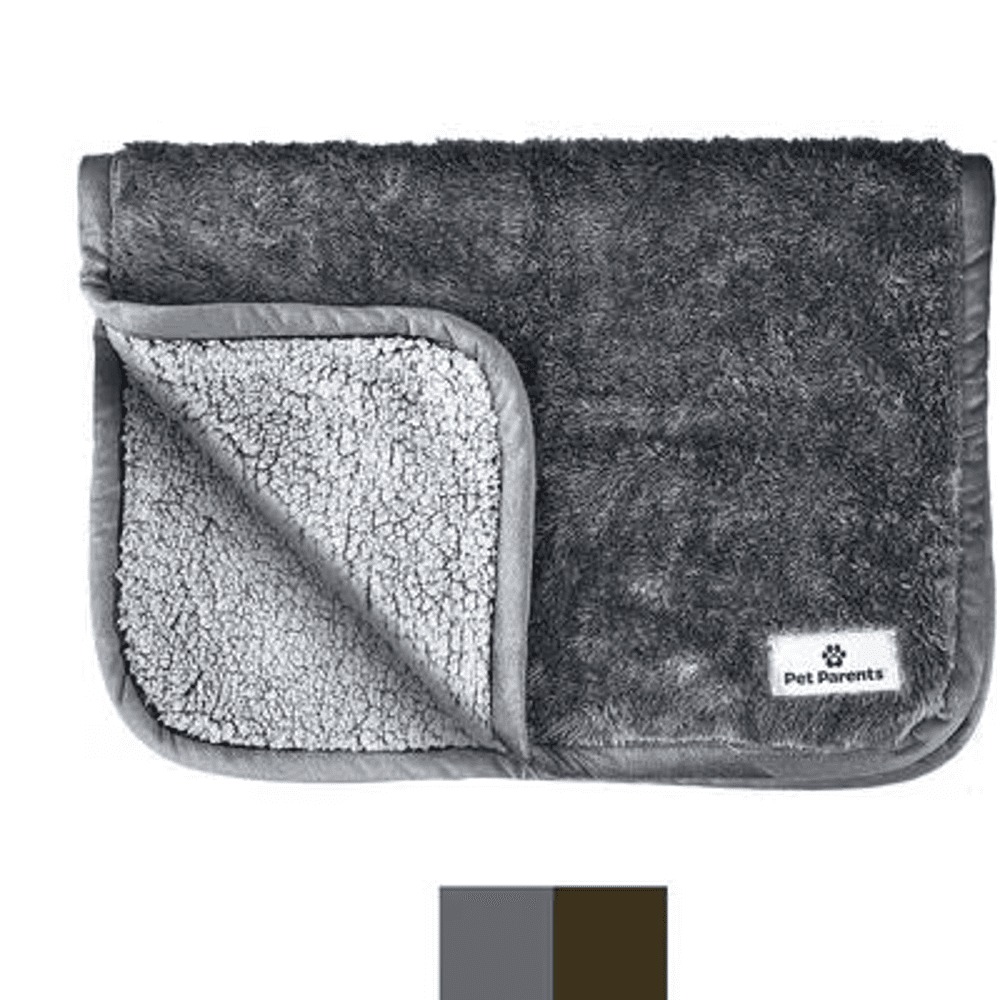
A washable waterproof blanket for a suitable resting or transport surface. Choose the size that fits your setup.
Webvet may earn a commission when you click through to Chewy, at no extra cost to you.
Blood swallowed from the mouth or nose
Swallowed blood from another site, such as the mouth or nose, may affect stool appearance. Tell the veterinarian if you have noticed bleeding there or if a procedure was recently performed. That history may be relevant, but the original bleeding and the cat's current condition still need interpretation.
Could stress, dehydration or pancreatitis explain it?
Stress can accompany a change in bowel habits, but it does not make black tarry stool safe to ignore. Dehydration can accompany dry, hard stool or ongoing diarrhea; neither appearance measures hydration reliably. Pancreatitis has no distinctive stool color. Report appetite loss, vomiting, weakness or discomfort rather than using black stool to identify it. Dry, hard pellets and sticky, tarry stool are different observations, so describe both color and consistency.
If there has been a possible toxin or medication ingestion, contact the veterinarian immediately, whether or not the cat has passed black stool. Do not induce vomiting or give a household antidote. The product, timing and estimated amount guide the next step, and different substances have different effects.
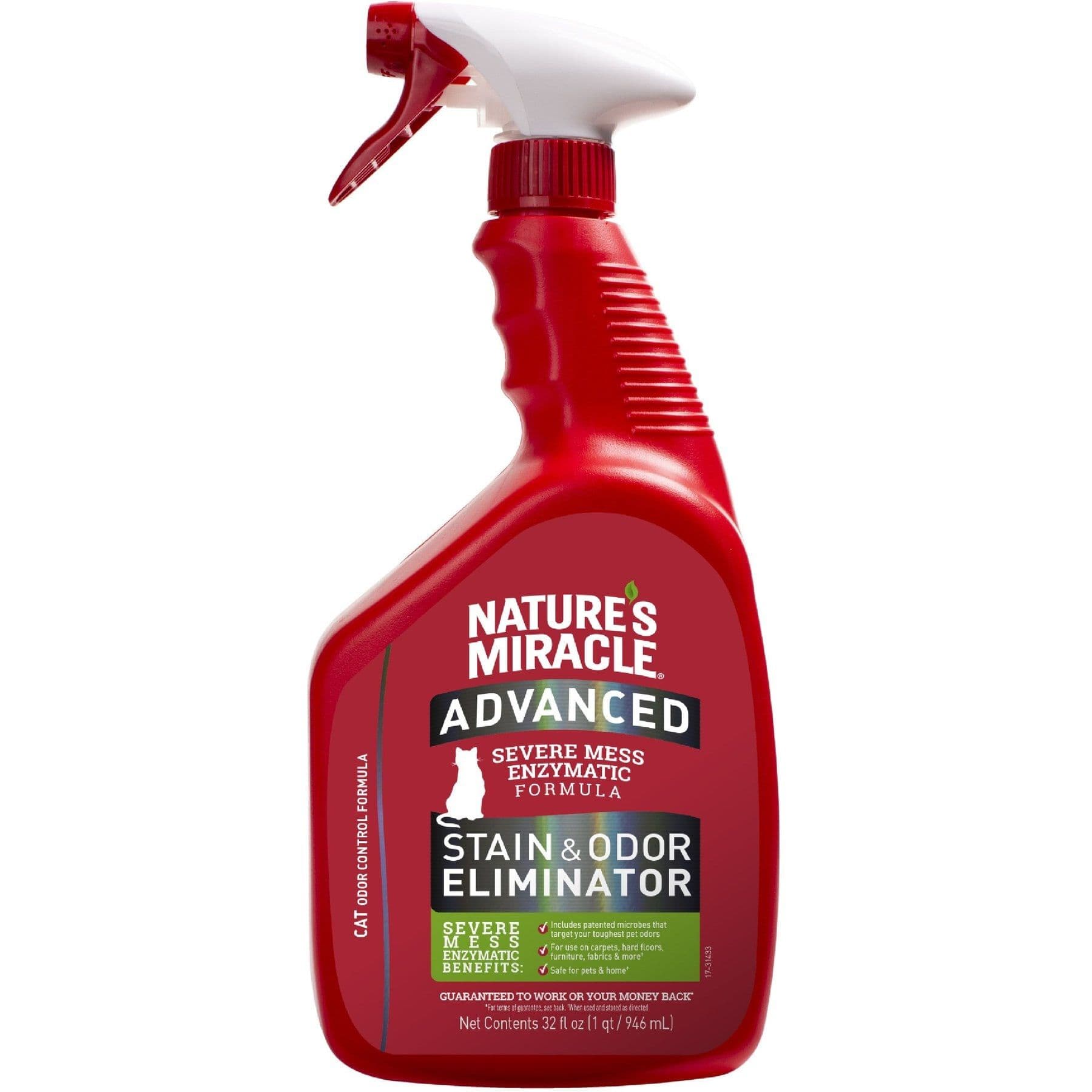
A cat-specific enzymatic cleaner for compatible surfaces after accidents. Keep cats away during use and follow the label.
Webvet may earn a commission when you click through to Chewy, at no extra cost to you.
Preparing for the appointment
Details to record for the stool assessment
When preparing for the appointment, give a clear sequence: when the stool changed, whether it was freshly passed, how many episodes occurred and what else changed. Mention appetite, vomiting, activity, weight and known illness. Include every prescription, supplement and home remedy, with timing and dose where known. A medication list is more useful than saying the cat received “something for its stomach.”
- Fresh stool: the time passed, color, consistency, amount, mucus or blood, and how often your pet tries to pass stool.
- Other signs: appetite, vomiting, energy and weight changes, plus actual urine output rather than litter-box posture alone.
- Recent changes: meals, treats, supplements, medicines, possible exposures and relevant previous illness or test results.
For accidents on compatible household surfaces, a cat-specific enzymatic cleaner can help remove stains and odor. Follow its label and keep the cat away while cleaning. Do not clean a sample that may be needed for testing or delay departure to finish the room. Veterinary care comes first when the cat is unwell.
Ask whether the clinic wants a fresh stool sample and how to store it. Use the recommended clean container and label the time and cat's identity. Avoid mixing waste from several cats. Wash hands after handling the container or scoop, and keep the sample away from food and children.
Investigation and treatment
The veterinarian may recommend blood tests, fecal testing, imaging or other investigation based on the examination. Blood tests can help assess anemia and other problems, while further tests may be needed to identify a source. There is no single test selected solely because a stool looks dark, and some cats require more urgent stabilization before a full workup.
Treating black poop in cats means identifying and treating the cause of the dark stool or melena. Treatment depends on the cause and severity. It may involve specific medication, supportive care or more intensive treatment. A probiotic, pumpkin or a diet change is not a universal cure for suspected melena. Ask what to do about the next meal and scheduled medications while awaiting assessment rather than applying a generic fasting rule.
Record fresh stool appearance, appetite, vomiting and actual urine output. Follow the veterinary plan and report worsening signs promptly.
Monitoring stool after treatment
Follow the veterinarian's instructions for medication, food and rechecks. Record stool appearance together with appetite, energy and vomiting. A return toward brown can be encouraging, but it does not necessarily prove that the cause has resolved. The clinic may need repeat testing or an examination to assess progress.
There is no safe fixed waiting period for black stool to go away on its own. How long a color change lasts depends on the cause and what has been given, and suspected bleeding should be assessed promptly. Contact the clinic again if black stool recurs, the cat becomes less active or appetite falls, even if the initial episode seemed to settle.

The broader cat diarrhea guide can help you describe stool form and frequency. Keep the specific melena concern clear, however, rather than switching to a mild-diarrhea home plan without veterinary advice.
What recovery depends on
Black poop can resolve when its cause is treatable, but “curable” cannot be judged from the color. Many cats can recover from causes of gastrointestinal bleeding when the problem is identified and treated, but the outlook varies with the cause and severity. Prompt assessment is more useful than predicting recovery from stool appearance. Your observations, medication history and follow-up record help the veterinarian make that assessment.
Sources
Sources: Merck Veterinary Manual: gastrointestinal ulcers, Cornell Feline Health Center: gastrointestinal parasites and Great Pet Care: black cat poop.
Frequently asked questions
Why is my cat's poop black?
Black stool that is sticky or tarry can be melena, meaning stool containing digested blood, and it can come from gastrointestinal ulceration or injury, some parasites or clotting problems. Dark food, activated charcoal, iron products or bismuth-containing medicines can also darken stool, and swallowed blood from the mouth or nose may too. Because you cannot tell these apart by sight, call your veterinarian.
Is black stool an emergency for a cat?
Black tarry stool needs a prompt call to your veterinarian even if your cat still seems normal, since cats hide illness. It becomes an emergency when it comes with weakness, collapse, pale gums, breathing difficulty, repeated vomiting or significant pain. Do not wait for another litter-box visit or give a human stomach remedy, and tell the clinic about any possible medication or toxin exposure.
How dark is too dark for cat poop?
Normal cat stool is usually brown, and dark brown can look almost black in dim light or when litter coats it, so check a fresh deposit in neutral light. Tarry describes a sticky appearance, not just a dark shade. If the stool is sticky or tarry, or you cannot tell, ask your veterinarian rather than trying to decide whether it is black enough.
Veterinarian · BVMS MRCVS
Dr. Pippa Elliott, BVMS, MRCVS, is a veterinarian with nearly 30 years of experience in companion animal practice. Dr. Elliott earned her Bachelor of Veterinary Medicine and Surgery from the University of Glasgow. She was also designated a Member of the Royal College of Veterinary Surgeons. Married with 2 grown-up kids, Dr. Elliott has a naughty Puggle named Poggle, 3 cats and a bearded dragon.


