What Is Dog Constipation? Can Probiotics Help?
Learn how to recognize constipation, distinguish urgent straining and discuss safe next steps with your vet, including where daily gut support may fit.
Medically reviewed by Dr. Athena Gaffud, DVM · Last reviewed

This article contains affiliate links. Webvet may earn a commission when you buy through them, at no extra cost to you.
Dog constipation means passing stool is difficult or less frequent than normal, often with hard, dry poop and uncomfortable straining. The first decision is whether your dog needs veterinary attention. A dog repeatedly squatting without producing anything may have constipation, but difficulty urinating or another painful problem can look similar.
Once your veterinarian has identified the cause, everyday gut support can fit into a longer-term routine. PetLabCo.® Probiotic Chews offer a convenient dog-specific option for supporting normal digestive function. They are not a laxative, and starting a soft chew should never delay assessment of a dog who cannot comfortably pass stool.
Sponsored content: WebVet maintains editorial control over this article, which is sponsored by PetLabCo.®. WebVet may earn a commission from purchases made through its affiliate links.
Painful straining needs attention before probiotic support. Check whether your dog can pass urine, contact your veterinarian about unsuccessful bowel movements, and use a daily supplement only within a plan that fits the cause.
What is dog constipation?
Constipation is more than a single missed poop. Dogs vary in how often they defecate, so a change from your dog's usual pattern matters more than matching a universal daily number. A smaller meal, changed schedule or different food can alter the amount of stool without establishing a diagnosis.
Signs owners may notice include repeated attempts to poop, small hard pieces, dry stool, or apparent discomfort while defecating. Some dogs walk away and try again several times. Others seem reluctant to squat because the posture itself hurts. Tell your vet what actually happened instead of relying only on the label “constipated.”
Useful observations include:
- Whether any stool came out and what it looked like.
- Whether your dog cried, hunched or stopped trying suddenly.
- Changes in appetite, drinking, energy or vomiting.
- Whether urination appeared normal during the same outing.
Hard pellets can support a constipation concern, but appearance alone cannot explain the cause. Mucus, small amounts of liquid stool or blood may also accompany straining and deserve discussion. The American Kennel Club's constipation guidance describes several possible causes, including dietary, medical and physical factors. The appropriate response depends on which of those applies to your dog.
Constipation after a recent digestive upset
If your dog seems constipated after diarrhea, tell the veterinarian about the whole sequence. Less stool after eating less is different from repeated painful attempts to pass stool. Mention any diarrhea medicine, a temporary diet such as chicken and rice, and whether appetite has returned. Do not assume the bowel is blocked or completely recovered from the sequence alone.
The same observation-based approach applies to a constipated Bulldog or another breed. Breed can inform the veterinarian's assessment, but it does not identify the cause or make uncomfortable straining normal. Look at the dog's current comfort, appetite, stool and urine output before selecting a breed-specific home remedy.
Pay attention to the difference between a dog who has not tried to poop and one who keeps trying without success. Both deserve context, but repeated effort, discomfort or a changed posture gives the veterinarian additional information. If you use a yard rather than walking on a lead, accompany your dog for an outing so you can report what happens directly. Do not assume an empty patch of yard proves that the dog has produced no stool anywhere.
When straining needs urgent veterinary attention
Watch carefully for urine output. A dog attempting to urinate may assume a position that owners mistake for trying to poop. If your dog repeatedly strains and cannot pass urine, seek emergency veterinary care. Do not wait for a bowel movement to clarify the situation. Our guide to a dog straining to urinate explains this important distinction.
Painful or repeatedly unsuccessful attempts to defecate also warrant prompt contact with your veterinarian. Vomiting, a swollen or painful abdomen, marked weakness, or suspected swallowing of a toy, bone or other object changes the urgency. If your usual clinic is closed, describe the signs to an emergency clinic and follow its instructions.
How can you tell if your dog is constipated or has a blockage? You cannot reliably distinguish them by checking poop alone. Passing a little stool or liquid does not safely rule out an obstruction. The AKC's intestinal blockage overview explains why clinical assessment and sometimes imaging are needed.
Take these combinations seriously when you call:
- A constipated dog who is throwing up or will not eat.
- A bloated, painful abdomen or marked shaking and distress.
- Bloody diarrhea or visible blood in the stool with discomfort or worsening straining.
- New symptoms after eating bones or another possible foreign object.
Severely constipated dogs may need treatment to remove retained stool, but those signs can also indicate another urgent problem. Do not decide which treatment to use based on severity alone. Urinary straining needs particular attention because inability to pass urine is an emergency even when the posture resembles constipation.
There is no safe blanket rule to wait 48 hours. A comfortable dog with one altered bowel movement presents a different situation from a dog repeatedly straining in pain. Describe the whole picture when you call, and let the veterinarian determine whether an examination is needed now.
Where gut support fits
For a dog whose veterinarian has addressed the cause of constipation, a steady routine may include an appropriate complete diet, access to fresh water, suitable activity and a chosen digestive supplement. Probiotics provide live microorganisms for a health benefit; their usefulness depends on the particular formulation and the reason for using it.
That makes routine support different from immediate constipation treatment. A probiotic does not physically remove retained stool, dissolve a swallowed object or resolve a urinary blockage. It should not be described as a guaranteed way to make a dog poop. Instead, discuss whether daily gut support has a useful role after the immediate problem has been assessed.
PetLabCo.® Probiotic Chews combine probiotics, prebiotics and a postbiotic yeast blend in a soft chew. The dog-specific label makes the serving routine straightforward for eligible dogs, with amounts based on body weight. The product is labeled for dogs 12 weeks and older.
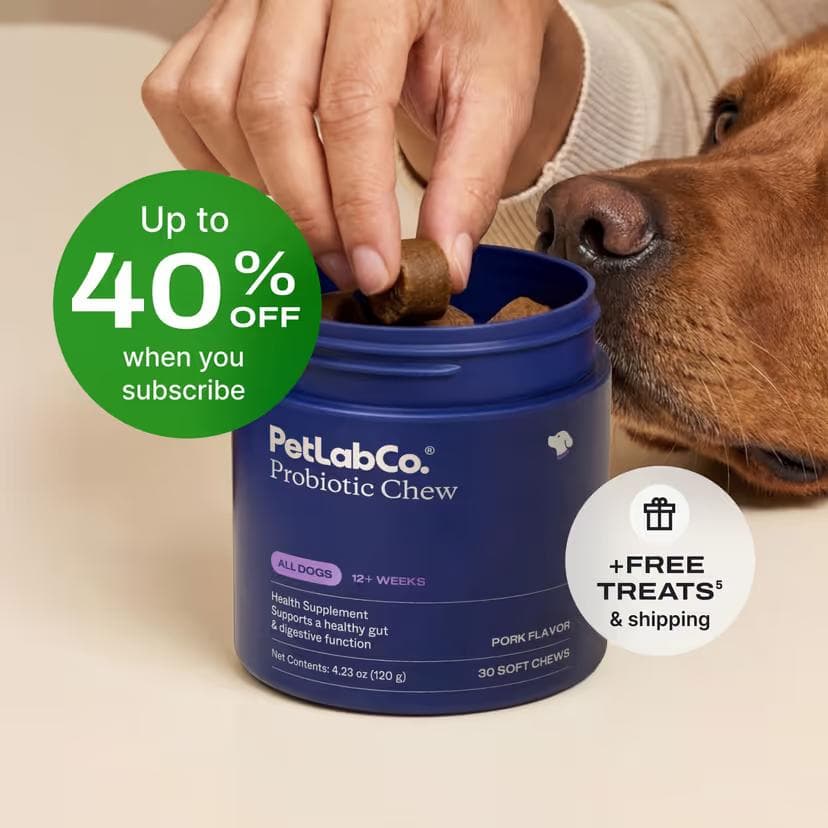
Clinically studied probiotic soft chews that support your dog's gut health while targeting occasional loose stools and seasonal allergies. Pork flavor, 30 chews per tub.
Webvet may earn a commission when you click through to PetLabCo.®, at no extra cost to you.

Before adding any supplement, give your veterinarian the full list of products your dog already takes. More than one digestive formula can make it harder to judge tolerance or understand a change in stool. A simple plan, with one clearly stated purpose for each product, is easier to follow and review.
Why dogs become constipated
Constipation can arise for different reasons, and the reason guides the solution. Reduced water intake or dehydration can contribute to drier stool. A dietary change, eating unsuitable material, or a disruption in normal opportunities to go outside may also matter. Your vet will consider these possibilities alongside your dog's medical history.
Some dogs avoid defecating because squatting hurts. Arthritis, an injury or discomfort near the anus can make the normal posture difficult. Other problems can interfere with stool passage or movement through the bowel. This is one reason a supplement-first approach may miss what the dog actually needs.
Think through recent changes:
- Food and treats: a new diet, more chews, table scraps or access to bones.
- Routine: travel, boarding, reduced walks or fewer toilet opportunities.
- Health: pain, reduced appetite, illness or lower water intake.
- Medicines: new prescriptions, dose changes, anesthesia or surgery.
Medicine and recovery history
If constipation starts after an operation, contact the treating clinic. Food intake, pain, activity and prescribed medicines may all be relevant. Do not stop a medicine or add a human laxative on your own; the clinic can interpret the change in the context of your dog's recovery.
If a dog becomes constipated after sedation or while taking pain medicines, report the actual drug names and timing. Opioids are among the medicines associated with constipation in the AKC guidance. An antibiotic is a different drug category: constipation during antibiotic treatment does not, by timing alone, prove that the antibiotic caused it. The prescribing veterinarian should review the medicine, illness, appetite and hydration together.
That also applies after deworming or a recent bout of gastroenteritis. Report what was given and what changed, without repeating a dose or stopping prescribed treatment on your own. Dogs with kidney disease or other chronic conditions need their existing diet, hydration and medication plans considered before a constipation remedy is added. PetLabCo.®'s guide to recognizing possible constipation provides additional owner-facing context.
 $65 · no membership
Worried about your dog's vomiting or diarrhea?
A licensed vet can examine your dog over video and prescribe treatment online when it's appropriate.
 Talk to a vet
- Licensed vets
- All 50 states
- same-day Rx
Webvet may earn a commission if you book.
What you can do while arranging advice
If your dog is constipated, work with your veterinarian to get them comfortable and unconstipated. If you are wondering what to give immediately for constipation, contact the clinic before choosing a remedy from the cupboard. Explain whether your dog is comfortable, eating and urinating normally. A clinic can decide whether home monitoring is appropriate or whether your dog needs an examination first. The fastest safe relief depends on the cause; there is no home cure that suits every dog.
Make the call more useful with a short written history. Record the last normal stool, not just the most recent unsuccessful attempt. Estimate when the change began and note any small amounts of stool that passed. If you have several dogs, confirm which dog produced the stool you are describing.
Have these details ready:
- Last normal stool: time, approximate amount and consistency.
- Urine output: whether your dog passed a normal stream or repeatedly tried without success.
- Other signs: pain, vomiting, appetite, drinking and energy.
- Medications and supplements: exact names and recent changes.
- Possible ingestion: bones, toys, fabric, garbage or another unusual item.
Keep fresh water available unless the veterinarian gives a different instruction. If your dog is comfortable and the clinic agrees, a normal gentle walk may provide a familiar opportunity to defecate. Do not force exercise, press on the abdomen or keep walking a distressed dog in an effort to produce stool.
A photograph of the stool or a brief video of the straining can help you describe what you saw. Ask the clinic whether to bring a stool sample and how to collect it. These observations are useful; they do not replace the examination when the dog is painful or repeatedly unsuccessful.
If someone else cares for your dog, compare notes before the call when that will not delay urgent care. A pet sitter may have seen a normal stool, while another family member may have noticed vomiting or difficulty urinating. Put those observations on one timeline. Knowing what is uncertain is also helpful: tell the clinic if you cannot confirm whether your dog passed urine or if several pets share the same toilet area.
Fiber, food, and hydration
Fiber is not a single universal constipation remedy. Different fibers behave differently, and the right dietary plan depends on the individual dog and the cause of the problem. More fiber is not automatically better: ask whether the type and amount suit your dog's current condition and water intake before adding a large quantity of pumpkin or another fiber source.
Ask your veterinarian whether your dog's current food should stay the same, change gradually, or be replaced with a prescribed diet. Share the complete feeding pattern, including treats and edible chews. A dog eating less than normal may produce less stool, but reduced appetite itself can be an important sign.
If you switched dog food and your dog now seems constipated, record the old and new foods and how quickly the change occurred. Do not keep switching foods in search of immediate relief. Ask which food, moisture level and fiber approach will help this constipated dog without disrupting the rest of the diet. Hot weather and reduced drinking are also relevant observations to share.
Keeping the agreed daily routine manageable
- Keep water bowls clean, accessible and regularly refilled.
- Provide predictable toilet breaks suited to your dog's mobility.
- Measure meals and treats so recent changes are easier to identify.
- Follow any dietary adjustment consistently instead of changing several things together.
Do not assume that offering more water will correct dehydration or a blockage. A dog who is unwell, vomiting or unable to keep water down needs advice. Our guide to dehydration in dogs describes signs to discuss with your vet; checking hydration at home cannot establish that it is safe to wait.
Once the medical and dietary plan is clear, a daily soft chew can be an easy routine to maintain. Keep its purpose specific: supportive gut care for a suitable dog, alongside the food and hydration plan. It should not become a reason to postpone reassessment if uncomfortable straining returns.
Clinically studied probiotic soft chews that support your dog's gut health while targeting occasional loose stools and seasonal allergies. Pork flavor, 30 chews per tub.
Webvet may earn a commission when you click through to PetLabCo.®, at no extra cost to you.
What to avoid when a dog cannot pass stool
To help a constipated dog poop, first establish whether the veterinarian considers home care appropriate. Do not try to stimulate a bowel movement by squeezing your dog's abdomen, inserting an object or attempting manual stool removal. A painful dog may move suddenly or bite, and the problem may not be constipation at all. Repeated attempts without success deserve veterinary guidance, not increasingly forceful home techniques.
Human laxatives and enemas are not interchangeable with a treatment prescribed for a dog. Products can contain ingredients or concentrations that are inappropriate for pets, and an obstruction changes what is safe. Your veterinarian may use a stool-softening or other treatment after assessment, but that is different from selecting a product and dose independently.
Avoid these unsupervised approaches:
- Human enemas or laxatives, including a dose copied from another pet.
- Mineral oil or other oils given as a home constipation treatment.
- Manual extraction, abdominal pressure or painful “massage.”
- Extra supplement servings intended to force a faster result.
Trying to treat constipation naturally still requires veterinary judgment about how to relieve the problem safely. Neither a kitchen oil nor milk is a reliable substitute for a treatment plan, and changing the diet to provoke loose stool is not the same as resolving retained stool safely. Individualize fiber and food changes with a vet; do not combine unprescribed laxatives, human enemas or manual extraction with a daily supplement.
Also avoid using a little liquid stool as proof that the problem has passed. Liquid can appear with several gastrointestinal problems, including around retained stool. Continue to report unsuccessful straining, discomfort and appetite changes even when something comes out.
PetLabCo.®'s constipation next-steps guide can help frame questions for your vet. The most useful question is what is appropriate for this dog's current signs, rather than which home remedy usually gets recommended online.
Reading the Probiotic Chews label
If your veterinarian agrees that a probiotic belongs in your dog's routine, read the exact product label. PetLabCo.® Probiotic Chews and other formulas in the brand's range have different directions. Do not carry a serving instruction from a similarly named product onto this tub. Related reading: Petful’s PetLabCo. Probiotic Chews review.
The current formula lists 3 billion CFU per 4 g soft chew from Bacillus coagulans, Bacillus clausii and Bacillus subtilis. Each chew also lists 100 mg of fructooligosaccharides, 100 mg of galactooligosaccharides and a 75 mg postbiotic yeast blend. These label amounts describe the formula; they are not evidence of a constipation-treatment dose.
| Dog's weight range | Probiotic Chews label serving |
|---|---|
| Under 25 lb | 1 chew daily |
| 25–75 lb | 2 chews daily |
| Over 75 lb | 3 chews daily |
The current product listing specifies dogs 12 weeks and older. Check the package in hand for the current directions, storage information and ingredient list. The pork-flavored formula includes pork liver, which is relevant if your dog has dietary restrictions or is following an elimination diet.

The label is for dogs 12 weeks and older. It advises consulting a veterinarian before use and stopping if the animal's condition worsens or does not improve. It also notes considerations for concurrent medicines and that safety in pregnant or breeding animals has not been established. Bring these points into the discussion if they apply to your dog.
Clinically studied probiotic soft chews that support your dog's gut health while targeting occasional loose stools and seasonal allergies. Pork flavor, 30 chews per tub.
Webvet may earn a commission when you click through to PetLabCo.®, at no extra cost to you.
Puppies, senior dogs, and recurring constipation
Puppies can get constipated and deserve age-specific veterinary advice. If your puppy is constipated, call with the age, feeding history, last normal stool and any vomiting, blood or poor appetite. Feeding, hydration, growth and illness can change quickly, and a very young puppy is not simply a smaller adult dog.
For a small puppy, such as a Shih Tzu, size does not make an adult home-remedy dose appropriate. Ask before using milk, Pedialyte or another human hydration product. Tell the clinic if constipation followed diarrhea or vaccination, but do not assume the timing identifies the cause. A newborn or bottle-fed puppy needs a neonatal feeding and elimination assessment, beyond a general supplement routine.
For senior dogs, consider mobility and the full medication list alongside diet. A dog with difficulty rising or squatting may need help with pain or access to an appropriate toilet area. Adding fiber or a supplement will not address every reason an older dog avoids defecating.

Questions for recurring constipation
- What underlying issue is being managed?
- What should the daily diet, activity and supplement routine include?
- Which changes mean the veterinarian wants to hear from us again?
Once your veterinarian has settled the plan and agrees that daily gut support fits it, PetLabCo.® Probiotic Chews offer a repeatable weight-based serving routine for supporting normal digestive function. They are not a treatment for constipation. Keep a simple record of stool comfort and consistency so you can discuss whether the overall plan is working, and treat a recurrence as a reason to revisit that plan with your veterinarian rather than to add or increase a supplement on your own.
Clinically studied probiotic soft chews that support your dog's gut health while targeting occasional loose stools and seasonal allergies. Pork flavor, 30 chews per tub.
Webvet may earn a commission when you click through to PetLabCo.®, at no extra cost to you.
Daily gut support once the plan is settled
What your veterinarian may check
Your veterinarian will use the history and examination to decide what further assessment is appropriate. Depending on the signs, this may include checking hydration and abdominal discomfort, assessing the rectal area, reviewing mobility, or recommending tests or imaging. Not every dog needs the same workup.
Bring all medication and supplement information, even if a product seems unrelated to digestion. If the dog recently had surgery, changed food or swallowed something unusual, explain the timing. Being precise helps the clinic decide whether the issue is reduced stool production, difficulty passing retained stool, pain during defecation or another condition.
Before you leave, clarify the home plan:
- When should your dog next be reassessed?
- What stool changes should you expect, and which should trigger a call?
- Should the current diet, treats and supplements continue?
- What should you do if another attempt to defecate is unsuccessful?
These instructions make daily support more useful because each part has a defined role. If a probiotic is included, ask what benefit you are monitoring and when to review it. There is no need to guess a universal response deadline or keep adding products when the original problem remains unresolved.
Frequently Asked Questions
Can a constipated dog still have diarrhea?
Yes, a dog may pass liquid stool even when retained stool is part of the problem, and straining can also occur with other bowel conditions. This is why a little diarrhea does not prove that constipation or an obstruction has resolved. Tell your veterinarian about both the liquid stool and any repeated unsuccessful attempts, pain, vomiting or appetite changes.
Can probiotics help a constipated dog immediately?
A probiotic is not intended to provide immediate constipation relief. It may have a role in a longer-term digestive routine, but it does not replace a veterinary treatment plan for retained stool or a blockage. Ask your vet what needs to happen first, then discuss whether a specific daily formulation is useful once the immediate problem is addressed.
Is constipation different in a puppy?
Young puppies need veterinary advice that accounts for age, feeding and overall condition. Do not copy an adult dog's laxative, fiber or supplement routine. A puppy who strains, seems painful, vomits or eats poorly needs prompt assessment. For PetLabCo.® Probiotic Chews specifically, the label starts at 12 weeks; younger puppies need a different veterinarian-directed decision.
About PetLabCo.® and this guide
PetLabCo.® makes daily dog supplements, including the Probiotic Chews discussed here. This guide uses the product's published label and veterinary sources to explain where supportive gut care can fit; it does not report hands-on testing or a constipation-treatment trial of the product.
This article is educational and cannot diagnose your dog. Contact your veterinarian for advice tailored to current symptoms, medical history, diet and medicines. Follow urgent-care instructions whenever your dog cannot urinate or shows other concerning signs.
PetLabCo.® products are not intended to diagnose, treat, cure, or prevent any disease. Consult your veterinarian before starting any new supplement regimen.
$65 · no membershipWorried about your dog's vomiting or diarrhea?
A licensed vet can examine your dog over video and prescribe treatment online when it's appropriate.
Talk to a vet- Licensed vets
- All 50 states
- same-day Rx
Webvet may earn a commission if you book.

Veterinarian · DVM
Athena Gaffud, DVM, is a licensed veterinarian and writer based in the Cagayan Valley of the northern Philippines. She runs the website countryvetmom.com. Dr. Gaffud earned her Doctor of Veterinary Medicine degree from the University of the Philippines Los Baños in 2011, ranking in the top 10 and receiving the Best Undergraduate Thesis Award in Large Animals. With over a decade of experience, she has worked as a researcher, a practitioner for small and large animals, and in veterinary technical sales, marketing, and pet insurance. A published author, Dr. Gaffud promotes responsible pet ownership and combats misinformation on animal care through her platforms, including the DocAthena Facebook Page and DocAthena YouTube channel. She is a writer and editor for various pet-related websites such as Total Vet, Honest Paws, PangoVet, Dogster, Catster, My Best PH, Paw Origins, Bully Max, Not a Bully, Paws and Claws CBD, many others. She was also cited in different pet-related media articles such as The Dog People, USA Today, Newsweek, New York Post, Reader’s Digest, Smithsonian Magazine, Woman’s World, Dog Time, Patch, Kinship, Martha Stewart, and many others. Moreover, she is also a published fiction author on Kindle.


