Can Dogs Have Tylenol? Acetaminophen Toxicity in Dogs
Dogs should not have Tylenol (acetaminophen) unless a veterinarian prescribes and doses it, because it can damage the liver and red blood cells. Here is what vets use instead, toxic doses by weight, signs, and what to do if your dog ate some.

BVMS MRCVS
Medically reviewed by Dr. Pippa Elliott, BVMS MRCVS · Last reviewed

This article contains affiliate links. Webvet may earn a commission when you buy through them, at no extra cost to you.
The short answer to "can dogs have Tylenol" is no: Tylenol is acetaminophen, a human pain and fever medicine that can damage a dog's liver and red blood cells, and a dog should get it only if a veterinarian prescribes and doses it.
A dog that has already eaten Tylenol needs a call to a vet or animal poison control right away, because signs can take hours or days to appear.
- 1Dogs should not have Tylenol unless a veterinarian prescribes it and sets the dose.
- 2Acetaminophen causes liver damage and methemoglobinemia in dogs, a red blood cell change that stops hemoglobin from carrying oxygen.
- 3The ASPCA Animal Poison Control Center lists 100 mg/kg for liver injury and 200 mg/kg for methemoglobinemia as toxic thresholds in dogs, not safe doses.
- 4By arithmetic, one 500 mg Extra Strength Tylenol caplet reaches the published 100 mg/kg liver-injury threshold for a 5 kg (11 lb) dog.
- 5If your dog ate any Tylenol, call a vet or animal poison control now, and do not induce vomiting unless told to.

 Sponsored
Need a prescription or refill for your dog?
A licensed vet at Dutch can assess your dog over video and prescribe treatment when it's appropriate, delivered to your door.
Use code Pets60
Plans start at $12/month · covers up to 5 pets
- Licensed vets in most states
- Rx for 150+ conditions
- 4.7 on Trustpilot
Can Dogs Have Tylenol?
No, do not give a dog Tylenol (acetaminophen) unless a veterinarian prescribes and doses it, because it can cause liver damage and methemoglobinemia, and a dog that already ate Tylenol needs a call to a vet or animal poison control right away.
Dogs should not have Tylenol unless a veterinarian prescribes it. The FDA Center for Veterinary Medicine says veterinarians will sometimes use acetaminophen to relieve pain in dogs, but never in cats. VCA Animal Hospitals, writing with veterinary toxicologists, adds that low doses should be given only under a veterinarian's direction.
Whether the label says Tylenol, acetaminophen, paracetamol, or APAP, VCA notes it is the same drug, and human Tylenol is not safe for a dog to take without a vet's instructions. Pet Poison Helpline's own page is stricter still, saying Tylenol should never be given to dogs because it can cause severe liver damage and methemoglobinemia.
Safer Pain Relief Your Vet Can Prescribe
Safer pain relief a vet can prescribe includes dog NSAIDs, grapiprant, and gabapentin, so a dog in pain needs a vet visit rather than human Tylenol. The FDA says every FDA-approved NSAID for dogs and cats is available by prescription only, and no over-the-counter NSAID for dogs or cats is FDA-approved.

One dog-labeled prescription option is Galliprant (grapiprant) Tablets for Dogs. Its FDA-approved label describes grapiprant as a prostaglandin E2 EP4 receptor antagonist that does not inhibit cyclooxygenase, and federal law restricts it to use by or on the order of a licensed veterinarian.
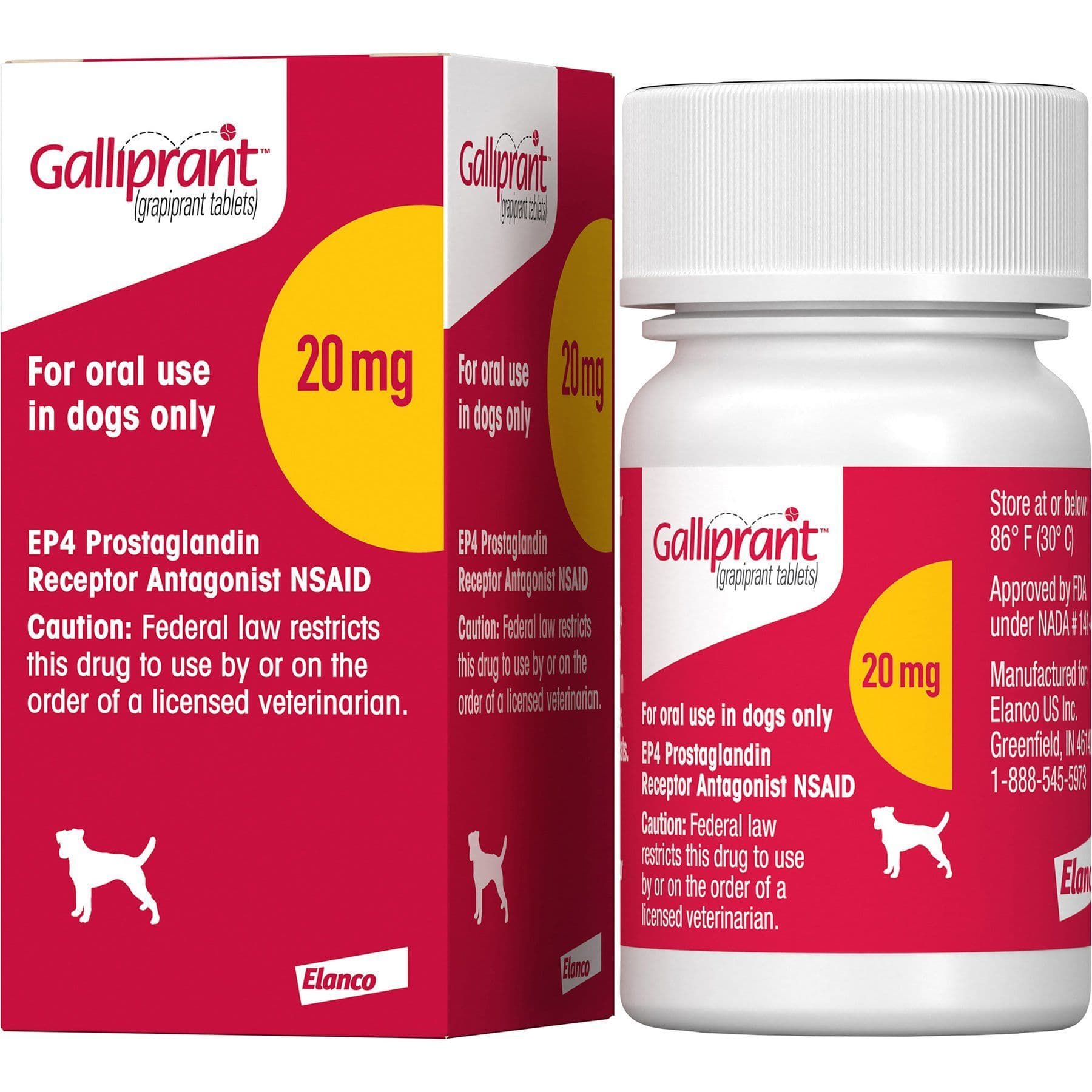
Galliprant is a prescription grapiprant tablet for dogs, dispensed only with a vet prescription.
Webvet may earn a commission when you click through to Chewy, at no extra cost to you.
FDA's list of currently marketed FDA-approved NSAIDs for dogs includes:
- Carprofen, sold under several brand and generic names (see carprofen for dogs and cats)
- Deracoxib, including Deramaxx
- Firocoxib, including Previcox
- Grapiprant, which FDA notes is approved only to control pain and inflammation associated with osteoarthritis
- Meloxicam, in oral and injectable forms for dogs
- Robenacoxib, sold as Onsior, for a maximum of 3 days
A vet may still decide acetaminophen suits a particular dog's pain; the vet then sets the dose and schedule, and owners should never choose one. It does little against inflammation, including arthritis inflammation: FDA says it doesn't have much anti-inflammatory activity. For a fever, start with your vet and WebVet's guide to fever in dogs.
Gabapentin is another prescription option: a 2023 review in Animals reports benefits in dogs for chronic, neuropathic, and post-operative pain. WebVet covers it in gabapentin for dogs and cats, and the Merck Veterinary Manual warns some oral gabapentin solutions contain xylitol, which is toxic to dogs.
If your vet prescribes a daily pain medicine, a weekly organizer such as the Ezy Dose Weekly 7-Day Dog Pill Organizer has seven compartments that each hold a full day's pills, so a week of doses can be set out in advance. Keep it in a closed cabinet out of your dog's reach.
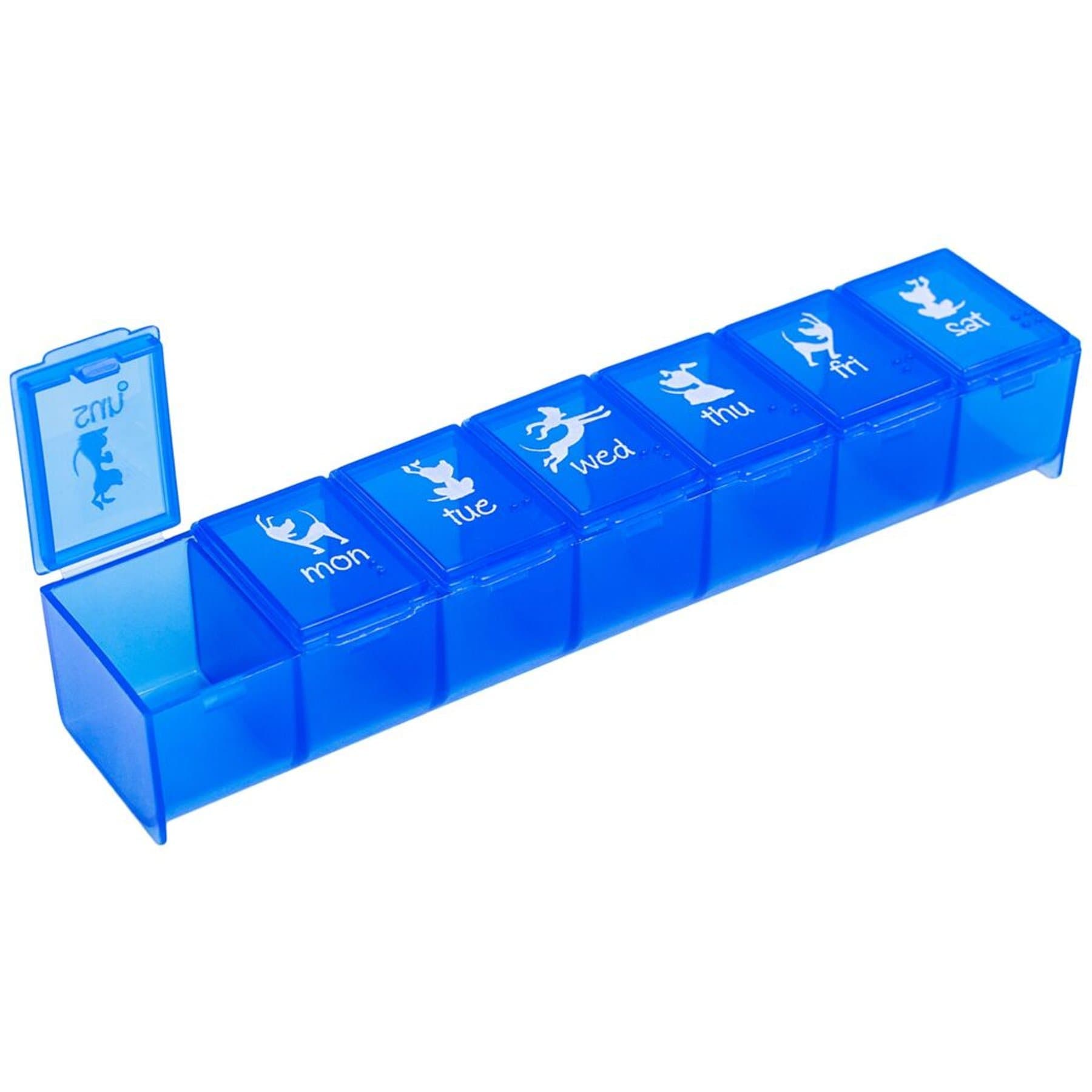
The Ezy Dose Weekly 7-Day Dog Pill Organizer is a weekly pill organizer with seven daily compartments.
Webvet may earn a commission when you click through to Chewy, at no extra cost to you.
Pet Poison Helpline lists limping, whining, and hiding among signs of pain, and until your dog is seen, it suggests a cold compress for 10 minutes several times a day, never directly on the skin.
WebVet's guide to pain meds for dogs covers dosing schedules, comfort care, and non-drug support, and FDA says to consult your vet before adjusting any prescribed dose.
Tylenol vs. Ibuprofen and Aspirin for Dogs
Neither Tylenol nor ibuprofen nor aspirin is a safe pain reliever to give a dog at home, and switching from one to another does not remove the risk.
Ibuprofen, naproxen, and aspirin are not safe swaps for Tylenol. Acetaminophen is not an NSAID, according to FDA and the ASPCA Animal Poison Control Center, but ibuprofen, naproxen, and aspirin are, and FDA explains that an NSAID meant for people may not be safe or effective in a dog because the drug may:
- Last longer
- Be processed differently in the body
- Be absorbed faster by the stomach and intestines
- Reach higher blood levels
The Merck Veterinary Manual says ibuprofen is no longer recommended in dogs because it may cause stomach ulcers and perforations, and Pet Poison Helpline warns even one or two ibuprofen or naproxen pills can seriously harm a pet. WebVet's guide to NSAIDs for dogs covers ibuprofen in depth.
Aspirin is no safer as a home swap for pain: Merck cites studies in which regular aspirin caused stomach erosions in half of the treated dogs within two days. For when a vet might use it, see aspirin for dogs and cats.
Giving Tylenol and ibuprofen together is not a workaround either. Before reaching for any human pain reliever, FDA's advice is to stop and call your veterinarian.
How Acetaminophen Harms a Dog's Liver and Blood
Acetaminophen causes liver damage and methemoglobinemia in dogs. When the liver's usual clearing pathways are overwhelmed, a reactive breakdown product injures liver cells and turns hemoglobin into methemoglobin, which cannot carry oxygen, according to a treatment paper from the ASPCA Animal Poison Control Center (APCC).
Why is Tylenol poisonous to dogs?
Tylenol is poisonous to dogs because their livers turn part of each dose into NAPQI, a highly reactive metabolite. Most acetaminophen is cleared by glucuronide and sulfate conjugation, and glutathione normally neutralizes the small amount of NAPQI made, the APCC paper explains.
When those pathways saturate and glutathione runs low, NAPQI binds to liver cell membranes and kills the cells. For red blood cells, a 2009 study points to a different metabolite, para-aminophenol, as the cause of methemoglobin in dogs and cats.
What happens if a dog accidentally eats Tylenol?
What happens depends on the dose for the dog's weight. VCA says dogs are likely to develop liver damage at lower doses and red blood cell changes at higher doses, which can bring weakness and breathing trouble within hours. Call a vet or animal poison control before signs appear.
Is There a Safe Tylenol Dose for Dogs?
No. There is no Tylenol dose for dogs, and no dosage chart, that an owner can safely use at home; any dog acetaminophen dose has to come from a veterinarian.
There is no safe home dose because any acetaminophen dose for a dog is one a veterinarian sets for that individual dog; the figures below are published acetaminophen toxic thresholds, the amounts at which harm is reported in dogs. Pet Poison Helpline says the drug has a narrower margin of safety in dogs than in people, and Merck adds that poisoning can occur at lower doses with repeated exposure.
This table converts the published acetaminophen toxic thresholds from the ASPCA APCC and Merck into milligrams by dog weight and rough tablet counts for 325 mg and 500 mg tablets. These are amounts at which sources report harm, not safe amounts.
| Dog weight | Reported liver-injury threshold, 100 mg/kg (mg) | Reported methemoglobinemia threshold, 200 mg/kg (mg) | Tablet arithmetic at 100 mg/kg (325 mg / 500 mg tablets) | Tablet arithmetic at 200 mg/kg (325 mg / 500 mg tablets) | Action for any amount |
|---|---|---|---|---|---|
| 2.5 kg (5.5 lb) | 250 | 500 | About 0.8 / 0.5 | About 1.5 / 1 | Any amount: call a vet or animal poison control now |
| 5 kg (11 lb) | 500 | 1,000 | About 1.5 / 1 | About 3.1 / 2 | Any amount: call a vet or animal poison control now |
| 10 kg (22 lb) | 1,000 | 2,000 | About 3.1 / 2 | About 6.2 / 4 | Any amount: call a vet or animal poison control now |
| 25 kg (55 lb) | 2,500 | 5,000 | About 7.7 / 5 | About 15.4 / 10 | Any amount: call a vet or animal poison control now |
| 40 kg (88 lb) | 4,000 | 8,000 | About 12.3 / 8 | About 24.6 / 16 | Any amount: call a vet or animal poison control now |
The tablet equivalents are simple arithmetic, not limits to stay under: VCA notes dogs can develop liver damage within several days of a small dose.
Can I give my dog a Tylenol pill?
No, not unless your veterinarian prescribes it and sets the dose and schedule. A Tylenol pill is sized for a person: Drug Facts labels list 325 mg per Regular Strength tablet and 500 mg per Extra Strength caplet, so by arithmetic one regular tablet reaches the 100 mg/kg liver-injury threshold in a small dog of about 3.25 kg (7 lb).
What is the toxic level of Tylenol for dogs?
The ASPCA APCC hepatotoxicant table lists 100 mg/kg for liver toxicity and 200 mg/kg for methemoglobinemia in dogs. The Merck Veterinary Manual gives the same two figures: acute signs are not seen unless the dose exceeds 100 mg/kg, and methemoglobinemia signs have been reported above 200 mg/kg.
A 2003 case report in the Canadian Veterinary Journal says signs are generally seen above 200 mg/kg. The figures differ by source, and none of them marks a safe amount.
How much acetaminophen can I give my dog?
None on your own. Some vets prescribe acetaminophen for dogs in specific cases, at a dose and schedule they set, and owners should never choose a dose.
In a survey of veterinarians in Australia and New Zealand, 97.0% had prescribed or recommended paracetamol for small animals, most often dogs, but the authors caution this is not an endorsement or proof that it relieves pain in dogs.
 Sponsored
Vet care that's always there
Unlimited video calls and messaging with licensed vets for less than a typical vet visit. One membership covers up to five pets.
Use code Pets60
Plans start at $12/month · covers up to 5 pets
- Licensed vets in most states
- Rx for 150+ conditions
- 4.7 on Trustpilot
How to Prevent Tylenol Poisoning in Dogs
Preventing Tylenol poisoning in dogs comes down to storing medicines out of reach and keeping poison control numbers ready. The Merck Veterinary Manual's owner guide says to store all medicines where your pet cannot reach them, and it helps to save Pet Poison Helpline, (855) 764-7661, and the ASPCA Animal Poison Control Center, (888) 426-4435, in your phone.
Preparation also covers everyday injuries. A stocked kit such as the Kurgo Pet First Aid Kit holds basics such as gauze, tweezers, and an instant cold pack. It contains nothing for treating a poisoning, so it adds to the poison control numbers rather than replacing them.
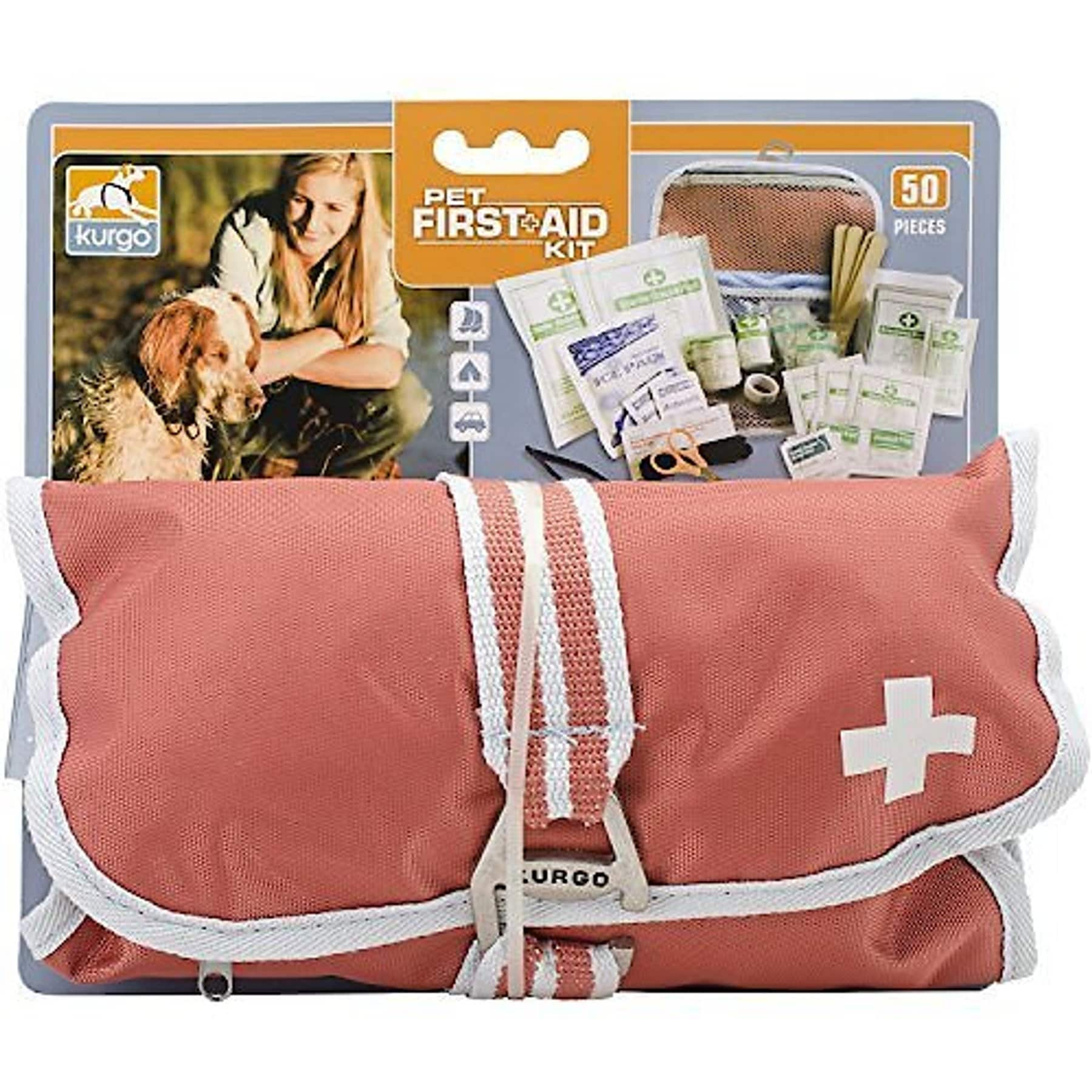
The Kurgo Pet First Aid Kit is a 50-piece pet first aid kit.
Webvet may earn a commission when you click through to Chewy, at no extra cost to you.
Medicines within a pet's reach are a leading cause of poison calls. ASPCA Poison Control ranked over-the-counter medications and supplements first among its 2025 exposure calls, at 16.9%, with vitamins, supplements, and pain medications making up most of them, often found in backpacks, purses, or bottles left within reach.

VCA and Pet Poison Helpline advise these storage habits:
- Keep pill bottles shut away in a cabinet, because pets commonly chew through closed bottles.
- Keep purses, backpacks, lunch boxes, and suitcases out of your dog's reach, since curious pets explore them.
- Store a weekly pill container in a cabinet out of reach, because some pets treat it as a plastic chew toy.
- If you drop a pill, confine your pets in another room until every pill is picked up.
- Do not assume a dog will refuse a pill because it tastes bad.
Keep the same habits for every pet in the home, because cats are far more sensitive to acetaminophen than dogs. The Merck Veterinary Manual explains that cats have low glucuronyl transferase activity, so they clear the drug poorly, and puts the cat toxicosis threshold at 40 to 50 mg/kg, with some cats affected at 10 mg/kg.
For room-by-room ideas, see WebVet's tips to dog proof your home.
A printed reference is useful to read ahead of time. The Pet Vet First Aid Guide-Spiral Bound is a 174-page handbook by veterinarian Dr. Leah Hill, covering topics from common toxicities to CPR and wound care for dogs and cats.
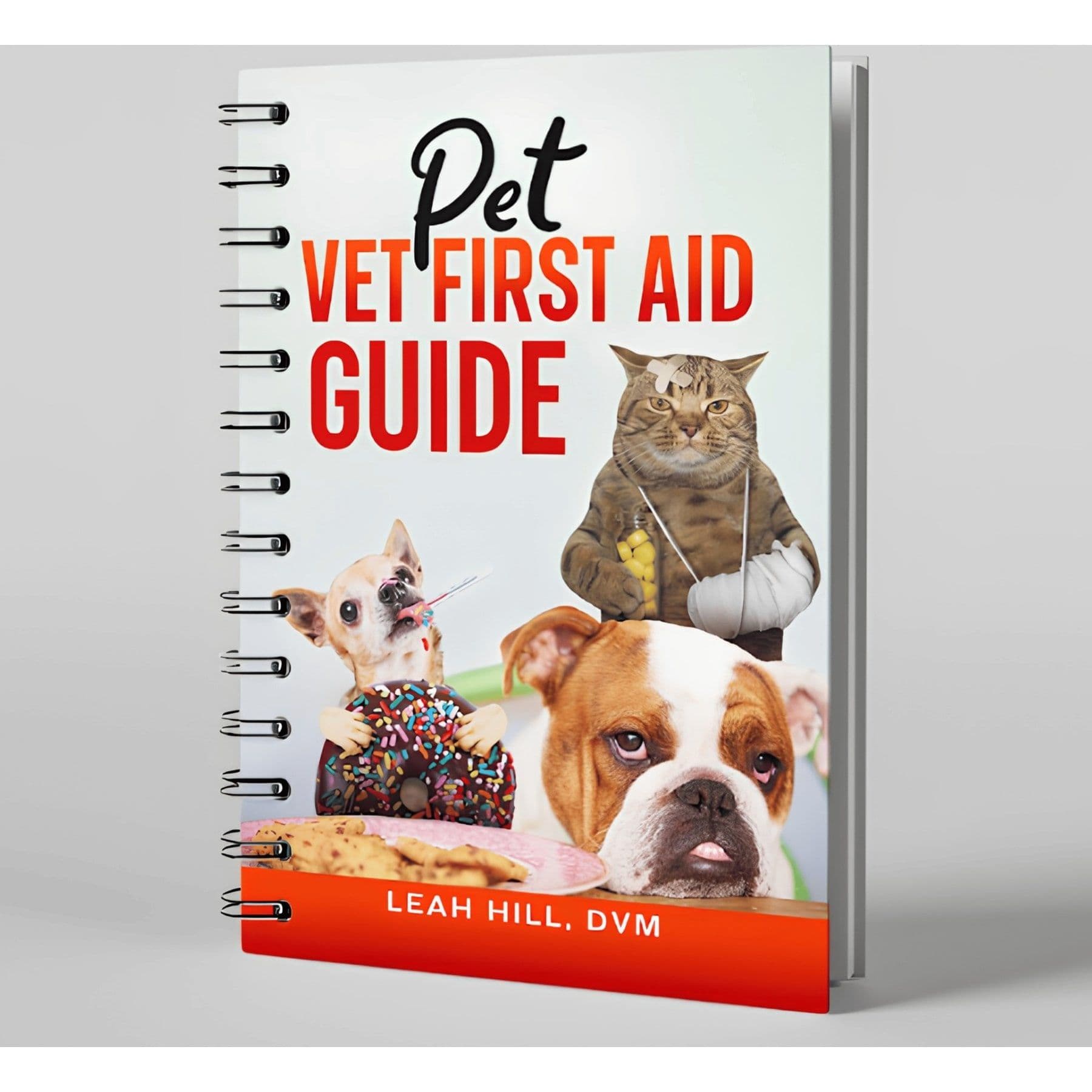
The Pet Vet First Aid Guide-Spiral Bound is a first aid handbook for dogs and cats written by a veterinarian.
Webvet may earn a commission when you click through to Chewy, at no extra cost to you.
Tylenol PM, Children's Tylenol, and Combination Products
No Tylenol product is safe to give a dog without a vet: Tylenol PM, Children's Tylenol, Extra Strength Tylenol, and cold and flu formulas all contain acetaminophen, according to their Drug Facts labels, and several add other drugs.
Combination products and other forms, including Tylenol PM, children's liquid, cold and flu formulas, and opioid combinations, need the same caution as plain Tylenol. VCA says acetaminophen may be combined with aspirin, opioids, antihistamines, decongestants, or caffeine, and Merck says accurate product identification is essential to successful treatment.
Here is how much acetaminophen common products carry, from PM and cold and flu formulas to children's liquid and opioid combinations, according to their labels:
- Tylenol Regular Strength: 325 mg per tablet
- Tylenol Extra Strength: 500 mg per caplet
- Tylenol PM Extra Strength: 500 mg per caplet, plus 25 mg of the antihistamine sleep aid diphenhydramine
- Extra Strength Tylenol Cold + Flu Multi-Symptom Night: 500 mg per caplet, plus an antihistamine and a cough suppressant
- Children's Tylenol oral suspension, a liquid: 160 mg per 5 mL, or 32 mg per mL
- Excedrin Extra Strength: 250 mg per caplet, plus 250 mg of aspirin and 65 mg of caffeine
- Prescription acetaminophen and codeine: 300 mg of acetaminophen with 15 mg of the opioid codeine in one tablet strength
Pet Poison Helpline says to watch for acetaminophen in products labeled for cold and flu symptoms, allergies, and fever, and in some prescription pain medications, and it lists Percocet, Panadol, and Feverall among acetaminophen's other names. Merck notes tramadol is often combined with acetaminophen too.
A children's liquid holds less acetaminophen per 5 mL (160 mg) than one 500 mg caplet, but it is the same drug, and its directions are written for children, not dogs. If your dog gets into any of these products, keep the package, since its strength and added ingredients shape the treatment.
Signs of Tylenol Poisoning in Dogs
Signs of acetaminophen poisoning and how soon they start depend on the dose: VCA says larger doses can cause signs within hours, while liver damage can develop within several days, even after a small dose. A poisoned dog can look normal at first, so do not wait for signs before calling.

Signs that VCA and the Merck Veterinary Manual describe in poisoned dogs include:
- Weakness and lethargy
- Pale or bluish gums, or brown, muddy-colored gums from methemoglobinemia
- Breathing trouble, fast breathing, or excessive panting
- Fast heart rate
- Swelling of the face and paws
- Vomiting, abdominal pain, and trembling
As liver damage develops over the following days, VCA lists these signs:
- Stomach upset and decreased or no appetite
- Depression
- Yellow skin, gums, and eyes (jaundice)
- Squinting, eye discharge, and eye pain, if dry eye (keratoconjunctivitis sicca) develops
- Secondary kidney failure, which is rare
How long does it take for dogs to show signs of acetaminophen poisoning?
Signs can start within hours. Merck says blood levels usually peak within 1 hour of swallowing, though extended-release products can delay that peak, and the 2003 Canadian Veterinary Journal report says early blood-related signs appear within 4 to 12 hours and liver-related signs about 36 hours after ingestion.
The APCC paper says lab evidence of liver injury generally develops 24 to 36 hours after ingestion. A normal exam on arrival is common: in a 2025 study of 223 dogs that swallowed medicines, 164 had a normal clinical examination when they arrived.
In the Canadian report, an 11-year-old, 25 kg Dalmatian found beside an empty bottle of Extra Strength Tylenol 3 to 4 hours earlier arrived markedly depressed, with bluish gums and a grey-blue tongue.
What to Do if Your Dog Ate Tylenol
What to do right away: call a vet or animal poison control, and do not induce vomiting unless told to. Speed matters with Tylenol toxicity in dogs, because acetaminophen usually reaches peak blood levels within 1 hour, and ASPCA Poison Control says not to try inducing vomiting at home without first consulting a veterinarian.
Then work through these steps:
- Move your dog away from the pills, and confine your pets in another room until every spilled pill is picked up.
- Call Pet Poison Helpline at (855) 764-7661; its FAQ states a one-time consultation fee of $99 per incident, which also covers follow-up consultations.
- Or call ASPCA Animal Poison Control at (888) 426-4435, open 24 hours a day, 365 days a year; a consultation fee may apply. Your own vet or an emergency clinic is also a first call.
- Have ready your dog's age, weight, and breed, the time it ate the medicine, how many pills are missing (count what is left if you know how many the bottle held), and the strength in milligrams per pill or per milliliter.
- Do not give any home antidote or remedy, and do not induce vomiting unless the vet or poison control specialist tells you to.
- If you are told to come in, bring the bottle and any remaining pills.
What can I do if my dog ate a Tylenol pill?
Call your vet or animal poison control right away, even for a single pill and even if your dog seems normal, and do nothing else at home unless they tell you to. The specialist uses your dog's weight and the pill's strength to judge the risk and to tell you whether your dog needs to be seen.
If your dog needs hospital care, WebVet's guide to emergency vet cost explains what an emergency visit can involve.
How Vets Treat Tylenol Poisoning
Vet treatment for acetaminophen poisoning covers decontamination, activated charcoal, N-acetylcysteine, and supportive care. The Merck Veterinary Manual frames the goals as early decontamination, preventing or treating methemoglobinemia and liver damage, and supportive care, and VCA notes hospitalization may be needed.

Depending on the dose, timing, and signs, care can include:
- Decontamination: Merck says induced vomiting is useful when done early, followed by a single dose of activated charcoal with a cathartic; VCA notes vets use medical-grade activated charcoal to limit absorption.
- N-acetylcysteine: Merck calls it a potential antidote that reduces methemoglobinemia and liver damage by binding acetaminophen metabolites and serving as a glutathione precursor.
- Oxygen and blood products: the APCC paper says a dog struggling to breathe should get oxygen, and whole blood transfusions or Oxyglobin may be necessary.
- Fluids and supportive medicines: VCA describes fluid support and medicines that treat signs and support organ function.
- Liver support: Merck says SAMe, alone or combined with silybin, has been suggested as an added treatment.
- Monitoring: Merck says vets watch for methemoglobinemia, Heinz body anemia, and hemolysis, and recheck liver enzymes at 24 and 48 hours.
Those checks look for the red blood cell destruction covered in anemia in dogs and the liver injury behind elevated liver enzymes in dogs. ASPCA APCC toxicologists recommend N-acetylcysteine after any acute overdose, even when the history is unclear, because signs can progress rapidly.
Treatment can help even after a delay. In a 2002 case report, a Shetland sheepdog that arrived 48 hours after eating about 1 g/kg of acetaminophen, ten times the 100 mg/kg threshold, had brown gums and severe anemia and was rescued with SAMe as a glutathione donor.
The 25 kg dog in the Canadian report responded to IV fluids, N-acetylcysteine, ascorbic acid, and sodium bicarbonate, and showed no clinical evidence of liver damage.
Tylenol and Dogs FAQs
Frequently Asked Questions
My dog ate 2 paracetamol pills. What should I do?
Call your vet or an animal poison control line now, because paracetamol is the same drug as acetaminophen, the active ingredient in Tylenol. Do not induce vomiting unless they tell you to.
Adult paracetamol tablets usually contain 500 mg, according to the NHS, so two pills usually total 1,000 mg.
By arithmetic, that reaches the 100 mg/kg liver-injury threshold for a 10 kg (22 lb) dog and the 200 mg/kg methemoglobinemia threshold for a 5 kg (11 lb) dog. Smaller dogs reach them with less, and neither is a safe amount.
What are the side effects of paracetamol in dogs?
In poisoning, paracetamol mainly damages the liver and red blood cells, and Merck reports dry eye in some dogs after ingestion. At doses a vet prescribes, side effects appear uncommon: 96.5% of veterinarians in the Australian and New Zealand survey reported not observing adverse effects.
A 2026 Veterinary Ophthalmology study in healthy dogs found 5 days of therapeutic acetaminophen did not affect tear production or eye pressure, which suggests the dry eye risk is tied to poisoning rather than prescribed use.
Can you flush Tylenol out of a dog's system at home?
No. There is no home method to flush acetaminophen out: Pet Poison Helpline says to give no home antidotes and not to induce vomiting without consulting a vet or the Helpline.
Even in the hospital, the APCC paper says forced diuresis or peritoneal dialysis does not speed the drug's elimination. Removing it is the vet's job, using induced vomiting only when a vet judges it useful and medical-grade activated charcoal to limit absorption.
What happens if a dog eats an extra strength Tylenol?
One extra strength Tylenol caplet holds 500 mg of acetaminophen, and what it does depends on your dog's weight. By arithmetic, it equals the 100 mg/kg liver-injury threshold for a 5 kg (11 lb) dog and the 200 mg/kg methemoglobinemia threshold for a 2.5 kg (5.5 lb) dog.
Pet Poison Helpline notes that the amount eaten and the size of the animal determine what is toxic. A larger dog stays below those figures with one caplet, but they are harm thresholds, not safe limits, so call a vet or animal poison control about any amount.
Can dogs survive acetaminophen poisoning?
Yes, many dogs survive acetaminophen poisoning, especially with early care. VCA says the prognosis for dogs is excellent if exposure is treated early, and a 2026 systematic review found the strongest evidence supports giving N-acetylcysteine early.
The APCC paper calls the prognosis good with prompt, aggressive treatment but poor to guarded for dogs with severe methemoglobinemia or liver damage. VCA warns that high doses, delayed treatment, or no treatment can leave lasting effects on liver function even in dogs that recover.

Editor
The Webvet Editorial Team is the in-house group of pet-care editors and writers behind Webvet, operated by Smart Pet Collective. The team researches, writes, and maintains Webvet's pet health, behavior, and medication content. Every article follows a defined editorial process: research from reputable veterinary and scientific sources, careful drafting, mandatory review of medical content by a credentialed veterinarian, and dated publication. Health and medication articles are medically reviewed by a licensed veterinary professional before they go live and are kept current over time.
Veterinarian · BVMS MRCVS
Dr. Pippa Elliott, BVMS, MRCVS, is a veterinarian with nearly 30 years of experience in companion animal practice. Dr. Elliott earned her Bachelor of Veterinary Medicine and Surgery from the University of Glasgow. She was also designated a Member of the Royal College of Veterinary Surgeons. Married with 2 grown-up kids, Dr. Elliott has a naughty Puggle named Poggle, 3 cats and a bearded dragon.
Related reading

Dog Anxiety Meds: What Vets Prescribe, Over-the-Counter Options, and How to Choose

Interceptor Plus for Dogs: What It Prevents, Dosing by Weight, Side Effects, and vs. Heartgard Plus

Heartgard Plus for Dogs: What It Prevents, Dosing by Weight, Side Effects, and Missed Doses
