Azithromycin for Cats: Uses, Dosage, and Side Effects
Azithromycin is a human antibiotic vets prescribe off-label for cats, most often for respiratory and eye infections. This guide covers dosing forms, how to give liquid or capsules, storage, side effects, and when to call the vet.

BVMS MRCVS
Medically reviewed by Dr. Pippa Elliott, BVMS MRCVS · Last reviewed

Drug facts
Azithromycin (Zithromax) for Cats· Azithromycin
Azithromycin is a macrolide antibiotic approved for people as Zithromax and prescribed extra-label by veterinarians for cats, mainly for respiratory infections linked to Mycoplasma and some protozoal infections. It is given by mouth as a liquid or compounded capsule, and the vet sets the dose and schedule by weight.
 Sponsored
Is Azithromycin (Zithromax) for Cats right for your cat?
A licensed vet at Dutch can assess your cat over video and prescribe treatment when it's appropriate, delivered to your door.
Use code Pets60
Plans start at $12/month · covers up to 5 pets
- Licensed vets in most states
- Rx for 150+ conditions
- 4.7 on Trustpilot
Azithromycin for cats: what it treats, prescription status, and whether today is a vet day
Azithromycin for cats is a macrolide antibiotic, sold for people as Zithromax, that vets prescribe extra-label for certain bacterial infections, mainly respiratory infections linked to Mycoplasma, and for some protozoal infections. The Merck Veterinary Manual notes that azithromycin is not labeled for veterinary use in the US and is prescribed for extralabel oral use.
Whether a cat needs to see the vet today depends on the discharge and how the cat is acting. The ISCAID respiratory guidelines advise against antibiotics for clear, watery discharge, and consider them when thick discharge comes with fever, lethargy, or not eating. The vet doses azithromycin for cats by body weight; human tablets at home are no substitute.
- 1What azithromycin treats in cats: mainly bacterial respiratory infections linked to Mycoplasma, plus some protozoal infections such as toxoplasmosis.
- 2It is a human prescription drug (Zithromax) that vets use extra-label, so every bottle or capsule needs a veterinarian's prescription.
- 3The dosing ranges the vet works within run from 5 to 15 mg/kg by mouth, on schedules that differ by infection, so only the vet sets the dose.
- 4For a routine respiratory infection, ISCAID names doxycycline first and reserves azithromycin for cases where chlamydia is unlikely.
- 5Call the vet now for labored breathing, facial swelling, or yellow skin or eyes, and the same day for a cat that is not eating.

Extra-label means a veterinarian prescribes a human-approved drug for a species its label does not cover. Pfizer's Zithromax prescribing information describes a macrolide antibacterial drug approved for people since 1991. No cat dose appears on that label, so the dose comes from veterinary references and the vet's exam.
Most acute upper respiratory infections in cats are viral. The Merck Veterinary Manual on feline respiratory disease names feline herpesvirus and calicivirus as the usual causes of acute feline upper respiratory infection, with Chlamydia felis and Mycoplasma felis as bacterial agents. The guide on why your cat keeps sneezing covers other causes.
Azithromycin reaches cats in two main forms: a liquid, either the human Zithromax suspension or a flavored compounded suspension made by a pharmacy, and compounded capsules in small strengths. Chewy Pharmacy fills the Azithromycin Oral Liquid Chicken Flavored for Dogs & Cats, 25-mg/mL, 30 mL Compounded only with a veterinarian's prescription.
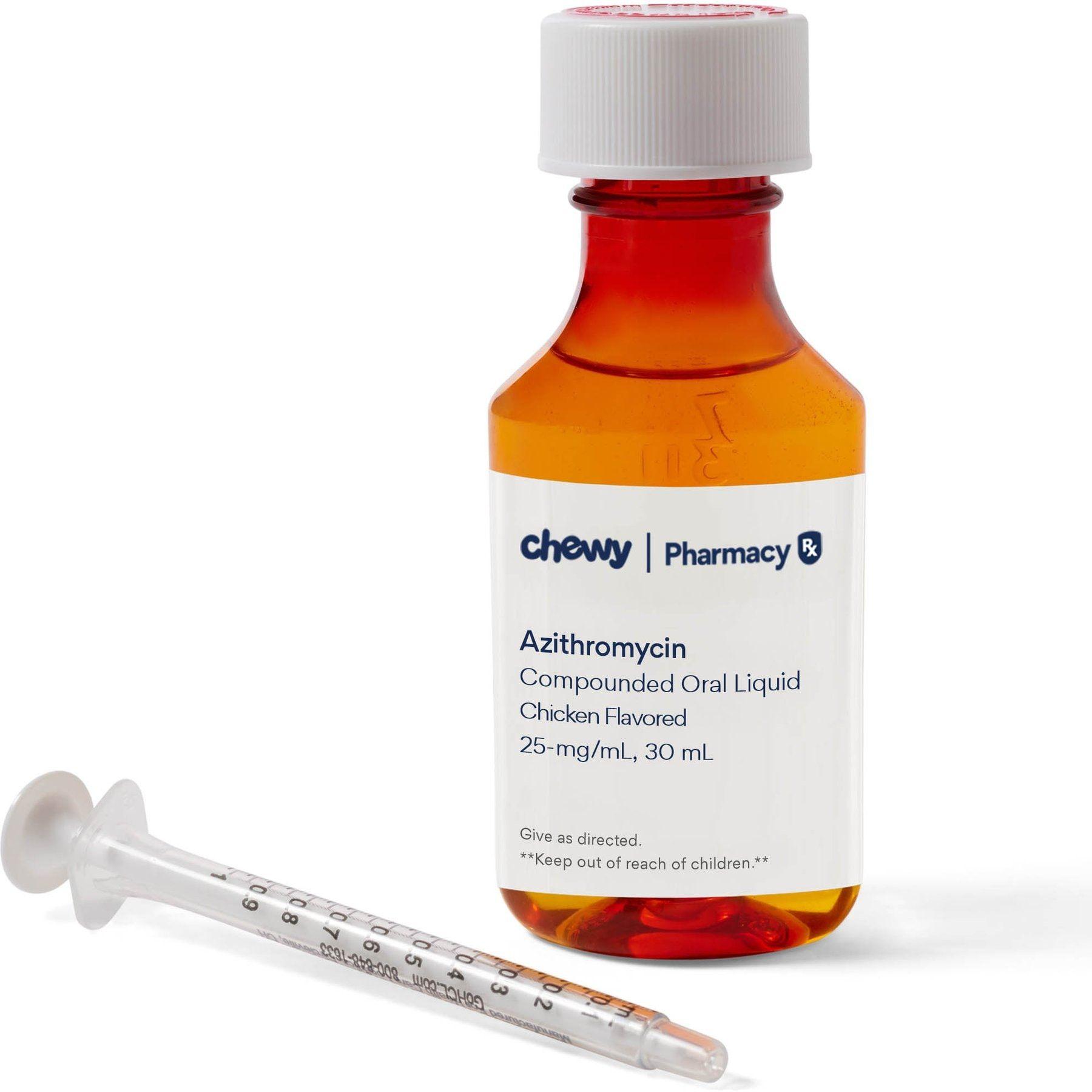
A chicken-flavored compounded azithromycin liquid that a vet can prescribe for cats that refuse pills.
Webvet may earn a commission when you click through to Chewy, at no extra cost to you.
Azithromycin dosage for cats by weight
The azithromycin dosage for cats in the veterinary references runs from 5 to 15 mg/kg by mouth, on a schedule that depends on the infection. The references state it per kilogram of body weight, so the vet weighs the cat and works out the exact amount.
| Named veterinary reference | Range it states for cats | Dosing schedule | Forms vets dispense |
|---|---|---|---|
| Merck Veterinary Manual dosage table | 5–15 mg/kg by mouth, off-label | Every 24 hours | Not specified; the vet chooses the form, such as a compounded liquid or capsule |
| ISCAID respiratory guidelines | 5–10 mg/kg by mouth | Every 12 hours on day 1, then every 3 days; longer intervals not indicated | Not specified; the vet chooses the form, such as a compounded liquid or capsule |
| Ohio State University, Mycoplasma respiratory infection | 5–15 mg/kg by mouth, extra-label | Every 24 hours for 5 days, then every 72 hours for 6–8 weeks | Oral suspension or tablet |
| Ohio State University, other bacterial infections | 7–15 mg/kg by mouth, extra-label | Every 12 hours for 5–7 days | Oral suspension or tablet |
| Ohio State University, toxoplasmosis | 10 mg/kg by mouth, extra-label, not the first choice | Every 24 hours for 4 weeks | Oral suspension or tablet |
Whether a cat gets a liquid or a capsule comes down to the cat and the dose: the dosing ranges the vet works within are calculated per kilogram, then turned into a liquid volume or a capsule strength. Ohio State's own hospital pharmacy stocks a 20 mg/mL oral suspension and a 250 mg tablet.
The Azithromycin Compounded Capsule, 20 mg, 30 capsules for Veterinary use is a capsule form that Chewy Pharmacy fills only with a veterinarian's prescription, at the strength the vet chooses.
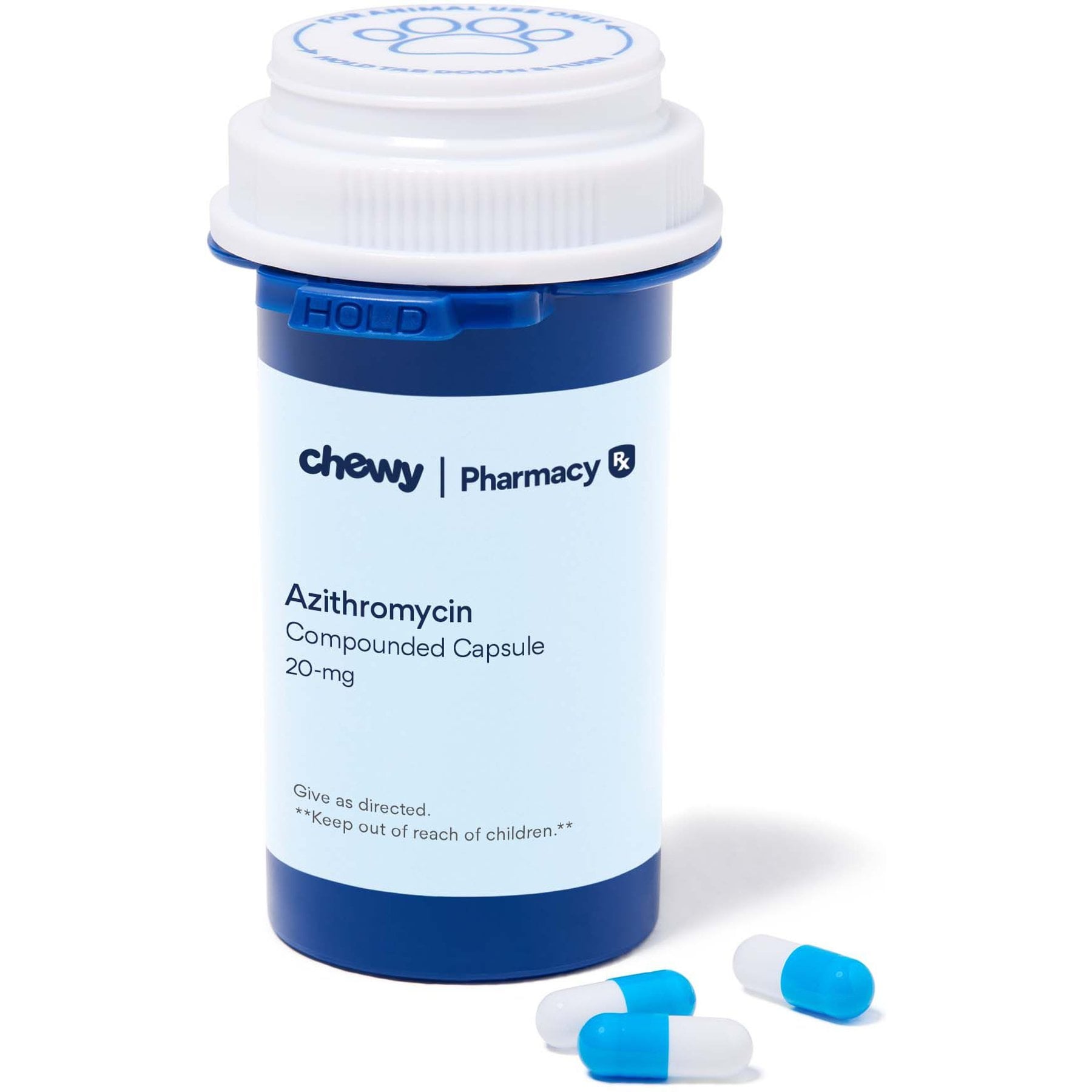
A 20 mg compounded azithromycin capsule for cats that take pills, filled at the strength a vet prescribes.
Webvet may earn a commission when you click through to Chewy, at no extra cost to you.
The references do not agree on the dosing schedule. The Merck Veterinary Manual dosage table lists 5–15 mg/kg once daily, the ISCAID guidelines list 5–10 mg/kg twice on day 1 and then every 3 days, and the Ohio State University antimicrobial guidelines give separate schedules by infection.
Those gaps between doses make sense because azithromycin lingers in a cat's body. A pharmacokinetic study by Hunter and colleagues measured a terminal half-life of 35 hours in cats and oral bioavailability of 58%; the Merck Veterinary Manual gives 59%. That long half-life is why some schedules skip days.

How many days a cat takes azithromycin depends on the infection. For Mycoplasma respiratory infection, Ohio State runs daily doses for 5 days and then every 72 hours for 6-8 weeks. For other bacterial infections, the course is 5-7 days. For an upper respiratory infection, the vet sets the length after the exam. Give exactly what the vet prescribed, and never change or stop the dose without the vet.
What azithromycin is used for in cats and how it compares with doxycycline, Clavamox, and Orbax
What azithromycin treats in cats is mainly Mycoplasma respiratory infection and some protozoal infections, and the vet picks between antibiotics by the likely germ. The main options for respiratory, eye, skin, and bladder infections compare like this:
- Azithromycin (extra-label human drug): ISCAID lists it for primary bacterial disease, particularly Mycoplasma, and for pneumonia of undetermined cause. Question to ask the vet: is chlamydia unlikely here?
- Doxycycline: ISCAID's first-line choice for suspected acute bacterial upper respiratory infection in cats, given for 7–10 days, with activity against Bordetella, Mycoplasma, and Chlamydia felis. Question to ask: liquid or tablet, and how to give a tablet safely?
- Clavamox (amoxicillin and clavulanate): FDA-approved for cats with skin and soft tissue infections and urinary tract infections from E. coli. ISCAID calls it ineffective against Mycoplasma and inferior for Chlamydia felis. Question to ask: does a culture support it?
- Orbax (orbifloxacin): FDA-approved oral suspension for skin infections, wounds and abscesses, in cats. ISCAID reserves fluoroquinolones for culture-supported cases. Question to ask: is the retina risk worth it here?
For a closer look at the amoxicillin option, the Clavamox for dogs and cats guide covers that drug on its own. Azithromycin versus Clavamox mostly comes down to the germ: Clavamox covers common skin and bladder bacteria, while azithromycin is chosen for Mycoplasma.

What infections does azithromycin treat?
Azithromycin treats bacterial infections, and in cats it is mainly chosen for Mycoplasma and some protozoa. The Ohio State guidelines list systemic infections, Mycoplasma-associated upper respiratory infection in cats, and protozoal infections including Toxoplasma gondii and Cryptosporidium. Ohio State adds that cats with Chlamydophila felis or hemotropic mycoplasmas will not clear infection with azithromycin.
Does azithromycin treat upper respiratory infection in cats?
Yes, sometimes, but it is not the first choice. In a study of 31 shelter cats, Ruch-Gallie and colleagues found no difference between azithromycin and amoxicillin, and 8 of 27 cats responded to neither. ISCAID reserves it for cases where chlamydiosis is unlikely. The upper respiratory infection in cats guide covers home care.
Azithromycin for a cat's eyes follows the same logic. Merck notes that chlamydial infection causes chronic, low-grade conjunctivitis, while Mycoplasma can cause severe swelling of the conjunctiva. ISCAID reports that azithromycin was not as effective as doxycycline for feline ocular chlamydiosis.
In a trial by Owen and colleagues, Chlamydia felis was re-isolated in four of five treated cats. The cat conjunctivitis and pink eye guide covers eye symptoms.
What is Orbax used for in cats?
Orbax oral suspension is FDA-approved to treat skin infections, wounds and abscesses, in cats caused by susceptible Staphylococcus aureus, Escherichia coli, and Pasteurella multocida. The Orbax label warns that fluoroquinolones have been reported to affect the retina in cats, and that blindness has been reported after approval.
Does Orbax treat upper respiratory infection in cats?
Not on its label: Orbax is approved for skin infections in cats, not respiratory infections. ISCAID notes that vets have used orbifloxacin and other veterinary fluoroquinolones for suspected feline bacterial upper respiratory infection, but recommends reserving them for cases where culture results support them and doxycycline or amoxicillin is not viable.
What is the safest antibiotic for cats?
No single antibiotic is safest for every cat; the safest choice matches the infection. ISCAID picks doxycycline first for bacterial upper respiratory infection partly because it is well tolerated by cats. Every option carries trade-offs, such as Orbax's retina warning, so the vet weighs the infection and the whole cat.
Several of these antibiotics come as liquids for cats, such as Orbax oral suspension and compounded azithromycin, each measured to the exact volume the vet prescribed. The Lixit Small Animal Oral Syringe & Medicine Dropper, 2 count pairs a 3 mL dropper with a 10 mL marked syringe; for a very small volume, ask the pharmacy for a dosing syringe sized to the dose. It does not replace the prescribed antibiotic or the vet exam.
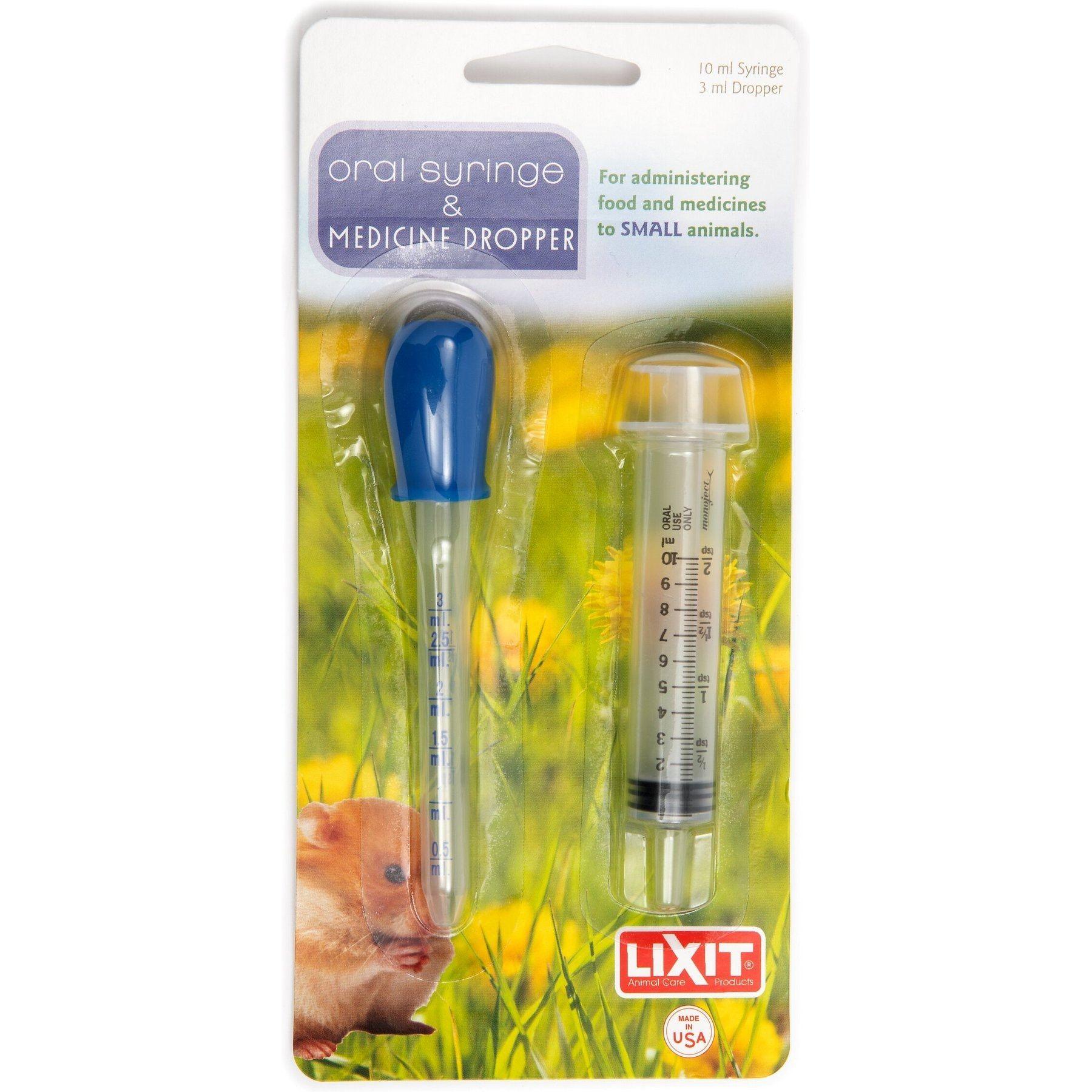
A 3 mL dropper and 10 mL marked syringe set for giving liquid medicine or a little water after a capsule.
Webvet may earn a commission when you click through to Chewy, at no extra cost to you.
Bladder infections are a different question. Merck lists urine culture as the gold standard for diagnosing bacterial cystitis and names amoxicillin or trimethoprim-sulfonamide as reasonable first choices, not azithromycin. Merck also notes that urinary signs in a young cat usually come from a noninfectious cause. The cat UTI treatment guide covers that workup.
SponsoredVet care that's always there
Unlimited video calls and messaging with licensed vets for less than a typical vet visit. One membership covers up to five pets.
Use code Pets60
Plans start at $12/month · covers up to 5 pets
- Licensed vets in most states
- Rx for 150+ conditions
- 4.7 on Trustpilot
Azithromycin side effects in cats
Azithromycin side effects in cats are usually mild. The Merck Veterinary Manual says macrolides and azalides are generally well tolerated in dogs and cats, though hypersensitivity reactions occasionally occur.
Side effects to watch come mostly from the gut. The label gives no cat figures; in people, the Zithromax label lists:
- Diarrhea, 5 to 14%
- Nausea, 3 to 18%
- Abdominal pain, 3 to 7%
- Vomiting, 2 to 7%
Those percentages describe people, not cats, so they show the type of effect rather than how often a cat will have it. Diarrhea that persists still needs a call to the vet, because the human label tells prescribers to evaluate any patient who develops diarrhea.
Capsules carry one extra risk in cats. ISCAID warns that cats are prone to drug-induced esophagitis and esophageal strictures when tablets or capsules stick on the way down. It advises giving them in a pill treat, coated, or followed by water, at least 2 mL of liquid, or a little food.
The Greenies Pill Pockets Feline Natural Salmon Flavor Soft Adult Cat Treats, 45 count are soft treats that wrap a capsule; they do not replace the prescribed treatment or the vet exam.
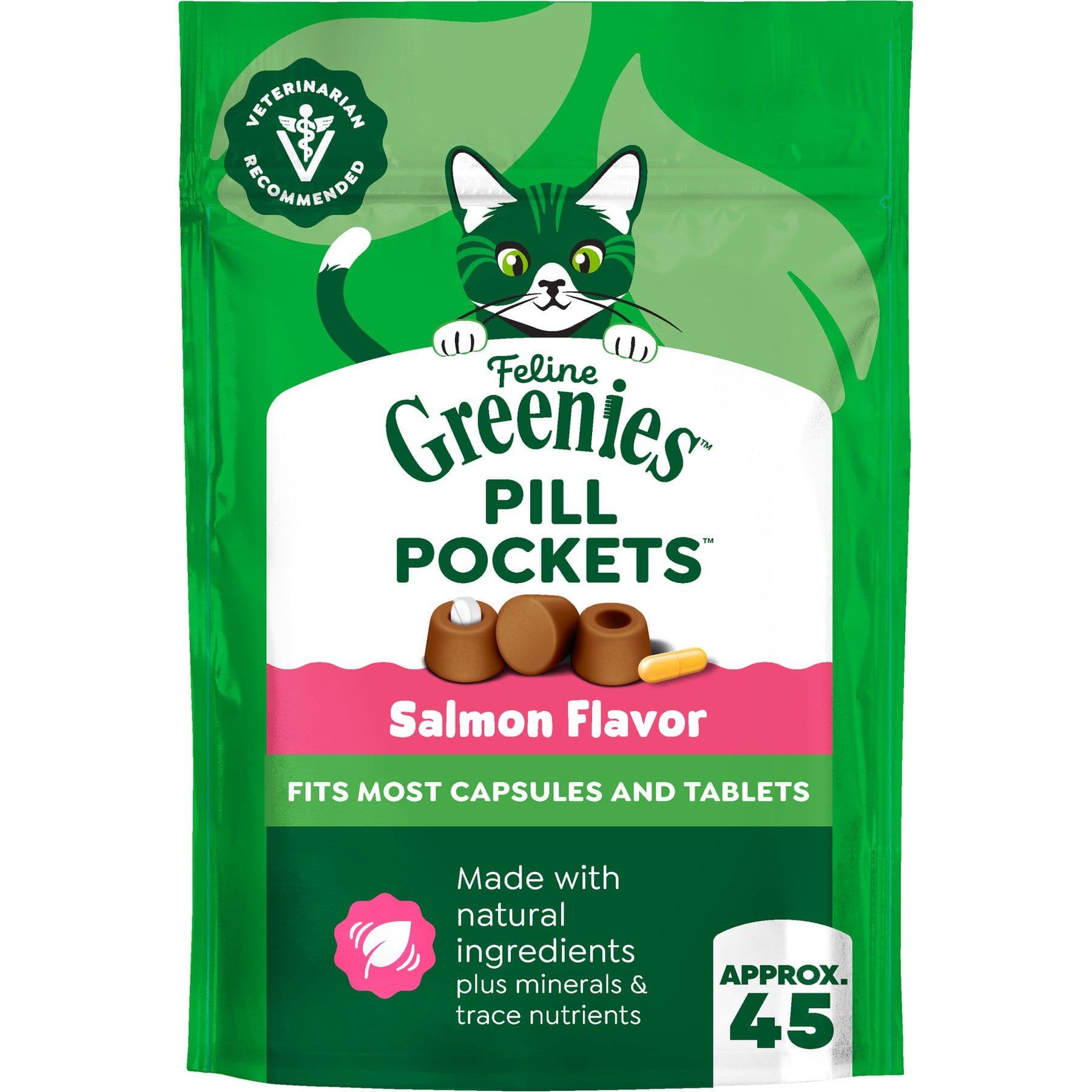
Soft salmon treats that wrap a capsule so it goes down with food instead of sticking.
Webvet may earn a commission when you click through to Chewy, at no extra cost to you.
Some owners ask about a probiotic for loose stools during an antibiotic course. A product such as Purina Pro Plan Veterinary Diets FortiFlora Cat Supplement, 30 count is a question to raise with the vet first, and tell the vet about the diarrhea; it does not treat the infection or replace the prescribed antibiotic.
Compared with older drugs in its class, azithromycin is gentler on the gut. The Ohio State guidelines note that its stomach and gut effects are less severe than with erythromycin, an older macrolide.
When to stop azithromycin and call the vet now
Allergic reactions are rare but serious. The Zithromax prescribing information reports serious allergic reactions in people, including angioedema and anaphylaxis, and tells patients to get emergency help for trouble breathing or swelling of the lips, tongue, or face. A cat cannot report those symptoms, so watch for the visible signs.
The same label reports liver injury in people, including hepatitis, jaundice, and liver failure, some fatal. It names yellowing of the skin or the whites of the eyes and dark urine as warning signs, so check your cat's skin and eye whites for a yellow tinge during the course.

Signs the cat needs a vet today also come from the infection itself. Merck notes that severe feline respiratory disease can progress to respiratory distress and pneumonia, and a cat with severe breathing difficulty may need oxygen. ISCAID treats fever, lethargy, or not eating alongside thick discharge as signs that need a vet's decision.
If the cat is no better after the first 7–10 days of an antibiotic, ISCAID recommends a fuller diagnostic workup rather than simply switching drugs. Never stop azithromycin early or give a missed dose twice without asking the vet.
Drug interactions and cats that should not take azithromycin
The human label lists two contraindications: a known allergy to azithromycin, erythromycin, or any macrolide or ketolide, and a history of jaundice or liver problems from earlier azithromycin use. A cat that reacted to a related antibiotic, or had liver trouble on azithromycin before, should not take it. Vets also weigh these conditions before prescribing:
- Heart rhythm problems: the human label warns that macrolides, including azithromycin, can prolong the QT interval and cause arrhythmias.
- Liver disease: Ohio State notes azithromycin is excreted mainly in bile, and the human label reports liver injury.
- Pregnancy or nursing: the human label reports azithromycin in human milk; its data come from people, so tell the vet if your cat is pregnant or nursing.
Drug interactions follow the human label and Merck. The label advises against giving aluminum or magnesium antacids at the same time as azithromycin. It also notes that azithromycin may strengthen the effect of warfarin, and advises careful monitoring with digoxin, colchicine, or phenytoin.
Merck adds that macrolides probably should not be combined with chloramphenicol or lincosamides such as clindamycin, because they compete for the same binding site in bacteria, though the real-world effect is unclear. Give the vet a full list of what the cat takes, including:
- Long-term drugs such as methimazole for an overactive thyroid
- Ear drops such as Tresaderm
- Vitamins, supplements, and any other antibiotic
Keep the bottle away from other pets too. Merck reports that rabbits can develop potentially fatal gut inflammation after macrolide treatment, so a cat's azithromycin is never shared with a household rabbit or any other animal.
How to give liquid or capsule azithromycin, how to store it, and what it costs
Giving a liquid antibiotic to a cat takes a steady hand. Shake the bottle, draw up the exact volume on the label, place the syringe tip in the side of the mouth, and give it slowly. Measure the dose with the dosing syringe the pharmacy supplies. A spare set such as the Lixit Small Animal Oral Syringe & Medicine Dropper, a 3 mL dropper and a 10 mL syringe with marked measurements, is useful for following a dose with a little water; it does not replace the prescribed antibiotic or the vet exam.
For capsules, ISCAID's advice is to make sure the capsule reaches the stomach: give it in a pill treat or follow it with water or a little food.
The best pill pockets for cats guide compares treat options, and Greenies Pill Pockets Feline are one choice. For cats that refuse treats, the Dee Pet Piller for Dogs & Cats, 1 count holds a capsule in a chamber and releases it with a plunger; follow it with water. Neither replaces the prescribed antibiotic or the vet exam.

Schedules that skip days are easy to lose track of. A labeled case such as the Ezy Dose Daily AM/PM Cat Pill Case helps a household see whether today's dose has been given, which matters when the schedule runs every 72 hours. It organizes the capsules the vet prescribed and does not replace the prescription or the vet exam.
Azithromycin starts to work in a cat's bloodstream quickly, reaching peak levels within about an hour, but the signs take longer to ease. Hunter and colleagues found peak levels about 0.85 hours after an oral dose in cats, while ISCAID notes that most cats with acute bacterial upper respiratory infection improve within 10 days with or without antibiotics.
How should azithromycin be stored?
Store mixed Zithromax suspension at room temperature and use it within 10 days; it does not need to be refrigerated. The prescribing information gives 5° to 30°C (41° to 86°F) and says to shake it before each use. A compounded liquid carries its own pharmacy storage and discard date.
Some cats receive the human Zithromax suspension, which Pfizer's label lists with artificial banana, cherry, and creme de vanilla flavors. Compounded versions come in flavors chosen for pets, such as chicken.
What a course costs depends on the form and strength. Both of these are filled only with a veterinarian's prescription:
- Azithromycin Oral Liquid Chicken Flavored for Dogs & Cats, 25-mg/mL, 30 mL Compounded: listed at $50.50 on Chewy when checked in November 2026
- Azithromycin Compounded Capsule, 20 mg, 30 capsules for Veterinary use: listed at $24.30 on Chewy when checked in November 2026
There is no legitimate way to buy azithromycin for cats without a vet prescription. The human drug is labeled Rx only, and the FDA notes that animal drugs compounded from bulk drug substances are not FDA-approved and have not been reviewed for safety or effectiveness, which is why the vet's prescription and dose matter.
Azithromycin questions
Frequently Asked Questions
Does azithromycin for cats need to be refrigerated?
No, there is no need to refrigerate the human Zithromax suspension: its label allows storage from 5° to 30°C (41° to 86°F) for up to 10 days after mixing. A compounded suspension follows the storage line on its own pharmacy label, which may differ, so read it before putting the bottle away.
How many days do cats take azithromycin?
It depends on the infection, and only the veterinarian sets the course. Published schedules range from 5-7 days for some bacterial infections to 6-8 weeks of every-72-hour doses for Mycoplasma respiratory infection. ISCAID adds that clearing Chlamydia felis carriage might take a longer course.
Is azithromycin or Clavamox better for cats?
Neither is better in general. Clavamox is FDA-approved for cats with skin, soft tissue, and E. coli bladder infections, while ISCAID calls it ineffective against Mycoplasma. Azithromycin fits Mycoplasma respiratory infection better, but ISCAID still prefers doxycycline for most bacterial respiratory infections in cats.
Can azithromycin treat a UTI in cats?
Azithromycin is not a standard choice for a UTI in cats. Merck names urine culture as the gold standard for diagnosis and lists amoxicillin or trimethoprim-sulfonamide as reasonable first choices for a simple bladder infection, with the culture result guiding any change.
Can my cat get azithromycin without a vet prescription?
No. Azithromycin is a prescription drug for people, and pharmacies such as Chewy Pharmacy dispense compounded versions for cats only with a veterinarian's prescription. The exam matters too, since most acute upper respiratory infections in cats are viral and antibiotics do not treat a virus.
Veterinarian · BVMS MRCVS
Dr. Pippa Elliott, BVMS, MRCVS, is a veterinarian with nearly 30 years of experience in companion animal practice. Dr. Elliott earned her Bachelor of Veterinary Medicine and Surgery from the University of Glasgow. She was also designated a Member of the Royal College of Veterinary Surgeons. Married with 2 grown-up kids, Dr. Elliott has a naughty Puggle named Poggle, 3 cats and a bearded dragon.


