Cat UTI Treatment: What Works and When to See a Vet
Cat UTI treatment starts with a vet exam and urine test. Learn which antibiotics work, whether a UTI clears on its own, why it is usually FLUTD in young cats, safe home care, and the male-cat emergency signs.

BVMS MRCVS
Medically reviewed by Dr. Pippa Elliott, BVMS MRCVS · Last reviewed

This article contains affiliate links. Webvet may earn a commission when you buy through them, at no extra cost to you.
Cat UTI treatment almost always starts with a vet exam and a urine test, because the right medicine depends on what is actually causing the signs. When a true bacterial infection is confirmed, vets treat it with a targeted course of antibiotics, often alongside pain relief and more water.
But in most young cats, straining and blood in the urine are not a bacterial infection at all. That is why treating a cat UTI at home with guesswork can be dangerous, especially in male cats.
This guide walks through how cat UTIs are diagnosed and treated, whether they can clear without antibiotics, what home care can and cannot do, why male cats are a special emergency, and roughly what treatment costs. Everything here defers to your veterinarian, who is the only person who can safely diagnose your cat.

- 1A cat UTI should be diagnosed by a vet with a urine test; the correct treatment depends on the actual cause, not the symptom.
- 2Antibiotics only work when a bacterial infection is confirmed, and they are typically given for 7 to 14 days for a simple infection.
- 3In cats under 10 years old, most lower-urinary signs are sterile cystitis (FLUTD), not a true bacterial UTI, so antibiotics alone often will not fix them.
- 4A male cat straining to urinate and producing little or no urine is a life-threatening emergency; go to a vet or ER within hours.
- 5There is no safe, effective over-the-counter or human medication that cures a cat UTI at home; home care is supportive and preventive only.

Webvet may earn a commission when you click through to Chewy, at no extra cost to you.
Cat UTI treatment: antibiotics and the vet workup
Cat UTI treatment begins with a veterinary workup, not a prescription. The vet confirms whether bacteria are actually present, then treats accordingly. If a true bacterial infection is found, the standard treatment is a course of antibiotics chosen to match the bacteria, usually with pain relief and steps to keep your cat drinking and urinating.
The reason for the workup is simple: the signs of a UTI (straining, frequent trips, blood, peeing outside the box) overlap almost exactly with sterile bladder inflammation and bladder stones, and those do not respond to antibiotics.
According to the Merck Veterinary Manual, diagnosis in cats relies on examining and often culturing the urine rather than guessing from symptoms alone.
What the vet does first
- Physical exam and bladder palpation to check for a large, firm, or painful bladder (a red flag for blockage).
- Urinalysis to look for blood, crystals, inflammatory cells, bacteria, and how concentrated the urine is.
- Urine culture and sensitivity, the gold standard, which grows any bacteria present and tells the vet exactly which antibiotic will work. This is why some cats get a broad antibiotic to start, then a switch once results return.
- Imaging (X-ray or ultrasound) when stones or a blockage are suspected.
For a deeper look at the tests involved, see our guide on how veterinarians diagnose urinary problems in cats.
What antibiotic is used for a cat urinary tract infection?
There is no single best antibiotic for every cat UTI. The right choice depends on which bacteria the culture grows and its sensitivity results. That said, vets commonly reach for amoxicillin, amoxicillin-clavulanate (Clavamox), or a similar first-line drug for simple, uncomplicated infections, then adjust if the culture points elsewhere.
Never use a leftover antibiotic, a family member's prescription, or a bottle from a previous pet. The wrong drug or an incomplete course fuels antibiotic resistance and can leave the real problem untreated. Always finish the full course your vet prescribes, even if your cat seems better after a few days.
Cat UTI medicine beyond antibiotics
Because bladder disease is painful, cat UTI medicine often includes more than an antibiotic. Depending on the diagnosis, a vet may add pain relief or a cat-safe anti-inflammatory, plus subcutaneous fluids to rehydrate and flush the bladder.
Other add-ons include a prescription urinary diet to dissolve or prevent certain crystals, and anti-anxiety support for stress-driven cystitis. Human pain relievers such as ibuprofen and acetaminophen are toxic to cats and must never be given.
 Sponsored
Have a health question about your cat?
Talk to a licensed vet at Dutch over video or message, including nights and weekends.
Use code Pets30
Plans start at $11/month · covers up to 5 pets
- Licensed vets in most states
- Rx for 150+ conditions
- 4.7 on Trustpilot
Can a cat UTI go away on its own without antibiotics?
Sometimes the signs ease on their own, but you should not count on it, and you should not wait to find out. A confirmed bacterial UTI usually needs antibiotics to fully clear.
The far more common cause of these signs in cats, sterile cystitis, can flare and settle on its own yet still leave your cat at risk of a dangerous blockage. Only a vet can tell which situation you are in.
Feline idiopathic cystitis, the most common form of feline lower urinary tract disease, tends to wax and wane over roughly five to seven days per episode. That self-limiting pattern is exactly why home remedies can look like they worked when the flare was going to settle anyway.
The problem is that the same visible signs can also mean stones or a partial blockage that is quietly getting worse. You cannot tell the harmless flare from the dangerous one by watching alone.

Webvet may earn a commission when you click through to Chewy, at no extra cost to you.
How long can a cat have a UTI without treatment?
An untreated infection can climb from the bladder to the kidneys or seed bladder stones, so leaving it alone risks a worse, harder-to-treat problem. There is no safe number of days to wait.
If signs last more than a day, or if your cat is straining without producing urine, that is your cue to see a vet, not to keep watching.
How long will a cat survive with a UTI?
A simple bladder infection is not usually immediately life-threatening, and cats treated promptly generally recover well. The danger is what a UTI or FLUTD flare can turn into.
If a male cat becomes fully blocked and cannot pass urine, toxins and potassium build up fast, and the situation can be fatal within a day or two. So the honest answer to how long a cat can survive is that it depends entirely on whether there is a blockage, and blockage is an emergency.
What if a cat UTI keeps coming back?
Repeated urinary flares are common with feline lower urinary tract disease, and they are frustrating because the trigger is often environmental rather than infectious. If your cat has more than one episode, your vet may recommend a urine culture to rule out a true recurring infection versus recurring sterile cystitis.
For recurring sterile cystitis, the fix is rarely another round of antibiotics. It is usually a multimodal plan: more water through wet food and fountains, stress reduction, weight management, and sometimes a prescription urinary diet. For genuinely recurrent bacterial infections, your vet looks for an underlying driver such as diabetes, kidney disease, or bladder stones.
Recurrence is also a reason to take single episodes seriously. Every blocked-cat emergency starts as a flare that looked minor at first, so a cat with a history of urinary trouble deserves a low threshold for calling the vet.
SponsoredVet care that's always there
Unlimited video calls and messaging with licensed vets for less than a typical vet visit. One membership covers up to five pets.
Use code Pets30
Plans start at $11/month · covers up to 5 pets
- Licensed vets in most states
- Rx for 150+ conditions
- 4.7 on Trustpilot
Why true bacterial UTIs are rare in young cats (it is usually FLUTD)
Here is the fact that changes how you should think about a cat UTI: in cats under about 10 years old, a genuine bacterial urinary tract infection is uncommon. In fact, studies find only a small share of cats with urinary signs have a true infection.
Most of the time the straining, blood, and litter-box accidents come from feline lower urinary tract disease (FLUTD). That is an umbrella term for sterile bladder inflammation, crystals, and stones, not bacteria.
Cornell's Feline Health Center notes that bacterial infection of the bladder is a relatively infrequent cause of lower urinary signs in cats, and becomes more likely with age, diabetes, kidney disease, or after urinary procedures.
In young otherwise healthy cats, the more likely culprit is feline idiopathic cystitis, which is strongly linked to stress and dehydration.

What triggers a UTI in cats?
When bacteria are the true cause, common triggers include older age, a suppressed immune system, diabetes or kidney disease that dilutes the urine, and anything that lets bacteria travel up the urethra. For the far more common sterile cystitis, the biggest triggers are stress, a low-water (dry-only) diet, obesity, and multi-cat household tension.
Can a dirty litter box cause a UTI in cats?
A dirty litter box is not a direct cause of bacterial UTI, but it absolutely contributes to urinary trouble. A cat that avoids a filthy box may hold urine longer, which lets the bladder over-fill and irritates the lining.
A dirty environment also raises stress, a major trigger for feline idiopathic cystitis. Keeping boxes clean, plentiful (one per cat plus one), and quiet is genuine urinary care.
The table below helps you see how similar the causes look from the outside, which is precisely why a vet test matters.
| Cause | Antibiotics help? | Typical clue |
|---|---|---|
| Bacterial UTI | Yes, when culture-confirmed | More common in cats over 10, diabetics, or after catheterization |
| Feline idiopathic cystitis (sterile) | No | Common in young stressed cats; flares and settles over days |
| Crystals or bladder stones | No (may need diet or surgery) | Gritty urine, recurring signs, sometimes visible on imaging |
| Urethral blockage (mainly male cats) | No, this is an emergency | Straining with little or no urine; medical emergency |
| Kidney (upper urinary) infection | Yes, longer culture-guided course | Often sicker cat: fever, drinking more, weight loss |
| Behavioral house-soiling (not medical) | No | Normal urine tests; linked to litter, stress, or territory |
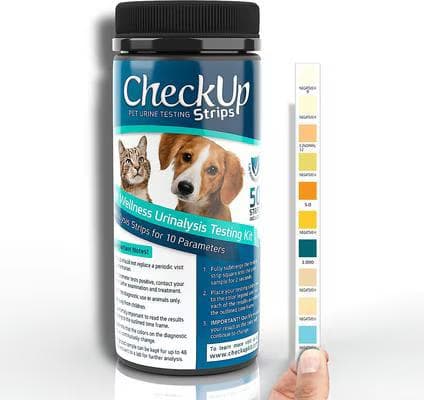
At-home urine test strips that screen for glucose, blood, pH, and protein in seconds, so you can catch early signs of diabetes, kidney disease, or a UTI and bring real numbers to your vet.
Webvet may earn a commission when you click through to Chewy, at no extra cost to you.
Antibiotic dosage and what to expect at home
Antibiotic dosing for a cat UTI is set by your veterinarian based on your cat's weight, the specific drug, and the culture results. There is no safe universal home dose, and this section is educational only, not a dosing instruction.
Give exactly what your vet prescribes, and never split, adjust, or extend a course on your own.
Amoxicillin is dosed by body weight in milligrams per kilogram, and the exact figure, frequency, and duration are decisions your vet makes for your individual cat.
Because underdosing breeds resistance and overdosing can harm the kidneys, this is not a number to eyeball at home. If you have lost the instructions, call the clinic rather than guessing.
The VCA guidance on urinary tract infections in cats is a useful owner-facing reference on what treatment involves.
What to expect during treatment
- Improvement in days, full course longer. A confirmed bacterial UTI often eases within a few days, but the prescribed course (frequently 7 to 14 days) must be finished.
- Encourage water. Wet food, water fountains, and multiple bowls help flush the bladder and support recovery.
- Watch the litter box. Track urine volume and any blood. If your cat stops producing urine or seems worse, that is an emergency, not a medication side effect to wait out.
- Recheck as advised. A follow-up urine test confirms the infection is truly gone, since signs can fade before bacteria are fully cleared.
One thing owners often skip is the recheck. Because a cat can look completely normal while bacteria linger, a confirmed bacterial infection is only truly cleared when a follow-up urine test says so. Skipping that recheck is a common reason a UTI seems to come back weeks later.
What about home treatment and over-the-counter cat UTI remedies?
There is no safe over-the-counter product or home remedy that reliably cures a cat UTI, and you should not try to treat one at home without a diagnosis.
Home care still has a real role, but it is supportive and preventive. It helps a cat recover and reduces future flares. It does not replace the vet visit or the medication a true infection needs.
The danger of a purely at-home approach is that you cannot see the difference between a mild flare and a developing blockage or kidney infection.
Cranberry supplements, apple cider vinegar, and human UTI products are not proven feline treatments, and some human remedies are outright toxic to cats.
We cover the evidence in more detail in our cat UTI home remedies guide, but the short version is: use supportive care with your vet, not instead of one.

Crystal litter that changes color alongside some urinary changes, as a prompt to call your vet.
Webvet may earn a commission when you click through to Chewy, at no extra cost to you.
Supportive home care that genuinely helps
- Increase water intake with wet food, broths approved by your vet, water fountains, and several fresh bowls around the home.
- Reduce stress with predictable routines, hiding spots, vertical space, and feline pheromone diffusers, since stress is a leading cystitis trigger.
- Keep litter boxes pristine, scooped daily, one per cat plus one, in quiet accessible spots.
- Feed a vet-recommended urinary diet only if your vet prescribes one for your cat's specific diagnosis.
For a full prevention plan, see our vet's guide to preventative care for feline urinary health.
Male vs. female cats: why male-cat symptoms are an emergency
The single most important thing to know about cat UTI treatment is that the same signs mean very different levels of danger in male versus female cats.
Male cats have a long, narrow urethra that can block completely with crystals, mucus, or a plug. A blocked male cat is a true emergency, and no home treatment is appropriate.

Male cat UTI: signs and treatment
Boy-cat warning signs include repeated trips to the box with little or no urine, crying while straining, licking the genital area, vomiting, and hiding or collapse.
There is no safe male cat UTI treatment at home. A suspected blockage needs immediate veterinary care, which may include sedation, a urinary catheter to relieve the obstruction, IV fluids, and hospitalization. Do not wait overnight to see if it passes.
Female cat UTI: signs and treatment
Female cats have a shorter, wider urethra and block far less often, though it is not impossible. A female cat with a confirmed bacterial UTI is treated with the antibiotic course, pain relief, and hydration described above.
Even so, female cat UTI treatment at home still means supportive care plus a vet visit for diagnosis, never self-prescribed medication. Any straining without urine is an emergency in a female cat too.
What a cat UTI costs to treat
Costs vary widely by region, clinic, and how sick your cat is, so treat any figure as a rough guide and ask your clinic for a written estimate. A straightforward exam plus urinalysis and a short antibiotic course sits at the lower end.
Costs climb when a urine culture, imaging, a prescription diet, or repeat visits are needed, and they rise sharply for an emergency blockage.
The biggest cost gap is male versus female. A simple female cat UTI with confirmed bacteria is usually the least expensive scenario.
A blocked male cat needing emergency catheterization, hospitalization, and monitoring is by far the most expensive, often running into hundreds or low thousands of dollars because of the intensive care involved.
This is another reason early vet care beats waiting. A small problem caught early costs far less than an emergency.
If cost is a barrier, ask about payment plans, veterinary charities, teaching hospitals, and low-cost clinics rather than delaying care, which almost always makes the bill (and the risk) larger.
When to see the vet and how to prevent recurring UTIs
See a vet whenever your cat shows urinary signs for more than a day, and seek emergency care immediately for any cat straining without producing urine. Because the visible symptoms can mean anything from a mild flare to a fatal blockage, a diagnosis is not optional.
For the full symptom picture, see our companion guide to cat UTI symptoms, and if you have spotted red or brown urine, our guide on blood in cat urine.
Prevention is largely about water, stress, and hygiene. If your cat has had crystals, learn to spot them early in our crystals in cat urine guide, and if litter-box accidents are the first sign you notice, our article on why cats start peeing outside the litter box can help you tell behavior from medical.
Frequently Asked Questions
Can I treat a cat's UTI at home?
No, you should not try to treat a cat's UTI at home without a veterinary diagnosis. The same symptoms can signal a sterile inflammation, bladder stones, or a life-threatening blockage, and only a vet can tell them apart with a urine test.
Home care such as more water, less stress, and clean litter boxes is helpful as support alongside treatment, but it is not a cure and does not replace a vet visit.
Can cat UTI cure itself without antibiotics?
A confirmed bacterial UTI usually needs antibiotics to fully clear. The more common sterile cystitis in cats can flare and settle on its own over several days, which can make it look like a UTI cured itself, but the underlying condition often returns and can hide a dangerous blockage.
Because you cannot see which situation you are in, do not rely on it clearing without a vet.
What to do if your cat has a UTI but you can't afford a vet?
Call clinics and ask about payment plans, CareCredit, veterinary charities, animal-welfare organizations, teaching hospitals, and low-cost or nonprofit clinics, which often treat urgent cases. Do not use human medications or leftover antibiotics, as many are toxic or ineffective for cats.
If your cat is straining without producing urine, treat it as an emergency and seek care immediately, because delay usually makes both the outcome and the cost far worse.
How long will a cat survive with a UTI?
A simple bladder infection is not usually immediately fatal, and cats treated promptly recover well. The danger is a urethral blockage, most common in male cats, which can be fatal within about 24 to 48 hours if the cat cannot pass urine.
There is no safe amount of time to wait, so any straining with little or no urine needs emergency care right away.
Can a cat's UTI go away without antibiotics?
If the problem is truly bacterial, it typically requires antibiotics to resolve completely. If the signs come from feline idiopathic cystitis, they may ease without antibiotics because that condition is self-limiting, which is exactly why antibiotics are often unnecessary and overused for it.
Only a vet's urine test can determine whether antibiotics are actually needed for your cat.
What triggers UTI in cats?
True bacterial UTIs are triggered by factors that let bacteria colonize the bladder, such as older age, diabetes, kidney disease, a weakened immune system, or urinary catheterization. The much more common sterile cystitis is triggered by stress, dehydration from a dry-only diet, obesity, and multi-cat household tension.
Bladder crystals and stones can also produce identical signs without any bacteria present.
Can a dirty litter box cause UTI in cats?
A dirty litter box does not directly cause a bacterial UTI, but it contributes to urinary problems. Cats may hold urine to avoid a filthy box, which irritates the bladder, and a dirty, stressful environment can trigger feline idiopathic cystitis.
Keeping boxes clean, scooped daily, and one per cat plus one is a simple, genuine part of urinary health.

Editor
The Webvet Editorial Team is the in-house group of pet-care editors and writers behind Webvet, operated by Smart Pet Collective. The team researches, writes, and maintains Webvet's pet health, behavior, and medication content. Every article follows a defined editorial process: research from reputable veterinary and scientific sources, careful drafting, mandatory review of medical content by a credentialed veterinarian, and dated publication. Health and medication articles are medically reviewed by a licensed veterinary professional before they go live and are kept current over time.
Veterinarian · BVMS MRCVS
Dr. Pippa Elliott, BVMS, MRCVS, is a veterinarian with nearly 30 years of experience in companion animal practice. Dr. Elliott earned her Bachelor of Veterinary Medicine and Surgery from the University of Glasgow. She was also designated a Member of the Royal College of Veterinary Surgeons. Married with 2 grown-up kids, Dr. Elliott has a naughty Puggle named Poggle, 3 cats and a bearded dragon.
Related reading

Salivary Mucocele in Dogs: Symptoms, Surgery, and Recovery

Diabetes in Cats: Symptoms, Treatment, and Remission

Diabetes in Dogs: Early Signs, Diagnosis, and Daily Management
