Cat UTI Symptoms and When It's an Emergency
A vet-informed guide to cat UTI symptoms, from litter-box straining and blood in the urine to the male-cat blockage that is a true emergency. Learn which signs mean call the vet now.

BVMS MRCVS
Medically reviewed by Dr. Pippa Elliott, BVMS MRCVS · Last reviewed

This article contains affiliate links. Webvet may earn a commission when you buy through them, at no extra cost to you.
The most common cat UTI symptoms are straining in the litter box, frequent trips that produce only a few drops, blood or a pink-red tinge in the urine, crying while urinating, peeing outside the box, and excessive licking of the genitals. Any cat showing these signs needs a vet visit.
One version of this picture is a true emergency: a cat, especially a male, who strains repeatedly but passes little or no urine may have a life-threatening blockage and needs care within hours, not days.
- 1Classic cat UTI symptoms: straining, frequent small urinations, blood-tinged urine, crying, peeing outside the box, and genital licking.
- 2A cat straining but producing NO urine is a medical emergency, not a UTI to watch at home.
- 3True bacterial UTIs are actually uncommon in young cats; most look-alike cases are feline lower urinary tract disease (FLUTD) or bladder stones and crystals.
- 4Male cats block far more easily than females because of their narrow urethra.
- 5Do not wait it out and do not give human medicine. Most urinary cases need a vet exam and a urine test to sort out the real cause.

Webvet may earn a commission when you click through to Chewy, at no extra cost to you.
What Is a Cat UTI (and Is It Really a UTI)?
A urinary tract infection means bacteria have colonized the bladder or urethra. Here is the part most owners never hear: in younger cats, a true bacterial UTI is uncommon.
Most cats that show classic cat UTI infection symptoms actually have feline lower urinary tract disease (FLUTD), an umbrella term for several bladder problems. The signs look identical, but the cause and treatment differ.
According to the American Veterinary Medical Association, FLUTD describes a group of conditions affecting the bladder and urethra, and cats with it strain, urinate frequently, pass bloody urine, and may urinate outside the box. That is why a vet urine test matters: it separates a real infection from the look-alikes below.
What Can Be Mistaken for a UTI in Cats?
- Feline idiopathic cystitis (FIC): stress-driven bladder inflammation with no infection. The single most common cause of these signs in young cats.
- Bladder stones or crystals: gritty deposits that irritate the bladder and can plug the urethra.
- Urethral obstruction (blockage): the emergency version, where urine cannot get out at all.
- Diabetes or kidney disease: cause increased drinking and urination that owners sometimes read as a UTI.
For a deeper look at how vets tell these apart, see our guide to how veterinarians diagnose urinary problems in cats.
Cat UTI vs Blockage Symptoms
The critical difference is whether urine is coming out. A UTI or cystitis cat produces small amounts, often with blood, and can still pee. A blocked cat strains hard and passes nothing. The table below is the fastest way to tell the difference at home.
| Sign | Likely UTI or Cystitis | Possible Blockage (Emergency) |
|---|---|---|
| Urine output | Small amounts, frequent | Little or none despite straining |
| Straining | Yes, produces some urine | Yes, produces nothing |
| Behavior | Uncomfortable, licking | Crying, hiding, restless, collapsing |
| Belly | Usually normal | Firm, distended, painful |
| Vomiting or lethargy | Uncommon | Common as it worsens |
| What to do | Vet appointment soon | Emergency vet NOW |
 Sponsored
Have a health question about your cat?
Talk to a licensed vet at Dutch over video or message, including nights and weekends.
Use code Pets30
Plans start at $11/month · covers up to 5 pets
- Licensed vets in most states
- Rx for 150+ conditions
- 4.7 on Trustpilot
Cat UTI Symptoms: The Signs to Watch For
If you are asking does my cat have a UTI, the symptoms cluster around the litter box and the urine itself. The Merck Veterinary Manual notes that cats with lower urinary tract disease commonly show frequent attempts to urinate, straining, blood in the urine, and urinating in unusual places. Watch for this combination:
- Frequent trips to the litter box, often with little urine each time
- Straining or obvious effort while crouched
- Crying, yowling, or vocalizing during urination
- Blood-tinged, pink, or cloudy urine
- Peeing outside the box, sometimes on cool smooth surfaces like tile or the bathtub
- Excessive licking of the genital area
- A strong or unusual urine odor
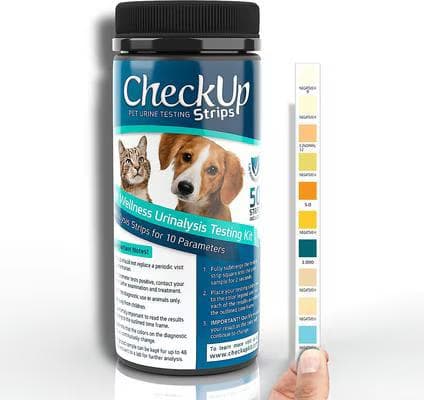
At-home urine test strips that screen for glucose, blood, pH, and protein in seconds, so you can catch early signs of diabetes, kidney disease, or a UTI and bring real numbers to your vet.
Webvet may earn a commission when you click through to Chewy, at no extra cost to you.
Cat UTI Symptoms Like Not Eating or Vomiting
Cat UTI symptoms that include not eating, vomiting, or lethargy are a red flag that things are more serious than a simple bladder irritation.
These whole-body signs often point toward a blockage or toward kidney involvement, so they move a cat from wait-and-watch to same-day vet care. Do not dismiss a cat who suddenly stops eating alongside litter-box trouble.
SponsoredVet care that's always there
Unlimited video calls and messaging with licensed vets for less than a typical vet visit. One membership covers up to five pets.
Use code Pets30
Plans start at $11/month · covers up to 5 pets
- Licensed vets in most states
- Rx for 150+ conditions
- 4.7 on Trustpilot
Litter-Box Signs: Straining, Frequent Small Urinations, and Accidents
The litter box is where cat UTI symptoms show up first. A cat straining in the litter box, making repeated trips, and passing only a small amount each time is the hallmark pattern. It reflects an inflamed, irritated bladder that feels full even when it is nearly empty.
Urinating outside the litter box is one of the most common signals. A cat that suddenly pees on the bed, the bathmat, or the tub is often telling you the box has become associated with pain. It is behavior worth investigating, not punishing.
For the behavioral angle, see cat peeing outside the litter box and why is my cat peeing on the bed.
Frequent urination of small amounts is easy to miss with covered boxes or automatic litter. If you are unsure what normal looks like, our guide on what healthy cat urine looks like gives you a baseline to compare against.
Blood in the Urine and Excessive Genital Licking
Blood in a cat's urine (hematuria) is one of the clearest cat UTI symptoms and always warrants a vet visit. It can look like frank red drops, a pink tinge across a litter clump, or just a slightly darker color than usual.
On pale clumping litter, a pink-red spot is often the first thing an owner notices.

Blood can come from a UTI, from cystitis, or from stones and crystals, so it is a symptom to report rather than to self-diagnose. We cover the causes in depth in blood in cat urine and in crystals in cat urine.
Excessive genital licking is the other tell. Cats groom a painful, irritated urethra the way they lick any sore spot. If your cat is repeatedly licking the back end and also visiting the box a lot, treat the two signs together as a urinary problem until a vet says otherwise.
EMERGENCY: Male Cat Straining but Not Peeing (Urinary Blockage Red Flag)
A male cat straining but producing no urine is a life-threatening emergency, not a UTI to manage at home. Male and neutered male cats have a long, narrow urethra that stones, crystals, and inflammatory plugs can seal shut completely.
When urine cannot escape, toxins build up in the blood and the bladder can rupture. Without treatment, obstruction can be fatal within a day or two.

Boy-cat and neutered-male-cat UTI symptoms start out looking like any other urinary problem: frequent trips, straining, licking. What sets the emergency apart is that the straining stops producing urine, and the cat begins crying, hiding, vomiting, or going limp. The VCA notes that a blocked cat is a medical emergency requiring immediate veterinary attention.

Crystal litter that changes color alongside some urinary changes, as a prompt to call your vet.
Webvet may earn a commission when you click through to Chewy, at no extra cost to you.
Female Cat UTI Symptoms
Female cat UTI symptoms are the same core signs: straining, frequent small urinations, blood in the urine, licking, and accidents outside the box.
The good news is that females have a shorter, wider urethra, so they block far less often than males. That lowers the emergency risk but does not remove it, and it does not make the discomfort any less real.
Female cats may also be slightly more prone to true bacterial UTIs than young males, particularly older females, because bacteria have a shorter path to the bladder. Any female cat with symptoms still needs a urine test to confirm whether an infection is truly present.
Symptoms in Senior Cats and Silent or No-Symptom UTIs
Senior cats, especially older females, are more likely to have genuine bacterial UTIs, often alongside kidney disease, diabetes, or hyperthyroidism.
In older cats the classic signs can be subtle: drinking more, urinating more, larger clumps in the box, or a couple of accidents. Yes, a cat can have a UTI with very few outward symptoms, which is why routine senior wellness testing matters.
The phrase silent killer of cats usually refers to chronic kidney disease, a condition that progresses quietly and shares early signs (increased drinking and urination) with urinary infections. That overlap is exactly why any older cat with urinary changes deserves bloodwork and a urinalysis, not just a guess.
For prevention strategy, see preventative care for feline urinary health and, for multi-cat homes, how to monitor urinary health in multi-cat households.
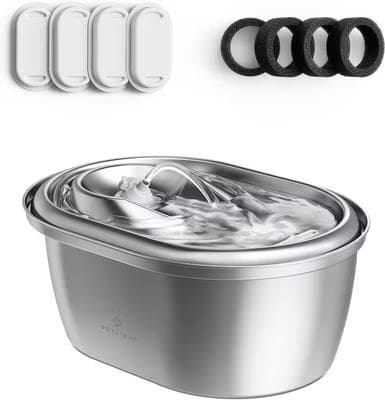
304 food-grade stainless steel pet water fountain, 101 oz. The circulating, filtered water encourages cats to drink more, which supports urinary tract and kidney health.
Webvet may earn a commission when you click through to Chewy, at no extra cost to you.
What Causes a Cat UTI? (Including Litter Box and Indoor Cats)
Cat UTI and FLUTD causes are usually a mix, not a single culprit. Common contributors include bladder stones and crystals, stress and anxiety (a major driver of feline idiopathic cystitis), and being overweight.
Low water intake and dry-only diets add risk, as do underlying conditions like diabetes. In older cats, true bacterial infection becomes more likely. For cats that prefer moving water, our guide to the best cat water fountains explains how to compare materials, noise, and cleaning needs.
Can a Dirty Litter Box Give a Cat a UTI?
A dirty litter box does not directly inject bacteria into the bladder, so it is not a straightforward cause of a UTI. But it does play a real role.
A filthy box makes a cat hold urine longer, and concentrated, retained urine can irritate the bladder and support crystal formation. A dirty box also adds stress, which is the biggest trigger for idiopathic cystitis. Keeping boxes clean is genuine urinary-health hygiene.
How Did My Indoor Cat Get a UTI?
Indoor cats get urinary problems all the time, and it surprises owners. Indoor life tends to mean less activity, more weight gain, lower water intake, and more stress from things like new pets, schedule changes, or competition over litter boxes.
Most indoor urinary flare-ups are cystitis or crystals rather than a caught infection, which is why environment and hydration matter so much for prevention.
When to See the Vet and How UTIs Are Diagnosed
Call your vet whenever your cat shows any urinary symptoms, and go to an emergency clinic immediately if a cat is straining without producing urine.
To help your cat with a suspected UTI, the single best move is a prompt exam and urine test. You cannot tell an infection from cystitis or stones by looking, and the treatments differ.
A cat's UTI will not reliably heal on its own. Some cystitis flare-ups settle within days, but you have no way to know at home whether you are dealing with harmless self-limiting inflammation, a worsening infection, or the early hours of a blockage. Waiting risks turning a treatable problem into an emergency.
Diagnosis typically includes a physical exam, a urinalysis, and often a urine culture, plus imaging (X-rays or ultrasound) to look for stones and bloodwork in older cats. Our guide on how veterinarians diagnose urinary problems in cats walks through exactly what to expect.
Treatment and At-Home Care
Treatment depends entirely on the true cause. A confirmed bacterial UTI is treated with vet-prescribed antibiotics. Cystitis is managed with pain relief, stress reduction, and increased water intake. Stones and crystals may need a prescription diet or, in some cases, surgery. A blockage requires emergency catheterization to relieve it.
This is a brief summary; for the full picture see our sibling guides on cat UTI treatment and cat UTI home remedies.
At-home care is supportive only and never a substitute for a diagnosis. Do not give human medications such as ibuprofen or acetaminophen, both of which are toxic to cats, and never reuse leftover antibiotics.
Safe support means encouraging water (a fountain, wet food, or added water in meals), keeping litter boxes clean and plentiful, reducing household stress, and following your vet's plan exactly. For an overview of the whole cluster, start with our cat UTI hub.
For the reassuring bottom line: most cats recover well once the correct problem is identified and treated. Additional owner guidance is available from AAHA and the Cornell Feline Health Center.
Frequently Asked Questions
Will a cat's UTI heal on its own?
You should not count on it. Some mild cystitis flare-ups calm down within a few days, but a true bacterial infection usually needs antibiotics, and you cannot tell the difference at home. Waiting also risks missing the early hours of a blockage, which is an emergency. See a vet rather than hoping it resolves.
Can a dirty litter box give a cat a UTI?
Not directly. A dirty box does not inject bacteria into the bladder, but it makes cats hold urine longer, which concentrates it and encourages crystals, and it adds stress that can trigger cystitis. Clean boxes are genuine urinary-health hygiene, so keep them scooped daily.
How do I help my cat with a UTI?
The most helpful thing you can do is get a prompt vet exam and urine test so the real cause is identified and treated correctly. At home, support your cat with fresh water, wet food, clean litter boxes, and a calm environment. Never give human medications or leftover antibiotics.
What can be mistaken for a UTI in cats?
Feline idiopathic cystitis, bladder stones and crystals, a urethral blockage, and metabolic conditions like diabetes or kidney disease can all look like a UTI. In fact, in young cats a true bacterial UTI is uncommon, and most cases are cystitis. This is why a urine test is essential.
Can a dirty litter box cause UTI in cats?
A dirty box is a contributing factor rather than a direct cause. It encourages urine retention and stress, both of which raise the risk of bladder problems and crystal formation. It is not a substitute cause for a real infection, but keeping boxes clean genuinely lowers urinary risk.
What is the silent killer of cats?
The phrase usually refers to chronic kidney disease, which progresses quietly and shares early signs, increased drinking and urination, with urinary infections. Because the two overlap, any older cat with urinary changes should have bloodwork and a urinalysis rather than being treated as a simple UTI.
How did my indoor cat get a UTI?
Indoor cats get urinary problems often. Indoor life can mean less activity, weight gain, lower water intake, and more stress from changes at home, all of which raise the risk. Most indoor flare-ups are cystitis or crystals rather than a caught infection, so hydration and a low-stress environment are the best defenses.

Editor
The Webvet Editorial Team is the in-house group of pet-care editors and writers behind Webvet, operated by Smart Pet Collective. The team researches, writes, and maintains Webvet's pet health, behavior, and medication content. Every article follows a defined editorial process: research from reputable veterinary and scientific sources, careful drafting, mandatory review of medical content by a credentialed veterinarian, and dated publication. Health and medication articles are medically reviewed by a licensed veterinary professional before they go live and are kept current over time.
Veterinarian · BVMS MRCVS
Dr. Pippa Elliott, BVMS, MRCVS, is a veterinarian with nearly 30 years of experience in companion animal practice. Dr. Elliott earned her Bachelor of Veterinary Medicine and Surgery from the University of Glasgow. She was also designated a Member of the Royal College of Veterinary Surgeons. Married with 2 grown-up kids, Dr. Elliott has a naughty Puggle named Poggle, 3 cats and a bearded dragon.
Related reading

FIP in Cats: Symptoms, Diagnosis, and Current Treatment Options

Feline Calicivirus: Symptoms, Treatment, and Managing Multiple Cats

Panleukopenia in Cats: Symptoms, Treatment, and Household Precautions
