Crystals in Cat Urine: Causes, Signs and Treatment
Crystals in cat urine are mineral deposits (usually struvite or calcium oxalate) that can irritate the bladder or block a male cat's urethra. Learn the types, warning signs, vet treatment, and the diet that prevents them.

BVMS MRCVS
Medically reviewed by Dr. Pippa Elliott, BVMS MRCVS · Last reviewed

This article contains affiliate links. Webvet may earn a commission when you buy through them, at no extra cost to you.
Crystals in cat urine are microscopic mineral deposits, most often struvite or calcium oxalate. They form when the urine becomes too concentrated or the pH shifts out of a healthy range. Small numbers can be harmless and even normal.
High concentrations, though, irritate the bladder, clump into painful stones, and in male cats can cause a life-threatening urinary blockage. If your cat is straining to urinate and producing little or nothing, treat it as an emergency and see a vet immediately.
- 1Crystals in cat urine are mineral deposits (usually struvite or calcium oxalate) that can irritate the bladder or form stones.
- 2A male cat straining with no urine coming out is a medical emergency, a blockage can be fatal within 24 to 48 hours.
- 3Diagnosis relies on urinalysis, and often bloodwork plus imaging (X-rays or ultrasound).
- 4Struvite crystals can often be dissolved with a therapeutic diet, calcium oxalate stones cannot and usually need surgery.
- 5Increasing water intake (wet food, more water stations) is the single most protective long-term step.
- 6A small amount of crystals in a routine sample is not always a disease, your vet interprets it alongside symptoms.
 Sponsored
Have a health question about your cat?
Talk to a licensed vet at Dutch over video or message, including nights and weekends.
Use code Pets30
Plans start at $11/month · covers up to 5 pets
- Licensed vets in most states
- Rx for 150+ conditions
- 4.7 on Trustpilot
What are crystals in cat urine? (crystalluria explained)
Crystals in cat urine, a condition vets call crystalluria, are tiny mineral particles that precipitate out of urine when it is too concentrated or its pH tips too acidic or too alkaline.
Under a microscope they look like grains, needles, or geometric shapes. On their own they are not always a disease, they are a finding that your vet interprets alongside symptoms and other tests.
According to VCA Animal Hospitals, crystalluria can occur in healthy cats and does not always mean stones are forming. The concern is when crystals are numerous, persistent, paired with symptoms, or of a type that readily clumps into stones.

Webvet may earn a commission when you click through to Chewy, at no extra cost to you.
What causes crystals in cat urine?
Several factors push minerals to crystallize. The most common causes vets see include:
- Concentrated urine. Low water intake, common in cats fed only dry food, leaves minerals more likely to precipitate.
- Urine pH imbalance. Struvite tends to form in alkaline (high pH) urine, calcium oxalate in acidic (low pH) urine.
- Diet and mineral load. Excess magnesium, phosphate, or calcium relative to the cat's needs can feed crystal formation.
- Urinary tract infection. Certain bacteria raise urine pH and can trigger struvite, though infection is a less common cause in cats than in dogs.
- Individual and breed factors. Some cats are simply predisposed, and certain breeds carry higher stone risk.
Struvite vs calcium oxalate: the two main crystal types
The two crystal types that matter most in cats are struvite (magnesium ammonium phosphate) and calcium oxalate. They form under opposite urine conditions and, critically, respond to treatment very differently. Struvite stones can often be dissolved with diet, calcium oxalate stones cannot be dissolved and generally require removal.
The Merck Veterinary Manual notes that struvite and calcium oxalate together account for the large majority of feline lower urinary tract stones, and that the balance between the two has shifted over the years as diets changed.

| Feature | Struvite | Calcium oxalate |
|---|---|---|
| Urine pH | Alkaline (high pH) | Acidic (low pH) |
| Microscopic shape | Coffin-lid or rectangular prisms | Envelope (square with X) or dumbbell |
| Can diet dissolve it? | Often yes, with a therapeutic dissolution diet | No, cannot be dissolved |
| Usual treatment | Therapeutic diet, treat any infection | Surgical or procedural removal of stones |
| Link to infection | Sometimes bacteria-associated | Usually not infection-related |
Struvite crystals in cat urine
Struvite forms in alkaline urine and is the type most likely to respond to a therapeutic dissolution diet. When a vet confirms struvite (not calcium oxalate), a diet that acidifies the urine and controls mineral content can often shrink or dissolve the deposits over several weeks, avoiding surgery in many cases.
Calcium oxalate crystals in cat urine
Calcium oxalate forms in acidic urine and, once it hardens into a stone, cannot be dissolved by any diet. Prevention centers on keeping urine dilute and avoiding over-acidification.
Risk factors include older age, certain breeds, and metabolic conditions that raise blood or urine calcium. Because these stones require physical removal, early detection and long-term prevention matter enormously.
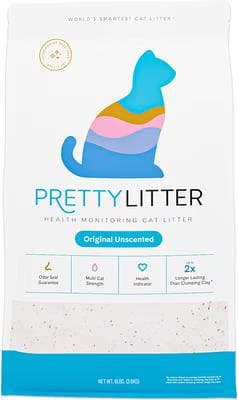
Crystal litter that changes color alongside some urinary changes, as a prompt to call your vet.
Webvet may earn a commission when you click through to Chewy, at no extra cost to you.
What do crystals in cat urine look like?
You usually cannot see crystals in cat urine with the naked eye. They are microscopic and confirmed under a microscope during a urinalysis.
What owners sometimes notice is cloudy urine, a gritty or sandy residue, or fine sparkly deposits left behind when urine dries. Blood-tinged or pink urine can also accompany crystals when the bladder is irritated.
Cat pee crystals when dry and crystals in the litter
Dried cat urine can leave shiny, crystal-like residue on litter or a hard floor, but this is not proof of medical crystalluria. Normal dried urine contains dissolved minerals that recrystallize as water evaporates, so sparkle in the litter box is not diagnostic on its own.
Clumping litters can also form hard chunks that look crystalline. The only reliable way to know is a fresh urine sample examined by your vet.
If you spot recurring sandy grit, persistent cloudiness, or pink staining, collect a sample if you safely can and have it evaluated. Do not rely on litter-box appearance to rule crystals in or out.
 Sponsored
Vet care that's always there
Unlimited video calls and messaging with licensed vets for less than a typical vet visit. One membership covers up to five pets.
Use code Pets30
Plans start at $11/month · covers up to 5 pets
- Licensed vets in most states
- Rx for 150+ conditions
- 4.7 on Trustpilot
Symptoms of crystals in cat urine and when it is an emergency
The symptoms of crystals in cat urine overlap with other lower urinary tract problems. They include straining to urinate, frequent trips to the litter box with little output, blood-tinged urine, urinating outside the box, and excessive genital licking.
How serious it is depends heavily on whether urine is still flowing. A cat who cannot pass urine at all is a true emergency.
Watch for these common signs:
- Straining or crouching in the litter box, often producing only drops
- Frequent litter-box visits or urinating in unusual places
- Blood in the urine or a pink or reddish tinge
- Crying or vocalizing while urinating
- Repeated licking of the genital area
- Lethargy, hiding, loss of appetite, or vomiting (signs a blockage may already be affecting the whole body)
Blood-tinged urine deserves its own attention, we cover the causes and when to worry in our guide to blood in cat urine. Any straining paired with an empty bladder, though, should never wait for a routine appointment.
Because these signs mirror urinary tract infections and feline lower urinary tract disease, it is easy to misread them. Our overview of cat UTI symptoms explains how the presentations overlap and why a vet exam is the only way to tell them apart.
Male vs female cats: why males are the higher-risk emergency
Male cats are far more likely to suffer a life-threatening blockage from urinary crystals than females, because their urethra is longer and much narrower. Crystals, mucus, and inflammatory debris can plug that narrow tube, trapping urine and rapidly poisoning the body. A blocked male cat is one of the most time-sensitive emergencies in feline medicine.
Male cat with crystals in urine: symptoms and treatment
In a male cat, watch for straining with no urine, restlessness, crying, a tense painful abdomen, vomiting, and collapse.
Treatment for a blocked male is urgent. The vet sedates the cat, passes a urinary catheter to relieve the obstruction, and provides IV fluids and monitoring to correct the dangerous electrolyte and kidney changes a blockage causes. Never attempt to relieve a blockage at home.
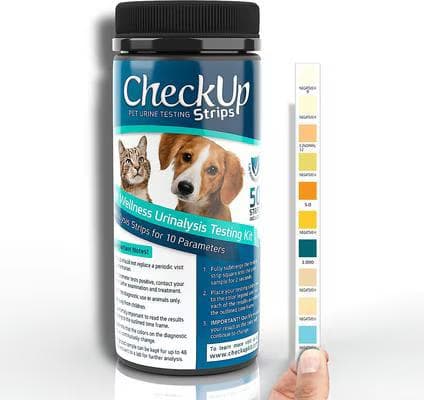
At-home urine test strips that screen for glucose, blood, pH, and protein in seconds, so you can catch early signs of diabetes, kidney disease, or a UTI and bring real numbers to your vet.
Webvet may earn a commission when you click through to Chewy, at no extra cost to you.
Female cat with crystals in urine: treatment
Female cats get crystals too, but their wider, shorter urethra makes complete obstruction much less common. Treatment still focuses on identifying the crystal type, treating any infection, relieving discomfort, and managing urine with diet and hydration.
Females are not immune to emergencies, however, so the same straining-with-no-urine rule applies to them.
How vets diagnose and treat crystals in cat urine
Vets diagnose crystals with a urinalysis on a fresh sample, examining the urine under a microscope to identify the crystal type. They often add bloodwork and imaging (X-rays or ultrasound) to check for stones and assess kidney health.
Treatment depends on the crystal type and whether a blockage is present. There is no single pill that dissolves all crystals.
The full diagnostic workup, and why a fresh sample matters so much, is walked through in our guide to how veterinarians diagnose urinary problems in cats.
How to treat and get rid of crystals in cat urine
Treatment is tailored to the crystal type:
- Struvite: a prescription dissolution diet can often dissolve struvite over several weeks, and any underlying urinary infection is treated with antibiotics chosen by culture.
- Calcium oxalate: stones cannot be dissolved and are removed surgically or by other procedures, then prevented long-term with diet and hydration.
- Blockage: an obstructed cat needs emergency catheterization, IV fluids, pain relief, and hospitalization, medication for pain or urethral spasm may be prescribed by the vet.
There is no safe over-the-counter medication that reliably gets rid of crystals, and human urinary products can be dangerous to cats. The medication a blocked male cat may receive (for pain or to relax the urethra) is prescribed and dosed only by a vet. Ask your veterinarian before giving anything.
For a closer look at antibiotics, pain control, and follow-up when infection is involved, see our detailed cat UTI treatment guide.
Diet and therapeutic food for crystals in cat urine
Diet is the single most powerful long-term tool against crystals, and the best cat food for crystals in urine depends on the crystal type your vet identified. Therapeutic urinary diets work by adjusting urine pH, controlling mineral content, and encouraging water intake. Do not guess, the wrong diet can worsen the wrong crystal.

Best cat food for crystals: struvite vs oxalate
For struvite, vets prescribe a dissolution or maintenance urinary diet that acidifies the urine and limits magnesium and phosphate. For calcium oxalate, the goal is the opposite: avoid over-acidifying and keep urine dilute, using a diet formulated to reduce oxalate and calcium saturation.
Wet cat food is generally preferred for both, because its high moisture content dilutes urine and lowers crystal-forming saturation.
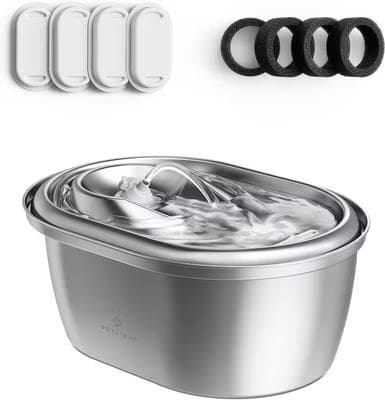
304 food-grade stainless steel pet water fountain, 101 oz. The circulating, filtered water encourages cats to drink more, which supports urinary tract and kidney health.
Webvet may earn a commission when you click through to Chewy, at no extra cost to you.
How to dissolve struvite crystals in cats naturally
There is no safe, proven way to dissolve struvite crystals with home remedies alone, and no home remedy dissolves calcium oxalate at all. The closest thing to a natural approach is a vet-prescribed therapeutic diet combined with increased water intake, which is a medical intervention, not a supplement.
Skip cranberry pills, apple cider vinegar, and internet cures. They are unproven and some can be harmful to cats.
Hydration, prevention, and home care
To prevent crystals in cat urine, the most effective step is keeping urine dilute by driving up water intake, because dilute urine is far less likely to precipitate minerals. Prevention is supportive care that complements your vet's plan, it does not replace diagnosis and treatment. If you are considering a fountain as another water option, our guide to the best cat water fountains compares materials, noise, capacity, and cleaning needs.
Practical prevention steps:
- Feed wet food or add water to meals to raise total moisture intake.
- Offer multiple water stations and consider a pet water fountain, many cats drink more from moving water.
- Keep litter boxes clean and provide one per cat plus one, so cats are not holding urine.
- Reduce stress, since stress is a known trigger for feline lower urinary tract flare-ups.
- Follow the prescribed diet exactly and return for recheck urinalysis as your vet advises.
For a deeper prevention playbook, including monitoring routines, read our vet's guide to preventative care for feline urinary health.
Can a dirty litter box cause crystals? Not directly, but a dirty box can make a cat avoid urinating or hold urine longer, which concentrates it and can worsen an existing tendency to form crystals. A clean box supports frequent, complete emptying of the bladder.
Prognosis: how long can cats live with urinary crystals?
With prompt diagnosis and proper management, most cats live full, normal lifespans despite a history of urinary crystals. Struvite often resolves with diet, and calcium oxalate, once treated, is managed with lifelong prevention.
The prognosis is excellent when crystals are caught early and poor only when a blockage goes untreated, which is why the emergency signs above are so important.
Are crystals in cat urine normal? A small number in a single sample can be an incidental finding, especially if the sample sat before analysis, and does not always mean disease.
Persistent or heavy crystalluria with symptoms is not normal and needs treatment. Your vet decides which is which by combining the lab result with your cat's clinical picture.
Can calcium oxalate stones be dissolved in cats? No. Unlike struvite, calcium oxalate cannot be dissolved by any diet or medication and must be removed physically, then prevented from recurring. That is why prevention is the long game for oxalate-prone cats.
Related cat urinary issues
Crystals are one piece of a larger picture of feline lower urinary tract disease (FLUTD). A true bacterial cat UTI is actually less common in young cats than crystals or idiopathic cystitis, but the symptoms look nearly identical, which is why a urinalysis matters.
Owners often reach for at-home fixes first, we sort the safe supportive steps from the myths in our review of cat UTI home remedies. The short version: hydration and a clean, low-stress environment help, but they never replace a vet exam when symptoms are present.
It also helps to know your baseline. Our vet explainer on what healthy cat urine looks like makes it easier to spot when color, clarity, or volume changes signal a problem worth checking.
Frequently Asked Questions
How do you treat crystals in cats urine?
Treatment depends on the crystal type. Struvite crystals can often be dissolved with a vet-prescribed therapeutic diet, sometimes alongside antibiotics if infection is present. Calcium oxalate cannot be dissolved and stones are removed surgically or by procedure, then prevented long-term.
A cat that is blocked and cannot urinate needs emergency catheterization and hospitalization. Always let your vet identify the crystal before starting any treatment.
How long can cats live with bladder crystals?
With proper diagnosis and management, most cats live a full, normal lifespan despite a history of bladder crystals. The key is catching and treating them before a blockage develops and following the prescribed diet and hydration plan.
Untreated crystals that cause an obstruction, on the other hand, can become fatal within a day or two, which is why prompt care is critical.
How serious are crystals in cat urine?
Seriousness ranges from a minor incidental finding to a life-threatening emergency. A few crystals in a single sample may mean little, but heavy or persistent crystals can irritate the bladder and clump into stones.
In male cats, crystals can plug the narrow urethra and cause a fatal blockage, so any straining with little or no urine must be treated as an emergency.
How does a cat get rid of crystals?
A cat clears crystals through a combination of diluted urine and, for struvite, a therapeutic diet that dissolves the deposits over several weeks. Increased water intake helps flush minerals before they crystallize.
Calcium oxalate stones will not pass or dissolve on their own and must be removed by a vet. There is no reliable way for a cat to get rid of crystals without veterinary guidance.
How long do cats live with urinary crystals?
Cats with urinary crystals that are diagnosed and managed typically live just as long as cats without them. Ongoing prevention through diet, hydration, and periodic recheck urinalysis keeps the problem controlled.
The prognosis only worsens dramatically if a urinary blockage is missed and left untreated, so recognizing the emergency signs is the most important factor in outcome.
What can I give my cat to get rid of crystals?
Do not give over-the-counter or human urinary products, some are toxic to cats. The safe, effective approach is a vet-prescribed therapeutic urinary diet matched to the crystal type, plus more water intake (wet food, fountains, extra bowls).
Any medication for pain or urethral spasm must be prescribed and dosed by your veterinarian. Ask your vet before giving your cat anything for crystals.
Can a dirty litter box cause crystals?
A dirty litter box does not directly create crystals, but it can contribute to the problem. Cats may avoid a soiled box and hold their urine, which concentrates it and makes minerals more likely to precipitate.
A clean box encourages frequent, complete urination that helps flush the bladder. Keeping boxes clean is a simple, useful part of prevention.

Editor
The Webvet Editorial Team is the in-house group of pet-care editors and writers behind Webvet, operated by Smart Pet Collective. The team researches, writes, and maintains Webvet's pet health, behavior, and medication content. Every article follows a defined editorial process: research from reputable veterinary and scientific sources, careful drafting, mandatory review of medical content by a credentialed veterinarian, and dated publication. Health and medication articles are medically reviewed by a licensed veterinary professional before they go live and are kept current over time.
Veterinarian · BVMS MRCVS
Dr. Pippa Elliott, BVMS, MRCVS, is a veterinarian with nearly 30 years of experience in companion animal practice. Dr. Elliott earned her Bachelor of Veterinary Medicine and Surgery from the University of Glasgow. She was also designated a Member of the Royal College of Veterinary Surgeons. Married with 2 grown-up kids, Dr. Elliott has a naughty Puggle named Poggle, 3 cats and a bearded dragon.
Related reading

Salivary Mucocele in Dogs: Symptoms, Surgery, and Recovery

Diabetes in Cats: Symptoms, Treatment, and Remission

Diabetes in Dogs: Early Signs, Diagnosis, and Daily Management
