Keppra for Dogs: Seizure Control, Dosage, and Side Effects
Keppra (levetiracetam) is a prescription anti-seizure drug that vets use extra-label in dogs with epilepsy or cluster seizures. This guide covers dosing by weight, regular versus extended-release, side effects, and when a seizure is an emergency.

BVMS MRCVS
Medically reviewed by Dr. Pippa Elliott, BVMS MRCVS · Last reviewed

Drug facts
Keppra (levetiracetam) for dogs· Levetiracetam
Levetiracetam (Keppra) is a prescription human anti-seizure drug that veterinarians use extra-label in dogs for idiopathic epilepsy, cluster seizures, and seizures from brain disease, often added to phenobarbital. Immediate-release forms are given every 8 hours and extended-release tablets every 12 hours. It must never be stopped suddenly.
Treats

 Sponsored
Is Keppra (levetiracetam) for dogs right for your dog?
A licensed vet at Dutch can assess your dog over video and prescribe treatment when it's appropriate, delivered to your door.
Use code Pets60
Plans start at $12/month · covers up to 5 pets
- Licensed vets in most states
- Rx for 150+ conditions
- 4.7 on Trustpilot
Keppra for dogs is levetiracetam, a human anti-seizure medicine that veterinarians prescribe extra-label to control seizures from idiopathic epilepsy, cluster seizures, and some brain diseases. It is a prescription-only drug, used on its own or added to phenobarbital, and your vet sets the dose and the schedule.
If your dog has a seizure lasting five minutes or longer, or three or more generalized seizures in 24 hours, today is a vet day: that is an emergency. Otherwise, Keppra for dogs works best when every dose goes in on time, extended-release tablets are swallowed whole, and the drug is never stopped suddenly.
Keppra (levetiracetam) for dogs: what it treats, prescription status, and why it is never stopped suddenly
- 1Keppra is the brand name for levetiracetam, a prescription human anti-seizure drug used extra-label in dogs.
- 2Keppra treats idiopathic epilepsy, cluster seizures, and seizures from brain disease in dogs, often as an add-on to phenobarbital.
- 3Vets calculate tablet dosing from a per-kilogram range; the references give no weight-band chart.
- 4Immediate-release tablets are usually given every 8 hours and extended-release tablets every 12 hours, swallowed whole.
- 5Never stop it suddenly, and treat a seizure lasting 5 minutes or longer as an emergency.
Levetiracetam for dogs is a human prescription drug that vets use extra-label. The Keppra prescribing information on DailyMed describes an Rx-only human drug, first approved in the US in 1999 and indicated for partial-onset seizures in people 1 month of age and older. The Merck Veterinary Manual notes it is not labeled for use in dogs and cats.
That makes levetiracetam (Keppra) for dogs an extra-label prescription. VCA Animal Hospitals explains that off-label use means the drug is used in a way not reviewed or approved by the FDA, so your veterinarian's directions and cautions take priority over anything on the human label. VCA adds that in dogs it is typically used in combination with other anticonvulsants.

What does Keppra do in dogs?
Keppra calms the abnormal electrical activity that triggers seizures. The Merck Veterinary Manual's anticonvulsant chapter says levetiracetam binds the presynaptic SV2A protein, which decreases release of the neurotransmitter glutamate. The human label adds that the exact significance of that SV2A binding is still not understood.
Keppra is never stopped suddenly, and both the label and VCA explain why:
- The Keppra label says the drug should generally be withdrawn gradually because of the risk of increased seizure frequency and status epilepticus.
- VCA warns not to stop it abruptly, to avoid withdrawal seizures.
For Keppra for dogs with brain tumor seizures, the Merck anticonvulsant chapter says levetiracetam is occasionally used as a single drug for structural epilepsy, and that anecdotally it has controlled seizures caused by a structural brain lesion such as neoplasia or encephalitis. The evidence there is anecdotal, not trial-based.
Many dogs go home with plain generic immediate-release tablets rather than brand-name Keppra. The Levetiracetam (Generic) Immediate-Release Tablets, 250-mg, 30 tablets pack is one example, and Chewy Pharmacy fills it only with a veterinarian's prescription for your dog.
A generic immediate-release levetiracetam tablet, filled only with your veterinarian's prescription.
Webvet may earn a commission when you click through to Chewy, at no extra cost to you.
Keppra dosage for dogs by weight
Keppra dosage for dogs is set by your vet, who works out the exact dose from your dog's weight in kilograms, the tablet strength, and any other seizure medicines; the veterinary references give a per-kilogram range, not a dosage chart by weight.
| Form | Named veterinary reference | Range the reference states | How often | Weight band basis | What guides changes |
|---|---|---|---|---|---|
| Immediate-release tablet or oral solution | Merck Veterinary Manual | 20–60 mg/kg | Every 8 hours | Per kg of body weight; no weight chart given | Seizure log and side effects, reviewed by the vet |
| Immediate-release, initial dose | 2015 ACVIM consensus statement | 20 mg/kg | Every 8 hours | Per kg of body weight; no weight chart given | Seizure log and recheck visits |
| Extended-release tablet, swallowed whole | Merck Veterinary Manual | 30 mg/kg | Every 12 hours | Per kg of body weight; no weight chart given | Seizure log and recheck visits |
| Extended-release tablet, swallowed whole | Auburn pharmacokinetic study in healthy dogs | 30 mg/kg | Every 12 hours | Study dogs weighed at least 15 kg | Monitoring of the individual dog |
| Any form, dog also taking phenobarbital | 2024 ACVIM consensus statement | No figure given | As prescribed | Set by the vet | A higher dose may be needed |
These are the ranges vets work within, not a home dosing guide. The Merck Veterinary Manual lists immediate-release levetiracetam at 20–60 mg/kg every 8 hours and extended-release at 30 mg/kg every 12 hours. The 2015 ACVIM consensus statement gives 20 mg/kg every 8 hours as the initial dose, the bottom of Merck's range.
On the maximum dose of Keppra for dogs, the top of the Merck range is 60 mg/kg every 8 hours. The ACVIM panel describes a wide safety margin: in the manufacturer's preclinical dog studies, unsteady gait, salivation, vomiting, and sedation appeared at 300–1200 mg/kg/day, 5 to 20 times the recommended dosage.
Some vets choose extended-release tablets so the schedule drops from three doses a day to two. The Levetiracetam (Generic) Extended-Release Tablets, 500-mg, 90 tablets pack is one prescription option, filled by Chewy Pharmacy only with a veterinarian's prescription and always swallowed whole.
Generic extended-release levetiracetam for a twice-daily schedule, dispensed only with a vet's prescription.
Webvet may earn a commission when you click through to Chewy, at no extra cost to you.
The extended-release figure traces to an Auburn University study of extended-release levetiracetam in 16 healthy dogs, which recommended 30 mg/kg every 12 hours, with or without food. Every dog in that study weighed at least 15 kg, so it says nothing directly about toy breeds. The authors expected blood levels to fluctuate approximately 50–80% across each 12-hour interval and recommended monitoring to set the best interval for each dog.
Tablet strength shapes how much Keppra a dog actually takes. The human tablets come in 250 mg, 500 mg, 750 mg, and 1000 mg, and the oral solution is 100 mg/mL, according to the Keppra label. A small dog may be prescribed a low strength such as Levetiracetam (Generic) Immediate-Release Tablets, 250-mg, 30 tablets, which Chewy Pharmacy dispenses only against your vet's prescription.

Give exactly the dose and schedule your vet prescribed. Never raise, lower, or stop levetiracetam on your own, even after weeks without a seizure; dose changes are made by the vet, usually based on your seizure records and a recheck.
What Keppra is used for in dogs: epilepsy, cluster seizures, and add-on therapy
Keppra is used in dogs mainly to control idiopathic epilepsy, and it also treats cluster seizures and serves as an add-on drug. The Merck Veterinary Manual describes idiopathic epilepsy as typically genetic, or of unknown origin once reactive seizures and structural brain disease have been ruled out. VCA's epilepsy guide adds that once anticonvulsant treatment starts, it will likely be continued for life.
The references disagree on where Keppra ranks. The 2015 ACVIM panel gave levetiracetam a low (grade C) recommendation as a single first-line drug and a moderate (grade B) recommendation as an add-on. VCA lists it among medications that may be considered first choice, and Merck calls it a first-choice option for dogs not responding to phenobarbital or bromide.
Vets use it in several situations:
- As an add-on for dogs whose epilepsy is not controlled by phenobarbital, bromide, or both (Merck, ACVIM).
- Occasionally as a single drug for structural epilepsy (Merck).
- As short-term pulse treatment by mouth for cluster seizures, which the 2024 ACVIM consensus on status epilepticus and cluster seizures recommends for dogs (grade B).
- As an injection in hospital for status epilepticus or cluster seizures (Merck).
The trial evidence is modest. In a 14-dog study of dogs resistant to phenobarbital and bromide, 9 dogs (64%) had more than 50% fewer seizures, but 6 of those 9 saw seizures climb again after 4–8 months. Merck notes that tolerance with long-term use has been reported in dogs.
A stricter test came from a placebo-controlled crossover study of 34 dogs. Weekly seizures fell compared with baseline on levetiracetam, but not significantly compared with placebo, and responders were 56% on levetiracetam versus 30% on placebo, a difference that was not statistically significant.
Does Keppra help with focal seizures?
Yes, it can. The human Keppra label is built around partial-onset (focal) seizures, and the 2015 ACVIM table lists levetiracetam for all seizure types, both alone and as an add-on. Merck describes focal seizures as twitching of the eyelids, lips, or ears or abnormal limb movements on one side of the body. If you are unsure whether head bobbing is a seizure, see dog head tremors and shaking.
Whether seizure medication is worth starting at all depends on how often and how severely your dog seizes, and the seizures in dogs guide walks through that decision. The 2015 ACVIM panel recommends starting treatment when any of these apply:
- A structural brain lesion, or a history of brain disease or injury.
- Status epilepticus or acute repetitive seizures.
- Two or more seizure events within 6 months.
- Prolonged, severe, or unusual recovery periods after a seizure.
Keppra is not the only add-on. VCA notes that gabapentin or clonazepam are sometimes added, and gabapentin for dogs and cats covers that option.
Keppra side effects in dogs
Keppra side effects in dogs are usually mild, but there are side effects to watch. The Merck anticonvulsant chapter calls levetiracetam very safe, with rare adverse effects, and the 2015 ACVIM panel classes every reported effect in dogs as predictable and dose-dependent. Reported levetiracetam side effects in dogs include:
- Sleepiness and incoordination (VCA).
- Vomiting, sedation, ataxia, hyperexcitability, poor appetite, and increased thirst and urination (Merck).
- Restlessness and decreased appetite (ACVIM).
What is the most common side effect of levetiracetam?
Sleepiness and wobbliness are the most common. VCA lists sleepiness and incoordination as the side effects in dogs, and in a randomized, controlled study of 34 dogs, ataxia (an unsteady gait) was the only effect that differed significantly from baseline. In people, the Keppra label notes sleepiness occurred most often in the first 4 weeks.
Early grogginess often eases. Writing about seizure medicines in general, the 2015 ACVIM panel says most transient adverse effects are avoidable with gradual dose increases and dissipate within several weeks. Persistent effects such as sedation or imbalance are dose-dependent, which is why the vet, not the owner, decides whether a dose change is needed.

Behavior changes are less common but worth knowing about. A University of Veterinary Medicine Hannover owner survey of 84 dogs found that 10 of 40 dogs with no earlier behavior problems developed changes such as anxiety, depression, or aggression after starting levetiracetam, and 14 of 44 dogs with existing problems got worse.
Mild stomach upset is often managed at home. VCA says levetiracetam may be given with or without food, but if a dog vomits after a dose on an empty stomach, future doses should be given with food. Giving the tablet with a meal, or wrapped in Greenies Pill Pockets Cheese Flavor Natural Dog Treats, Tablet Size, 30 count, adds food; check that your dog swallows it whole, because extended-release tablets must not be chewed. These treats do not replace the prescribed drug or your vet's advice.

A soft treat pouch that hides a levetiracetam tablet so each dose is eaten on schedule.
Webvet may earn a commission when you click through to Chewy, at no extra cost to you.
Dogs with kidney or liver disease may feel the effects for longer. VCA describes levetiracetam as short-acting, with effects expected to stop within 24 hours, although effects can last longer in pets with liver or kidney disease.
Some reactions need a call to the vet straight away, before the next dose is due. VCA advises stopping levetiracetam and contacting your veterinarian immediately for the two signs below. Because the Keppra label and VCA also warn that stopping abruptly risks withdrawal seizures, make that call at once so the vet directs what happens to the next dose; never simply leave the drug off.
- Persistent vomiting.
- Sudden changes in behavior.
VCA also says to watch for signs of an allergic reaction over the entire course of treatment, because sensitivities can develop with repeated exposure; treat those signs as an emergency call.
With side effects tracked and every dose given on time, most dogs settle into the routine. VCA's epilepsy guide notes that most dogs do well on anti-seizure medication and resume a normal lifestyle, although some have periodic breakthrough seizures and need occasional adjustments.
A sleepy dog with a smaller appetite may still refuse tablets in food, and Merck notes that a missed dose of this short-acting drug risks breakthrough seizures. For dogs that spit out disguised tablets, a simple pill-giving tool can keep the schedule. The Dee Pet Piller for Dogs & Cats, 1 count holds a tablet or capsule in a chamber and uses a plunger to give it by mouth without food. It is an over-the-counter tool and does not change what or how much the vet prescribed.
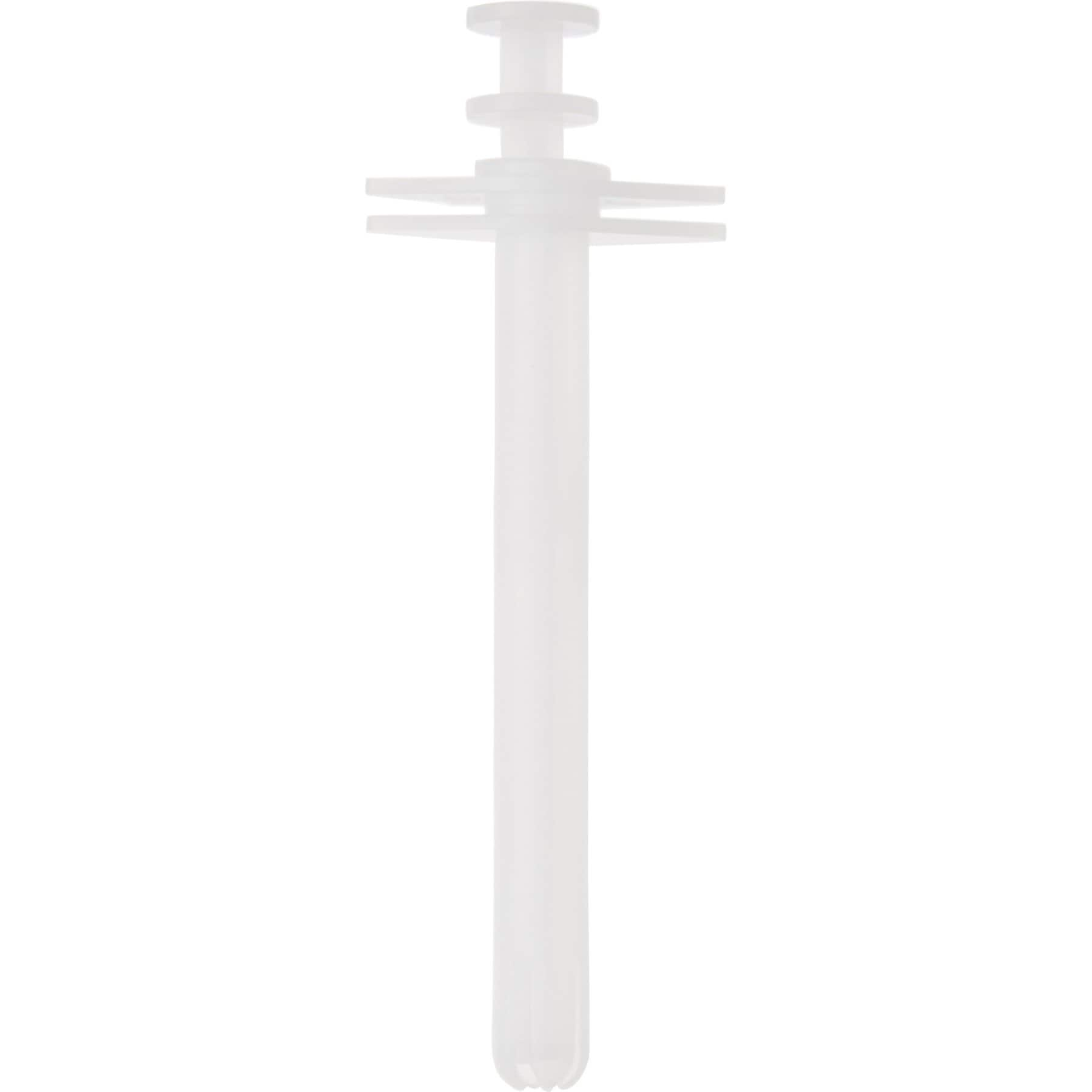
A plunger-style piller for dogs that refuse tablets in food, so no prescribed dose is skipped.
Webvet may earn a commission when you click through to Chewy, at no extra cost to you.
Monitoring catches problems early. VCA advises recording your dog's seizure activity at home, says your vet may check therapeutic blood levels, and notes that routine bloodwork may be checked every 6 to 12 months.
 Sponsored
Vet care that's always there
Unlimited video calls and messaging with licensed vets for less than a typical vet visit. One membership covers up to five pets.
Use code Pets60
Plans start at $12/month · covers up to 5 pets
- Licensed vets in most states
- Rx for 150+ conditions
- 4.7 on Trustpilot
When a seizure is an emergency: call the vet now
Seizures become an emergency when they last too long or come in a close series. The 2024 ACVIM consensus statement explains that seizures are considered an emergency when their duration is prolonged and they are not self-limiting, or when they occur as a closely grouped series.
These seizure signs need the vet now:
- A seizure lasting 5 minutes or longer (2015 and 2024 ACVIM statements).
- Three or more generalized seizures within 24 hours (2015 ACVIM).
- Two or more seizures without recovery of consciousness in between (International Veterinary Epilepsy Task Force definition, cited by ACVIM).
- A cluster of seizures; VCA warns clusters may progress to status epilepticus, which it calls a medical emergency.
- Signs of a severe allergic reaction such as hives, facial swelling, or breathing difficulty, which the Keppra label lists for people.
- A suspected overdose or any serious adverse reaction.

Some dogs with a history of cluster seizures have a vet-written plan for home. The 2024 ACVIM panel says oral levetiracetam can be the first choice outside hospital, with rectal dosing in dogs when swallowing is not possible. Use such a plan only exactly as your vet wrote it; never improvise extra doses during a seizure.
For a suspected overdose or reaction, VCA advises calling your veterinary office immediately, or an emergency facility if your clinic is closed, and having the product, your dog's weight, and the symptoms ready.
Drug interactions, phenobarbital or zonisamide combinations, and dogs that need extra caution
VCA lists several medications to use with caution alongside levetiracetam:
- Central nervous system (CNS) depressants.
- Nonsteroidal anti-inflammatory drugs (NSAIDs).
- Phenobarbital.
The sources do not fully agree here. The 2015 ACVIM statement says no known drug-drug interactions have been reported for levetiracetam in dogs, yet the same panel notes phenobarbital speeds its clearance. Phenobarbital and Keppra for dogs are often given together, and the 2024 ACVIM statement says dogs on long-term phenobarbital may need a higher levetiracetam dose.
Phenobarbital vs Keppra for dogs is rarely an either-or choice once seizures are hard to control. ACVIM supports monitoring levetiracetam blood levels when the two are combined, to judge whether a dose increase is warranted. Phenobarbital also increases the clearance of zonisamide, so the vet weighs both drugs together. When adding a second drug, the panel favors one with a different mechanism of action, fewer interactions, and no additive toxicity. See zonisamide for dogs for that drug's own profile.
What organ is Keppra hard on?
Keppra relies on the kidneys, not the liver. The 2015 ACVIM statement notes levetiracetam lacks hepatic metabolism and is primarily excreted unchanged in the urine, which is why VCA and Merck advise caution in kidney disease. The human label does list liver failure and hepatitis among reports in people after marketing.
Giving trazodone alongside Keppra raises a sedation question. VCA's trazodone page lists sedation and lethargy among possible effects, and VCA places CNS depressants on levetiracetam's caution list. The same applies when a vet prescribes another medicine such as methocarbamol for dogs or butorphanol for dogs: tell the vet everything your dog takes.
CBD and Keppra for dogs, including CBD oil, should be cleared with your vet first. VCA asks owners to report all vitamins, supplements, and herbal therapies before any new treatment. A randomized trial of CBD in epileptic dogs added to standard seizure drugs gave mixed results and raised a liver enzyme, so it is not a substitute for any prescribed dose.
Do any foods interact with Keppra?
No specific food interaction is listed. The Keppra label says it is given with or without food, and VCA agrees. In the Auburn study, food slowed absorption of extended-release levetiracetam, but time above the target level was similar: 17.7 hours fed and 18.3 hours fasted. On which foods to avoid with seizures in general, the seizures in dogs guide found no primary source naming dog food or treats as a cause, and it covers the diet research on medium-chain triglycerides.
Some dogs need extra caution or should not get levetiracetam at all, according to VCA:
- Do not use in dogs allergic to it.
- Use with caution in dogs with kidney disease.
- Use with caution in dogs that are pregnant or nursing.
Giving Keppra on schedule: immediate-release vs extended-release, missed doses, seizure logs, and cost
The form your vet picks sets the daily routine. The Merck epilepsy chapter says levetiracetam's short half-life, about 3 hours, means doses must follow the prescribed schedule tightly to avoid breakthrough seizures.
Here is how immediate-release Keppra and Keppra XR differ in dogs:
- Immediate-release tablets and liquid are given every 8 hours in dogs (Merck).
- Extended-release (Keppra ER or XR) tablets are given every 12 hours in dogs (Merck), even though Keppra XR is once daily in people.
- Extended-release tablets must not be crushed or chewed, because that breaks the slow-release structure (VCA), and a study of a compounded extended-release formulation notes this limits their use in small dogs.
For larger dogs on a twice-daily plan, a vet may prescribe Levetiracetam (Generic) Extended-Release Tablets, 500-mg, 90 tablets, filled only with a veterinarian's prescription. Ask your vet before altering any tablet.
Liquid Keppra for dogs suits small dogs who need a dose no tablet provides. The Keppra label describes a grape-flavored 100 mg/mL oral solution, and VCA says to measure liquid forms carefully. A product such as Levetiracetam (Generic) Oral Solution USP, 100-mg/mL, 16 oz is dispensed only with your vet's prescription; measure it with the syringe the pharmacy supplies.
A dog that takes a compounded capsule can have it hidden in Greenies Pill Pockets Cheese Flavor Natural Dog Treats, Capsule Size, 30 count, and a Dee Pet Piller for Dogs & Cats, 1 count helps when food tricks fail. Neither replaces the prescribed dose. See administering medicine to dogs and the best pill pockets for dogs.
Is it better to take Keppra in the morning or at night?
Neither time is better; even spacing is what matters. The references name no preferred time of day, but Merck stresses tight adherence to the dosing frequency because of the short half-life. Pick times you can keep every day, and let your vet confirm the schedule.
What not to do while on Keppra?
Don't stop it suddenly, double up, or change the dose yourself. VCA and the Keppra label warn against abrupt withdrawal. Also avoid these:
- Crushing or letting your dog chew extended-release tablets.
- Starting a supplement, CBD product, or new prescription without telling your vet.
- Skipping rechecks or bloodwork your vet schedules.
If you miss a dose, VCA's advice is simple:
- Give it as soon as you remember, then continue the regular schedule.
- If the next dose is almost due, skip the missed one.
- Never give two doses at once.

A seizure log is the best evidence of whether Keppra is working. VCA's epilepsy guide asks owners to record the date, time, length, and severity of every episode. Bring the log to every recheck. Record:
- Date and time the seizure started, and how long it lasted.
- What it looked like: whole body, one side, or face only.
- How long recovery took and how your dog behaved afterward.
- Doses given that day, any missed or late dose, and new medicines or supplements.
- Side effects such as sleepiness, wobbliness, or vomiting.
VCA notes that generalized seizures can include loss of bladder control, so some owners line their dog's usual resting spot with Katziela Washable Dog Pee Pads, 24 x 36-in, 2 count to make cleanup and note-taking easier. The pads are a cleanup aid only and do not replace the prescribed medication or a call to the vet after a seizure.
Keppra for dogs cost depends mostly on the dose, form, and tablets per day. Generic Keppra for dogs can be filled online with a prescription:
- Immediate-release 250 mg, 30 tablets: listed at $5.40 on Chewy when checked in November 2026.
- Extended-release 500 mg, 90 tablets: listed at $19.80 on Chewy when checked in November 2026.
- Oral solution 100 mg/mL, 16 oz: listed at $20.95 on Chewy when checked in November 2026.
Wherever you buy it online, the pharmacy needs a valid prescription from your vet. To keep Keppra for dogs cheap over the long run, compare the price per dose rather than per pack, and ask your vet which strength means the fewest tablets. Online owner reviews of Keppra cannot tell you how your own dog will respond; the seizure log and rechecks can.
Keppra questions
Frequently Asked Questions
Can you crush Keppra for dogs?
Do not crush extended-release Keppra or its generics. VCA says crushing or chewing breaks the structure that releases the drug slowly. VCA also notes that some compounded products marketed as extended-release may be split or crushed, but only after checking with your veterinarian. For crushing immediate-release tablets, ask your vet or pharmacist first.
Is generic levetiracetam the same as Keppra for dogs?
Generic levetiracetam contains the same active drug as Keppra. For extended-release products, the Auburn researchers point out that human bioequivalence cannot be assumed in dogs, because extended-release tablets made for people are not always released slowly in dogs. If your pharmacy switches brands, tell your vet and watch the seizure log closely.
What is the difference between Keppra XR and regular Keppra for dogs?
Regular Keppra is the immediate-release form, given every 8 hours in dogs per Merck; Keppra XR is the extended-release form, given every 12 hours and swallowed whole. Researchers note that fewer daily doses can help owners keep to the schedule.
Can dogs take CBD with Keppra?
Only if your veterinarian agrees. In a randomized trial of 26 epileptic dogs, CBD added to existing seizure drugs reduced seizure frequency by a median of 33%, yet the share of dogs with at least a 50% reduction was similar to placebo. Two dogs developed ataxia, and liver enzyme activity rose.
Is phenobarbital or Keppra better for dogs?
Neither is better for every dog. The 2015 ACVIM panel gave phenobarbital its highest first-line recommendation, while levetiracetam ranked higher as an add-on than as a first-line drug. Phenobarbital is processed by the liver and can cause liver toxicity, so dogs on it need regular blood tests. Levetiracetam skips liver metabolism but needs caution with kidney disease.
Veterinarian · BVMS MRCVS
Dr. Pippa Elliott, BVMS, MRCVS, is a veterinarian with nearly 30 years of experience in companion animal practice. Dr. Elliott earned her Bachelor of Veterinary Medicine and Surgery from the University of Glasgow. She was also designated a Member of the Royal College of Veterinary Surgeons. Married with 2 grown-up kids, Dr. Elliott has a naughty Puggle named Poggle, 3 cats and a bearded dragon.


