Methocarbamol for Dogs: Uses, Dosage, and Side Effects
Methocarbamol is a prescription muscle relaxant vets use for back spasms, muscle injuries, and some tremor-causing poisonings in dogs. This guide covers dosing by weight, side effects, combining it with pain medicines, and when to call the vet.

BVMS MRCVS
Medically reviewed by Dr. Pippa Elliott, BVMS MRCVS · Last reviewed

Drug facts
Methocarbamol (Robaxin-V)· Methocarbamol
Methocarbamol (Robaxin-V) is a prescription, FDA-approved central muscle relaxant for dogs, cats, and horses. Vets use it as an adjunct to therapy for acute inflammatory and traumatic skeletal muscle conditions, such as back spasm from intervertebral disc disease, sprains, and strains, and to control tremors in some poisonings.

 Sponsored
Is Methocarbamol (Robaxin-V) right for your dog?
A licensed vet at Dutch can assess your dog over video and prescribe treatment when it's appropriate, delivered to your door.
Use code Pets60
Plans start at $12/month · covers up to 5 pets
- Licensed vets in most states
- Rx for 150+ conditions
- 4.7 on Trustpilot
Methocarbamol for dogs is a prescription central muscle relaxant, sold under the brand name Robaxin-V, that vets use to calm skeletal muscle spasm after back injuries, sprains, and strains, and to control tremors from some poisonings. Under federal law it is dispensed only by or on the order of a licensed veterinarian.
The veterinarian sets the dose by weight, and sleepiness is the most common side effect. A dog already on methocarbamol who seems comfortable is usually not an emergency. A dog with new back pain, wobbly legs, or tremors needs a vet visit first, because the spasm is a sign of an underlying problem.
Methocarbamol for dogs: what it treats, prescription status, and whether today is a vet day
- 1What methocarbamol treats: skeletal muscle spasm from back disease, sprains, strains, and some tremor-causing poisonings.
- 2It is a prescription muscle relaxant approved by the FDA for dogs, cats, and horses as Robaxin-V.
- 3Dosing by weight band comes from the label, and only your vet picks the dose and tablet strength.
- 4Sleepiness is expected; severe or continued vomiting or weakness means stop the drug and call the vet.
Robaxin for dogs is the same drug. The Robaxin-V package insert lists the injectable and tablets as approved by the FDA for dogs, cats, and horses under NADA 38-838 and NADA 45-715.
The federal regulation for the tablet, 21 CFR 520.1380 in the Electronic Code of Federal Regulations, describes its use as an adjunct to therapy for acute inflammatory and traumatic conditions of the skeletal muscles, to reduce muscular spasms. Generic methocarbamol 500 mg tablets are filled by Chewy Pharmacy only with a veterinarian's prescription.
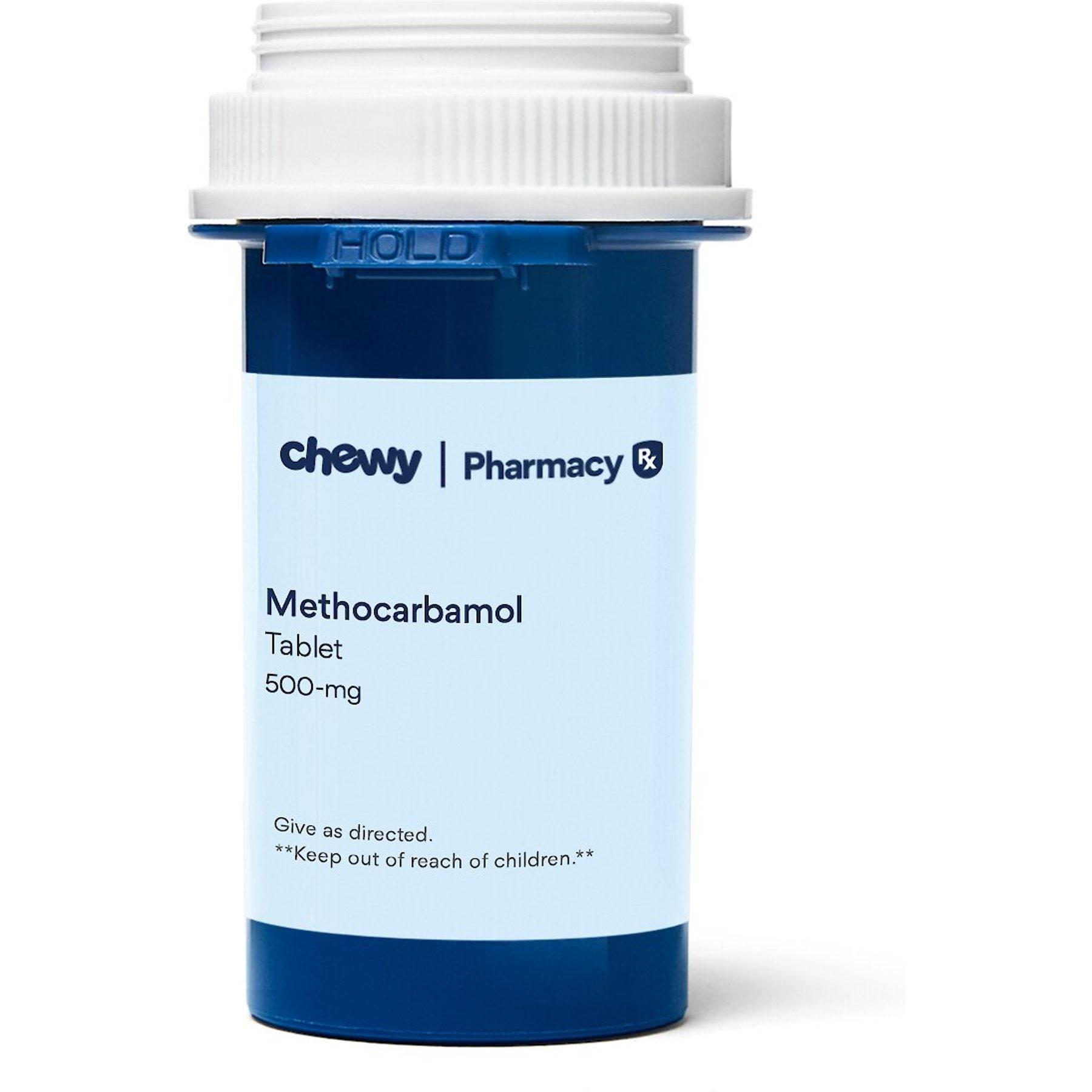
Generic 500 mg methocarbamol tablets, filled only against your vet's prescription for a dog on a muscle relaxant course.
Webvet may earn a commission when you click through to Chewy, at no extra cost to you.
"Adjunct" matters. Methocarbamol eases the spasm, but it does not fix a slipped disc, a torn muscle, or a poisoning. The Merck Veterinary Manual describes it as a centrally acting muscle relaxant, chemically related to guaifenesin, with a sedative effect and no direct relaxant action on muscle fibers.

VCA Animal Hospitals adds that use in dogs for certain musculoskeletal conditions is on label, while some doses vets choose are off label (extra-label), so your vet's directions can differ from the printed label.
Whether today is a vet day depends on what you are seeing:
- Book a visit now for new back or neck pain, a hunched posture, crying when picked up, or reluctance to walk.
- Go today if the legs are weak, wobbly, or dragging, or if your dog cannot get up.
- Go now, as an emergency, for tremors or twitching after a possible poisoning.
- Call the clinic if a dog already on methocarbamol vomits repeatedly or becomes very weak.
Methocarbamol dosage for dogs by weight
Methocarbamol dosage for dogs is worked out by the vet from body weight. The Robaxin-V label range for the tablet is 60 mg/lb a day on day 1, then 30 or 60 mg/lb a day after that, always split into two or three doses. Here is the label chart by weight that your vet works within:
| Weight band (label chart) | Day 1 load dose on the label | Day 2 onward maintenance on the label | Tablet the label uses |
|---|---|---|---|
| 12 1/2 lbs | 1/2 tablet t.i.d. | 1/4 to 1/2 tablet t.i.d. | 500 mg scored tablet |
| 25 lbs | 1 tablet t.i.d. | 1/2 to 1 tablet t.i.d. | 500 mg scored tablet |
| 50 lbs | 2 tablets t.i.d. | 1 to 2 tablets t.i.d. | 500 mg scored tablet |
| Any weight (label rule) | 60 mg/lb body weight in divided doses | 30 or 60 mg/lb body weight each following day | Total split into two or three equal doses |
In the label chart, t.i.d. means three times a day. Your vet calculates the exact dose and adjusts it to the spasm and your dog's response.
Methocarbamol 500 mg for dogs is the strength the federal regulation specifies per tablet. Veterinary Partner lists 500 mg, 750 mg, and 1000 mg tablets plus an injectable, typically given two to three times daily.
If a vet prescribes the larger Methocarbamol (Generic) Tablets, 750-mg, 30 tablets, that is also a prescription-only fill. Veterinary Partner warns that tablet size is not an indication of a proper dose, so never swap strengths on your own. Whatever strength the vet picks, Greenies Pill Pockets Cheese Flavor Natural Dog Treats, Tablet Size, have a built-in pouch that holds most small tablets; they do not replace the prescribed medicine or the vet's advice.
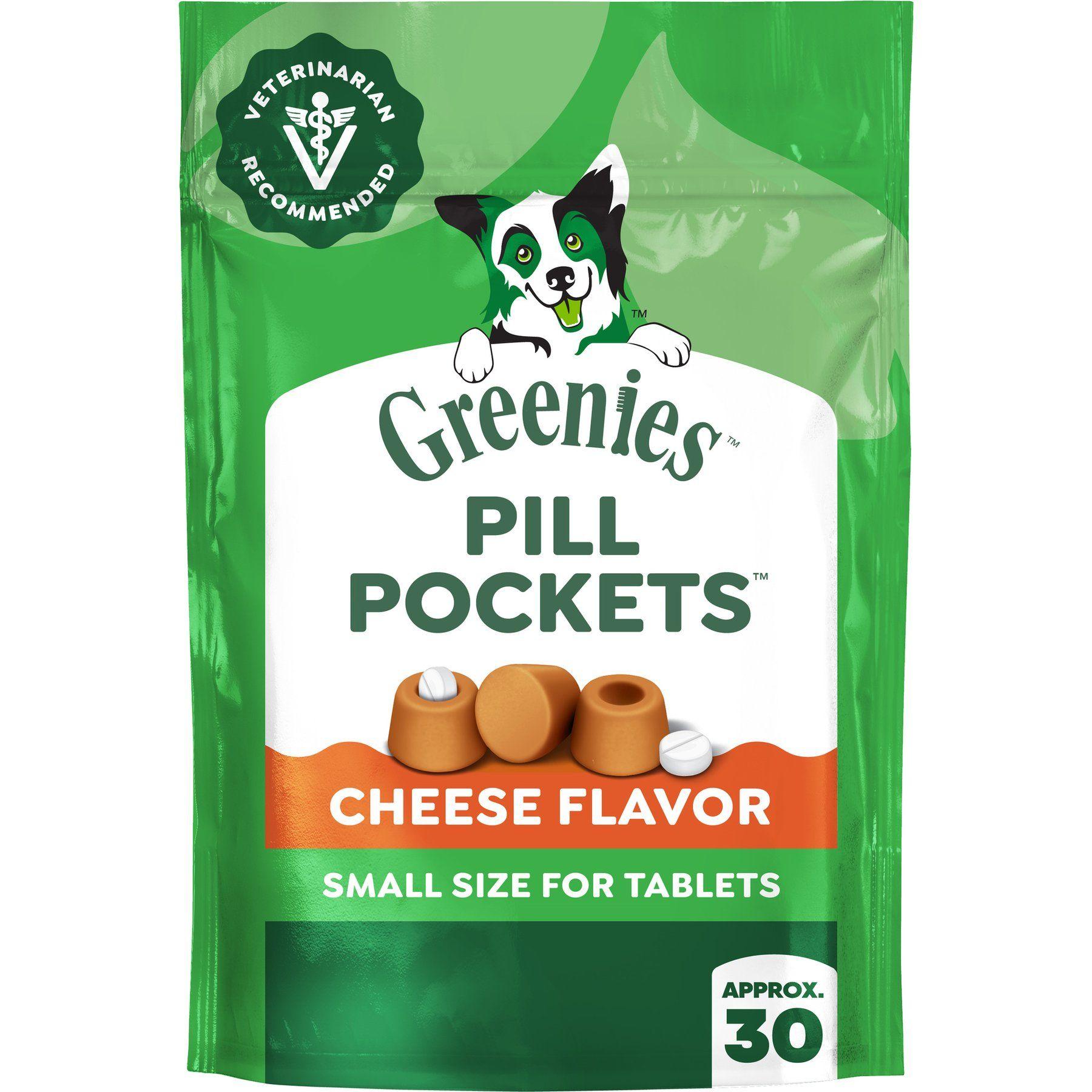
Soft treats with a pouch for hiding a prescribed tablet so each dose goes down on schedule.
Webvet may earn a commission when you click through to Chewy, at no extra cost to you.
How many days? The label says the usual course in clinical trials did not exceed 14 to 21 days, and the federal regulation uses the same 14 to 21 day wording. The label also says that if no response is seen within five days, the diagnosis should be redetermined.

A few practical points about any methocarbamol dosage chart or calculator you find online:
- No PDF chart or online calculator replaces the vet's math. The USA label, the Robaxin-V package insert, is itself a PDF, and its chart covers only three example weights.
- Doses printed per pound on the label are totals for the day, split into two or three doses, not a single dose.
- Give exactly what the vet prescribed, and never raise, lower, or stop the dose without asking the vet first.
What methocarbamol is used for: back spasms, muscle injuries, and tremor poisonings
What is methocarbamol for dogs used for? The Robaxin-V label lists acute skeletal muscle hyperactivity secondary to these conditions, where efficacy of the tablets and injectable was demonstrated:
- Intervertebral disc syndrome, compressive myelitis, and spinal cord injury where the cord remains intact
- Trauma causing muscular and ligamentous sprains and strains
- Myositis, fibrositis, bursitis, and synovitis
- Muscle spasm before or after surgery
- Strychnine poisoning and tetanus, where tablets maintain the benefit of the injectable form
Tremor poisonings, and the strychnine poisoning and tetanus on that list, are always emergencies. Hospital treatment uses methocarbamol by injection, then sometimes by mouth:
- Tremorgenic mycotoxins from moldy food, food waste, and compost. The Merck Veterinary Manual on tremorgenic neuromycotoxicosis says oral methocarbamol may be needed for several days after discharge.
- Permethrin toxicity and other pyrethroid poisonings. Merck's insecticide toxicosis chapter lists tremors and seizures as signs and methocarbamol or diazepam by vein to control them.
- Strychnine poisoning, and tetanus (a bacterial infection), both named on the label.
Muscle injuries are another big group. A pulled or strained muscle can go into a painful cramp, and dog muscle spasms have many causes worth ruling out first. Veterinary Partner says methocarbamol can be used in any condition where painful muscle spasms should be reduced for patient comfort.
Short trips outside are often the hardest part of the rest a vet orders for an injury. The Labra Dog Support Sling, Medium slips around the dog's middle, with handles so an owner can lift some weight off sore joints; it is a help during the vet's rest plan, never a substitute for the exam or the medication.
What about methocarbamol for dogs with arthritis or general pain? Arthritis is not on the label list, and methocarbamol is not a painkiller by itself; it eases pain that comes from spasm. Long-term joint pain usually calls for other drug classes, compared in pain meds for dogs, which also covers how to tell if a dog is in pain.

Back spasm from intervertebral disc disease in dogs is the most familiar reason. The Merck Veterinary Manual's chapter on degenerative spinal disease says dogs with pain and minimal to moderate neurological deficits often recover with 2–3 weeks of cage rest, and that pain medication without concurrent cage rest is contraindicated.
Merck also notes that no evidence exists that steroids or any other drugs improve neurological recovery, and that signs return after conservative treatment in 30–40% of cases. Methocarbamol is a comfort drug inside a bigger plan; the options are laid out in IVDD treatment in dogs.
A dog who feels better moves more, and more activity might push out more disc material. A supportive bed in a crate or small pen is part of many rest plans. The BARK Orthopedic Dog Bed, Medium, Grey is a high-density memory foam bed; it supports vet-ordered rest and does not replace the exam or the medication.
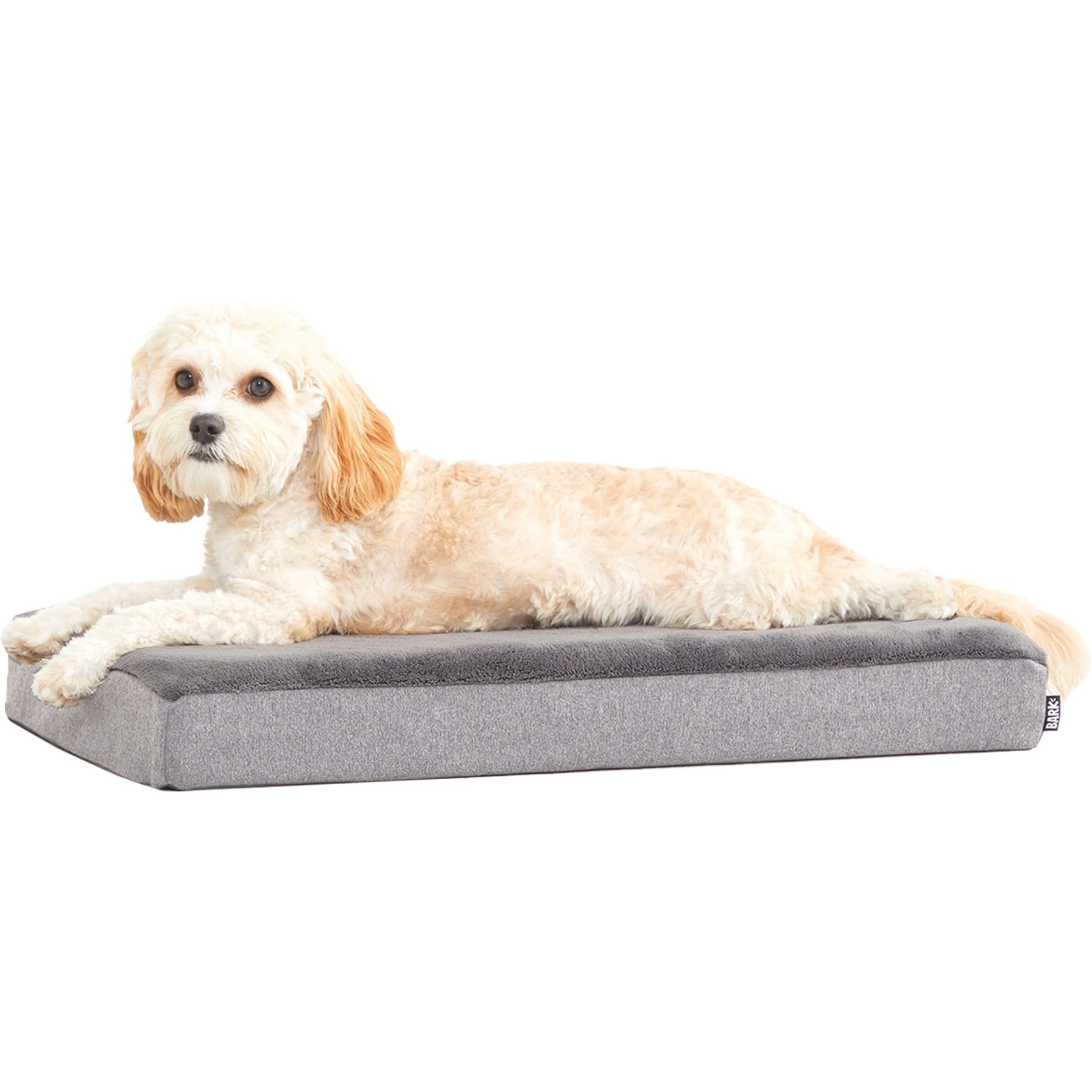
A memory foam bed for the crate or pen where a dog with a back or muscle injury rests as the vet directs.
Webvet may earn a commission when you click through to Chewy, at no extra cost to you.
Methocarbamol side effects in dogs
Most methocarbamol side effects in dogs are mild and short-lived. VCA lists these:
- Sleepiness, the most common
- Drooling
- Vomiting
- Weakness
- Incoordination
- Dark or blue-green urine, which is not harmful
Veterinary Partner describes the same picture: sedation, lethargy, drooling, vomiting, weakness, and a drunken gait, and says darker urine is not cause for concern. The injection label notes that salivation, vomiting, muscle weakness, and wobbliness can be indicators of overdosage, which is why the dose matters so much.
An overdose usually starts with the same signs as the side effects, only stronger. That overlap is why the line between a sleepy dog and an over-sedated dog matters, and the next section spells out the signs that need a vet now.
 Sponsored
Vet care that's always there
Unlimited video calls and messaging with licensed vets for less than a typical vet visit. One membership covers up to five pets.
Use code Pets60
Plans start at $12/month · covers up to 5 pets
- Licensed vets in most states
- Rx for 150+ conditions
- 4.7 on Trustpilot
Can methocarbamol make my dog sleepy?
Yes. Sleepiness is the most common side effect VCA lists, and Merck notes methocarbamol has a sedative effect of its own. A drowsy dog who still wakes, stands, and eats is showing the expected effect. A dog who cannot be roused, collapses, or cannot stand is not, and needs a vet now.
VCA also notes that the drug is short-acting and should stop working within 24 hours, though effects can last longer in dogs with liver or kidney disease. Drug sensitivities can develop over time, so stay alert to an allergic reaction through the whole course, not just the first dose.

Dark or blue-green urine is the side effect that surprises owners most and matters least. VCA calls it not harmful, and Veterinary Partner says darker urine is not cause for concern, so there is no need to stop the course for it.
A dog on vet-ordered rest for a back or muscle injury still needs short bathroom trips. Weakness that is severe or keeps going is a reason to call the vet, not a reason for a sling. For ordinary trips during the rest plan, the Labra Dog Support Sling slips around the dog's middle so an owner can take some of the weight; it supports the rest plan and does not replace the exam or the medication.
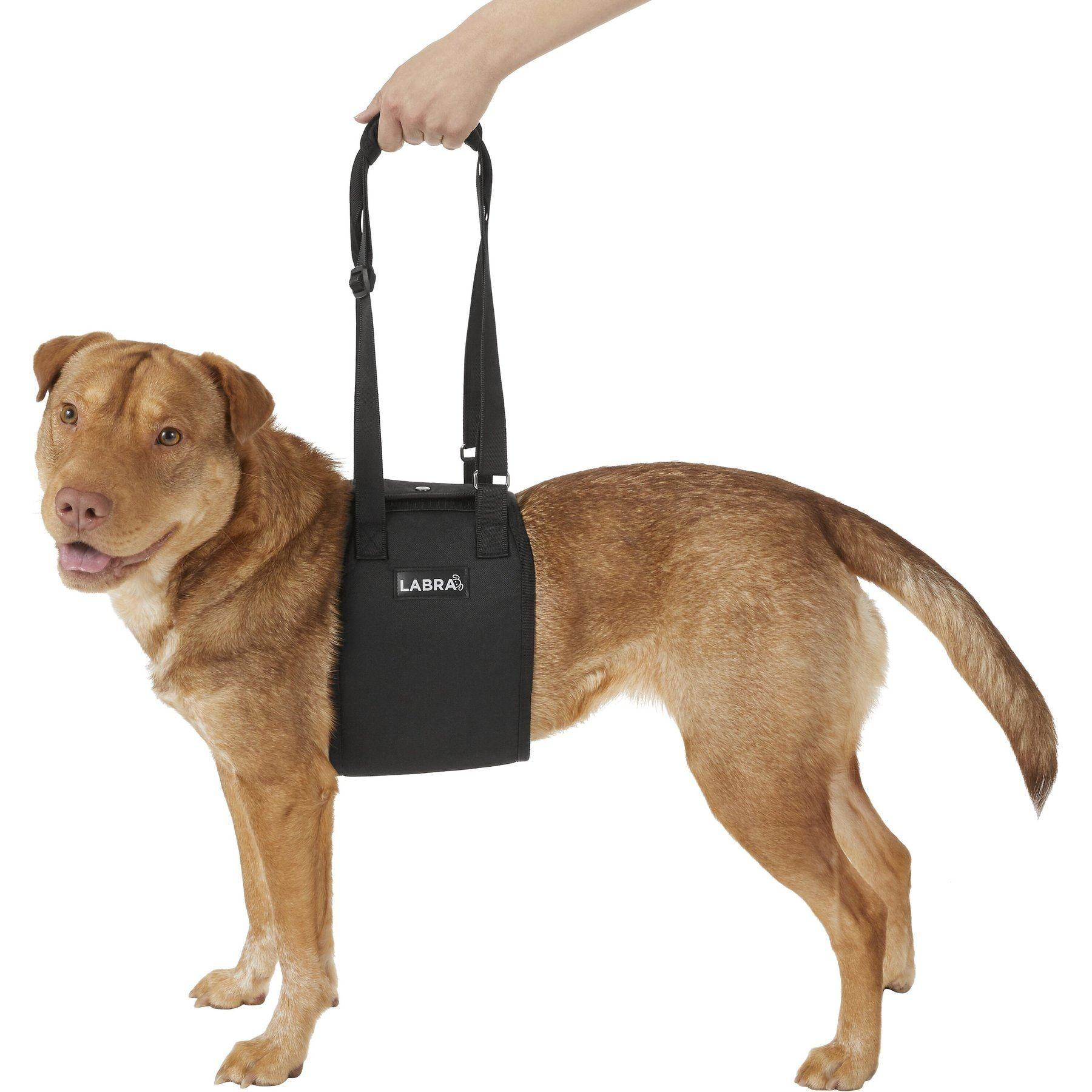
A belly sling to steady a dog on short bathroom trips during the strict rest the vet has ordered.
Webvet may earn a commission when you click through to Chewy, at no extra cost to you.
Vomiting on an empty stomach is one of the easier problems to fix: VCA says future doses should then be given with food.
When to call the vet now: overdose and emergency signs
The Merck Veterinary Manual on muscle relaxant toxicoses says the most common signs of methocarbamol intoxication are lethargy, weakness, ataxia (wobbly walking), and vomiting, and that large ingestions may cause more severe nervous system signs. Treated dogs are monitored for depressed breathing.
Get emergency help for any of these:
- A dog that cannot stand, falls over, or cannot right itself
- Very slow or labored breathing
- Collapse, or a dog that is hard to wake
- Severe or continued vomiting
- Signs of an allergic reaction at any point in the course
- Any chance your dog ate extra tablets, or a person's muscle relaxant
The Robaxin-V label notes that large doses cause loss of the righting reflex, prostration, and ataxia. If your vet is closed, follow their directions to an emergency clinic.
The ASPCA Animal Poison Control Center answers 24 hours a day, 365 days a year, at (888) 426-4435, and a consultation fee may apply. Have the bottle, your dog's weight, and the dose time ready.
Interactions with gabapentin, carprofen, and other drugs, and dogs that should not take it
Vets often prescribe methocarbamol alongside other medicines, and the sources differ on caution. Merck says that because methocarbamol is a CNS depressant, it should not be given with other drugs that depress the CNS. VCA lists CNS depressants among drugs to use with caution, rather than to avoid. Your vet weighs that difference for your dog.
Drugs VCA and Veterinary Partner flag for extra care:
- Other sedating drugs, including buprenorphine and mirtazapine
- Anticholinergics
- Selective serotonin reuptake inhibitors (SSRIs), whose side effects methocarbamol can enhance
- Pyridostigmine in dogs with myasthenia gravis, a pair that may cause extreme weakness
Opioids add sedation. VCA lists sedation as a tramadol side effect in dogs, and incoordination and extreme sleepiness as possible overdose signs. Tramadol and methocarbamol for dogs are sometimes prescribed together, but the combination needs closer watching. The same applies to butorphanol for dogs, which VCA says can cause sedation, respiratory depression, and ataxia.
Methocarbamol and gabapentin for dogs is a common pairing for back pain. VCA lists sedation and incoordination as gabapentin's side effects, the same two effects methocarbamol causes, so expect a sleepier, wobblier dog at first. Timing, typical amounts by weight, and how dogs feel on it are covered in gabapentin for dogs and cats.
The two drugs are not an either-or choice: gabapentin is an anti-seizure and nerve pain drug, while methocarbamol relaxes muscle spasm. Dogs with epilepsy on Keppra for dogs (levetiracetam) need care too, because VCA lists CNS depressants as a caution with it and warns never to stop it abruptly.
Can I give my dog carprofen and methocarbamol together?
Yes, when your vet prescribes both. Neither VCA's nor Veterinary Partner's interaction list for methocarbamol names NSAIDs such as carprofen, and the label says methocarbamol can be used with other medications usually employed in these cases. The stricter rule sits on the carprofen side, explained in carprofen for dogs and cats.
Other pairings owners ask about:
- Prednisone and methocarbamol for dogs: the Robaxin-V label says the drug can be used with adrenal corticosteroids without untoward effects. VCA warns, however, to avoid other NSAIDs or corticosteroids while a dog takes carprofen, so carprofen and prednisone should not be combined unless the vet has planned it.
- Diazepam vs methocarbamol for dogs: both relax muscles. Diazepam is a benzodiazepine and a controlled substance used off label, while methocarbamol is a label-approved muscle relaxant. In hospital poisoning cases, Merck lists both for tremors and seizures.
Dogs that should not take methocarbamol, or need extra caution:
- Dogs allergic to methocarbamol (VCA) or hypersensitive to its ingredients (label)
- Pregnant dogs, unless the vet judges the benefit outweighs the risk (label); VCA also cautions with nursing dogs
- Dogs with kidney disease (VCA); the label rules out the injectable with known or suspected kidney disease
- Dogs with liver disease, in whom effects can last longer (VCA)
- Working dogs, since the drug may affect their ability to perform (VCA)
How to give methocarbamol, how fast it works, how long dogs stay on it, and cost
Methocarbamol for dogs comes as a tablet given by mouth, and in hospital as an injection. VCA says it can be given with or without food, and Veterinary Partner agrees. With food is the better choice for a dog who vomits after doses on an empty stomach.
Chewy's listing describes the generic tablet as uncoated, which it says makes the tablet easy to disguise in food. Options for getting the dose down:
- Wrap the tablet in Greenies Pill Pockets Cheese Flavor Natural Dog Treats, Tablet Size, 30 count, or in a small piece of the dog's usual food.
- For a dog that spits tablets out, the Dee Pet Piller for Dogs & Cats, 1 count holds the tablet in a chamber and pushes it into the mouth with a plunger.
- Split a scored tablet only when the vet prescribes a half or quarter; the JorVet Pill Splitter has a thin blade and a V-shaped trough for a clean cut.

If you miss a dose, VCA says to give it when you remember, unless the next dose is nearly due. In that case skip it, and never give two doses at once.
How long does it take for methocarbamol to work on dogs?
About 1 to 2 hours, according to VCA. Merck reports that absorption in dogs is rapid, with peak blood levels reached in 2 hours and an elimination half-life of 1.7 hours. Veterinary Partner notes that in people, a pill is active within about 30 minutes and peaks at two hours.
How long can a dog stay on methocarbamol?
Usually up to 14 to 21 days for a back or muscle injury, the course length both the label and the federal regulation describe. The label also reports toxicity studies in which 400 mg/kg divided in two daily doses, given 5 days a week for 26 weeks, was well tolerated. Whether a course runs past 21 days is the vet's decision.
Long-term use is less common. After a tremor poisoning, Merck notes oral methocarbamol may be needed for several days after the dog goes home. If there is no response within five days, the label says the diagnosis should be redetermined, so a recheck is part of any longer plan.
Where to buy methocarbamol for dogs, and what it costs:
- Buy from your vet's clinic or a pharmacy that fills veterinary prescriptions, since federal law limits it to use on a veterinarian's order.
- Methocarbamol (Generic) Tablets, 500-mg, 30 tablets were listed at $4.20 on Chewy when checked in November 2026.
- The 750 mg bottle of 30 tablets was listed at $4.50 on Chewy when checked in November 2026.
Store tablets as directed. VCA gives room temperature between 68°F and 77°F (20°C and 25°C), protected from moisture and light, while the Robaxin-V label gives 15° to 30°C (59° to 86°F). Check the expiration date on the bottle before each course, and do not use expired methocarbamol.
Methocarbamol questions
Frequently Asked Questions
Is Robaxin the same as methocarbamol for dogs?
Yes. Robaxin is a brand name for methocarbamol, and Robaxin-V is the veterinary brand Veterinary Partner lists. A generic methocarbamol tablet contains the same active ingredient. Your vet or pharmacist can tell you which version your prescription allows and whether the strength matches the label.
Can methocarbamol be given with food?
Yes. VCA says methocarbamol may be given with or without food. If your dog vomits or seems to have an upset stomach after a dose on an empty stomach, give later doses with a meal or a small amount of food.
Can dogs take tramadol and methocarbamol together?
Yes, when a vet prescribes both, but both cause sedation, so the effects add up. Merck advises against combining methocarbamol with other CNS depressants, while VCA lists them as a caution. Give only the doses prescribed and call the vet if your dog becomes very sleepy or unsteady.
How is methocarbamol different from diazepam for dogs?
Methocarbamol is a central muscle relaxant approved for dogs, used mainly for spasm from back and muscle injuries. VCA describes diazepam as a benzodiazepine used as a muscle relaxant, anti-anxiety drug, and anti-seizure medicine, given off label in dogs and regulated as a controlled substance. Stopping diazepam suddenly after long-term use can cause withdrawal.
Is expired methocarbamol safe to give a dog?
No. The FDA says expired medicines can be less effective or risky, and that once the date passes there is no guarantee they are safe and effective. Ask your vet for a fresh prescription, and ask a pharmacist about a drug take-back location for the old tablets.
Veterinarian · BVMS MRCVS
Dr. Pippa Elliott, BVMS, MRCVS, is a veterinarian with nearly 30 years of experience in companion animal practice. Dr. Elliott earned her Bachelor of Veterinary Medicine and Surgery from the University of Glasgow. She was also designated a Member of the Royal College of Veterinary Surgeons. Married with 2 grown-up kids, Dr. Elliott has a naughty Puggle named Poggle, 3 cats and a bearded dragon.


