Onsior for Cats: Uses, Dosage, Side Effects, and Safety
Onsior (robenacoxib) is a prescription anti-inflammatory pain reliever vets use for cats, most often around surgery. This guide covers what it treats, how it is dosed, side effects, which cats should not get it, and when to call the vet.

BVMS MRCVS
Medically reviewed by Dr. Pippa Elliott, BVMS MRCVS · Last reviewed

Drug facts
Onsior (robenacoxib) for Cats· Onsior
Onsior (robenacoxib) is an Elanco prescription NSAID for cats. The FDA label covers postoperative pain and inflammation after spay, neuter, and declaw surgery in cats at least 5.5 lbs and 4 months old, given once daily for a maximum of 3 days as a 6 mg tablet or a clinic injection.
Treats
 Sponsored
Is Onsior (robenacoxib) for Cats right for your cat?
A licensed vet at Dutch can assess your cat over video and prescribe treatment when it's appropriate, delivered to your door.
Use code Pets60
Plans start at $12/month · covers up to 5 pets
- Licensed vets in most states
- Rx for 150+ conditions
- 4.7 on Trustpilot
Onsior for cats is robenacoxib, a prescription nonsteroidal anti-inflammatory drug (NSAID) made by Elanco. The FDA-approved Onsior label covers pain and inflammation after spay, neuter, and declaw surgery in cats that weigh at least 5.5 pounds and are at least 4 months old, for a maximum of 3 days.
If your cat came home with Onsior after surgery, call the vet the same day if something looks wrong: poor appetite, vomiting, diarrhea, unusual tiredness, or a change in drinking or urination. Your vet sets the dose and the number of days, and Onsior cannot be started without a veterinarian.
Onsior for cats: what robenacoxib treats, prescription status, and whether today is a vet day
- 1Onsior is robenacoxib, an Elanco NSAID pain reliever that only a veterinarian can prescribe.
- 2On the US label, what Onsior treats is pain and inflammation after spay, neuter, or declaw surgery, for up to 3 days.
- 3The label sets cat dosing by weight band: one whole 6 mg tablet for 5.5 to 13.2 lbs, two for 13.3 to 26.4 lbs.
- 4Stop the tablets and call the vet for poor appetite, vomiting, diarrhea, lethargy, or drinking and urination changes.
- 5Never combine Onsior with another NSAID, such as meloxicam or aspirin, or a steroid such as prednisone.
So what is Onsior, exactly? The Onsior tablet label describes robenacoxib as a prescription, non-narcotic NSAID of the coxib class. In a whole blood test on cat samples, robenacoxib selectively blocked COX-2, which makes it a COX-2 inhibitor. The label adds that the clinical relevance of that lab finding has not been shown.
Robenacoxib for cats is sold as Elanco's Onsior brand, approved by the FDA under NADA 141-320. The label's federal caution limits it to use by or on the order of a licensed veterinarian. Robenacoxib is chemically related to diclofenac, a human anti-inflammatory, but the tablets are for cats only.

Is Onsior a pain relief?
Yes. Onsior is a pain reliever: the FDA label says robenacoxib had analgesic, anti-inflammatory, and fever-reducing actions in a cat inflammation model, with effects starting at about 0.5 hours. It is a non-narcotic drug that eases the inflammation behind postoperative pain, and the label times the first dose for about 30 minutes before the operation.
The label's own field study shows how well it works. Among cats having a spay or neuter with a front-paw declaw, 83.5% of cats given Onsior tablets (137 of 164) counted as treatment successes, compared with 53.8% (43 of 80) given a placebo.
Onsior tablets come as round, flavored 6 mg tablets packed three to a blister card, and each card is dispensed in an envelope with an owner information sheet. Chewy Pharmacy or your vet can fill them only with a veterinarian's prescription.
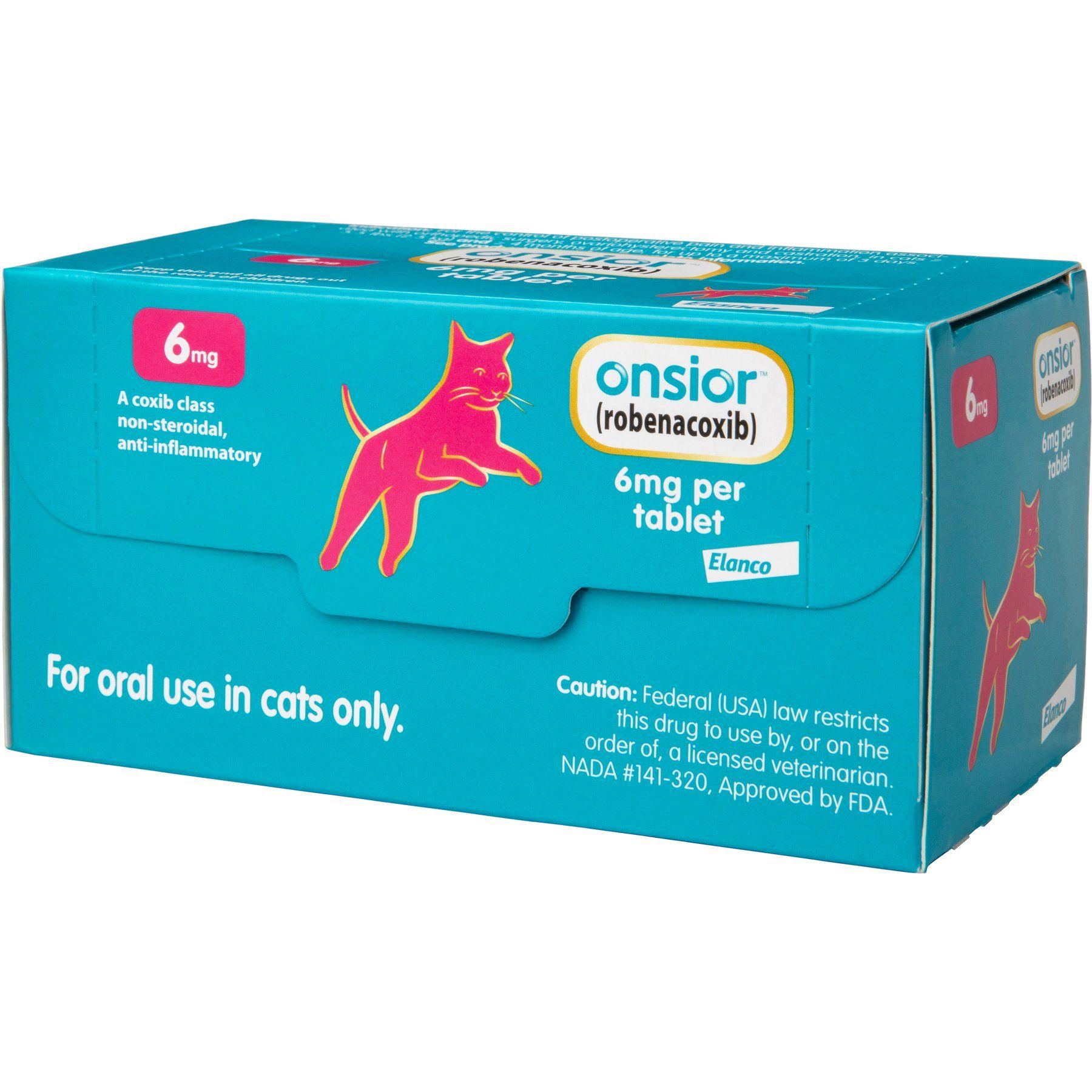
The 6 mg Onsior blister card of 3 tablets, filled only against a veterinarian's prescription for a cat 5.5 lbs or heavier.
Webvet may earn a commission when you click through to Chewy, at no extra cost to you.
Onsior dosage for cats by weight
The label's Onsior dosing chart sets whole tablets by weight band. Your veterinarian chooses the exact dose, the start time, and the number of days, and you give exactly what the vet prescribed. Never change, extend, or restart a course on your own.
| Weight band | What the FDA label states | Form | Kidney and safety note |
|---|---|---|---|
| Under 5.5 lbs (under 2.5 kg) | Do not use; cats this small cannot be accurately dosed | Not applicable | Ask the vet about a different pain plan |
| 5.5 to 13.2 lbs (2.5 to 6 kg) | 1 whole tablet once daily, maximum 3 days | 6 mg tablet, not scored, not broken | Baseline bloodwork first; higher risk with kidney, liver, or heart disease or dehydration |
| 13.3 to 26.4 lbs (6.1 to 12 kg) | 2 whole tablets once daily, maximum 3 days | Two 6 mg tablets, may need two blister cards | Same kidney and dehydration cautions; never more than one dose per day |
| Clinic injection, cats 4 months or older | 0.91 mg/lb (2 mg/kg) under the skin once daily, maximum 3 days | 20 mg/mL injection given by the vet team | Injection and tablet doses differ; combined total stays at 3 doses over 3 days |
The US label states the dose as 0.45 mg/lb (1 mg/kg) by mouth once daily, for a maximum of 3 days. Because each tablet holds a fixed 6 mg, the label turns that dose into whole-tablet weight bands. The tablets are not scored, and the label says they should not be broken.
Timing details matter too. The label says the first dose goes in about 30 minutes before surgery, with the pre-anesthetic drugs. Your cat may already have had a dose in the hospital, and the owner sheet allows no more than one dose a day, for a maximum of 3 total doses.

Regulators describe the dose slightly differently. The US label states 1 mg/kg once daily. The UK Veterinary Medicines Directorate summary of product characteristics for the same 6 mg tablet gives 1 mg/kg with a range of 1 to 2.4 mg/kg, using the same two weight bands. Either way, the vet works from the cat's measured weight.
Before any NSAID, the label asks for a full history, a physical exam, and baseline blood tests, and it tells vets to use the lowest effective dose for the shortest time. Owners may read about longer courses, which come from other countries' labels; the US course stops at 3 days.
If your cat resists tablets, a soft treat molded around the whole tablet is one technique VCA Animal Hospitals suggests. The Onsior for Cats, 6-mg, 3 tablets pack is a prescription item, and a pill treat only helps deliver the tablet; it does not replace the vet's instructions on dose or timing.
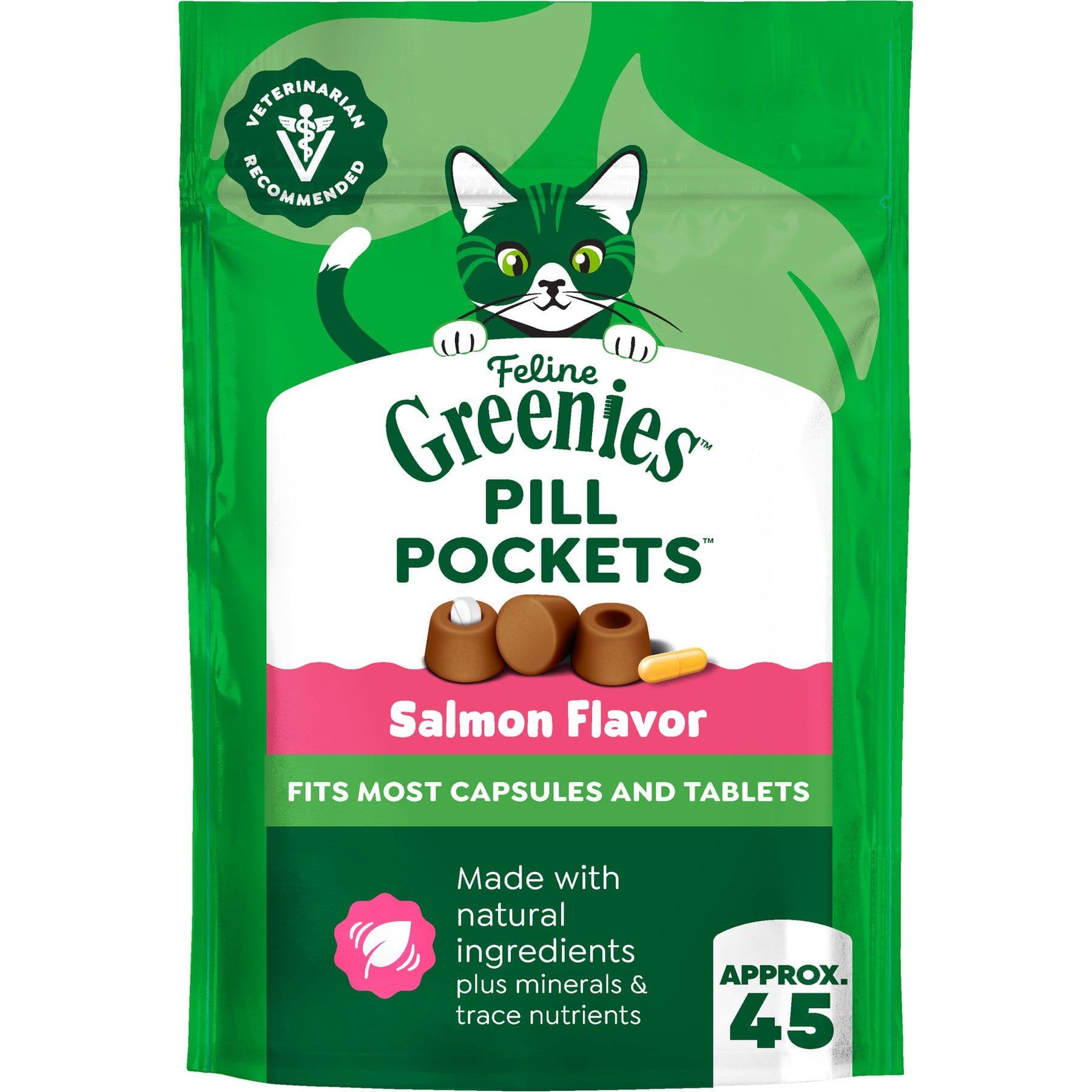
Soft salmon-flavored treat pouches that can wrap a whole Onsior tablet for a cat that refuses pills.
Webvet may earn a commission when you click through to Chewy, at no extra cost to you.
What Onsior is used for in cats and how long it lasts
In the US, Onsior's approved uses are short and specific. The label covers pain and inflammation after orthopedic surgery (declaw), ovariohysterectomy (spay), and castration (neuter). The field study behind that approval enrolled 249 cats having a spay or neuter together with a front-paw declaw.

Spay surgery is exactly what the label was built around. The vet usually gives the first dose before surgery, then sends the remaining tablets home in the dispensing envelope. Rest, a quiet room, and incision protection matter just as much during cat neuter recovery and spay recovery.
For a cat recovering at home, a heated resting spot such as the K&H Pet Products Thermo-Pet Cuddle Cushion Mocha Pet Bed gives a soft, warm place to sleep off the anesthetic. It is a comfort item only and does not replace the prescribed pain medication or the vet's recheck.
How fast does Onsior work, and how long does it last? It starts working within about 30 minutes to 2 hours, and one daily dose covers about a day. The label and VCA Animal Hospitals give these figures:
- Onset: about 0.5 hours in a cat inflammation model, per the label; VCA says about one to two hours for visible effect
- Peak blood level: about half an hour after a tablet
- Time in the blood: a terminal half-life of about 1.7 hours after a tablet
- Time in inflamed tissue: a median half-life of about 27 hours, versus 2.5 hours in blood, which is why one daily dose covers the day
- Wearing off: VCA says the drug should stop working in a few days, longer in pets with liver or kidney disease
Fever and urinary tract infection (UTI) are not on the US or UK label. The FDA label mentions fever-reducing activity only in a lab inflammation model. A cat with a fever or urinary signs needs a vet exam to find the cause before any pain medicine.
Arthritis is a different story, and the sources disagree on its status:
- The UK summary of product characteristics lists acute and chronic musculoskeletal pain in cats, with acute problems treated for up to 6 days.
- VCA Animal Hospitals calls robenacoxib for musculoskeletal inflammation off label in the US.
- The Merck Veterinary Manual states that robenacoxib is approved for musculoskeletal disorders in cats in both the US and the EU.
The current US tablet label lists only postoperative use, so any arthritis use in the US is your vet's decision, made with monitoring. For chronic cases, the UK document says a response is normally seen within 3 to 6 weeks, and treatment should stop after 6 weeks if there is no improvement.
When the vet is managing joint pain, home changes support the plan. The Pet Gear Pet Step Cat & Dog Stairs, Essential Grey, Pet Step III let a stiff cat reach a bed or sofa without jumping. See arthritis relief for cats: 9 ways you can help; none of these replace the vet's pain plan.
Onsior side effects in cats, including sleepiness
The owner sheet says Onsior side effects are normally mild, though serious ones have been reported with NSAIDs. The challenge is telling normal post-surgery recovery apart from a drug reaction, especially in the first day home.

Does Onsior make cats sleepy? Sleepiness after surgery is usually the anesthetic. VCA Animal Hospitals says anesthetic and sedative drugs can leave a cat drowsy for about a day, and that many cats are sleepy or tired for 12 to 24 hours after anesthesia. Normal behavior should return gradually over 24 to 48 hours.
Onsior itself can contribute. In the label's field study, decreased activity or lethargy was recorded in 4 of 167 cats given Onsior, compared with 1 of 82 cats given a placebo. The label says to stop Onsior if a cat becomes lethargic, so a cat getting duller rather than brighter needs a call.
The field study, which included 249 cats, recorded these Onsior side effects in cats (Onsior group of 167 versus placebo group of 82):
- Incision site bleeding: 7 versus 1
- Incision site infection: 6 versus 2
- Poor appetite or weight loss: 4 versus 2
- Decreased activity or lethargy: 4 versus 1
- Vomiting: 4 versus 1
- Bladder inflammation or blood in the urine: 3 versus 0
- Blood in the stool or diarrhea: 3 versus 1
After approval, voluntary reports to the FDA listed these signs, from most to least frequent. The label notes such reports cannot reliably show how often a reaction happens or prove the drug caused it.
- Poor appetite
- Depression or lethargy
- Vomiting
- Raised kidney blood values (BUN and creatinine)
- Kidney insufficiency or failure
- Diarrhea, weight loss, and dehydration
Some deaths were reported, some in cats that developed kidney failure. The UK document rates vomiting and diarrhea as common, affecting 1 to 10 cats in every 100 treated, and rates raised kidney values and lethargy as very rare, more often in older cats and when anesthetic or sedative drugs are given at the same time.
Because bleeding and infection at the surgery site led the field study list, keeping a cat from licking or chewing the incision is part of the recovery plan. A soft recovery cone is one way to do that; it protects the wound but adds no pain relief, so the prescribed Onsior course still applies.
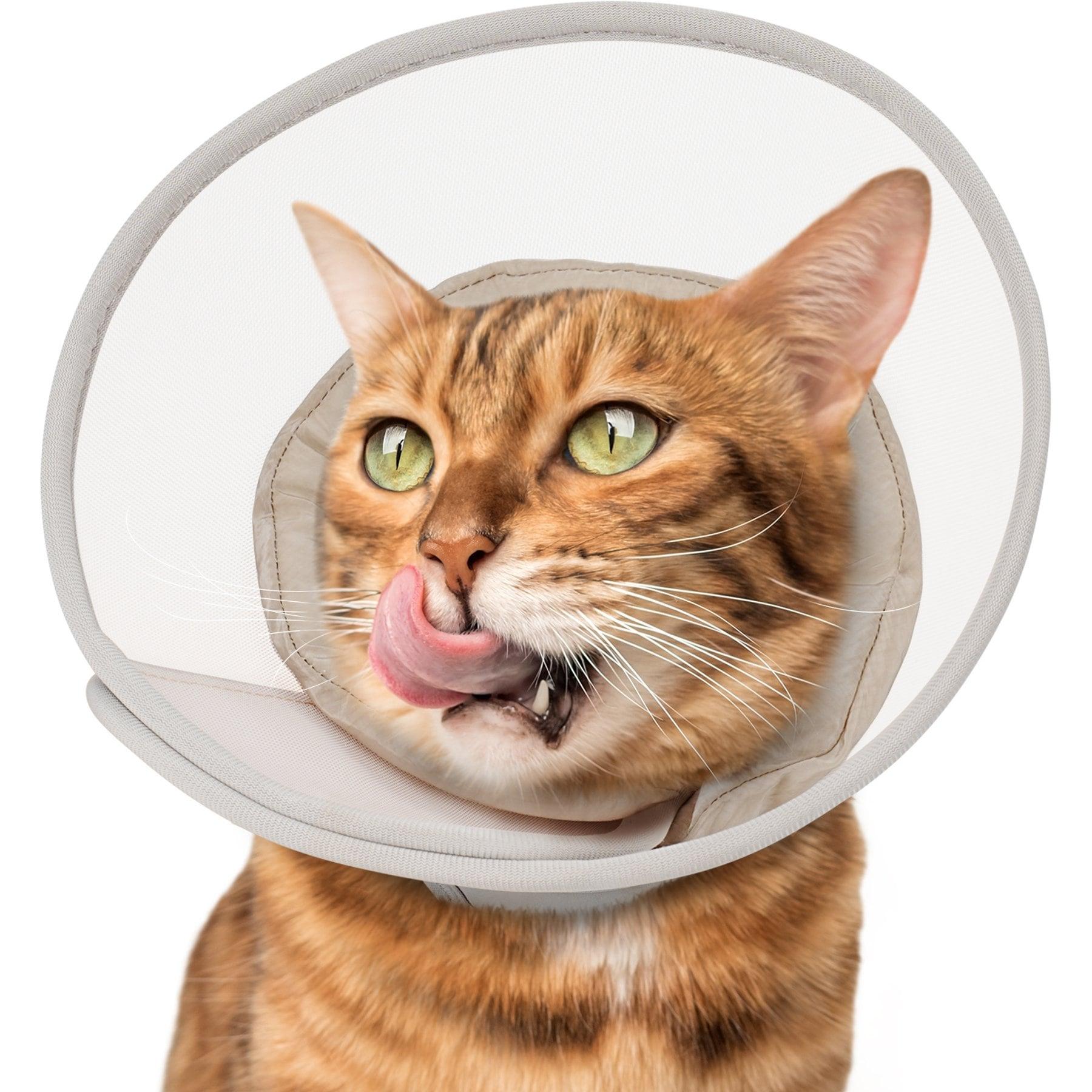
A padded mesh recovery cone that keeps a cat from licking a spay or neuter incision during the Onsior course.
Webvet may earn a commission when you click through to Chewy, at no extra cost to you.
Two less common effects appear on the US label. Seizures, wobbly walking (ataxia), and flicking eye movements (nystagmus) have been associated with Onsior. Robenacoxib can also lengthen the QT interval on a heart tracing, and the label says the risk of a dangerous heart rhythm from that is unknown.
The label's laboratory safety studies in healthy young cats show what happens well above the label dose:
- At 10 times the maximum tablet exposure for 21 days, all cats survived, but some vomited or were less active, and two showed abnormal hind-leg nerve function.
- In a 6-month study at up to 5 times the label exposure, vomiting, decreased activity, and soft stools were the most common findings, and the QT interval lengthened with dose.
- Kidney weights were lower in treated groups than in untreated cats in these studies.
The label adds that a cat that reacted badly to one NSAID may react to another, so tell the vet about any past reaction to meloxicam or another anti-inflammatory.
Keeping track of each dose protects against the most avoidable problem, an accidental extra dose. The label asks the clinic to record the first dose on the dispensing envelope, which has check boxes for Day 1, Day 2, and Day 3, and the owner sheet allows no more than one dose a day.
A cat can stay drowsy for about a day after anesthesia, with normal behavior returning over 24 to 48 hours, so a quiet, warm, draft-free bed away from other pets helps them rest. A bed is a comfort item only; it does not replace the prescribed pain medication or the vet's recheck.
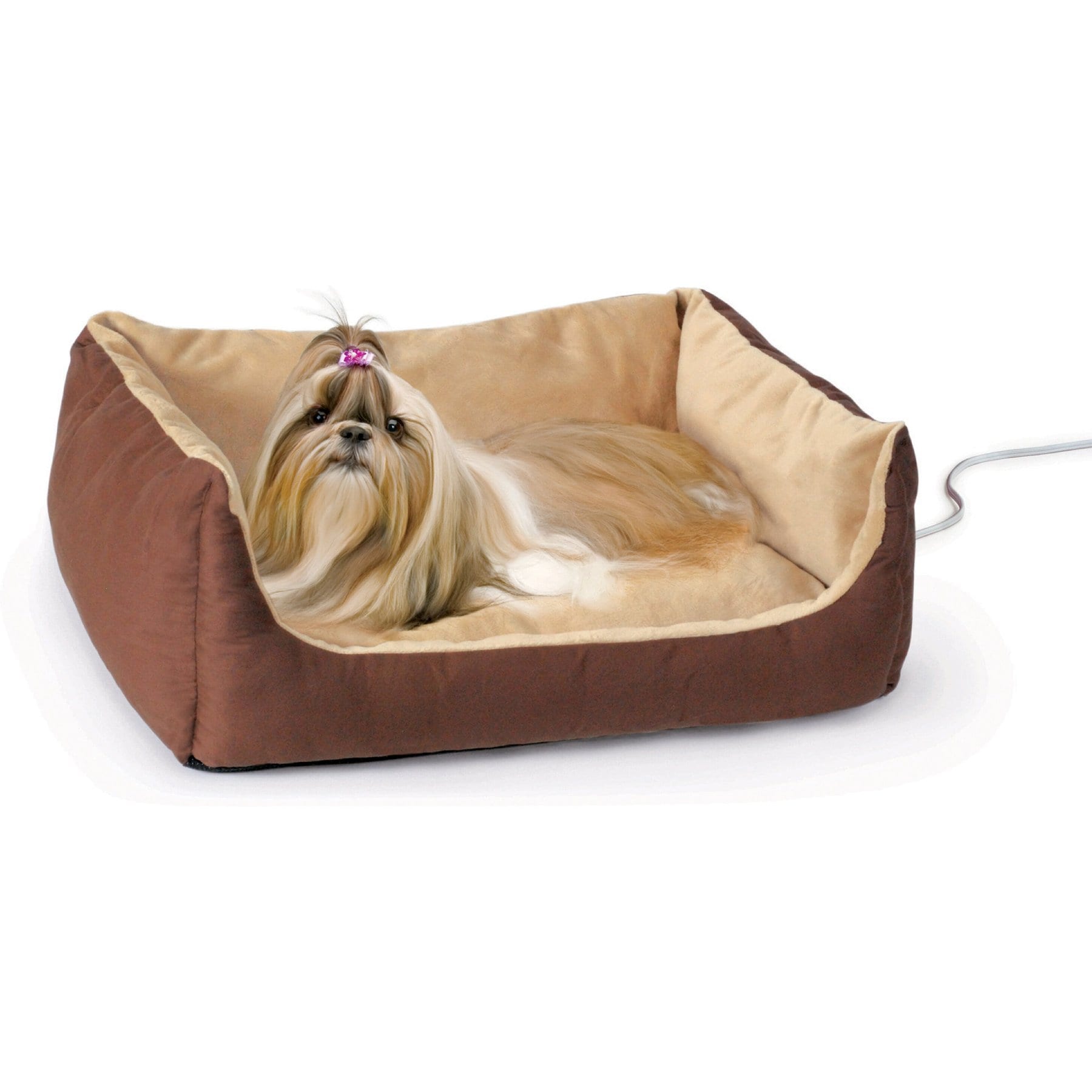
A thermostatically controlled heated bolster bed that warms when the cat lies down, giving a recovering cat a soft, quiet place to rest; a comfort item, not pain relief.
Webvet may earn a commission when you click through to Chewy, at no extra cost to you.
Pain itself also changes how a cat acts, so a quiet cat is not always showing a drug effect. The signs to look for are covered in how to tell if a cat is in pain, and a cat that still seems sore on Onsior should be seen by the vet.
SponsoredVet care that's always there
Unlimited video calls and messaging with licensed vets for less than a typical vet visit. One membership covers up to five pets.
Use code Pets60
Plans start at $12/month · covers up to 5 pets
- Licensed vets in most states
- Rx for 150+ conditions
- 4.7 on Trustpilot
When to stop Onsior and call the vet now
The Onsior owner information sheet lists the signs to watch for at home:
- Decrease in appetite
- Vomiting
- Diarrhea or a change in stool color
- A change in drinking or urination
- A change in behavior, such as depression or restlessness
The full label adds dark or tarry stools, anemia, yellowing of the gums, skin, or whites of the eyes (jaundice), incoordination, and seizures. VCA Animal Hospitals adds weakness and severe vomiting or diarrhea to the list of signs that mean stop the drug and contact the vet immediately.
The label is reassuring on one point: most cats with a drug reaction recover when the signs are spotted early, the drug is stopped, and veterinary care starts. That is why the owner sheet asks you to stop and call rather than wait to see whether the signs pass.
Call right away in these situations too:
- Your cat eats more than the prescribed amount, for example by getting into the blister card: the label says contact the vet immediately.
- Your cat is unusually sluggish or hard to wake after surgery: VCA Animal Hospitals says contact the hospital immediately.
- A person swallows a tablet: the label says call a physician immediately.
Elanco's adverse event line printed on the label is 1-888-545-5973, for reporting a suspected reaction after your cat has been seen.
Drug interactions and cats that should not take Onsior
Is Onsior safe for cats? For most healthy cats having routine surgery, the label's field study supports short-term use. Safety depends on screening first, which is why the label asks for an exam and baseline blood tests before any NSAID.
The bold label warning is the key interaction rule: never give Onsior with any other oral or injectable NSAID or corticosteroid. The owner sheet names aspirin, meloxicam, and prednisone. The UK document asks for at least 24 hours without other anti-inflammatory drugs before Onsior starts.
The FDA label and the VCA robenacoxib page flag these other drug groups:
- Drugs that lengthen the QT interval, including antihistamines, prokinetic gut drugs, and certain anesthetic drugs
- Protein-bound drugs such as heart, anticonvulsant, and behavioral medications, which have not been studied with Onsior in cats
- Drugs that can harm the kidneys, and diuretics such as furosemide
- Cyclosporine, fluoxetine and other SSRIs, and tricyclic antidepressants such as amitriptyline and clomipramine
Meloxicam is a common point of confusion because it is another NSAID used in cats. The Merck Veterinary Manual notes that in the US it is not approved for cats beyond a single injection and carries a black box warning; its effects and downsides are covered in meloxicam for dogs and cats.
Can you give a cat gabapentin and Onsior at the same time?
Yes, vets can prescribe gabapentin and Onsior together. The label does not list gabapentin among drugs to avoid, and it says that if more pain relief is needed, a non-NSAID pain medication may be necessary. Gabapentin is not an NSAID. Both can make a cat drowsy, so the vet should know about every drug the cat receives.
Gabapentin for dogs and cats is an extra-label pain and anti-seizure medication, and VCA Animal Hospitals lists sedation and incoordination as its side effects. Opioids are another non-NSAID option: the UK document recommends opioids as add-on pain relief after orthopedic surgery, and buprenorphine for cats is one example.
According to the owner sheet and the label, Onsior should not be given to, or has not been studied in, cats that:
- Have had an allergic reaction to robenacoxib, aspirin, or another NSAID
- Weigh less than 5.5 lbs or are younger than 4 months
- Have a poor appetite, or bloody stool or vomit
- Are already taking aspirin, another NSAID, or a corticosteroid
- Have a pre-existing kidney or liver condition, or anything that predisposes them to dehydration
- Are used for breeding, pregnant, or nursing, or have heart disease (not evaluated)
- Have stomach ulcers, which VCA Animal Hospitals adds to the list
Cats with kidney disease, including chronic kidney disease (CKD), need particular care with Onsior. The label names cats with existing kidney dysfunction, dehydration, or diuretic use among those at greatest risk, and post-approval reports include kidney failure. The UK document says such cats need careful monitoring if use cannot be avoided. See kidney disease in cats.
The label does not address cats with cancer, but it does warn that NSAIDs can cause significant illness in cats with underlying disease that has not been diagnosed, so a cat with cancer needs current bloodwork and a vet's risk review first.
Long-term use is not part of the US label, which stops at 3 days. The UK document says most cats tolerated robenacoxib for up to 12 weeks in field studies, and VCA Animal Hospitals says extended treatment needs periodic liver and kidney blood tests.
How to give Onsior tablets, the clinic injection, and what it costs
Giving Onsior comes down to three label rules: give it by mouth, give the whole tablet without crushing or splitting it, and give it with or without food. VCA Animal Hospitals adds that if a cat vomits after an empty-stomach dose, future doses go with food. Wash your hands afterward.
VCA's pilling advice describes technique only, never the amount:
- Hide the whole tablet in a small amount of wet food or a soft, moldable treat such as Greenies Pill Pockets Feline Natural Salmon Flavor Soft Adult Cat Treats, 45 count.
- If the cat eats around it, hold the head from above, tilt the nose up, and let the jaw drop open slightly.
- Place the tablet far back over the tongue, close the mouth, and return the head to normal.
- Follow with a little water from a syringe or a tasty liquid to help it go down.
- For a cat that bites, a device such as the Dee Pet Piller for Dogs & Cats, 1 count delivers the tablet to the back of the mouth.
The dispensing envelope's Day 1, Day 2, and Day 3 check boxes are the dose record; tick one each time, and keep the tablets in their blister card until they are given.
The Onsior injection is given by the vet team, not at home. The Onsior injection label sets 0.91 mg/lb (2 mg/kg) under the skin once daily, for up to 3 days, in cats at least 4 months old. Tablets and the injectable can be swapped day to day, but the doses differ.
The injection label notes that some cats show inflammation at the injection site, and that long-term use of the injectable has not been studied.

Store the blister card at controlled room temperature, 59 to 77°F (15 to 25°C), out of reach of children and pets, and keep any unused tablets in the dispensing envelope with the owner sheet. VCA Animal Hospitals adds never to give two doses at once, and never to give one pet's Onsior to another.
What can I give my cat for an anti-inflammatory?
Only an anti-inflammatory your vet prescribes, such as Onsior after surgery. Human pain relievers are dangerous for cats: the Merck Veterinary Manual says acetaminophen (paracetamol) in cats is associated with anemia, liver failure, and death, and cats clear aspirin slowly. Never give a cat any pain medicine from your own cabinet.
As for where to buy it, there is no legal way to get Onsior without a vet prescription. Your clinic can dispense it, or Chewy Pharmacy can fill Onsior for Cats, 6-mg, 3 tablets with your vet's prescription. That 3-tablet card was listed at $14 on Chewy when checked in November 2026.
The total cost to an owner usually includes more than the tablets, such as the exam, baseline bloodwork, and any in-clinic injection, which vary by clinic. A generic robenacoxib tablet is now FDA approved, so ask the vet whether a generic is an option where you buy.
Onsior for cats questions
Frequently Asked Questions
Can you crush Onsior for cats?
No. The FDA label says Onsior tablets are not scored and should not be broken, so do not crush them either. Give each whole tablet as the vet directed, and call the clinic if your cat cannot swallow it.
Does Onsior make cats sleepy?
It can, but most sleepiness after surgery comes from the anesthetic, which can leave a cat sleepy for 12 to 24 hours. In the label's study, lethargy was recorded in 4 of 167 cats on Onsior. A cat that is getting sleepier instead of brighter, or is hard to wake, needs a call to the vet.
How long does Onsior last in cats?
Each dose covers about a day. Robenacoxib leaves the blood within hours but lingers in inflamed tissue, with a half-life there of about 27 hours. A US course is one dose a day for no more than 3 days, and VCA Animal Hospitals says the effect wears off within a few days.
Is Onsior safe for cats with kidney disease?
Not usually. The owner sheet says cats with a pre-existing kidney condition should not be given Onsior, and kidney failure appears in post-approval reports. Vets run bloodwork and a urinalysis before any NSAID to check for hidden kidney problems.
Can you get Onsior for cats without a vet prescription?
No. US federal law restricts Onsior to use by or on the order of a licensed veterinarian. The veterinarian also needs to examine your cat and check baseline bloodwork first, and any pharmacy can fill it only with a valid prescription.
Can my cat take Onsior after spaying?
Yes. Pain after spay surgery is one of the uses the FDA label covers, along with neuter and declaw surgery, for cats at least 5.5 lbs and 4 months old. Keep your cat from licking the incision, using the cone or recovery suit the clinic provided, and watch the wound and appetite each day.
Does Onsior help a cat with a fever?
Onsior is not labeled for fever. Robenacoxib reduced fever in a lab inflammation model, but a fever is a sign of an underlying problem that needs a diagnosis. Have a veterinarian examine a cat with a fever rather than relying on a leftover pain medicine.
Is there a generic version of Onsior for cats?
Yes. The FDA has approved the first generic robenacoxib tablets for cats, found bioequivalent to Onsior and approved for the same postoperative use. A generic robenacoxib injection for cats and dogs has also been approved. Both still require a veterinarian's prescription.
Veterinarian · BVMS MRCVS
Dr. Pippa Elliott, BVMS, MRCVS, is a veterinarian with nearly 30 years of experience in companion animal practice. Dr. Elliott earned her Bachelor of Veterinary Medicine and Surgery from the University of Glasgow. She was also designated a Member of the Royal College of Veterinary Surgeons. Married with 2 grown-up kids, Dr. Elliott has a naughty Puggle named Poggle, 3 cats and a bearded dragon.


