Buprenorphine for Cats: Uses, Dosage, and Side Effects
Buprenorphine is a prescription opioid pain medicine vets use for cats after surgery, dental work, and injuries. This guide covers each form and who gives it, how the dose is set, side effects, overdose signs, safe storage, and cost.

BVMS MRCVS
Medically reviewed by Dr. Pippa Elliott, BVMS MRCVS · Last reviewed

Drug facts
Buprenorphine for Cats· Buprenorphine
Buprenorphine is a prescription opioid pain medicine for cats, used mainly after surgery such as spay, neuter, and dental work. Simbadol injection and Zorbium transdermal solution are FDA-approved for cats; standard-strength buprenorphine is used extra-label as a clinic injection or an oral liquid placed in the cheek.
 Sponsored
Is Buprenorphine for Cats right for your cat?
A licensed vet at Dutch can assess your cat over video and prescribe treatment when it's appropriate, delivered to your door.
Use code Pets60
Plans start at $12/month · covers up to 5 pets
- Licensed vets in most states
- Rx for 150+ conditions
- 4.7 on Trustpilot
Buprenorphine for cats is a prescription opioid pain medicine that vets use after surgery, dental work, and other painful procedures. It is a controlled substance, so a cat can only get it on a veterinarian's order, and only the vet sets the dose.
A cat may receive it as a clinic injection such as Buprenex or a generic, the long-acting Simbadol injection, Zorbium transdermal solution on the skin, or an oral liquid placed in the cheek. Sleepiness and wide pupils are common. Severely slowed breathing is not, and it makes today a vet day: call the clinic right away.
Buprenorphine for cats: what it treats, its controlled-drug status, and whether today is a vet day
- 1What buprenorphine treats: mild to moderate pain, most often after spay, neuter, and dental surgery.
- 2Who gives each form: the vet team gives the injections and the transdermal solution in the clinic; owners give the oral liquid at home only as the vet shows them.
- 3Only the vet sets the dose; never give extra, double up, or stop early without asking.
- 4Sleepiness and dilated pupils are expected; severely slowed breathing is an emergency.
Two buprenorphine products are FDA-approved for cats, and knowing who gives each form explains most of what owners see. The Simbadol label covers postoperative pain from surgery, and the FDA approved Zorbium transdermal solution in January 2022 for pain after surgery. Buprenex and its generics are human injections used extra-label, which VCA Animal Hospitals describes as common in veterinary medicine.
Many cats meet buprenorphine around a spay or neuter, the surgeries in the cat label studies. The cat spay recovery and cat neuter recovery plans both include keeping the cat off the incision.
The Supet Mesh Soft Pad Cat Recovery Cone is a padded, lightweight mesh cone for that job, listed at $16.99 on Chewy when checked in November 2026. A softer fabric option is the WZ PET Adjustable Waterproof Soft Cone Recovery Elizabethan Collar for Cat, Medium. A cone does not replace the prescribed pain medicine or the vet exam.
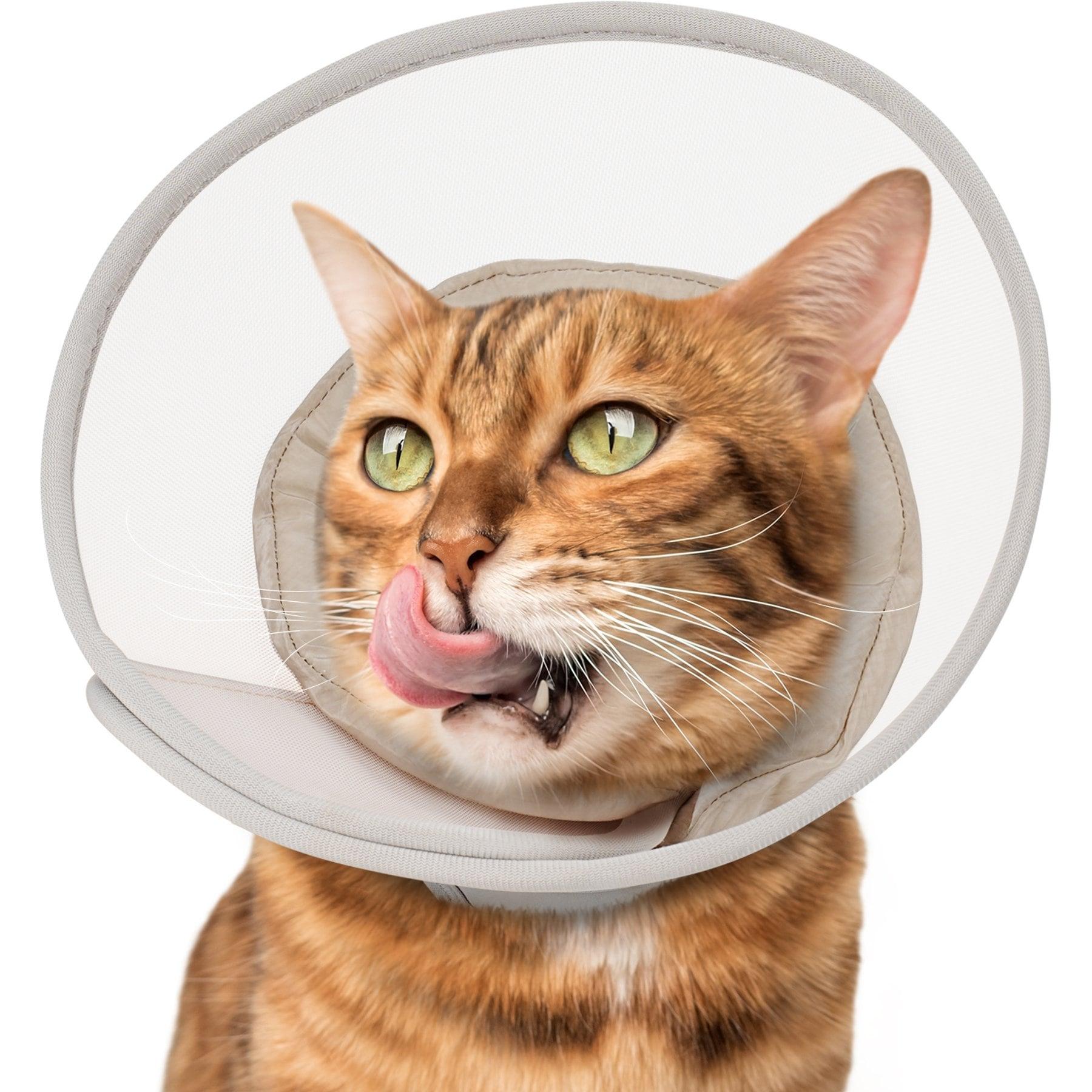
A soft mesh cone that keeps a cat off its incision while it recovers on vet-prescribed pain relief.
Webvet may earn a commission when you click through to Chewy, at no extra cost to you.
Every buprenorphine product is a Schedule III controlled substance. Veterinary Partner notes that specific paperwork is needed to prescribe it, which is why it comes from the clinic or a pharmacy filling the vet's prescription.
Is today a vet day? VCA lists severely decreased breathing as an uncommon but serious effect. Rare reactions in cats include behavior changes, a raised heart rate or temperature, and vomiting. Any of those in a cat on buprenorphine is a reason to phone the clinic today.

What is the pharmacology of buprenorphine?
Buprenorphine is a partial mu-opioid agonist: it binds the mu opioid receptor, which relieves pain, without producing the full response of morphine. The Zorbium label says it binds tightly and lets go slowly, so its effects do not track blood levels. That label credits it with a ceiling effect and a wider safety margin than full agonists.
Sources differ on that ceiling. A review of buprenorphine studies in cats by Steagall and colleagues found no ceiling effect demonstrated at clinical doses in cats, and describes a delayed onset with moderate, long-acting pain relief and few adverse effects. The liver clears the drug, mostly into the feces, according to the Simbadol label.
Buprenorphine dosage for cats by form and weight: what the vet works within
Buprenorphine dosage for cats is set by the vet for each cat, from its weight, the form, and the procedure, so there is no dose to look up and give at home. Each form has a different label basis and a different person giving it.
The oral liquid is the form most often given at home, and VCA explains that it is absorbed through the gums, so it never goes in food. Tablets sent home alongside it, such as an NSAID, are different. Greenies Pill Pockets Feline Natural Salmon Flavor Soft Adult Cat Treats, 45 count are soft treats made to wrap one, listed at $6.62 on Chewy when checked in November 2026. They do not replace any prescribed medicine.
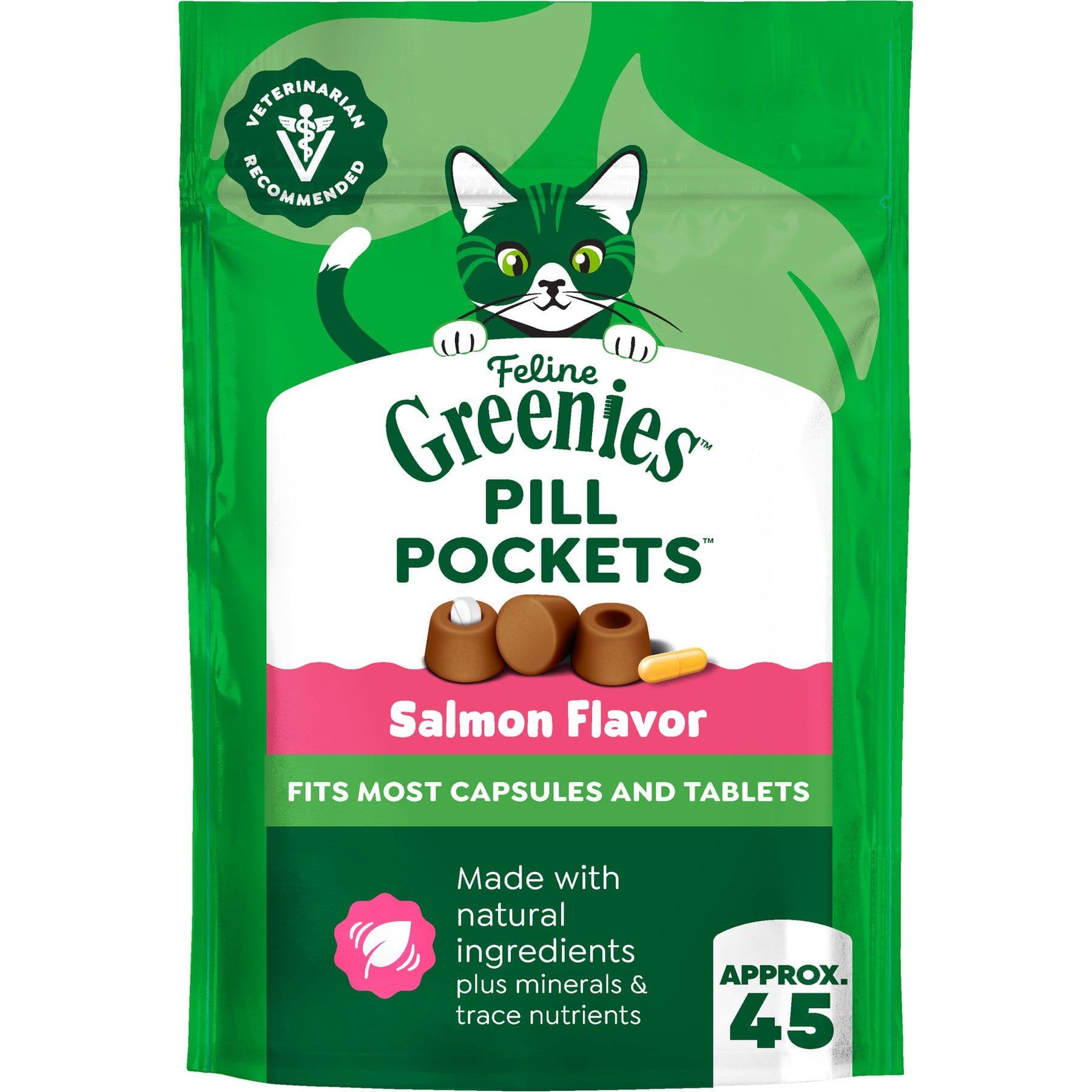
Salmon-flavored soft treats for hiding the tablets that often go home alongside buprenorphine after surgery.
Webvet may earn a commission when you click through to Chewy, at no extra cost to you.
Weight shapes every form. Zorbium tube size follows the cat's weight band, Simbadol is measured per kilogram, and the oral liquid volume is worked out from a current weight taken at the clinic. Here is each form with who gives it and where, the label basis, and how long it lasts.
| Form | Who gives it and where | What the label or reference states | How long it lasts |
|---|---|---|---|
| Simbadol injection, 1.8 mg/mL (FDA-approved for cats) | Veterinarian or veterinary technician, in the clinic | 0.24 mg/kg (0.11 mg/lb) under the skin once daily for up to 3 days; first dose about 1 hour before surgery (Simbadol label) | 24 to 28 hours per dose (Simbadol label) |
| Zorbium transdermal solution, 20 mg/mL (FDA-approved for cats) | Veterinary team, in the clinic, on the skin at the base of the skull; not dispensed for home use | 2.6 to 6.6 lb: 0.4 mL (8 mg) pink tube; over 6.6 to 16.5 lb: 1 mL (20 mg) green tube; applied once, 1 to 2 hours before surgery (Zorbium label) | 4 days from one application (Zorbium label) |
| Standard-strength injection, 0.3 mg/mL (Buprenex and generics, human drug used extra-label) | Veterinary team, in the clinic, into a vein or muscle | 0.02–0.04 mg/kg IV or IM (2022 ISFM guidelines); under-the-skin use of this strength not recommended | Up to 8 hours (2022 ISFM guidelines) |
| Oral liquid placed in the cheek pouch (standard strength, extra-label) | Owner at home, after the vet demonstrates | 0.02–0.04 mg/kg by oral transmucosal route (2022 ISFM guidelines); how often is set on the prescription label | Up to 8 hours (2022 ISFM guidelines) |
The 2022 ISFM Consensus Guidelines on acute pain in cats give the mg/kg ranges vets work within for the standard 0.3 mg/mL strength. They are per kilogram, not per pound, and they are not a home chart. The cat labels do give per-pound figures, Simbadol's 0.11 mg/lb and Zorbium's weight-band tubes, but both products are clinic-only.
What no reference replaces:
- a printed dosage chart by weight cannot stand in for the vet's calculation
- an online calculator cannot work out the volume, because the volume in mL depends on the liquid's strength, and standard and compounded products differ
- how often and how long to give each dose is set on the prescription label

How much buprenorphine can I safely give my cat?
Only the exact amount your vet prescribed is safe to give, at the times on the label. VCA says to measure liquid doses carefully because buprenorphine is potent, and never to give two doses at once or extra doses. Veterinary Partner does not publish doses online. If pain seems uncontrolled, call the vet rather than giving more.
What buprenorphine is used for in cats: surgery, dental pain, injuries, and chronic pain
What buprenorphine treats is pain, and the labeled use of both cat products is pain after surgery. In the Simbadol field studies, cats had soft tissue surgery or orthopedic procedures, including castration and ovariohysterectomy. The Zorbium field study enrolled cats having reproductive sterilization together with forelimb onychectomy (declawing of the front paws). Pain relief after a spay or neuter is therefore one of its most common jobs.
The ISFM guidelines place buprenorphine in the mild to moderate pain group, alongside castration, ovariohysterectomy, small mass removal, and osteoarthritis. They add that it gives adequate relief for dental and neutering procedures when combined with an NSAID, but is not enough on its own after major orthopedic surgery.
The label evidence is solid. Simbadol was tested in two field studies covering 450 cats. In the Zorbium study, 113 cats got the drug and 109 got a placebo solution, and the FDA reports that more treated cats had adequate pain control for 4 days after surgery.

Other uses are vet decisions made case by case:
- Injuries: Veterinary Partner calls buprenorphine a good choice for pain management once a patient is stable enough to return home, so a cat treated for a painful injury may go home with the oral liquid.
- Urinary pain: Veterinary Partner's cystitis guide lists butorphanol or buprenorphine as pain relievers for idiopathic cystitis; a vet exam separates that from a UTI.
- Mouth pain: dental extraction pain is covered in the ISFM guidance; no label addresses stomatitis, so any use there is extra-label.
- Cancer: the ISFM grouping includes small mass removal; no label covers ongoing cancer pain.
- Anxiety: buprenorphine is a pain medicine, not an anti-anxiety drug.
Vets judge whether pain is controlled with tools such as the feline grimace scale. Its developers, Evangelista and colleagues, score five facial features: ear position, orbital tightening, muzzle tension, whiskers change, and head position. In their validation study, scores after pain relief were lower than before, which is how a vet sees buprenorphine working.
For arthritis, the Merck Veterinary Manual notes that oral opioids are likely less helpful than other oral medicines because little is absorbed when swallowed. Home comfort still matters; arthritis relief for cats starts with easy access. The KittyGoHere Senior Cat Litter Box, Green, Small has a three-inch entry, listed at $36.95 on Chewy when checked in November 2026.
A warm, padded resting place helps a stiff cat settle. The Mora Pets Self-Heating Reversible Cat Pad, Grey, Small reflects the cat's own body heat with no cord, listed at $18.56 on Chewy when checked in November 2026. Neither product treats pain or replaces the vet's pain plan.
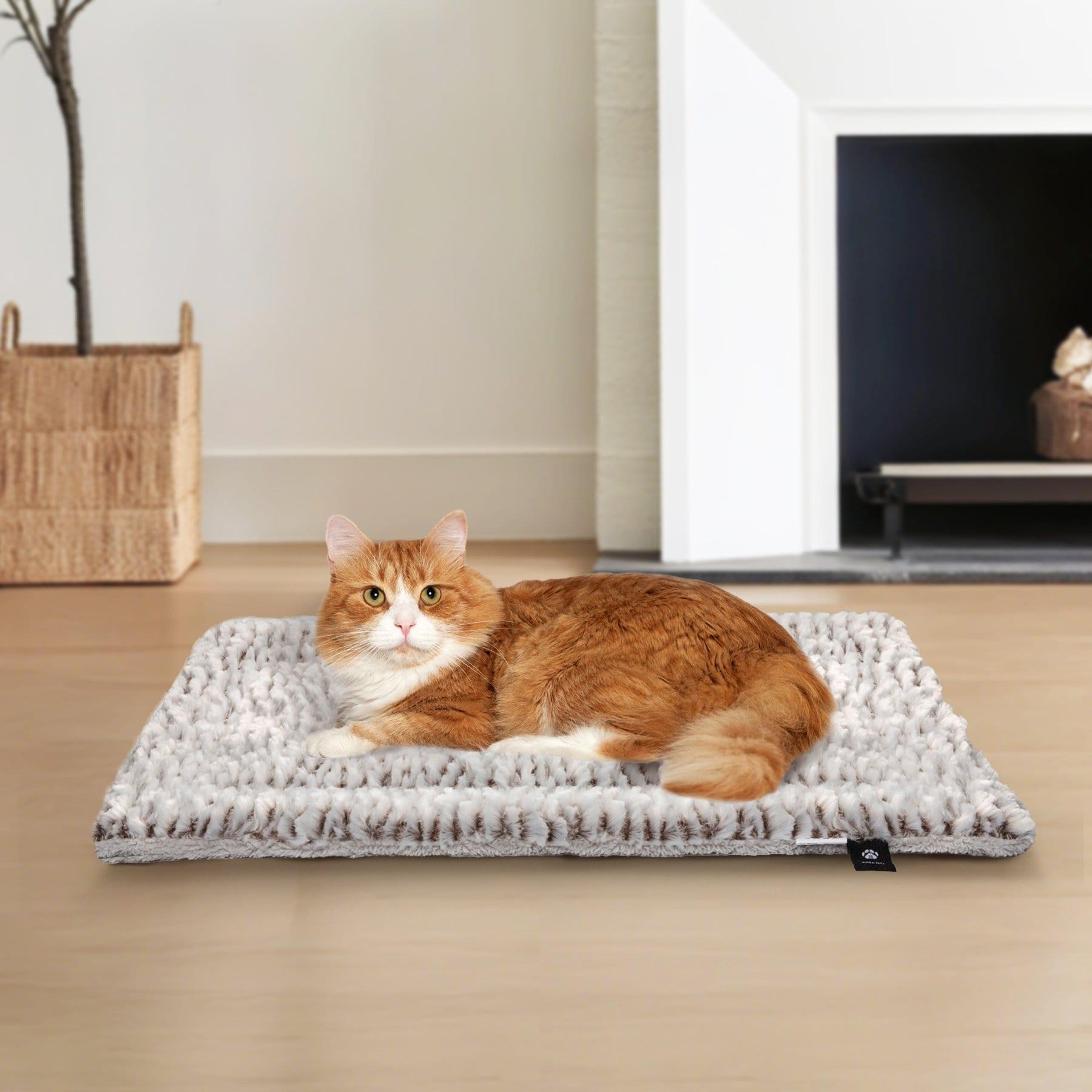
A cordless self-warming pad that gives a stiff cat a soft resting spot alongside the vet's pain plan.
Webvet may earn a commission when you click through to Chewy, at no extra cost to you.
Buprenorphine side effects in cats
Most buprenorphine side effects in cats are expected and short-lived. VCA lists sleepiness as the most common, plus pain at the injection site when it is injected. The oral liquid has the same side effect list; the route changes where it is absorbed, not what it does.
The cat labels give real numbers:
- High temperature: after recovery, 74.3% of Zorbium cats had hyperthermia versus 56.9% of control cats, falling from 66.4% on Day 0 to 6.2% by Day 4.
- Wide pupils: mydriasis appeared in about half of cats within 24 hours of a Zorbium dose.
- Mood changes: the Zorbium safety studies saw euphoria and mild dysphoria; the Simbadol label notes hyperactivity up to 8 hours after recovery.
- Reports after approval: abnormal behaviors, mydriasis, hyperthermia, anorexia, lethargy, ataxia, and sedation, in that order, per the Simbadol label.
- Handling and urination: in a Simbadol safety study at up to five times the label dose, treated cats were harder to handle, urinated less often, and had dry mouths and dilated pupils.
Appetite can dip after surgery and pain medicine; anorexia is on the Simbadol report list. A cat that stops eating needs a call to the vet, and the cat not eating guide explains why.
Is buprenorphine addictive for cats? The labels describe dependence and abuse risk in people, not in cats on a short course, and that human risk is why the drug is locked up. A buprenorphine overdose is a separate matter: its signs differ from ordinary sleepiness.

Records help the vet read side effects correctly. The Ezy Dose Daily AM/PM Cat Pill Case has two labeled compartments for companion tablets, listed at $4.99 on Chewy when checked in November 2026. It does not replace the prescription label or the vet's instructions.
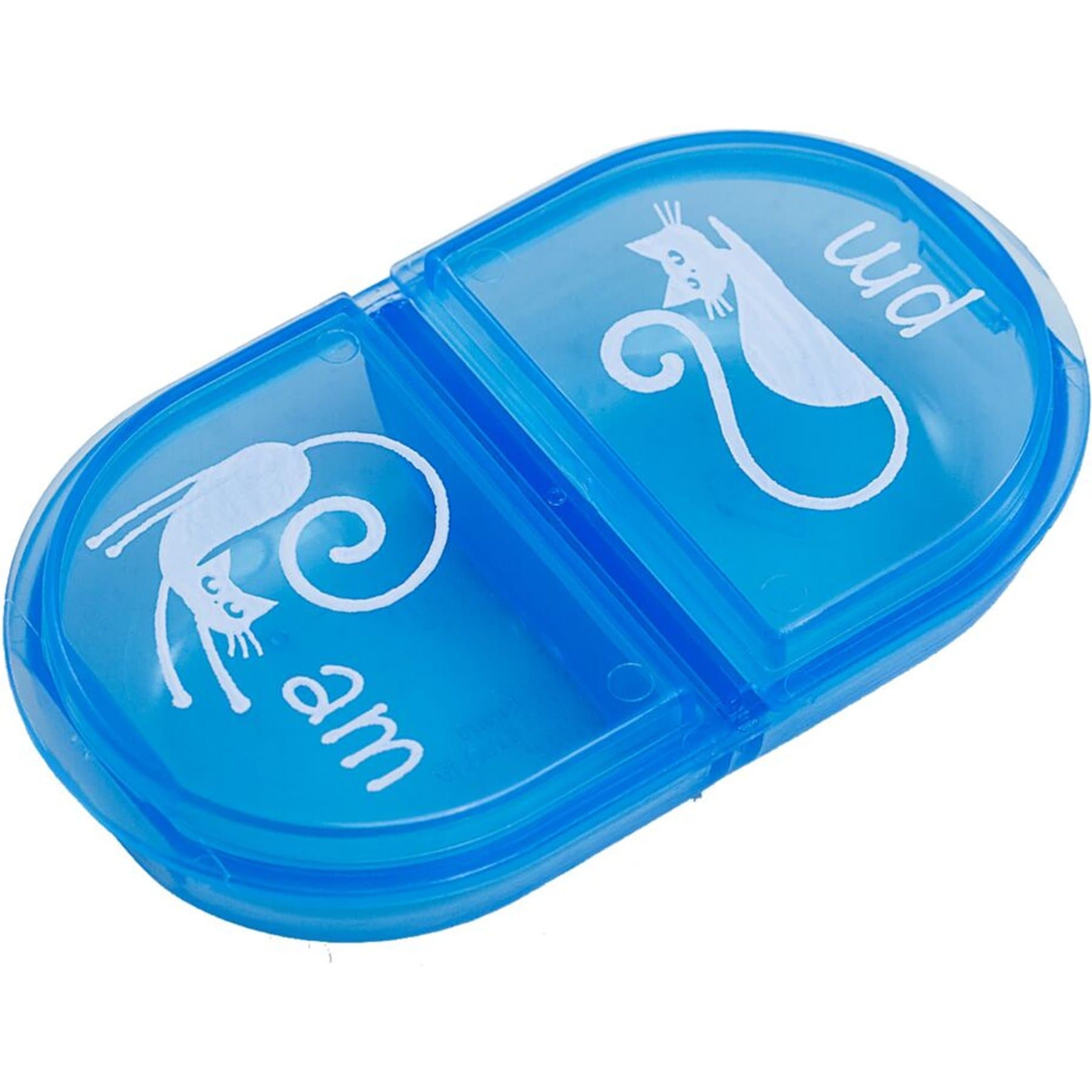
An AM/PM pill case that keeps co-prescribed tablets on schedule so no dose is doubled.
Webvet may earn a commission when you click through to Chewy, at no extra cost to you.
Is buprenorphine constipation in cats?
Yes, mild constipation can happen. In a Zorbium safety study, constipation after the first dose was mild and transient, and three cats needed a laxative. Tell the vet if your cat strains in the litter box or passes no stool; a laxative such as lactulose for cats is used only on the vet's direction.
SponsoredVet care that's always there
Unlimited video calls and messaging with licensed vets for less than a typical vet visit. One membership covers up to five pets.
Use code Pets60
Plans start at $12/month · covers up to 5 pets
- Licensed vets in most states
- Rx for 150+ conditions
- 4.7 on Trustpilot
How does buprenorphine make a cat feel?
Most cats feel relaxed and content. The ISFM guidelines say that at effective opioid doses, dilated pupils, purring, kneading, and euphoria occur. Some cats are restless or hyperactive for a few hours instead, and the Simbadol label notes this up to 8 hours after recovery.
Signs of too much buprenorphine: when to call the vet or emergency clinic now
Sleepiness on its own is expected. In the Simbadol field studies, sedation was seen in 68 cats given buprenorphine and 62 given a placebo, for up to 4 hours after waking from anesthesia. The difference between expected drowsiness and an overdose is breathing.
Call the vet or emergency clinic now for:
- very slow breathing, which VCA lists as a severely decreased breathing rate
- a high body temperature, a racing heart, or vomiting
- behavior changes such as agitation or disorientation
- a dose given twice, or a product a person swallowed or touched
The labels warn that naloxone, the usual opioid reversal drug, may not reverse breathing depression from buprenorphine and can take 30 minutes or more. After Zorbium is applied, the label says to wait at least 30 minutes before touching the application site.
Drug interactions, gabapentin combinations, and cats that need a different pain plan
Buprenorphine is often paired with other pain medicines on purpose. The ISFM guidelines say it gives adequate relief for dental and neutering procedures when combined with an NSAID such as meloxicam for dogs and cats or Onsior for cats. The Steagall review found some spayed cats needed a second dose 4 hours after surgery, especially without an NSAID.
Gabapentin and buprenorphine for cats are also combined. In a randomized trial of 52 cats having ovariohysterectomy, gabapentin plus buprenorphine gave pain relief similar to meloxicam plus buprenorphine on one pain scale. The gabapentin for dogs and cats guide covers that drug.
Drugs that need caution, per VCA and Veterinary Partner:
- amitraz products, which VCA says should not be used with buprenorphine
- benzodiazepines, phenobarbital, and other sedating drugs, including antihistamines, which deepen sedation
- azole antifungals and erythromycin, which can raise buprenorphine levels
- selegiline and tramadol
- cisapride, desmopressin, fentanyl, and metoclopramide
Buprenorphine for cats with kidney disease needs care: VCA says effects can last longer. The ISFM guidelines note that as many as 40% of cats over 10 years of age have chronic kidney disease, and doses may need adjusting. Zorbium was not tested in cats with kidney, liver, heart, or respiratory disease.
Cats that may need a different pain plan:
- cats with breathing problems, heart failure, or head trauma, per Veterinary Partner
- cats with liver disease, low thyroid levels, or Addison's disease, per VCA
- pregnant, nursing, or breeding cats, and kittens under 4 months, which neither cat label has evaluated
- cats outside the Zorbium weight range of 2.6 to 16.5 lb
Is buprenorphine better than gabapentin for cats?
Neither is better overall; they do different jobs. Buprenorphine is an opioid pain medicine labeled for use after surgery. The ISFM guidelines say there is limited information on gabapentin for acute pain, but value it for easing stress around vet visits. In the 52-cat trial, the two were used together rather than as rivals.
How buprenorphine is given at home and in the clinic, how long it lasts, storage, and cost
The injections, including Simbadol, and the Zorbium transdermal solution are given by the vet team in the clinic.
VCA notes some owners are asked to give injections under the skin at home, only as the vet instructs. Most home use is the oral liquid, placed in the cheek pouch or under the tongue. This oral transmucosal dosing is sometimes called sublingual.
How to administer the oral liquid, once the vet has demonstrated it:
- Check the syringe against the prescription label before every dose.
- Hold the cat's head gently and slip the syringe tip into the cheek pouch at the side of the mouth, or under the tongue.
- Squeeze slowly so the liquid stays in the mouth; VCA explains it is absorbed through the gums, so a fast swallow can limit how well it works.
- Write down the time of each dose.
- If a dose is missed, VCA says to give it when you remember and then wait the usual interval; never give two at once.

Cats often go home with tablets on the same schedule. Greenies Pill Pockets Feline can help with those pills, while the buprenorphine itself always goes in the cheek. They do not replace any prescribed medicine or the vet's instructions.
How long does buprenorphine take to kick in in cats?
VCA says buprenorphine takes effect in about 1 to 2 hours. The Simbadol label reports pain relief about one hour after injection, and Zorbium works within 1 to 2 hours of application. The Steagall review notes onset may take 30 to 45 minutes even after injection into a vein or muscle.
How long buprenorphine lasts in cats depends on the form: up to 8 hours for standard-strength doses, 24 to 28 hours for a Simbadol injection, and 4 days for Zorbium.
Can you give injectable buprenorphine orally to cats?
Yes, the ISFM guidelines list the oral transmucosal route for the standard 0.3 mg/mL injectable solution, and Veterinary Partner says transmucosal delivery in cats is as reliable as injection. Sources disagree about Simbadol: Veterinary Partner says it cannot be used orally, while the ISFM guidelines describe off-label oral transmucosal use lasting up to 8 hours. Your vet decides.
How long can cats stay on buprenorphine?
The cat labels cover short courses: Simbadol for up to 3 days, and Zorbium as one application per surgery. Longer home use of the oral liquid is extra-label; the vet sets the length and rechecks the cat, and no label gives a long-term limit. The drug wears off on its own; VCA says the short-acting form stops working within 24 hours.
Safe storage at home:
- Keep it at room temperature, 20°C to 25°C (68°F to 77°F), away from light, heat, and freezing, per VCA; it is not refrigerated unless a compounded label says so.
- Lock it in a cabinet or safe that cannot easily be moved, and check the amount remaining, as VCA advises for a controlled substance.
- Check the expiration date, do not give expired buprenorphine, and ask the vet or pharmacist how to dispose of it safely.
The cost of buprenorphine for a cat depends on the form, strength, compounding, and who fills it; no label publishes a price. Because it is a controlled drug, it cannot be bought online without a prescription. The only places to buy buprenorphine for cats are the vet's clinic or a pharmacy filling the vet's prescription.
Buprenorphine questions
Frequently Asked Questions
Does buprenorphine for cats need to be refrigerated?
Standard buprenorphine does not need to be refrigerated; room-temperature storage is the VCA guidance. Compounded liquids can differ, so follow your bottle's storage line. For clinic vials, the Simbadol label itself disagrees: use within 56 days of first puncture, or discard after 28 days.
Is buprenorphine given to cats after spaying?
Often, yes. Spay surgery is in the cat label studies, and the ISFM guidelines list ovariohysterectomy as mild to moderate pain. Cats may get a clinic injection, Zorbium, or oral liquid to go home with, often alongside an NSAID for the spay pain.
Is buprenorphine addictive for cats?
The labels describe addiction and dependence as a human risk: buprenorphine is a Schedule III controlled drug because people misuse it, and the Simbadol label says it may lead to physical or psychological dependence in humans. The labels do not describe dependence in cats on short courses.
Can you use expired buprenorphine for a cat?
No. Do not give an expired product, and ask the clinic or pharmacy how to dispose of it safely. For clinic stock, the Simbadol and Zorbium labels require unused or expired product to be destroyed by a registered reverse distributor.
Is buprenorphine used for anxiety in cats?
No. Buprenorphine treats pain; its sedation is a side effect, not a reason to give it for anxiety. The ISFM guidelines point to gabapentin for easing stress and fear around transport and vet visits. Agitation on buprenorphine is worth reporting to the vet.
Veterinarian · BVMS MRCVS
Dr. Pippa Elliott, BVMS, MRCVS, is a veterinarian with nearly 30 years of experience in companion animal practice. Dr. Elliott earned her Bachelor of Veterinary Medicine and Surgery from the University of Glasgow. She was also designated a Member of the Royal College of Veterinary Surgeons. Married with 2 grown-up kids, Dr. Elliott has a naughty Puggle named Poggle, 3 cats and a bearded dragon.


