Lactulose for Cats: Dosage, Side Effects, and How It Helps Constipation
Lactulose is a prescription syrup laxative that vets use for constipation in cats. This guide covers how the dose is set, how to give it, how fast it works, side effects, and when a constipated cat needs a vet today.

BVMS MRCVS
Medically reviewed by Dr. Pippa Elliott, BVMS MRCVS · Last reviewed

Drug facts
Lactulose· lactulose
Lactulose is a prescription human syrup laxative that vets prescribe extra-label for cats with constipation, megacolon, or hepatic encephalopathy. It softens stool by drawing water into the colon. The veterinarian sets and adjusts the dose to the cat's stool output.
 Sponsored
Is Lactulose right for your cat?
A licensed vet at Dutch can assess your cat over video and prescribe treatment when it's appropriate, delivered to your door.
Use code Pets60
Plans start at $12/month · covers up to 5 pets
- Licensed vets in most states
- Rx for 150+ conditions
- 4.7 on Trustpilot
Lactulose for cats is a prescription syrup laxative that works as a stool softener. Vets use it for constipation and megacolon, and also for hepatic encephalopathy, a brain effect of liver disease. It is a human prescription medicine that vets prescribe extra-label, so your veterinarian sets and adjusts the dose.
If your cat has been prescribed lactulose and is eating, comfortable, and passing softer stool, the plan is working. A cat straining in the litter box with no stool, a cat vomiting, or a cat that stops eating needs a vet today, not another dose at home.
Lactulose for cats: what it treats, prescription status, and whether today is a vet day
- 1Here is what lactulose does for a constipated cat: it draws water into the colon so the stool turns softer and easier to pass.
- 2Lactulose is a human prescription drug that vets use extra-label in cats; a vet prescription is needed.
- 3Merck's reference figures are the dosing ranges the vet works within; the vet sets the exact dose and adjusts it to the cat's stool output.
- 4Expect softer stool, gas, or mild cramping early on; straining with no stool, vomiting, or not eating means a vet visit today.
What lactulose is and how it works
Lactulose is a synthetic sugar that the body cannot digest. According to the Lactulose Solution USP prescribing information on DailyMed, colonic bacteria break it down mainly to lactic acid, which raises osmotic pressure in the colon. That colonic fermentation pulls water into the stool and softens it, which is why lactulose works as a stool softener and is grouped with the osmotic laxatives.
The Merck Veterinary Manual says lactulose is used to treat chronic constipation in cats with megacolon, and in the management of hepatic encephalopathy. Merck notes that constipation is common in small animals, particularly in cats.

Prescription status and extra-label use
Lactulose solution appears on DailyMed under a human prescription drug label. No lactulose label is written for cats. The FDA's AMDUCA rules let a veterinarian prescribe an approved human drug extra-label, but only on the lawful order of a vet within a veterinarian-client-patient relationship.
In practice, owners receive the same generic syrup people use, usually lactulose oral solution at 10 g per 15 mL. It is filled by the vet clinic or by a pharmacy such as Chewy Pharmacy only with a veterinarian's prescription, and the vet writes the amount on the label.
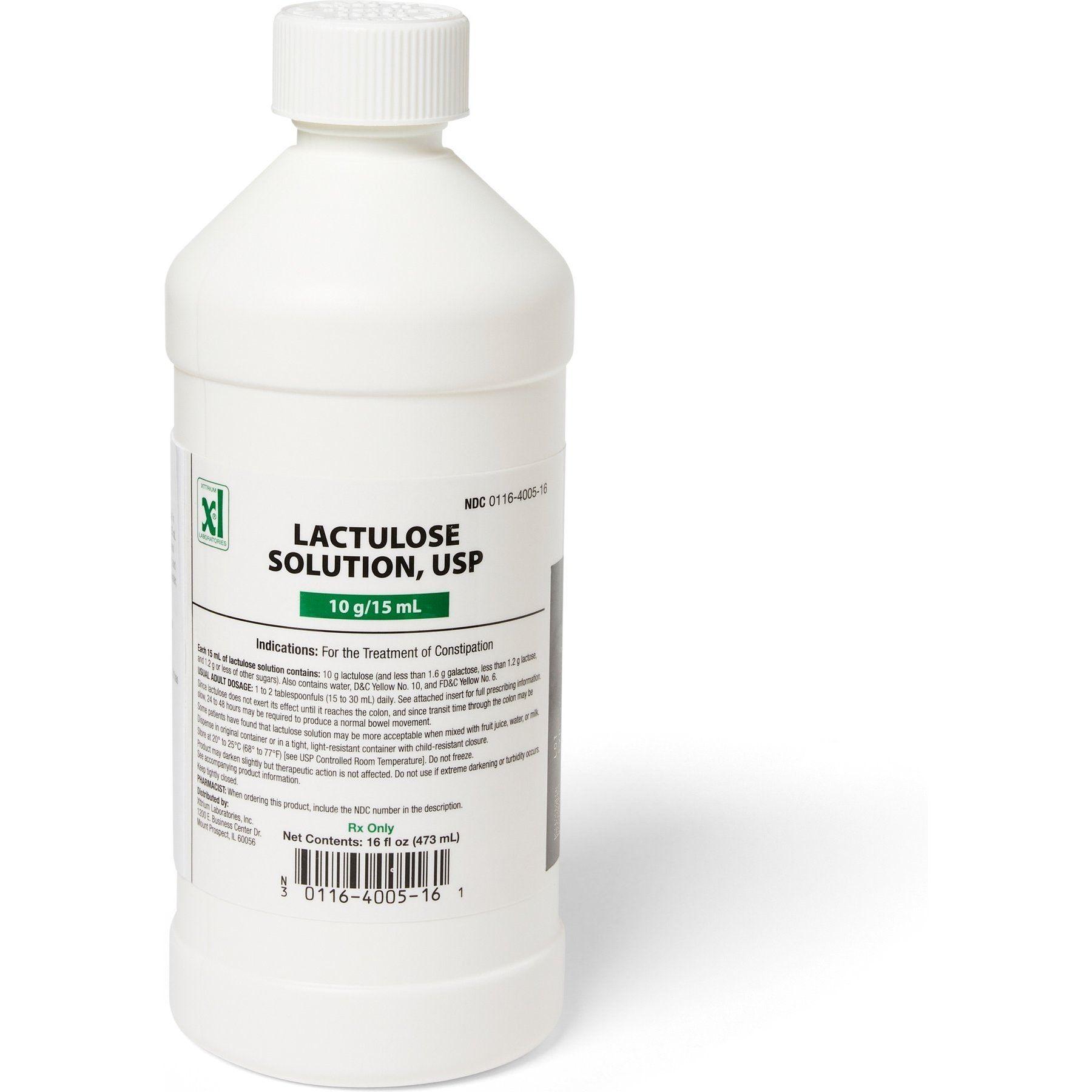
Generic lactulose syrup at 10 g per 15 mL, dispensed only with a vet prescription and given at the vet's dose.
Webvet may earn a commission when you click through to Chewy, at no extra cost to you.
Short-term relief, long-term use, and lactulose enemas
Some cats need lactulose only for a short course. Others stay on it long term, especially with megacolon or recurrent constipation, while the vet reviews the plan at each recheck.
Merck lists older, overweight cats, cats with chronic kidney disease, and cats with past constipation as higher risk, and a 189-cat emergency study in the Journal of Feline Medicine and Surgery found the same pattern. Owners of older cats may also find senior cat digestive problems and how to help useful.
A lactulose enema for cats is a clinic procedure, not a home treatment. The Merck Veterinary Manual chapter on constipation, obstipation, and megacolon lists lactulose at 5–10 mL/cat among enema solutions, given slowly through a rectal catheter under sedation for moderate to severe constipation or obstipation.
Lactulose dosage for cats by weight
Lactulose dosage for cats is set by the veterinarian from the cat's weighed body weight and the reason for treatment. These figures are the reference ranges the Merck Veterinary Manual states, so they show the range vets work within, not a home dosing chart. The vet calculates the exact dose and adjusts it to the cat's stool output.
| Use | Weight band | What the Merck Veterinary Manual states | Form | How the vet adjusts |
|---|---|---|---|---|
| Constipation (small animals) | No fixed weight band; per kg of the cat's measured weight | Lactulose liquid 0.5 mL/kg, by mouth or in food, every 8–12 hours | Oral solution (syrup) by oral syringe | Raised or lowered by the vet until stool output is soft and regular |
| Constipation, crystal form | Amount per animal, not per kg | Crystals ¼–½ teaspoonful, by mouth or in food, every 8–12 hours | Crystals (powder) | Same vet review of stool output |
| Hepatic encephalopathy (liver disease) | Per kg, calculated by the vet | Initial low dose 0.25–0.5 mL/kg, by mouth, every 8–12 hours | Oral solution | Titrated upward to several soft puddinglike stools per day |
| Hepatic encephalopathy, in hospital | Per kg, calculated by the vet | Retention enema of 3 parts lactulose to 7 parts water at 20 mL/kg | Enema given by the veterinary team | Hospital use only |
| Constipation or obstipation, in hospital | Per cat, not per kg | Lactulose enema 5–10 mL/cat under sedation | Enema given by the veterinary team | Hospital use only |

How much lactulose to give to a cat?
Give exactly the amount your vet prescribed, nothing more. For constipation, the Merck Veterinary Manual states lactulose liquid 0.5 mL/kg every 8–12 hours as the small-animal reference. The vet converts that into a measured volume for your cat, often two or three doses per day, then fine-tunes it at follow-up.
Measuring matters because the syrup is concentrated. Lactulose oral solution at 10 g per 15 mL works out to 667 mg per mL. Lactulose (Generic) Oral Solution, 10g/15mL, 16-oz is filled only with a veterinarian's prescription. A small oral syringe with clear markings helps you draw up exactly the volume the vet wrote on the label, every time.
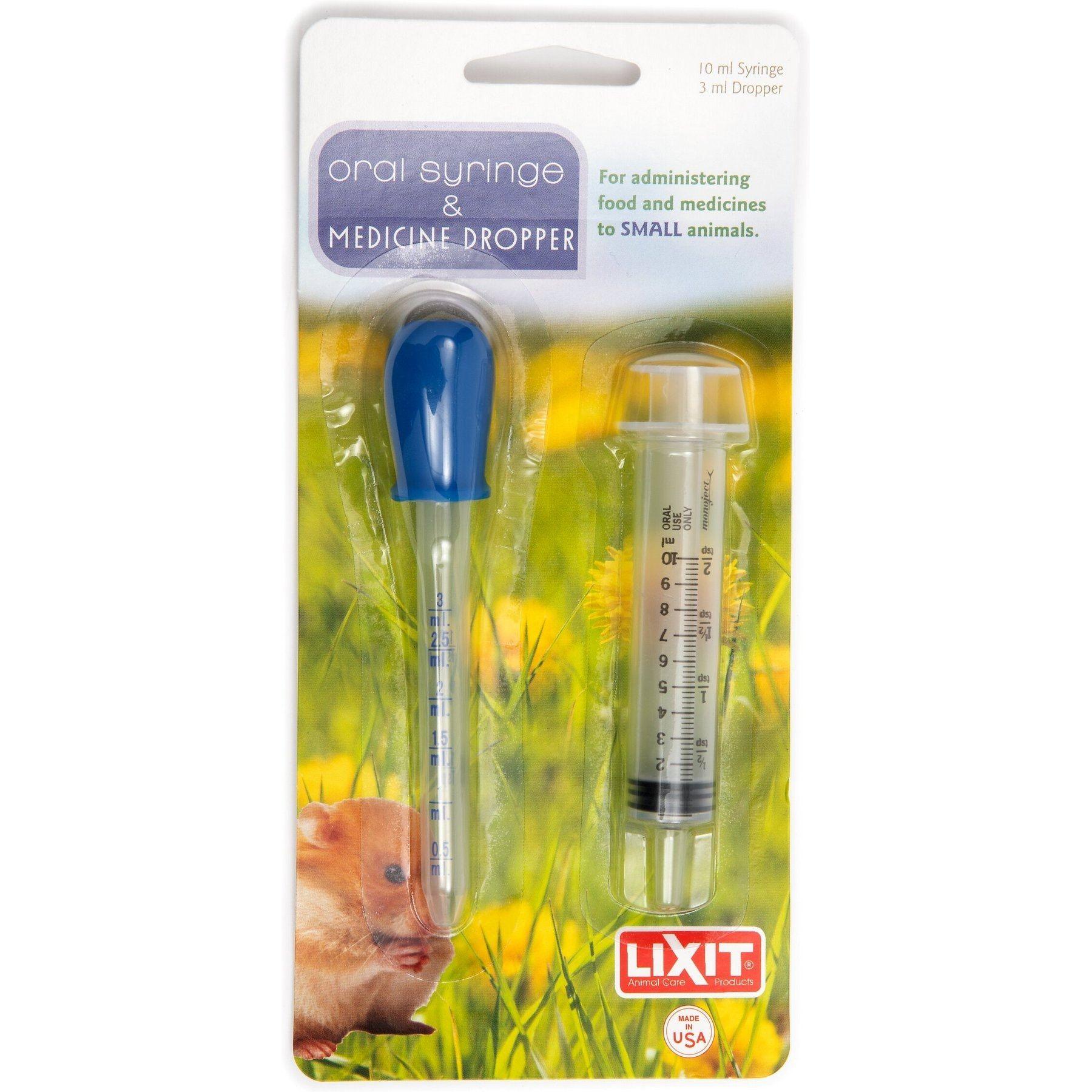
Marked oral syringe and dropper for measuring the exact syrup volume your vet prescribed.
Webvet may earn a commission when you click through to Chewy, at no extra cost to you.
Why there is no lactulose dosage chart per pound
Merck states the lactulose dose per kilogram, not per pound, and gives no cat-only weight chart, so there is no printable chart or calculator an owner can safely use. That is why no weight band in the table carries a fixed volume.
The vet weighs the cat, applies the range, and accounts for several things an online calculator cannot:
- Kidney function and hydration, since lactulose pulls water into the gut.
- Other medicines, including antacids and antibiotics that can blunt its effect.
- How hard the stool is now and how the cat responded to earlier doses.
- Whether the goal is softer stool for constipation or several soft stools a day for liver disease.
Sources also differ. Merck's pharmacology dosing table lists a lactulose line for dogs only, 0.25–0.5 mL/kg every 6–8 hours, while the constipation chapter gives 0.5 mL/kg every 8–12 hours for small animals. A study of the osmotic laxative PEG 3350 in cats found effective doses varied widely, so individualized dosing is important. The same logic applies to lactulose.
How the vet adjusts the dose to stool output
Lactulose is titrated, which means the dose moves up or down based on what lands in the litter box. Merck describes adjusting laxatives to soft stool, and for liver disease, titrating upward to several soft puddinglike stools per day. Your vet tells you the target and when to report back.
In hospital care for liver disease, Merck's retention enema uses a ratio of 3 parts lactulose to 7 parts water, a step only the veterinary team performs.
How many days a cat stays on lactulose
How many days a cat needs lactulose depends on the cause. A single bout of constipation may need only a short course, while a cat with megacolon or liver disease may take a daily dose for months under vet supervision.
Your vet sets how long the course lasts, and any change to the dose per day, including stopping, goes through the vet first. Report side effects such as watery stool so the vet can review the dose.
What lactulose is used for in cats and how it compares with MiraLAX and fiber
Lactulose for constipation in cats
Constipation is the most common reason a cat goes home with lactulose.
Merck calls lactulose the most effective of the hyperosmotic laxatives: the acids made during fermentation stimulate colonic fluid secretion and the muscle movements that push stool along, while the sugar holds water in the bowel. That combination makes it a stool softener with an extra push.
Constipation has many triggers. Merck lists hair, bones, and litter mixed with feces, low water intake, and reluctance to use a dirty litter box as causes of a blocked colon, so the vet looks for a cause, not only a laxative. The guide to cat hairball blockage explains when swallowed hair becomes a vet problem.
Megacolon, obstipation, liver disease, and liver shunts
In megacolon, the colon is stretched and weak, and stool builds up. Merck says high-fiber diets help early while some colonic movement remains; once the colon's nerves deteriorate, a low-residue diet with aggressive laxative treatment may be needed, and end-stage disease may need subtotal colectomy. Lactulose is often part of that aggressive laxative plan.
For cats with liver disease or liver shunts (portosystemic shunts), lactulose has a second job. The Merck Veterinary Manual chapter on hepatic encephalopathy calls it the gold standard: it acidifies the colon so ammonia is trapped as poorly absorbed ammonium ions and leaves in the stool rather than being absorbed.
Lactulose versus MiraLAX
MiraLAX is polyethylene glycol 3350, a human over-the-counter osmotic laxative. Merck lists PEG 3350 as another osmotic laxative vets use in small animals, adjusted to soft stool, and notes that, unlike fiber laxatives, it does not cause bloating or gas. Lactulose, by contrast, often causes gas early on because bacteria ferment it.
- Lactulose: prescription syrup or crystals, works through colonic fermentation, also treats hepatic encephalopathy.
- PEG 3350 (MiraLAX): over-the-counter powder, mixes into food, not fermented by gut bacteria, no ammonia-lowering role.
- Both: osmotic laxatives that hold water in the stool, and both need a vet-set dose for a cat.
What OTC is similar to lactulose?
Polyethylene glycol 3350, sold as MiraLAX, is the closest over-the-counter match: it is also an osmotic laxative, and Merck lists it for small animals. It is not a lactulose substitute for liver disease. Ask your vet before giving it, because the human label says it generally works in 1 to 3 days and the cat dose differs.
Fiber and hairball products as a lactulose alternative
Fiber is the gentlest lactulose alternative for cats with mild constipation. Merck says dietary fiber is preferable because it is well tolerated, more effective, and more physiological than other laxatives. It lists psyllium, wheat bran, and pumpkin added to canned food, and says animals should be well hydrated first so the fiber does not compact in the colon.
The Cornell Feline Health Center explains the two fiber types:
- Insoluble fiber, such as cellulose, adds bulk that stretches the colon and triggers contractions, but it can lower stool water content.
- Fermentable fiber, such as canned pumpkin and psyllium, is broken down in the colon into short chain fatty acids that may help the colon muscle contract.
- Too much fermentable fiber can make stools overly liquid.
The evidence for fiber in cats is encouraging but limited. In two field trials of 66 cats fed a psyllium-enriched diet, most improved by 2 months (14 of 15 and 42 of 51 cats), and use of cisapride and lactulose fell significantly in the second trial. The trials were uncontrolled and funded by the diet maker.
Where the vet suggests adding fiber to food, CAT By Dr Lisa Fiber Digestive Aid Powder Supplement for Cats, 1.76-oz is an organic fiber powder with prebiotics, listed at $12.99 on Chewy when checked in November 2026. It is over the counter and does not replace prescribed lactulose or a vet exam.
Merck also lists emollient stool softeners such as docusate sodium as another option the vet may weigh. Each of these choices depends on how severe the constipation is, which is why the vet picks among them rather than the owner.
Hairball laxatives, fiber chews, and hairballs
Hairballs are not a standard reason to use lactulose; Merck describes it for constipation, megacolon, and liver disease. Once the vet has ruled out a blockage, some owners use a fiber chew such as NaturVet Hairball Aid Supplement Plus Pumpkin Cat Soft Chews , 60-ct, which combines pumpkin and psyllium and is listed at $13.97 on Chewy when checked in November 2026. It is an over-the-counter supplement and does not replace prescribed lactulose or a vet exam.
The roundup of best hairball remedies for cats compares more options. Merck notes that white petroleum hairball products exist for cats and should be used only with veterinary approval and supervision, and that lubricant laxatives help only mild constipation. Chronic use of lubricant laxatives may reduce absorption of fat-soluble vitamins.
Cat Lax Cat Supplement, 2-oz tube is one such petroleum-based hairball gel, listed at $10.35 on Chewy when checked in November 2026. It is an over-the-counter hairball product; it does not replace prescribed lactulose or a vet exam.
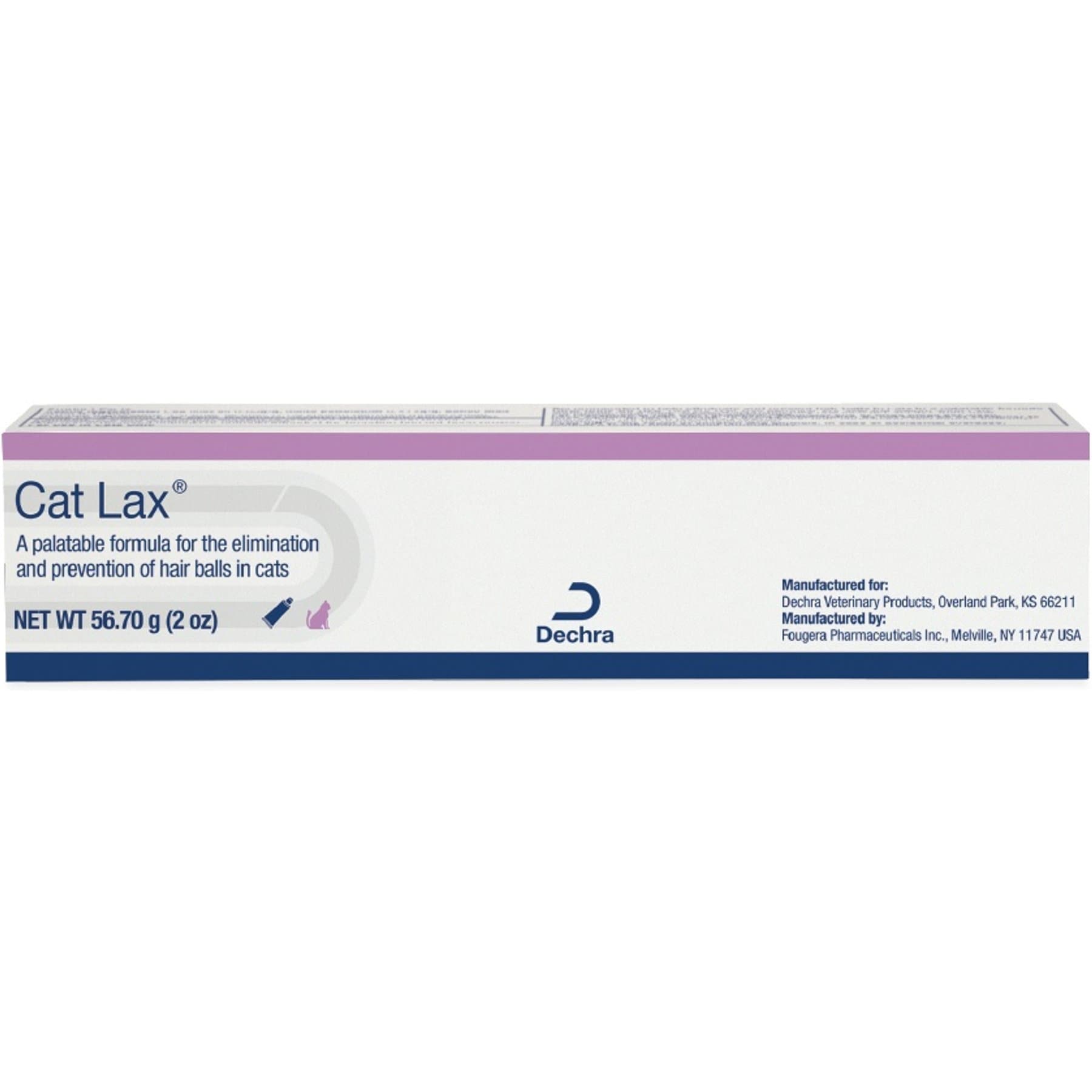
A petroleum-based hairball gel to ask your vet about for mild hairball trouble, alongside any prescribed plan.
Webvet may earn a commission when you click through to Chewy, at no extra cost to you.
Lactulose side effects in cats
Most lactulose side effects in cats come from the way the drug works: bacteria ferment it, which makes gas, and it pulls water into the gut, which loosens stool. The lactulose prescribing information is written for people, and it states that precise frequency data are not available, so no percentage can be given for cats.

What are the common side effects of lactulose?
Gas, intestinal cramps, and loose stool are the common side effects. The lactulose label says initial dosing may produce flatulence and intestinal cramps, which are usually transient, and that nausea and vomiting have been reported. Excessive dosage can cause diarrhea with fluid loss, low potassium (hypokalemia), and high sodium (hypernatremia).
Water and hydration on lactulose
Keep fresh water within reach at all times, since lactulose draws water into the gut. If you are unsure whether your cat is drinking enough, see how much water should a cat drink.
Hydration matters even more when the vet adds fiber to the plan, because Merck says animals should be well hydrated so the fiber does not compact in the colon. A fiber powder such as CAT By Dr Lisa Fiber Digestive Aid Powder Supplement for Cats, 1.76-oz is over the counter and belongs only inside the vet's plan, never in place of prescribed lactulose.
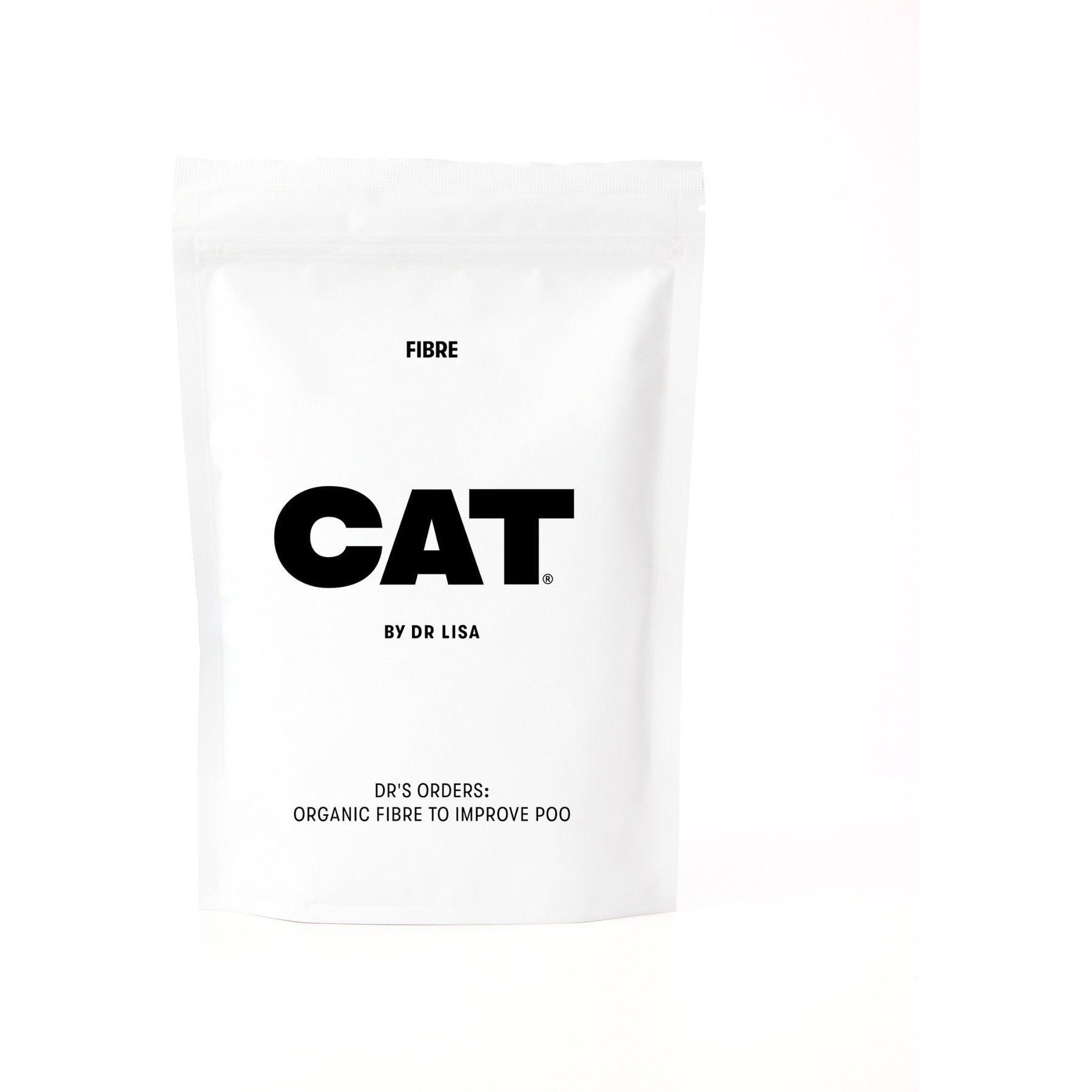
An organic fiber powder to ask your vet about as a diet add-in alongside or before a lactulose plan.
Webvet may earn a commission when you click through to Chewy, at no extra cost to you.
Expected effects versus dose-related problems
Lactulose side effects fall into two groups, and both show up in the litter box. The first group is expected while the dose is being set; the second suggests the dose is too high or the cat is unwell.
- Expected early on: softer stool, more frequent stool, some gas, and mild cramping that settles.
- Dose too high: watery or projectile diarrhea and painful cramping. Merck warns that overdosing can cause painful cramping from gas and severe liquid projectile diarrhea.
- Lab changes the owner cannot see: low potassium or high sodium from fluid loss, which the vet checks with blood tests when needed.
- Taste: lactulose is a sweet syrup; Merck notes that its relative lactitol is less sweet and less objectionable to some people, and some cats fight liquid medicine.
SponsoredVet care that's always there
Unlimited video calls and messaging with licensed vets for less than a typical vet visit. One membership covers up to five pets.
Use code Pets60
Plans start at $12/month · covers up to 5 pets
- Licensed vets in most states
- Rx for 150+ conditions
- 4.7 on Trustpilot
Loose stool while the dose is adjusted
Soft, formed stool is the goal; puddles are not, unless the vet set that target for liver disease. Stool that turns watery usually means the dose needs a review, and that change is the vet's to make.
Keep a note of how many stools the cat passes each day and how loose they are, so the vet adjusts the dose from real output. Watery diarrhea is a same-day call, as the warning below explains.
When to stop lactulose and call the vet now

Lactulose softens stool; it cannot clear a colon that is already packed hard. The Merck Veterinary Manual describes the classic signs as straining (tenesmus) and passing firm, dry feces, and notes that some animals are quite ill, with lethargy, depression, anorexia, vomiting (especially cats), and abdominal discomfort.
These are signs the cat needs a vet today. Merck notes that severe or recurrent cases may need enemas or manual removal of feces under anesthesia.
Stop-now signs
Call the vet now, before the next dose is due, if you see any of these:
- Straining in the litter box with no stool, or only tiny hard, dry pieces.
- Vomiting, especially repeated vomiting or vomiting with no appetite.
- Not eating, seeming dull or lethargic, or seeming painful in the belly.
- Watery or projectile diarrhea, which can lead to fluid loss.
- Straining to urinate with little or no urine. The Cornell Feline Health Center calls urethral obstruction an absolute emergency requiring immediate veterinary treatment.
The lactulose label says that in an overdose, diarrhea and abdominal cramps would be the major symptoms and the medication should be terminated. If a cat gets an extra dose by mistake, call the vet for advice rather than waiting.
Vomiting on lactulose
When a cat on lactulose is vomiting, two causes need to be separated. The label lists nausea and vomiting as reported side effects, but Merck lists vomiting as a sign that a constipated cat is quite ill.
Because owners cannot tell these apart at home, vomiting on lactulose is a same-day call. The guide to cat throwing up covers other causes.
When lactulose does not seem to work
If lactulose is not working after the time the vet gave you, do not double the dose. The label says 24 to 48 hours may be needed, so a cat with no stool after two days on treatment needs a recheck.
The Cornell Feline Health Center says constipation should be treated fairly aggressively to prevent progression to megacolon and obstipation.
Lactulose may stop helping for several reasons the vet can check:
- The colon is too full for a softener alone and needs an enema in the clinic.
- An antacid or antibiotic is blunting the fermentation lactulose needs.
- The cat is dehydrated, so there is little water for lactulose to pull into the stool.
- Megacolon has progressed; Merck notes chronic constipation unresponsive to medical management may need colectomy.
Drug interactions and cats that should not take lactulose
Most cats can take lactulose safely when a vet prescribes it and the cat is drinking well. Merck describes the hyperosmotic laxatives as relatively safe, provided the animal drinks enough water. Some cats, though, need a different plan or closer monitoring.
Cats that should not take lactulose or need extra care
- Dehydrated cats: Merck says laxatives should be avoided in dehydrated animals because they can make dehydration worse, so fluids come first.
- Cats with a suspected blockage: lactulose cannot move a physical obstruction, so a cat that is straining and vomiting needs an exam before any laxative.
- Diabetic cats: the lactulose label contains galactose and lactose and says it should be used with caution in diabetics.
- Cats needing a low galactose diet: the label lists this as a contraindication.
Lactulose for cats with kidney disease
Lactulose can be safe for cats with kidney disease, but they need extra thought. They are a common lactulose group, because Merck describes them as chronically dehydrated and at higher risk of constipation.
That same dehydration is the catch: lactulose pulls water into the gut, so the vet weighs fluid support and hydration before and during treatment. The overview of kidney disease in cats covers the wider care plan.
Lactulose for diabetic cats
Diabetic cats can take lactulose, but the label's galactose and lactose content means caution. Make sure the vet knows your cat is diabetic before lactulose starts, so the vet can decide whether glucose monitoring needs to change.
Interactions to tell your vet about
- Antacids: the label says non-absorbable antacids given at the same time may block the drop in colonic pH lactulose needs.
- Antibiotics: the Enulose prescribing information says neomycin and possibly other oral anti-infectives may interfere with lactulose breakdown, and Merck notes antimicrobials can impair the needed fermentation.
- Other laxatives: the Enulose label says other laxatives should not be used early in liver treatment, because their loose stools can falsely suggest the lactulose dose is right.
- Drugs that can constipate: Cornell lists the side effects of various drugs among causes of constipation in cats, so tell the vet about every medicine the cat takes, from pain relief such as buprenorphine for cats to long-term treatment such as methimazole for cats.
Lactulose and MiraLAX together
Can you give a cat lactulose and MiraLAX together? Only if your vet plans it. Both are osmotic laxatives, so stacking them adds to the risk of diarrhea, fluid loss, and electrolyte changes, and in liver disease extra laxatives can hide whether the lactulose dose is right. Never add MiraLAX at home to a cat already on lactulose.
Cisapride and lactulose for cats
Vets may pair cisapride with lactulose for cats with recurrent constipation: lactulose softens the stool while cisapride helps the colon move it.
Merck says cisapride (0.1–0.5 mg/kg every 8–12 hours) stimulates colonic movement in cats with mild to moderate idiopathic constipation, that it must be compounded in the US, and that cats with long-standing obstipation and megacolon are not likely to improve with it.
How to give lactulose to a cat, how fast it works, and what it costs
Best way to give a cat lactulose
The best way to give lactulose is a measured oral syringe into the cheek pouch, using a calm routine. Lactulose is a sweet syrup, and getting any liquid into a reluctant cat takes technique. These steps come from Cornell's guide to giving cats oral medications and the Washington State University teaching hospital.
- Draw up exactly the prescribed volume before you fetch the cat.
- Wrap a wriggly cat snugly in a towel, with only the head out.
- Slide the syringe tip into the pouch between the cheek and teeth, just past the lower teeth.
- Squirt small amounts slowly, pausing so the cat can swallow.
- Keep the head level; do not tilt it back, because liquids can slip into the windpipe.
- Close the mouth gently and stroke the throat until the cat swallows.
A Lixit Small Animal Oral Syringe & Medicine Dropper, 2 count has a 10 mL syringe and a 3 mL bulb dropper with marked measurements, listed at $7.99 on Chewy when checked in November 2026. Use it only to measure the volume the vet wrote on the prescription label.

Giving syrup to a reluctant cat
Merck lists lactulose as given by mouth or in food, but Texas A&M's veterinary school warns that a cat won't receive the correct dose if it doesn't finish its food.
Mixing into a small amount of wet food works only if the cat eats all of it. If dosing turns into a fight, tell the vet: a compounding pharmacy can sometimes make a flavored lactulose liquid or another form the cat accepts.
Litter box checklist at home
Watch the litter box daily and write down what you see, so the vet can adjust the dose from real stool output.
- On track: soft, formed stool most days, normal appetite, the cat using the box without fuss.
- Report to the vet: fewer stools than usual, very hard pieces, or stool that is getting runny.
- Same day: straining with no stool, vomiting, not eating, watery diarrhea, or any straining to urinate.
How fast does lactulose work?
The lactulose label says it can take 24 to 48 hours to produce the desired bowel movement. The label explains that it does not act until it reaches the colon, and transit through the colon may be slow. A cat with no stool after that window needs a vet recheck, not a bigger dose.
Lactulose solution, crystals, powder, and Enulose
Lactulose comes in several human forms. Lactulose oral solution, the syrup, at 10 g per 15 mL is the form pet pharmacies list for cats. Kristalose is lactulose as crystals, a powder for solution in single-dose packets that is dissolved in water.
Enulose is a branded lactulose solution; Generlac and Constulose are others. All carry human prescription drug labels.
Storage and expiration
Lactulose does expire, so check the date on the bottle. The label says to store it at 20° to 25°C (68° to 77°F), not to freeze it, and to keep it tightly closed.
Normal darkening of the syrup is expected in sugar solutions and does not affect how it works. Prolonged heat above 30°C (86°F) or direct light can cause extreme darkening and cloudiness; if that happens, do not use it.
Is lactulose available over the counter?
No. In the US, lactulose solution and crystals carry human prescription drug labels on DailyMed, so it is not sold over the counter, and a veterinarian's prescription is needed. The closest over-the-counter cousin is PEG 3350 (MiraLAX), which is a different drug and still needs your vet's dose for a cat.
What is a generic for lactulose?
Lactulose is itself the generic name. Generic Lactulose Solution, USP at 10 g per 15 mL is approved through an Abbreviated New Drug Application. Brand names on DailyMed include Enulose, Generlac, and Constulose for the solution, and Kristalose for the crystals.
Where can I buy lactulose?
You can buy lactulose from your vet clinic or a pharmacy, including an online pet pharmacy such as Chewy Pharmacy, once your veterinarian sends a prescription. The pharmacy fills the bottle with the vet's directions on the label. Generic Lactulose (Generic) Oral Solution, 10g/15mL, 16-oz is listed at $13.99 on Chewy when checked in November 2026.
Lactulose questions
Frequently Asked Questions
Can I give my cat MiraLAX and lactulose together?
Only if your veterinarian plans the combination. Both drugs work by holding water in the bowel, so together they raise the chance of watery stool, dehydration, and low potassium. If your cat is on lactulose and still constipated, call the clinic before adding MiraLAX.
Does lactulose for cats expire?
Yes. Every bottle has an expiration date, and the FDA says that once it has passed there is no guarantee the medicine is safe and effective, so do not use it. Good storage protects the bottle until then: room temperature, tightly closed, away from heat and light. Discard syrup that turns cloudy or very dark.
Is lactulose safe for cats with kidney disease?
It can be, with care. Cats with kidney disease are prone to constipation because they run dry, and dehydration is also the main risk with any laxative. Expect the vet to make sure the cat is well hydrated before starting and to keep an eye on water intake and blood work during treatment.
Can lactulose help hairballs in cats?
Not directly. Lactulose acts in the colon, and veterinary references describe it for constipation, megacolon, and liver disease rather than hairballs. Cornell lists swallowed fur among causes of constipation, so where hair is part of a hard stool, softer stool may help it pass. Fiber and vet-approved hairball products are the usual first steps.
Can cats take lactulose long term?
Yes, many cats with megacolon or liver disease take lactulose long term under vet supervision. Expect regular recheck visits, where the vet reviews weight, stool, hydration, and, when needed, electrolytes. The human label advises periodic electrolyte checks after six months of use in elderly, debilitated people; for a cat, the vet decides how often to run them.
Veterinarian · BVMS MRCVS
Dr. Pippa Elliott, BVMS, MRCVS, is a veterinarian with nearly 30 years of experience in companion animal practice. Dr. Elliott earned her Bachelor of Veterinary Medicine and Surgery from the University of Glasgow. She was also designated a Member of the Royal College of Veterinary Surgeons. Married with 2 grown-up kids, Dr. Elliott has a naughty Puggle named Poggle, 3 cats and a bearded dragon.


