Furosemide for Dogs: Uses, Dosage, and Side Effects
Furosemide (Lasix, Salix) is a prescription diuretic that vets use to clear fluid in dogs with heart failure. This guide covers dosing by weight, thirst and urination, home breathing checks, and when to call the vet.

BVMS MRCVS
Medically reviewed by Dr. Pippa Elliott, BVMS MRCVS · Last reviewed

Drug facts
Furosemide (Salix, Lasix)· furosemide
Furosemide (Salix, Lasix) is a prescription loop diuretic for dogs and cats. The Salix label lists edema from cardiac insufficiency, including pulmonary congestion and ascites, and acute noninflammatory tissue edema. Vets use it mainly to clear fluid in dogs with congestive heart failure and adjust the dose to each dog.
 Sponsored
Is Furosemide (Salix, Lasix) right for your dog?
A licensed vet at Dutch can assess your dog over video and prescribe treatment when it's appropriate, delivered to your door.
Use code Pets60
Plans start at $12/month · covers up to 5 pets
- Licensed vets in most states
- Rx for 150+ conditions
- 4.7 on Trustpilot
Furosemide for dogs: what it treats, prescription status, and why only the vet starts, changes, or stops it
Furosemide for dogs is a prescription loop diuretic, sold for pets as Salix and also known by the brand name Lasix, that vets use mainly to clear fluid from the lungs in dogs with congestive heart failure. The Salix label on DailyMed lists edema from cardiac insufficiency and acute noninflammatory tissue edema as its uses.
If your dog has just started furosemide, more thirst and more urination are expected. Today is a vet day if breathing at rest gets faster or harder, your dog collapses or turns very weak, or stops drinking. Otherwise, give exactly what the vet prescribed and never change or stop the dose without the vet.
- 1What furosemide treats in dogs: fluid in the lungs or belly from heart failure, plus some other kinds of tissue swelling.
- 2It is a prescription loop diuretic, and Salix or an approved generic is dispensed only on a veterinarian's order.
- 3Tablet dosing by weight band comes from the label, but the vet sets, adjusts, and stops each dog's dose.
- 4More thirst and more urination are expected, so fresh water stays available at all times.
- 5Count resting breathing daily and call the vet if it stays above 30 breaths per minute.
Can I give furosemide to my dog?
Only if a veterinarian has prescribed it for your dog. The Salix label carries the federal caution that restricts it to use by or on the order of a licensed veterinarian, and the right dose depends on an exam, the cause of the fluid, and blood work. Never give a dog leftover furosemide from another pet or a person's Lasix tablets.
Salix is the Merck Animal Health brand of veterinary furosemide, made in 12.5 mg and 50 mg tablets, and VCA lists Lasix and Disal as other brand names for the same drug. Salix for dogs is filled by Chewy Pharmacy only with a veterinarian's prescription. The 12.5 mg bottle of 30 tablets is listed at $6.30 on Chewy when checked in November 2026.
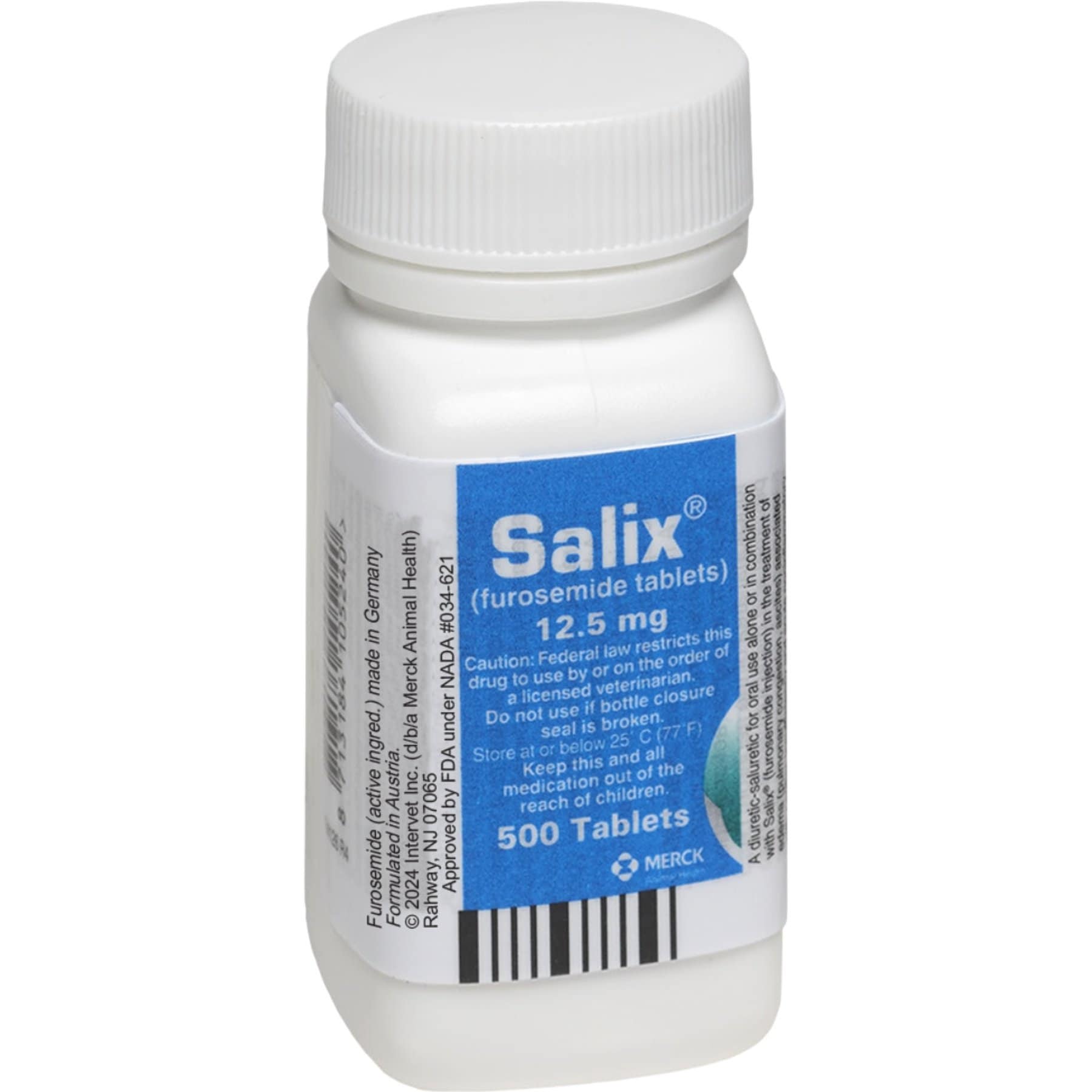
Veterinary-labeled furosemide tablets, filled only on your vet's prescription at the strength the vet chose.
Webvet may earn a commission when you click through to Chewy, at no extra cost to you.
Only the vet starts, changes, or stops furosemide because the dose is meant to move with the dog. The label says the dose should be adjusted to the individual's response, that it can generally be lowered for long-term treatment once the edema has been reduced, and that re-examination sets the ongoing schedule.
According to VCA Animal Hospitals, use at the labeled doses in dogs and cats is FDA approved, while other doses are extra-label and follow the vet's own directions. The number on your dog's bottle may therefore differ from the label and still be the right dose for that dog.

Furosemide dosage for dogs by weight
The Salix label range for furosemide dosage in dogs is 1 to 2 mg per pound (approximately 2.5 to 5 mg/kg), once or twice daily, and the veterinarian sets and adjusts each dog's dose from there. The label's tablet dosing by weight band is a chart your vet works within while watching resting breathing rate and signs of dehydration, not a way to work out a dose at home.
| Weight band or situation | What the label or reference states | Tablet strength | What the vet watches |
|---|---|---|---|
| Any weight, per pound or per kg | Salix label: usual dosage 1 to 2 mg/lb body weight (approximately 2.5 to 5 mg/kg), once or twice daily at 6 to 8 hour intervals | Salix 12.5 mg or 50 mg | Response, signs of dehydration and electrolyte imbalance |
| 5 to 10 pounds | Salix label: one 12.5 mg tablet per 5 to 10 pounds body weight, once or twice daily | 12.5 mg | Resting breathing rate, thirst, urination |
| Per 25 pounds | Salix label: one-half to one 50 mg scored tablet per 25 pounds body weight, once or twice daily | 50 mg scored | Resting breathing rate, appetite, energy |
| Severe or refractory edema | Salix label: dose may be doubled or increased by increments of 1 mg per pound body weight | Chosen by the vet | Blood work for kidney values and electrolytes |
| Long-term heart failure | Merck Veterinary Manual: typical start 2 mg/kg every 12 hours, range 1–5 mg/kg every 8–12 hours | Chosen by the vet | Daily resting breathing rate at home, dehydration |
| Life-threatening pulmonary edema | Merck Veterinary Manual: 2–4 mg/kg every 1–6 hours by injection, in hospital | Injection | Breathing effort, hydration, response |
The Merck Veterinary Manual gives a separate range for long-term heart failure care in dogs: a typical start of 2 mg/kg every 12 hours, within 1 to 5 mg/kg every 8 to 12 hours.
Furosemide 20 mg and 40 mg tablets are human-labeled generics, and a vet may prescribe one for a dog when that strength fits the dose. Furosemide (Generic) Tablets, 20-mg, 30 tablets are filled by Chewy Pharmacy only with a veterinarian's prescription for that strength.
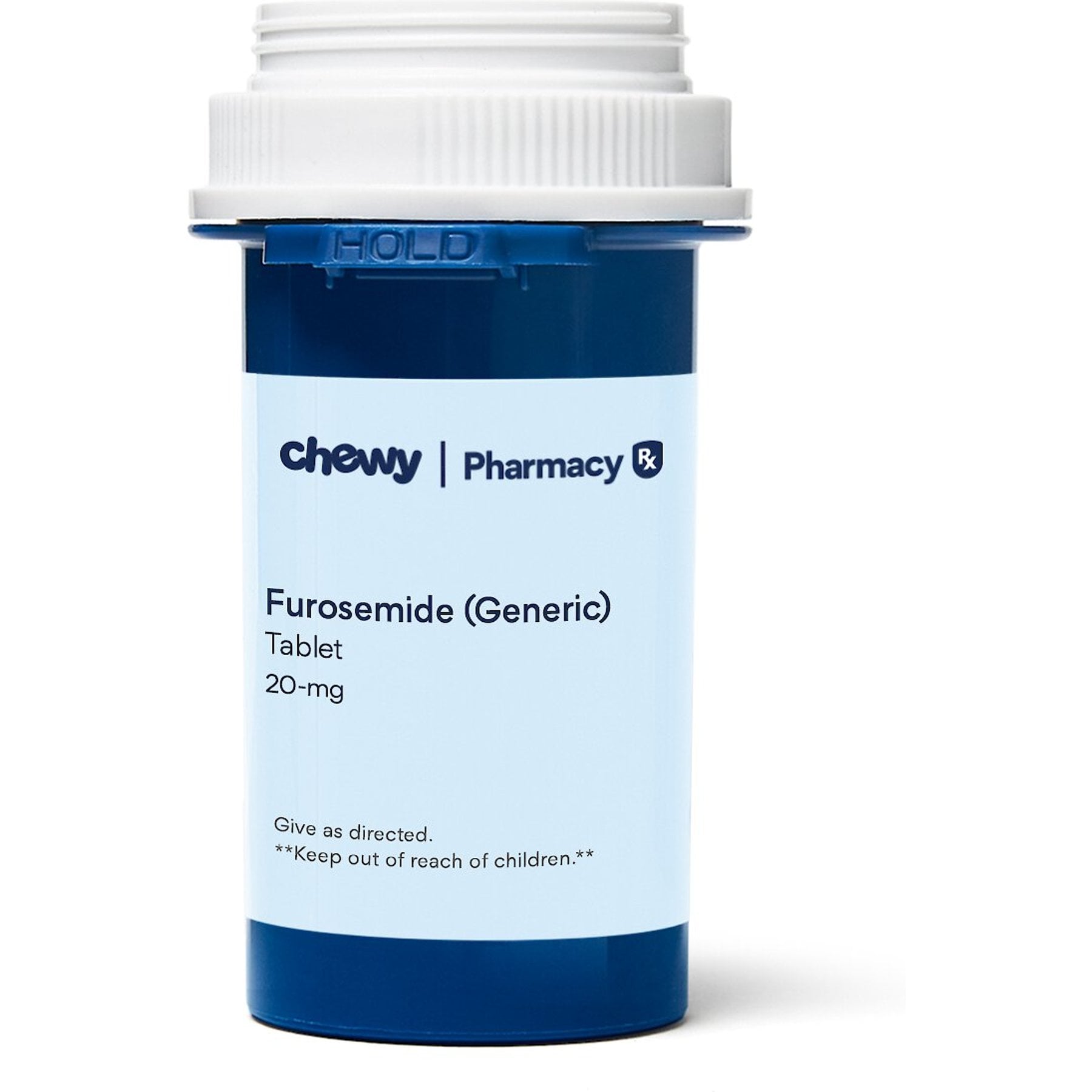
A generic 20 mg furosemide refill, dispensed only when your vet has prescribed this strength.
Webvet may earn a commission when you click through to Chewy, at no extra cost to you.
The two sources are written for different jobs, so the vet weighs both. The label also allows an intermittent schedule, every other day or 2 to 4 consecutive days weekly, which it describes as an efficient and safe way to move edema.
Tablet strengths you may see on a prescription:
- Salix: 12.5 mg and 50 mg scored tablets
- Generic veterinary furosemide: the first generic tablet for dogs and cats, approved on July 18, 2025 according to the FDA Freedom of Information summary, in the same two strengths and prescription only
- Human-labeled generic furosemide: 20 mg, 40 mg, and 80 mg tablets, per the DailyMed furosemide tablets label
When fluid keeps returning, the label lets the vet double the dose or raise it by 1 mg per pound. The Merck Veterinary Manual adds that furosemide resistance should be considered when a dog needs more than 8–10 mg/kg every 24 hours, which is when vets start thinking about other diuretics.

Whatever the strength, give exactly the tablets the vet prescribed, at the times the vet set. If breathing, thirst, or energy changes, the vet adjusts the dose after checking your dog, so never add or skip tablets on your own.
What furosemide (Lasix, Salix) is used for in dogs
Furosemide is used in dogs mostly for heart failure, to remove fluid that collects because the heart cannot keep up. The Merck Veterinary Manual calls diuretics the cornerstone of congestive heart failure treatment when it causes pulmonary edema (fluid in the lungs), fluid around the lungs, or fluid in the belly.
It works in the kidney. As a loop diuretic, it blocks sodium, potassium, and chloride from being taken back into the body in the loop of Henle, so water leaves with the sodium. Merck names it the diuretic most often used to treat heart failure in dogs.
The labeled and reference uses include:
- Pulmonary congestion and ascites from cardiac insufficiency, on the Salix label
- Acute noninflammatory tissue edema, on the Salix label
- Certain kidney diseases, according to VCA
- Help in treating high blood potassium and high blood pressure, according to VCA
Merck adds that furosemide is a mild venodilator, lowering pressure in the veins before the extra urine even starts, especially when it is injected. It also raises blood flow to the kidneys in the short term, by about 50%, without changing the filtration rate.
Tablets are absorbed only in part: Merck gives an oral bioavailability of 40% to 50%. Dogs in heart failure have less blood reaching the kidneys, so they need a higher blood level, and a higher dose, than healthy dogs for the same effect. Merck also notes that diuretic resistance can develop with long-term treatment.
A cough is one of the signs VCA links with heart failure, though dogs cough for many reasons; WebVet's guide on why a dog is coughing covers the others. Questions about comfort, outlook in an older dog, walks, the final stages, and euthanasia belong to the heart disease itself, and the guide to dog heart cough and congestive heart failure answers them.
How long does it take for furosemide to reduce swelling in dogs?
Furosemide starts working within about an hour of a tablet. The Merck Veterinary Manual gives an onset within 60 minutes by mouth, a peak at 1 to 2 hours, and an effect lasting about 6 hours; VCA says 1 to 2 hours, with improvement in clinical signs to follow. By injection in hospital, Merck gives an onset within 5 minutes.
Furosemide side effects in dogs: thirst, urination, and dehydration
The side effects of furosemide (Lasix) in dogs mostly follow from what it does: thirst with more urination is the expected pattern. VCA lists increased urination as the most common effect, with diarrhea and constipation also reported. The bigger concern on the label is dehydration and electrolyte imbalance if the dose is more than the dog needs.

What are the top 3 side effects of furosemide?
Increased urination, diarrhea, and constipation are the three side effects VCA lists, with increased urination the most common. Thirst rises along with the extra urine. The Salix label adds that excessive amounts may cause dehydration and electrolyte imbalance, which is why vets recheck blood work and why water should never be limited.
If a dog vomits after a dose given on an empty stomach, VCA says later doses can go with food or a treat. Greenies Pill Pockets Cheese Flavor Natural Dog Treats, Tablet Size, 30 count are cheese-flavored treats with a built-in pouch that holds most small tablets, listed at $11.99 on Chewy when checked in November 2026. A treat pouch only helps the tablet go down; it does not replace the prescribed dose.
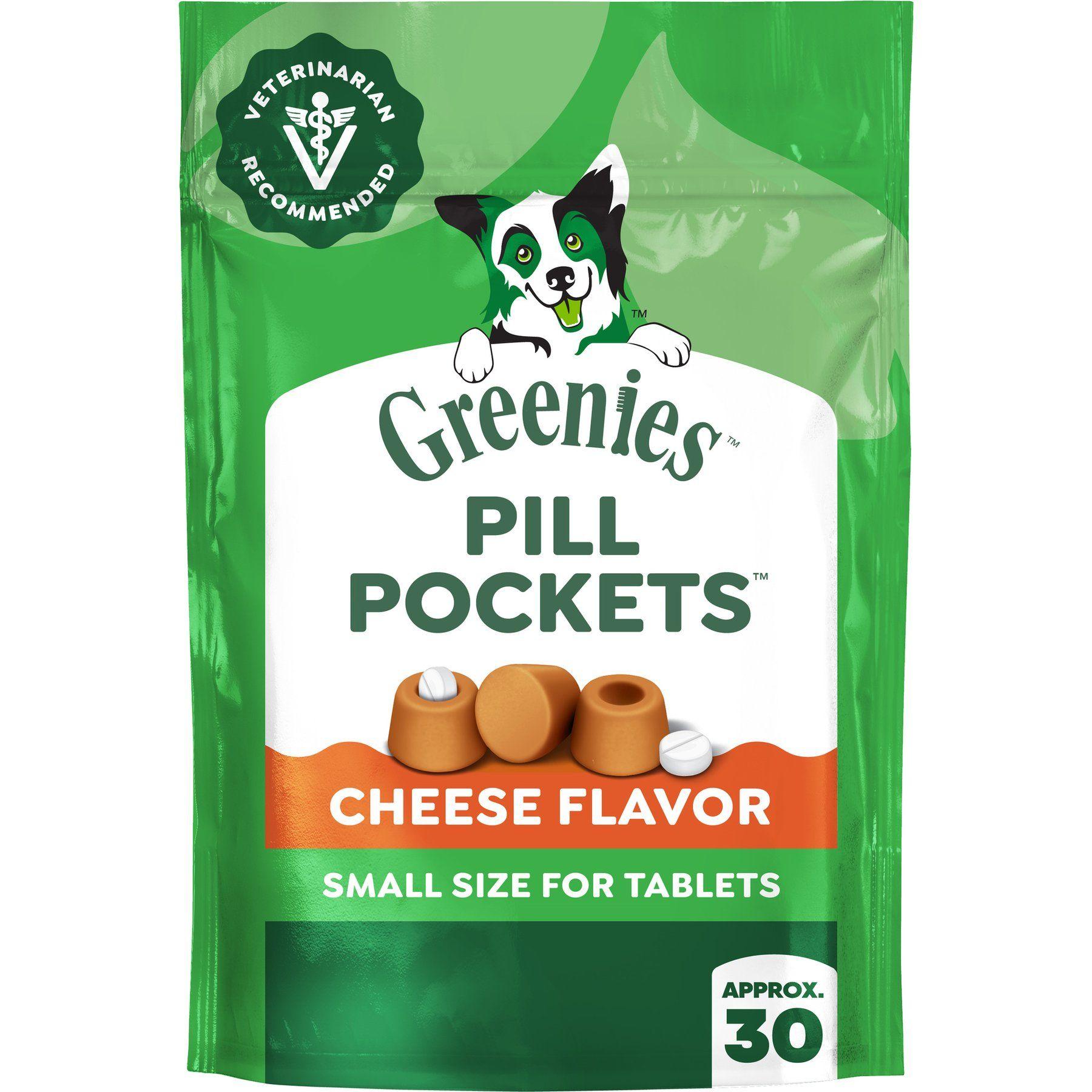
Cheese-flavored treat pouches that help a dog on daily heart medication take each prescribed tablet.
Webvet may earn a commission when you click through to Chewy, at no extra cost to you.
Side effects can add up when furosemide is combined with other heart drugs. Enalapril is an ACE inhibitor, per the enalapril label on DailyMed, and Merck notes that azotemia (a rise in kidney waste values) is more likely when a diuretic is given with an ACE inhibitor or an NSAID.
Merck lists low potassium, low sodium, low magnesium, and metabolic alkalosis as the most common electrolyte and acid-base changes, made more likely by more than one diuretic, a poor appetite, and higher doses. The label names these early signs of electrolyte imbalance:
- Increased thirst
- Lethargy, drowsiness, or restlessness
- Fatigue
- Producing little urine (oliguria)
- Stomach or bowel upset
- A fast heart rate (tachycardia)
For these reasons the label asks for a clinical exam and blood tests of BUN, CO2, and electrolytes early in therapy and periodically after. VCA adds that the vet monitors kidney values, blood sugar, and hydration, plus blood pressure, weight, or hearing where needed.
VCA advises keeping plenty of fresh, clean water available at all times while a dog takes furosemide, since cutting water works against the drug and raises the risk of dehydration. WebVet's guide to a dog drinking and peeing a lot explains how vets judge thirst that seems out of proportion.
Extra urine can still mean wet floors overnight. For a male dog, Paw Inspired Select Fit Disposable Belly Band Male Dog Wraps, Medium are absorbent wraps listed at $19.99 on Chewy when checked in November 2026. Simple Solution Washable Dog Pee Pads, 34x36-in, 2 count, listed at $40.51 on Chewy when checked in November 2026, are washable pads with a waterproof backing. Neither replaces the prescribed treatment or the vet's checks.

Washable, waterproof-backed pads that protect floors and beds while a dog on a diuretic urinates more.
Webvet may earn a commission when you click through to Chewy, at no extra cost to you.
The label notes that for long-term treatment the dose can generally be lowered once the edema has been reduced, so the vet looks for the lowest dose that keeps fluid away.
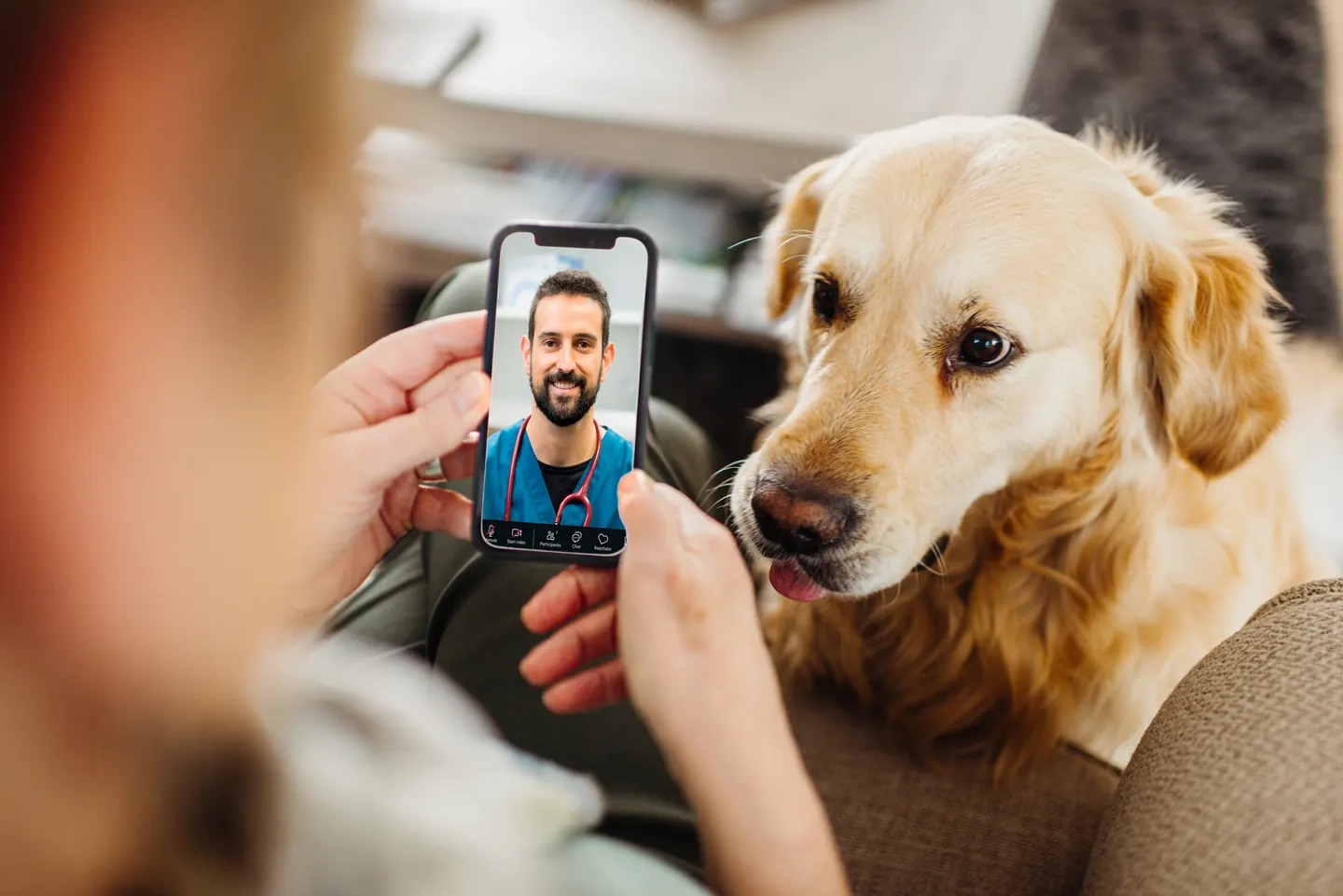 Sponsored
Vet care that's always there
Unlimited video calls and messaging with licensed vets for less than a typical vet visit. One membership covers up to five pets.
Use code Pets60
Plans start at $12/month · covers up to 5 pets
- Licensed vets in most states
- Rx for 150+ conditions
- 4.7 on Trustpilot
When to call the vet now: breathing changes, collapse, or refusing water
A dog on furosemide needs the vet today, or right now, for faster or harder breathing at rest, collapse or sudden weakness, or drinking and urinating far less than usual. VCA says to stop giving furosemide and contact the veterinarian immediately for weakness, collapse, a head tilt, balance problems, a racing heart, or a lack of urine. For faster or harder breathing at rest, call the vet at once and do not skip, stop, or add a dose unless the vet tells you to; VCA's home breathing guide says increased resting breathing plus other signs may be an emergency.
- Weakness or collapse
- Head tilt or balance problems
- A racing heart rate
- Little or no urine
- Resting or sleeping breathing consistently above 30 breaths per minute
- Labored breathing, restlessness, or sleeping sitting up
VCA's home breathing rate guide says to recount over the next couple of hours to confirm a high rate, then contact the vet as soon as possible. If the rate is up and other signs appear, it may be an emergency, and after hours that can mean an emergency center.

A dog that stops drinking while furosemide keeps removing water is heading toward the dehydration the label warns about. The label also warns that excessive diuresis can reduce plasma volume and raise the risk of circulatory collapse, thrombosis, and embolism.
A racing heart can be hard to judge at home; the guide to a normal dog heart rate explains what vets expect at rest. If you suspect an overdose or a reaction, VCA says to call your veterinary office immediately, and to follow its directions for an emergency facility if it is closed.
Drug interactions, heart medication combinations, and dogs that need extra caution
Furosemide is usually one part of a heart failure plan, and the other drugs change what the vet watches. Tell the vet about every medication, supplement, and herbal product your dog takes before furosemide starts.
Heart drugs given alongside it include:
- Pimobendan (Vetmedin): the Vetmedin label on DailyMed is written for use with concurrent heart failure therapy such as furosemide
- ACE inhibitors such as enalapril: VCA lists ACE inhibitors among drugs to use with caution, and Merck notes the higher risk of azotemia
- Spironolactone: Merck says adding it to furosemide reduces potassium loss
- Digoxin: the label warns that potassium loss in dogs on digitalis may trigger digitalis toxicity
Spironolactone and furosemide do different jobs, so the question is rarely one versus the other. Merck describes spironolactone as a weak potassium-sparing diuretic that should never be the only diuretic in heart failure, used more for its protective effect on the heart muscle. It also warns that high potassium can develop with an ACE inhibitor, especially without furosemide.
VCA also lists aspirin, corticosteroids, insulin, and theophylline as drugs to combine with caution. Merck adds that furosemide can increase the hearing and kidney damage caused by drugs such as the aminoglycoside antibiotics, and VCA notes it can falsely raise a Free T4 thyroid result.
Furosemide is not used, or needs extra care, in dogs that:
- Make no urine (anuria), where the label says it is contraindicated
- Have worsening kidney disease, where the label says therapy should stop if azotemia and low urine output increase
- Are dehydrated, have an electrolyte imbalance, or are vomiting or have diarrhea, per VCA
- Have liver disease, since the label warns that sudden fluid shifts in cirrhosis may bring on hepatic coma
- Have diabetes mellitus, which the label says may rarely worsen
- Are pregnant, since the label does not recommend it in the second trimester, or are nursing, per VCA
- Are allergic to sulfa drugs, since VCA says they may also react to furosemide
Giving furosemide at home: timing, resting breathing checks, and cost of Salix or generic
Give furosemide by mouth exactly as prescribed, with or without food. VCA says liquid furosemide should be measured carefully, and a missed dose is given when you remember unless the next one is nearly due, never two at once.
What time of day should I give my dog furosemide?
Give it at the times your vet sets, avoiding doses close to bedtime. VCA advises against dosing near bedtime because furosemide causes frequent urination, and the label says the daily schedule can be timed to control when urination happens. A twice-daily plan uses the 6 to 8 hour interval the label sets, so both doses can fall in the daytime.
Because furosemide takes about an hour to work in dogs, urination picks up soon after each tablet, so plan a chance to go outside over the next few hours. For tablet tips, the WebVet guide on administering medicine to dogs walks through technique, and the roundup of the best pill pockets for dogs compares treat pouches.
VCA recommends resting breathing rate checks at least once a day for a dog with heart failure on furosemide. A normal resting or sleeping rate is 15 to 30 breaths per minute, including dogs whose heart failure is well controlled. To count it:
- Wait until your dog is asleep or resting quietly, not hot or just back from activity.
- Watch the chest and count one breath for each full rise and fall.
- Count for 30 seconds and multiply by 2, or count for a full minute.
- Write the number down each day so you and the vet can see the trend.
Use this home monitoring checklist to sort expected effects from call-today signs:
- Expected: more thirst and more urination after each dose, with normal energy and appetite
- Call the vet today: resting breathing rate consistently above 30 breaths per minute, a new or worse cough, a poor appetite, or unusual tiredness
- Call the vet today: drinking far less than usual or producing little urine, which raises the risk of dehydration
- Call now: labored breathing, collapse, a head tilt, sudden weakness, or a racing heart
Store tablets at room temperature away from light and freezing, as VCA advises. Merck says tablets discolored by light should not be used. The main alternative to furosemide, torsemide, is a decision the vet makes after a recheck, never a swap at home.

The price of furosemide depends on the strength and the number of tablets your dog needs each day. Salix (Furosemide) Tablets for Dogs & Cats, 12.5-mg, 30 tablets are listed at $6.30 on Chewy when checked in November 2026, and a bottle of 30 generic Furosemide 20 mg tablets is listed at $1.80 on Chewy when checked in November 2026. Both are filled only with a veterinarian's prescription.
There is no over-the-counter furosemide for dogs, and no legitimate way to buy it without a vet prescription: the label restricts it to use by or on the order of a licensed veterinarian.
If the vet prescribes half of a scored 50 mg tablet, a JorVet Pill Splitter cuts it cleanly; it is listed at $5.79 on Chewy when checked in November 2026. A Dee Pet Piller for Dogs & Cats, 1 count, listed at $6.90 on Chewy when checked in November 2026, places a tablet with a plunger for dogs that refuse tablets hidden in food. Neither tool changes the prescribed dose or replaces the vet's directions, and the vet should be asked before a tablet is crushed.
Furosemide questions
Frequently Asked Questions
Can you crush furosemide for dogs?
Ask your vet or pharmacist before you crush furosemide, because the Salix label gives no instruction on crushing tablets. VCA says it can be given with or without food, and with food or a treat if a dog vomits on an empty stomach. If whole tablets are a struggle, the vet can consider an oral liquid, which Merck lists among the available forms.
Is Salix the same as furosemide?
Yes. Salix is Merck Animal Health's brand of veterinary furosemide tablets. The generic furosemide tablet for dogs and cats approved in 2025 was shown in a dog blood-level study to be bioequivalent to the 50 mg Salix tablet, according to the FDA summary. Brand or generic, the vet sets the strength and dose.
Can a dog take furosemide with Vetmedin?
Yes, when the vet prescribes both. Vetmedin is the brand of pimobendan, and its label covers use with concurrent heart failure therapy such as furosemide. In the Vetmedin field study, all but 4 of the 175 dogs given pimobendan also received furosemide.
Is spironolactone better than furosemide for dogs?
No, spironolactone is not a replacement for furosemide. Merck calls it a weak diuretic that should never be the sole agent in heart failure. Given with furosemide it reduces potassium loss, and Merck says adding it to long-term heart failure treatment in dogs may improve survival.
Is there an alternative to furosemide for dogs?
Yes, torsemide is the main alternative, chosen by a veterinarian. Merck describes it as a loop diuretic roughly 10 times or more as potent as furosemide in dogs, used when furosemide stops working and increasingly for first-onset heart failure. The FDA announced conditional approval of UpCard-CA1 (torsemide oral solution) for dogs in May 2024. Kidney values and electrolytes are rechecked about a week after starting it.
Veterinarian · BVMS MRCVS
Dr. Pippa Elliott, BVMS, MRCVS, is a veterinarian with nearly 30 years of experience in companion animal practice. Dr. Elliott earned her Bachelor of Veterinary Medicine and Surgery from the University of Glasgow. She was also designated a Member of the Royal College of Veterinary Surgeons. Married with 2 grown-up kids, Dr. Elliott has a naughty Puggle named Poggle, 3 cats and a bearded dragon.


