Normal Dog Heart Rate: Resting Chart and How to Count
Compare dog heart-rate references by size and age, learn a safe manual counting method, and understand when an unusual rate or rhythm needs veterinary attention.

BVMS MRCVS
Medically reviewed by Dr. Pippa Elliott, BVMS MRCVS · Last reviewed

This article contains affiliate links. Webvet may earn a commission when you buy through them, at no extra cost to you.
Normal dog heart rate depends on size, age, activity, and the circumstances of the measurement. A broad adult resting reference is 70–120 beats per minute, but small dogs and puppies often run faster, while larger dogs can run slower. A chart is a starting point, not a diagnosis.
Count when your dog is calm, record the context, and ask your veterinarian about a persistent change. Collapse, fainting, breathing difficulty, or severe weakness needs urgent veterinary care even when the heart-rate number appears to fit a published range.
Normal dog heart rate chart by size and age
The Merck Veterinary Manual lists 70–120 beats per minute as a general dog resting heart rate. The American Red Cross first-aid guide provides size and age groupings. Those references overlap, but they describe populations rather than your individual dog’s personal target.
- 1Measure a calm dog and record whether it was awake or asleep.
- 2Use age and size to interpret a resting reference, then compare with the dog’s own usual pattern.
- 3Ask your veterinarian about a repeated abnormal count, new rhythm change, or concerning symptoms.
This context-first heart rate chart separates size-based first-aid ranges from home sleep readings and medically monitored anesthesia. The resting reference is a starting point, while symptoms override the number. Its see-a-vet row keeps the action visible: an unfamiliar count, weakness, fainting, or difficult breathing needs veterinary interpretation rather than a second reassuring chart.
Optional trend monitoring for a stable dog
Maven’s dog health tracker is an optional way to discuss longer-term patterns with your veterinary team. A tracker’s output is different from a manual pulse count and cannot diagnose a rhythm problem or determine that an unwell dog is safe. Ask which measurements would be useful before paying for monitoring.

A collar-mounted sensor and app for activity, rest, sleep, respiratory rate, heart-rate trends, itch behaviors, and more.
- Builds a personalized baseline over time
- Tracks trends between veterinary visits
- Generates a month-long shareable report
Health monitoring for dogs and cats
Webvet may earn a commission when you click through to Maven Pet, at no extra cost to you.
| Dog or context | Approximate reference | How to use it |
|---|---|---|
| General adult resting reference | 70–120 beats per minute | Broad reference, not a universal individual target |
| Puppy under one year, first-aid reference | 120–160 beats per minute | Very young puppies need age-specific assessment |
| Small or toy adult, around 30 lb or less | 100–140 beats per minute | Size group from Red Cross first-aid guidance |
| Medium to large adult, around 30 lb or more | 60–100 beats per minute | Healthy athletic dogs may differ; discuss the individual baseline |
| Exercise, excitement, pain, heat, or handling | Can raise the rate | Do not call this a resting measurement |
| See a vet: persistent unexpected rate, new irregularity, weakness, fainting, or breathing trouble | No single safe cutoff | Prompt advice; collapse or breathing distress is an emergency |
Why the numbers differ between sources
Normal small dog heart rate is often faster than the rate of a large dog. A single broad adult range cannot capture that difference perfectly. Sources also vary in which animals they describe and how measurements were obtained. Use a named reference consistently and discuss your dog’s expected range with its veterinarian.
A dog heart rate chart also cannot account for every medication, athletic history, or rhythm disorder. A healthy dog’s familiar resting pattern is more useful than repeatedly comparing isolated counts with different online charts. Changes still need interpretation: a familiar number does not overrule new symptoms.
For a useful reference record, note:
- Your dog’s age, size, and relevant medical history.
- Whether the dog was awake, sleeping, recently active, or anxious.
- Where you counted and for how long.
- Whether the rhythm felt regular and whether any symptoms were present.
These details make it easier for the clinic to decide whether to recheck, examine the dog, or review a monitoring plan. Do not repeatedly count a dog that finds handling stressful; the checking itself can change the reading.
Use a familiar resting place
Count during genuine rest in the dog’s usual comfortable place. A FurHaven Cuddler bed is one option when a new bed is needed; this link opens the Large size. A familiar existing bed works too. Keep the setup consistent and record whether the dog was asleep, awake, or recently active.
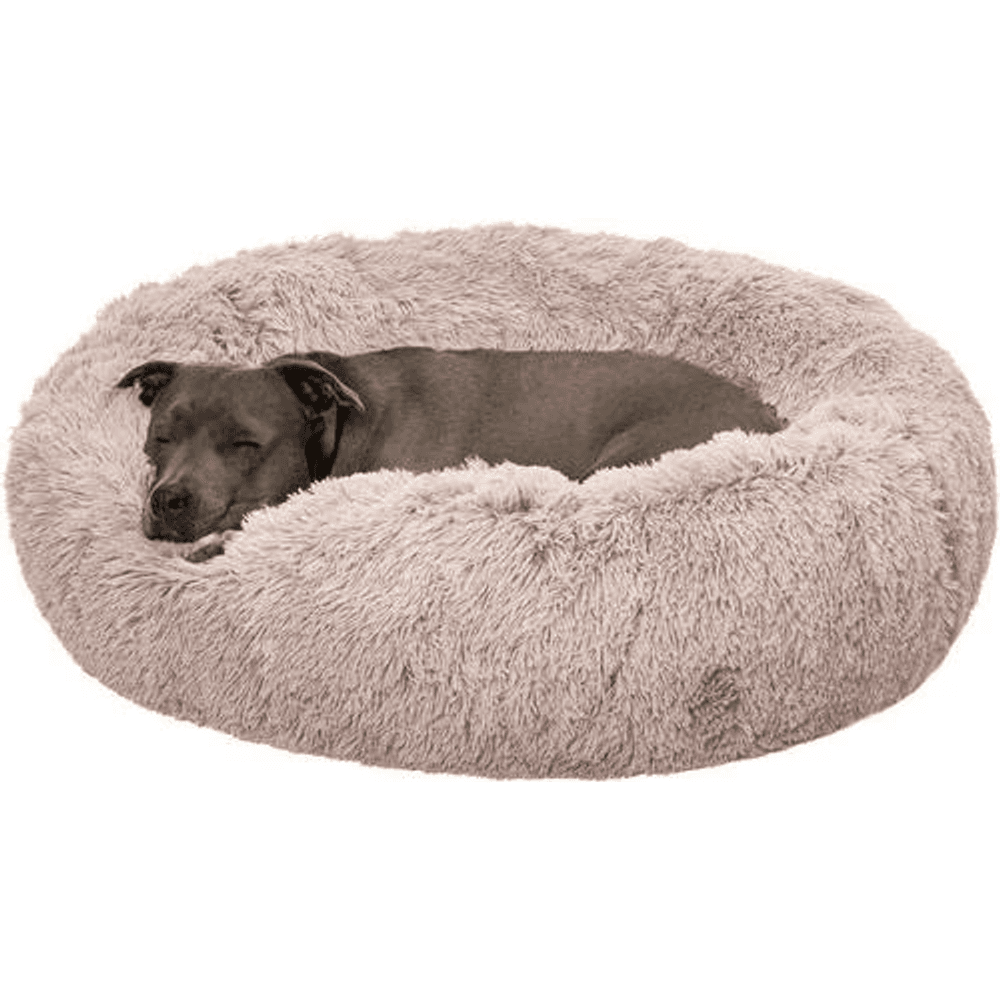
An optional Large resting bed when a new bed is needed. A familiar existing resting place is also suitable.
Webvet may earn a commission when you click through to Chewy, at no extra cost to you.
How to check a dog’s heart rate and pulse
To check dog pulse or heart rate, choose a quiet moment when your dog is comfortable. You can feel the heartbeat through the left chest, just behind the front elbow. Alternatively, you may feel the femoral pulse high on the inner thigh. Ask your veterinary team to demonstrate both locations.

A simple counting method is:
- Let your dog settle in a comfortable position without forcing it onto its side.
- Place your hand gently over the left chest, or use two fingertips at the pulse location your vet showed you.
- Count each complete heartbeat for 30 seconds.
- Multiply by two to estimate beats per minute.
- Record the result and the conditions of the measurement.
If the rhythm seems irregular, count for a full minute when feasible and report the irregularity. Do not press harder or keep repositioning a worried dog to obtain a result. Thick fur, body shape, movement, and panting can make a manual count difficult.
Avoid the common counting errors
A heartbeat can have two closely spaced sounds, often described as “lub-dub.” Together they represent one cardiac cycle, not two beats. At an artery, count each pulse you can feel. If you are uncertain what you are counting, ask for a demonstration rather than treating the result as precise.
Use your fingertips rather than your thumb at the inner thigh; your own thumb pulse can confuse the measurement. Start the timer when you start counting. A 15-second count multiplied by four is convenient, but a missed beat or timing mistake has a larger effect than in a longer count.
Do not use a heart-rate check to decide whether to start CPR on a responsive, breathing dog. Emergency assessment and resuscitation require a specific first-aid approach. If your dog becomes unresponsive or stops breathing normally, contact emergency veterinary help immediately and follow professional instructions.
What to record after a difficult count
It is useful to say “I could not obtain a reliable pulse” rather than inventing a number. Report whether the dog was moving, panting, whining, trembling, or resisting touch. A veterinarian can listen with a stethoscope and use diagnostic equipment when necessary.
Likewise, an occasional missed peripheral pulse does not establish an arrhythmia at home. The relationship between heartbeat and pulse can be clinically important, but interpretation belongs with a veterinary examination. A new irregular-feeling rhythm or repeated counting difficulty alongside weakness should prompt a call.
Plan routine transport before the appointment
For a stable dog small enough to fit it, a Frisco Travel Safety carrier can support a scheduled veterinary visit. The linked variant is Medium. Check the manufacturer’s fit guidance and introduce the carrier before travel. For an unwell dog, follow the clinic’s transport instructions instead of shopping for equipment.

A Medium carrier for a stable small dog attending a planned appointment. Check fit and follow the clinic’s transport guidance.
Webvet may earn a commission when you click through to Chewy, at no extra cost to you.
Sleeping heart rate, puppies, and anesthesia
A normal dog heart rate while sleeping can be lower than its awake resting rate. Compare sleeping counts with other sleeping counts, rather than comparing a sleeping reading with one obtained after an exciting walk. Brief changes during dreaming or movement can also make a short sample unrepresentative.
There is no single sleeping number that is safe for every dog. If your dog’s heart is beating fast while sleeping, first note whether the dog was truly settled or twitching and moving. A repeated unexpected fast count in quiet sleep, especially with breathing changes, deserves veterinary advice.
Puppy heart rate
Puppy heart rate is generally faster than adult heart rate. The Red Cross first-aid grouping of 120–160 beats per minute applies broadly to puppies under a year, but newborns and very young puppies need more specific clinical interpretation. Do not use that general row to clear an unwell neonate.
For puppy heart rate while sleeping, useful accompanying observations include:
- Whether the puppy wakes and responds normally.
- Feeding or nursing and recent weight progress.
- Warmth, comfort, and breathing effort.
- Vomiting, diarrhea, weakness, or unusual crying.
A weak puppy should be assessed promptly. Repeatedly handling it to collect several numbers may create stress and delay more useful care. Tell the clinic the puppy’s exact age, rather than simply saying “young dog.”
Choose the appropriate travel setup for your dog
For a stable dog travelling on a lead to a planned appointment, a Frisco padded harness is an alternative to a carrier, not an additional required purchase. The link opens the Small variant; measure before choosing. This is walking equipment, not a lifting sling or a heart-disease treatment.
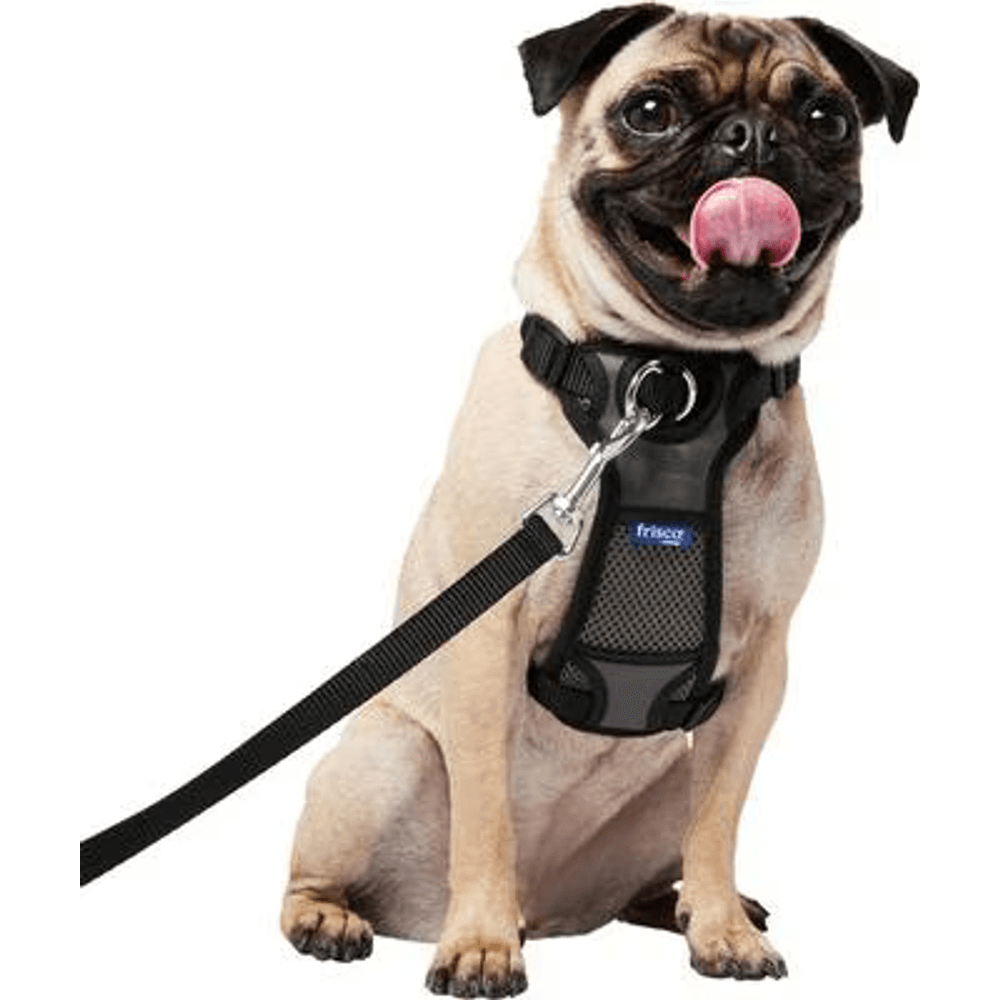
A Small harness for a stable dog travelling on a lead to a planned appointment. An alternative to a carrier when appropriate.
Webvet may earn a commission when you click through to Chewy, at no extra cost to you.
Sedation and anesthesia
Normal dog heart rate under anesthesia cannot be interpreted with a household resting chart alone. Anesthetic drugs, the procedure, blood pressure, oxygenation, temperature, and the individual patient all influence what the veterinary team considers acceptable. Monitoring involves several measurements at once.
If a dog heart rate dropped under anesthesia, ask the treating team what happened, what other measurements showed, and whether follow-up is needed. Do not infer from a remembered monitor number that the dog was safe or in danger. At home, follow the discharge instructions and call about poor recovery or new symptoms.
Older dogs do not automatically need a higher resting pulse target simply because they are seniors. Existing heart disease, pain, medications, and other illnesses can change interpretation. Your veterinarian may recommend an individualized plan based on those factors.
 $65 · no membership
Have a health question about your dog?
A licensed vet can assess your dog over video and prescribe online when it's appropriate.
 Talk to a vet
- Licensed vets
- All 50 states
- same-day Rx
Webvet may earn a commission if you book.
Fast, slow, or irregular heartbeats
A dog rapid heartbeat while resting can reflect stress, pain, fever, dehydration, anemia, heart disease, or another problem. The number cannot identify the cause. A dog whose heart is beating fast and who is shaking needs assessment of the whole situation, including possible pain, fear, heat, or toxin exposure.

What is a dangerously high heart rate for dogs?
There is no universal danger number that works for every size, age, and situation. A sustained rate well outside your dog’s expected resting pattern is a reason to call. Urgency increases when the change occurs with weakness, fainting, poor responsiveness, or breathing difficulty.
A veterinary triage threshold has a different purpose from a home reference. Clinicians interpret heart rate with circulation, examination findings, and sometimes an ECG. Do not wait for a particular high number before seeking help for a dog that appears seriously ill, and do not diagnose tachycardia from a brief excited count.
What is considered too slow?
A slow heart rate, or bradycardia, may be associated with normal rest in some dogs, medication effects, or disease. A fit large dog can have a lower resting rate than a small dog. A new low count is more concerning when it differs from the dog’s usual pattern or occurs with symptoms.
Tell the veterinarian about:
- Fainting, stumbling, unusual fatigue, or reduced exercise tolerance.
- A new medication or accidental access to medication.
- Recent anesthesia, illness, or cold exposure.
- Whether the rate remains low while the dog is awake and calm.
Do not test a dog’s response by forcing exercise. A dog that may have a circulation or rhythm problem should rest while you obtain advice. The clinic may recommend listening to the heart, an ECG, blood tests, or other investigations based on the findings.
Irregular does not always mean the same thing
Some healthy dogs have respiratory sinus arrhythmia, a normal variation in heart rate with breathing. Other rhythm changes can be clinically important. A home count cannot reliably distinguish them. Report a new irregular rhythm, especially if your dog has signs such as weakness, fainting, or breathing changes.
Avoid treating an irregular pulse with a supplement or borrowed medication. Record what you noticed and let your veterinarian decide whether the rhythm needs testing. If the dog has known heart disease, use the specific instructions already provided by the treating team.
Breathing rate and heart disease monitoring
Heart rate counts beats; respiratory rate counts breaths. They are separate measurements. In dogs with certain heart conditions, a veterinary plan may emphasize sleeping respiratory rate because changes can provide useful warning. Our normal respiratory rate for dogs guide explains the basic count.
Early heart failure signs in dogs can include increased resting breathing, reduced stamina, cough, or weakness, but these findings are not exclusive to heart disease. See the congestive heart failure guide for the condition-specific context. Labored breathing or collapse needs urgent care rather than more home monitoring.
Keep the record focused
If your veterinarian asks for monitoring, agree on:
- Which measurement to collect and under what conditions.
- How often to record it.
- What change should trigger a call.
- Which symptoms require immediate care.
Our dog respiratory rate trends guide covers longer-term records. A monitor or spreadsheet can help organize observations, but an alert does not diagnose heart failure and a reassuring device result does not cancel concerning symptoms. Confirm that any device suits the veterinarian’s monitoring purpose.
For temperature context, use the normal dog temperature chart. Do not combine several normal readings into a guarantee of health. Veterinary evaluation remains appropriate when your dog is behaving abnormally or appears unwell.
Questions to settle before using a monitor
Before buying a monitor, ask which measurement your veterinarian would actually use, how often it should be recorded, and what alerts would change the care plan.
A useful device should make the agreed task easier. Extra readings without an interpretation plan can make a worried owner collect more data without knowing what action to take.
Check fit, charging needs, reporting options, and whether the device measures the specific signal your veterinarian wants. A wellness monitor is not an emergency service. Continue watching your dog directly and report symptoms even if no alert appears.
An optional monitoring tool
Maven Pet offers a collar sensor for heart-rate and resting breathing trends in dogs. Ask your veterinarian whether those records would help with your pet’s care, and check current species features and subscription terms. We have not tested this device for this guide.
A wearable records trends; it does not diagnose a condition or replace urgent care. Manual observations remain useful, and a normal device reading should never override visible breathing difficulty, collapse, or other worrying symptoms.
Frequently asked questions
What are normal vitals for a dog?
Normal vitals for a dog include separate references for temperature, heart rate, and breathing. Adult rectal temperature is generally 99.5–102.5°F, while quiet resting or sleeping breathing commonly falls around 15–30 breaths per minute.
Heart rate varies with size and age. Interpret each measurement in context, and seek veterinary advice about concerning symptoms even when individual numbers seem normal.
Is a heart rate of 50 bpm normal for a dog?
A heart rate of 50 bpm may fit an established individual baseline for some very fit large dogs, especially during sleep. It is not automatically normal for every dog or every situation.
A new low count or one accompanied by weakness or fainting needs prompt veterinary advice. Do not use an athletic-dog exception to dismiss an unfamiliar change in your pet.
Can I use a smartwatch to check my dog?
A human smartwatch is not validated for dogs simply because it displays a number against the skin or coat. Fit, movement, fur, and the device’s algorithms affect the result. Use a manual count your veterinarian has demonstrated, or an appropriate veterinary monitoring device within a plan that explains what to do with its readings.
Does an irregular beat always mean heart disease?
No. Respiratory sinus arrhythmia can cause normal beat-to-beat variation with breathing in dogs. However, a home count cannot distinguish that pattern reliably from every abnormal rhythm. A veterinarian may recommend a veterinary ECG or other assessment, particularly when irregularity is new or occurs with fainting, weakness, or reduced exercise tolerance.
Should I stop medication if the pulse seems slow?
Contact the prescribing veterinarian rather than changing treatment yourself. Explain the count, timing, symptoms, and when the last dose was given. Some medicines affect heart rate, but abruptly stopping or adjusting them may create another problem. If the dog collapses or has breathing difficulty, seek urgent help and bring the medication information.
Is a pulse the same as a heartbeat?
A pulse is the pressure wave felt in a peripheral artery after the heart contracts. In many circumstances the pulse count and heartbeat count match, but a pulse deficit can occur when some beats do not produce an easily detectable peripheral pulse.
A veterinarian assesses that difference; a difficult home pulse count alone does not establish it.
$65 · no membershipHave a health question about your dog?
A licensed vet can assess your dog over video and prescribe online when it's appropriate.
Talk to a vet- Licensed vets
- All 50 states
- same-day Rx
Webvet may earn a commission if you book.

Editor
The Webvet Editorial Team is the in-house group of pet-care editors and writers behind Webvet, operated by Smart Pet Collective. The team researches, writes, and maintains Webvet's pet health, behavior, and medication content. Every article follows a defined editorial process: research from reputable veterinary and scientific sources, careful drafting, mandatory review of medical content by a credentialed veterinarian, and dated publication. Health and medication articles are medically reviewed by a licensed veterinary professional before they go live and are kept current over time.
Veterinarian · BVMS MRCVS
Dr. Pippa Elliott, BVMS, MRCVS, is a veterinarian with nearly 30 years of experience in companion animal practice. Dr. Elliott earned her Bachelor of Veterinary Medicine and Surgery from the University of Glasgow. She was also designated a Member of the Royal College of Veterinary Surgeons. Married with 2 grown-up kids, Dr. Elliott has a naughty Puggle named Poggle, 3 cats and a bearded dragon.


