Normal Dog Temperature: Chart and Safe Checking Guide
Learn the normal adult dog temperature range, compare Fahrenheit and Celsius, understand thermometer limitations, and recognize readings or symptoms that need veterinary attention.

BVMS MRCVS
Medically reviewed by Dr. Pippa Elliott, BVMS MRCVS · Last reviewed

This article contains affiliate links. Webvet may earn a commission when you buy through them, at no extra cost to you.
A normal dog temperature is generally 99.5–102.5°F (37.5–39.2°C) when measured rectally. That reference describes body temperature, not how warm the ears, nose, or fur feel. Your dog’s behavior, the measurement method, and the circumstances matter alongside the number.
If your dog collapses, struggles to breathe, becomes confused, or is very weak, seek veterinary help immediately. Taking a temperature is useful only when it is safe and does not delay care.
Normal dog temperature chart in Fahrenheit and Celsius
The Merck Veterinary Manual’s rectal temperature reference lists an adult dog range of 99.5–102.5°F. Other clinical references use slightly different lower limits. These are reference ranges, not a guarantee that a dog inside them is healthy.
- 1Compare a rectal reading with a rectal reference range.
- 2Consider recent exercise, excitement, heat exposure, and symptoms.
- 3Contact your veterinarian about an unexpected or persistent abnormal reading.
This reading-context-action chart puts adult ranges, measurement method, and the see-a-vet decision together. A rectal temperature reading needs the circumstances beside it: recent exercise, handling, and symptoms may change the next step. Use the chart to communicate with your veterinarian, rather than using one normal result to dismiss an unwell dog.
A thermometer for an agreed home-check plan
The Vet-Temp Rapid Flexible digital thermometer is a rectal model for dogs and cats. Keep it separate from human-use devices, and use it only if your veterinary team has recommended and demonstrated a home check. A pet that cannot be handled safely can have its temperature taken at the clinic.
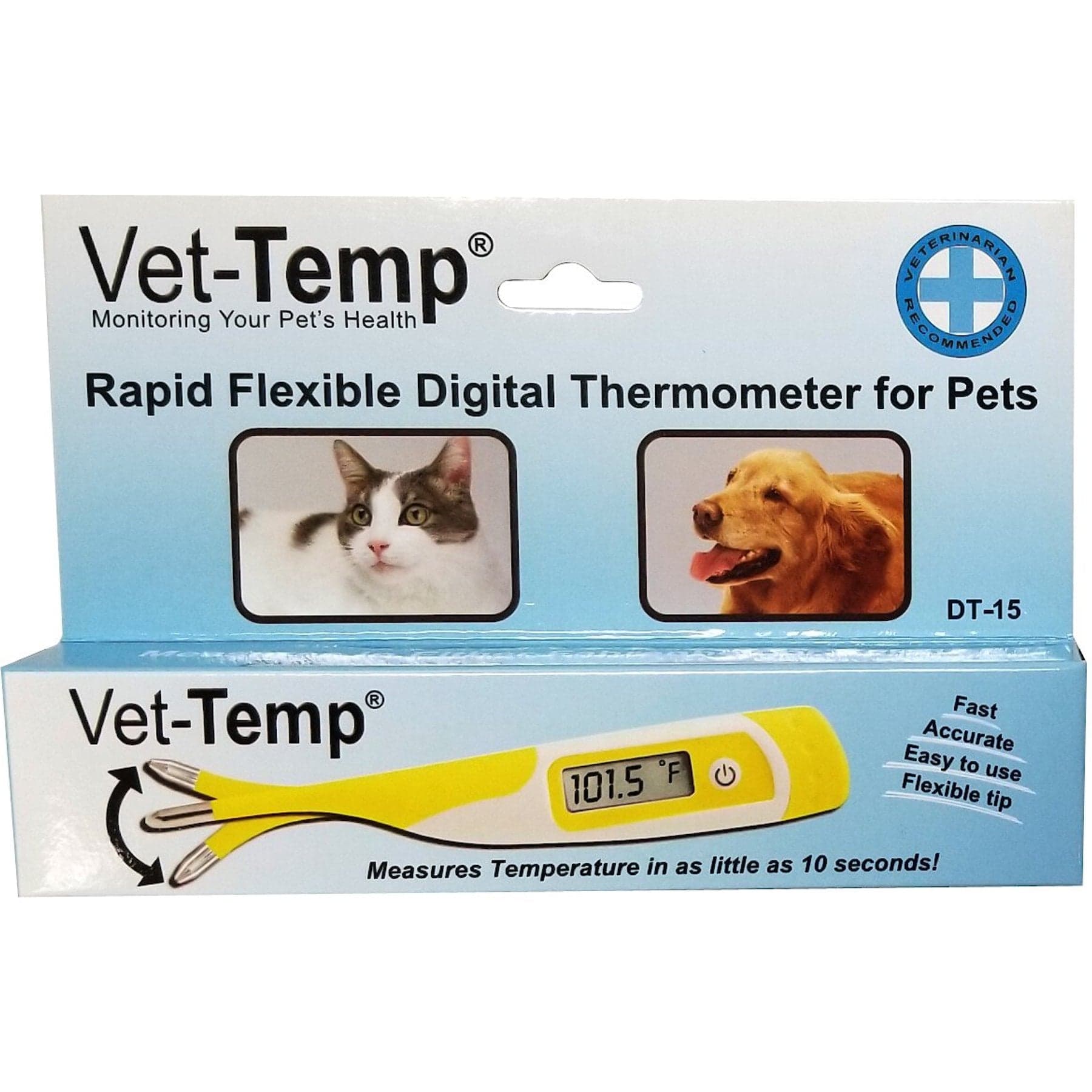
A flexible digital rectal thermometer for a pet temperature check when your veterinary team has shown you how to do it safely.
Webvet may earn a commission when you click through to Chewy, at no extra cost to you.
| Reading or situation | Interpretation | What to do |
|---|---|---|
| Adult rectal temperature 99.5–102.5°F / 37.5–39.2°C | General reference range | Consider behavior and other symptoms |
| Newborn puppy | Expected temperature is lower and changes with exact age | Use an age-specific veterinary reference; weakness or poor nursing needs prompt care |
| Older puppy | Temperature regulation develops toward the adult pattern | Confirm the appropriate reference with your veterinarian; symptoms still override the chart |
| Just above the range after activity or excitement | An elevated reading does not establish fever | If otherwise well, allow quiet rest and seek advice if it remains elevated |
| Persistently above 102.5°F / 39.2°C at rest | Needs interpretation of fever versus other causes | Call your veterinarian |
| Below the expected range | Measurement error or a low body temperature is possible | Check the method only if safe; contact your veterinarian |
| Adult around 104°F / 40°C or higher, or below 99°F / 37.2°C | Possible temperature emergency | Contact an emergency veterinarian now and arrange immediate assessment |
| See a vet: collapse, breathing difficulty, confusion, severe weakness, or heat exposure with illness | Symptoms override the chart | Seek emergency care without delaying for another measurement |
Choose covers that match the thermometer
Vet-Temp digital probe covers are compatible with the DT-15 flexible thermometer above. Keep the single-use covers with the device and follow its instructions for preparation and cleaning. They are an accessory for an appropriate home-check plan, not a reason to keep repeating an uncomfortable measurement.
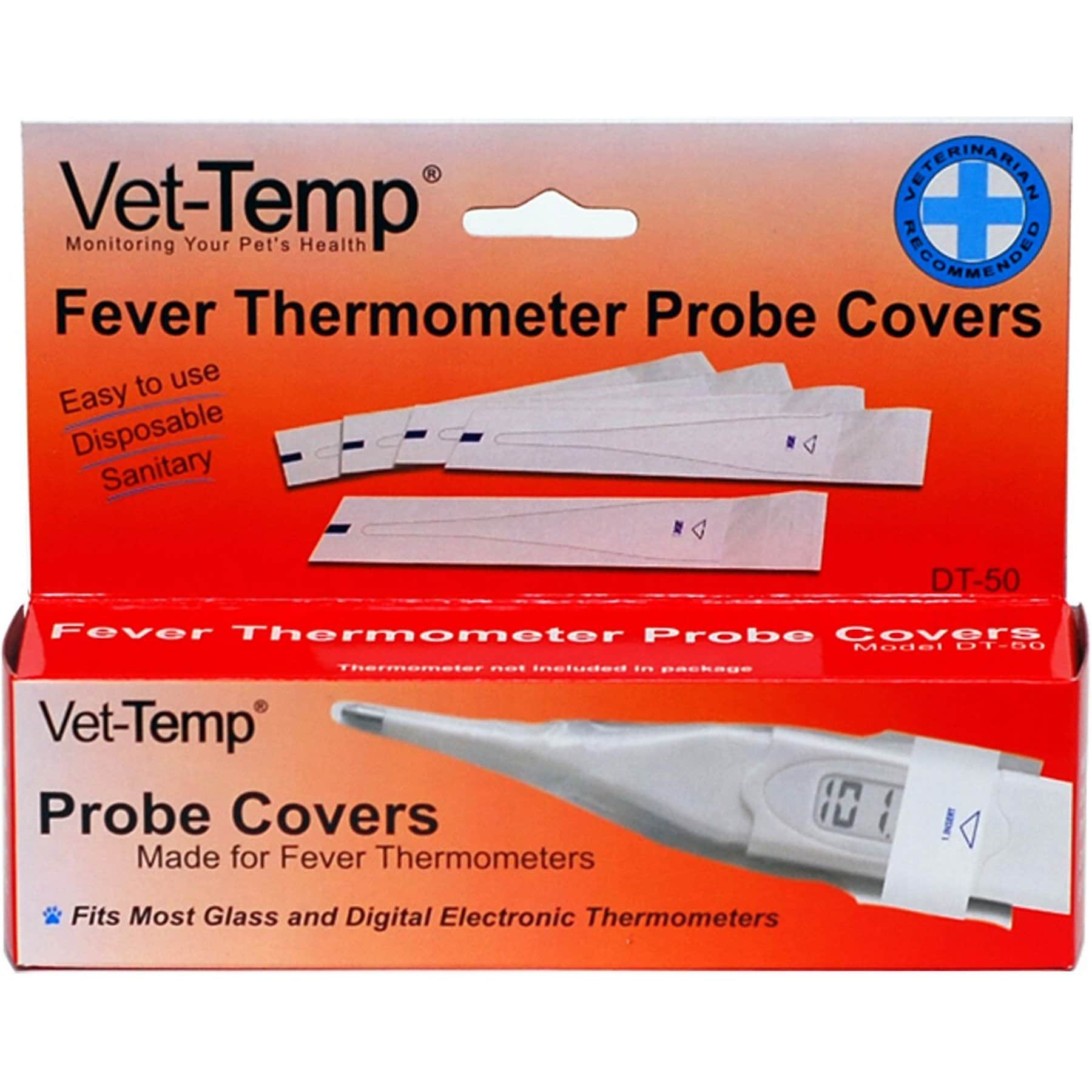
Single-use digital thermometer probe covers compatible with the Vet-Temp DT-15. Follow the thermometer instructions for use and cleaning.
Webvet may earn a commission when you click through to Chewy, at no extra cost to you.
Why context changes the meaning
A dog body temperature chart cannot identify the cause of an abnormal reading. Exercise or a hot environment can increase body heat. Fever involves a change in the body’s temperature regulation, usually in response to disease. A thermometer does not distinguish those mechanisms by itself.
Record three details with a reading:
- Method: rectal, ear, or another device and measurement site.
- Context: resting, just exercised, frightened, recently anesthetized, or exposed to heat.
- Condition: appetite, alertness, breathing, vomiting, diarrhea, and unusual behavior.
Do not compare a surface reading with a rectal chart or add an improvised “correction” to it. A normal dog temperature in Celsius uses the same clinical context as Fahrenheit. For conversion, subtract 32 from Fahrenheit and multiply by five ninths; the units do not change the urgency.
How to take a dog’s temperature safely
To learn how to take a temperature in dogs, start with a demonstration. Ask your veterinary team to demonstrate the technique before you need it during an illness.
Taking your dog’s temperature should be a brief, gentle procedure. A dog that is painful, frightened, or resisting may bite even if usually friendly. Stop when handling becomes unsafe.

For a cooperative dog, the basic process is:
- Use a clean digital thermometer reserved for the dog and a suitable lubricant.
- Have a calm helper support the dog in the position your veterinary team demonstrated.
- Lubricate the tip and gently position it rectally according to veterinary guidance and the device instructions.
- Hold the thermometer securely until it signals completion, then remove it and read the display.
- Clean the device as directed and write down the result, time, and method.
Never force the tip against resistance or leave a thermometer unattended. Insertion depth is not one universal number for every puppy, toy breed, and giant dog. Ask your veterinarian what is appropriate for your dog. Avoid trying the procedure if you cannot safely support the animal.
Keep a paper reference with the care instructions
The spiral-bound Pet Vet First Aid Guide is an optional paper reference for advance preparation. Keep your clinic's phone number and your dog's individual instructions with it. Read it before you need it; a general reference does not replace the plan your veterinary team gives you.

A spiral-bound pet first-aid reference to keep with your veterinary instructions and clinic contact details.
Webvet may earn a commission when you click through to Chewy, at no extra cost to you.
Make the reading useful
Checking dog temperature is most informative when you also explain what prompted the check. “102.8°F rectally after a run, eating and acting normally” describes a different situation from “102.8°F at rest, vomiting and barely responsive.” The second dog needs prompt assessment regardless of the modest temperature elevation.
If a reading seems implausible, check whether the device was used as instructed. Do not repeatedly restrain a distressed dog to obtain a tidier number. Tell the clinic that the measurement may be unreliable. A veterinarian can assess temperature alongside circulation, hydration, pain, and other findings.
Choosing a thermometer and checking methods
A digital rectal thermometer for dogs is a practical option when your veterinary team considers home measurement suitable. Choose a device you can clean and use confidently, keep it clearly labeled for pet use, and replace a damaged device. It does not need to be used every day on a healthy dog.
Prepare transport for a planned appointment
For a stable dog small enough to fit, the Frisco Travel Safety carrier is one option for a planned veterinary visit. This link opens the Medium model, so check its dimensions against your pet before choosing. Introduce the carrier ahead of time; an urgent problem calls for the clinic's transport instructions, not a shopping delay.

Soft-sided travel safety carrier that keeps a stressed cat secure and well-ventilated on the way to the vet, with mesh panels for airflow and a seat-belt loop.
Webvet may earn a commission when you click through to Chewy, at no extra cost to you.
Different methods have different limitations:
- Rectal: the usual clinical comparison method for the ranges in this article.
- Ear: depends on a suitable device, positioning, and the condition of the ear canal.
- Armpit: can be affected by contact, coat, and surrounding temperature; it is not interchangeable with a rectal result.
- No-touch or surface infrared: measures a surface and may not reliably represent internal body temperature.
VCA’s temperature-taking guidance explains why technique and cooperation matter. Earwax, hair, and ear disease can make an ear reading harder to interpret. There is no dependable universal “normal dog temperature in ear” adjustment that you should apply at home.
Searching for how to check dog temperature at home without a thermometer often reflects a dog that seems hot or unwell. Touch can alert you to a concern, but it cannot establish a fever. Look for changes in activity, eating, drinking, and breathing, then call your veterinarian rather than guessing a number.
 $65 · no membership
Have a health question about your dog?
A licensed vet can assess your dog over video and prescribe online when it's appropriate.
 Talk to a vet
- Licensed vets
- All 50 states
- same-day Rx

Webvet may earn a commission if you book.
Puppy temperature and special situations
Normal puppy temperature depends strongly on age. Newborn puppies do not regulate heat like healthy adult dogs. Their expected temperatures are lower early in life and rise as they develop. Do not apply the adult chart to a newborn or decide that an apparently low reading is harmless without considering age and condition.
The Merck Veterinary Manual’s neonatal guidance emphasizes immature temperature regulation. A newborn that feels cold, is weak, cries persistently, or is not nursing needs prompt veterinary advice. Heating methods, feeding, and the pace of warming require particular care.
Age and reproductive context
- Newborn puppies: use a veterinary plan based on exact age, litter conditions, and nursing.
- Older puppies: interpret readings with their stage of development and health history.
- Adult small dogs: body size alone does not justify using a different adult rectal-temperature range.
- A dog after giving birth: temperature must be interpreted with appetite, nursing, discharge, pain, and overall condition.
An unwell mother after delivery needs a veterinary call rather than reassurance from an online “normal dog temperature after giving birth” chart. Likewise, a recently anesthetized dog should be assessed using the discharge instructions and the clinic’s advice. Do not improvise warming or cooling based on a single reading.
Low dog temperature and urgent warning signs
Low body temperature in dogs can accompany cold exposure, anesthesia, or serious illness. A poor measurement is also possible. The key question is whether the dog is alert, comfortable, and behaving normally, or showing weakness, reduced responsiveness, slow or difficult breathing, or collapse.

While arranging help, move a cold or wet dog into shelter and dry the coat gently. Follow the clinic’s transport and warming instructions. Avoid direct contact with hot water bottles, heating pads, or other hot surfaces that can burn skin, especially when a dog cannot move away.
What an unwell dog may show
Changes worth reporting include:
- Unusual quietness, hiding, or reluctance to move.
- Shivering, a hunched posture, or signs of pain.
- Refusing food, repeated vomiting, or diarrhea.
- Labored breathing, pale or blue gums, fainting, or collapse.
No single resting position proves that a dog has fever or hypothermia. A dog may curl up because it is comfortable or because it feels cold or painful. A pattern of changes is more useful than interpreting one gesture. Tell the veterinary team what is different for your dog.
Three signs that a dog may be suffering
Three signs that dogs may be suffering include unusual reluctance to move, withdrawal from normal interaction, and a change in eating or resting behavior. These signs do not identify fever specifically. Pain, fear, weakness, and other illnesses can produce similar changes, so describe the pattern to your veterinarian rather than assuming its cause.
- Notice whether movement, touch, or a particular activity seems uncomfortable.
- Record when the behavior began and whether it is worsening.
- Seek urgent help for collapse, severe weakness, or breathing difficulty.
When a high temperature may be fever
A persistently elevated dog fever temperature needs a cause-based assessment. Fever in dogs may accompany infection or inflammation, while environmental overheating is a different problem. The dog fever guide covers signs, veterinary testing, safe interim care, and medicines to avoid.
If overheating is possible, use our dog heatstroke guide while contacting emergency care. Do not wait for the temperature to reach a particular threshold when a dog has concerning symptoms after heat exposure. A falling reading does not prove that the consequences of overheating have resolved.
Temperature is one vital sign
For a fuller reference, see normal dog heart rate and normal respiratory rate for dogs. A heartbeat is counted in beats per minute; breathing is counted in breaths per minute. Neither substitutes for a temperature measurement or veterinary examination.
Frequently asked questions
Is a warm or dry nose a reliable temperature check?
No. Nose moisture and surface warmth change with sleep, licking, surroundings, and other factors. A healthy dog can have a dry nose, and an ill dog can have a wet one. Use a thermometer only when safe and appropriate, and assess behavior and symptoms rather than relying on the nose.
Should a small dog have a different temperature range?
Healthy adult dogs generally use the same adult range regardless of body size. A toy breed does not automatically need a higher or lower target than a large breed. Age, recent activity, measurement method, and illness matter more. Newborn puppies are a separate situation and need age-specific veterinary guidance.
Is 102°F a fever in a dog?
A rectal reading of 102°F is within the reference range for an adult dog. It does not establish fever, but it also does not rule out another illness. Contact your veterinarian if other symptoms such as weakness, poor appetite, repeated vomiting, pain, or breathing changes are present.
Should I recheck after exercise?
For an otherwise well dog with a mildly elevated reading, quiet rest can help distinguish an activity-related change from a persistent abnormal result. Record the circumstances and ask the clinic when to recheck. Do not delay urgent care for collapse, confusion, breathing difficulty, or suspected heatstroke while waiting for a lower number.
Can I use a human digital thermometer?
Your veterinarian may recommend a suitable digital thermometer as a dedicated rectal thermometer for your dog. Follow the device instructions and the demonstrated technique, and keep it separate from human-use devices. Never use a glass thermometer that could break, and stop if your dog resists or you cannot handle the dog safely.
$65 · no membershipHave a health question about your dog?
A licensed vet can assess your dog over video and prescribe online when it's appropriate.
Talk to a vet- Licensed vets
- All 50 states
- same-day Rx
Webvet may earn a commission if you book.

Editor
The Webvet Editorial Team is the in-house group of pet-care editors and writers behind Webvet, operated by Smart Pet Collective. The team researches, writes, and maintains Webvet's pet health, behavior, and medication content. Every article follows a defined editorial process: research from reputable veterinary and scientific sources, careful drafting, mandatory review of medical content by a credentialed veterinarian, and dated publication. Health and medication articles are medically reviewed by a licensed veterinary professional before they go live and are kept current over time.
Veterinarian · BVMS MRCVS
Dr. Pippa Elliott, BVMS, MRCVS, is a veterinarian with nearly 30 years of experience in companion animal practice. Dr. Elliott earned her Bachelor of Veterinary Medicine and Surgery from the University of Glasgow. She was also designated a Member of the Royal College of Veterinary Surgeons. Married with 2 grown-up kids, Dr. Elliott has a naughty Puggle named Poggle, 3 cats and a bearded dragon.


