Dog Fever: Signs, Temperature Chart, and Next Steps
Learn how to recognize possible dog fever, interpret a temperature reading, prepare for a veterinary assessment, and avoid unsafe home medicines while arranging care.

BVMS MRCVS
Medically reviewed by Dr. Pippa Elliott, BVMS MRCVS · Last reviewed

This article contains affiliate links. Webvet may earn a commission when you buy through them, at no extra cost to you.
Dog fever means body temperature has risen because the body’s temperature regulation has changed, often in response to disease. A warm nose or hot ears cannot confirm it. A safely obtained temperature, your dog’s symptoms, and a veterinary assessment help determine what is happening.
An elevated reading can also follow exercise, excitement, or overheating. If your dog collapses, seems confused, struggles to breathe, or becomes severely weak, seek emergency veterinary care immediately. Do not delay transport to get a temperature or try a home fever medicine.
Fever in dogs: temperature and action chart
The usual adult rectal reference is 99.5–102.5°F (37.5–39.2°C), according to the Merck Veterinary Manual. A dog high temperature above that range needs context. One slightly elevated reading after activity does not prove an infection, and a normal reading does not rule out illness.
- 1Confirm temperature only if you can do so safely.
- 2Call your veterinarian about an elevated resting reading or an unwell dog.
- 3Never give human fever medicines unless your veterinarian specifically directs their use for this dog.
This temperature-plus-symptoms plan for fever in dogs prioritizes urgent veterinary care and measurement context. It separates an elevated reading from a confirmed cause, makes warning signs visible, and avoids suggesting a human medicine dose. Use the chart to explain what you observed and ask which next step is appropriate for your dog.
A thermometer for an agreed home-check plan
The Vet-Temp Rapid Flexible digital thermometer is a rectal model for dogs and cats. Keep it separate from human-use devices, and use it only if your veterinary team has recommended and demonstrated a home check. A pet that cannot be handled safely can have its temperature taken at the clinic.
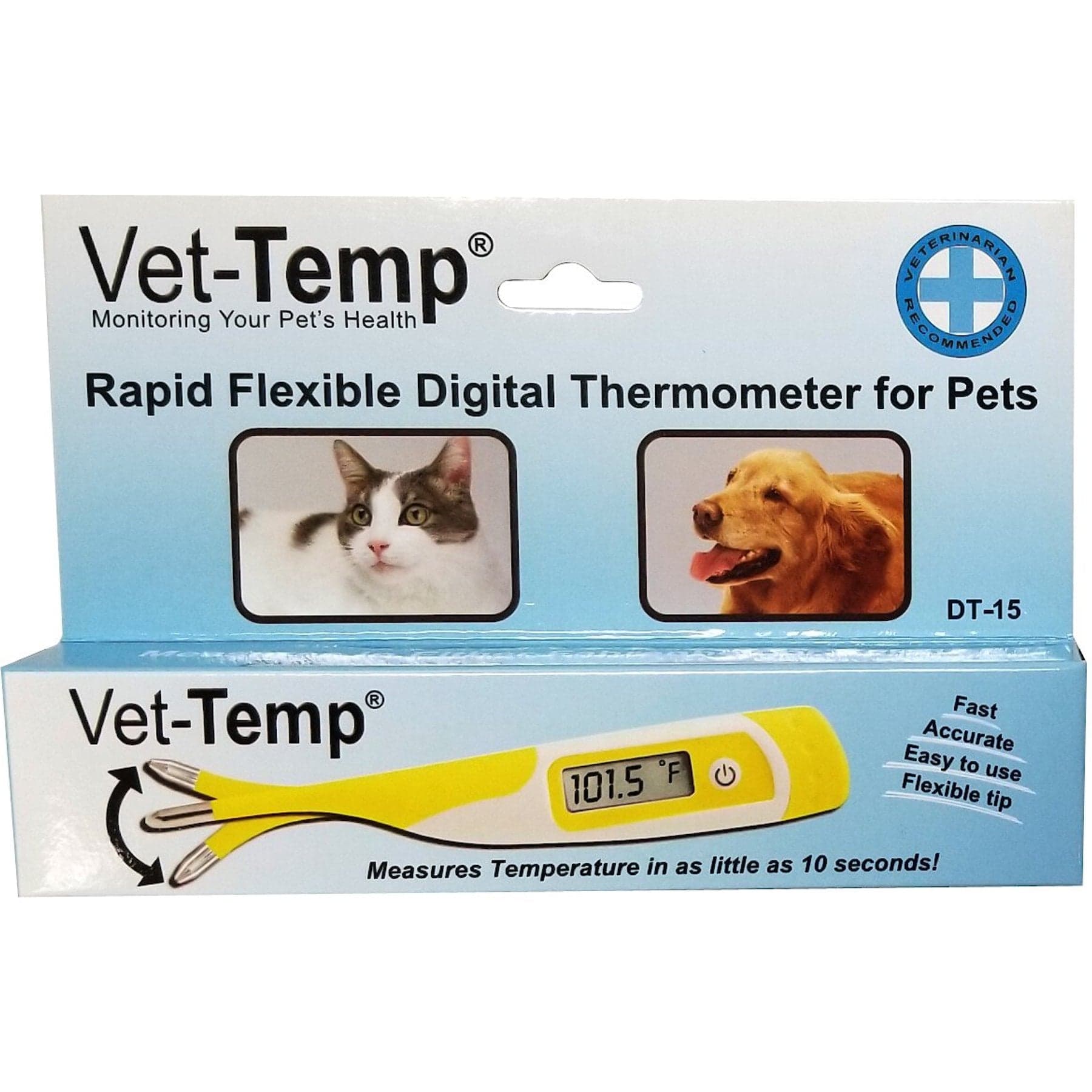
A flexible digital rectal thermometer for a pet temperature check when your veterinary team has shown you how to do it safely.
Webvet may earn a commission when you click through to Chewy, at no extra cost to you.
| Temperature or finding | Meaning | Next step |
|---|---|---|
| 99.5–102.5°F / 37.5–39.2°C rectally in an adult | General reference range | Assess symptoms as well |
| Slightly above the range after activity, otherwise well | Could be a temporary rise | Allow quiet rest and ask about persistent elevation |
| Above the range at rest or repeatedly elevated | Possible fever or another cause of increased temperature | Call your veterinarian |
| Around 104°F / 40°C or higher | Possible temperature emergency | Contact an emergency veterinarian now and arrange immediate assessment |
| See a vet: collapse, confusion, severe weakness, difficulty walking, or breathing distress | Potential emergency regardless of the number | Seek urgent care now |
Do not wait for 105°F or 106°F before asking for help. Higher temperatures can be dangerous, but illness can be serious below those numbers. Report how the temperature was measured and whether the dog had been exercising, stressed, or exposed to heat.
Keep a paper reference with the care instructions
The spiral-bound Pet Vet First Aid Guide is an optional paper reference for advance preparation. Keep your clinic's phone number and your dog's individual instructions with it. For a current fever, follow the treating veterinarian's advice rather than selecting medicines from a general chart.

A spiral-bound pet first-aid reference to keep with your veterinary instructions and clinic contact details.
Webvet may earn a commission when you click through to Chewy, at no extra cost to you.
Fever versus overheating
Fever and heatstroke are not interchangeable. Fever involves the body raising its regulated temperature. Heatstroke involves a dangerous heat load and can damage organs. If your concern followed a hot car, strenuous exercise, or environmental heat, tell the emergency clinic immediately and use the dog heatstroke guidance.
A dog can remain seriously ill after its temperature starts falling. Do not use a lower follow-up reading as permission to cancel care after collapse or suspected heatstroke. The history and examination determine what monitoring and treatment are needed.
How to tell if a dog has a fever
Dog fever symptoms can include reduced energy, poor appetite, shivering, and changes in behavior. These signs suggest that something is wrong, but none confirms fever on its own. The safest way to tell if a dog has a fever is an appropriate temperature measurement combined with veterinary interpretation.

Look for a change from your dog’s usual pattern:
- Sleeping more, withdrawing, or showing less interest in normal activities.
- Eating less or refusing a meal.
- Shivering or appearing uncomfortable.
- Vomiting, diarrhea, coughing, nasal discharge, or signs of pain.
- Drinking differently, panting unexpectedly, or breathing faster at rest.
Write down when the changes began and whether they are getting worse. A short video of unusual breathing or walking may help the clinic if recording does not delay care. Do not repeatedly make a weak dog stand or walk to demonstrate a problem.
Symptoms that change the urgency
A dog that has fever and trouble walking needs prompt veterinary assessment. Weakness, pain, a neurological problem, or another serious condition may be involved. Sudden inability to stand, collapse, marked confusion, or seizures warrants emergency help rather than a wait-and-see home treatment.
Dog fever and diarrhea also require context. Tell the veterinarian about blood, repeated vomiting, drinking, possible toxin exposure, and vaccination status. Puppies, frail older dogs, and dogs with existing disease can become unwell quickly. A fever-and-cough home remedy should not replace evaluation of a dog that has difficulty breathing.
For a calm dog, our normal respiratory rate for dogs guide explains counting resting breaths. Labored breathing is an emergency even if the count does not seem high. Avoid handling that makes breathing harder.
Keep the usual water available
A Frisco collapsible travel bowl is a portable option for offering your dog's usual water on a routine clinic trip or keeping a bowl nearby during the agreed home-care plan. This is the Small, 1.5-cup version. It is ordinary drinking equipment, not a treatment for fever or a substitute for veterinary fluids.

Collapsible silicone travel bowl with a carabiner that clips to a leash or bag, so your dog always has fresh water on walks, hikes, and car trips.
Webvet may earn a commission when you click through to Chewy, at no extra cost to you.
What causes fever in dogs?
What causes fever in dogs depends on the illness. Causes of dog fever include infections, inflammatory disorders, and some other diseases. The temperature itself does not identify which one is responsible. A veterinarian combines the history and examination with targeted tests rather than selecting an antibiotic simply because the dog feels hot.
Possible categories include:
- Infection: a wound, abscess, urinary infection, respiratory infection, or another infectious process.
- Inflammation: immune-mediated disease and other inflammatory conditions.
- A reaction associated with treatment: a recent vaccine or medication may be relevant to the history.
- Other underlying disease: persistent unexplained fever can require a broader investigation.
Prepare transport for a planned appointment
For a stable dog small enough to fit, the Frisco Travel Safety carrier is one option for a planned veterinary visit. This link opens the Medium model, so check its dimensions against your pet before choosing. Introduce the carrier ahead of time; an urgent problem calls for the clinic's transport instructions, not a shopping delay.

Soft-sided travel safety carrier that keeps a stressed cat secure and well-ventilated on the way to the vet, with mesh panels for airflow and a seat-belt loop.
Webvet may earn a commission when you click through to Chewy, at no extra cost to you.
This list is not a way to diagnose your dog at home. A visible wound can be useful information, but the absence of one does not rule out infection. Likewise, a fever after vaccination should be reported rather than automatically attributed to the vaccine if the dog is significantly unwell.
What to tell the clinic
Prepare a concise timeline:
- When the dog was last behaving normally.
- Every temperature reading, time, and measurement method.
- Recent vaccines, medications, procedures, travel, boarding, or wildlife contact.
- Changes in food, water, urination, stool, breathing, and movement.
- Access to human medicines, toxins, or unusual foods.
Bring medication packaging or a clear photograph of the label. The veterinarian may recommend blood tests, urine testing, imaging, or samples from a suspected infection. Not every dog needs every test; the examination helps decide which questions need answering first.
 $65 · no membership
Have a health question about your dog?
A licensed vet can assess your dog over video and prescribe online when it's appropriate.
 Talk to a vet
- Licensed vets
- All 50 states
- same-day Rx
Webvet may earn a commission if you book.
Dog fever treatment and medicines to avoid
Dog fever treatment depends on the cause and the dog’s overall condition. A veterinarian may prescribe an appropriate medicine, fluids, nutritional support, or other care. The goal is to address the illness and support the dog, not simply push the thermometer reading into a chosen range.
There is no universally safe over-the-counter dog fever medicine. The FDA’s pet pain-reliever guidance explains that animals handle drugs differently from people. Human products can cause serious harm, and a medicine used for one animal may be unsuitable for another.
Avoid these common mistakes:
- Giving ibuprofen, naproxen, aspirin, acetaminophen, or a combination cold-and-flu product without explicit veterinary instructions.
- Estimating a dose by cutting a human tablet into a smaller piece.
- Reusing a previous prescription for a new illness.
- Combining pain medicines or adding a steroid without the prescribing veterinarian’s direction.
- Treating a puppy with an adult dog’s medicine or dose.
Searching for the best medicine for dog fever, a dog fever tablet, or puppy fever medicine will not identify a safe choice without a diagnosis and dosing plan. Some products have several active ingredients. Give the clinic the complete product name if anything has already been administered.
If a human medicine was already given
Contact your veterinarian or an animal poison service immediately and provide the drug, strength, amount, time, and your dog’s weight. Do not wait for vomiting or another symptom to appear. Do not induce vomiting unless a qualified veterinary professional specifically tells you to do so.
A veterinarian’s prescription for an individual dog is different from a general recommendation to use a household medicine. Follow the exact instructions, report side effects, and ask before changing the dose or adding another product.
Safe care while arranging veterinary help
A home remedy for dog fever and cough cannot establish the cause. Dog fever treatment at home should mean following a veterinary plan and keeping the dog comfortable while care is arranged.
It should not mean experimenting with medicines, ice baths, alcohol rubs, or supplements. Ask the clinic what to do while traveling or waiting for the appointment.

Reasonable comfort measures include:
- Keep the dog in a quiet, comfortably ventilated space.
- Provide access to fresh water if the dog can drink normally.
- Avoid exercise and unnecessary handling.
- Record eating, drinking, urination, vomiting, and other changes.
- Follow instructions about food, medicines, and when to return for care.
Do not force water or food into a weak, vomiting, or poorly responsive dog. A dog that cannot keep water down or will not drink may need treatment for dehydration. Call again if the condition worsens before a planned appointment; the original advice may no longer fit.
The follow-up plan
Ask when the dog should start eating and acting more normally, whether another temperature check would be useful, and what to do if a dose is missed or vomited.
Follow-up instructions should identify both a routine recheck and the changes that require an earlier call. Contact the clinic if the expected improvement does not occur.
Normal temperature and measurement methods
The normal dog temperature guide gives Fahrenheit and Celsius ranges, safe handling steps, and the limitations of ear, armpit, and infrared readings. A dog normal temperature in Celsius is the same clinical reference expressed in another unit, not a different threshold.
If you do not have a suitable thermometer or cannot use one safely, describe the symptoms and call for guidance. Lack of a measured dog fever temperature should never prevent a seriously unwell dog from receiving care. The veterinary team can take the reading as part of the examination.
Frequently asked questions
Can dogs recover from fever on their own?
Some dogs recover from fever when a mild underlying illness resolves, but you cannot predict that safely from a temperature alone. Call your veterinarian about a suspected fever and describe the symptoms.
A dog with poor intake, worsening lethargy, pain, breathing changes, or persistent abnormal temperature needs assessment rather than waiting for spontaneous recovery. Follow the clinic’s recheck instructions.
Can I tell if my dog has a fever by touch?
You cannot reliably tell if your dog has a fever by touch. Warm ears, a dry nose, or a hot-feeling coat may reflect surroundings or normal variation, while an ill dog may not feel unusually hot.
A measured temperature is more useful when obtained safely. Collapse or breathing trouble requires care whether or not you can obtain a reading.
Does a fever always mean infection?
No. Inflammation and other illnesses can also cause fever, and an elevated temperature can sometimes have a non-fever explanation such as overheating. The cause is not always bacterial, so an antibiotic is not automatically the appropriate treatment. A veterinary examination and selected tests help distinguish the possibilities and guide treatment.
Can a dog have fever after vaccination?
A temporary reaction can include reduced energy and a mild temperature change, but tell your veterinarian about the timing and symptoms. Worsening signs, persistent illness, or refusal to drink deserves further advice. Facial swelling, collapse, or breathing difficulty after vaccination requires urgent help rather than assuming it is an ordinary short-lived reaction.
$65 · no membershipHave a health question about your dog?
A licensed vet can assess your dog over video and prescribe online when it's appropriate.
Talk to a vet- Licensed vets
- All 50 states
- same-day Rx
Webvet may earn a commission if you book.

Editor
The Webvet Editorial Team is the in-house group of pet-care editors and writers behind Webvet, operated by Smart Pet Collective. The team researches, writes, and maintains Webvet's pet health, behavior, and medication content. Every article follows a defined editorial process: research from reputable veterinary and scientific sources, careful drafting, mandatory review of medical content by a credentialed veterinarian, and dated publication. Health and medication articles are medically reviewed by a licensed veterinary professional before they go live and are kept current over time.
Veterinarian · BVMS MRCVS
Dr. Pippa Elliott, BVMS, MRCVS, is a veterinarian with nearly 30 years of experience in companion animal practice. Dr. Elliott earned her Bachelor of Veterinary Medicine and Surgery from the University of Glasgow. She was also designated a Member of the Royal College of Veterinary Surgeons. Married with 2 grown-up kids, Dr. Elliott has a naughty Puggle named Poggle, 3 cats and a bearded dragon.


