Tresaderm for Cats: Uses for Ear Mites and Infections, and Safety
Tresaderm is a prescription ear and skin solution labeled for ear infections and some skin conditions in cats, including infections that complicate ear mites. This guide covers label dosing, how to apply and refrigerate it, side effects, and when to call the vet.

BVMS MRCVS
Medically reviewed by Dr. Pippa Elliott, BVMS MRCVS · Last reviewed

Drug facts
Tresaderm (thiabendazole, dexamethasone, neomycin sulfate solution)· Tresaderm
Tresaderm is an FDA-approved prescription solution for dogs and cats that combines thiabendazole, dexamethasone, and neomycin. Vets use it for bacterial and fungal outer ear infections, inflammatory skin disease, and infections that complicate ear mites. The label dose for ears is 5 to 15 drops twice daily for no longer than one week, kept refrigerated.
Treats
 Sponsored
Is Tresaderm (thiabendazole, dexamethasone, neomycin sulfate solution) right for your cat?
A licensed vet at Dutch can assess your cat over video and prescribe treatment when it's appropriate, delivered to your door.
Use code Pets60
Plans start at $12/month · covers up to 5 pets
- Licensed vets in most states
- Rx for 150+ conditions
- 4.7 on Trustpilot
Tresaderm for cats: what it treats, prescription status, and whether today is a vet day
Tresaderm for cats is a prescription ear and skin solution that combines an antifungal (thiabendazole), a steroid (dexamethasone), and an antibiotic (neomycin sulfate). Its label covers ear infections and some skin conditions in cats, including infections that complicate ear mites; ear mites themselves are not a labeled use. It is kept refrigerated, and a vet examines the ear first.
The FDA-approved Tresaderm label on DailyMed lists the solution as an aid in treating bacterial, fungal, and inflammatory skin disease and outer ear infection (otitis externa) in dogs and cats. Federal law restricts it to use by or on the order of a licensed veterinarian. If your cat's ears have not been examined for this problem, today is a vet day.
- 1Tresaderm is an FDA-approved prescription solution for dogs and cats, approved under NADA 042-633.
- 2Bacterial and fungal ear infections, inflammatory skin disease, and infections that complicate ear mites are what Tresaderm treats in cats.
- 3The label drops per ear are five to 15, twice daily, for no longer than one week, as the vet directs.
- 4Store the bottle in the refrigerator at 36 to 46°F (2 to 8°C).
- 5A head tilt, hearing loss, loss of balance, or lethargy during treatment means stop and call the vet.
A vet exam comes first because head shaking, scratching, and discharge, the usual signs of a cat ear infection, can come from mites, bacteria, yeast, or a torn eardrum. The Merck Veterinary Manual says diagnosis rests on history, an otoscope exam, and cytology, a swab of ear debris checked under the microscope.

Can I get antibiotics for my cat without seeing a vet?
No. Under the GFI #263 change the U.S. Food and Drug Administration announced in June 2023, all medically important antimicrobials for animals require a licensed veterinarian's authorization once old over-the-counter stock runs out. A prescription needs a valid veterinarian-client-patient relationship (VCPR), with rules that vary by state.
Tresaderm comes in 7.5 mL and 15 mL dropper bottles. An FDA-approved generic (ANADA 200-565) contains the same active ingredients in the same concentration and dosage form, according to the FDA Freedom of Information Summary. If Tresaderm is hard to find, the vet can say whether the generic is an option.
When the only problem is ear mites, a vet may instead choose Milbemite Otic Solution for Cats, 2 tube, 0.1% Milbemycin Oxime, labeled under the eCFR for ear mites in cats and kittens 4 weeks and older. It treats mites only. Chewy Pharmacy fills it only with a veterinarian's prescription; it is listed at $28.55 on Chewy when checked in November 2026.
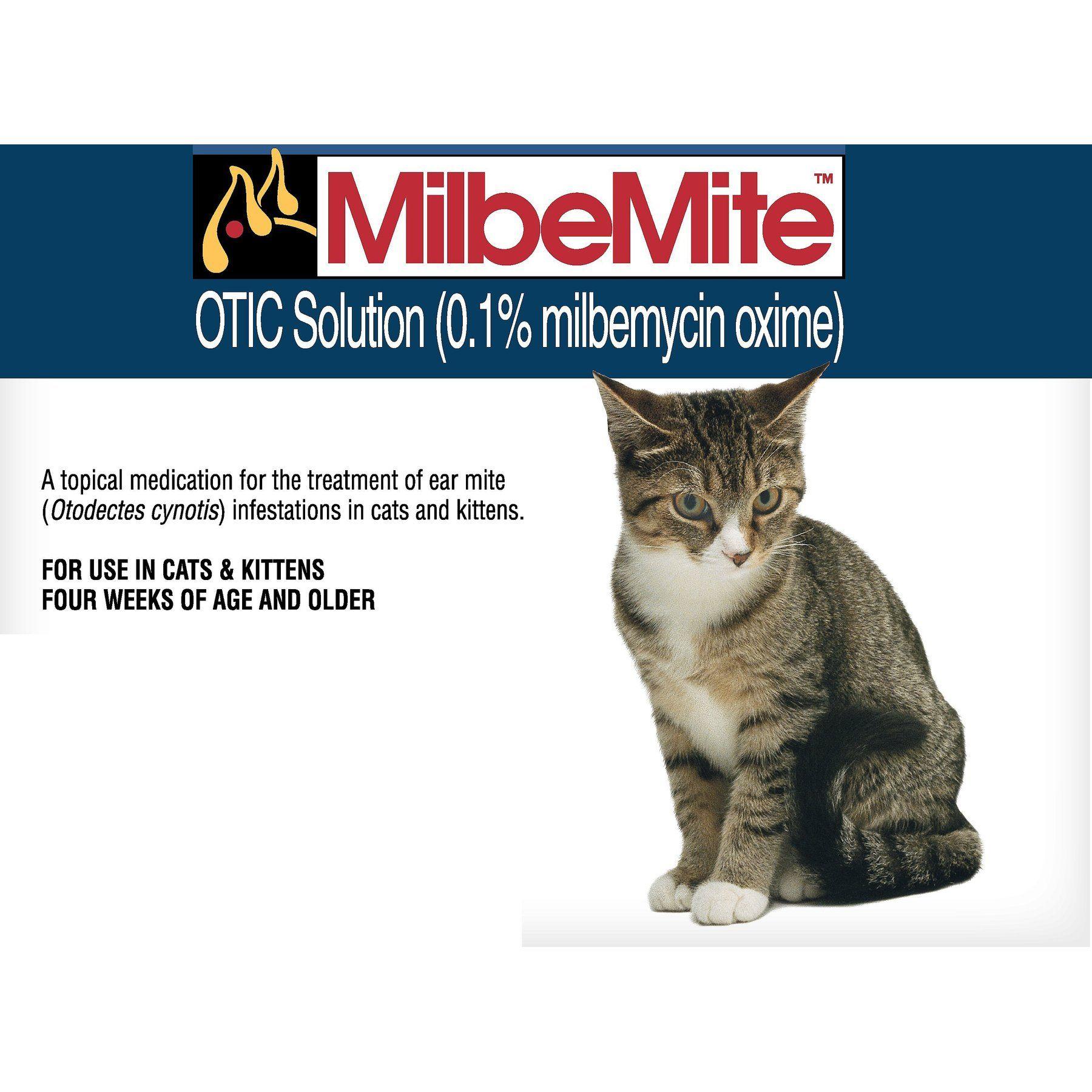
A prescription ear mite treatment for cats and kittens 4 weeks and older, one tube per ear, if the vet chooses it.
Webvet may earn a commission when you click through to Chewy, at no extra cost to you.
Tresaderm dosage for cats: drops per ear and how long to use it
The Tresaderm label directs 5 to 15 drops in the ear twice daily for no longer than one week, with a separate range for skin, and the vet sets the exact Tresaderm dose for cats within it, based on how severe and widespread the problem is. These are the figures the label directs, the range vets work within, not a home dosing guide. Give exactly what the vet prescribed.
| Use | What the label states for drops | Frequency | Course length | Storage |
|---|---|---|---|---|
| Ear infection (otitis externa) | 5 to 15 drops in the ear; the vet sets the number | Twice daily | Not longer than one week | Refrigerate at 36 to 46°F (2 to 8°C) |
| Ear mites with a complicating infection | No separate mite dose on the label; the vet directs drops within the ear range | Twice daily, as the vet directs | Not longer than one week on the label; the vet decides any further mite treatment | Refrigerate at 36 to 46°F (2 to 8°C) |
| Skin lesions such as ringworm patches | 2 to 4 drops per square inch, enough to moisten the lesion surface | Twice daily | Not longer than one week | Refrigerate at 36 to 46°F (2 to 8°C) |
| Kittens | No minimum age, weight, or kitten dose on the label | Set by the vet | Set by the vet | Refrigerate at 36 to 46°F (2 to 8°C) |
That ear range applies to cats and dogs alike. The label gives no separate cat figure, no kitten dose, and no weight chart, so the vet decides how many drops a cat gets. It caps the course length at one week.
The amount and frequency depend on the severity and extent of the lesions, the label says. Between doses, refrigerate the bottle; the label gives one storage rule for every use.

Before each dose, the label directs removing wax, pus, or foreign material from the ear canal, and crusts from skin lesions. Merck Veterinary Manual advises that the first cleaning happen at the clinic with the owner watching, using a cleaner with a neutral pH to lessen pain in inflamed ears.
One neutral-pH cleaner sold for cats is Virbac Epi-Otic Neutral-pH Advanced Dogs & Cats Ear Cleaner, 4-fl oz bottle, which contains 0.2% salicylic acid. It is over-the-counter, does not replace Tresaderm or the exam, and goes in the ear only once the vet confirms the eardrum is intact. It is listed at $13.59 on Chewy when checked in November 2026.
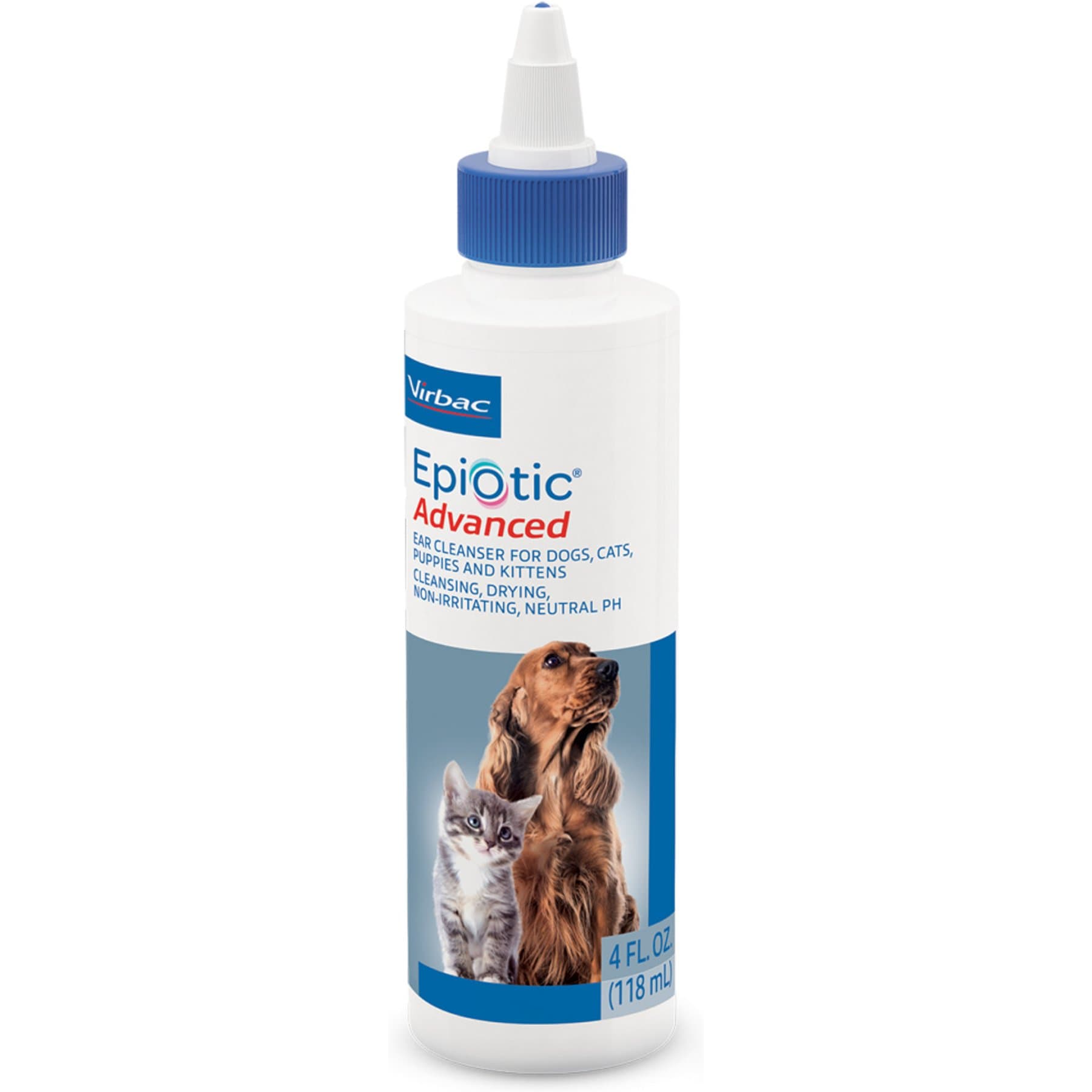
A neutral-pH ear cleaner for the cleaning step the vet shows you before each dose, once the eardrum is confirmed intact.
Webvet may earn a commission when you click through to Chewy, at no extra cost to you.
Give exactly the Tresaderm dosing the vet prescribed, in the ear or ears they named, for the days they named. Do not add drops, extend the course, or stop early without asking. If the ear still looks sore at the end of the week, the vet decides the next step at a recheck.
What Tresaderm treats in cats: ear mites, ear infections, and skin uses
Tresaderm treats bacterial and fungal ear infections, fungal and inflammatory skin disease such as ringworm, and infections that complicate ear mites in cats. The Tresaderm ingredients each cover a different cause. Per mL, the label lists 40 mg thiabendazole (antifungal), 1 mg dexamethasone (steroid), and 3.2 mg neomycin from neomycin sulfate (antibiotic). Merck Veterinary Manual classes neomycin as an aminoglycoside. Dexamethasone calms the inflammation that makes a sore ear itch.
What does Tresaderm do for cats, according to the label and its maker?
- Bacterial outer ear infection: the label names Staphylococcus aureus, Proteus vulgaris, and Pseudomonas aeruginosa among the chief bacteria.
- Fungal skin disease, including ringworm (dermatophytosis) caused by Microsporum and Trichophyton, which the label names as the principal causes in dogs and cats.
- Inflammatory skin disease: the Boehringer Ingelheim product page lists localized conditions such as ringworm, hot spots, pyoderma, and flea allergy dermatitis.
- Infections that complicate ear mites: the label describes these bacteria complicating ear mite infestation (otoacariasis) caused by Otodectes cynotis.
Ear mites themselves are not a labeled indication; the label mentions mites only as something bacteria complicate. Evidence that thiabendazole will kill ear mites comes from a 2006 dog study in the Revista Brasileira de Parasitologia Veterinaria using a 5% thiabendazole solution, not Tresaderm. Published evidence in cats is thin.
Ear mites are especially common in cats, the Merck Veterinary Manual pet owner guide notes, and in cats a dark discharge that looks like coffee grounds points strongly to mites. Every animal in contact with an infested cat should be treated too. Other options are covered in cat ear mite treatment and ear mites in kittens.
When an ear swab shows rod-shaped bacteria, Pseudomonas aeruginosa is one possibility, and the label names it among its target bacteria, though Merck advises a tris-EDTA cleaner when rods are seen because Pseudomonas can form a protective biofilm. Merck also advises taking samples before any cleaning, so skip cleaning a sore ear right before the visit.

On skin, the label directs moistening each lesion twice daily. The Merck Veterinary Manual ringworm guide says cats with widespread ringworm usually need oral antifungal drugs, so Tresaderm for cats with ringworm suits small, localized patches the vet has confirmed. Ringworm also spreads to people through contact with infected cats and contaminated objects.
Ringworm is confirmed before treatment: Merck says fungal culture of hairs and scrapings is the most accurate test, though results can take up to 3 weeks. The label cites laboratory studies showing significant thiabendazole activity against the important dermatophytes, the fungi behind ringworm.
For the wider range of ear medications used in cats, and what gets rid of an ear infection, see cat ear infection treatment; in short, the vet matches the drug to what the swab shows. What a yeast infection looks like in a cat's ear, and how vets confirm it, is covered in cat yeast ear infection.
What are some good antifungal ear drops for cats?
Good antifungal ear drops for cats are prescription products the vet chooses after a swab. Merck notes that most commercial prescription topical ear products combine an antimicrobial, an antifungal, and a glucocorticoid steroid. Tresaderm fits that pattern, with thiabendazole as its antifungal, though its label names ringworm fungi rather than ear yeast species.
What kills yeast in cats' ears?
A topical antifungal, usually paired with a steroid, clears most yeast ear infections. Merck Veterinary Manual says yeast otitis typically responds well to that combination, and that systemic antifungals such as terbinafine may help in cats. Whether Tresaderm treats a yeast infection in your cat depends on the swab; its label lists fungal (mycotic) disease without naming yeast.
Keeping a cat from licking a treated skin patch
A cat that keeps licking a treated skin patch may need a barrier, since the solution is for topical use only. A soft cone such as the Supet Soft Air Mesh Cat Recovery Cone, Blue, Medium: 8 to 10-in neck is designed to stop licking or biting of a treated area. It is not a treatment and does not replace the prescribed drug.
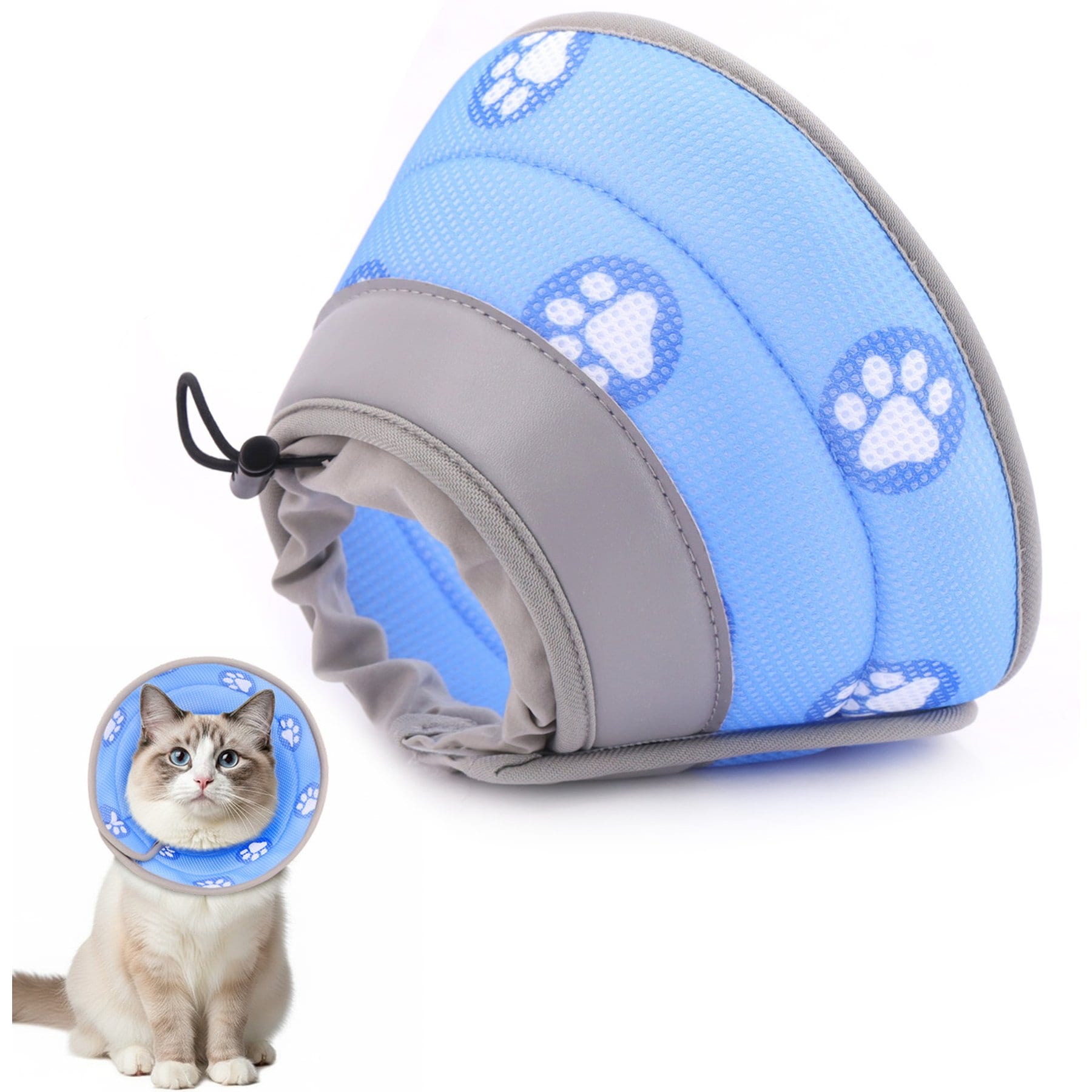
A soft mesh cone that keeps a cat from licking or biting a treated skin patch; it is not a treatment.
Webvet may earn a commission when you click through to Chewy, at no extra cost to you.
Tresaderm side effects in cats
Most Tresaderm side effects in cats are local, where the solution goes. The label's precautions describe dogs and give no feline side effects frequency. What the label describes:
- Brief stinging on cracked or raw skin.
- Rarely, in a dog sensitive to neomycin, redness of the treated area lasting 24 to 48 hours.
- Possible systemic steroid effects only if use is extensive and prolonged.
Does Tresaderm burn? It can sting. The label reports transient discomfort in some dogs when it was applied to cracked or raw areas, with pain lasting 2 to 5 minutes. Merck Veterinary Manual lists occasional hypersensitivity reactions and contact dermatitis among aminoglycoside side effects.
SponsoredVet care that's always there
Unlimited video calls and messaging with licensed vets for less than a typical vet visit. One membership covers up to five pets.
Use code Pets60
Plans start at $12/month · covers up to 5 pets
- Licensed vets in most states
- Rx for 150+ conditions
- 4.7 on Trustpilot
What are the side effects of TRESADERM for cats?
The side effects on the label are local stinging and redness, plus rare steroid effects with extensive, prolonged use. Its stop signs are increased thirst, weakness, lethargy, passing little urine (oliguria), gastrointestinal upset, or a fast heart rate. Merck adds hearing loss, head tilt, and vertigo as signs of ear damage.
Does Tresaderm make cats sleepy? It should not. The label lists lethargy and weakness among the signs that mean treatment should be stopped, not as an expected effect. A cat that turns sleepy, weak, or unusually thirsty during the course needs a call to the vet that day.
A cat known to react to any ingredient should not get Tresaderm without the vet's say. Besides the three active drugs, the label lists these inactive ingredients:
- Glycerin, propylene glycol, and purified water.
- Hypophosphorous acid and calcium hypophosphite.
- About 8.5% ethyl alcohol and about 0.5% benzyl alcohol.
The solution contains 1 mg dexamethasone per mL. The label says systemic side effects are not likely with topically applied corticosteroids, though they should be considered if use is extensive and prolonged. Separately, the label limits application to not longer than one week.
Solution that runs onto the ear flap fur can be wiped from the outer flap after each dose. A finger wipe such as Petkin Fingertip Ear Wipes Dog & Cat Grooming Wipes, 100 count is over-the-counter, for the outer flap only and never the canal, and does not replace the prescribed drops or the vet's check.
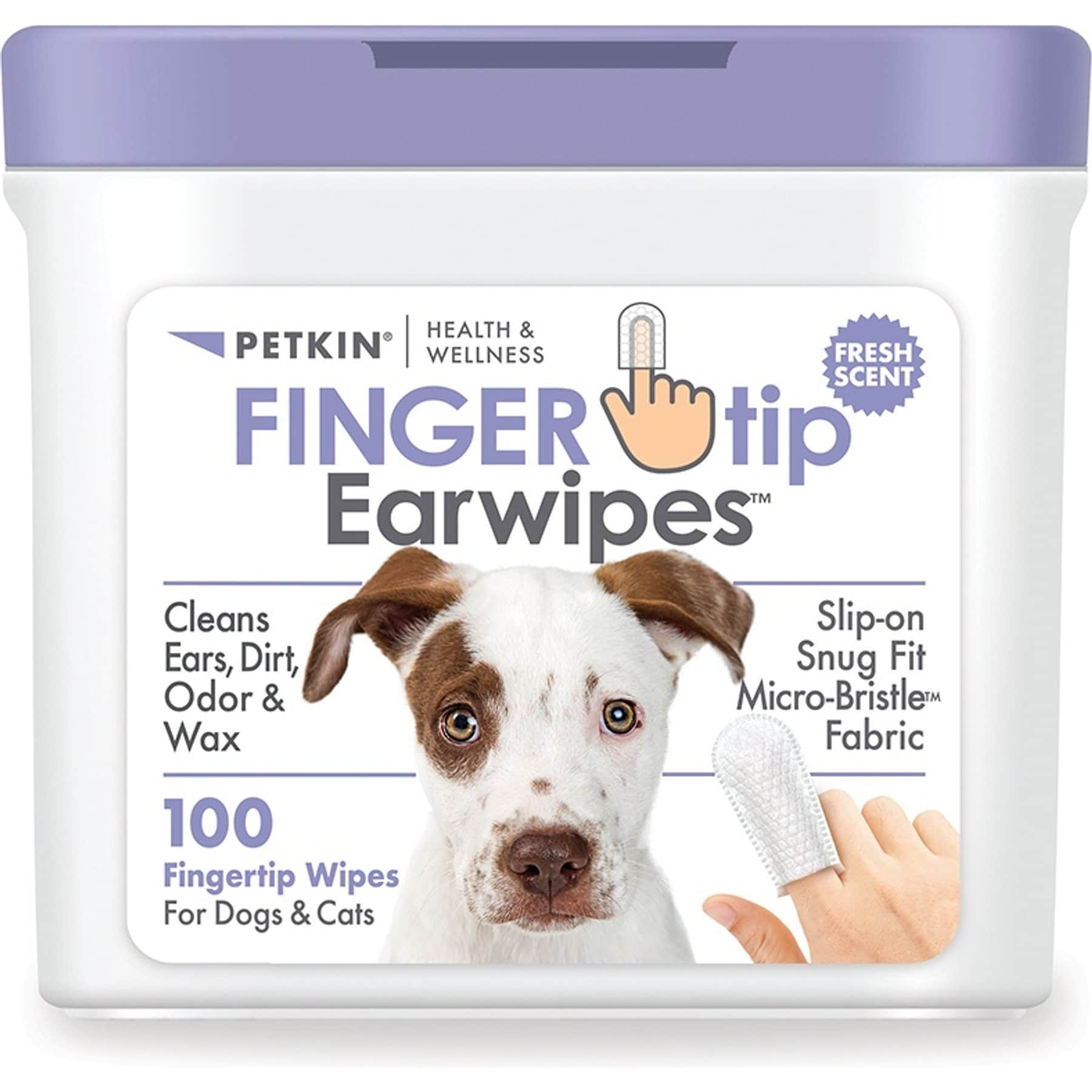
Finger wipes for clearing excess solution and debris from the outer ear flap only, never inside the canal.
Webvet may earn a commission when you click through to Chewy, at no extra cost to you.
When to stop Tresaderm and call the vet now

Is Tresaderm toxic to cats? Used as labeled, it is an FDA-approved topical treatment for cats. The label gives no toxic amount and no data on swallowing it. The known risks are ear damage when the eardrum is not intact, steroid effects with heavy, prolonged use, and reactions to neomycin.
Call the vet now if any of these appear:
- Head tilt, loss of balance, or sudden hearing loss after starting the drops: Merck Veterinary Manual lists decreased hearing, head tilt, and vertigo as signs of ear damage.
- Increased thirst, weakness, lethargy, passing less urine, vomiting or diarrhea, or a racing heart: the Tresaderm label says treatment should be discontinued if these appear.
- Swelling, rash, or redness spreading beyond the treated area, which can signal a reaction to neomycin.
- Tresaderm in a cat's eye: the label says to avoid contact with eyes, so call if the eye turns red, squints, or waters.
- A cat that ingested Tresaderm by licking a treated area or the bottle, especially with vomiting afterwards; the label is for topical use only, so call with the bottle in hand.
Can cats lick Tresaderm without harm? The label does not say. A quick groom of a treated ear is a common worry, but repeated licking of a skin patch is worth stopping and mentioning to the vet, and vomiting after licking Tresaderm is a same-day call.
Sneezing is not among the label's listed reactions. If a cat starts sneezing during treatment, mention it to the vet, who can judge whether it is related. If your cat collapses, struggles to breathe, or has a seizure, go straight to the nearest emergency clinic.
Kittens, pregnant cats, ruptured eardrums, and cats that should not get Tresaderm
Is Tresaderm safe for cats? Yes, used as labeled: the label approves it for topical use in dogs and cats. It gives no minimum age or weight, no kitten dose, and no statement on pregnant or nursing cats, so for those cats the decision is the vet's.
The biggest safety question is the eardrum, or tympanic membrane. Merck Veterinary Manual says it should be verified as intact before any topical ear treatment, because agents such as aminoglycosides can cause ear damage, with greater risk when it is not intact.
Merck places neomycin among the aminoglycosides with the greatest ototoxic potential, and notes that severe ear mite infestations can tear the eardrum, one more reason a young or heavily infested kitten needs an exam before any drops. Cats that should not get Tresaderm, or that need extra caution:
- A cat with a ruptured eardrum, or one the vet cannot see: Merck says aminoglycosides should not be given topically into the ear unless the eardrum is intact.
- A cat that has reacted to neomycin or another ingredient before.
- Kittens: is Tresaderm safe for kittens? The label sets no age limit either way, so the vet weighs the kitten's size and checks its eardrums.
- Pregnant or nursing cats: is Tresaderm safe for pregnant cats? The label gives no data, so the vet decides whether the benefit is worth it.
- Cats with existing hearing or balance problems, or on other drugs that can affect hearing: Merck lists both as raising the risk of ear damage from aminoglycosides.
- Cats on a loop diuretic such as furosemide, which Merck says enhances aminoglycoside ear toxicity.
- Cats needing long or widespread treatment, since the label notes systemic steroid effects become possible with extensive, prolonged use.
Tell the vet about every medication and supplement your cat takes before the first dose, and mention any earlier reaction to ear drops.
How to apply and store Tresaderm, and what to do if it is not working
Applying Tresaderm, even to a cat that dislikes ear handling, comes down to cleaning first, a steady hold, and the drop count on the vet's instructions. These steps follow the label's directions and describe technique only:
- Take the bottle from the refrigerator and check the vet's directions for which ear, how many drops, and how many days.
- Clean the ear first the way the vet showed you; the label directs removing wax, pus, and debris before each application. Merck notes many cats accept cotton balls soaked in cleaner better than cleaner squeezed into the canal.
- Lift the ear flap and insert the nozzle only partway; the label says the nozzle design allows partial insertion into the ear canal.
- Squeeze in the number of drops the vet prescribed, keeping the tip away from the eyes.
- Release the ear, let the cat shake, and wipe any excess from the outer flap.
- For skin patches, moisten the lesion surface as the vet directed, then keep the cat from licking the area.
- Return the bottle to the refrigerator.
The same steps apply when using Tresaderm for ear mites; the vet's directions set which ears and for how long.

Does Tresaderm for cats need to be refrigerated? Yes. The refrigeration rule on the Tresaderm label is to store it in a refrigerator at 36 to 46°F (2 to 8°C). The label gives no data on what happens if Tresaderm is not refrigerated, gets warm, or goes past its expiration date.
Whether Tresaderm goes bad after time out of the fridge is not stated, so ask the pharmacy or vet before you use expired Tresaderm or a bottle that was left out. The 7.5 mL and 15 mL bottles hold the same solution; the vet chooses the size to cover the course.
Can I buy TRESADERM over the counter?
No. Tresaderm is a prescription drug: its label says federal law restricts it to use by or on the order of a licensed veterinarian, and the FDA summary for its generic lists the dispensing status as Rx. There is no legitimate route to Tresaderm for cats without a vet prescription.
After the course, once the vet clears the ear at the recheck, routine cleaning may help a cat prone to repeat problems; Merck says cleaning usually drops to once or twice weekly as maintenance.
Over-the-counter ear cleaners for that maintenance cleaning, none of them a substitute for Tresaderm, include Zymox Enzymatic Cat & Kitten Ear Cleanser, 4-fl oz bottle, TropiClean OxyMed Dog & Cat Ear Cleaner, 4-fl oz bottle, and, for cats that resist liquid, Pet MD Advanced Dog & Cat Ear Cleaner Wipes, 100 count. None treats an infection or replaces the exam; use them only as the vet directs, and see cat ear cleaner for choosing one.
Can a cat's ear infection resolve itself?
Not reliably. Merck Veterinary Manual notes that ear disease often becomes chronic or recurrent when the primary cause is not addressed, and chronic cases can take months to resolve. Ear mites also spread to other animals in contact with the cat.
If the ear is not better by the end of the course, book the recheck rather than restarting the bottle. Merck says treatment should continue until reexamination and repeat cytology, weekly to every other week, show the infection is gone. If an ear keeps failing to clear, the vet should consider otitis media, a middle ear infection.
A Tresaderm alternative for cats is the vet's choice, and options include:
- The FDA-approved generic with the same active ingredients and concentration.
- A different prescription ear product matched to the swab result.
- A mite-only prescription product when mites are the whole problem.
Tresaderm questions
Frequently Asked Questions
Does Tresaderm need to be refrigerated?
Yes. The storage rule on the label is to keep the bottle refrigerated at 36 to 46°F (2 to 8°C). Put it back in the fridge after each dose. If a bottle has been left out, check with the pharmacy before using it, since the label gives no room-temperature allowance.
What happens if my cat licks Tresaderm?
The label is for topical use only and gives no data on swallowing it, so licking is a question for the vet rather than something the label settles. Call your veterinarian if licking is repeated or your cat vomits or seems unwell afterwards, and keep the cat from licking a treated skin patch.
Does Tresaderm kill ear mites?
It may, but ear mites are not on its label. Its antifungal, thiabendazole, cleared Otodectes cynotis ear mites in a 2006 study of 10 beagles, five of them treated, using a 5% thiabendazole solution for seven days. Published evidence in cats is thin, and products labeled for feline ear mites exist.
Is Tresaderm safe for kittens?
There is no labeled answer for kittens: the label gives no minimum age, weight, or kitten dose. Your veterinarian checks the kitten's eardrums and weighs its size before prescribing. Some ear mite products do carry labeled kitten ages, such as 4 weeks and older for milbemycin otic solution.
Does Tresaderm treat ringworm?
For small, localized skin patches, it can. The label names Microsporum and Trichophyton, the fungi behind ringworm, and directs 2 to 4 drops per square inch on the lesion twice daily. Merck notes that widespread ringworm in cats usually needs oral antifungal drugs, and ringworm can spread to people.
Veterinarian · BVMS MRCVS
Dr. Pippa Elliott, BVMS, MRCVS, is a veterinarian with nearly 30 years of experience in companion animal practice. Dr. Elliott earned her Bachelor of Veterinary Medicine and Surgery from the University of Glasgow. She was also designated a Member of the Royal College of Veterinary Surgeons. Married with 2 grown-up kids, Dr. Elliott has a naughty Puggle named Poggle, 3 cats and a bearded dragon.


