Cat Yeast Ear Infection: Diagnosis, Treatment and Relapse
Learn how veterinarians confirm a cat yeast ear infection, distinguish it from mites or bacteria, choose antifungal care and assess recurring symptoms with a useful recheck record.

BVMS MRCVS
Medically reviewed by Dr. Pippa Elliott, BVMS MRCVS · Last reviewed

This article contains affiliate links. Webvet may earn a commission when you buy through them, at no extra cost to you.
A cat yeast ear infection usually means yeast has overgrown in an inflamed ear canal. The important question is not simply whether yeast is present, but whether it is contributing to disease and what allowed it to multiply. A veterinarian combines the ear examination with cytology, which means looking at a sample under a microscope, to choose treatment.
Brown wax, odor and scratching do not prove the problem is yeast. Mites, bacteria and other ear disorders can look similar or occur together. Arrange an examination for a painful, odorous or draining ear. A new head tilt, falling, unusual eye movements or marked illness needs prompt veterinary attention.
 Sponsored
Have a health question about your cat?
Talk to a licensed vet at Dutch over video or message, including nights and weekends.
Use code Pets30
Plans start at $11/month · covers up to 5 pets
- Licensed vets in most states
- Rx for 150+ conditions
- 4.7 on Trustpilot
What a cat yeast ear infection means
Malassezia is a group of yeasts associated with skin and ear disease.
Yeast can be found in some healthy feline ears as well as diseased ones. When conditions in the ear canal change, yeast overgrowth can contribute to inflammation, discharge and discomfort. The term yeast otitis describes that ear disease; it does not mean every positive yeast result requires the same treatment.
An original study of healthy cats and cats with otitis cultured Malassezia from both groups. That finding helps explain why a laboratory result needs clinical interpretation. The study's population and culture methods do not tell us how likely any individual pet is to have an infection, and they are not a reason to medicate a comfortable ear without veterinary advice.
The organism and the underlying problem
Treating yeast may relieve the current episode, while a separate problem continues to disturb the canal. Allergy, parasites, abnormal tissue or persistent inflammation may need their own care. Ask the vet to distinguish “what is growing in the ear” from “why this ear became vulnerable.” Those two answers guide different parts of the plan.
Also clarify where the disease is. The external ear canal, middle ear and inner ear are different structures. Most owner-visible debris comes from the outer canal, but appearance at the opening cannot establish how far disease extends. The general cat ear infection overview explains that anatomy and the broader diagnostic process.
Yeast, bacteria and mites: why appearance is not enough
Symptoms of a cat ear yeast infection can include scratching, head shaking, abnormal wax, odor, redness and pain.
These are signs to seek an examination, not a home test for yeast. A musty smell or dark discharge is not specific enough to distinguish yeast from bacteria, mites or a mixed problem.

| Possibility | What may overlap | What helps distinguish it |
|---|---|---|
| Yeast overgrowth | Itch, odor, wax and inflammation | Ear cytology interpreted with the examination |
| Bacterial disease | Odor, discharge and discomfort | Cytology; additional testing when indicated |
| Ear mites | Scratching and dark, crumbly debris | Examination for mites or eggs |
| Mixed infection or infestation | Features of more than one problem | Testing that accounts for each organism present |
| Abnormal wax or a structural problem | Material or obstruction at the opening | Otoscopy and further assessment as needed |
Why a photograph cannot identify the organism
Pictures of yeast ear infections show an appearance, not the organism-level diagnosis. Lighting, previous cleaning and dried blood can change the color. A photograph cannot reliably distinguish yeast from bacterial infection or ear mites, and a normal-looking opening does not show the entire canal. Use a photo to document a visible change for your vet, not to select medicine.
If your cat is comfortable with it, photograph only what you can see without inserting anything. Note the date and side, and do not clean simply to make the image clearer. The photographs in this article illustrate examination and sampling; they are not diagnostic examples of yeast-infected canals.
Yeast and mites can occur together
“Mites or yeast?” is not always an either-or decision. A study of free-roaming cats in Croatia documented co-occurrence of ear mites and Malassezia. That particular population does not provide a household-pet risk estimate, but it illustrates why identifying one finding should not automatically exclude another.
For a cat with both problems, the plan needs to address the parasite and clinically important microbial disease. The cat ear-mite comparison covers parasite identification. Avoid applying a mite product merely because the debris looks like coffee grounds, or assuming an antifungal will also eliminate mites.
Why yeast overgrows, including in indoor cats
An indoor cat can develop a yeast ear infection because staying indoors does not prevent every cause of canal inflammation.
The relevant history includes previous ear trouble, other itchy skin, new pets, medications and whether the same side repeatedly becomes affected. Report those details even if they seem separate from the ear.
Inflammation and allergy
Skin inflammation can affect the ear environment. If your cat also has facial itching, overgrooming or recurrent skin lesions, mention them. These signs do not prove an allergy, but they may change the investigation. Research comparing aural microflora in healthy, allergic and systemically ill cats also shows why findings must be interpreted within the animal's wider clinical condition.
Do not begin a succession of new foods to “starve the yeast.” If a food trial is needed, ask the clinic for a defined diet, duration and rules about treats and other foods. A carefully followed diagnostic plan is more informative than several simultaneous changes whose effects cannot be separated.
Parasites and physical obstruction
Ear mites can irritate the canal, including in a cat whose exposure happened before adoption or through another animal. If mites are diagnosed, ask about the other pets rather than treating only the cat with visible discharge. The Companion Animal Parasite Council provides guidance on mite control and contact-animal management.
A polyp, foreign object or other growth can also interfere with normal ear function. Cornell's feline polyp guidance explains this important feline problem. Ear drops cannot remove obstructing tissue. Persistent one-sided trouble, particularly with other signs such as noisy breathing, deserves a careful history and examination.
Previous products and chronic change
Tell the vet about every cleaner, drop or cream used, whether prescribed or purchased independently. Frequent cleaning and product reactions can add irritation; chronic swelling can make the canal harder to assess and treat. “Dirty again” is therefore more useful as a reason to investigate than as a reason to clean more often.
The distinction matters at a return visit. If the yeast has cleared but the ear remains inflamed, another antifungal course may not address the remaining problem. If yeast persists, the team may need to reassess delivery, the canal and the underlying trigger. Bring the actual bottles so everyone is discussing the same formulation.
SponsoredVet care that's always there
Unlimited video calls and messaging with licensed vets for less than a typical vet visit. One membership covers up to five pets.
Use code Pets30
Plans start at $11/month · covers up to 5 pets
- Licensed vets in most states
- Rx for 150+ conditions
- 4.7 on Trustpilot
How vets treat confirmed yeast otitis
Treatment for a cat ear yeast infection commonly includes a selected topical antifungal, with other medication or cleaning according to the findings. The Merck professional otitis review emphasizes diagnosis-specific care and addressing the inciting cause. A yeast result does not by itself choose a drug, dose, duration or cleaning schedule.

Confirm the result and the condition of the ear
Otoscopy assesses the canal and eardrum; cytology checks the sampled material. The vet may look for yeast, bacteria and inflammatory cells and may check separately for mites.
Severe pain or blockage can prevent a useful examination without sedation. Additional tests depend on the findings, especially when disease is unusual or keeps returning.
Ask what was found in each ear. One side may have different findings or need a different plan. It is useful to know whether “yeast” was seen on cytology, grown in culture, or merely suspected from appearance. Do not translate the result into a fixed home threshold: sampling and interpretation belong with the clinical examination.
Antifungal medicine is one job in the plan
Antifungal ingredients target fungal organisms; antibacterial ingredients have a different job. A combination ear medicine may also contain an anti-inflammatory. For example, the manufacturer's Tresaderm information describes a prescription combination for dogs and cats. Mentioning that medicine is not a recommendation to use it without a prescription or reuse an old bottle.
Systemic medicine or more involved treatment may be needed in selected cases. A deeper infection, obstructing lesion or cat that cannot tolerate topical care may require another approach. Do not give a human antifungal, put a skin cream into the canal or substitute leftover dog medicine. Ask what each prescribed product is intended to accomplish.
Cleaning and product compatibility
Cleaning may help remove material that interferes with treatment, but a painful or damaged ear changes what is appropriate. VCA's feline ear-cleaning instructions support following the veterinary instructions and avoiding unnecessary cleaning. Clarify whether the clinic will clean first, whether you should clean at home and how that fits with the medicine.
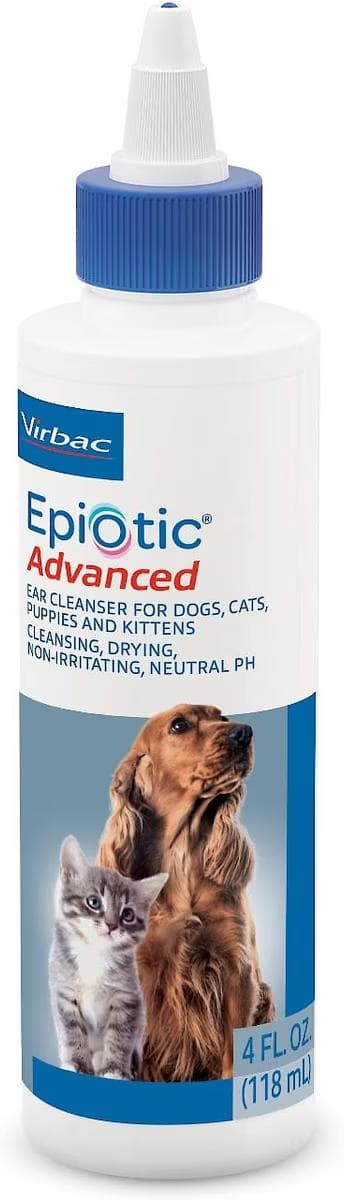
Virbac EpiOtic Advanced is an example of a cleanser to discuss when the plan calls for one. The manufacturer lists use in cats. A cleanser's role is not proof that it will resolve your cat's yeast infection, and the product should not be added merely because wax is visible.
Webvet may earn a commission when you click through to Chewy, at no extra cost to you.
Dechra TrizULTRA + Keto is a different formulation. Dechra's product information describes a ketoconazole-containing flush for dogs, cats and horses. Confirm its exact role and timing with the veterinarian. An ingredient with antifungal activity does not make every flush a complete treatment for every ear.
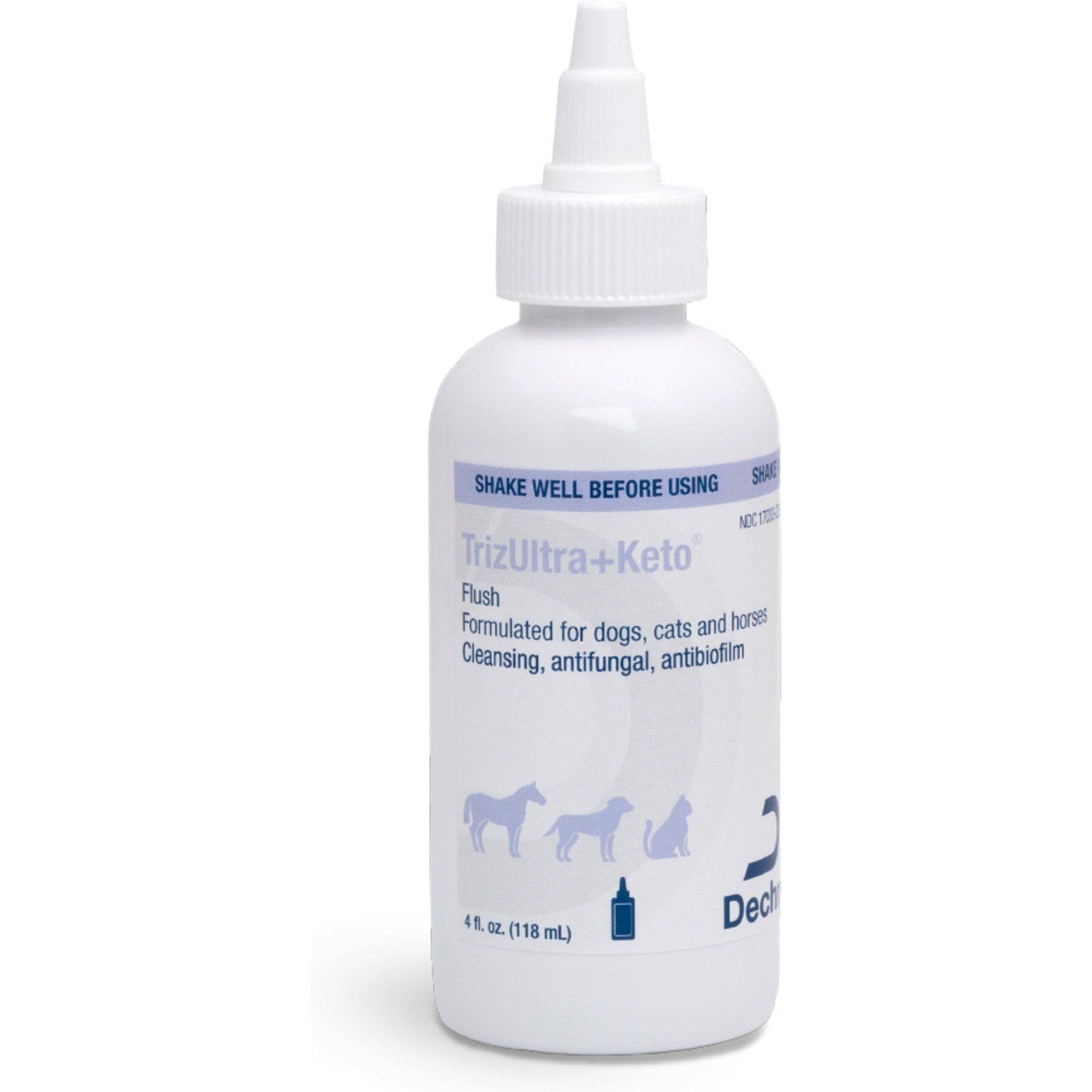
A ketoconazole-containing ear flush to discuss with your veterinarian when routine cleaning is not enough. Use only as directed for your dog.
Webvet may earn a commission when you click through to Chewy, at no extra cost to you.
Vetnique OticBliss ear flush contains different active ingredients, described in the manufacturer's information. Discuss the exact product if it has been recommended. Do not rotate cleansers to see which produces the cleanest-looking ear, and do not assume several antimicrobial products work better together.
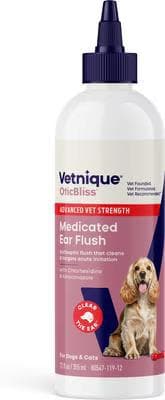
Vet-strength medicated ear flush that clears wax, debris, and odor while its antibacterial and antifungal formula targets the yeast and bacteria behind ear infections. For dogs and cats.
Webvet may earn a commission when you click through to Chewy, at no extra cost to you.
A no-precleaning product has different instructions
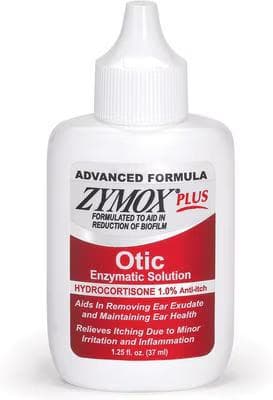
Zymox Plus with 1% hydrocortisone is an enzyme-based option with a no-precleaning instruction on its manufacturer page. That difference is a reason to confirm the plan, not to pick it from a suspected diagnosis. Ask whether it suits your cat and how it relates to any prescribed medicine or other product already in use.
Webvet may earn a commission when you click through to Chewy, at no extra cost to you.
Recovery and recurrent yeast ear infections
Track ear comfort and microscopic control separately. Less odor or scratching is welcome, yet it cannot establish that the yeast overgrowth and inflammation have resolved.
Keep the instructed course and recheck schedule. If your cat will not accept treatment, contact the clinic while there is time to adjust the plan.
Do not assume a yeast ear infection will go away on its own because the symptoms fluctuate. Report persistent pain, new discharge or a return of signs after treatment. Recovery depends on the starting condition, delivery of treatment and the underlying cause. There is no single reliable calendar that applies to every cat.
| Record | What to bring to the recheck | Decision it can inform |
|---|---|---|
| Ear comfort | Changes in scratching, pain and normal behavior | Whether the cat is improving or needs earlier help |
| Treatment delivered | Given, missed or uncertain doses; products used | Whether medicine reached the intended site |
| Repeat cytology | Findings interpreted by the veterinary team | Whether yeast or another organism remains clinically important |
| Underlying cause | Status of mite care, skin investigation or structural assessment | What is needed to reduce recurrence |
When the same problem returns
Keep a record that distinguishes persistent disease from a new episode:
- Which ear relapses and how soon after treatment.
- Whether the previous recheck confirmed resolution or the course ended because the bottle was empty.
- Other itchy pets, skin flares and difficulty giving the prescribed medicine.
VCA's feline otitis guidance describes further testing in severe or chronic cases. The next step may involve repeated cytology, assessment of the eardrum, testing for other organisms or investigating an obstruction. A recurrent infection is a reason to reconsider the explanation, not automatically a reason to request the same refill.
Can ear yeast spread between cats or to people?
Typical Malassezia ear disease is approached as opportunistic overgrowth in an altered ear environment, rather than assumed to be a newly acquired contagious household infection. The World Association for Veterinary Dermatology's consensus guidelines describe Malassezia biology, disease and the importance of clinical context. That does not justify a blanket claim that every fungal organism or every host has zero transmission risk.
Wash your hands after handling discharge and avoid sharing applicator tips between pets.
Ask the vet about particular precautions if someone in the household is medically vulnerable. If several pets are scratching, report the pattern: a contagious parasite such as ear mites may coexist with yeast and require a contact-pet plan. Do not label every itchy housemate as another yeast case without examination.
Related care: causes and diagnosis
Related care: recognizing signs and urgency
Related care: treatment and recovery
Related care: household remedy safety
Related care: choosing a cat ear cleaner
Questions cat owners ask
Frequently Asked Questions
What kills yeast in cats' ears?
An appropriate antifungal medicine can treat clinically important yeast overgrowth. The ear examination and sample findings guide the choice, and any underlying cause also needs attention. A cleaner, antibiotic or mite treatment has a different role; do not substitute one simply because it is labeled for ears.
Do cat yeast infections go away on their own?
Do not assume a cat yeast ear infection will go away without care. Symptoms can fluctuate while inflammation continues. Arrange an examination for persistent signs and follow the agreed recheck plan after treatment. Improvement in smell alone cannot confirm the organisms are controlled.
Can an indoor cat get a fungal infection?
Yes. An indoor cat can have ear yeast overgrowth associated with underlying inflammation, parasites or a structural problem. Indoor living does not remove those possibilities. The examination determines whether yeast is clinically important and whether another disease or trigger needs attention.
Can humans pass yeast infections to cats?
A human yeast infection does not establish the cause of a cat's ear symptoms. Tell your veterinarian about any specific exposure concern, but do not use your own antifungal medicine on the cat. The organism, affected site and clinical findings need to be considered separately.
Does every positive yeast test need treatment?
No single positive result should be interpreted in isolation. Some healthy feline ears carry yeast. The veterinarian weighs clinical signs, the examination, cytology and any other testing before deciding whether yeast is causing disease and what treatment is appropriate.

Editor
The Webvet Editorial Team is the in-house group of pet-care editors and writers behind Webvet, operated by Smart Pet Collective. The team researches, writes, and maintains Webvet's pet health, behavior, and medication content. Every article follows a defined editorial process: research from reputable veterinary and scientific sources, careful drafting, mandatory review of medical content by a credentialed veterinarian, and dated publication. Health and medication articles are medically reviewed by a licensed veterinary professional before they go live and are kept current over time.
Veterinarian · BVMS MRCVS
Dr. Pippa Elliott, BVMS, MRCVS, is a veterinarian with nearly 30 years of experience in companion animal practice. Dr. Elliott earned her Bachelor of Veterinary Medicine and Surgery from the University of Glasgow. She was also designated a Member of the Royal College of Veterinary Surgeons. Married with 2 grown-up kids, Dr. Elliott has a naughty Puggle named Poggle, 3 cats and a bearded dragon.
Related reading

FIP in Cats: Symptoms, Diagnosis, and Current Treatment Options

Feline Calicivirus: Symptoms, Treatment, and Managing Multiple Cats

Panleukopenia in Cats: Symptoms, Treatment, and Household Precautions
