Signs of Ear Infection in Cats: Discharge and Red Flags
Recognize changes in your cat's ears and behavior, understand what discharge can and cannot show, and learn which symptoms need prompt or urgent veterinary assessment.

BVMS MRCVS
Medically reviewed by Dr. Pippa Elliott, BVMS MRCVS · Last reviewed

This article contains affiliate links. Webvet may earn a commission when you buy through them, at no extra cost to you.
Signs of ear infection in cats can include head shaking, scratching, odor, discharge and pain when the ear is approached. Some cats become less sociable or stop accepting a familiar head stroke before you notice much inside the ear. These changes warrant an examination; they cannot identify the cause on their own.
A new head tilt, loss of balance, repeated falling or unusual eye movements needs prompt veterinary assessment. Do not put drops or cleaner into the ear while trying to diagnose these signs from photographs. A cat with little visible wax can still have an important problem deeper in the ear.
 Sponsored
Have a health question about your cat?
Talk to a licensed vet at Dutch over video or message, including nights and weekends.
Use code Pets30
Plans start at $11/month · covers up to 5 pets
- Licensed vets in most states
- Rx for 150+ conditions
- 4.7 on Trustpilot
Early signs and changes in everyday behavior
An ear problem may first show up as a change from your cat's normal habits.
Repeatedly shaking the head, rubbing one side of the face, scratching behind an ear or flinching during petting are useful observations. An isolated scratch is less informative than a pattern that keeps returning or comes with visible changes.

What are the first signs of a cat's ear infection?
Early signs often include more frequent head shaking, scratching or sensitivity around one or both ears. Your cat may hold an ear differently, avoid a hand approaching its head, or leave a grooming session it normally tolerates. You may also notice redness, odor or new debris. There is no required order: the first change you notice depends on the cat and the location of the problem.
Compare behavior with what is usual for that cat rather than with another pet. A quiet kitten may simply seem harder to settle; a sociable adult may hide or resist contact. Appetite or activity changes are also worth reporting, especially if the cat seems painful. Do not force an inspection to prove that the change is real.
Common observations to report include:
- Head shaking that repeats throughout the day.
- Scratching, face rubbing or new scabs near the ear.
- Pulling away, vocalizing or trying to bite when the area is approached.
- A change in ear position or a visibly swollen flap.
- Odor, discharge or more wax than usual.
VCA's feline ear-infection guidance describes overlapping signs of mites and infection. A cat scratching both ears does not establish mites, and a problem confined to one ear does not exclude them. Diagnosis needs the history and examination together.
Discharge, wax and redness: what appearance can tell you
Appearance alone cannot identify the cause. Black debris can occur with mites, but it is not a reliable home test.
An ear that is red inside may be inflamed for several reasons. Brown wax, yellow discharge and crusting can overlap across conditions. The useful task is to describe what you can see without turning a color into a diagnosis or medicine choice.
Use this discharge-by-type comparison as an observation guide, not a cat ear wax color chart that assigns each shade to an organism. The Merck Veterinary Manual describes ear examination and microscopic testing because visible material alone cannot distinguish all the possibilities.
| Observation | What it can tell you | Diagnostic limits | Useful next action |
|---|---|---|---|
| Dark or crumbly debris | Material has accumulated and should be described | Whether mites, yeast or another problem caused it | Report itching and animal contacts; arrange an ear examination |
| Brown wax or sticky material | Amount and texture have changed from normal | Whether ordinary wax has become infected | Note whether it quickly returns and whether the ear hurts |
| Yellow, pale or wet discharge | Fluid or discharge is present | Which bacterium, if any, needs treatment | Contact the clinic; avoid choosing antibiotics by color |
| Redness or crusts | The visible skin is irritated or damaged | How far the problem extends into the canal | Record the location without scraping it |
| Blood or a painful swollen flap | There is injury or swelling that needs assessment | Whether the source is the canal, scratching or another lesion | Seek prompt advice and stop handling the painful area |
Why pictures cannot diagnose an ear infection
A photograph can document an ear flap, scab or visible discharge, but it cannot show the full canal, inspect the eardrum or examine a swab. Pictures labeled “bacterial cat ear infection” or “early-stage infection” do not establish what is happening in your cat. Lighting, camera settings, fur and naturally pigmented skin also affect what you see.
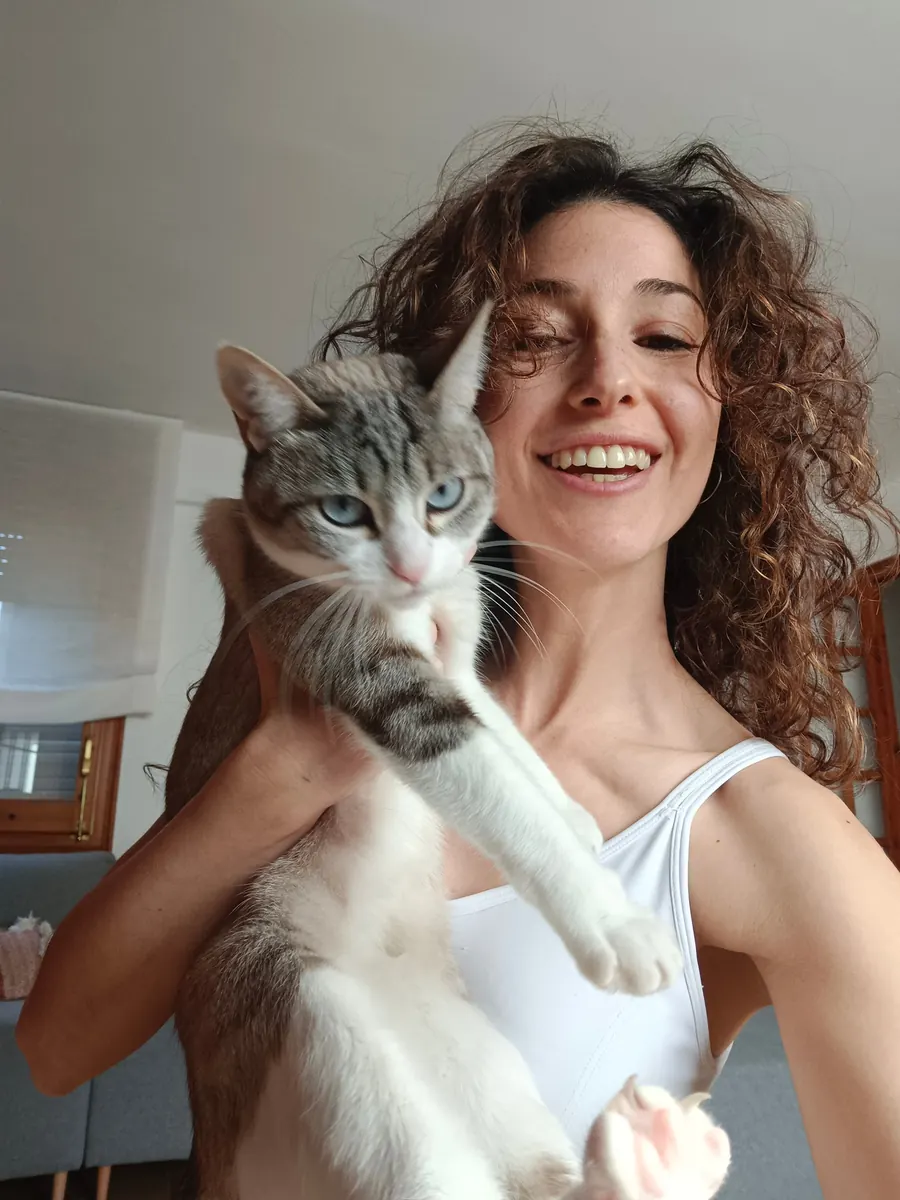
The photographs in this guide illustrate behavior and examination, not a diagnostic gallery of infected canals. If you send your clinic a photo, describe when it was taken and whether anything was applied beforehand. Do not scrape away material or push a camera, cotton swab or other object into the canal to obtain a clearer view.
Odor and watery discharge
A new unpleasant ear odor is worth reporting, but “yeasty” or “bacterial” smells are not dependable organism tests. Watery discharge also needs context: tell the vet whether it began before or after bathing, cleaning or ear medicine. The same observation can have a different meaning depending on what entered the ear and whether there is pain.
If you can comfortably observe it, note whether the material is at the canal opening, on the outer flap or on surrounding skin. This helps the clinic understand your description. It does not mean you need to remove or sample the material yourself.
Head tilt, balance changes and other deeper-ear signs
Head tilt or loss of balance can occur with deeper ear disease, but these signs have other causes too.
Treat them as reasons for veterinary assessment rather than as proof of an inner ear infection. Mention which way the head tilts, whether your cat can stand, and whether the changes began suddenly.
VCA's inner-ear infection guidance describes leaning, falling, circling and rapid involuntary eye movements among the possible signs. Some cats are reluctant to chew or appear uncomfortable opening the mouth. A cat may also struggle to eat or drink because it is nauseated or disoriented.

Report these additional observations without trying to name a syndrome:
- One pupil looks smaller, an eyelid droops or the third eyelid is more visible.
- The eyes move rapidly even while the head is still.
- One side of the face moves differently.
- Your cat falls, rolls, circles or cannot walk normally.
- Vomiting or difficulty reaching food and water accompanies the balance problem.
Eye changes can accompany disease near the middle ear, including signs a veterinarian may describe as Horner's syndrome. They can also need a separate eye or neurological assessment. Ear and eye discharge together, or a cat that is not eating, should be described in full rather than reduced to “just an ear infection.”
SponsoredVet care that's always there
Unlimited video calls and messaging with licensed vets for less than a typical vet visit. One membership covers up to five pets.
Use code Pets30
Plans start at $11/month · covers up to 5 pets
- Licensed vets in most states
- Rx for 150+ conditions
- 4.7 on Trustpilot
When to contact a vet and when to seek urgent care
Contact your veterinarian when ear scratching, head shaking, discharge, odor or pain persists or recurs. Cats can hide discomfort, so the absence of crying is not a useful reason to wait. PDSA's advice emphasizes prompt care because untreated disease can be painful and damage the ear.
Describe urgent changes when you call, especially:
- New head tilt, falling, loss of balance or unusual eye movements.
- Severe pain, rapid worsening or a markedly swollen ear flap.
- Inability to eat, drink or move normally.
- Marked lethargy, collapse or other whole-cat illness.
- A suspected reaction after a cleaner, oil or medication was applied.
Not every suspected ear infection is an emergency, but the clinic needs enough detail to triage your cat.
Tell it whether signs are new, worsening or present after treatment. If your regular practice is closed, use its out-of-hours instructions or contact an emergency veterinary service for advice.
An ear infection can become life-threatening in rare, severe cases. VCA explains that a severe inner-ear infection can occasionally spread to brain regions involved in breathing and heart function. This is not the usual outcome, but severe illness or neurological changes need prompt assessment. Do not wait for an online probability or try several products before seeking care.
What to record before the appointment
Make a brief observation record while leaving the ear alone. The history can help a veterinarian distinguish a new episode from incomplete recovery or a reaction to a product.
A short phone video of walking or head shaking may be useful if it can be taken without delaying care or upsetting your cat.
Record one or both ears, when the problem started and whether it is constant or intermittent. Add any recent bathing, medication, new animal contact or previous ear disease. For every bottle used, photograph the label and ingredients. “Ear cleaner” is less useful than the exact product name and when it was applied.
For a planned journey, use a secure carrier suitable for your cat. If a replacement is needed, the Frisco Travel Safety Dog & Cat Carrier, Medium is one option to assess for size and use. A carrier is transport equipment, not treatment; use an appropriate one you already have and follow the clinic's advice for a cat with balance difficulties.

Soft-sided travel safety carrier that keeps a stressed cat secure and well-ventilated on the way to the vet, with mesh panels for airflow and a seat-belt loop.
Webvet may earn a commission when you click through to Chewy, at no extra cost to you.
How a vet confirms what the signs mean
The vet combines the history with an examination. An otoscope helps inspect the canal and eardrum when the view allows.
Cytology looks at sampled material under a microscope for findings such as bacteria, yeast and inflammation. These are complementary steps: one shows structures, while the other helps identify findings that appearance alone cannot establish.
Pain or obstruction can limit an awake examination. Your vet may recommend a different approach so the ear can be examined safely and a useful sample obtained. Cornell's overview of feline ear disorders explains why ear problems need assessment rather than visual guessing.
Ask what was found in each ear, what still cannot be assessed and whether a recheck is needed. A normal-looking outer flap does not prove the deeper ear is normal. Conversely, visible wax does not automatically mean infection. The clinical findings determine what those observations mean for this cat.
Products after diagnosis: match the job to the plan
Once the clinic has identified the problem, clarify whether it wants medication, cleaning or neither.
Do not use a new product simply to see whether the symptoms disappear. Improvement in smell or visible wax is not the same as confirming that the cause has been treated.
Zymox Plus Advanced Formula with 1% hydrocortisone is an enzyme-based solution with its own instructions. The manufacturer specifies no pre-cleaning. It is therefore a poor product to add casually to an existing cleaning-and-drops routine; ask the vet whether the exact formulation is appropriate for your cat.

Webvet may earn a commission when you click through to Chewy, at no extra cost to you.
If routine cleansing is specifically recommended after the examination, Virbac Epi-Otic Advanced is labeled for cats. Virbac describes its routine-cleaning purpose. Ask when it should be used and whether it is compatible with the prescribed product. A cleanser is not a substitute for diagnosing a painful, blocked or newly discharging ear.
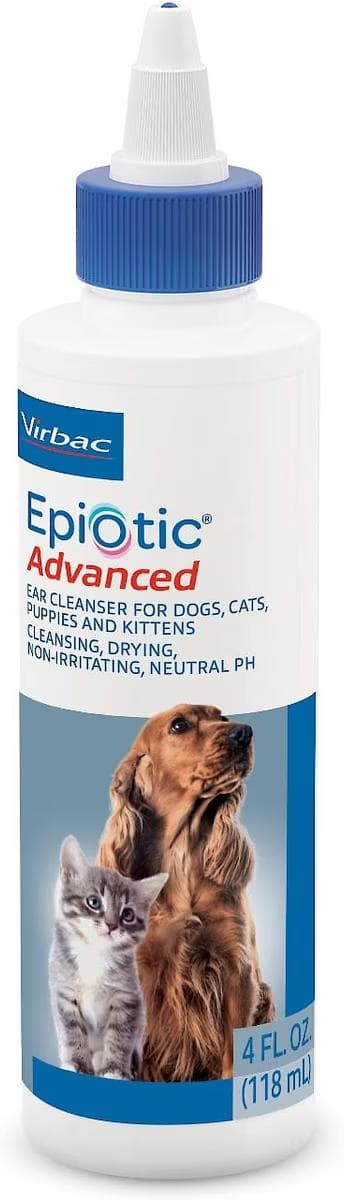
Webvet may earn a commission when you click through to Chewy, at no extra cost to you.
For approved outer-ear maintenance, Veterinary Formula Ear Therapy Wipes offer a wipe format. Their directions concern the accessible ear surface. Do not push a wipe deep into the canal or rub painful, damaged skin. Confirm that wiping is wanted before the appointment or during a medication course.

Alcohol-free ear wipes that gently clean and deodorize ears between deep cleanings, an easy maintenance step for itchy or smelly ears. 100 wipes, for dogs and cats.
Webvet may earn a commission when you click through to Chewy, at no extra cost to you.
Related care: causes and diagnosis
Related care: treatment and recovery
Related care: yeast-specific ear disease
Related care: ear mites and infection
Related care: household remedy safety
Related care: choosing a cat ear cleaner
Questions cat owners ask
Frequently Asked Questions
What is a pillow ear?
People sometimes use “pillow ear” for a puffy ear flap caused by a blood-filled swelling, or aural hematoma. It is different from wax inside the canal. Scratching and head shaking can accompany it, but a veterinarian should assess the swelling and its cause. Do not puncture, squeeze or try to drain it yourself.
What is a silent ear infection?
“Silent ear infection” is not a home diagnosis. Some cats show subtle discomfort, and deeper ear disease may occur without dramatic visible discharge. If behavior, balance or comfort has changed, describe those observations to your vet. A lack of smell or obvious redness cannot rule out every ear problem.
What can be mistaken for middle ear infection?
Vestibular disease and other neurological problems can produce some of the same balance signs. VCA's vestibular-disease guidance explains why the history plus physical, neurological and ear examinations matter. A head tilt alone cannot identify the location or cause. Seek assessment instead of trying a course of ear drops as a diagnostic test.
Can a cat have an ear infection without a smell?
Yes, lack of odor does not rule out an ear problem. Pain or behavior changes, scratching, head shaking and discharge can still justify an examination. Tell the clinic what has changed from your cat's normal habits, even if the ear looks relatively clean. Do not wait for a smell to appear before asking for advice.
Should I clean the ear before the appointment?
Call the clinic first. Material in the ear can provide a useful sample, and cleaning a painful or unexamined canal may be inappropriate. Tell the team what is visible and whether your cat tolerates handling. Follow its instructions rather than attempting to remove all wax or discharge before the examination.

Editor
The Webvet Editorial Team is the in-house group of pet-care editors and writers behind Webvet, operated by Smart Pet Collective. The team researches, writes, and maintains Webvet's pet health, behavior, and medication content. Every article follows a defined editorial process: research from reputable veterinary and scientific sources, careful drafting, mandatory review of medical content by a credentialed veterinarian, and dated publication. Health and medication articles are medically reviewed by a licensed veterinary professional before they go live and are kept current over time.
Veterinarian · BVMS MRCVS
Dr. Pippa Elliott, BVMS, MRCVS, is a veterinarian with nearly 30 years of experience in companion animal practice. Dr. Elliott earned her Bachelor of Veterinary Medicine and Surgery from the University of Glasgow. She was also designated a Member of the Royal College of Veterinary Surgeons. Married with 2 grown-up kids, Dr. Elliott has a naughty Puggle named Poggle, 3 cats and a bearded dragon.
Related reading

FIP in Cats: Symptoms, Diagnosis, and Current Treatment Options

Feline Calicivirus: Symptoms, Treatment, and Managing Multiple Cats

Panleukopenia in Cats: Symptoms, Treatment, and Household Precautions
