Cat Ear Infection Treatment: Medicine and Recovery
Understand how veterinarians choose cat ear infection treatment, how to give medicine safely, when cleaning belongs in the plan, and what recovery, rechecks and costs involve.

BVMS MRCVS
Medically reviewed by Dr. Pippa Elliott, BVMS MRCVS · Last reviewed

This article contains affiliate links. Webvet may earn a commission when you buy through them, at no extra cost to you.
Cat ear infection treatment starts with an ear examination, then a plan matched to the findings. A veterinarian may prescribe ear medicine, cleaning, pain relief or treatment for an underlying problem. The right combination depends on the organisms present, the condition of the canal and eardrum, and whether deeper structures are involved.
If your cat develops a head tilt, balance problems, severe pain or marked illness, contact a veterinarian promptly. Do not try another bottle while waiting to see whether those signs settle. For routine home care after diagnosis, the most useful tool is a clear written plan you can actually follow.
 Sponsored
Have a health question about your cat?
Talk to a licensed vet at Dutch over video or message, including nights and weekends.
Use code Pets30
Plans start at $11/month · covers up to 5 pets
- Licensed vets in most states
- Rx for 150+ conditions
- 4.7 on Trustpilot
How vets choose cat ear infection treatment
Treating a cat ear infection starts with an ear examination and cytology.
Feline otitis externa means inflammation of the external canal; its treatment depends on the findings. An otoscope helps the vet look into the canal and assess the eardrum when visible. Cytology examines material under a microscope for bacteria and yeast. Odor or discharge color cannot provide the same information.
Your vet may also look for ear mites, an obstruction, allergic skin disease or a growth. Treating an organism without addressing the underlying cause can leave the cat vulnerable to another episode. VCA's feline otitis guidance explains why the examination and swab findings determine treatment.

Ask the clinic to explain the plan in terms of jobs:
- Which product treats an organism?
- What addresses swelling, discomfort or pain?
- Is cleaning needed, and who should do it?
- Does the underlying cause need separate care?
- When will the ears be checked again?
Painful handling or a blocked canal may mean that examination or cleaning needs sedation or anesthesia. Tell the team if your cat cannot tolerate having its head touched. A plan that depends on forcing medication into a frightened, painful cat may need adapting before you take it home.
For scheduled examinations and rechecks, arrange a secure carrier. If needed, the Frisco Travel Safety Dog & Cat Carrier, Medium is an option to compare with your cat's size and transport needs. An appropriate carrier you already have is sufficient; buying one should not delay an examination.

Soft-sided travel safety carrier that keeps a stressed cat secure and well-ventilated on the way to the vet, with mesh panels for airflow and a seat-belt loop.
Webvet may earn a commission when you click through to Chewy, at no extra cost to you.
Which medicines treat bacteria, yeast and inflammation?
Antibiotics treat susceptible bacteria. Antifungals treat fungal organisms such as yeast.
Anti-inflammatory medicines reduce inflammation, and the vet may provide separate pain relief when needed. Some ear medicines combine several ingredients; that does not make them appropriate for every cat or every ear.
For kitten ear infection treatment, confirm that the medicine is appropriate for the kitten's age and weight. Do not dilute an adult pet's ear drops or borrow another animal's prescription. The same product name can cover different formulations, so check the exact label and instructions with the veterinary team.
| Component | Purpose | Question to ask |
|---|---|---|
| Antibiotic | Treat a susceptible bacterial infection | What findings support this choice? |
| Antifungal | Treat yeast or another fungal infection | Was yeast found alone or with another problem? |
| Anti-inflammatory medicine | Reduce inflammation and swelling | Is separate pain relief needed? |
| Ear cleaner | Remove material when cleaning is appropriate | Which product, which ear and what timing? |
| Parasite treatment | Address mites when present | Do other household pets need coordinated care? |
A prescription example, not a universal choice
Tresaderm is one veterinary product labeled for certain ear and skin conditions in cats and dogs. Its manufacturer information identifies neomycin, thiabendazole and dexamethasone, which provide antibacterial, antifungal and anti-inflammatory actions. The label also has specific storage and duration instructions. Follow the prescription for your cat rather than borrowing directions from another ear medicine.
There is no single best antibiotic for every cat ear infection. Oral medication is not automatically better than ear drops, and a bacterial treatment will not replace parasite control or solve every yeast infection. Do not use leftover amoxicillin, another pet's prescription or human ear medicine without the prescribing veterinarian's direction.
If you recognize a drug name from a previous episode, ask whether the current findings are the same. A similar smell does not establish the same organism, and a different ear can require a different plan. Keep the labeled packaging so another caregiver or emergency clinic can identify exactly what has been used.
Prescription medicine and over-the-counter products
Over-the-counter availability does not tell you whether a product suits your cat's ear.
Cleaners and medicated or enzyme-based solutions have different ingredients, directions and restrictions. “Best medicine without a vet” is therefore not a safe selection rule for an undiagnosed painful ear.
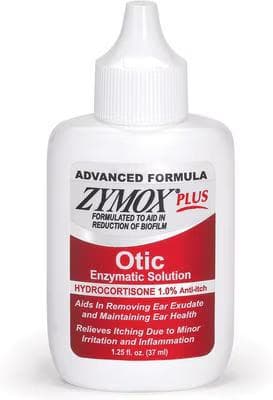
Zymox Plus Advanced Formula with 1% hydrocortisone is an example of an enzyme-based solution with product-specific instructions. The manufacturer specifies no pre-cleaning. VCA's Zymox guidance also describes cautions and the need to check compatibility with other products. Ask whether this exact formulation fits your cat before combining it with prescribed drops or a cleaner.
Webvet may earn a commission when you click through to Chewy, at no extra cost to you.
Other products, including Vetnique OticBliss ear flush and Veterinary Formula Clinical Care Ear Therapy, use different formulations. A familiar brand name is not enough to decide whether to flush, wipe or apply medicine. Bring the exact bottle to the clinic or send a clear label photo. Ask what job it would perform in the plan and whether you already have a product doing that job.
SponsoredVet care that's always there
Unlimited video calls and messaging with licensed vets for less than a typical vet visit. One membership covers up to five pets.
Use code Pets30
Plans start at $11/month · covers up to 5 pets
- Licensed vets in most states
- Rx for 150+ conditions
- 4.7 on Trustpilot
Giving ear medicine at home
Ask for a demonstration using your cat when practical. The team can show where the medicine goes, how the applicator should be held and what amount the prescription requires. VCA's guidance on applying ear drops to cats recommends a quiet setting and contacting the veterinary team when a cat resists treatment.
Set up before bringing your cat over. Have the labeled medicine and any approved supplies ready, remove distractions and check the instructions again.
A comfortable towel wrap may help some cats, but stop if your cat panics, struggles to breathe or becomes painful or aggressive. Ask the clinic for another approach instead of escalating restraint.

Use this treatment handover checklist before the first home dose:
- Which ear: left, right or both, with separate directions if needed.
- Exact product: name, formulation, prescribed amount and frequency.
- Cleaning instructions: whether cleaning is allowed and the interval before medicine.
- Storage: whether the bottle needs refrigeration or other special handling.
- Missed dose: who to contact and what the prescription instructions say.
- Recheck date: the scheduled visit and reasons to call earlier.
Each ear can need a different plan. Mark doses on a simple calendar so two people do not accidentally repeat a treatment. If a dose spills or seems to come straight back out, ask before adding more. Do not double the next dose to compensate unless your veterinary team specifically instructs you to do so.
Report new pain, redness, swelling, unusual behavior or balance changes after a product is used. Tell the clinic the time, the ear treated and the amount you think entered. Keep the bottle available. That information is more useful than switching products before the team can assess what happened.
When cleaning helps and when to leave the ear alone
Cleaning can remove material that interferes with treatment, but cleaning instructions depend on the exact medicine.
Some products require preparation first; others should be placed in an uncleaned ear or left undisturbed afterward. A general instruction to “always clean before drops” cannot replace the directions for the actual product.
If cleaning is needed, clarify whether the veterinary team should perform it first. A painful, swollen or obstructed ear may not be suitable for home flushing. Do not insert cotton swabs deep into the canal, force a bottle tip downward or keep adding cleaner because debris remains visible. Stop if the cat cannot tolerate the procedure.
A vet may select a pretreatment or cleansing product such as Dechra TrizULTRA + Keto. Dechra's product information describes its cleansing and pretreatment role. It is not a reason to add an extra flush to an existing prescription without checking the timing and compatibility.
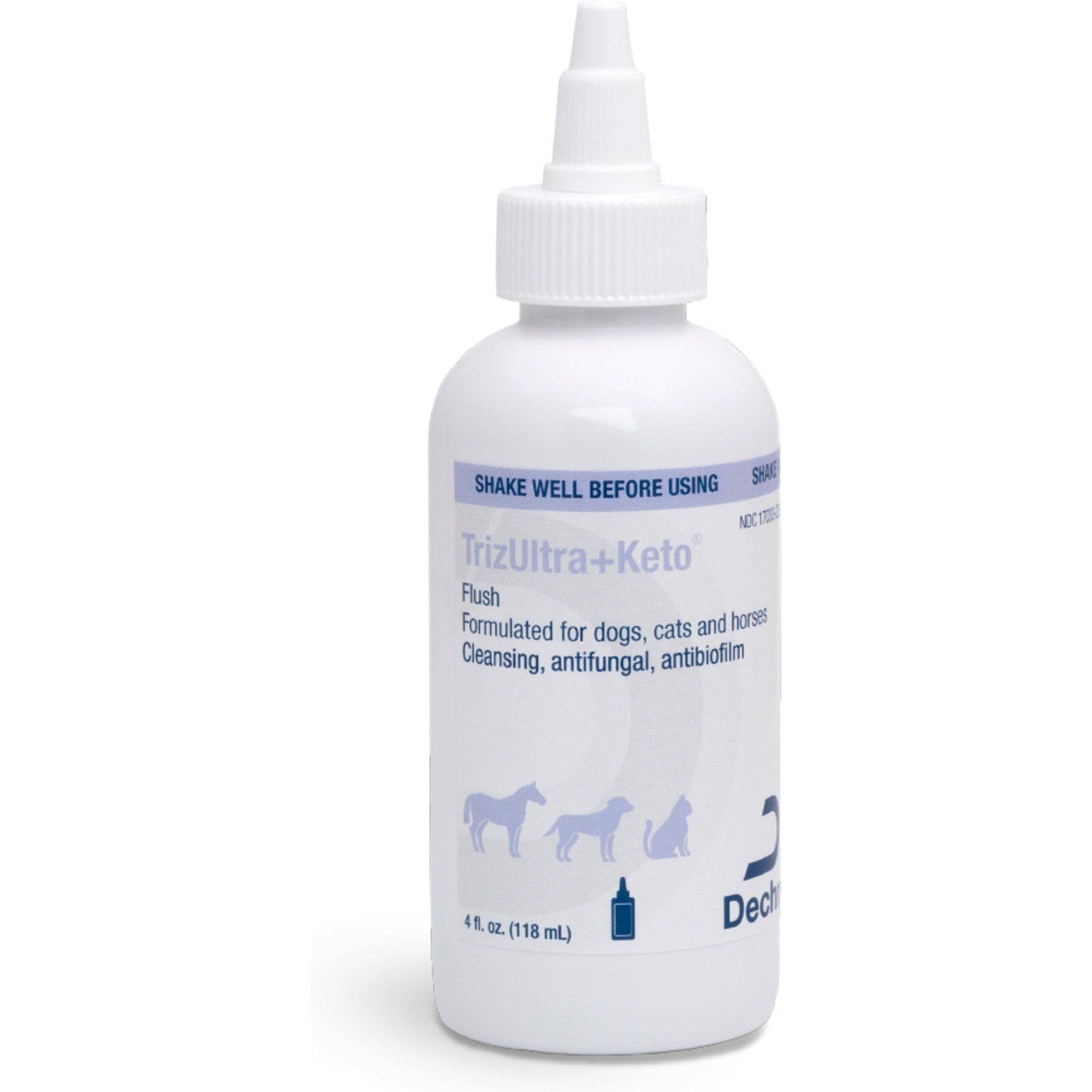
A ketoconazole-containing ear flush to discuss with your veterinarian when routine cleaning is not enough. Use only as directed for your dog.
Webvet may earn a commission when you click through to Chewy, at no extra cost to you.
Ask the clinic to write “clean now,” “do not clean until this date,” or another clear instruction beside the medication schedule. If one label seems to conflict with another, pause and call. This avoids a common practical mistake: buying a sensible product, then using it at the wrong point in the treatment course.
Recovery, rechecks and treatment that is not working
Recovery time depends on the cause, how much disease is present and the treatment selected.
An ear can smell better or look cleaner before the problem is fully resolved. Keep the recheck date and follow the prescribed duration rather than stopping as soon as the cat scratches less.
If improvement is absent, brief or followed by relapse, tell your vet. Bring an honest record of the medicine actually given, including missed doses and handling problems. The next step might involve adjusting administration, repeating tests, investigating an underlying cause or reconsidering the diagnosis. It is not always a stronger antibiotic.
Useful follow-up questions are:
- Did the examination and swab improve as expected?
- Is treatment complete, or is another visit needed?
- Is cleaning still part of the plan?
- What should we do if the same signs return?
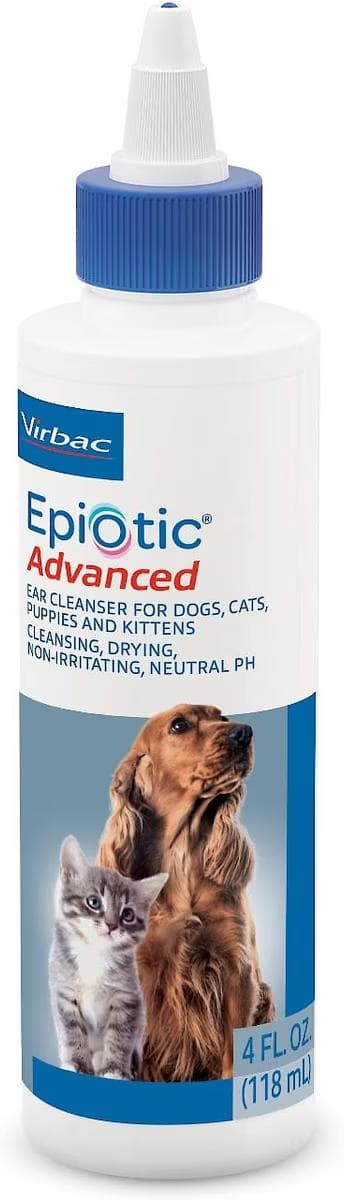
For maintenance after recovery, a vet may recommend a routine cleanser such as Virbac Epi-Otic Advanced. Virbac labels it for routine cleansing in cats as well as dogs. Healthy cats do not automatically need a cleaning schedule; ask whether your cat has a specific reason for one and how often it should be used.
Webvet may earn a commission when you click through to Chewy, at no extra cost to you.
Treatment for middle or inner ear infection
Middle-ear infection, called otitis media, and inner-ear infection can need more extensive investigation and treatment than a straightforward external canal problem. The VCA middle-ear guidance describes systemic medicines and other approaches chosen for the specific findings. A ruptured eardrum also changes which products can safely enter the ear.
A cat that cannot eat or drink normally because of disorientation or nausea may need supportive care in hospital.
Treatment can take substantially longer, and some cases need imaging, specialist assessment or surgery. Do not transfer the duration or cleaning instructions from a previous outer-ear episode to a suspected deeper infection.
What affects the cost of treatment
Ask for an itemized estimate covering the examination, ear tests, cleaning if needed, medicines and follow-up.
Sedation, culture, imaging, disease in both ears and treatment of an underlying problem can change the bill. A bottle price alone is not the cost of resolving an episode.
As a concrete example, Sonoran Sky Pet Hospital's published pricing, checked September 18, 2026, lists an ear-infection visit estimate of $287–$367 or more. Its example includes an $80–$110 examination, $62 ear cytology, $45 therapeutic cleaning and $100–$150 in recommended treatments. This is one clinic's general otitis example, not a national cat-specific average or a quote for your pet.
Before agreeing to a plan, ask what is included and what could be needed later. Is a recheck examination or repeat cytology separate? Would treatment change if the cat cannot tolerate home dosing? Can the clinic explain the priorities if you have a fixed budget? These answers make an estimate more useful than comparing isolated medication prices.
What a bottle price leaves out
For example, the Zymox manufacturer listed its 1.25-ounce Plus solution with 1% hydrocortisone at $33.49 when checked on September 18, 2026. Retail prices may differ. That bottle cost does not include an examination or establish that the product is the right treatment, so ask what you actually need before buying additional products.
Related care: causes and diagnosis
Related care: recognizing signs and urgency
Related care: yeast-specific ear disease
Related care: ear mites and infection
Related care: household remedy safety
Related care: choosing a cat ear cleaner
Questions cat owners ask
Frequently Asked Questions
What if my cat will not let me give the drops?
Stop and contact the veterinary team. Pain, fear, the handling method or the dosing schedule may need attention. Explain how far you get before the cat struggles and whether any medicine actually enters the ear. Ask for another demonstration or a suitable alternative plan instead of forcing repeated attempts.
Can an ear infection go away on its own in cats?
A cat ear infection may seem to go away when discharge temporarily decreases, but that change does not prove recovery. A recheck can assess whether an underlying cause still needs treatment. If your cat has not been examined, arrange care for persistent ear signs. If it is already on a prescription, follow that course and contact the clinic about changes.
What happens if you leave a cat's ear infection untreated?
An untreated problem can remain painful, lead to self-injury and sometimes contribute to deeper damage. The risk depends on the cause and extent, so there is no reliable home deadline before it becomes serious. Seek advice promptly, and describe severe pain, balance changes or marked illness immediately.
What helps an ear infection go away faster?
Follow the prescribed schedule, use the demonstrated technique and keep the recheck. Tell the clinic early if doses cannot be given or the cat is worsening. Do not add cleaner, peroxide, oil or extra medicine to speed things up; an incompatible product can complicate the treatment already selected.
What if I cannot afford all the treatment today?
Say so before the plan is finalized. Ask for an itemized estimate, the immediate priorities and any suitable lower-cost options or local assistance. Explain what you can manage now rather than silently skipping tests or doses. Availability varies, and urgent symptoms still need prompt triage even when finances are difficult.

Editor
The Webvet Editorial Team is the in-house group of pet-care editors and writers behind Webvet, operated by Smart Pet Collective. The team researches, writes, and maintains Webvet's pet health, behavior, and medication content. Every article follows a defined editorial process: research from reputable veterinary and scientific sources, careful drafting, mandatory review of medical content by a credentialed veterinarian, and dated publication. Health and medication articles are medically reviewed by a licensed veterinary professional before they go live and are kept current over time.
Veterinarian · BVMS MRCVS
Dr. Pippa Elliott, BVMS, MRCVS, is a veterinarian with nearly 30 years of experience in companion animal practice. Dr. Elliott earned her Bachelor of Veterinary Medicine and Surgery from the University of Glasgow. She was also designated a Member of the Royal College of Veterinary Surgeons. Married with 2 grown-up kids, Dr. Elliott has a naughty Puggle named Poggle, 3 cats and a bearded dragon.
Related reading

FIP in Cats: Symptoms, Diagnosis, and Current Treatment Options

Feline Calicivirus: Symptoms, Treatment, and Managing Multiple Cats

Panleukopenia in Cats: Symptoms, Treatment, and Household Precautions
